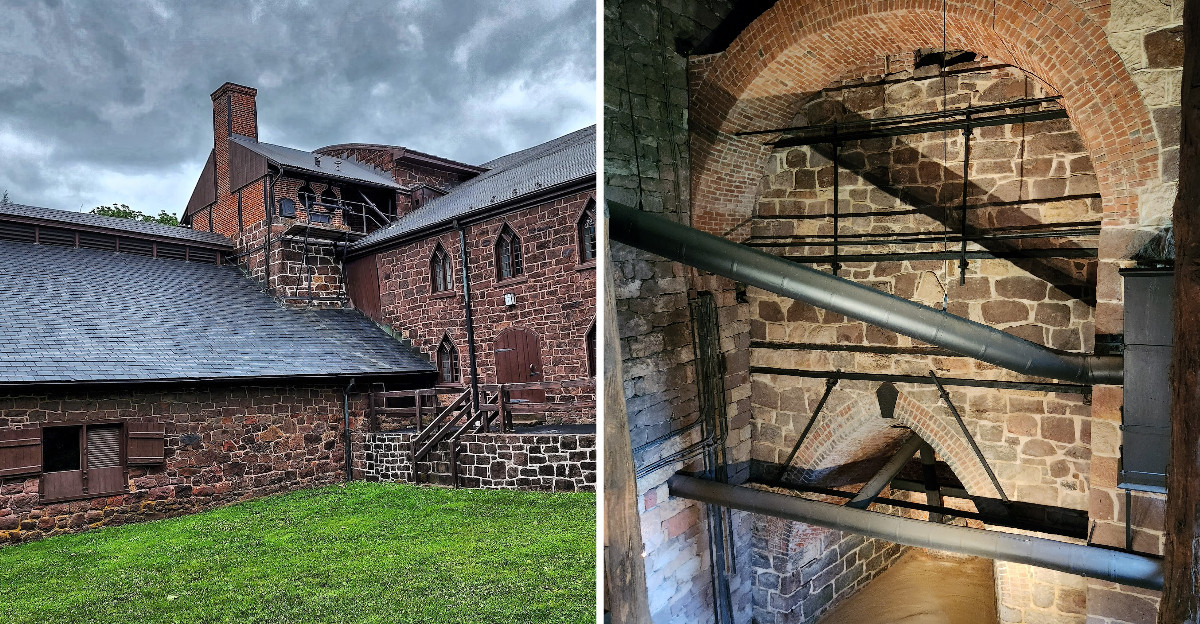
Stone walls and Gothic Revival trim stand exactly where they were left, and a furnace in Pennsylvania stopped working in 1883, yet nobody tore it down. Walls, machinery, blowing tubs, the charging platform, even the window trim, all of it is still here.
The furnace stopped working on a specific February day, but the building remained untouched for over a century. Volunteers and historians have kept the site intact, preserving the tools and the stories of the workers who once fed the fires.
Stepping into the furnace building, the air dropped several degrees and the whole room smelled faintly of cool stone and old iron.
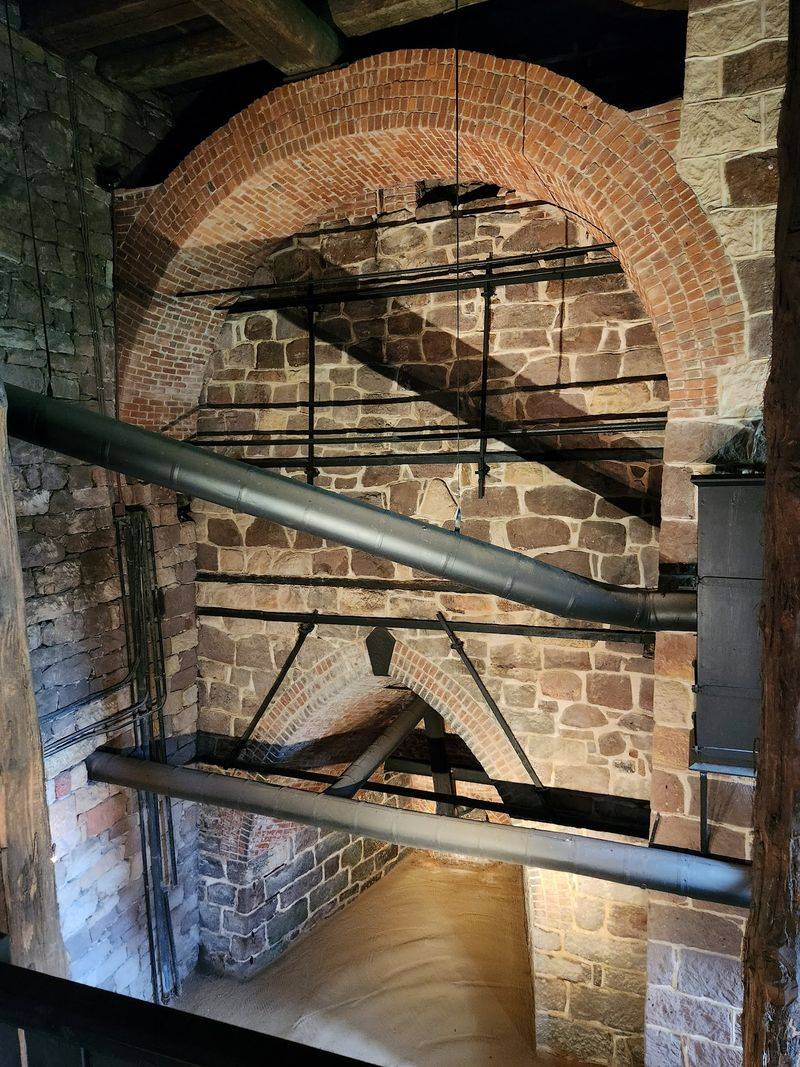
My guide pointed up into the stack, and I realized I was looking at the exact spot where cannons for George Washington’s army began as rock.
Walking through the grounds feels like stepping into a paused moment in industrial history. Seeing how things were actually made will keep you talking the whole drive home.
A Furnace That Ran for 141 Years Before Going Quiet
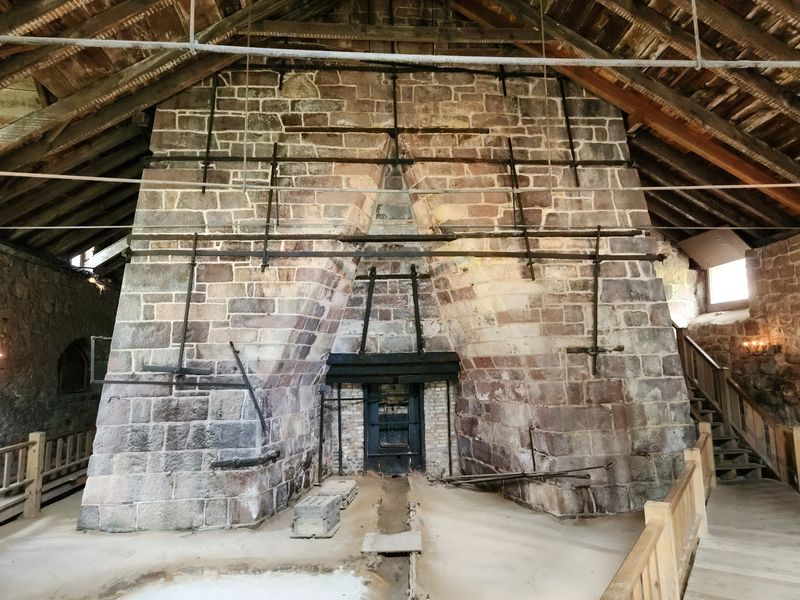
Peter Grubb lit this furnace in 1742, back when Pennsylvania was still a colony and the iron trade ran on charcoal and water power. It kept going through the Revolution, the Civil War, and the rise of the railroads.
Then on February 11, 1883, the blast was shut off for good.
What struck me most was the sheer length of that run. A single business operating for 141 years is remarkable in any century, and this one produced roughly 20 tons of pig iron and cast products each week in its early days.
The reason it closed had nothing to do with the ore running out. New steel-making methods like Bessemer and open-hearth changed everything, coke and anthracite replaced charcoal, and enormous iron deposits were found in Minnesota.
Robert Habersham Coleman, the last owner, made the call to stop.
Hearing that timeline laid out while standing under the actual stack gave the whole visit weight. Most industrial sites from that era were scrapped for their metal within a decade of closing.
Cornwall simply sat still, cooling off, waiting for somebody to recognize what it was.
The Only Intact Charcoal Furnace Left in This Half of the World
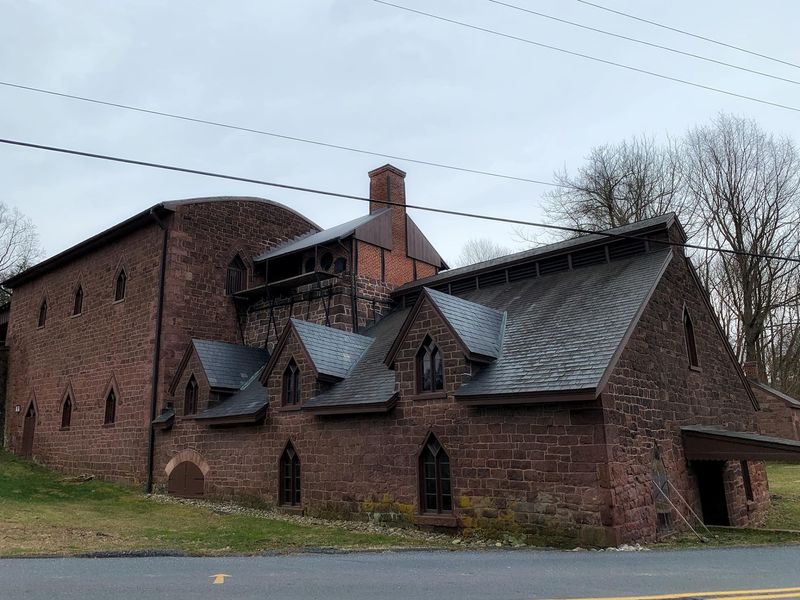
Here is the claim that convinced me to make the drive: Cornwall is the only intact charcoal-burning iron blast furnace still sitting in its original plantation setting anywhere in the Western Hemisphere. Not a reconstruction.
Not a stabilized ruin with a fence around it.
The real thing, roof and all.
The Smithsonian Institution has described the site as having transcendent significance, and once you see how much survived, the phrase stops sounding like museum language.
I have visited other furnace sites in Pennsylvania where you get a lonely stone pyramid in the woods and a lot of imagination homework. Cornwall is different because the support structures are still attached to the furnace, so you can follow the process physically from one room to the next.
It also carries National Historic Landmark status, which is the highest designation the country hands out for historic places.
Walk the perimeter slowly if you can. The masonry, the ironwork on the doors, and the way the buildings lean into the hillside all tell you something about how the operation actually functioned day to day.
Cannons, Shot, and Shell for the Revolution
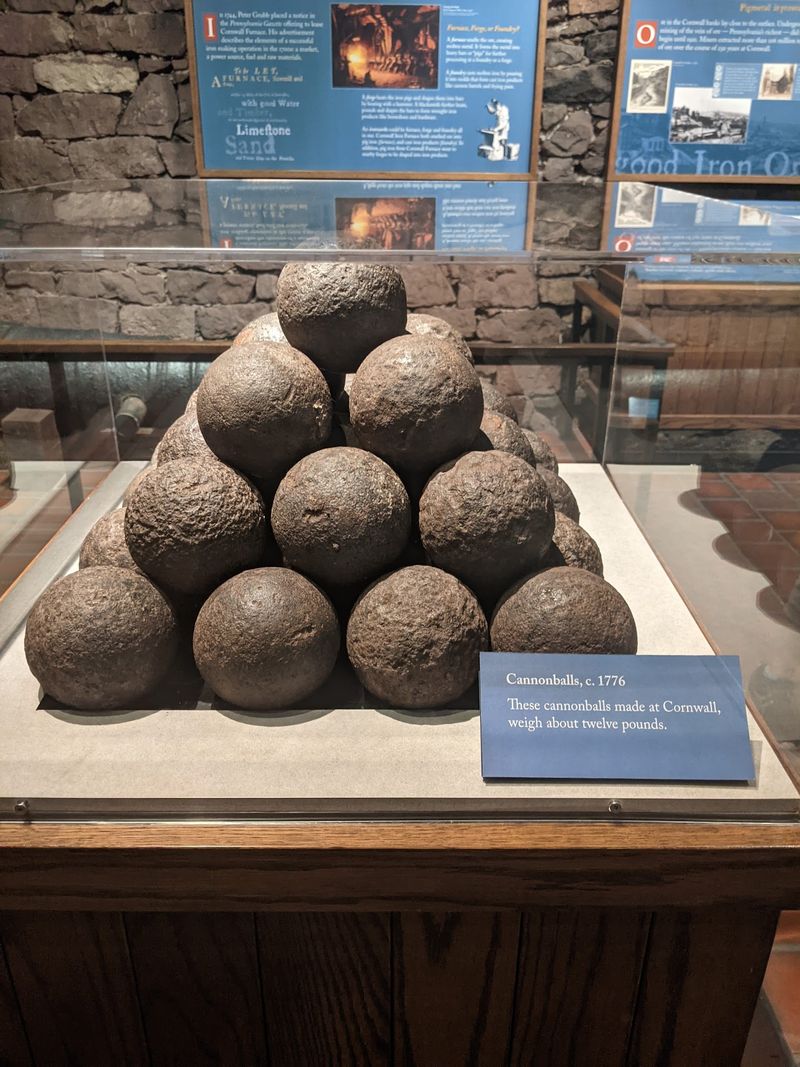
My guide mentioned almost casually that iron from this spot armed the Continental Army, and the group went quiet.
During the American Revolution, Cornwall Furnace supplied shot, shell, and cannons to George Washington’s forces. That turns a heap of stone into something closer to a founding document.
The ore came from the Cornwall ore banks just up the road, which were unusually rich and made the whole enterprise possible. Rock out of the ground, fire, and skill, and suddenly you have artillery.
Robert Coleman bought into the operation around 1786, shortly after the war ended, and eventually became Pennsylvania’s first millionaire on the strength of iron.
That detail says a lot about how much money flowed through these hills.
I liked that the tour did not oversell this chapter. There are no dramatic reenactments or sound effects, just the plain fact of what was cast here and who used it.
If you bring kids who are studying the Revolution in school, this is one of the rare places where the textbook suddenly has a smell and a temperature and a staircase.
Gothic Revival Windows on an Industrial Building
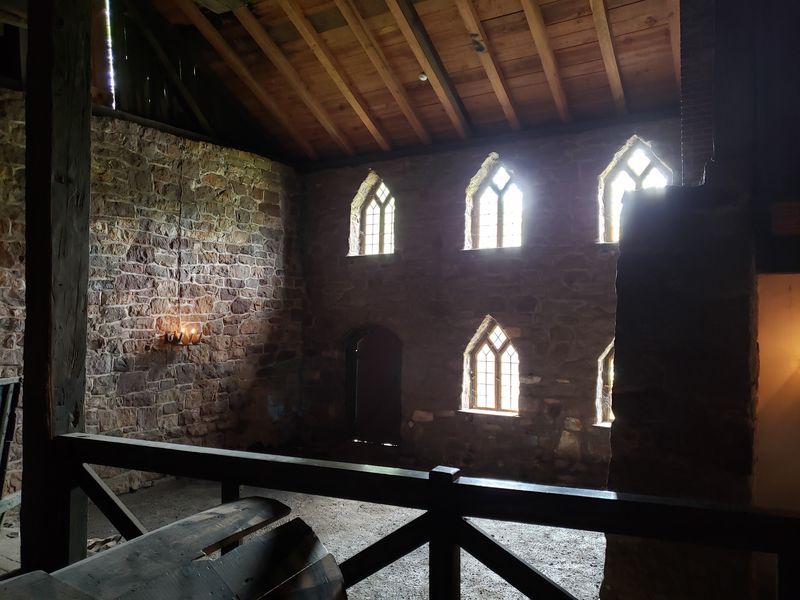
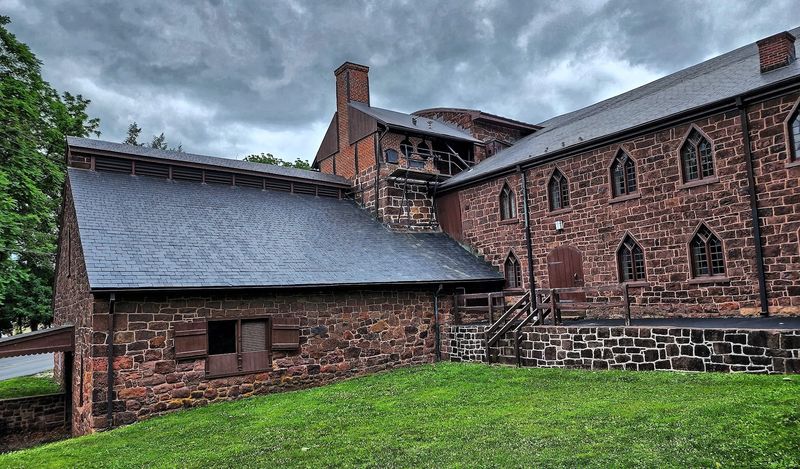
Nobody expects pointed arches on a factory. The Coleman family rebuilt much of the complex in 1856 and 1857, and they chose a Gothic Revival style that gives the place the look of a country chapel that accidentally started making iron.
Slate roofs, arched windows, decorative doors, all on a working industrial plant.
Those renovations are the reason the site looks mid-19th century today rather than colonial. The furnace was enlarged, the old bellows were swapped out for wooden cylinder blowing tubs, and a 20-horsepower steam engine was installed to drive the blast.
So the pretty exterior is wrapped around genuinely modern equipment for its moment.
One visitor I overheard said she came back a second time purely for the architecture, and I understand why. The local red stone glows warm in afternoon light, and the details reward slow looking.
Bring a camera and walk the outside before or after your tour, since the guided portion focuses more on process than ornament. Rainy days wash out the stone color, so a clear afternoon is worth planning around if you have flexibility.
Blowing Tubs, Steam Power, and the Engine Room
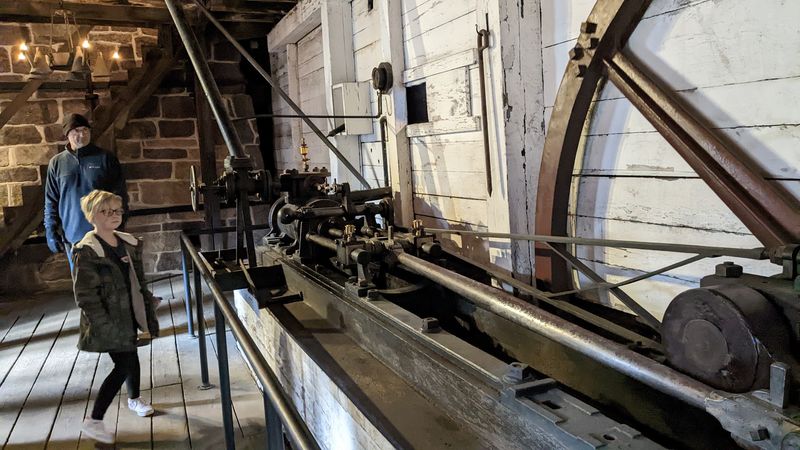
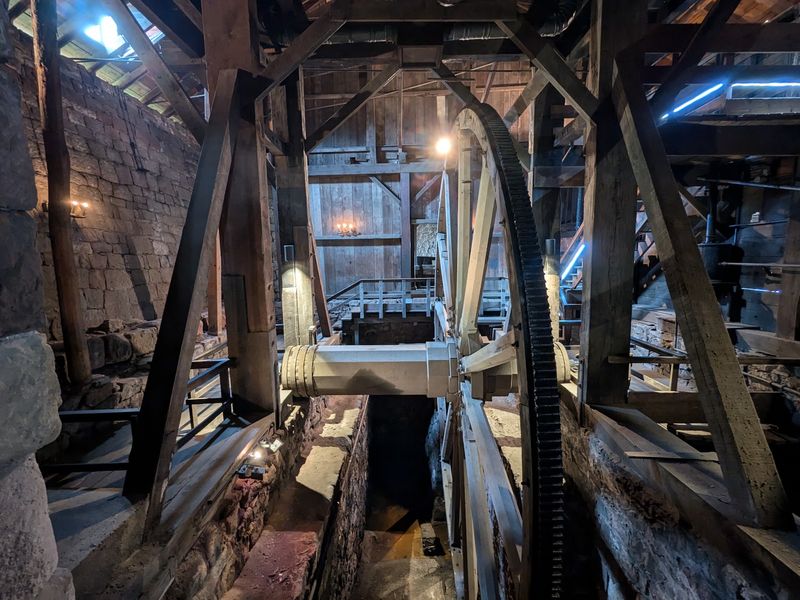
The engine room ended up being my favorite space in the whole complex. Enormous wooden blowing tubs sit in a row, built to push air into the furnace hard enough to keep it burning hot enough to melt rock.
Before those tubs, the job was done with leather bellows.
Everything connects. The furnace stack, the charging platform where workers dumped ore and charcoal in from above, and the engine room are all linked together in one interlocking building, so the tour moves through the process in order rather than jumping around.
Several of the machines are still in good enough shape for demonstration, which helps enormously if you are not a mechanically minded person.
Watching a guide point out where the air traveled made the physics click for me in a way no diagram ever has.
There are stairs involved, so wear shoes you can actually climb in. The interior stays cool even in summer thanks to all that stone, and I noticed the temperature drop the moment I walked in from a warm spring afternoon.
Food and drinks are not permitted during the tour.
The Gift of 1932 That Saved Everything
Fifty years after the fire went out, the complex could easily have been sold for scrap. Instead, Margaret Coleman Freeman Buckingham, a descendant of the family that had owned it for generations, donated the furnace to the Commonwealth of Pennsylvania in 1932.
Her condition was simple. Preserve it as a museum.
That single decision is the reason anything is left. The Pennsylvania Historical and Museum Commission has administered the site ever since, keeping the roofs sound and the machinery intact through nearly a century of changing tastes about what counts as history worth saving.
I find that part of the story quietly moving. Industrial buildings rarely get sentimental protection, and iron furnaces were considered obsolete junk by the 1930s.
Somebody in the family looked at the place and saw a record instead of rubble.
When you tour, you are benefiting from a choice made generations ago by someone who had no obligation to make it. The gift shop inside the welcome center carries books on the site and cast iron goods, which felt like a fitting way to support the ongoing upkeep of a place that exists because of generosity.
Lives Behind the Labor, Twelve-Hour Shifts and Furnace Families
What stayed with me longest was not the machinery but the schedule. Workers here often pulled 12-hour shifts, because a blast furnace cannot simply be switched off at the end of the day.
Once it is lit, somebody has to feed it around the clock.
The exhibits in the museum focus heavily on those people. Colliers burning wood into charcoal, miners in the ore banks, founders judging the heat by eye, teamsters hauling finished iron out to market.
An entire community existed to keep one fire going.
The word plantation gets used for sites like this, meaning a self-contained industrial village with housing, workshops, and farmland all serving the furnace. Cornwall still sits in that original setting, which is exactly what makes it rare.
Reading the displays after walking through the engine room changed how I understood the whole place.
Ask your guide about daily routines if they do not cover it, since the volunteers here tend to know far more than the tour script allows time for. Several guides rotate through different rooms on busier days, so you get multiple perspectives in a single visit.
Guided Tours, Friendly Volunteers, and Charter Day
Skip the self-guided instinct here. The guided tour is the experience, and the volunteers are genuinely good at it, explaining smelting to people who have never thought about metallurgy once in their lives.
Mine ran a little over an hour.
On busy days you may hear from several different guides as you move between spaces, each covering their own section. That rotation keeps the energy up and means you catch details a single speaker might skip.
The site is open Friday and Saturday from 9 AM to 4 PM and Sunday from noon to 4 PM, and it stays closed Monday through Thursday. Tours run on a schedule, so calling ahead at 717-272-9711 saves you standing around.
Charter Day in March is the big annual event, when additional buildings open up and the grounds fill with visitors.
Restrooms are inside the welcome center with the gift shop, and that is the only set on the property. Parking sits partly on site and partly across the road down a small hill, so give yourself an extra few minutes if the lot near the furnace is full.
Making a Day of It in the Lebanon County Countryside
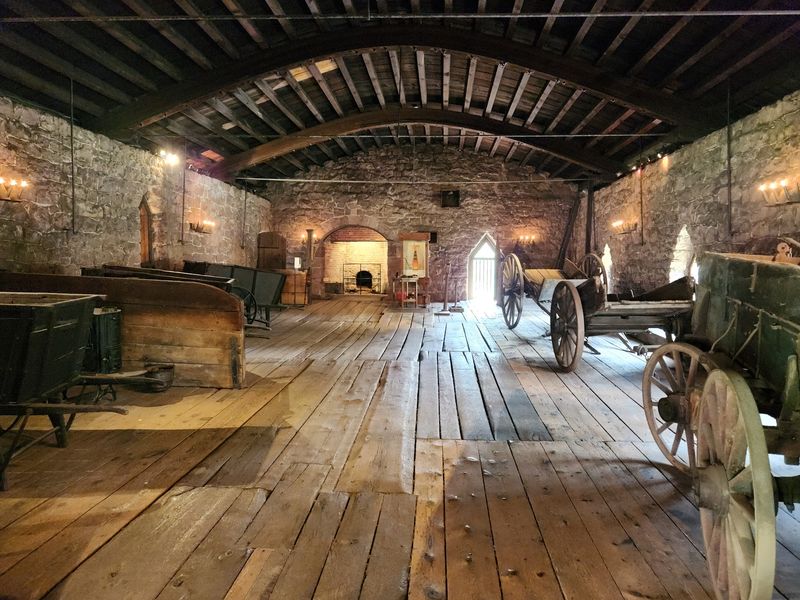
Rolling farmland, stone buildings, and quiet back roads surround the furnace, and the drive out from Harrisburg takes well under an hour. It makes an easy half-day trip that does not feel rushed.
I would budget about an hour and a half on site.
The grounds themselves are pleasant to wander once your tour wraps up. Lawns, mature trees, and the outbuildings with their slate roofs give you plenty to look at without any additional planning.
Staff at the welcome desk are happy to point you toward nearby places to eat, which I appreciated since the surrounding area is not exactly dense with restaurants.
Comfortable walking shoes matter, and a light jacket is smart even in warm months because the stone interiors hold onto the chill.
Photographers should aim for late afternoon light on the red stone. History lovers should simply allow extra time, because the volunteers will happily keep talking if you keep asking.
Anyone curious about how America actually got built will find more here than a single visit can absorb.
Address: 94 Rexmont Rd, Cornwall, PA 17016, United States
