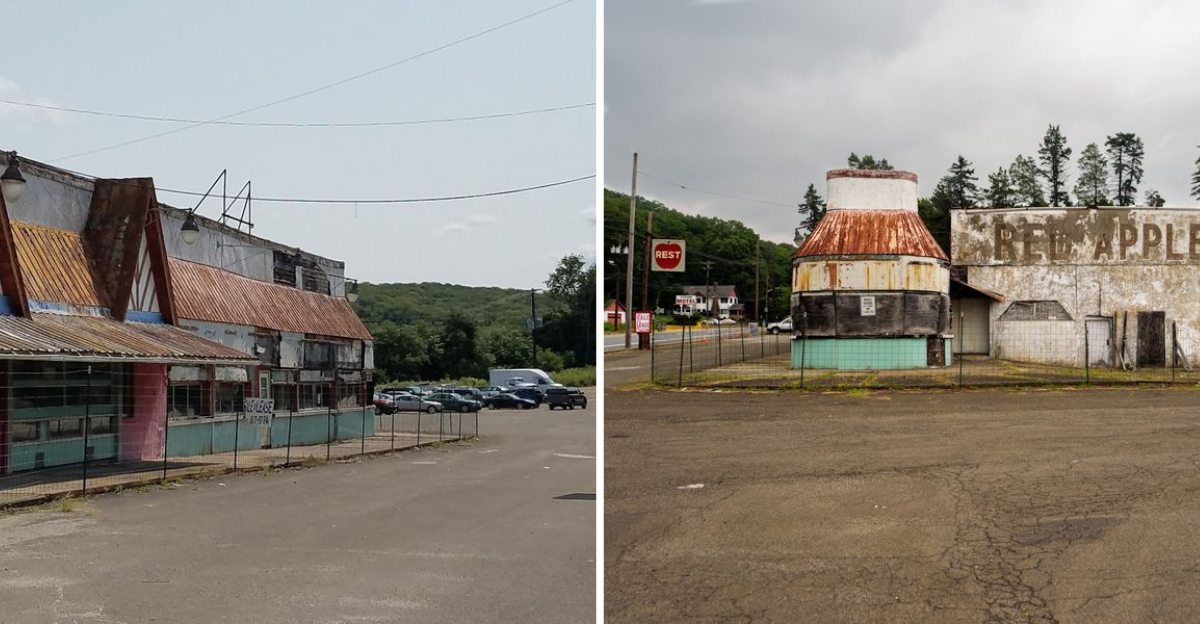
Route 17 in New York holds an old building that refuses to let people drive past without slowing down. Weathered and fenced off, yet somehow still magnetic, I remember the first time I pulled over near it at dusk, half expecting the lights to flick on and the smell of coffee to drift out.
That obviously did not happen, but the pull was real.
For nearly 75 years, this roadside stop fed millions of travelers heading to and from the Catskill Mountains, and it left a mark that outlasted its own walls.
I stood at the fence watching the light fade, trying to imagine the crowds that once spilled through those doors. Even now, half-demolished and quiet, it draws night drivers, curious locals, and memory-chasers who just cannot seem to let it go.
The building sits just off the highway like an old photograph that refuses to fully fade, and there is a weight to its silence that makes you feel like you have stepped into someone else’s memory.
You can almost hear the hum of conversations and the clatter of dishes from decades ago, a ghost of a time when this place was the heart of the road.
The Story Behind the Red Apple Rest
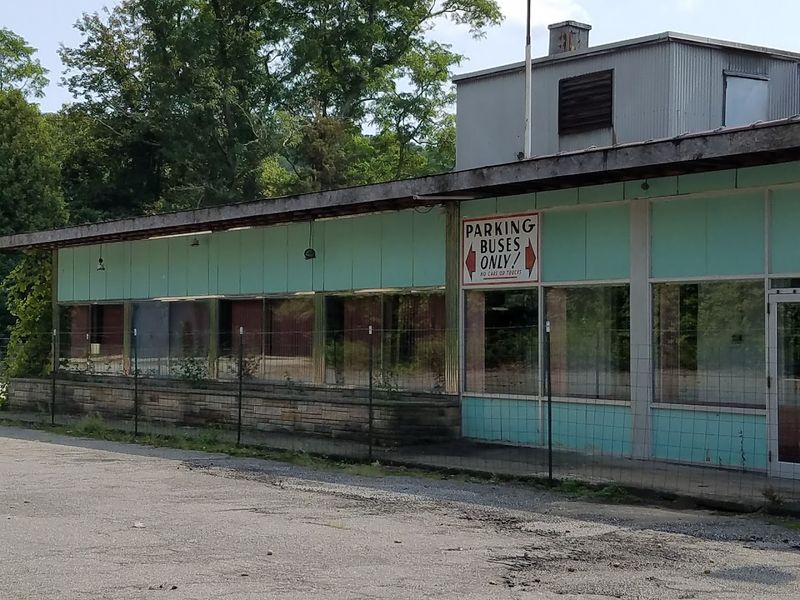
Back in 1931, a man named Reuben Freed opened a cafeteria-style restaurant along Route 17 in the Southfields section of Tuxedo, New York, and he could not have known he was building a legend. The Red Apple Rest was open 24 hours a day, 365 days a year, no breaks, no holidays, no slow seasons.
That kind of dedication to the road-weary traveler was rare, and people noticed fast.
Before the New York State Thruway existed, Route 17 was the main artery connecting New York City to the Catskill Mountains. The Red Apple Rest sat right at the mental halfway point of that journey.
Families piled out of cars, stretched their legs, grabbed a bite, and felt the vacation finally begin.
By 1965, the restaurant was serving one million customers a year. That number is staggering when you picture a single roadside stop in a small New York town.
It was not just food that kept people coming back. It was the feeling of arrival, that specific moment when the city stress started to lift.
Borscht Belt comedians stopped here late at night after their shows, swapping jokes and gossip before heading home. Professional athletes passed through.
Families made it a ritual. The Red Apple Rest was never just a diner.
It was a shared experience that belonged to everyone who traveled that stretch of road, and that is exactly why its empty shell still pulls people off the highway decades after the last meal was ever served.
Why Nighttime Visitors Still Pull Over
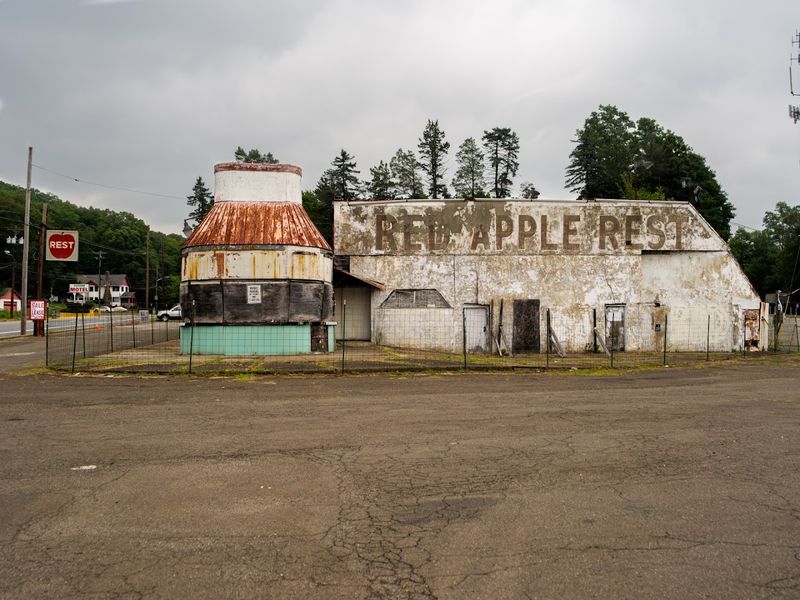
There is something different about seeing the Red Apple Rest after dark. During the day it looks like a construction site, fenced off and partially torn down.
But at night, the shadows fill in the missing pieces, and the building almost looks whole again. That might sound strange, but anyone who has pulled over there after midnight probably understands exactly what that means.
People stop for all kinds of reasons. Some grew up making the Catskills trip every summer and feel a genuine tug of memory when they pass the exit.
Others are younger travelers who heard about the place online and want to see it for themselves before the rest of it disappears. A few just notice the structure from the highway and pull over out of pure curiosity.
The parking area near the site still gets visitors regularly. Someone once mentioned pulling over there to take a nap on a long drive home from work, a habit that lasted years.
A local officer even checked in on them once, unbothered when they explained they were just resting. That kind of low-key interaction says a lot about how the spot is treated, less like a ruin and more like a familiar old landmark that people still feel comfortable around.
No ghost stories or paranormal claims surround this place. The draw is simpler and more honest than that.
It is memory, curiosity, and the very human habit of pausing at something that used to matter a great deal to a lot of people.
The Golden Years and the Crowds That Came
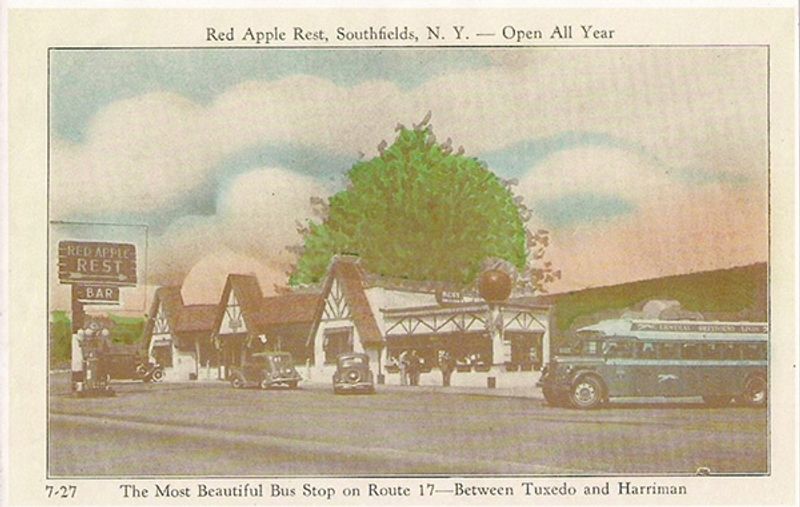
The peak years of the Red Apple Rest were genuinely remarkable for a roadside stop of its size. During the 1950s and 1960s, the Catskill Mountains were one of the most popular vacation destinations on the East Coast.
Hotels, resorts, and summer camps filled the region every season, and nearly all of their guests passed through Tuxedo on Route 17.
The Red Apple Rest caught every single one of them. Families traveling with kids, couples heading up for a weekend, performers driving to their next show, all of them stopped here.
The cafeteria-style setup meant food moved fast and lines kept flowing. It had the energy of a place that never really slept, because it never did.
Comedians who performed at the Borscht Belt resorts became regulars, especially late at night when the crowds had gone home. They would sit, eat, and talk through their acts.
The Red Apple Motel nearby hosted musicians passing through, including George Carlin at various points in his career. The whole stretch of Route 17 had a creative, buzzing energy that the Red Apple Rest sat right at the center of.
One million customers in a single year is the number that sticks. For a cafeteria in a small town with no freeway nearby, that figure tells the whole story of what this place meant to the region.
It was not just popular. It was woven into the rhythm of how people experienced travel in New York, and that kind of cultural weight does not fade quickly, even when the building does.
How the Decline Happened and What Was Left Behind
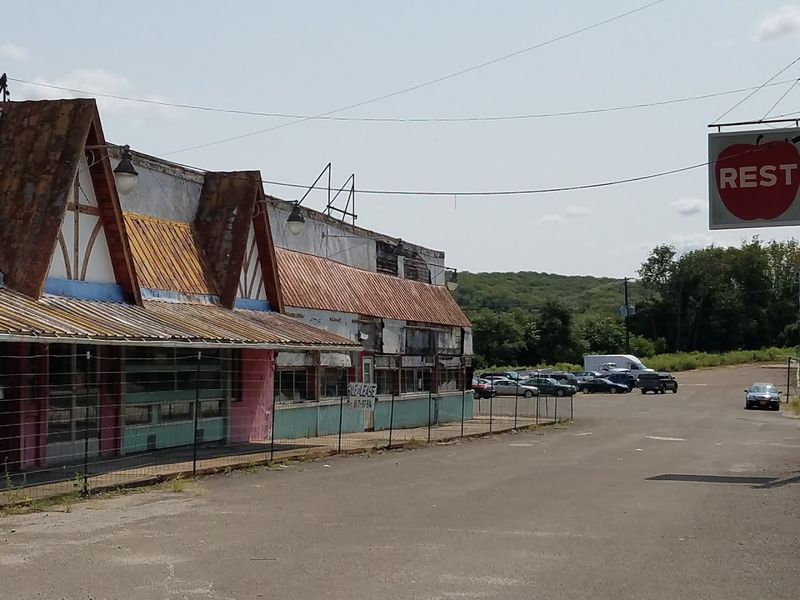
The New York State Thruway changed everything. Once drivers had a faster, more convenient route north, the old Route 17 traffic thinned out considerably.
The Red Apple Rest had built its entire identity around being the inevitable stop on an inevitable road, and that road was suddenly less inevitable.
Through the 1970s and into the 1980s, Catskills tourism itself began to fade. The big resorts that once packed the mountains with guests started closing one by one.
The cultural moment that had made the region a summer destination for so many New York families was shifting. The crowds that used to guarantee a full house at the Red Apple Rest were simply not coming in the same numbers anymore.
The Freed family, who had run the restaurant since its founding, sold it in 1984. The business changed hands and struggled to find its footing in a region that was still adjusting to new travel patterns.
It finally closed in September 2006, ending 75 years of continuous operation on that corner of Route 17.
By 2007, the building was condemned due to roof damage. In October 2023, a partial demolition began after a section of the structure collapsed and raised new safety concerns.
Roughly one-third of the building was removed. The site is currently fenced off, and as of early 2026, a town councilman was scheduled to meet with the owners to discuss the property’s future.
What exactly comes next remains an open question, but the history underneath that fencing is anything but forgotten.
What Visiting the Red Apple Rest Feels Like Today
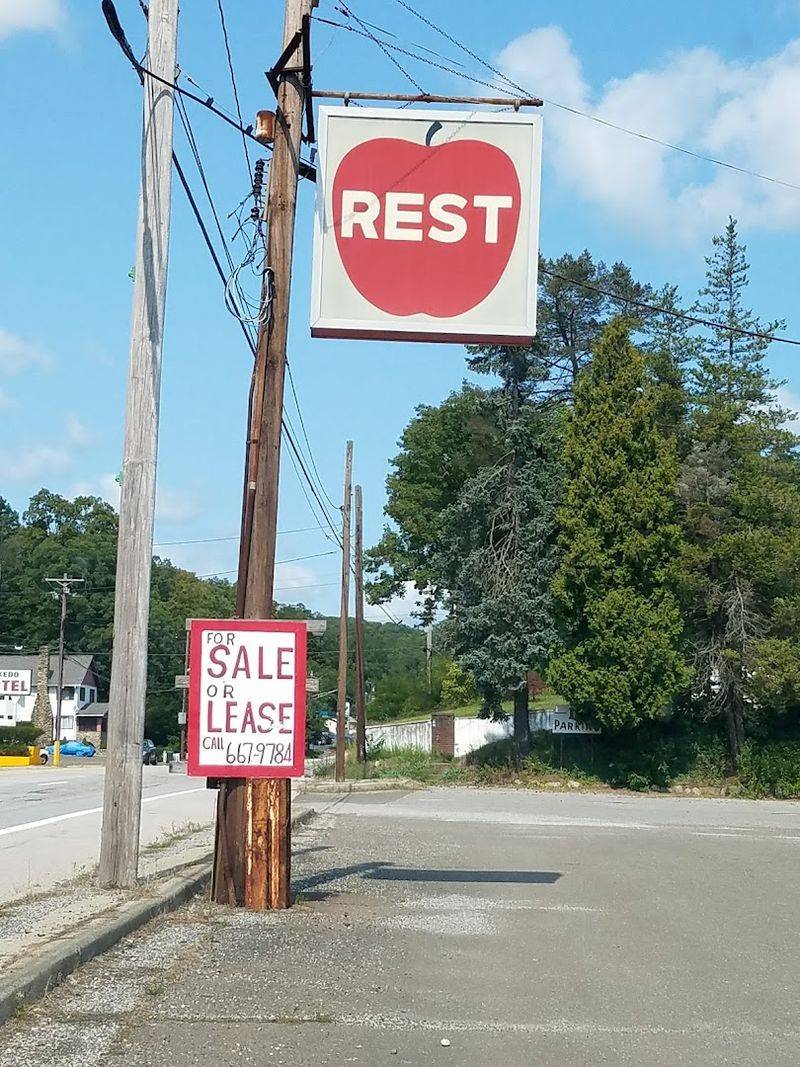
Pulling off Route 17 near the old Red Apple Rest today is a quieter experience than most people expect. The fencing keeps you at a distance, and the building itself is noticeably smaller than it once was after the partial demolition.
Still, there is enough left standing to give you a real sense of what the place once looked like.
The address is 974 NY-17 in Southfields, and it sits in a stretch of road that still has that old-highway feel, wide shoulders, mature trees, and the kind of unhurried pace that modern interstates have mostly erased. Stopping there during the day means you might share the parking area with a few other curious visitors.
At night, it tends to be quieter, just you, the hum of passing cars, and whatever memories you brought with you.
People who grew up stopping here on family trips describe a very specific feeling when they visit now. It is not quite sadness and not quite joy.
It is something in between, the kind of feeling you get when a place from your childhood looks smaller than you remembered but somehow means more.
For younger visitors who never experienced the Red Apple Rest in its working days, the appeal is different but just as real. There is genuine history here, the kind that does not come with a plaque or a gift shop.
Just a weathered building on a state highway that once served a million people a year and still, somehow, gets people to stop.
Address: 974 NY-17, Southfields, NY 10975
