North Carolina’s outer barrier islands still carry layers of history and wild coastal life where access is limited and the journey shapes the entire experience.
At the far edge of the Outer Banks, reached only by ferry or small aircraft, wide stretches of undeveloped shoreline unfold beside small maritime communities shaped by centuries of seafaring life.
Wild horses move freely across open dunes, while stories of early coastal pirates still echo through local heritage and geography.
The shift from mainland to island feels immediate, marked by open water, rising wind, and expanding silence. Remote Outer Banks barrier island in North Carolina with wild horses and maritime history blends isolation, ecology, and legend into one continuous coastal landscape.
Blackbeard’s Last Stand at Teach’s Hole
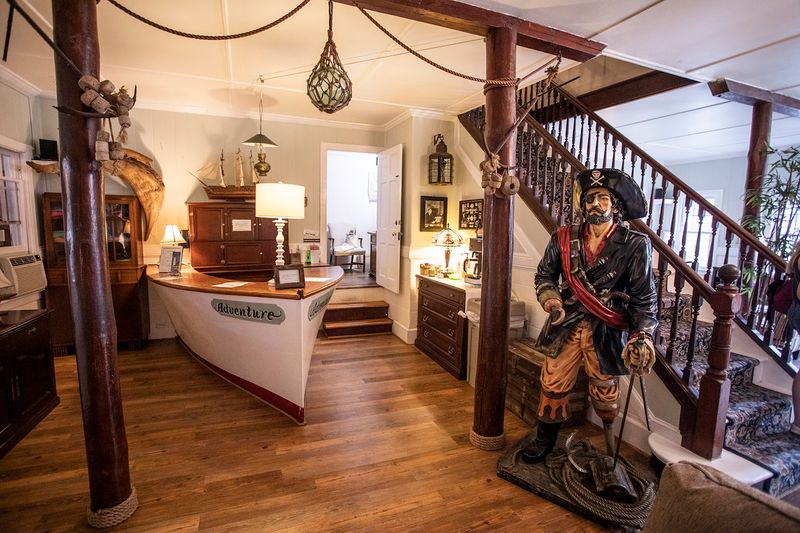
Few places carry the weight of a real pirate legend the way Ocracoke does. From 1717 to 1718, the notorious Edward Teach, better known as Blackbeard, used this island as his base of operations.
He knew the shallow waters of Pamlico Sound like the back of his hand, and that knowledge made him nearly untouchable.
Ocracoke Inlet was the only deep-water passage for oceangoing ships entering northeastern North Carolina. That made it a perfect chokepoint for a pirate looking to intercept valuable cargo.
Blackbeard reportedly held legendary gatherings near what is now Springer’s Point, a 122-acre maritime forest preserve on the island’s soundside.
His story ended right here on November 22, 1718, in a battle now called Blackbeard’s Last Stand. British naval forces led by Lieutenant Robert Maynard ambushed him in the waters off Ocracoke, and the fight was brutal.
Blackbeard was shot five times and stabbed over twenty times before finally falling.
The site is still called Teach’s Hole. A short trail through the woods leads to a quiet spot on the sound where the water looks almost too peaceful for the history beneath it.
Local lore says his headless ghost still walks the beach at night.
Springer’s Point Nature Preserve
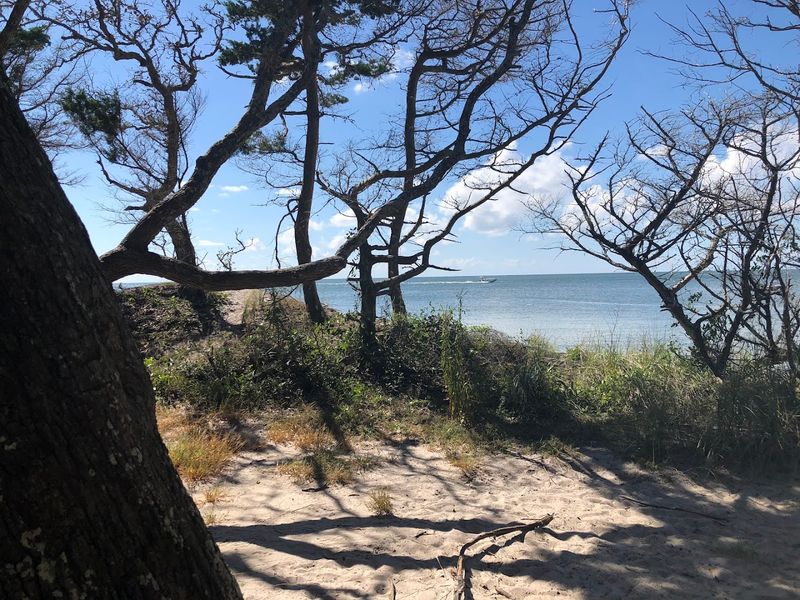
Springer’s Point does not announce itself loudly. It sits quietly off a gravel path near the village, and most first-time visitors walk past the trailhead without realizing what they are about to find.
The 122-acre preserve is managed by the North Carolina Coastal Land Trust, and it is one of the most atmospheric spots on the entire island.
Ancient live oaks twist overhead, their branches draped in Spanish moss and tangled together like something from a fairy tale. The trail is short, maybe half a mile, but it moves through several distinct environments before opening onto a stretch of Pamlico Sound shoreline.
The transition from dense forest to open water feels almost theatrical.
This is the same land where Blackbeard reportedly camped and gathered with his crew. That history hangs in the air here in a way that is hard to explain but easy to feel.
The soundside shore is rocky and wild, nothing like the smooth Atlantic beach on the other side of the island.
Bring sturdy shoes and some patience. The trail can get muddy after rain, and the mosquitoes have opinions.
Going in the early morning, when the light is low and the birds are loud, makes the whole experience feel genuinely otherworldly.
The Ocracoke Pony Pens and Banker Horses
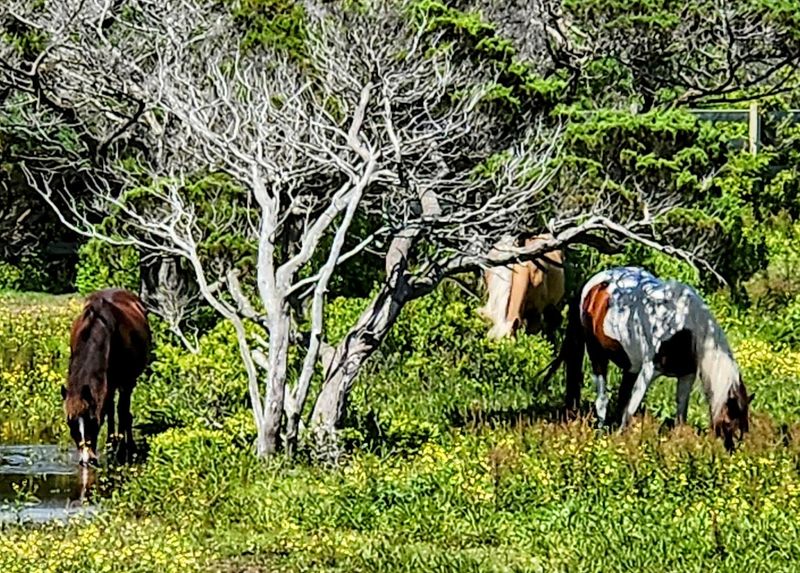
Somewhere along NC Highway 12, about halfway up the island, there is a fenced enclosure where a small herd of horses lives a life completely unlike anything you would expect. These are the Ocracoke Banker ponies, descendants of Spanish mustangs that are believed to have swum ashore from shipwrecks centuries ago.
One possible ancestor ship is the Tiger, a vessel lost off the Carolina coast in the late 1500s.
What makes these horses genuinely fascinating is not just their origin story. They are physically different from most horse breeds, carrying only five lumbar vertebrae instead of the usual six, and seventeen ribs instead of eighteen.
That compact, sturdy build helped them survive on an island with limited resources for hundreds of years.
The herd once numbered around 300. Today, fewer than 20 remain, living inside a protected 180-acre enclosure managed by the National Park Service since the early 1960s.
The pens were created after NC Highway 12 was built in 1957 to protect the horses from traffic and prevent overgrazing.
Visitors can watch them from a designated viewing area right off the road. They look peaceful out there in the grass.
Getting too close or trying to feed them is prohibited, and rangers take that rule seriously.
16 Miles of Undeveloped Atlantic Shoreline
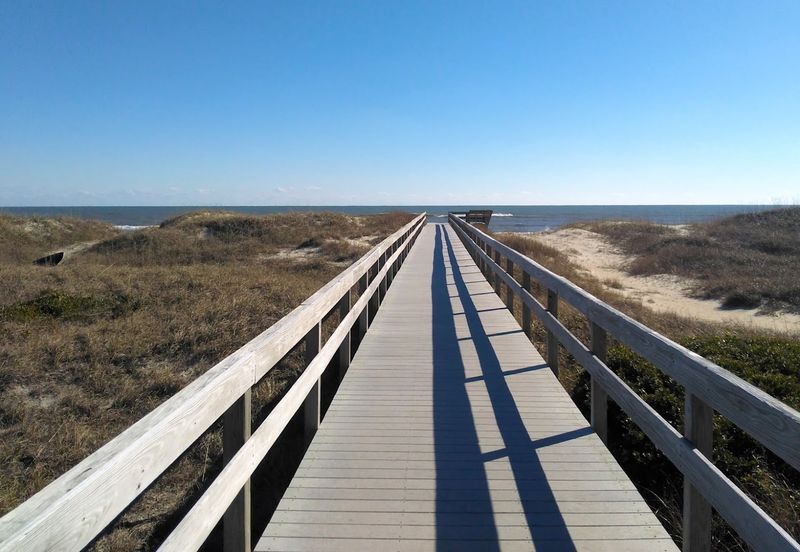
The number 16 does not fully prepare you for what 16 miles of undeveloped beach actually looks like. There are no high-rise hotels blocking the horizon.
No boardwalks, no souvenir stands, no lifeguard towers every hundred feet. Just sand, dunes, water, and sky for as far as you can see in either direction.
Ocracoke’s beaches are part of Cape Hatteras National Seashore, managed by the National Park Service, which is exactly why they have stayed so wild. The protected status means development is tightly controlled, and that restraint is the island’s greatest gift to its visitors.
Even during the busiest weeks of summer, you can walk ten minutes in either direction from any access point and find yourself completely alone.
Lifeguard Beach, officially called Ocracoke Beach Access, was voted America’s number one beach in both 2007 and 2022. That recognition is well-earned.
The water is warm, the sand is clean, and the dunes behind the beach are tall and sculptural.
Many stretches of beach are accessible by four-wheel-drive vehicles with the proper permit, which opens up sections that most visitors never reach. Shelling is excellent, especially in the off-season.
September and October bring cooler air, calmer water, and far fewer people.
The Free Ferry Ride From Hatteras
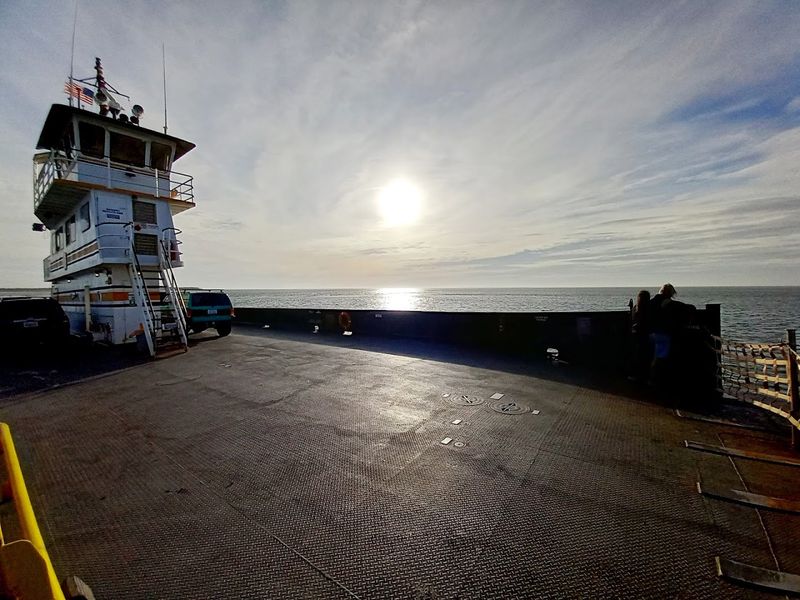
Getting to Ocracoke is part of the experience, and the free ferry from Hatteras is where the trip really begins. The ride takes about an hour, and it crosses a wide stretch of Pamlico Sound that feels surprisingly open and vast.
There are no bridges, no tunnels, just water in every direction and the slow hum of the engine beneath your feet.
Pelicans often glide alongside the ferry, and dolphins occasionally surface near the bow. The flat horizon of the Outer Banks gives way to the low profile of Ocracoke long before you arrive, and watching the island slowly grow larger from the deck is genuinely one of the better moments of any trip to the North Carolina coast.
The ferry is operated by the North Carolina Department of Transportation and runs on a regular schedule throughout the day. It is free for passengers and vehicles, though reservations are highly recommended, especially during summer weekends.
Arriving early is smart because demand is real and lines build up fast.
Once the ferry docks and you drive off onto the island’s single main road, the pace of everything changes immediately. The traffic lights do not exist here.
The urgency fades. That transition from the mainland world to island time happens faster than you would think possible.
Ocracoke Village and the Historic Lighthouse
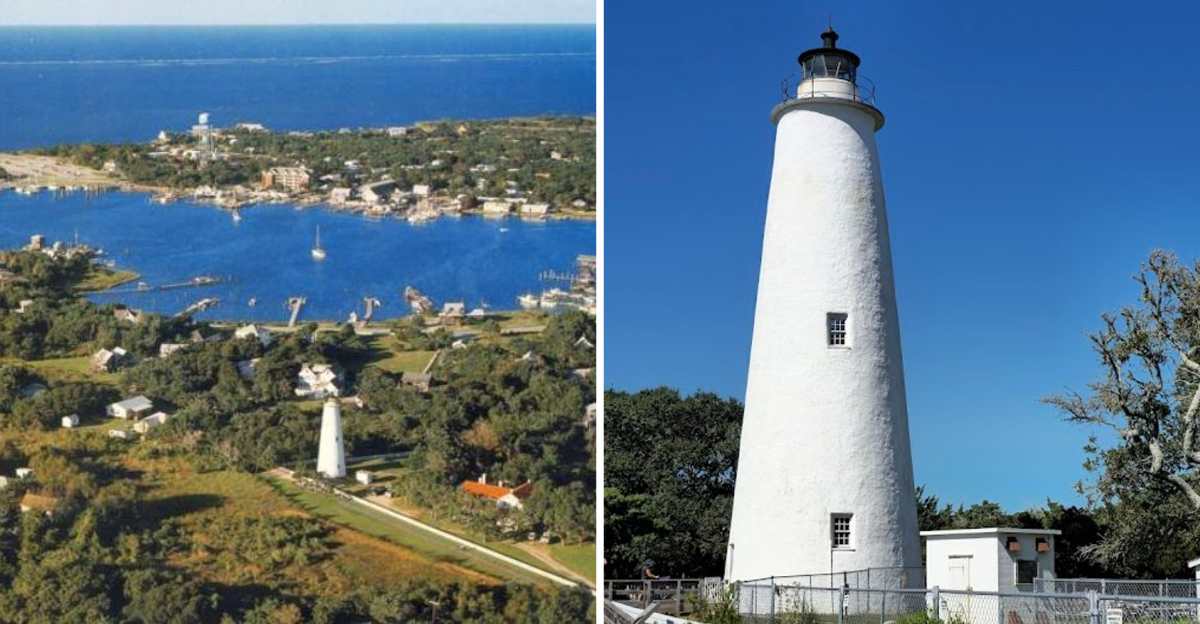
Ocracoke Village is the kind of place that makes you want to slow down and actually look at things. It clusters around Silver Lake Harbor, a small circular basin where fishing boats and sailboats sit side by side in the afternoon light.
The whole village has a genuine, unhurried quality that feels less like a tourist destination and more like a real community that happens to welcome visitors.
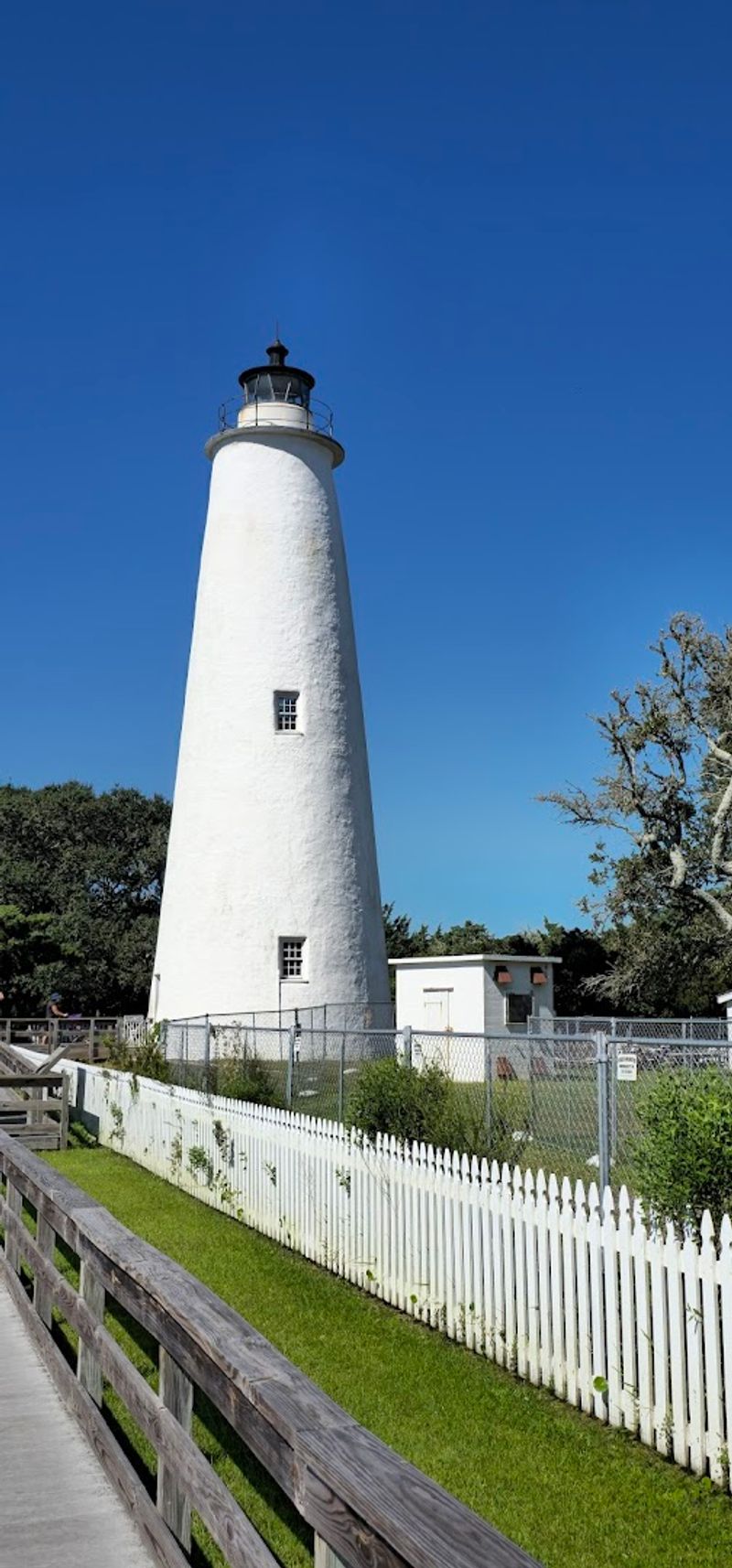
The Ocracoke Lighthouse is one of the oldest operating lighthouses in the United States, built in 1823 and still functioning today. It stands 65 feet tall, compact compared to the Cape Hatteras lighthouse up the road, but no less striking.
The lighthouse grounds are open to visitors, though the tower itself is not climbable. Walking around it early in the morning, when the village is still quiet, is a genuinely lovely way to start a day.
Silver Lake at sunset is something locals talk about with good reason. The water catches the colors in a way that makes even a mediocre phone camera produce stunning results.
Small shops and seafood restaurants line the harbor, most of them locally owned and genuinely good.
The community here has deep roots, and the island dialect spoken by some longtime residents is a linguistic curiosity all on its own, a remnant of 18th-century English still alive in the 21st century.
What It Actually Feels Like to Stay on Ocracoke
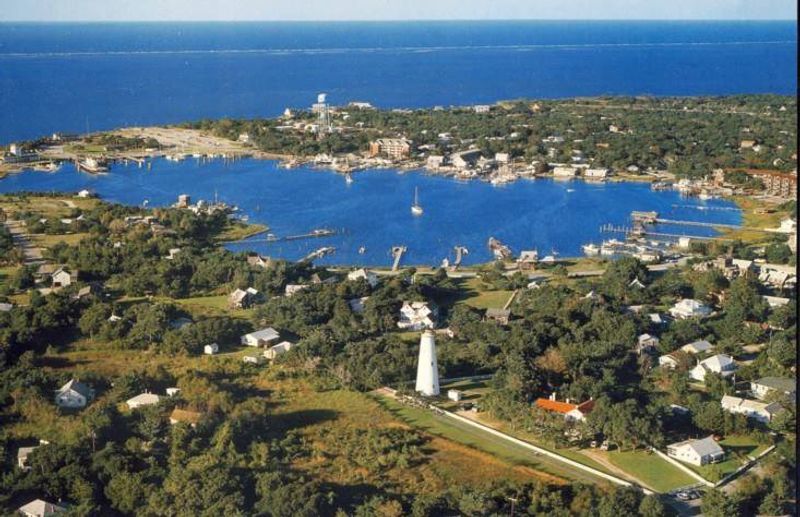
Staying on Ocracoke overnight changes the whole equation. Day visitors get a taste of the island, but the people who book a few nights are the ones who actually understand what makes this place tick.
The mornings here are extraordinarily quiet. The only sounds are birds and the occasional golf cart rolling past.
There are no traffic lights anywhere on the island. Bikes and golf carts are the preferred way to get around, and the pace that enforces is genuinely good for your nervous system.
Most accommodations are small rental cottages or locally run inns, nothing corporate, nothing with a chain logo above the door.
The food scene is small but worthwhile. Fresh seafood is the obvious draw, and several spots along the harbor serve fish pulled from local waters that same day.
Howard’s Pub, located at 1175 Irvin Garrish Highway, is a longtime local institution with a menu that covers a lot of ground and a porch that faces the sound.
September and October are widely considered the best months to visit. The summer crowds have thinned, the water is still warm enough to swim in, and the light in the late afternoon turns everything golden.
Ocracoke in the fall feels like a secret the island is finally willing to share.
