Some of the best stories in West Virginia hide at the end of a long, winding road where your phone signal gives up before you do. You expect a few old buildings and a quick look around, then you find yourself standing where card games reportedly ran for years and outlaws slipped in by train.
The quiet here feels almost too quiet, like the hills are keeping a secret. Pack a snack, bring your curiosity, and get ready for a stop that sticks with you long after the drive home.
A Railroad Town Tucked Deep in the Gorge
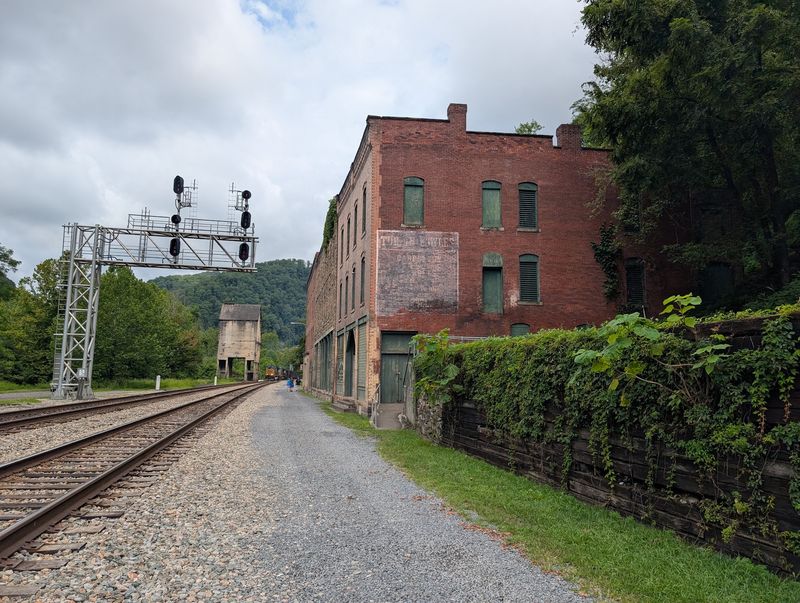
Picture a handful of brick buildings standing shoulder to shoulder along a set of railroad tracks, with a wide river rolling past and steep green hills rising on every side. That scene is the whole town, more or less, and it sits deep inside the New River Gorge in Fayette County, West Virginia.
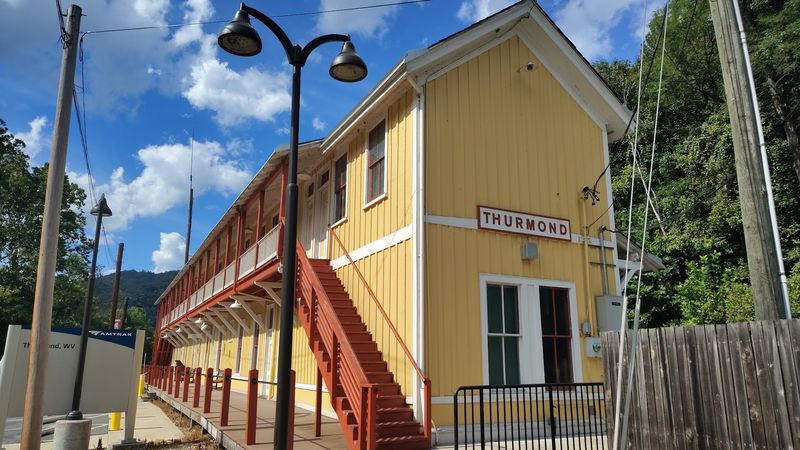
At the heart of it stands an old train depot that now serves as a National Park Service visitor center. The park lists it as part of New River Gorge National Park and Preserve, and it is one of the most remote stops in the entire park.
Visitors often describe the place as a ghost town, though that label is only half right.
People still pass through here. Freight trains rumble by daily, and passenger trains still stop on certain days of the week.
A few residents remain, and the old storefronts carry signs and storyboards that explain what each building once held.
What makes the spot special is the contrast. Today you will mostly hear birds, the river, and the occasional train horn.
A century ago, this same stretch of track was reportedly one of the busiest and rowdiest places in the state, and the tales from those years have never really gone away.
Captain Thurmond and His Strict House Rules
Every good story needs a strong character, and the town got one right at the start. Captain William D.
Thurmond, a man known for firm principles, founded the community during the coal and railroad boom of the late 1800s.
He had clear ideas about how folks should behave on his land. Gambling and other activities he considered unsavory were banned outright on his side of the property.
For a while, that gave the young town a reputation as a tidy, well-behaved place where railroad men and miners could live and work.
Coal was pouring out of the surrounding hills, and the railroad needed a hub to handle it all. Trains stopped here for water, coal, and crews, and the town quickly grew into a key link along the line.
Back then, getting in or out mostly meant riding the rails, since roads were scarce.
Here is the funny part, though. The captain’s strict rules only covered his own land.
Just across the New River, another landowner was watching all those hardworking men with money in their pockets, and he had a very different plan in mind. That neighbor is where the wild side of the story truly begins.
The Dun Glen Hotel and Its Legendary Card Game
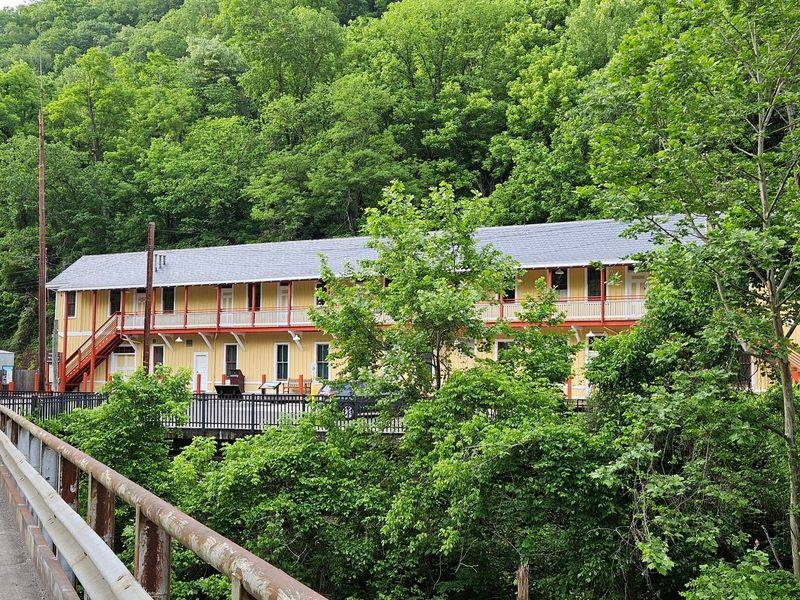
Thomas McKell saw an opportunity, and in 1901 he grabbed it. Just outside Captain Thurmond’s jurisdiction, he built the Dun Glen Hotel, a grand place sometimes spelled Dunglen, designed to give visiting workers and travelers a place to unwind.
And unwind they did. The hotel reportedly drew crowds for elaborate gambling operations, and the town soon picked up nicknames like the Little Monte Carlo of the East and the Dodge City of the East.
Those are big titles for a place with no real road in.
The most famous tale involves a poker game. According to accounts passed down over the years, one game ran continuously for about 14 years, with players coming and going as the cards kept moving.
The story is often linked to Ripley’s Believe It or Not, which reportedly recognized it as a record.
Imagine sitting at a table that never went cold for over a decade. Shifts changed, seasons changed, and the chips kept sliding.
Whether every detail is exactly true or polished by retelling, it has become one of the favorite yarns locals share. The hotel itself, sadly, burned in 1930 and was never rebuilt, so only the stories remain.
Outlaws, Hideouts, and a Famous Old Saying
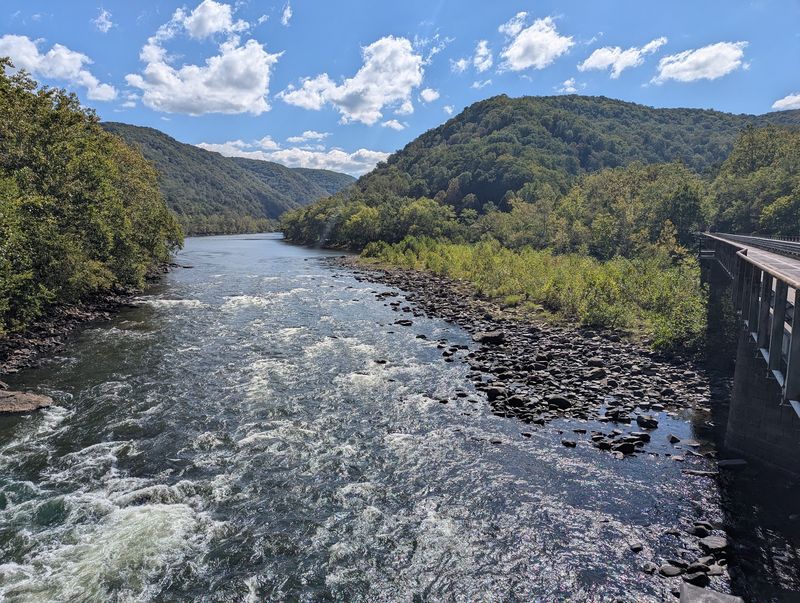
Ask around about the old days, and you will likely hear one line repeated with a grin. Folks used to say the only difference between Hell and Thurmond is that a river runs through Thurmond.
That saying tells you plenty about the town’s reputation. Its remote setting, with almost no road access during the busiest years, reportedly made it an appealing retreat for people trying to stay a step ahead of the law.
With trains bringing strangers in all day, a newcomer could blend right into the crowd.
A rough section of the community called Ballyhack, sometimes spelled Balahack, became especially well known for its lively, noisy atmosphere. Stories of frequent scuffles and strange happenings circulated for generations, and some of them were surely stretched a bit around the supper table.
That is part of the charm, honestly. Nobody keeps a perfect record of who was hiding where in a boomtown, so the legends filled the gaps.
As statewide Prohibition arrived in West Virginia in 1914, the Dun Glen’s rowdy business reportedly slowed down, but the reputation for mysterious visitors and shady characters lingered. Today, those tales are told with the same twinkle grandparents use for any good mountain story.
Money, Fire, and a Slow Fade
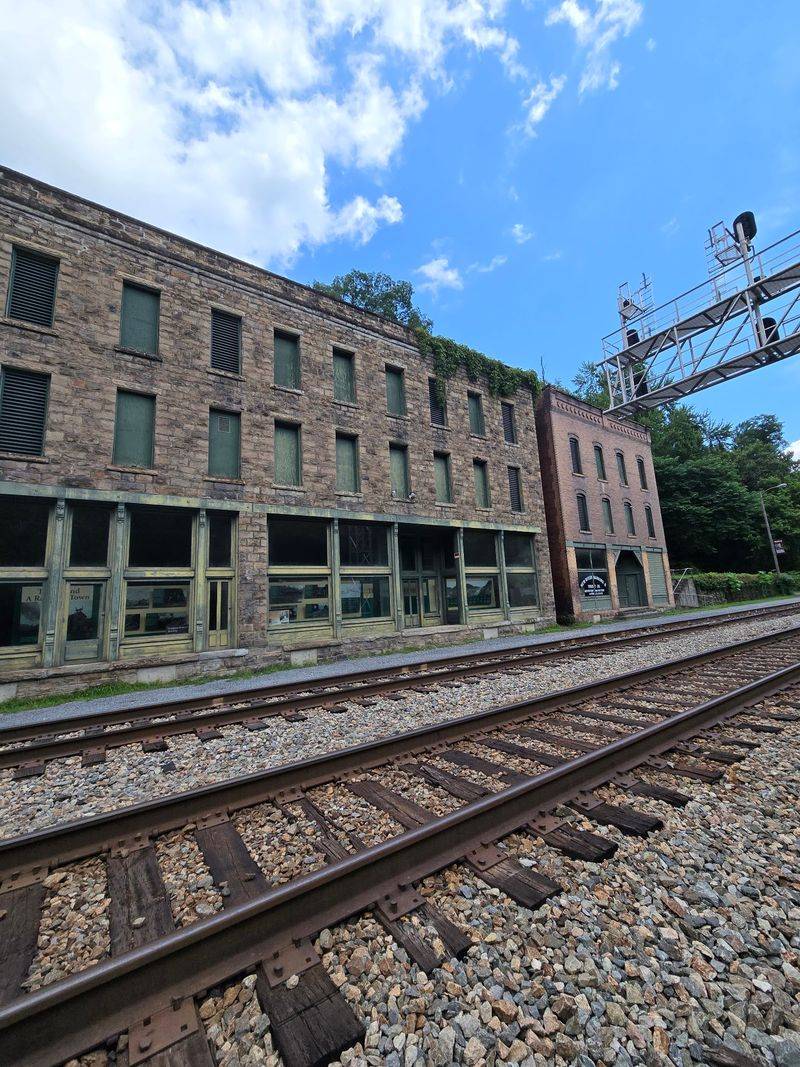
Hard to believe now, but this little strip of buildings once handled serious money. Visitors who read the displays often come away surprised by figures showing that freight revenue passing through here around 1910 reportedly topped what much larger cities like Cincinnati brought in.
Coal was king, and the railroad was the crown. Banks, stores, and offices lined the tracks, and many of those structures still stand.
Walking past the former bank buildings, you can almost hear clerks counting bills while engines hissed outside.
The good times did not last forever. Prohibition took the steam out of the hotel crowd in 1914, and a fire in 1922 damaged parts of the community.
Then the Dun Glen went up in flames in 1930 and never returned. The Great Depression hit next, squeezing the coal business hard.
The final blow came quietly. When railroads switched from steam locomotives to diesel in the mid-1900s, trains no longer needed to stop for water and coal service so often.
Crews thinned out, businesses closed, and families moved on. It is the kind of boom-and-bust tale so many West Virginia towns share, told here with a backdrop that is still remarkably intact.
Inside the Restored Depot
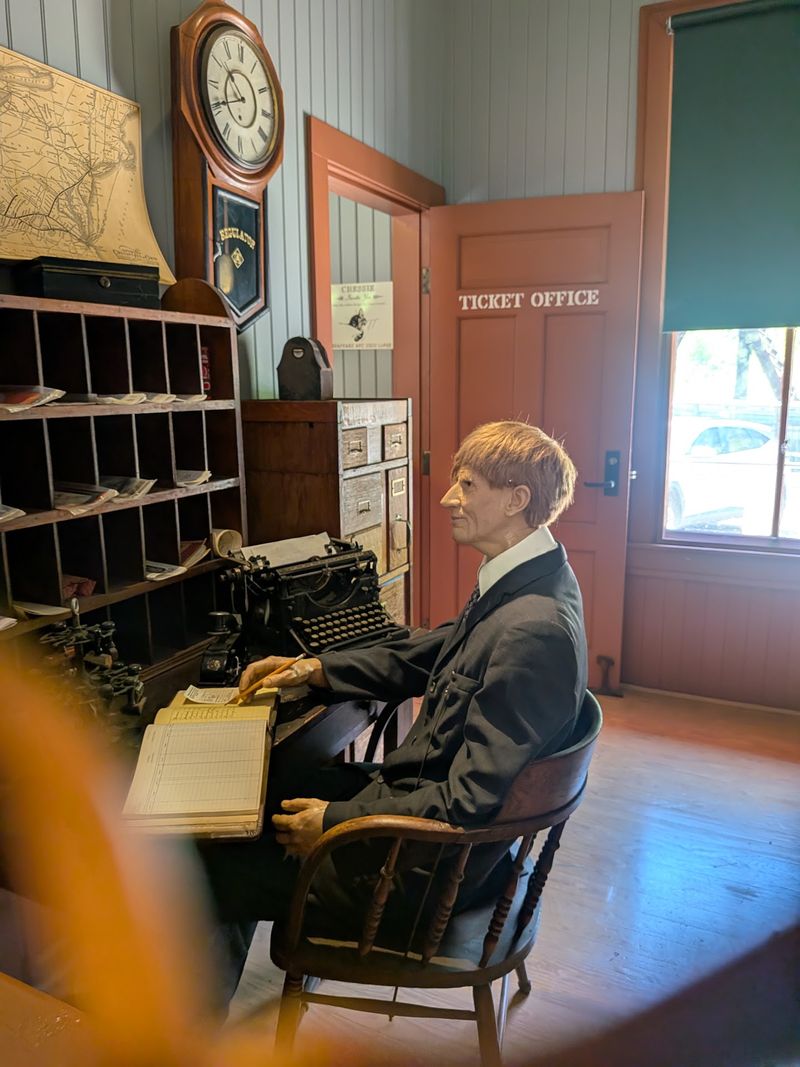
Step through the depot door and the past gets surprisingly personal. The National Park Service has restored the building, and visitors regularly praise how clean and well kept it is.
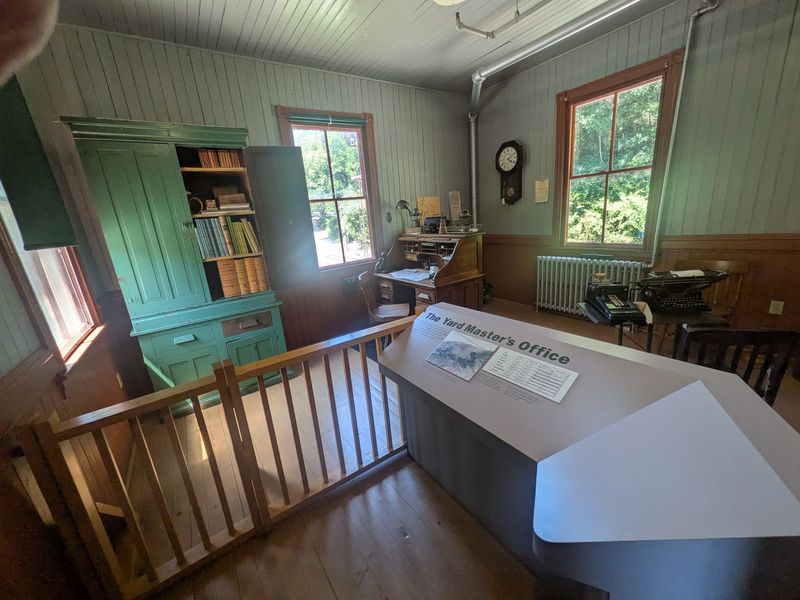
The museum is small but packs a punch. Exhibits feature artifacts from the town’s heyday, and recreated railway offices come complete with costumed mannequins that look ready to punch your ticket.
Some guests say the mannequins are the best part, adding a playful touch that kids seem to love.
There are two floors, with an outside stairway and an elevator inside, which is a nice help for anyone with tired knees. Restrooms are available, and some visitors mention a few snacks and drinks on hand, though others noticed none, so packing your own is a smart move.
Don’t skip the park bookstore. It reportedly stocks fun train-themed items you won’t find at the other New River Gorge bookstores, plus little trinkets and toys that make easy souvenirs for grandkids.
Friendly staff round out the experience. Many people mention the rangers by name for being patient and full of stories.
If you love hearing local history from someone who clearly enjoys sharing it, this little building delivers.
Ranger Walks and Rumbling Trains
Eleven o’clock is the magic hour. During the open season, ranger-led walks reportedly start every day at 11 AM, guiding guests through the town’s rise and fall one building at a time.
Visitors often say a good ranger turns the walk into a highlight, mixing facts with the kind of storytelling that makes the old gamblers and railroad men feel real. Missed the tour?
No worries. You can grab a self-guided walking tour brochure and wander at your own pace, reading the storyboards placed in old storefront windows.
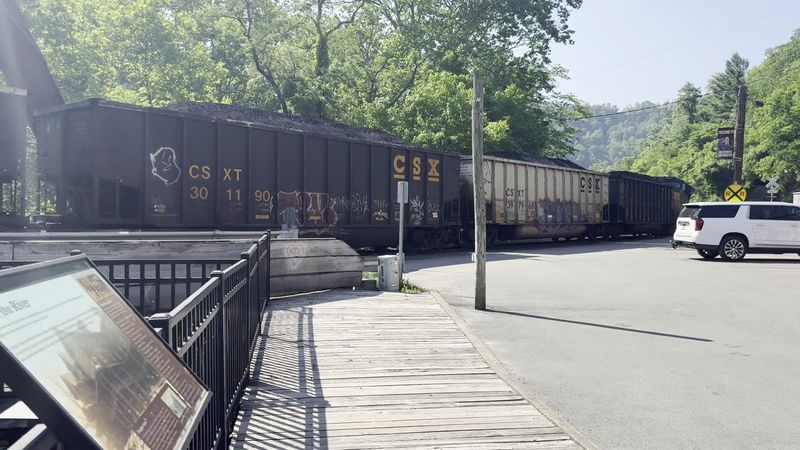
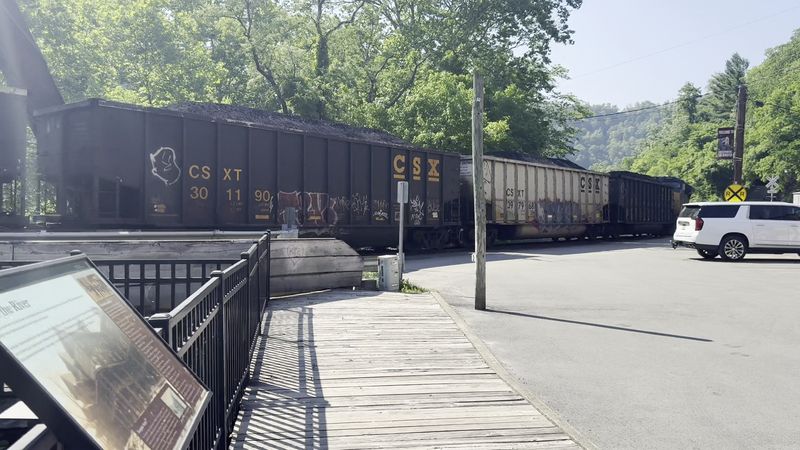
Then there are the trains. Freight trains roll through every single day, and the Amtrak Cardinal still stops here three days a week on its route linking Washington, D.C., and Chicago.
Watching a long coal train crawl past these century-old buildings is a thrill for all ages.
A friendly warning, though. Those tracks are active and belong to CSX, so they are private property.
Stay off the rails and enjoy the view from a safe spot.
Some folks even mention a long train blocking the road for a while. Instead of grumbling, many simply wander over to the depot and make a visit of it.
Getting There: Hours, Roads, and Parking
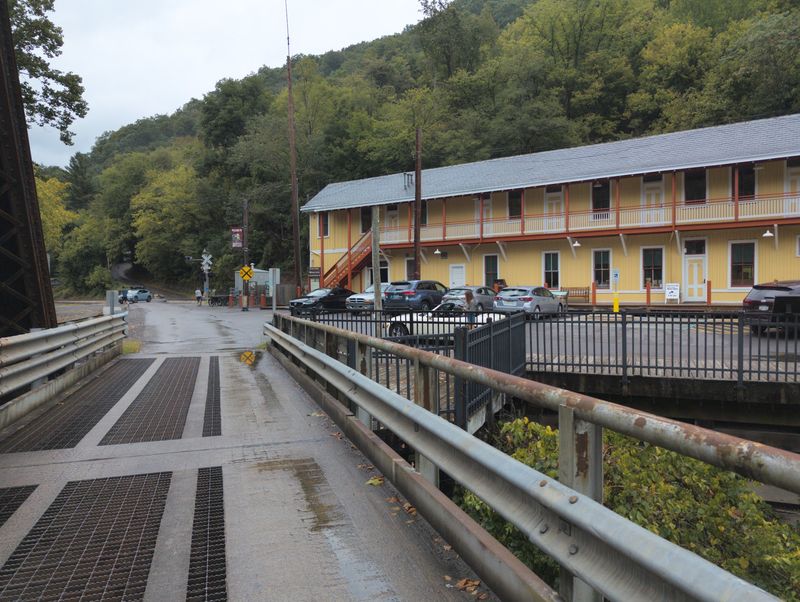
Plan for an adventure on wheels. The town sits well off the beaten path, and visitors often describe a long, winding drive on a narrow road beside the railroad.
The road is paved the whole way, but it is not friendly to camper vans or larger rigs.
Signs could be clearer, according to some travelers, so a printed map or saved directions are a good idea. Near the end, you will cross a single-lane bridge over the river, one car at a time, or you can park and walk across.
Parking is available across the bridge, though it can fill up, so arriving early is wise. On your way out, keep an eye out for Dunloup Falls along the roadside, a lovely bonus stop.
Listed hours run from 10 AM to 5 PM daily. Here is the catch.
The depot itself is typically open only from Memorial Day weekend through Labor Day weekend, and some visitors have arrived to find it closed, so check the National Park Service site before heading out.
The address is Thurmond, WV 25936, inside New River Gorge National Park and Preserve. Even when the doors are locked, the outdoor displays are open to explore.
Worth the Winding Road?
Honest answer? It depends on what makes your heart happy.
If you love history, trains, and the kind of quiet that lets your imagination run, this place is a gem.
Plenty of visitors call it a must-see for nature lovers and history fans alike, praising the river views and the old-time elegance of the buildings. Others admit there is not a lot to browse, and a couple of hours is usually plenty.
Folks on a tight schedule who are not big on history might choose a closer stop instead.
For retirees and families looking for an affordable day out, though, it checks a lot of boxes. The outdoor walk costs nothing, the scenery is free, and grandkids tend to light up when a train comes thundering through.
Bring a picnic, since food options are limited. Wear comfortable shoes, carry water, and leave time to just sit and listen to the river.
Mostly, come for the stories. The gamblers, the legendary card game, the strangers stepping off trains, and the town that faded but never quite vanished.
Do you have a family memory of this corner of the gorge? It might be the best story of all.
