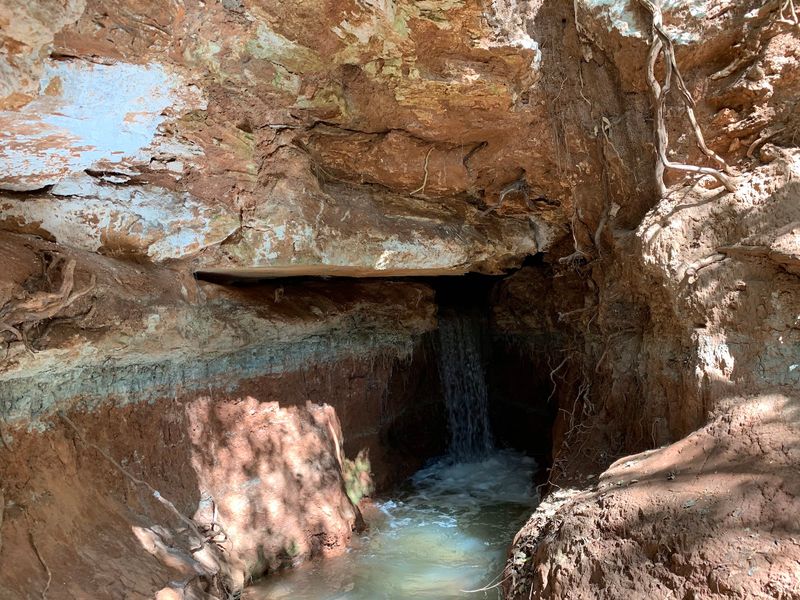
I pulled off the highway expecting a quick leg stretch and maybe a gas station snack. Instead, the road dipped into a canyon of rusty red cliffs, and cold spring water was gurgling right out of the rock.
Oklahoma has a way of tucking its best surprises behind wheat fields and plain little signs. This one has deep Cheyenne roots, New Deal stonework, and a spring that has not stopped flowing in living memory.
A Red Rock Canyon in the Middle of Wheat Country
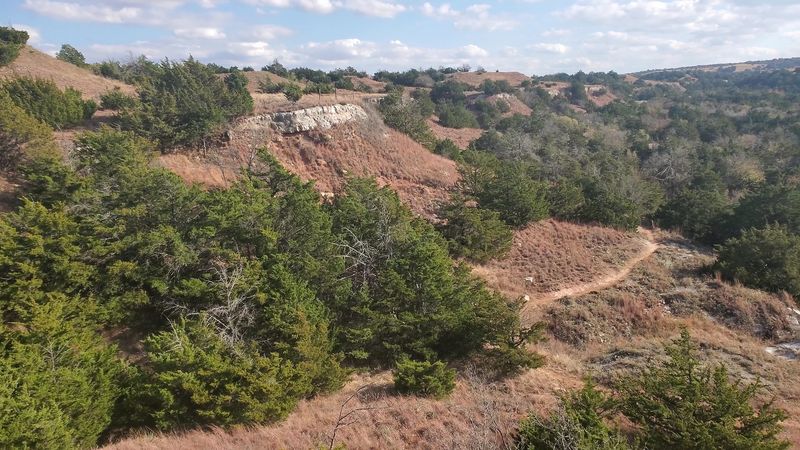
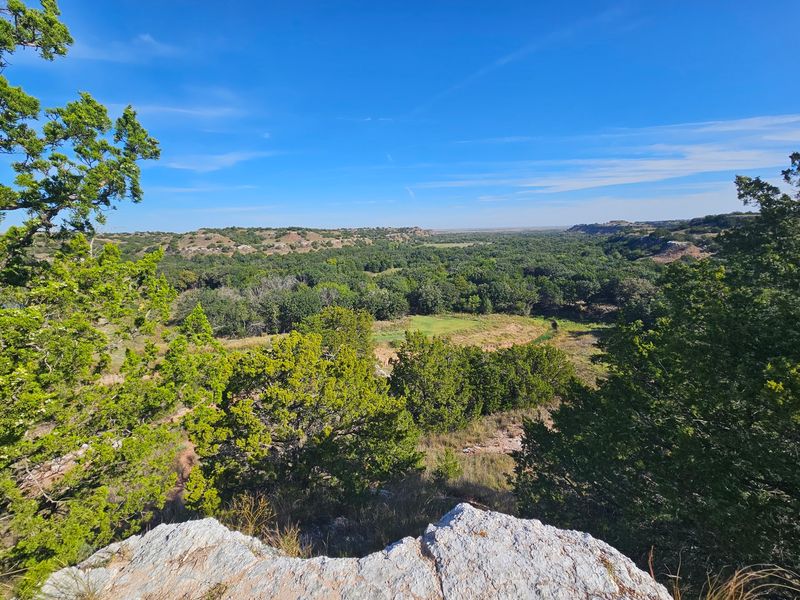
Picture miles of flat farmland, grain elevators, and sky. Then, almost without warning, the ground breaks open into a canyon streaked with red and white rock.
That sudden drop is the first thing most people remember about Roman Nose State Park.
The park sits in western Oklahoma, a few miles north of the small town of Watonga. It is one of the state’s original seven state parks, and it has welcomed families since 1937.
Day use is free, and the gates are generally open from dawn to dusk all year.
Visitors often call it one of the most underrated spots in the state. Some guess it stays quiet simply because Oklahoma is not famous for its state parks, at least not yet.
Folks from Yukon, Edmond, and the OKC metro mention that it is only about an hour to an hour and a half away, which puts it squarely in easy road trip territory.
Inside, you will find natural springs, hiking trails, a rustic lodge, cabins, campsites, teepees, a spring-fed pool, and an 18-hole golf course draped along the canyon rim. It is a lot of variety packed into one small corner of red-bed country.
Ancient Seabed Turned Gypsum Cliffs
Over 220 million years ago, an inland sea covered this part of the continent. When it slowly dried up, it left behind thick layers of salt, gypsum, anhydrite, and dolomite.
Those leftovers are the cliffs you see today.
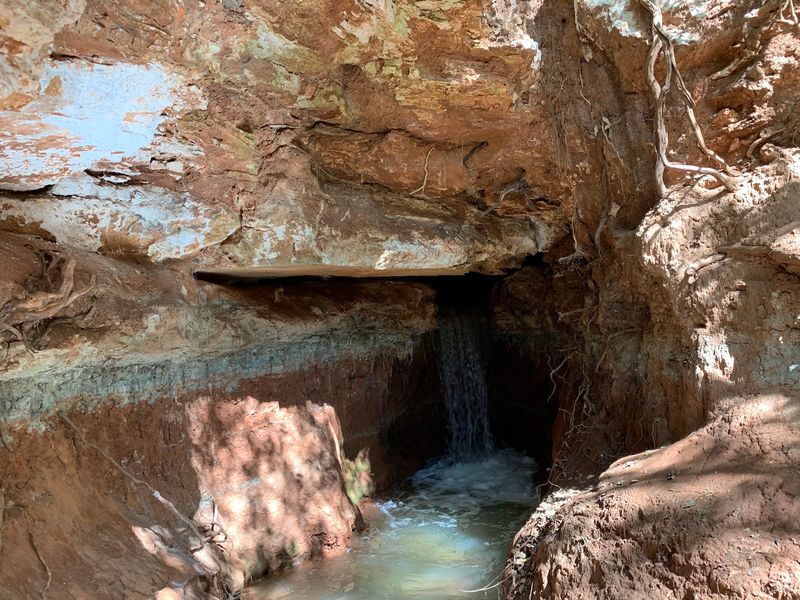
Geologists call this region Oklahoma’s red-bed country. The deep red comes from iron-rich soil and sandstone, while the bright white bands are gypsum, a soft mineral that dissolves slowly in water.
That softness is exactly what carved the canyons and opened the paths for spring water to flow.
Timing matters if you want the best show. At sunrise and sunset, the canyon walls seem to light up in shades of orange, pink, and cream.
Photographers and casual phone snappers alike tend to linger at the overlooks during those hours.
Kids usually love hearing that they are standing on the floor of an old sea. It turns a simple walk into a kind of time travel lesson, no textbook required.
Ask them to spot the shiny gypsum crystals in the rock, but remind everyone to leave the stones where they found them so the next family can enjoy the same view.
Chief Henry Roman Nose and the Cheyenne Story
Long before golf carts and campsites, this canyon was a home. The park carries the name of Henry Roman Nose, known as Woqini, a Southern Cheyenne council chief and warrior who lived from 1856 to 1917.
In 1891, he chose 640 acres around this canyon as his land allotment. It is easy to understand why.
Steady fresh water, sheltering cliffs, and wooded draws made it a wise and beautiful place to settle.
Today, a historical marker inside the park shows where his teepee and dug-out once stood. Standing there, you can look out over the same red walls he saw each morning.
It is a quiet, reflective stop that many visitors almost miss, so look for it on purpose.
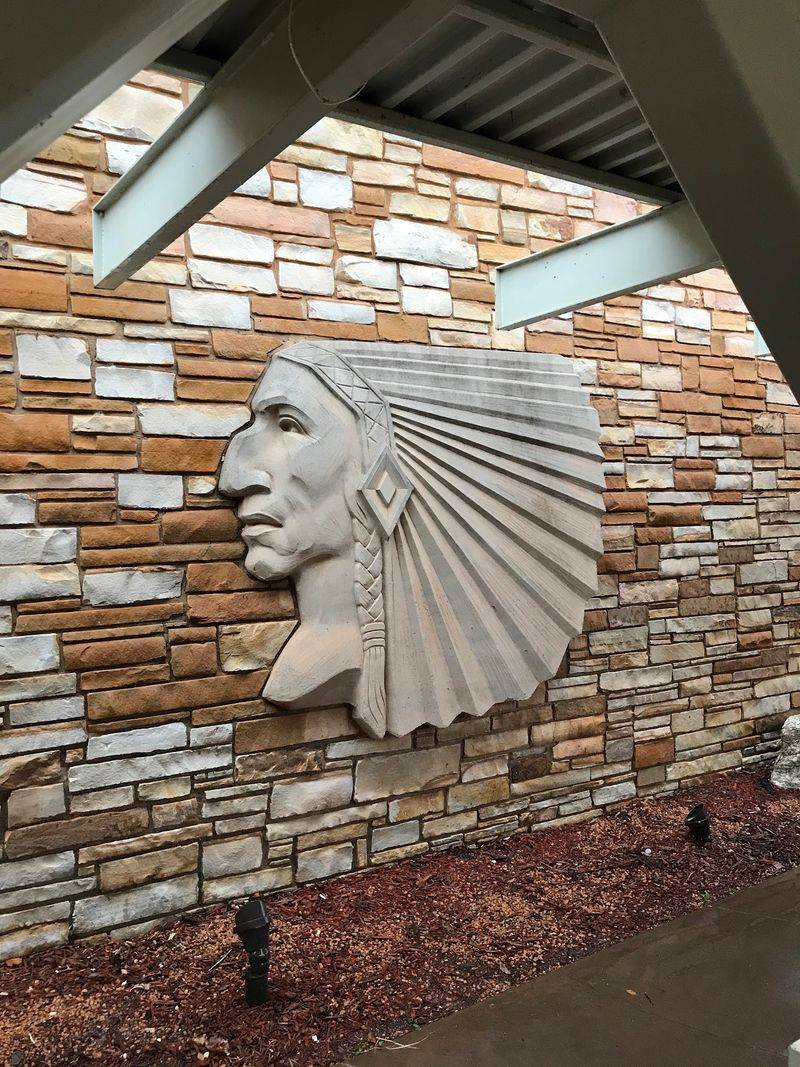
The Cheyenne and Arapaho Tribes remain a living presence in this part of Oklahoma, and that connection shows up inside the lodge too. Returning guests mention the local touches that honor Cheyenne and Arapaho culture in the decor.
For families, this is a gentle way to talk about Oklahoma’s tribal nations as neighbors with ongoing stories, not just names from the past. The teepee rentals nearby make that conversation feel even more real.
The Spring of Everlasting Waters
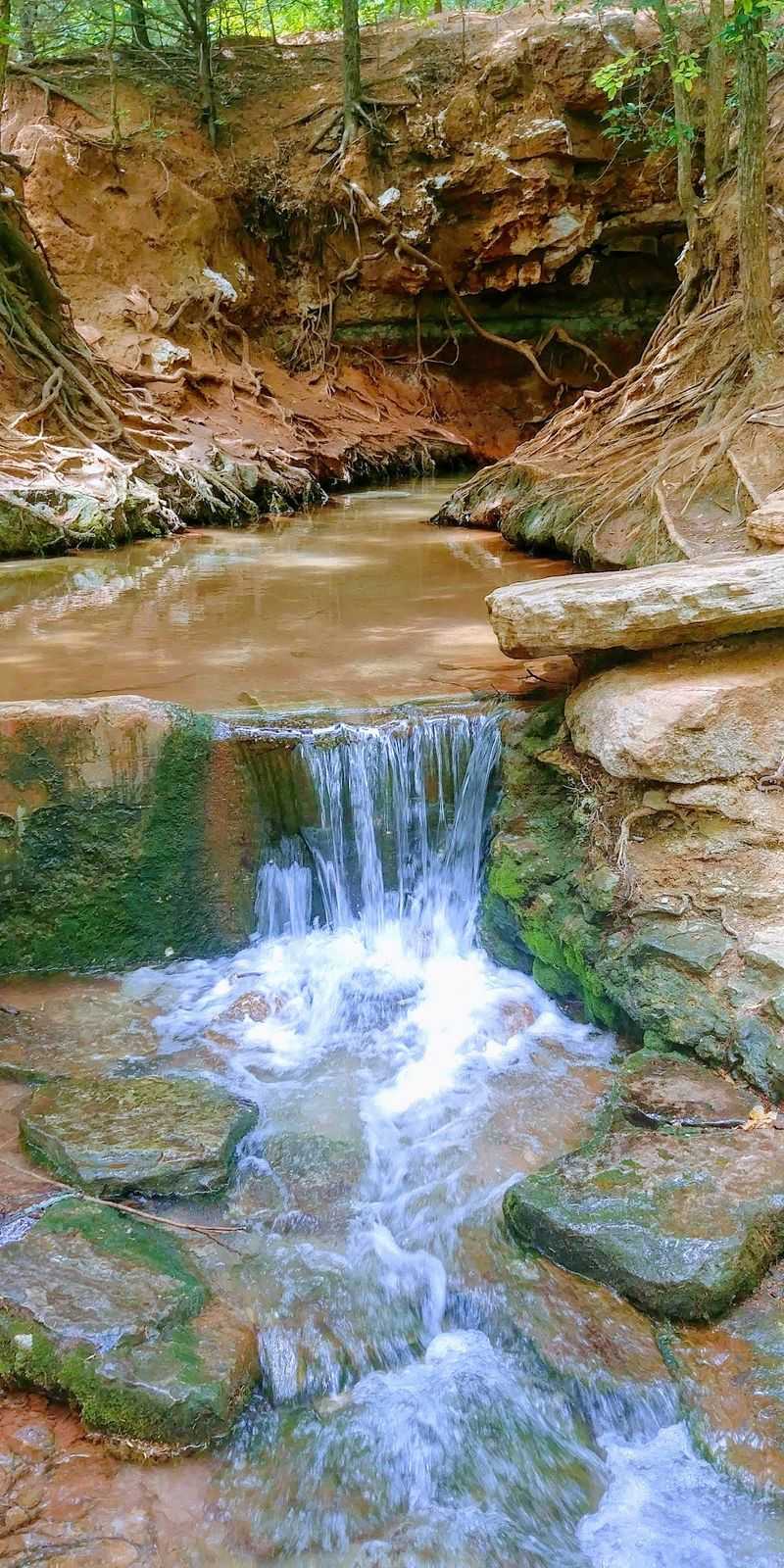
Six hundred gallons a minute. That is roughly how much water pours from the Spring of Everlasting Waters, the best known of the park’s three natural springs.
The water picks up minerals as it travels through the gypsum, then bubbles out cool and clear. Along the Three Springs trail, there is a freshwater pool where the temperature hovers around 55 degrees all year.
On a 100-degree July afternoon, dipping your feet in feels like a small miracle.
Natural springs come up more than almost anything else when people talk about this park. Some describe small waterfalls and a creek trickling down the canyon.
Others note that parts of the flow now run along a concrete channel, so it feels a bit more tamed than wild.
Finding the springs can take some effort. A few visitors say signs were hard to follow and certain paths were closed, so asking at the lodge before you set out may save frustration.
Even so, there is something calming about water that simply keeps coming, season after season. It fed Chief Roman Nose’s homestead, it fills the swimming pool today, and it still keeps the canyon green when the prairie above turns brown.
Stonework from the Civilian Conservation Corps
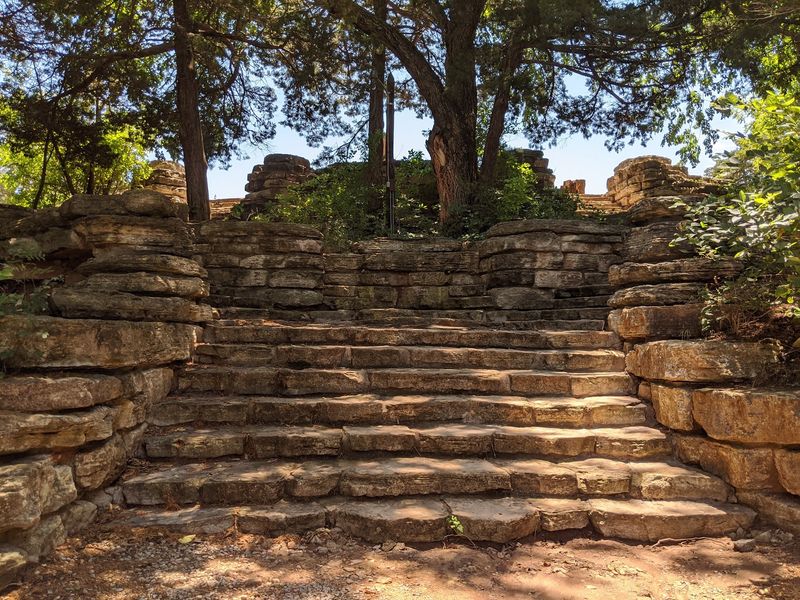
Run your hand along the old rock walls and you are touching the work of young men from the 1930s. The Civilian Conservation Corps, part of President Franklin Roosevelt’s New Deal, built much of this park by hand.
They used native lumber and local dolomite rock, which is why the buildings blend so naturally into the canyon. The original swimming pool, bathhouse, and picnic areas came from their efforts, and many of those pieces still stand strong today.
The public pool is the star of that legacy. Fully restored and fed by the natural springs, it is one of the coldest pools in the state, so expect a gasp on the first jump.
It typically opens from Memorial Day through Labor Day for a small fee, and one pool area has offered a water slide and climbing wall.
A heads up for midweek travelers: some guests found the pool open only on weekends, so call ahead before promising the kids a swim.
Grandparents often enjoy pointing out the craftsmanship here. Nothing flashy, just sturdy, honest work that has lasted nearly ninety years and still gets used every summer.
Trails, Teepees, and a Canyon-Rim Golf Course

Sleeping in a teepee under a western Oklahoma sky is the kind of thing kids talk about for years. Teepee rentals usually run from April through October, with rates around $65 to $100 a night.
Hikers have options too, though fewer than in the past. The paved ADA trail from the campground to the lodge stays open and is friendly for wheelchairs and strollers.
From the lodge, it continues toward Inspiration Point, where the climb gets steep with sharp ups and downs. One family logged five miles in a day, even with closures elsewhere.
Golfers get something unusual. The 18-hole course plays over and beside canyons, and it has looked to be in excellent shape.
Locals joke that if your ball lands deep in the rough, you should drop another and leave it alone.
That joke holds real advice. Rattlesnakes, including diamondbacks, live in this terrain, so keep children and pets close and stay on cleared paths.
Horseback riding, hayrides, mountain biking, and mini golf also show up in visitor chatter. Stables and rides work by reservation and may be seasonal, so check availability before you plan the whole trip around them.
Honest Talk About the Dry Lakes
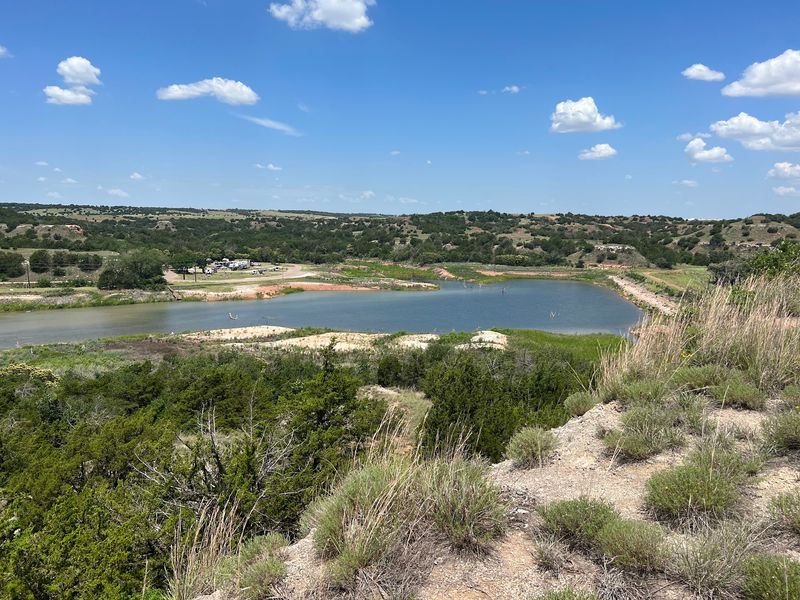
Here is the part the old postcards will not show you. Both Lake Watonga and Lake Boecher have been largely dry in recent years.
Watonga Lake was drained for dam repairs, and a sinkhole later affected the smaller lake, according to what park staff have told guests. Visitors describe paddle boats resting on grassy ground and just a thin channel of water running through.
Fishing, kayaking, and paddle boating are effectively on pause until repairs finish, and no firm reopening date has been shared.
Some travelers arrived expecting a lake weekend and left disappointed. Others came for the canyon, springs, and quiet, and had a wonderful time anyway.
The difference usually comes down to expectations.
A few nearby closures followed. The lodge restaurant and general store have had shifting hours, and some trails near Lake Boecher closed due to erosion.
The best move is simple: call the lodge at 405-295-2770 before booking and ask what is open that week. Ask about trails, the pool, the store, and the stables.
With a clear picture, you can plan a trip around what is actually running and skip the surprise.
Lodge Rooms, Cabins, and Cheap Campsites
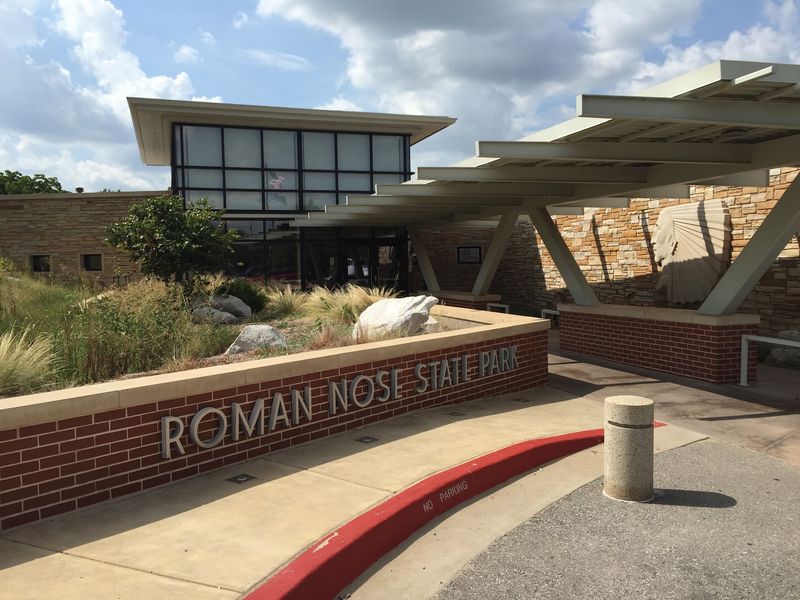
Budget travelers, take note. Tent and RV sites run roughly $14 to $25 a night, which makes a family weekend here about as affordable as Oklahoma travel gets.
The Roman Nose Lodge first opened in 1956 and has been modernized with 22 rooms in a mid-century style. Rooms offer satellite TV, mini fridges, coffeemakers, free Wi-Fi, and views of the park.
One guest who last visited in 1977 for family reunions found the same lodge, freshly updated, with Cheyenne and Arapaho touches throughout.
Eleven cabins add kitchens and fireplaces, and many allow pets, though the Pioneer Cabin does not. Guests mention clean duplex-style units, generous concrete driveways, and backyard fire pits, grills, and picnic tables.
Bringing your own pillows may help, since some found the beds firm.
Beaver Dam Campground earns praise for clean bathrooms and showers. Showers there use tokens, and some shared water hookups sit far from sites, so packing a long hose is smart.
Staff get warm words again and again. Front desk folks have gone out of their way to help guests, which goes a long way when you are far from town.
Planning the Drive and a Fair Verdict
Point the car toward 3236 OK-8A, Watonga, and you are about an hour from the OKC metro. Parking is free, day use costs nothing, and the park stays open from dawn to dusk year round.
Spring and fall bring the most comfortable weather for hiking. Summer heat in western Oklahoma can be intense, and storm season deserves a quick forecast check.
Clear nights here are dark enough for stargazing and astrophotography, a real treat for city families.
Cell service is spotty. Verizon tends to work best, while AT&T users report weak signal, though Wi-Fi calling works at the lodge and pro shop.
Download maps before you arrive.
Hungry? The Lookout Kitchen in the lodge has served comfort plates like chicken-fried steak, mashed potatoes, and fried okra, though hours have changed, so confirm first.
In Watonga, the Eagle’s Nest Restaurant offers catfish baskets and burgers.
So, is it worth it? If you come for red canyons, cold springs, Cheyenne heritage, and cheap camping, it is a lovely, peaceful escape.
If your heart is set on boating, wait for the lakes to return. Either way, this canyon has a story worth hearing.
