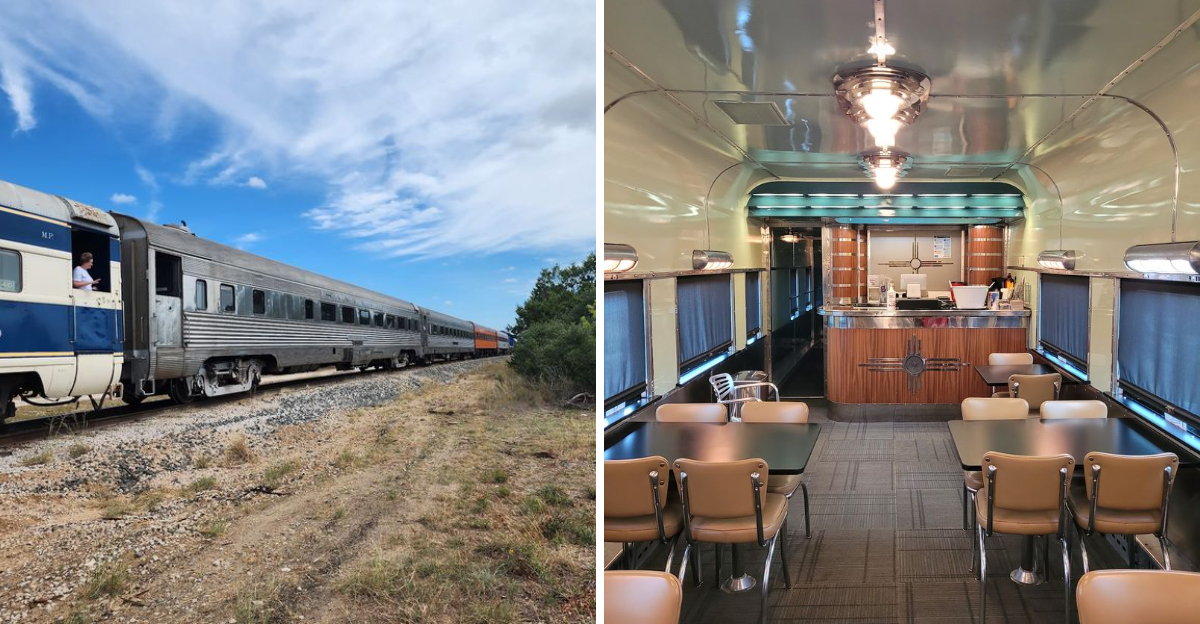
Road trips are great, but they rarely come with restored railcars from the 1930s through the 1950s and the satisfying excuse to let somebody else handle the driving.
This Texas excursion railroad rolls through Hill Country scenery aboard climate-controlled vintage passenger cars, crossing a trestle over the South San Gabriel River and winding through countryside that looks much better when nobody has to watch traffic.
Its signature full-day ride covers a 66-mile round trip and includes a two-hour stop before passengers climb back aboard for the return journey. The organization has been recreating historic passenger rail travel since the early 1990s, so the experience feels like part day trip and part moving museum.
Texas scenery is already good from a car window, but seeing it from an old railcar gives the whole afternoon considerably more personality.
The Hill Country Flyer And Its Full Day Of Rolling Scenery
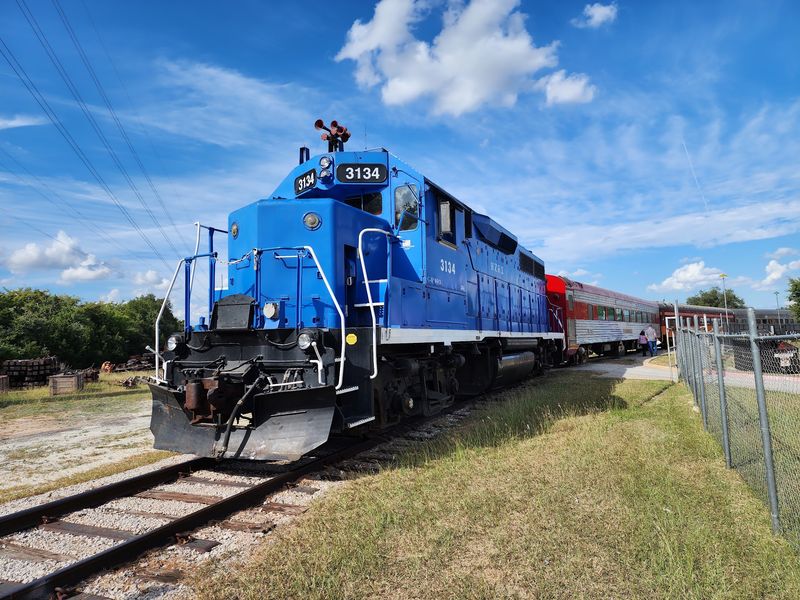
Sixty-six miles of track separate Cedar Park from Burnet, and the Hill Country Flyer takes its sweet time covering every one of them. Plan on giving up the whole day.
That turns out to be the point.
The round trip includes a two-hour break in Burnet, which means the ride splits neatly into two long stretches of countryside with a small-town intermission in the middle. Morning light hits the hills differently than afternoon light does, so the return leg genuinely looks like a different route.
Boarding happens at the Cedar Park Depot, and arriving early makes everything easier. Luggage racks fill fast, the platform gets busy, and finding a window seat you actually like is worth a few extra minutes.
Track speed stays low, somewhere in that unhurried range where you can pick out individual cattle, spot hawks on fence posts, and read the faded lettering on old barns. Phones come out constantly, though the best moments tend to happen when everyone forgets to photograph them.
Bring water and a light jacket. Railcars can swing between warm and breezy depending on where the sun lands, and the ride is long enough that comfort matters more than you’d expect.
What sticks with most riders isn’t one single view. It’s the rhythm of the whole thing, the steady sway, the horn at every crossing, and the way conversation gets easier when nobody is driving.
Bertram Flyer, The Shorter Ride With Big Payoff
Not everyone has a full day to hand over, and the Bertram Flyer exists for exactly that reason. Three hours, forty-four miles, done.
It still hits the highlights.
Departure comes from Cedar Park just like its longer sibling, but the turnaround happens at the 1912 Bertram Depot with a fifteen-minute layover. Short, yes, though enough time to stretch, snap a few photos of the old building, and watch the crew work.
Scenery-wise, riders aren’t missing much. Short Creek Canyon shows up on this route, and so does the long wooden trestle over the South San Gabriel River.
Both are the kind of views that make people quietly stop talking.
Families with younger kids often gravitate toward this option, and it makes sense. Three hours sits right at the edge of a small child’s patience, while six can push past it.
The Duffy-Shamrock communications mast also appears along the way, a strange and towering landmark that always sparks a round of questions. Worth looking up before you go if you like knowing what you’re seeing.
Afternoon departures work well for anyone combining the ride with other Cedar Park plans. Morning people might prefer the earlier slots when light stays soft.
Either way, the shorter run delivers the same clatter, the same open windows in certain cars, and the same feeling that you’ve stepped sideways out of ordinary time for an afternoon.
Crossing The Wooden Trestle Above The South San Gabriel River
Roughly three hundred feet of timber carry the train over the South San Gabriel River, and the sound changes the instant the wheels hit it. Steel on steel turns into something deeper and hollower.
Everyone notices.
Looking straight down from a window seat gives a clear view of the riverbed below, sometimes running clear and green, sometimes reduced to pale limestone and shallow pools depending on the season. Both versions photograph beautifully.
Crew members usually give a heads-up before the crossing, which helps if you want your camera ready. The approach is quick, so waiting until you feel the change means you’ve already missed half of it.
Wooden trestles like this one have grown rare across the country, replaced by concrete and steel on most active lines. Riding across one feels like touching a piece of railroading that’s slowly disappearing.
Best seats depend on which direction you’re heading, and honestly either side offers something. One gives the river bend, the other gives the tree line dropping away.
There’s a small thrill in the height, nothing scary, just enough to make your stomach register the drop.
Kids press their faces to the glass here more than anywhere else on the route. Adults quietly do the same thing and pretend they aren’t.
Coming back across on the return trip lands differently, with lower light and longer shadows stretching over the water.
Short Creek Canyon And The Narrow Rock Walls
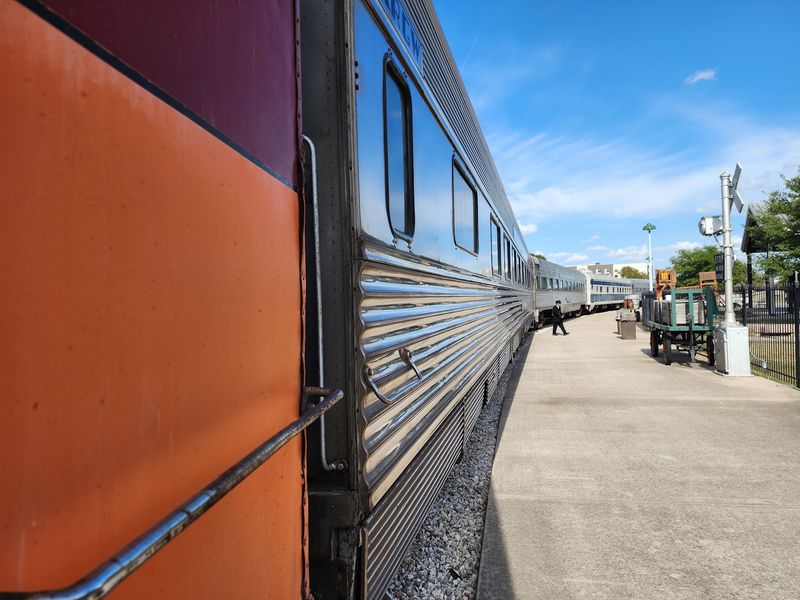
Limestone closes in on both sides at Short Creek Canyon, and for a few minutes the wide-open Hill Country vanishes completely. The change is abrupt.
That’s what makes it fun.
Layered rock walls rise close enough to the cars that you can pick out individual fossil lines and pockets where water has worn the stone smooth. Cedar and scrub cling to ledges that look far too thin to hold anything.
Sound behaves oddly in there too. The locomotive’s noise bounces back off the rock and fills the car in a way it doesn’t anywhere else on the line.
Photographers tend to struggle here because of the contrast between shaded canyon and bright sky above. Switching to a wider shot usually works better than trying to capture detail.
Cutting a rail line through this kind of terrain took serious effort, and the grade tells that story without anyone needing to explain it. Crews on board often share a bit of background as the train enters.
Wildflowers appear along the rocky edges in spring, tucked into cracks where soil collects. Late fall brings a different palette, drier and more golden.
The passage doesn’t last long, maybe a couple of minutes, and then the landscape opens back up into ranch land and big sky.
Somehow that quick contrast is what people describe most when they talk about the ride afterward.
Rippling Stream, A 1949 Budd Company Beauty
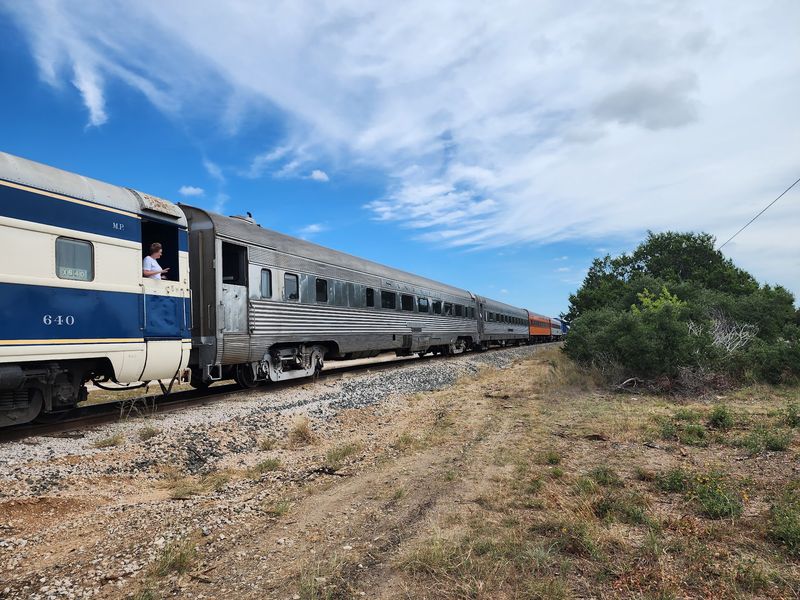
Built in 1949 by the Budd Company for the New York Central System, the Rippling Stream carries a name that sounds more like a poem than a railcar. Step inside and the era makes sense immediately.
An open lounge anchors one section, with private compartments running along another portion of the car. Furnishings, fixtures, and finishes reflect a time when long-distance rail travel was treated as an event rather than a chore.
Volunteers have poured enormous care into keeping this car in shape, and the details show it. Hardware gleams, upholstery holds its shape, and the windows are big enough to make the scenery feel like it’s happening in the room.
Riding in a car like this changes the pace of the trip. Conversation gets easier, people settle in, and the miles pass without anyone checking the time much.
Fans of mid-century design find plenty to study, from the stainless construction techniques Budd pioneered to the way space was cleverly divided for privacy.
Availability varies by excursion and service level, so checking ahead is smart if riding in a specific car matters to you.
What lingers isn’t just the polish. It’s knowing that this same car once carried passengers across a completely different America, and it’s still rolling.
Not many objects from 1949 still do their original job. Fewer still do it this gracefully.
The Cedar Park Car And Its Stainless Steel Shine
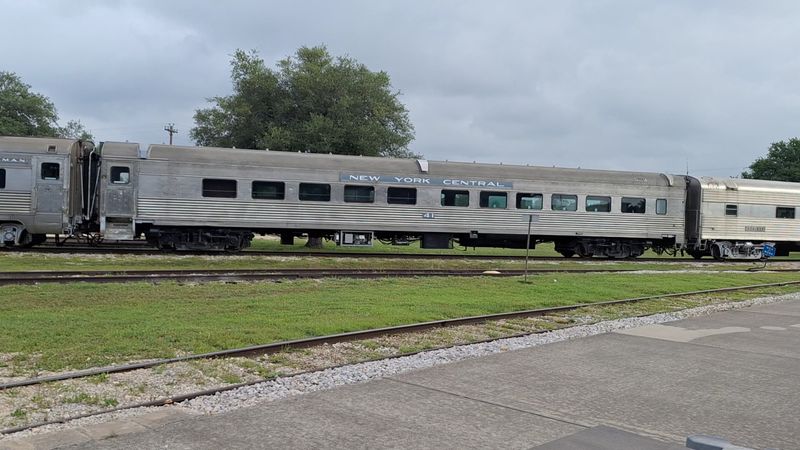
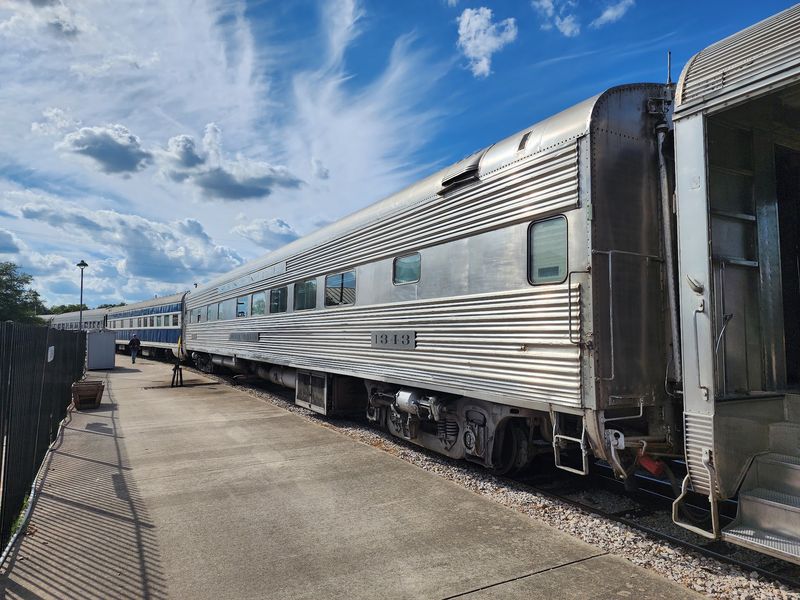
Sunlight does something spectacular to fluted stainless steel, and the Cedar Park Car proves it every single trip. Built by the Budd Company in 1946, the exterior still throws off that ribbed silver glow that defined an entire generation of passenger trains.
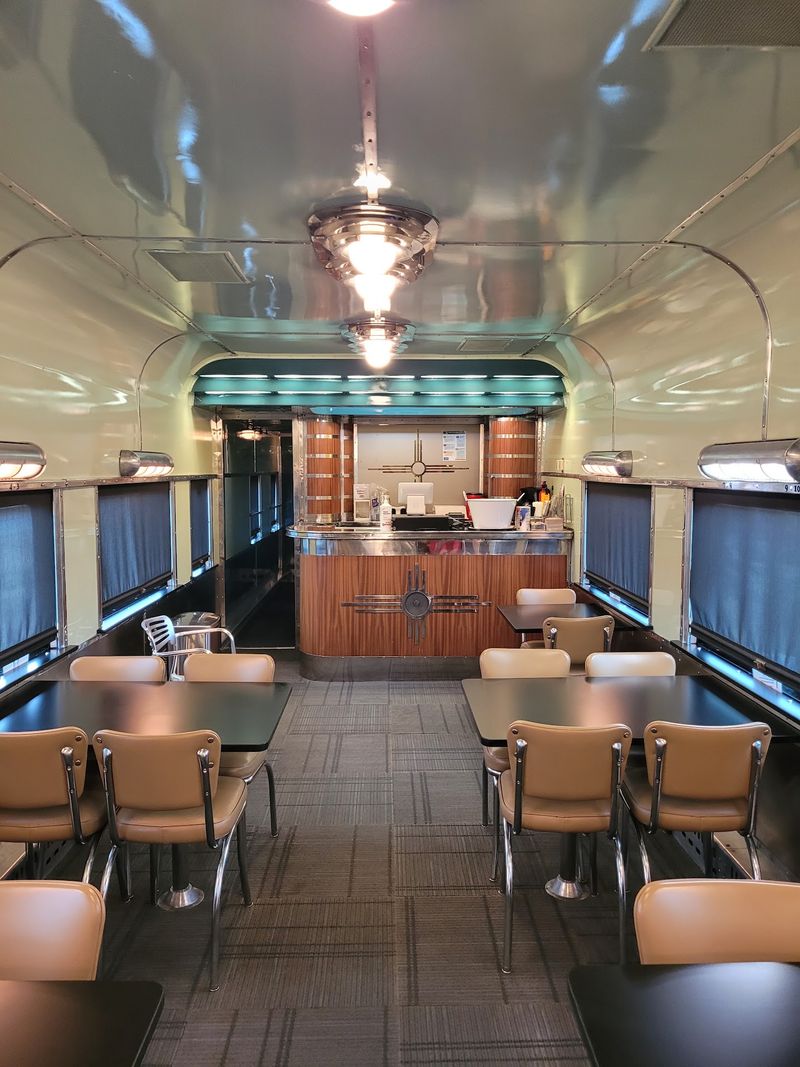
These days the car works as the concession car, which makes it one of the busiest spots on board. Snacks, drinks, and a steady flow of people moving through give it a friendly, social atmosphere.
Restoration work brought it back from decades of hard service, and the results hold up under close inspection. Run a hand along the interior paneling and the craftsmanship registers right away.
Stopping by early in the ride beats waiting until everyone else gets hungry. Lines form, especially on the longer Hill Country Flyer route.
Photographers love the exterior from the platform before departure, particularly in morning light when the ridges catch highlights all the way down the car.
Budd’s stainless construction was a genuine leap forward when it debuted, lighter and stronger than what came before, which is exactly why so many of these cars survived long enough to be saved.
Walking between cars to reach it adds a small dose of adventure, with the swaying vestibule and the rush of air and noise between coaches.
Small thing, but it’s the part kids talk about later.
Choosing Between Coach And First Class Seating
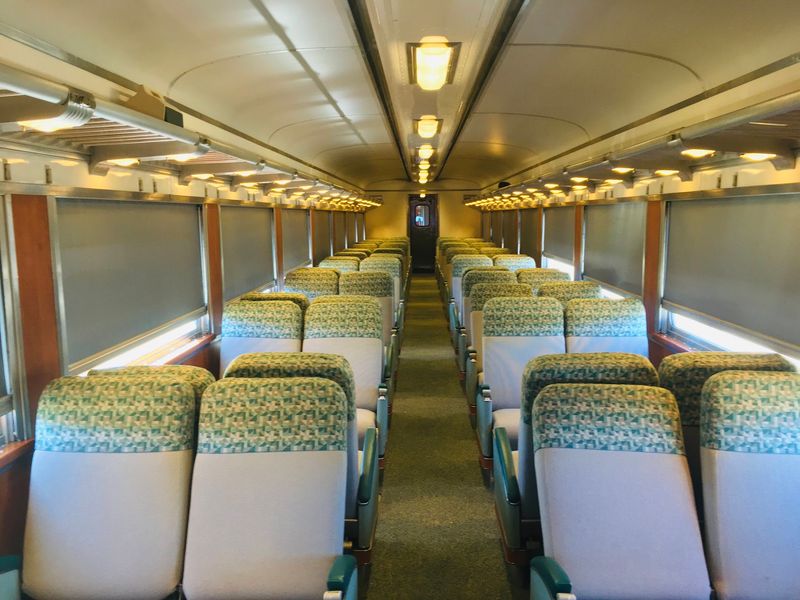
Seating choice shapes the whole experience more than most first-timers expect. Coach and first class both exist across the fleet, and neither is a wrong pick.
They just create different days.
Coach keeps things straightforward, with comfortable seats, generous windows, and the easy buzz of families settling in for the ride. Good for groups, good for kids, good for anyone who wants to wander and take photos from multiple angles.
First class leans into the vintage lounge feeling, with more room to spread out and a calmer atmosphere. Longer trips benefit from that extra comfort in a real way.
Booking early matters for both, and especially for the specialty cars that draw repeat riders every season.
Weather influences the decision too. Warm months make climate-controlled comfort more appealing, while pleasant spring and fall days make almost any seat feel great.
Groups traveling together should reserve at the same time to avoid getting scattered across different cars, which happens more often than people realize.
Anyone hoping to photograph the trestle or canyon should think about window position rather than just service level. A great seat on the wrong side still means craning your neck.
Ask the volunteers on the platform if you’re unsure. They know the fleet inside out and tend to have strong, helpful opinions about which car suits which kind of rider.
Two Hours To Wander Burnet’s Historic Square
Burnet hands you two hours and basically says, go enjoy yourself. Most people underestimate how much fits into that window.
The square sits close enough to walk.
Shops line the streets around the courthouse, ranging from antiques and gifts to small local businesses that clearly know the train schedule by heart. Browsing is unhurried and pleasantly low-pressure.
Lunch is the most popular use of the layover, and having a plan helps. Deciding on the train rather than after stepping off saves valuable minutes.
The courthouse itself anchors the square with solid limestone presence, worth a lap around even if you don’t go inside. Historic markers scattered nearby fill in local background for anyone curious.
Comfortable shoes make a noticeable difference. Sidewalks are easy, though two hours of walking adds up faster than expected.
Keep an eye on the clock, because the train departs on schedule and doesn’t wait for stragglers browsing one last shop. Setting a phone alarm is not overly cautious, it’s just smart.
Shade can be limited during summer midday, so hats and water earn their keep.
What makes the stop work is the contrast. You’ve just spent hours watching countryside slide past, and suddenly you’re standing on a quiet Texas square with the day still ahead of you.
Then the horn sounds again, and everyone starts drifting back toward the depot.
Planning Details That Make The Trip Smoother
A little preparation turns a good rail day into a genuinely easy one. Departure point tops the list.
Most excursions leave from the Cedar Park Depot, though certain special rides originate from Bertram or Burnet instead.
Double-checking that detail before leaving home prevents the worst possible start to a train trip. Confirm it on the ticket, not from memory.
Arriving with time to spare helps enormously. Parking, boarding, and finding your car all go smoother when you’re not sprinting across the lot.
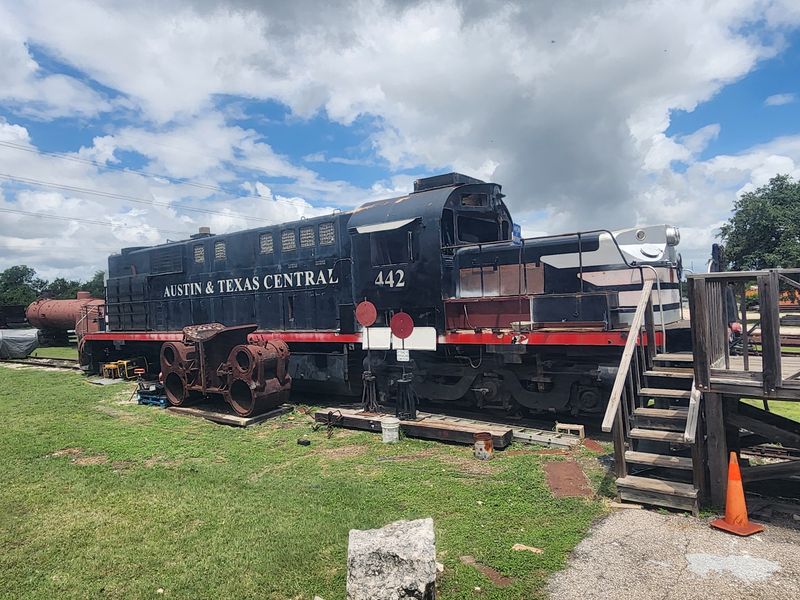
Historic diesel locomotives handle the pulling duties, and watching one idle at the head of the train before departure is half the fun for anyone who likes machinery.
Seasons matter in the Hill Country. Spring brings wildflowers along the right of way, fall brings mild air and long light, and summer calls for hydration and lighter clothing.
Cameras, snacks, and something for younger kids to do during quieter stretches all earn their space in a bag. Cell service can get spotty in places, which most people end up appreciating.
Volunteers run much of the operation, and their enthusiasm is honestly contagious. Ask questions freely.
For GPS purposes, the Bertram Depot sits at 100 W State Hwy 29, Bertram, TX 78605.
Address: 401 E. Whitestone Blvd., Ste C-100, Cedar Park, TX 78613
