We only pulled off the interstate to stretch our legs and maybe grab a cold soda, but somewhere between a vintage diner booth and a painted VW bus, the whole afternoon slipped away. Oklahoma has a way of hiding its best stories inside plain-looking buildings along the highway.
This one holds about sixty years of road trips, family vacations, and big dreams, all packed into rooms you can walk through one decade at a time. If your crew has ever argued over snacks in the back seat, you will feel right at home here.
A Time Machine Parked Off the Interstate
Plenty of museums ask you to look at history behind glass. The official Route 66 museum for the state of Oklahoma asks you to step inside it instead, and that difference is felt within the first few minutes.
Run by the Oklahoma Historical Society, the museum serves as the state showcase for the Mother Road. It is often called the largest history museum dedicated to Route 66 anywhere between Chicago and Santa Monica, which is a big claim for a building that looks fairly modest from the parking lot.
Several visitors say it turned out bigger than they expected, with so many displays that a quick stop stretched into a long one.
The layout follows the highway from its birth in the 1920s through its decommissioning in 1985 and on into modern preservation efforts. Each room carries you into a new decade, so the experience feels less like reading a textbook and more like riding shotgun through American life.
Travelers crossing the country on the old route stop here, but so do Oklahoma families looking for an easy day trip. It sits right off Interstate 40 in the western half of the state, which makes it simple to reach from Oklahoma City in roughly an hour and a half.
The Mother Road, Decade by Decade
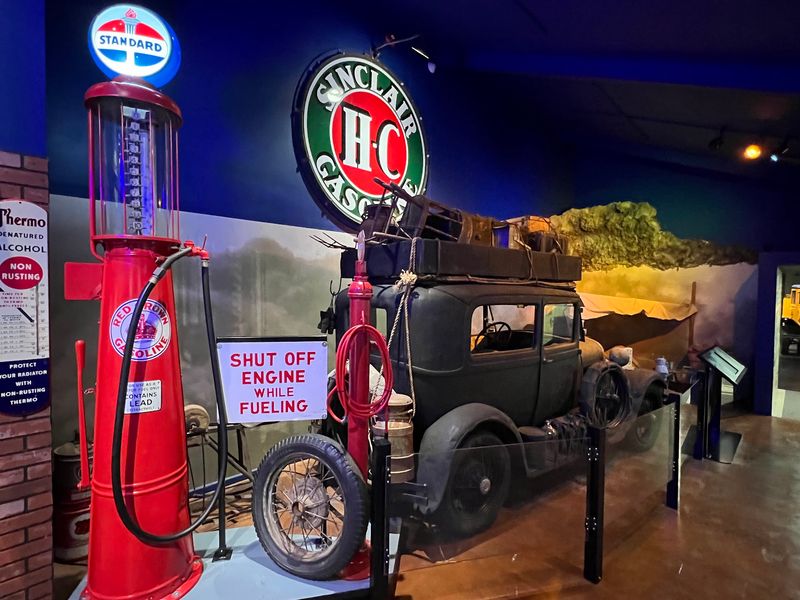
Picture an old pickup loaded with mattresses, pots, and everything a family owned, rattling west through a cloud of dust. That scene is where the story gets real for many visitors, because the Dust Bowl exhibit shows why thousands of Oklahomans packed up and headed toward California hoping for a better life.
From there, the rooms move forward in time. The 1920s introduce the brand-new highway and the people who pushed to build it.
Later spaces capture the boom after World War II, when families flocked to neon-lit motels, gas stations, and roadside attractions that turned a simple drive into an adventure.
Guests often mention how much they learned about the making of the route and the changes made to it over the years. One traveler said the visit changed the way they saw the road and its place in national history.
Another pointed out that the exhibits cover the entire route, not just the Oklahoma stretch.
The storytelling ends with the highway being bypassed by interstates in 1985, then picks back up with the people working to save what remains. It is a full arc, told with heart, and surprisingly easy to follow even for younger kids.
Push the Button, Hear the Era
Here is a tip first-timers sometimes miss: at the entry of each room, there is a button waiting to be pressed. Give it a tap and period music fills the space, setting the mood before you even read a single sign.
Kids tend to love this part, and honestly, so do grown-ups. Hearing the songs of a decade while standing among its cars and signs makes the history feel alive.
Paired with the tunes is narration by Michael Wallis, the acclaimed author well known for his writing about Route 66, whose voice guides you through the road and its characters.
Videos round out the experience. There are places to sit and watch footage about the highway, including old reels of cars cruising down the Mother Road.
For tired legs or restless little ones, those seats can be a welcome break that still keeps everyone learning.
Visitors also praise the mix of photos, music, and artifacts, along with insight shared from locals, tourists, and people who lived along the route. The result is layered without being overwhelming.
One guest summed it up nicely, describing the place as packed with information but never overdone.
Diner Booths, a Flower Power Bus, and a Giant Curio Cabinet
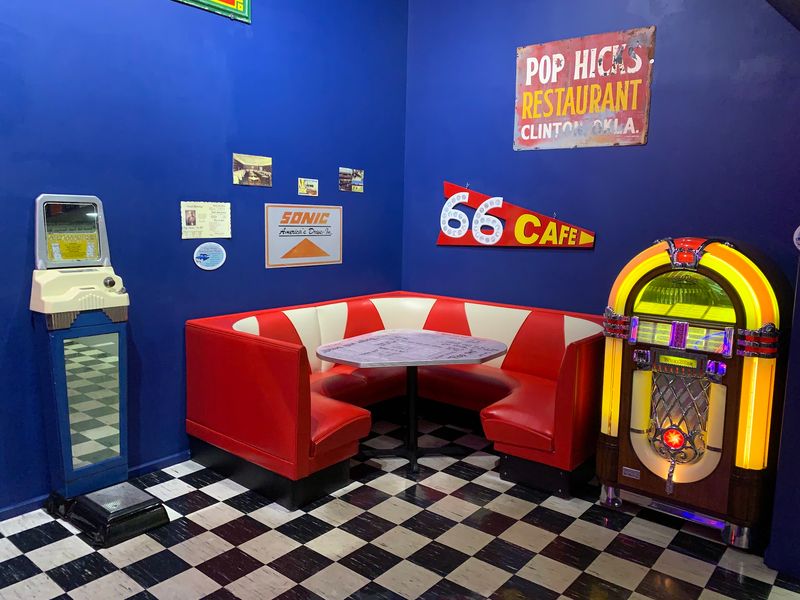
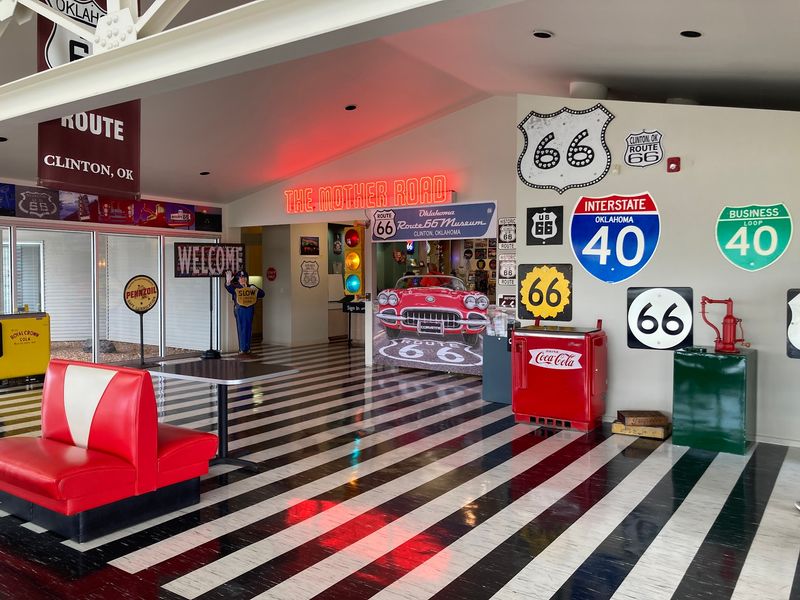
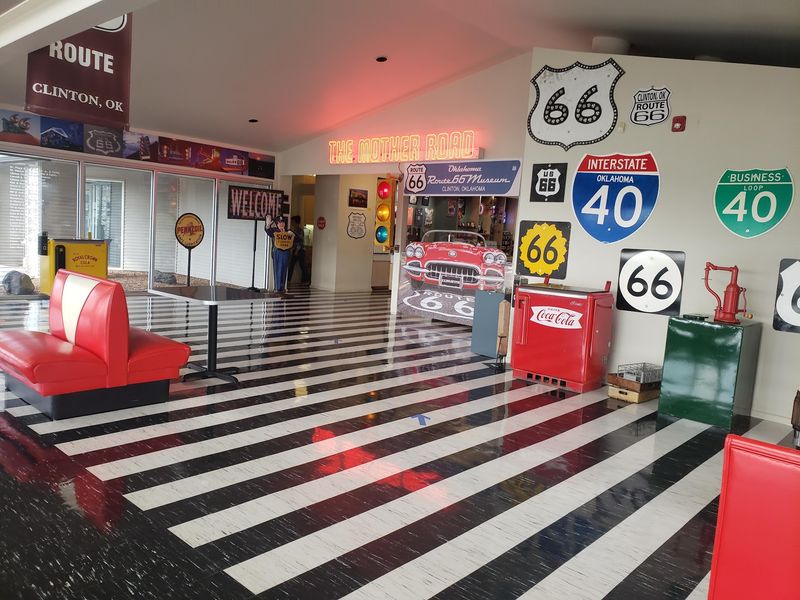
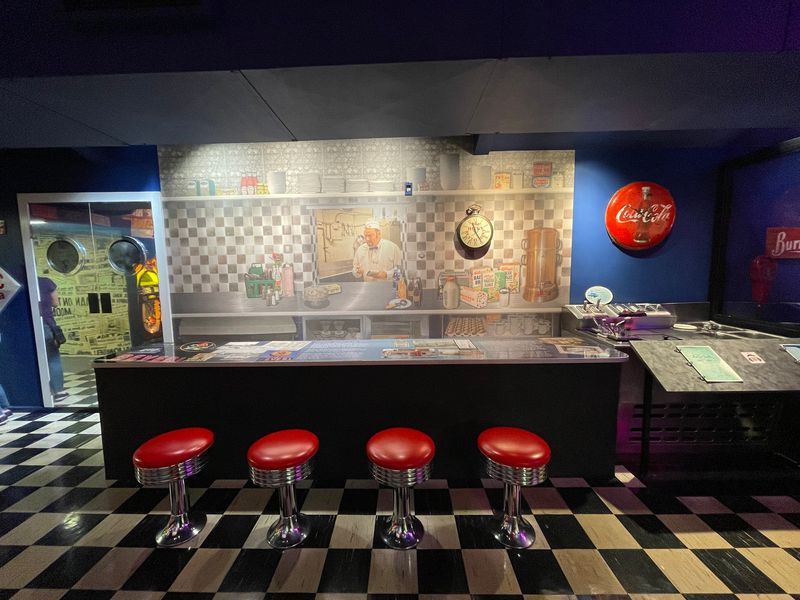
Sliding into a red vinyl booth is not something most museums allow. Here, it is practically encouraged, and that recreated 1950s diner quickly becomes a family favorite.
Guests can sit at the counter or settle into a booth like the ones countless travelers once used for a hot meal and a slice of pie between long stretches of road. It makes a great spot for photos, and grandparents often end up telling stories about their own trips while the kids spin on imaginary stools.
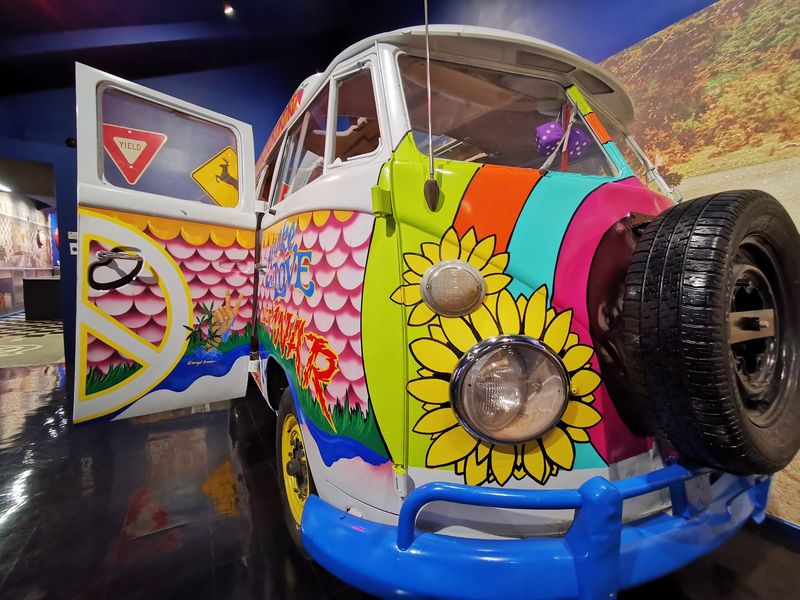
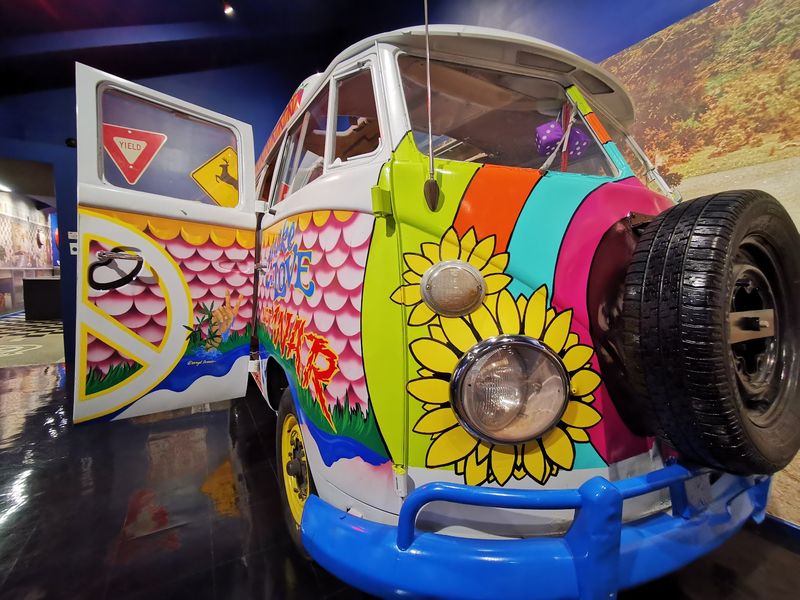
A few rooms later, the mood shifts to bright colors and peace signs. A VW bus reflects the Flower Power spirit of the 1960s, and it tends to draw smiles from anyone who remembers that decade firsthand.
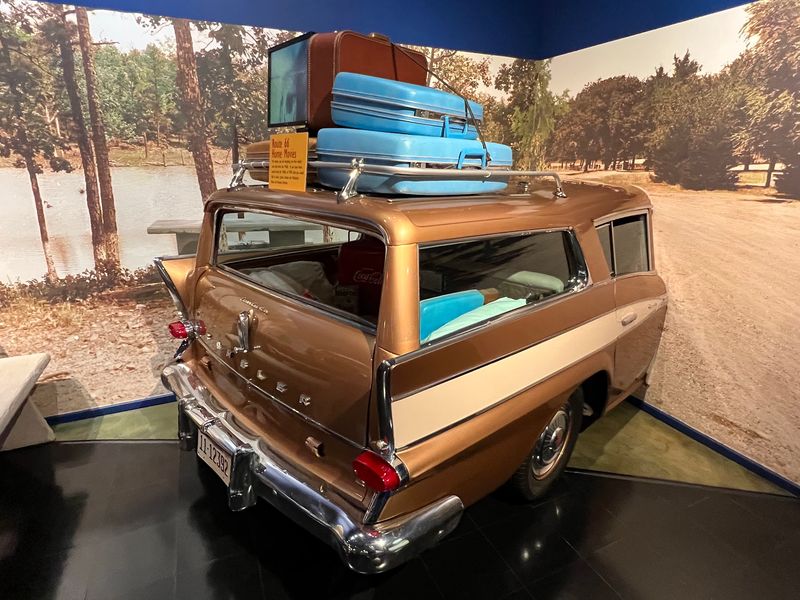
Then there is what the museum calls the world’s largest curio cabinet, stuffed with roadside trinkets and souvenirs that capture the playful side of highway travel. Vintage cars and trucks that once rolled along the route add even more to look at, along with classic signs and memorabilia.
Do not skip the Corvette cut-out near the photo spots. Popping your face into a shiny classic convertible is the kind of silly picture families end up framing.
Clinton, Oklahoma, and the Address Worth Saving
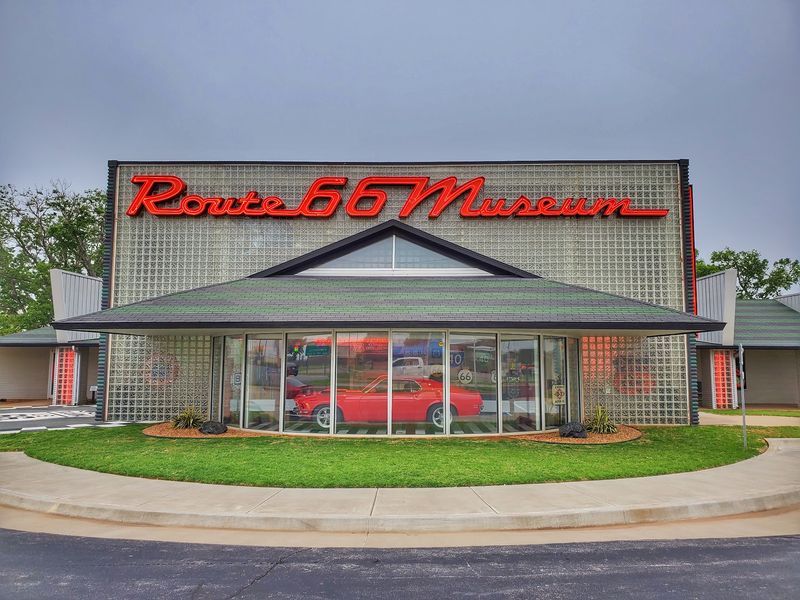
So where exactly is this road trip treasure? The museum sits at 2229 West Gary Boulevard in Clinton, a western Oklahoma town that has long been tied to the Mother Road.
Getting there is refreshingly easy. Take Interstate 40 to Exit 65 and you are just about there, which means families can hop on and off the highway without much fuss.
From Oklahoma City, the drive usually lands around an hour and a half, putting it firmly in easy-yes territory for a Saturday outing. Tulsa folks will spend a bit longer in the car, but plenty of them make it a stop on bigger western trips.
Parking should not be a headache, and the lot can handle buses and motorcoaches, so tour groups pull in regularly. If a bus happens to arrive while you are inside, it may get a little busier for a while, so a quick walk through the gift shop can be a smart move until the crowd thins.
Before heading out, it may help to call ahead at 580-323-7866, especially during holiday weeks, since the museum closes on certain state holidays and the first week of January.
Friendly Faces and a Souvenir Shop Full of Surprises
Ask almost anyone who has visited, and the staff comes up fast. Over and over, guests describe the team as sweet, welcoming, and genuinely knowledgeable about the road and its history.
That warmth spills right into the gift shop, which might be one of the most talked-about rooms in the building. The team has been expanding the shop and adding variety, including a bigger t-shirt selection, and some shoppers specifically mention finding affordable shirts.
You will also spot plenty of Oklahoma-flavored Route 66 gifts, from signs to small keepsakes kids can buy with their own allowance money.
Collectors, pay attention. The museum has a Route 66 stamp for passport books, so anyone tracking their journey along the highway can add an official mark.
Not every item is a bargain, and at least one visitor felt some souvenirs ran pricey. Still, the money spent there helps support the museum and its programs, which makes picking up a magnet or postcard feel a little more meaningful.
A good plan for families is to set a souvenir budget before walking in. That way the kids get to choose a treasure, and nobody leaves feeling like the gift shop won the day.
Ticket Prices, Hours, and Timing Your Visit
Ten dollars gets an adult through the door, and many guests call that fee a bargain for what is inside. Seniors 62 and up pay $8, students ages 6 to 18 pay $5, and children 5 and under get in free.
Families have an even better deal. A family ticket covering up to six people costs $30, which can save a nice chunk compared with paying individually.
Groups of 10 or more pay $7 per person, and Oklahoma Historical Society members get in free. Veterans and active military with ID are also admitted at no charge, a perk visitors mention often.
Hours can be a little tricky, so double-check before you go. Recent listings show Monday through Saturday, 9 a.m. to 5 p.m., with Sundays closed.
The museum has also used seasonal schedules, such as longer summer evenings and Sunday afternoon openings, and Monday closures in winter and early spring.
How long should you plan? It is a self-guided walk, and some people buzz through in about 30 minutes, while others linger two or three hours.
Summer heat and spring storm season in western Oklahoma make this an easy indoor pick when the weather turns rough.
Why the Detour Pays Off
Some stops feel like errands. Others turn into the part of the trip everyone talks about on the drive home, and this museum lands squarely in that second group.
What makes it work is balance. There is real history here, told with care, from the hopeful migrants of the Dust Bowl years to the neon-bright boom of postwar travel.
Yet there is also plenty of fun, whether that means pressing music buttons, posing in a Corvette cut-out, or grabbing a seat in the diner. Visitors frequently mention how clean and well-maintained it is, with one guest even assuming the building was brand new.
Is it a massive, all-day attraction? Not quite, and a few folks suggest setting expectations for a small-town museum.
For families, grandparents, and Route 66 fans, though, the price and the experience tend to match up nicely, especially with the $30 family ticket.
Round out the day with other spots around Clinton, like the Cheyenne Cultural Center, Foss Lake, or the indoor water park. Pack snacks, cue up some old road songs, and let the Mother Road do what it has always done best, which is turn an ordinary drive into a memory.
