
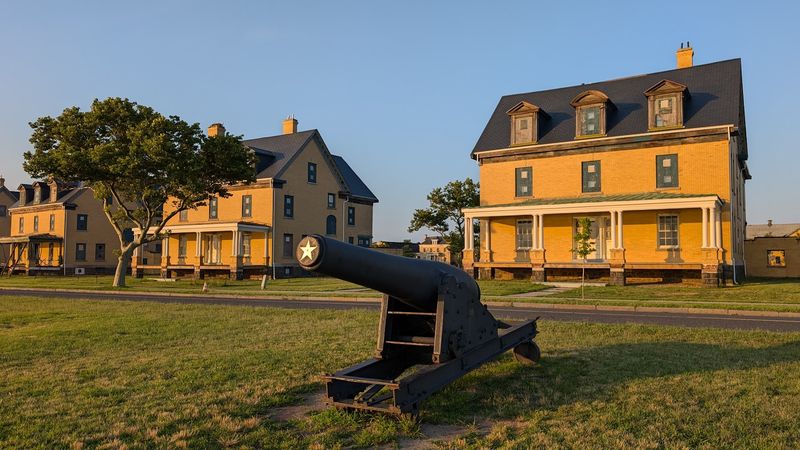
Eighteen yellow-brick mansions sit in a neat line facing the bay, and most of them are empty. Their big windows still look out at the water like they’re waiting for someone to come home.
The Army built these houses in the late 1890s for the officers who guarded the way into New York Harbor. Then the soldiers left in 1974.
The houses stayed behind.
I have to admit, that’s the detail I can’t get over. A whole street of grand homes, frozen in place on a skinny strip of New Jersey shoreline.
One of them has been fixed up and furnished so you can peek inside. The rest keep their secrets behind boarded doors and fading paint.
Honestly, it’s hard to tell which part is more tempting to see.
Eighteen Houses Lined Up Like Soldiers on Parade
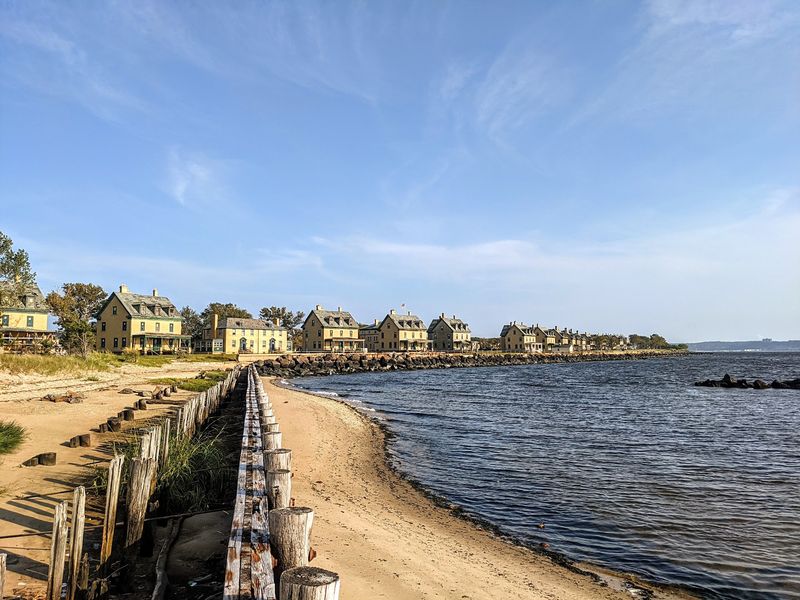
Fort Hancock is a former U.S. Army post at the northern tip of the Sandy Hook peninsula.
Today it’s part of the Sandy Hook Unit of Gateway National Recreation Area, run by the National Park Service.
The star of the show is Officer’s Row. It’s a line of eighteen substantial homes built between 1897 and 1899 for officers and their families.
Each house matched an officer’s rank, so the bosses got more room. The biggest one belonged to the Commanding Officer, which seems fair if you’re in charge of the whole fort.
The homes stand along Hartshorne Drive and face Sandy Hook Bay. That was an unusual choice, since military houses typically faced a parade ground instead.
Those families got bay breezes and sunset views, which beats staring at marching drills any day. The water is still right there, and the houses still turn toward it.
Walking the length of the row lets you appreciate how planned it all was. The spacing, the matching brick, and the steady rhythm of rooftops make it feel like a small town.
It’s a quiet, slightly eerie street now. But the order of it all still shows, more than a century later.
That Buttery Brick Was Picked on Purpose
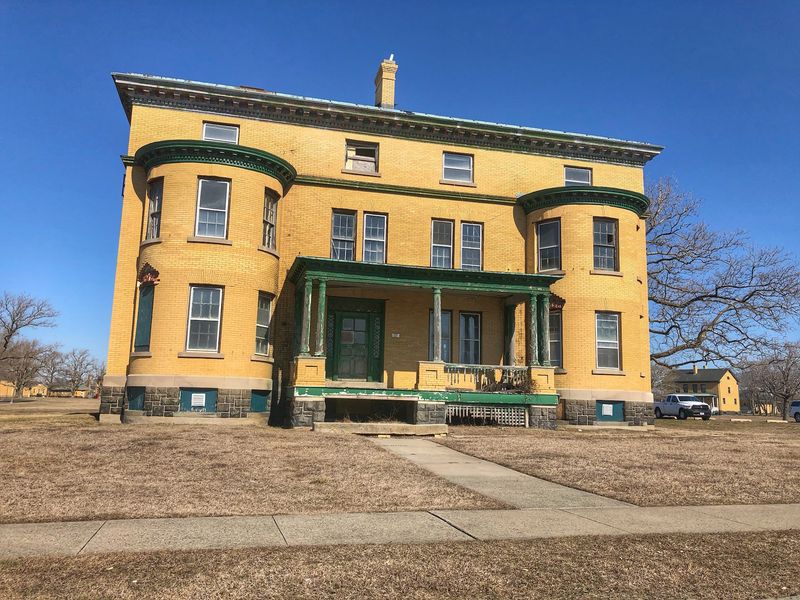
Red brick was the usual pick back then, yet these houses wear a soft buff color. The lighter brick is heavier and less porous than traditional red brick, which helps near salty coastal air.
The style is Colonial Revival. It was popular in the late 1800s and brought back Georgian and Federal ideas after all that fussy Victorian decoration.
Captain Arthur Murray of the U.S. Artillery Corps shaped the overall layout and look of the post.
He wanted a simple style that was still “not lacking in beauty.”
Murray skipped the frilly “gingerbread work” on purpose. Less trim meant fewer things to repair, which is a pretty practical way to design a house.
Look closely and you’ll spot Palladian and elliptical windows, glazed transoms, dormers, and bold cornices. Those features give the homes a polished look without feeling showy.
Here’s a fun way to explore. Pick one house and try to find every window shape on its front.
Then compare it with its neighbors and see what changes with rank and size. It’s like a scavenger hunt designed by an Army captain from the 1890s.
Guarding New York Harbor Was the Whole Job
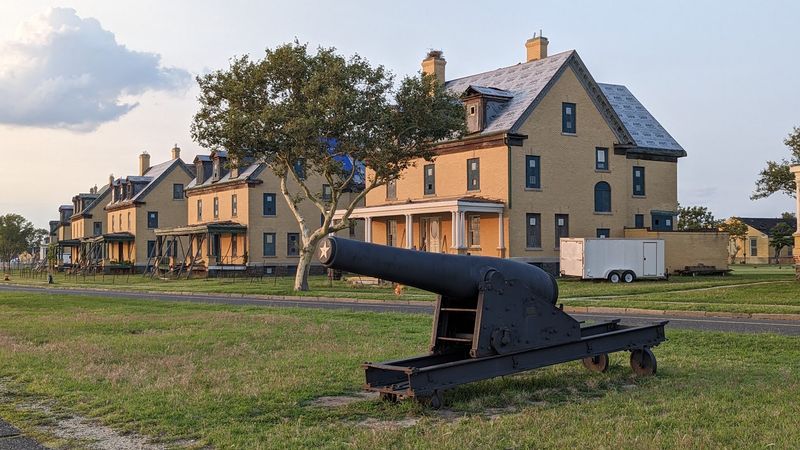
Those pretty houses existed for one serious reason. Fort Hancock protected the Atlantic coast and the entrance to New York Harbor for more than 75 years.
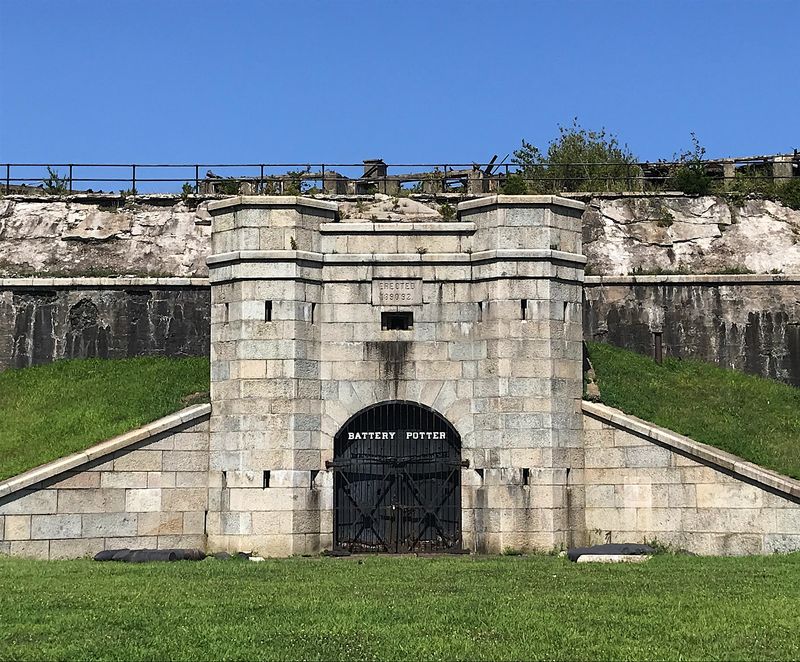
The Army began constructing modern coastal gun batteries here in 1890, and Battery Potter was operational by 1893. The officers living on the row were the people running that coastal defense system.
Sandy Hook makes sense for the job once you look at a map. The peninsula pokes north toward the harbor entrance like a pointer finger.
Ships headed for New York had to pass nearby. So the Army packed this sandy strip with batteries, barracks, and support buildings.
During World War II, the post got especially busy. It was a key piece of the harbor’s defenses during those years.
The fort was officially decommissioned on December 31, 1974. After that, the soldiers moved out and many buildings went quiet.
Knowing this backstory changes how the houses feel. They weren’t vacation cottages but family homes for people on duty around the clock.
So when you stand on a porch step and look at the bay, you’re seeing the same water those officers watched. Except now you can just enjoy the view.
Storm Damage Left Its Mark on Those Porches
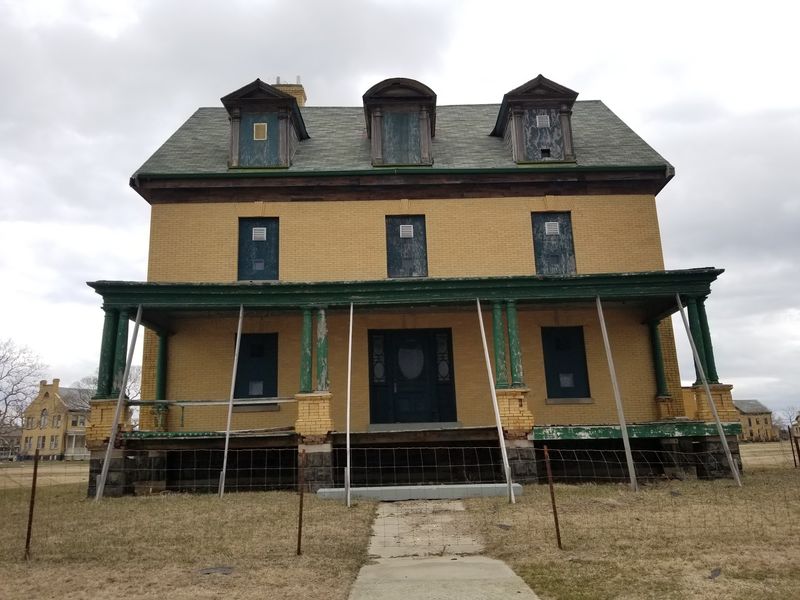
Hurricane Sandy hit the Jersey Shore hard in 2012, and Officers’ Row didn’t escape. The storm damaged waterfront porches and flooded some basements, although the houses’ first floors remained dry.
Decades of empty rooms had already taken a toll before the storm. Salt air, wind, and time are tough on any building left alone.
From the street, many homes still look sturdy and proud. Get closer, though, and peeling paint, weathered wood, and boarded openings tell a different story.
That mix is exactly what makes the row so photogenic. Elegant brick and crumbling details sit side by side in the same frame.
A quick word of caution. Many buildings are in poor shape, so admire them from the outside and respect any closed areas.
Some houses on the grounds are used as park housing too. Treat those spaces like someone’s home, because they are.
Photographers love golden hour here for good reason. Low sun warms up that buff brick and makes the worn edges look almost painted.
Bring a zoom lens for details like cornices and dormers. You’ll get great shots without stepping anywhere you shouldn’t.
Step Inside One House That Got a Second Life
Good news for the curious. The National Park Service restored one of the Officer’s Row homes, and it’s called the History House.
It’s furnished to look the way it did during World War II. That was one of the busiest stretches in the fort’s long story.
This is your chance to see what’s behind those big front windows. Instead of guessing, you can stand in rooms set up like an officer’s family really lived there.
In 2026, History House welcomes visitors Friday through Monday from 1 PM to 4:30 PM, according to the National Park Service’s published schedule. The published 2026 tour schedule runs through October 31, so visitors planning a later trip should check for updated opening dates.
A park ranger is often on hand to answer questions. So go ahead and ask the stuff you’ve been wondering about while walking the row.
Families with kids will find this stop especially handy. It turns a street of mysterious empty buildings into something easy to picture and understand.
Check the park’s schedule before you go, since hours can shift by season. Showing up to a locked door is no fun after a long bike ride.
After the visit, the other seventeen houses look a little different. You’ll know what each one might have looked like inside.
Plans Are Brewing to Fill Those Empty Rooms
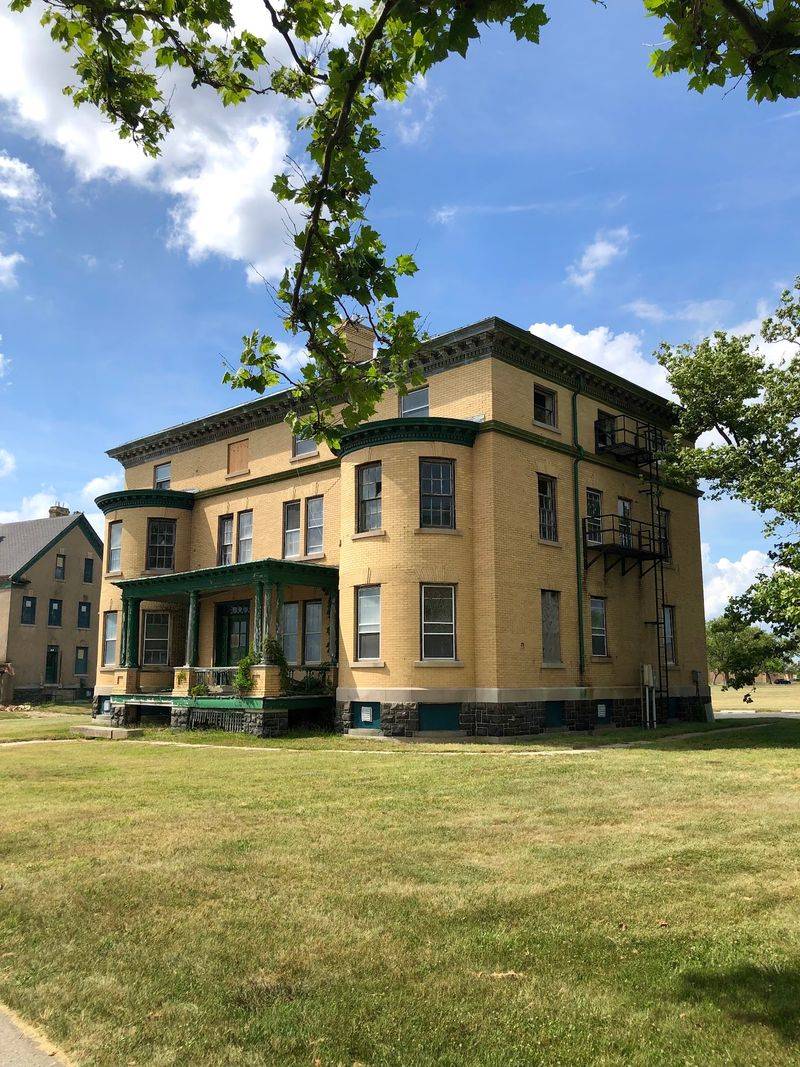
Not every story here ends with boarded windows. Efforts to bring Fort Hancock’s historic buildings back to life have been going on for years.
Some buildings on the post have already been leased. There have also been proposals to turn the eighteen Officer’s Row houses into residential units.
Saving century-old buildings isn’t quick or cheap. The National Park Service works with partner groups to find funding and plan each step.
Any reuse also needs approval from New Jersey’s State Historic Preservation Office. That keeps changes in line with strict historic standards.
It means the buff brick and classic windows should stay true to the original look. Nobody wants a shiny modern makeover on a landmark like this.
For visitors, this adds a little suspense to every trip. The row you see this year might look different a few years from now.
Snap photos now and compare them later if you come back. It’s a neat way to watch a piece of history slowly wake up.
Whatever happens next, the goal is keeping these homes standing. After surviving storms and decades of quiet, they’ve earned a shot at a fresh chapter.
An Osprey Moved Into the Neighborhood

Not every resident here left in 1974. Ospreys have been spotted nesting on Officer’s Row, with a big nest perched right on a chimney.
Sandy Hook is a great spot for wildlife in general. The peninsula mixes beaches, marshes, and wooded patches where birds have plenty of room.
Spotting a raptor on top of a Victorian-era chimney is a pretty fun twist. The fort’s newest tenants don’t seem bothered by the peeling paint.
Ospreys are fish hunters, so the bayfront location suits them perfectly. You might catch one gliding over the water with dinner in its claws.
Pack binoculars if you have them. They help you watch nests without getting close or bothering the birds.
Spring and summer are typically the busiest nesting times for ospreys. Keep your eyes on rooftops and tall poles around the area.
This is a fun bonus for kids who think history is boring. A giant bird nest on an old Army house tends to win them over fast.
And honestly, it’s a sweet image. Nature quietly moving into a place once built for defending a harbor.
Bring a Bike Because the Path Is Flat and Long
Sandy Hook rewards anyone on two wheels. A long multi-use path runs through the park, and it’s flat enough for casual riders.
That makes it easy to see Fort Hancock without worrying about parking at every stop. Pedal past the batteries, coast down Officer’s Row, and keep rolling toward the beaches.
Walkers and runners use the path too. So keep a friendly pace and give everyone some room.
Gateway National Recreation Area’s Sandy Hook Unit is open year-round. Entry to the park is free, though beach parking fees apply during the summer season.
Fishing is allowed at certain beaches throughout the year. Nature trails add even more options if you’d rather explore on foot.
Plan for a mix of sun and wind, since it’s a narrow strip between ocean and bay. A light jacket can be handy even on nice days.
Pack water and snacks, especially for a full day of riding. There’s a lot of ground to cover once you start exploring.
The best part might be the variety. Few bike rides combine Army history, abandoned mansions, and beach views all in one afternoon.
The Country’s Oldest Working Lighthouse Lives Next Door
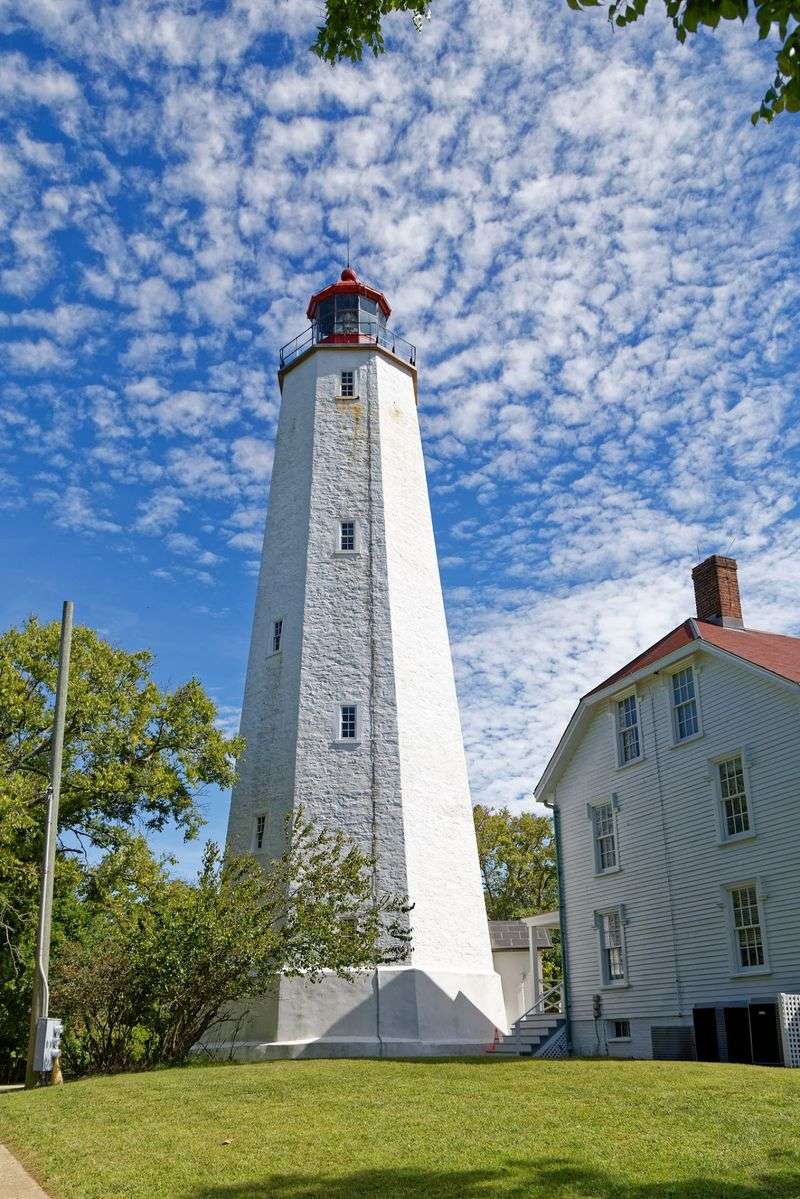
Right in the middle of all this history stands the Sandy Hook Lighthouse. It holds the title of the oldest working lighthouse in the United States.
That’s a pretty impressive neighbor for a row of officers’ houses. The lighthouse sits within the Fort Hancock area, so it’s easy to pair the two.
Ranger-led tours to the top are offered at certain times of year. Climb up and you can take in sweeping views of the bay and beyond.
On clear days, the view can stretch toward the New York City skyline. It’s a great reminder of why this spot mattered so much for guarding the harbor.
Tour schedules change by season, so check ahead before you go. Showing up and finding it closed would be a bummer.
Fort Hancock is located at Sandy Hook, NJ 07732, at the northern end of the peninsula. Grounds are generally open from early morning into the evening.
Put it all together and you’ve got a full New Jersey day. Abandoned mansions, a restored house, old gun batteries, and a historic lighthouse, all within easy reach.
Not bad for one skinny strip of sand.
