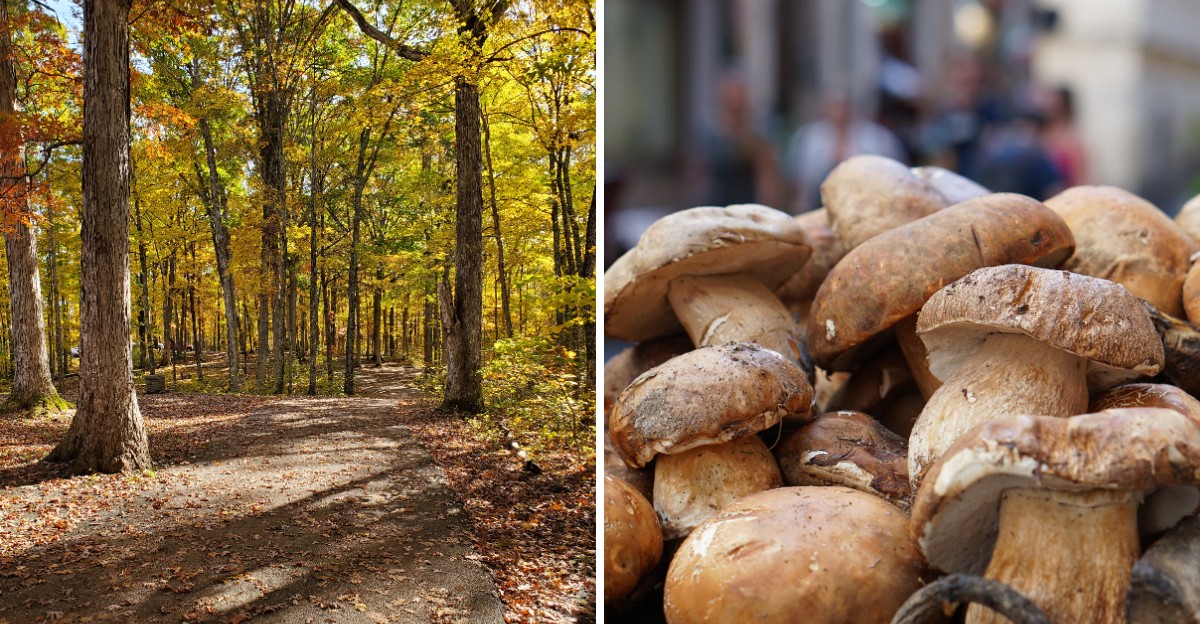
A mushroom hunter has a strange relationship with fallen leaves. Everybody else sees a pretty autumn carpet.
They see possibilities. That brown patch might be nothing.
That orange speck might be something. That log might be hiding an entire little neighborhood of fungi.
Indiana gets particularly interesting in fall, when damp forests, mossy ground, and cooler weather create perfect conditions for a slow search. The nine woodlands on this route stretch from southern hills to northern river country, with plenty of quiet corners where mushrooms can hide in plain sight.
The trick is not knowing where to rush. It is knowing when to stop.
1. Hoosier National Forest, Southern Indiana
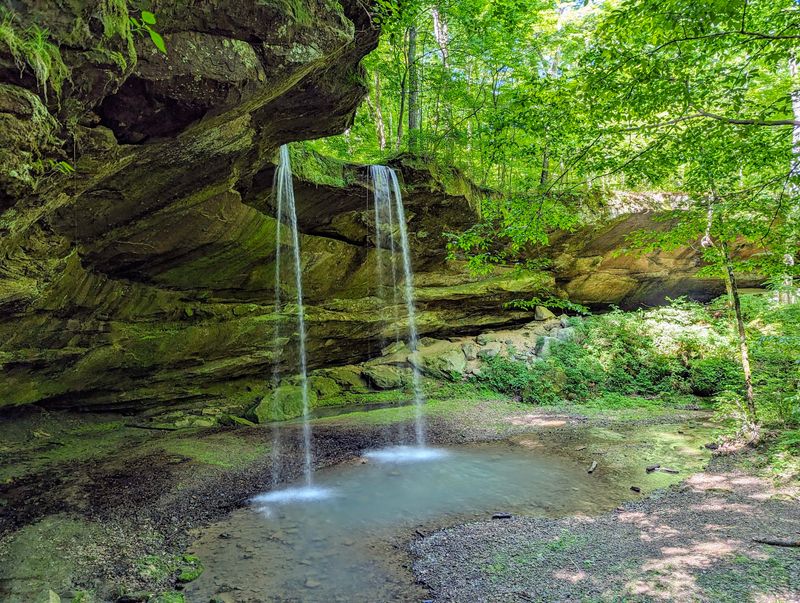
Few places in the state swallow a person up quite like this stretch of hills, where the ridgelines roll on and the road noise disappears within minutes. Across nine southern counties, roughly 200,000 acres of hardwood spread out in every direction.
Oak and hickory dominate the canopy, which is exactly the company many autumn fungi prefer.
Deep hollows hold moisture long after a rain, and sandstone bluffs create shaded pockets where the ground stays cool. Those small differences matter more than most people expect.
Administrative offices sit in Bedford and Tell City, useful stops for maps, current conditions, and rules about what may be collected. Checking in first saves guesswork later.
The Charles C. Deam Wilderness, tucked inside the forest boundary, turns the experience wilder still.
Trails narrow, signs thin out, and the only sounds tend to be wind and woodpeckers.
Patience pays here. Instead of covering miles, slow down along a creek bottom and scan the base of old stumps and fallen trunks.
Fall color peaks in waves across the hills rather than all at once, so a mid-October visit and a late-October visit can feel like two different forests. Carry water, a paper bag, and a phone with offline maps loaded for the adventure at 248 15th St, Tell City, IN 47586.
Cell service vanishes fast out here, which is half the appeal and half the reason to plan ahead carefully.
2. Yellowwood State Forest, Nashville
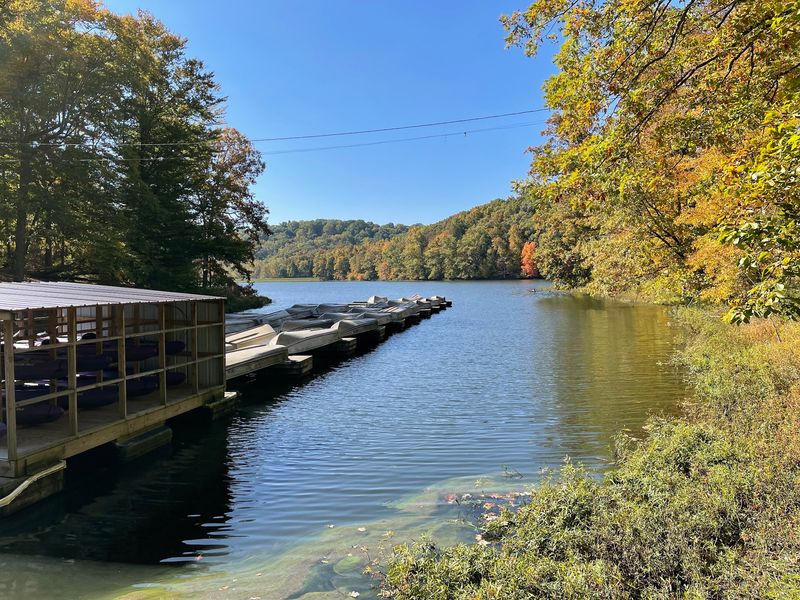
Brown County has a reputation for crowds in October, yet this 23,000-acre forest just outside Nashville stays surprisingly hushed. Find it at 772 Yellowwood Lake Road, Nashville, IN 47448, where a gravel lane drops toward the water and the world gets quieter.
Unglaciated ground shaped everything here. Narrow ridges rise between steep slopes, and drainages cut down into shaded bottoms that stay damp well into the afternoon.
Habitats shift quickly, from planted pine groves to mature central hardwoods thick with black walnut and oak. Walk twenty minutes and the tree mix changes completely, which keeps a foraging walk interesting.
A 133-acre lake anchors the middle of it all, mirroring the sky on still mornings. Anglers drift near the shoreline while the woods behind them go untouched.
Rare yellowwood trees give the forest its name, their wood carrying a deep golden tone. Spotting one feels like a small victory.
Connecting trails run north toward Morgan-Monroe State Forest, meaning a day trip can stretch into something much longer if legs allow. Backcountry zones and primitive campgrounds make overnight stays simple.
Mornings after rain are ideal for searching near downed hardwood. Bring a brush, a knife, and a field guide rather than relying on memory.
Nothing ruins a good walk faster than uncertainty about what ended up in the basket.
3. Morgan-Monroe State Forest, Martinsville
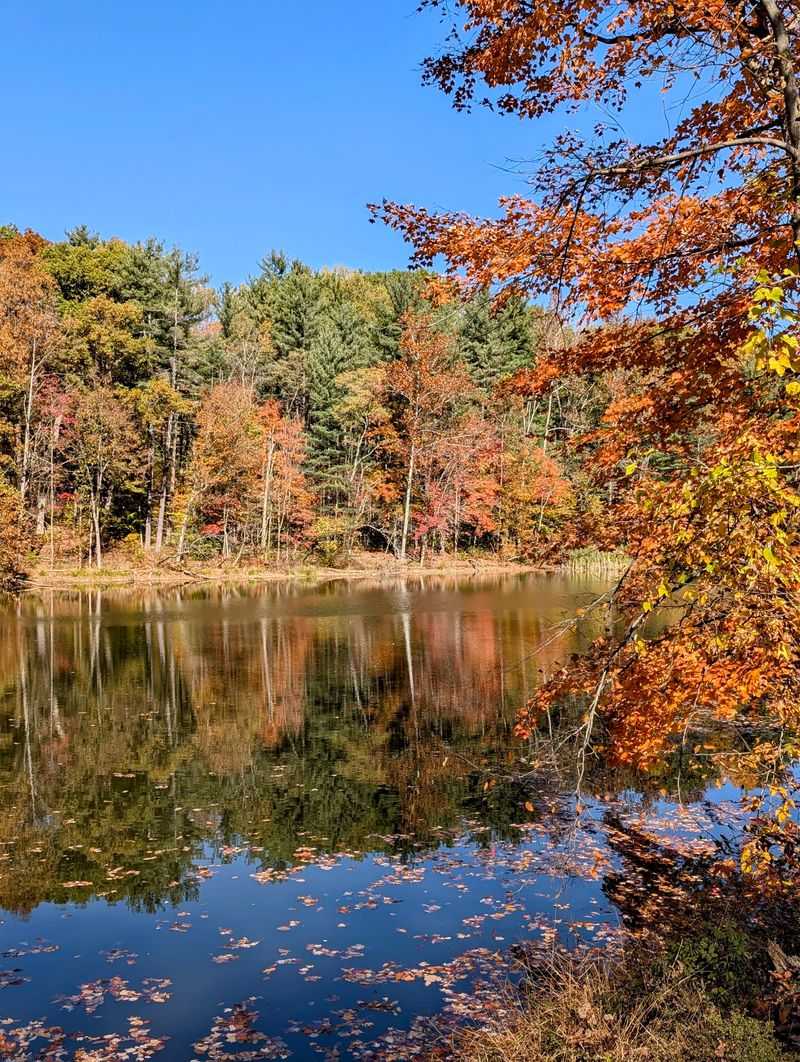
Southwest of Indianapolis, the pavement gives way to forest road and the temperature seems to drop a few degrees under the canopy. The main entrance sits at 6220 Forest Road, Martinsville, IN 46151, and over 24,000 acres stretch out from there across Morgan and Monroe counties.
Big timber is the headline. Some of the finest hardwoods in the state grow along these ridges, with trunks that make a person tip their head back.
Terrain does the rest of the work. Steep climbs, dramatic valleys, and exposed rock features create shaded micro-pockets where fungi thrive once autumn rain settles in.
Three lakes break up the green and gold. Cherry, Bryant Creek, and Prather each sit quietly in their own corner, good places to eat lunch and reset.
An extensive trail network threads through mature woodland, and part of it links directly to Yellowwood, which explains why serious hikers treat the two forests as one giant playground.
A 1,600-acre backcountry area allows camping, and that changes the rhythm of a trip entirely. Early light and late light are when the forest floor reveals the most.
Fire roads make good starting points for anyone new to the area. Step off them gradually, keep track of direction, and pay attention to north-facing slopes where moisture hangs on longest.
4. Versailles State Park, Versailles
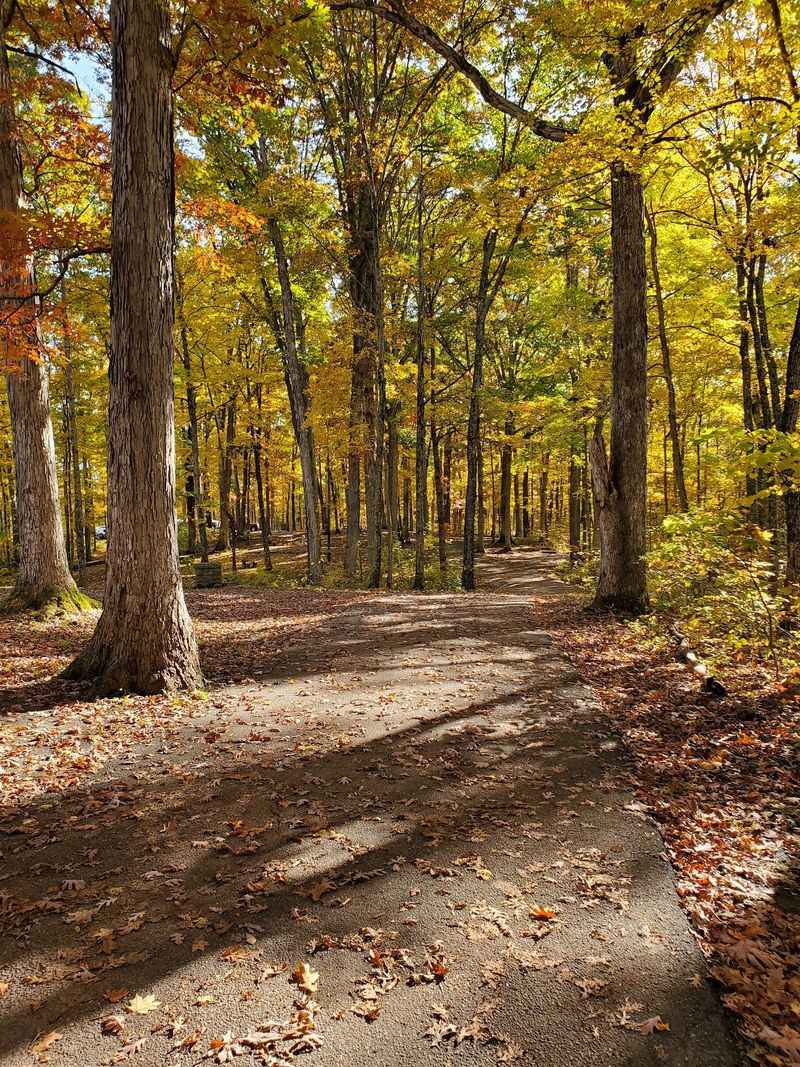
Southeastern Indiana hides one of the state’s largest parks in plain sight, right along the highway at 1387 E US 50, Versailles, IN 47042. Nearly 6,000 acres of rolling hills and wooded ridges sit just past the entrance gate.
Tree variety is the draw. Oak, hickory, maple, beech, tulip poplar, and black walnut all share space, and each species supports its own cast of autumn fungi.
Limestone shaped this landscape in odd and useful ways. Sinkholes dot the ground, ravines drop away sharply, and both features trap leaf litter and moisture in ways mushrooms appreciate.
A 230-acre lake handles most of the recreation traffic, which leaves the wooded trails refreshingly empty on weekday mornings. Good news for anyone who prefers birdsong over boat motors.
Peak color usually arrives in the middle of October, turning the ravines into layered walls of orange and copper. The light filtering down there is worth the descent alone.
Footing can get tricky near sinkhole edges after rain, so boots with real tread earn their keep.
Park staff can clarify current collection rules, which differ between state parks and state forests in Indiana. Asking first is simply part of the routine.
Afterward, the small town nearby makes an easy stop for coffee and a warm-up before the drive home.
5. Shades State Park, Waveland
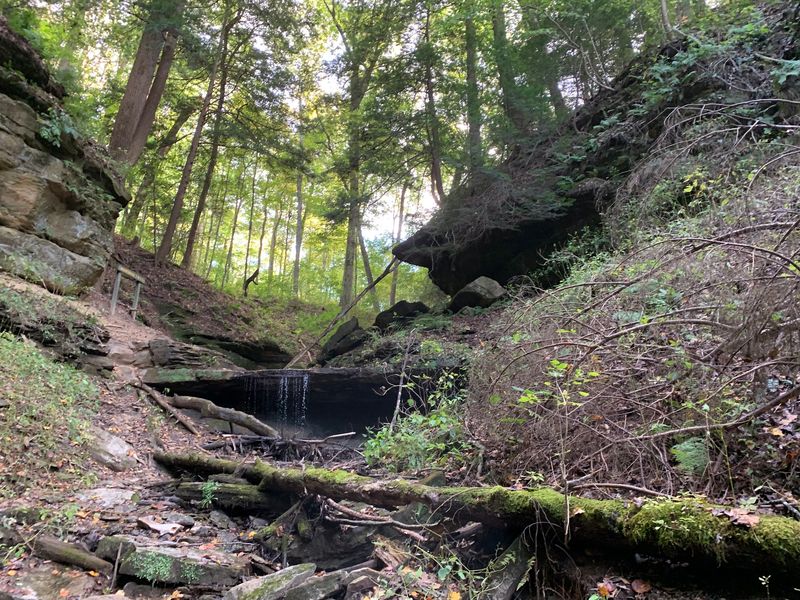
Cool air pools at the bottom of these ravines even on mild afternoons, and the sandstone walls stay green with moss well into November. The park entrance sits at 7751 S 890 W, Waveland, IN 47989, tucked into west-central Indiana farmland that gives no hint of what waits beyond the trees.
Sugar Creek carved the drama. Cliffs, narrow canyons, and small waterfalls cut through more than 3,000 acres spread across three counties.
Beech, oak, and tulip trees form a canopy dense enough to hold humidity near the ground. That combination of shade and moisture is exactly what fungi need once autumn rain arrives.
Pine Hills Nature Preserve sits within the park boundary and delivers the strangest geology of all, including the knife-edge ridge known as Devil’s Backbone. Walking it feels genuinely unusual for the Midwest.
Nearby Turkey Run pulls most of the crowds, which works in favor of anyone heading here instead. Trails stay calmer, parking stays easy.
Ladders and stairs handle the steepest sections, so hands often end up free of gear. Pack light and keep the camera accessible.
Damp rock makes for slick steps, a detail worth remembering while staring at the ground looking for mushrooms instead of watching footing.
Late afternoon light hitting the ravine walls is the kind of scene people drive hours to see.
6. Harmonie State Park, New Harmony
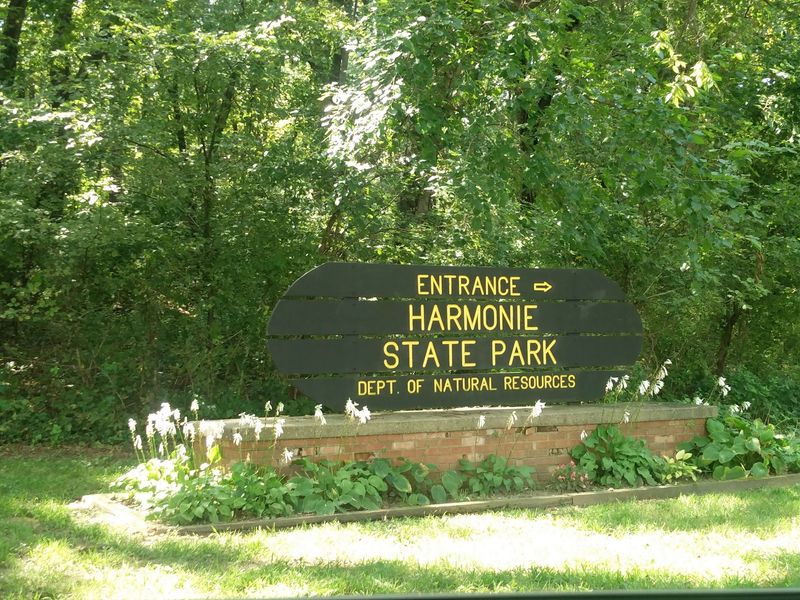
Down in the southwestern corner, where the Wabash River bends wide and slow, sits a park most Hoosiers drive right past. The address is 3451 Harmonie State Park Road, New Harmony, IN 47631, and the remoteness is a feature rather than a flaw.
More than 3,000 wooded acres roll back from the riverbank in quiet ravines and gentle bluffs. Maple, oak, and hickory fill most of the uplands with familiar autumn color.
The real oddity shows up lower down. Bottomland forest here supports cypress trees with flared, buttressed trunks, a southern look that seems misplaced this far north.
Wet ground and unusual flora create habitats that differ from anything else on this route. Foragers who enjoy variety tend to linger.
Trails follow small streams, cross low hills, and wander through shifting tree mixes without ever getting steep enough to punish anyone. Easy walking, plenty to look at.
Crowds stay thin because the park sits far from major cities, so the loudest thing around is usually a squirrel dropping hickory nuts.
Nearby New Harmony adds a curious historic layer to the trip, with quiet streets and old architecture worth an hour of strolling.
Morning fog off the river makes the whole place feel hushed and a little secretive, which is a fine way to start a day of searching.
7. Salamonie River State Forest, Andrews
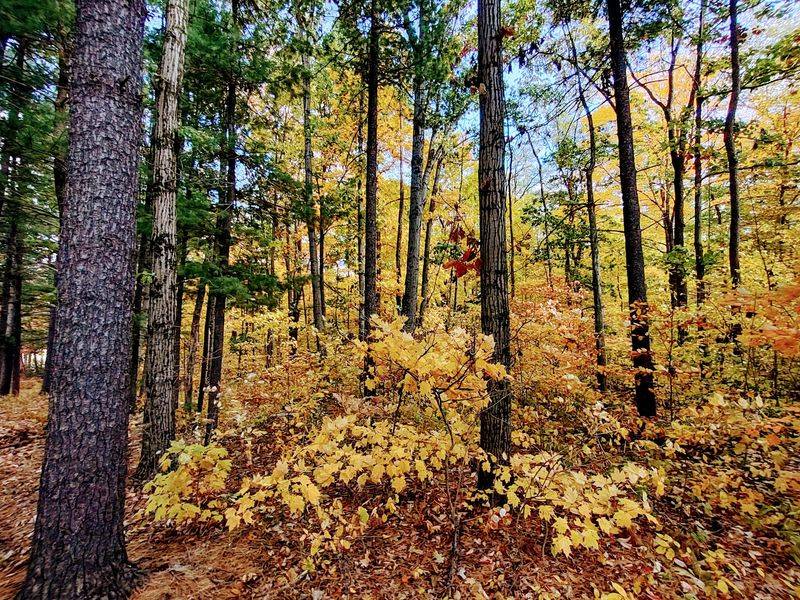
Northern Indiana is not known for deep woods, which makes this small forest feel like a lucky break. The main office sits at 9214 West-Lost Bridge West, Andrews, IN 46702, and roughly 950 acres of hilly ground climb up from the Salamonie River.
History left marks all over this land. Erosion once stripped much of it bare, and decades of careful replanting brought back a mix of young hardwoods alongside aging pine stands.
That patchwork creates genuinely different habitats within a short walk. Regenerating woodland, mature pockets, and shaded gorges each behave differently in autumn.
Trails wind past rocky ravines where small waterfalls appear after rain, a detail that surprises first-time visitors expecting flat farmland scenery.
Hominy Ridge Lake adds a calm centerpiece, ringed by trees that flare gold in mid-autumn.
Here is a nice bit of trivia: the name Salamonie comes from a Native American word meaning yellow paint, referring to bloodroot that once grew thick along the riverbanks.
Because the forest is compact, a full loop fits comfortably into one afternoon. Leftover time can go toward slow scanning near old stumps and leaf-packed hollows.
Fewer visitors means less disturbed ground, which foragers generally consider a very good sign.
Pair the stop with the larger reservoir area nearby for a fuller day outdoors.
8. Hardy Lake State Recreation Area, Scottsburg
Glowing fungi, known as foxfire, turn up in these woods, which is reason enough to add the stop. Offices are located at 4171 E.
Harrod Road, Scottsburg, IN 47170, while the park entrance can be found at 5620 N. Hardy Lake Road, Scottsburg, IN 47170.
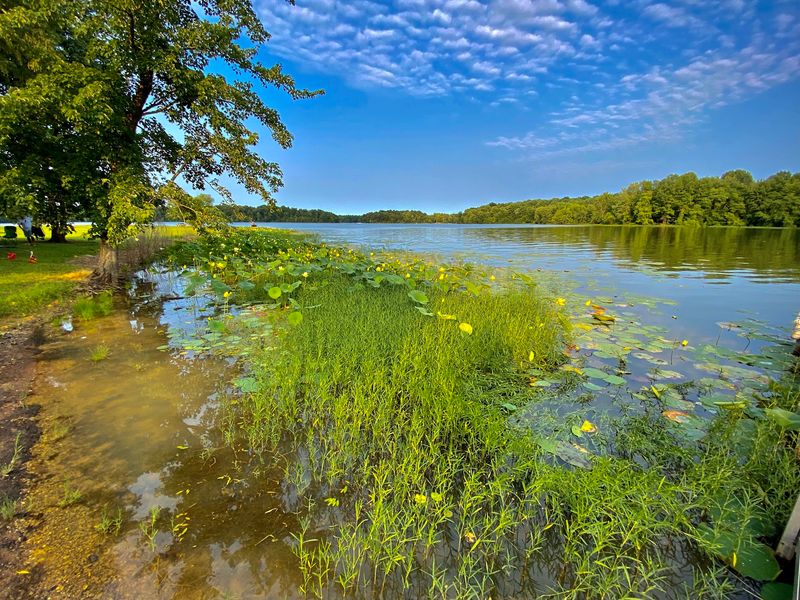
Over 2,100 acres wrap around a 741-acre lake built as a water-supply reservoir. Stable water levels year-round make the shoreline look consistent no matter the season.
Geology shifts here compared with the limestone country nearby. Slate and shale show through in places, while rocky bluffs frame the surrounding landscape.
Woodlands come in layers: managed pine groves, cedar thickets, tall tulip poplars, and mature oak stands. Each stage of forest growth attracts a different set of organisms on the ground.
Hidden among the oaks lies a family cemetery dating to the 1700s, a quiet reminder that people lived and worked in these hills long before the reservoir existed.
Trails connect the various forest types, so a single walk can pass through four distinct settings in under an hour.
Autumn evenings here stay still and cool, and the lake often goes glassy near sunset.
Bring a headlamp with a red setting if curiosity about that glowing fungus wins out after dark. Just stay on marked routes and let park staff know plans.
9. Brown County State Park, Nashville
.
Popularity is the trade-off. Main roads fill up during peak color, so the trick is heading where the tour buses do not go.
Ogle Hollow Nature Preserve is one such spot, sheltering rare yellowwood trees in a tucked-away setting that stays calm even on bright weekends.
Rally Campground Trail climbs and drops through upland woods and into deep ravines, and that range of terrain means a range of growing conditions underfoot.
For real solitude, Trail D in the far southwest corner runs long and remote, eventually linking toward portions of the Hoosier National Forest. Bring enough water for that one.
Fog mornings are the park’s signature. Valleys fill with white while ridgetops catch early sun, and the woods below stay damp and cool for hours.
Collection rules differ inside state parks, so check with park staff before gathering anything and treat the visit as observation first.
Even without filling a basket, the walk delivers. Few places in the Midwest hand over this much autumn scenery in a single afternoon, right at 1810 State Road 46 West, Nashville, IN 47448.
