New Hampshire has a quiet, creative side that most travelers never find on their first visit. Granite peaks, river paths, and forested hillsides hide some of the most surprising outdoor art spaces in all of New England.
I stumbled into a few of these places by accident, and each one left me genuinely speechless in the best possible way.
Frozen ice kingdoms in the White Mountains, sun-warmed bronze figures resting in manicured gardens, the range here is extraordinary.
I found myself standing in front of a sculpture on a quiet afternoon, the mountains rising behind it, and realized I had never seen anything quite like it. These are not the loud, well-advertised attractions you find on travel brochures.
They feel personal, a little secret, and completely worth every winding back road it takes to reach them.
1. Andres Institute of Art
Big Bear Mountain holds more than just trees and trails. Spread across 140 rugged acres in Brookline, the Andres Institute of Art is one of the most genuinely surprising outdoor sculpture parks in the entire Northeast.
Founded in 1996 by engineer Paul Andres and sculptor John M. Weidman, the park sits on land that once served as a ski area, which means the terrain is wonderfully dramatic.
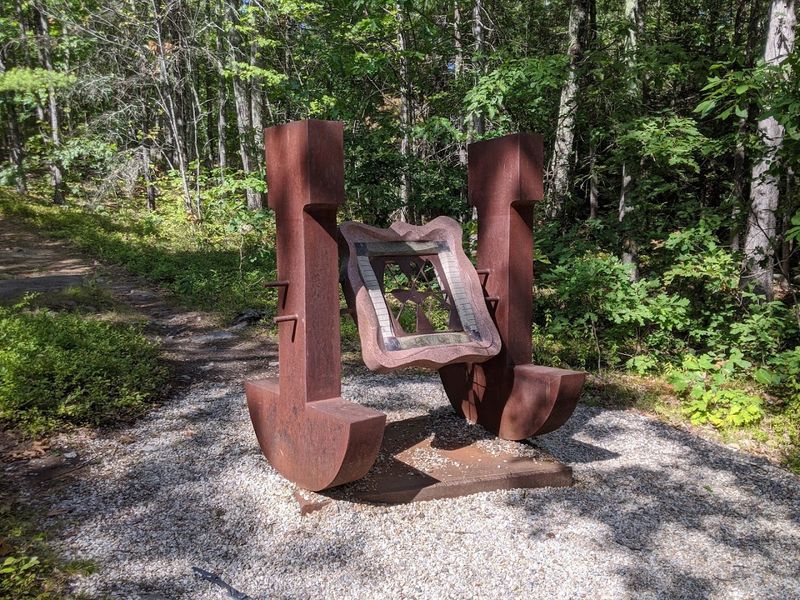
Over 100 metal and stone sculptures by international artists are placed along more than ten miles of hiking paths, appearing suddenly in forest clearings or perched on rocky outcroppings.
The experience feels less like visiting a gallery and more like going on a real adventure.
You never quite know what you will round the corner to find.
Each autumn, the park hosts an International Sculpture Symposium, where artists create brand-new works on-site, adding fresh pieces to the ever-growing collection.
Everything here is free and open to the public from dawn to dusk, every single day of the year.
The Welcome Center, housed in the old ski lodge, offers maps and a warm starting point for your exploration.
Address: 106 Route 13, Brookline, NH 03033
2. Saint-Gaudens National Historical Park
There is something deeply personal about walking through the grounds where a world-class artist once lived, worked, and found his greatest inspiration.
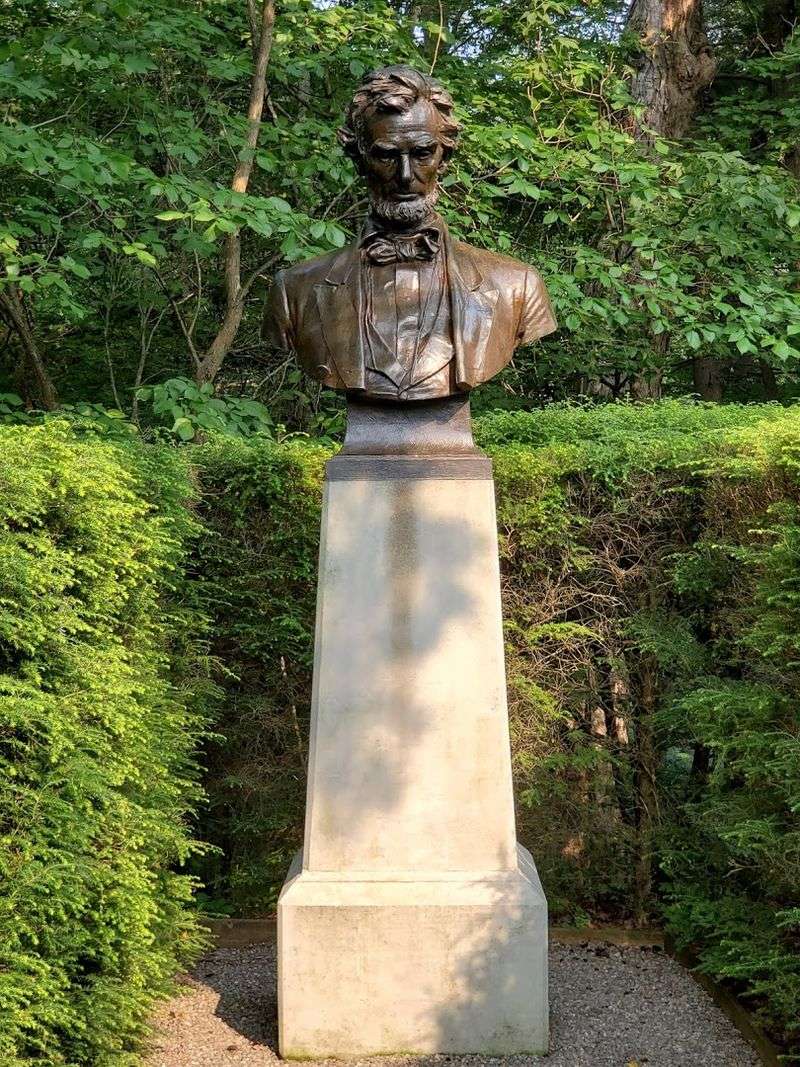
Saint-Gaudens National Historical Park in Cornish preserves the 190-acre estate of Augustus Saint-Gaudens, one of the most celebrated American sculptors of the late 19th century.
His home, known as Aspet, anchors a landscape that feels equal parts history and living art.
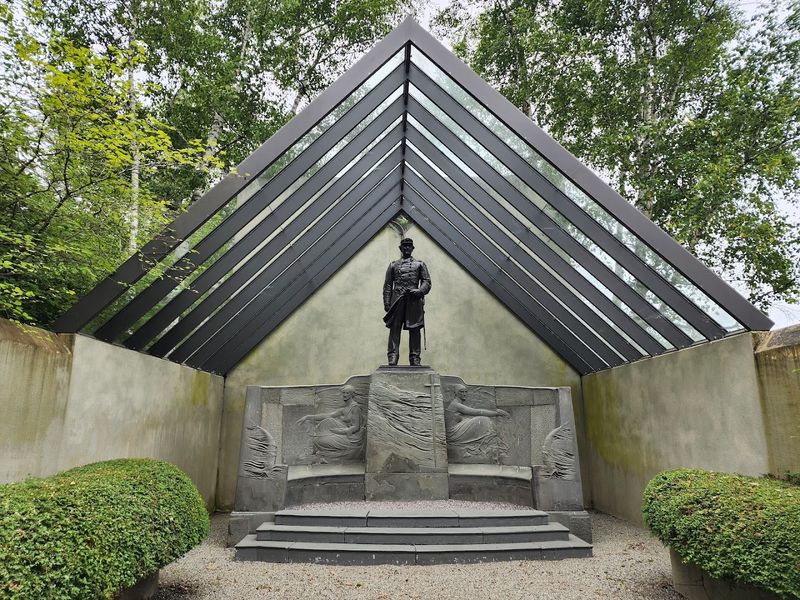
Bronze recastings of his most powerful works, including the Robert Gould Shaw and 54th Massachusetts Regiment Memorial and the quietly haunting Adams Memorial, are placed throughout formal gardens and shaded woodland paths.
The park carries a real cultural weight, continuing the legacy of the Cornish Colony, the influential artist community that once gathered here.
Summer brings seasonal concerts, contemporary art exhibits, and the annual Sculptural Visions festival.
Nature trails wind through wooded sections of the estate, offering peaceful moments away from the more formal garden spaces. The whole property invites slow, thoughtful wandering rather than rushed sightseeing.
It is the kind of place that rewards visitors who take their time and pay close attention to the details quietly waiting around every turn.
Address: 139 Saint-Gaudens Road, Cornish, NH 03745
3. The Ravine Studio at Saint-Gaudens National Historical Park
Most visitors to Saint-Gaudens National Historical Park spend their time in the formal gardens, which makes the Ravine Studio one of the park’s best-kept secrets.
Tucked at the forest’s edge, overlooking the quiet drama of Blow-Me-Down Ravine, this historic studio was originally built in 1900 as a working space for Augustus Saint-Gaudens’ stone-cutting assistants.
Today it serves an entirely different but equally meaningful purpose.
The studio houses the longest-running artist residency program within the entire National Park Service.
Each year, from June through October, a figurative sculptor takes up residence here and works on personal projects in this remarkably inspiring setting.
Visitors can often stop by to watch the process unfold, ask questions, and attend demonstrations that make sculpture feel approachable rather than intimidating.
What I found so compelling about this spot was its honesty. There is no performance here, just a working artist doing the real thing in a place soaked with creative history.
The surrounding woodland keeps the atmosphere hushed and focused. It is a rare chance to witness art being made in real time, surrounded by the same natural beauty that shaped one of America’s great sculptors a century ago.
4. Bedrock Gardens
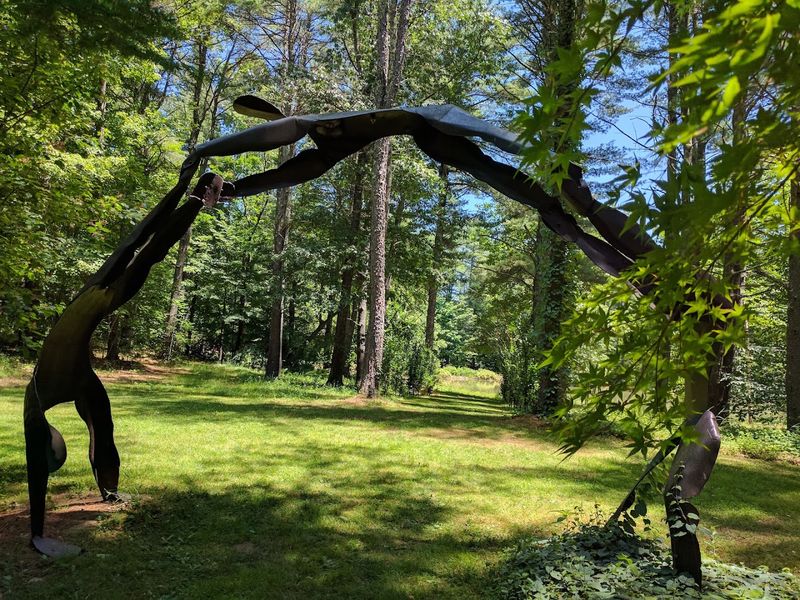
Bedrock Gardens does not announce itself the way big attractions do. The entrance is quiet, almost understated, which makes the moment you step onto the property feel like a genuine discovery.
What began as a private dairy farm in Lee has been transformed by co-founders Jill Nooney and Bob Munger into 30 acres of inventive landscape design woven together with original outdoor sculpture.
Jill Nooney, a sculptor herself, creates many of the art pieces from salvaged agricultural tools and repurposed metal. The results are abstract creatures, arching forms, and playful structures that feel like they grew right out of the ground.
The garden is organized into a series of distinct rooms and open spaces connected by winding paths, so every few minutes brings a completely new atmosphere and mood.
From the mossy floor of the Spiral Garden to the bold color of the Garish Garden, the variety here is genuinely impressive. Water features, unusual botanical specimens, and woodland trails all contribute to a layered experience that rewards slow exploration.
Bedrock Gardens has a quiet humor running through it. Nothing here takes itself too seriously, and that lightness makes the whole place feel wonderfully alive.
Address: 45 High Road, Lee, NH 03861
5. The Fells Historic Estate and Gardens, Newbury
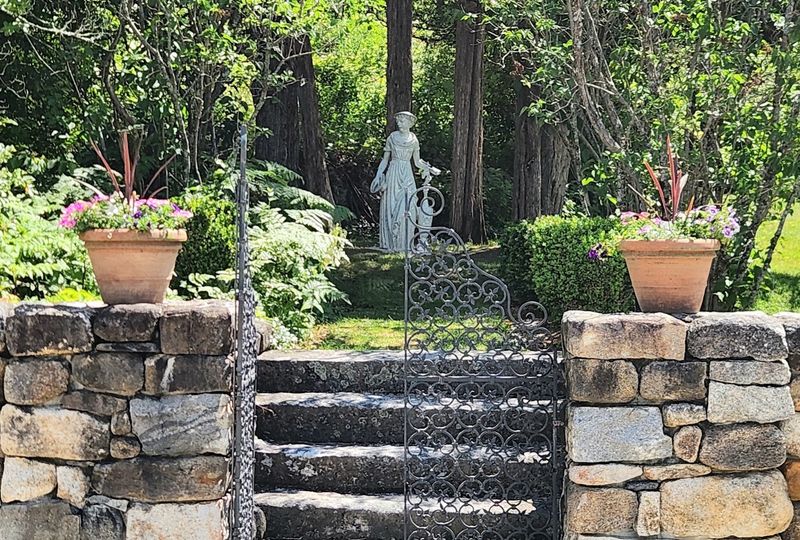
The Fells Historic Estate and Gardens in Newbury sits quietly along Route 103A, just up the hill from Lake Sunapee, and the first glimpse feels more like stumbling onto a well-kept secret than arriving at a curated destination.
The history here runs deep, with the 84-acre estate serving as the summer home of John Milton Hay, private secretary to Abraham Lincoln and later Secretary of State.
What drew me in was how thoroughly art has been woven into the landscape. The “Art in Nature” sculpture exhibit places works by local and regional artists throughout the grounds, nestled among rhododendrons and along stone paths.
The property also features a Poetry Walk, installing poems along the trails and adding a literary layer to the experience.
Beyond the art, the gardens themselves are a quiet marvel. The 100-foot Perennial Border, the formal Rose Terrace overlooking the lake, and the large rock garden with its winding paths each offer their own atmosphere.
The whole estate rewards slow exploration, leaving a quiet, lasting impression.
6. Ice Castles, North Woodstock
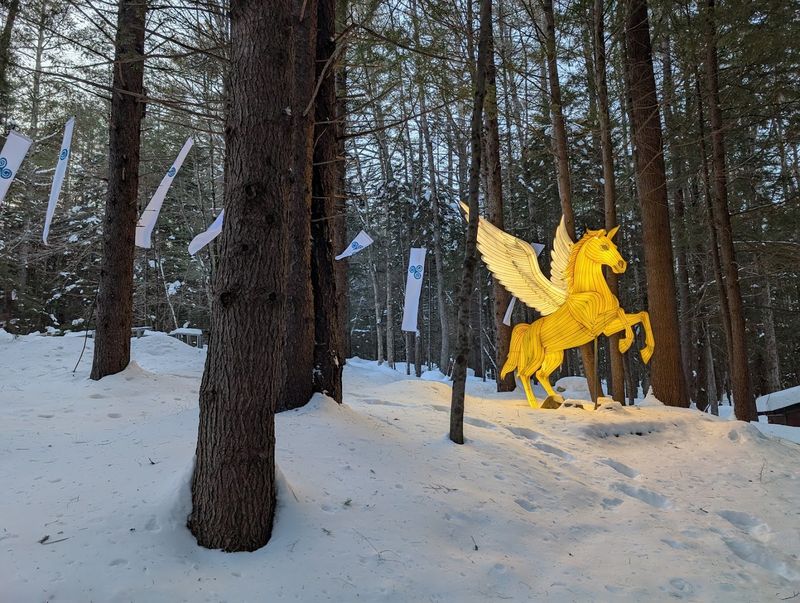
Every January, something almost unbelievable takes shape in North Woodstock. Skilled ice artisans begin growing, harvesting, and hand-placing hundreds of thousands of individual icicles, building an entirely frozen world from the ground up.
The Ice Castles installation is unlike anything else in New Hampshire, or honestly, most places on Earth.
Towering spires, winding tunnels, carved archways, and frozen slides emerge from the landscape over weeks of careful construction.
When daylight fades, thousands of color-changing LED lights embedded within the ice structure ignite, turning the entire installation into a glowing, otherworldly spectacle.
The colors shift slowly, washing everything in deep blue, rose, and amber, and the effect is genuinely magical in a way that photographs cannot fully capture.
Each season brings a fresh design, so returning visitors always find something new to explore. The installation typically opens in late December or early January and stays up through February or early March, entirely dependent on cold temperatures holding steady.
Beyond the ice formations themselves, visitors can enjoy a Mystic Forest Light Walk and other winter activities that round out the visit.
It is a fleeting, seasonal art sanctuary, and that temporary nature makes the whole experience feel even more precious and worth the trip into the mountains.
7. Peterborough Artist Community
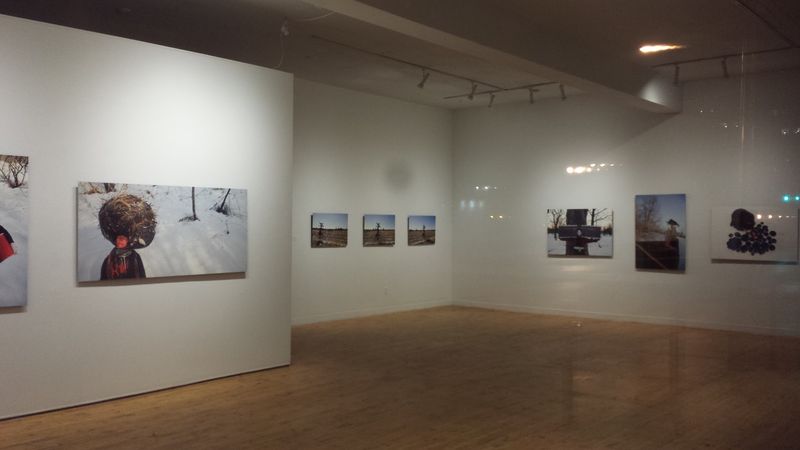
Art has a way of spilling out of buildings in Peterborough. The town has long held a reputation as one of New Hampshire’s most vibrant creative communities, and that reputation is earned in part by how thoroughly public art has been woven into everyday life here.
Sculptures appear along walking routes, murals brighten building facades, and intricate mosaics surface in spots you might almost overlook.
The Peterborough Art Trail encourages visitors to move through the town with curiosity, discovering pieces that range from large figurative sculptures to abstract installations.
Millennium Park is a particularly rewarding stop, where Bird Story in the Children’s Discovery Area sparks imagination across every age group.
Teixeira Park, affectionately nicknamed The Ruin Garden, features a granite structure designed for children to climb and explore, which gives the space an energy that feels genuinely playful rather than precious.
What makes Peterborough special is the sense that art here is not decorative. It feels like part of the town’s identity, something locals genuinely care about and protect.
A walk through the center of town on a quiet morning, when the streets are still and the light is soft, turns into something close to a gallery visit without any of the formality.
The art simply exists here, naturally and without apology.
8. Alnoba Outdoor Sculpture Park, Kensington
Not many people know that tucked into the quiet woods of Kensington, New Hampshire, there is a sculpture park spanning somewhere between 400 and 600 forested acres.
Alnoba, whose name comes from the Abenaki word meaning person, was created by philanthropists Alan and Harriet Lewis as a retreat space that places art, nature, and human connection at the center of everything it does.
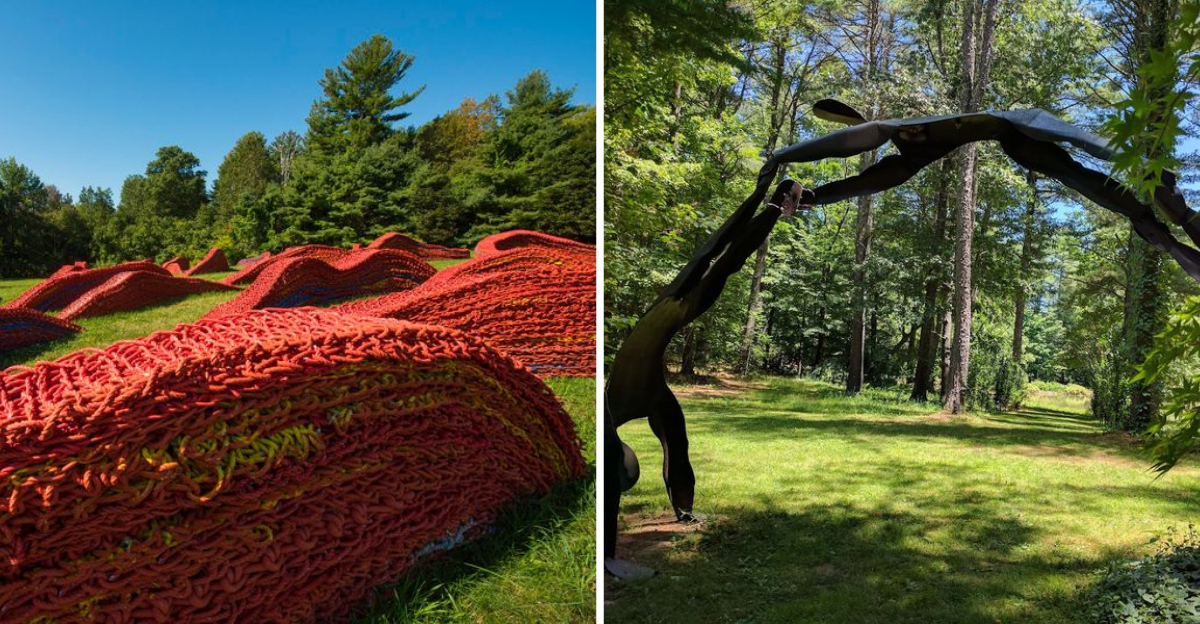
The collection here is genuinely world-class. Works by Andy Goldsworthy, Orly Genger, and Jaume Plensa are integrated into the landscape in ways that feel site-specific and intentional rather than simply placed.
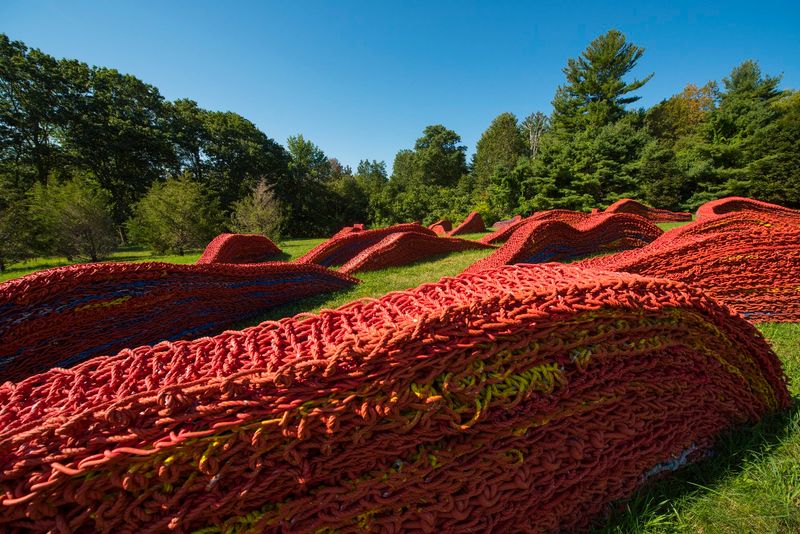
Orly Genger’s Going, Going, Gone, a massive undulating form made entirely from recycled lobster rope, practically invites visitors to run their hands across it.
A towering totem pole by native artists Calvin Hunt and John Livingston speaks to indigenous heritage with quiet dignity.
Alnoba actively encourages touching, climbing, and interacting with the sculptures, which sets it apart from most art spaces in a meaningful way. The park operates through scheduled tours and events rather than open drop-in hours, so planning ahead is essential.
That slight effort, though, makes each visit feel curated and intentional. The forest holds these works beautifully, and the whole experience stays with you long after you have driven back down the winding access road.
9. The Fells Historic Estate and Gardens
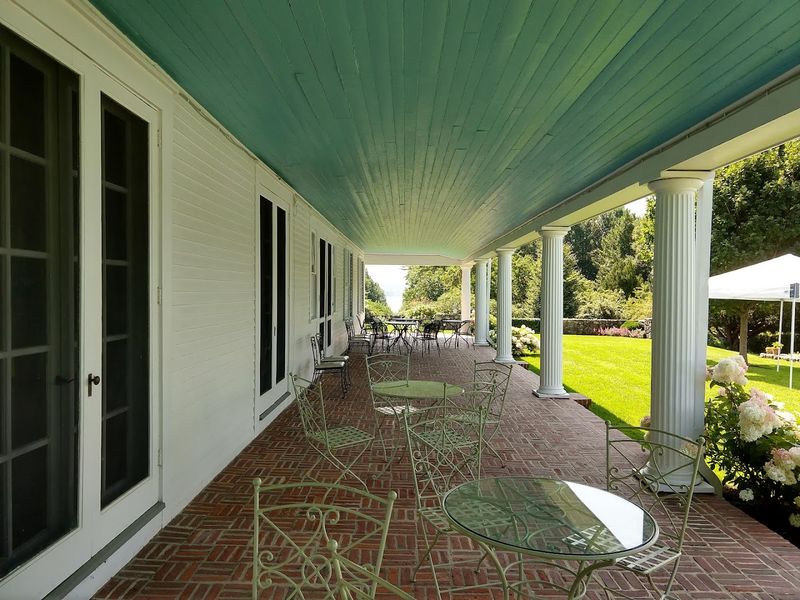
The Fells is the kind of place that feels like it was designed for slow afternoons.
Situated along the shores of Lake Sunapee in Newbury, this 80-plus-acre historic estate combines meticulously maintained gardens with a thoughtfully curated outdoor sculpture program that rewards visitors who take the time to wander rather than rush.
The Art in Nature program places works by regional artists throughout the grounds, positioning sculptures in garden rooms, along stone paths, and near water features where the natural light shifts beautifully throughout the day.
The placement feels deliberate and sensitive, as if each piece was chosen with a specific spot in mind rather than simply installed wherever space allowed.
Beyond the visual art, The Fells also runs a Poetry Walk, a collaboration with the local library that installs poems along scenic trails.
Rock gardens, native plant areas, and sweeping lakeside vistas all contribute to an estate that feels layered and endlessly interesting. I found myself doubling back on several paths simply because I had missed something the first time through.
The combination of literary and visual art, set against the backdrop of New Hampshire’s lake region, gives The Fells a character that is genuinely its own.
Address: 456 Route 103A, Newbury, NH 03255
10. Art on Main, Concord
Concord’s downtown has a personality that surprises people who expect a state capital to feel purely administrative.
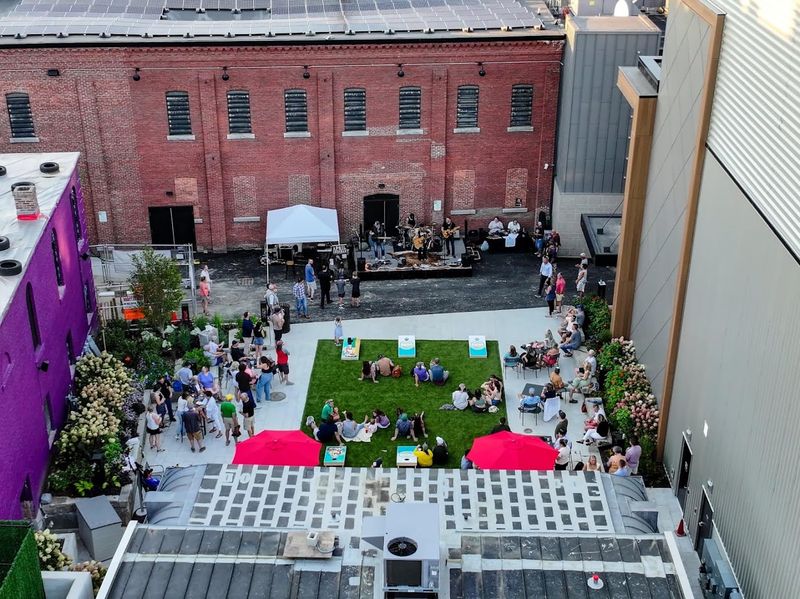
Art on Main, launched in 2018 through a partnership between the City of Concord and the Greater Concord Chamber of Commerce, brings rotating outdoor sculpture installations directly onto Main Street, turning a daily commuter route into an open-air gallery that anyone can access for free.
The program refreshes its collection annually, which means the street never quite looks the same from one year to the next.
Each new rotation brings a different set of voices and artistic approaches, keeping the experience genuinely fresh for locals and repeat visitors alike.
A self-guided tour format lets people move at their own pace, pausing in front of whatever catches their attention without any pressure or schedule to follow.
What I appreciate most about Art on Main is its democratic spirit. The sculptures live alongside coffee shops, bookstores, and government buildings, making art an ordinary part of a Tuesday afternoon rather than a special occasion requiring a separate trip.
Historic architecture frames each installation in a way that creates interesting visual conversations between old and new.
For travelers passing through Concord on the way to somewhere else, this is the kind of unexpected detour that tends to become the highlight of the whole journey.
