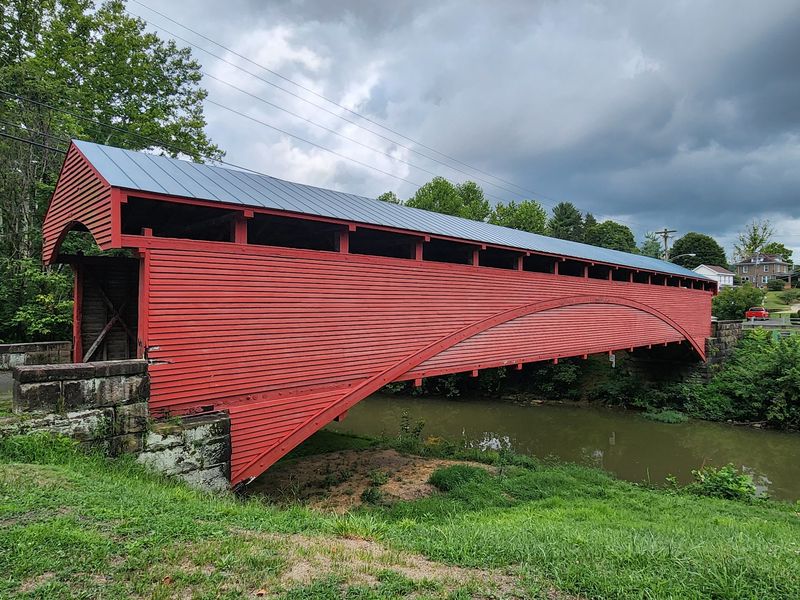
Some of the best memories in West Virginia are made on back roads, where you round a bend and spot a wooden bridge with a roof over its head. These old spans once echoed with hooves, wagon wheels, and folks heading to the mill or the county seat.
Many still stand today, cared for by communities that refuse to let them fade away. Here are seven that carry more than a century of stories, and every one is worth a Sunday drive.
1. Historic Philippi Covered Bridge, Philippi, WV
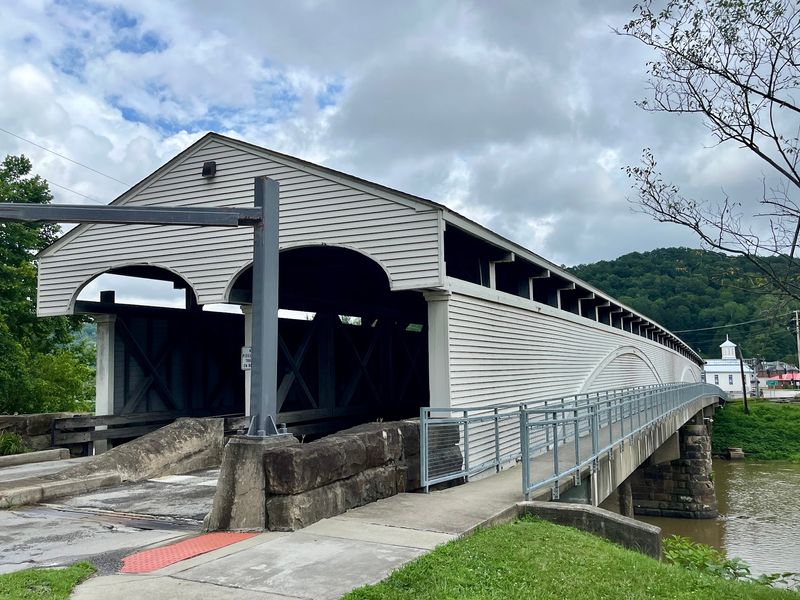
Picture Union and Confederate soldiers marching across the same boards your tires roll over today. Built in 1852 by Lemuel Chenoweth, the Philippi Covered Bridge is the oldest and longest covered bridge in West Virginia, stretching roughly 285 feet across the Tygart Valley River.
History runs thick here. The bridge played a part in the Battle of Philippi in 1861, often called the first land battle of the Civil War, and Union troops reportedly used it as barracks afterward.
It was upgraded in the 1930s to handle modern traffic, and it survived a serious fire in 1989 before being carefully restored.
Driving through feels bigger than you expect from outside. It is one of the rare two-lane covered bridges still in service, and it carries US Route 250 to this day.
A fire safety system now helps protect the old timbers.
Plan to linger a bit. Veterans park and memorial areas sit near the ends, there is a small picnic spot, and a museum housed near the old train station adds local color.
Kayakers enjoy the river below, and one of the state’s Almost Heaven Swings is here too.
Free parking makes the stop easy, and the bridge is open around the clock.
2. Historic Barrackville Covered Bridge
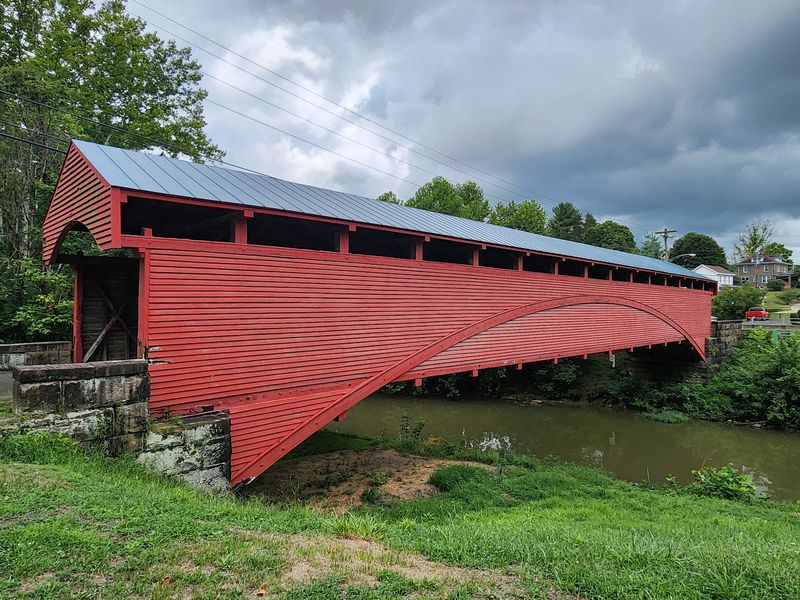
A family’s quick thinking is the reason this red beauty still stands. During the Civil War, Confederate troops under General William Grumble Jones reportedly planned to burn the Barrackville Covered Bridge, but a local family talked him out of it.
Lemuel Chenoweth built it in 1853, just one year after his work in Philippi. At about 145 feet over Buffalo Creek, it ranks as the second-oldest and second-longest covered bridge in the state.
The siding came along roughly twenty years later, giving it the snug barn-like look folks love.
Cars no longer rumble through. After a restoration in 1999, the span was set aside for foot traffic, which makes it a peaceful place to slow down.
You can step inside, sit on a bench, and listen to the creek moving below the old Burr arch timbers.
Signs share some historic background, so bring the grandkids and let them read along. Children tend to be fascinated by the size of the beams and the echo of their footsteps.
Parking is free, both in a small lot and along the street, and the bridge welcomes visitors any hour. For a slice of Marion County pride, it is hard to beat this one.
3. Historic Staats Mill Covered Bridge, Ripley, WV
Some bridges stay put for generations. Others, like Staats Mill, pack up and move to a new neighborhood.
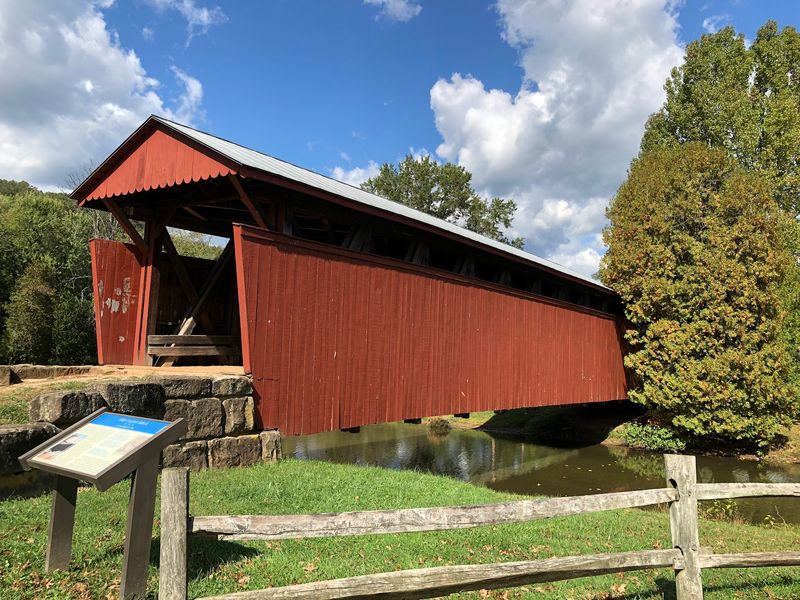
Completed around 1887 or 1888, this handsome red span first crossed the Tug Fork of Big Mill Creek in Jackson County, earning it the old nickname Tug Fork Bridge. Records suggest it cost roughly $1,800 to build, a hefty sum for a rural county back then.
Its roughly 101-foot Long truss design reflects careful engineering from an era of wagons and mule teams.
Eventually the bridge was taken apart piece by piece and rebuilt at Cedar Lakes, where it now rests in a park setting. That relocation saved it from fading into history, and the preservation work shows.
The timbers look crisp and well cared for.
What makes a visit here special is the setting. Cedar Lakes offers walking trails and room for family activities, so the bridge becomes part of a relaxed afternoon rather than a quick roadside pause.
Photographers find plenty to love, especially when the red siding pops against the trees. It is one of only two remaining covered bridges in Jackson County, so locals are rightly proud.
Bring a camera and comfortable shoes for the trails.
4. Historic Herns Mill Covered Bridge, Lewisburg, WV
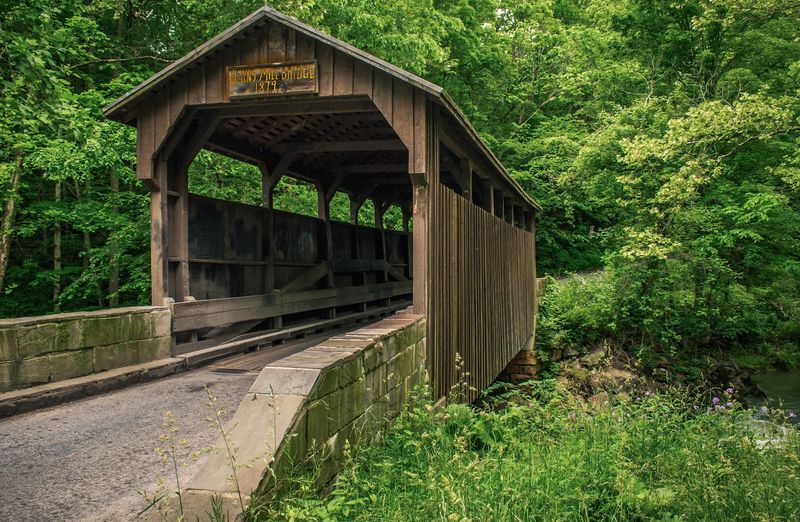
Eight hundred dollars. That is reportedly what the Greenbrier County court paid to build the Herns Mill Covered Bridge back in 1884, and it has more than earned its keep.
Tucked along a quiet country road near Lewisburg, the bridge crosses Milligan Creek in a forested hollow that feels miles from anywhere. At about 54 feet long and only around ten and a half feet wide, it is snug, charming, and still open to cars.
Drive slowly, and you may spot wildlife along the way.
A major restoration finished in 2000 reportedly topped $543,000. Crews added steel beams under the timber roadway and replaced the roof trusses, metal roof, and wooden siding, so the old queenpost truss can keep serving the community for years to come.
Covered bridge fans often call this one the classic picture of the form. The creek is lovely, traffic is light, and the whole scene has a calm, almost storybook quality.
It sits a short hop off the beaten path, not far from the West Virginia Renaissance Festival grounds. Herns Mill is one of just two covered bridges left in Greenbrier County, making it a treasured link to the region’s farm and mill heritage.
5. Historic Sarvis Fork Covered Bridge, Sandyville, WV
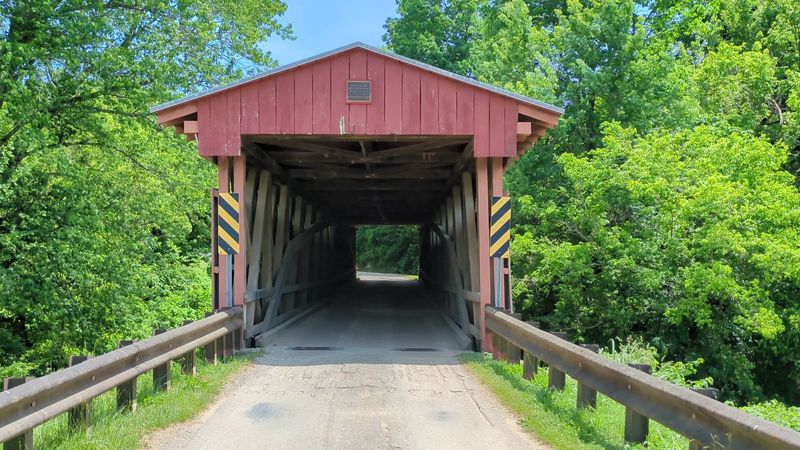
Roll down the windows as you cross. The Sarvis Fork Covered Bridge is known for the distinctive rumble it makes when a car passes over its boards, a sound that might take you straight back to childhood.
Dating to 1889, this span is one of just two remaining covered bridges in Jackson County, partnered in spirit with Staats Mill up the road. It still carries vehicles, so you can experience it the way generations of farm families did, only with rubber tires instead of iron-rimmed wagon wheels.
Finding it is simple. The bridge sits roughly a block off the main road on a paved lane, which makes it an easy detour for anyone passing through the Sandyville area.
Construction buffs will enjoy studying the framework. The truss work is interesting to look at up close, and the overall shape has a pleasing, sturdy look that fits right into the rolling countryside.
A free parking lot lets you hop out and wander for photos. It stays open all day and night, though Sunday mornings and afternoons tend to draw the most visitors.
Pair it with Staats Mill for a Jackson County covered bridge double feature.
6. Historic Indian Creek Covered Bridge, Union, WV
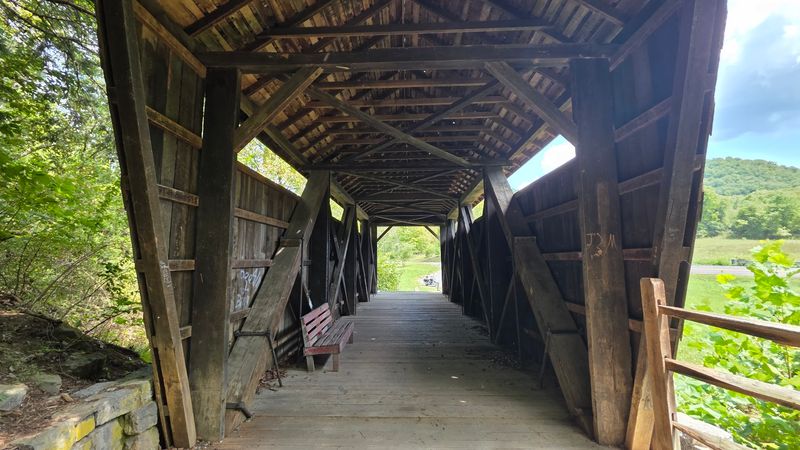
Most teenagers today are learning to drive. In 1898, brothers Oscar and Ray Weikel, reportedly just 16 and 18, were building the Indian Creek Covered Bridge in Monroe County.
Getting there is half the fun. The drive along US Route 219 winds past rolling hills and dairy farms, and in peak fall season the scenery can be downright breathtaking.
Once you arrive, a small gravel lot gives you a free place to park.
The bridge itself has been restored and is well maintained, with its weathered wood looking right at home above the creek. Historical information on site helps fill in the story, so you leave knowing more than when you pulled in.
Families appreciate the short walking trail nearby. It is an easy stroll, perfect for stretching your legs or letting little ones explore.
The creek below invites a quiet pause, and plenty of folks simply sit and enjoy the sound of moving water.
Open every hour of every day, the bridge makes a great stop whether you are passing through Union or planning a leisurely backroads loop through Monroe County. Bring a camera, because the photo opportunities here are generous in every season.
7. Historic Locust Creek Covered Bridge, Renick, WV
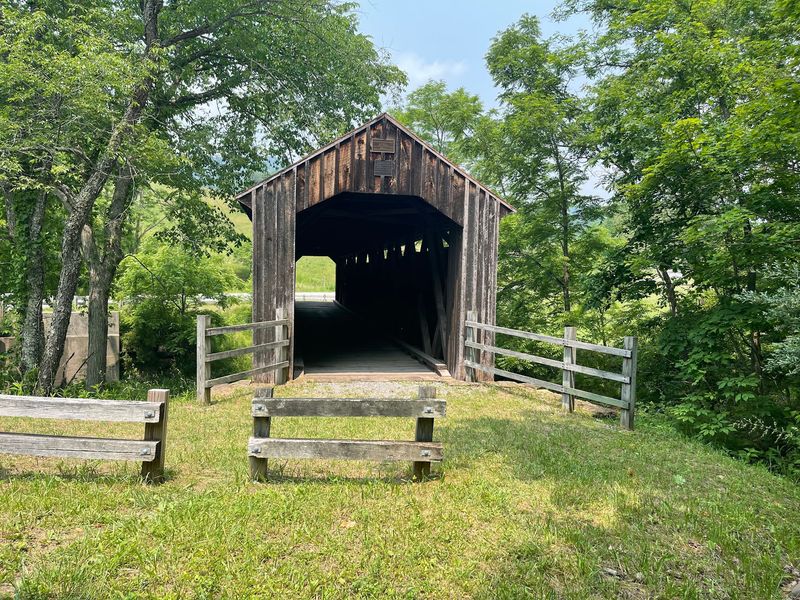
Out where the pavement meets pasture, the Locust Creek Covered Bridge waits patiently for anyone willing to wander. Built in 1888 and rehabilitated in 2002, it has watched country life roll by for well over a century.
The setting is pure rural Greenbrier County. Country homes dot the landscape, a creek flows nearby, and the whole place feels wonderfully removed from the hurry of town.
Wildflowers often brighten the banks in warmer months, adding color to your photos.
A small parking area holds just a couple of vehicles, so you can get out and walk across the bridge at your own pace. The wooden interior is beautiful, and the framework shows the kind of craftsmanship that built rural West Virginia.
One thing to know ahead of time: there is not much historical signage on site. A little reading before you go will make the visit richer, especially if you are sharing the story with grandkids.
Open around the clock, it pairs nicely with Herns Mill for a Greenbrier County bridge day.
Plan your trip using these addresses: Philippi at 26416 US-250, Philippi, WV 26416, and Locust Creek at Co Rte 31, Renick, WV 24966. Which of these bridges do you remember crossing?
