Texas travel gets a lot more interesting once the famous stops stop running the itinerary.
Beyond the packed main streets, headline attractions, and places everybody already has saved on their phone, there are quiet historic sites, strange roadside curiosities, overlooked nature preserves, tiny museums, sleepy towns, and scenic corners that rarely get the same attention.
The fun is not just finding somewhere less crowded; it is getting that little rush of discovering a place that makes you wonder why nobody mentioned it sooner. Some of these destinations are simple, some are wonderfully odd, and a few barely feel like tourist attractions at all.
For travelers who have already done the obvious Texas road trip circuit, these hidden stops prove there is still plenty left to uncover without following the same crowd from parking lot to parking lot.
1. Quitaque
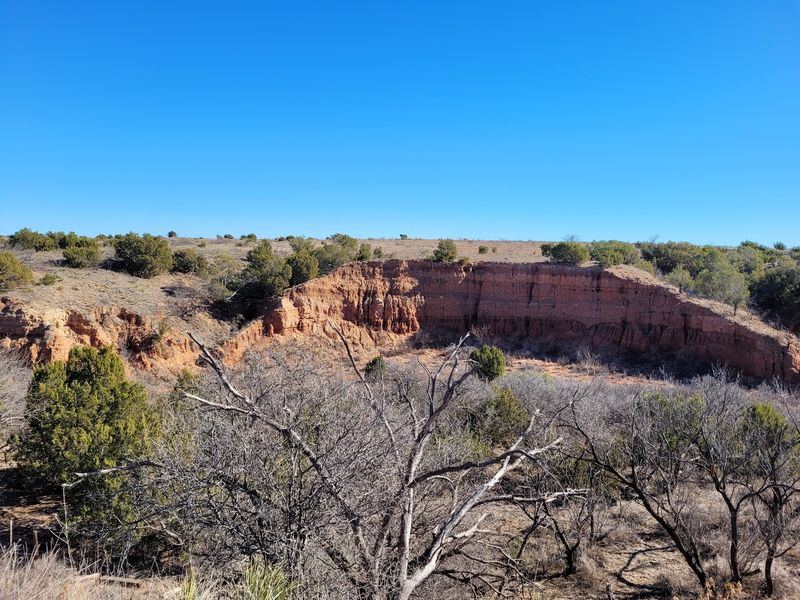
There is something almost cinematic about arriving in Quitaque for the first time. The Texas Panhandle stretches endlessly in every direction, and then suddenly the land breaks open into dramatic red rock canyons that most people have never heard of.
It feels like a well-kept secret, and honestly, that is part of the appeal.
Caprock Canyons State Park sits just outside town and offers nearly 90 miles of trails for hiking, biking, and horseback riding. Lake Theo adds another layer, welcoming visitors for no-wake boating, fishing, and swimming.
The park is also home to the official Texas State Bison Herd, a genuinely moving sight against those rust-colored canyon walls.
Nighttime here is something else entirely. The skies above Quitaque rank among the darkest in all of Texas, making stargazing feel almost overwhelming in the best possible way.
The Milky Way appears as a clear, sweeping band overhead, not just a faint suggestion.
Back in town, the Comanchero Canyons Museum tells the layered story of Native American tribes, Comanchero traders, and events like the Red River War. The old storefronts along the main street hold a quiet charm, some curated by the local women’s club into small, museum-like exhibits.
Trail users passing through the Clarity Tunnel during warmer months may also encounter roosting bats, adding an unexpected wildlife moment to an already memorable ride.
2. Llano
Llano has a way of catching people off guard. It sits quietly in the heart of the Texas Hill Country, far enough from the busier tourist towns that it still feels genuinely relaxed.
The pace here is slow in the best possible sense, and the river running right through town makes it hard to feel anything but at ease.
The Llano River is the main draw, and it earns every bit of that reputation. Clear, spring-fed water moves through rocky stretches that are perfect for swimming, kayaking, fishing, or simply floating on an inner tube with nowhere pressing to be.
Access points like Grenwelge Park make it easy for anyone to get in and enjoy the water without much planning.
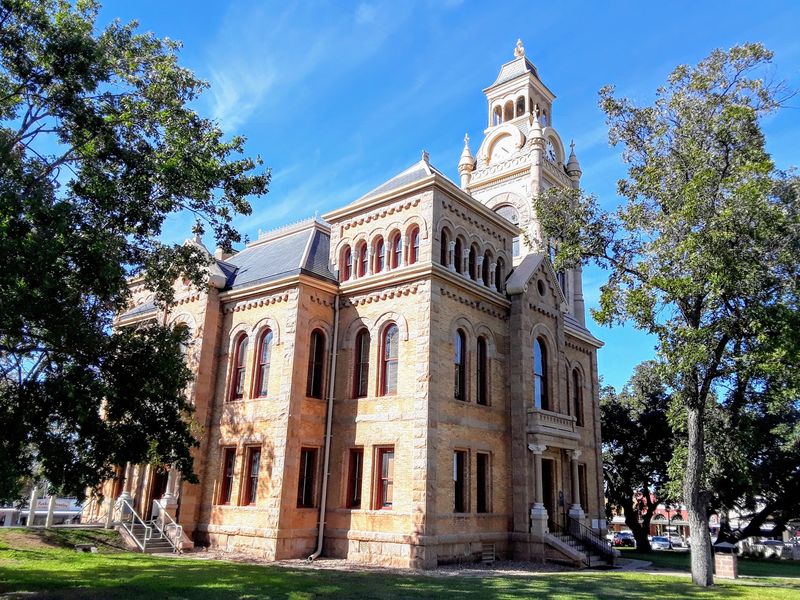
Downtown Llano offers a different kind of reward. The historic square and the Llano County Courthouse give the town a sense of permanence and pride that feels authentic rather than curated for visitors.
Local events throughout the year, including the Llano Earth Art Fest with its stone stacking competitions and the Starry Starry Nights Christmas Lights display, show just how much community spirit this small town carries.
For those wanting a half-day adventure nearby, Enchanted Rock State Natural Area is only a short drive away. That massive pink granite dome rising from the Hill Country landscape is a rewarding hike with sweeping views at the top.
Llano is the kind of place that rewards slow travel and curious wandering.
3. Driftwood
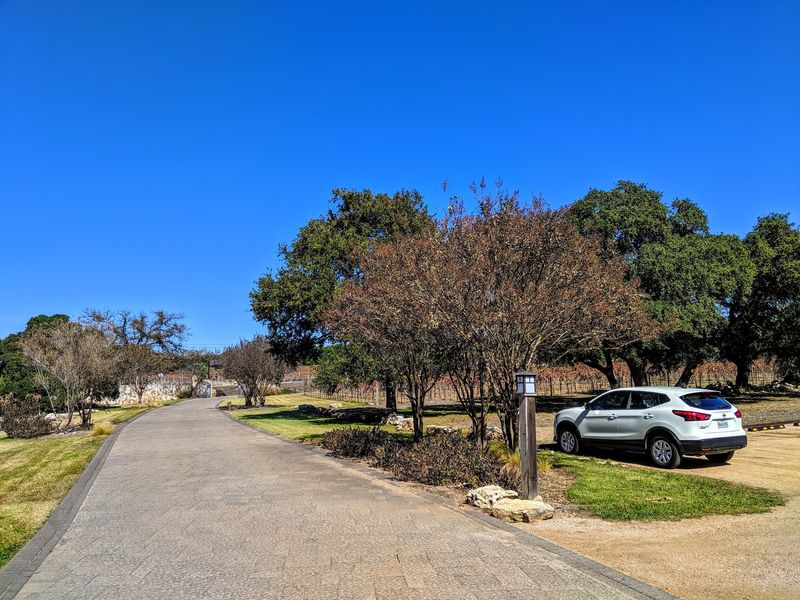
Driftwood does not announce itself loudly. This unincorporated Hays County community sits quietly among rolling Hill Country hills, and if you blink at the wrong moment on the highway, you might miss it altogether.
That understated quality is exactly what makes it worth slowing down for.
Salt Lick BBQ is the name most people associate with Driftwood, and the reputation is well earned. Pit-smoked brisket, pork ribs, and sausage served at long picnic tables under sprawling oak trees create an experience that feels more like a gathering than a meal.
On weekends, live music adds to the atmosphere, turning a lunch stop into something genuinely memorable.
The surrounding area is also home to several notable wineries.
Driftwood Estate Winery offers panoramic Hill Country views from its tasting room and outdoor patio, while Duchman Family Winery impresses with its Tuscan-inspired architecture and Italian-style wines that have earned serious recognition.
It is the kind of wine country that does not feel stuffy or intimidating.
Charro Ranch Park provides a pleasant outdoor escape with trails that wind past wildflowers, art installations, and occasional deer sightings.
Desert Door Distillery, which crafts a unique sotol spirit from wild-harvested desert plants, offers a distinctive tasting experience in a striking desert-modern setting.
The Mercer Street Dance Hall rounds things out, giving visitors a chance to enjoy live music and two-stepping in a space that feels entirely, unapologetically Texan.
4. Alpine
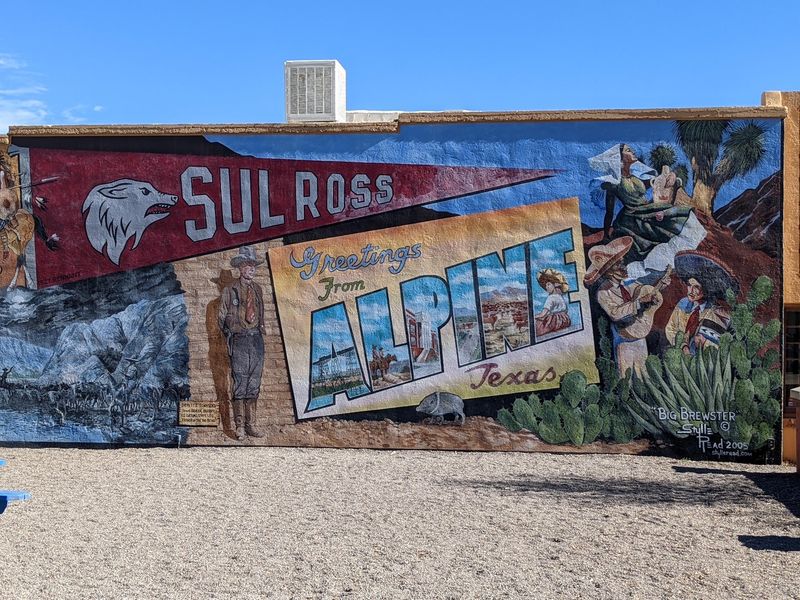
Alpine carries a personality that is hard to pin down and even harder to forget. Perched at high elevation in West Texas, this small city blends artistic energy with wide-open desert beauty in a way that feels entirely its own.
The nickname “Eden of the West” sounds like an exaggeration until you actually get there.
The downtown area rewards anyone willing to walk it slowly.
Historic murals cover building walls, a self-guided walking tour highlights more than 40 significant structures, and Kokernot Field, a lovingly preserved 1940s baseball stadium, offers a chance to catch an Alpine Cowboys game in one of the most atmospheric venues in the state.
That stadium alone is worth a detour.
Sul Ross State University anchors the cultural side of town. The Museum of the Big Bend on campus houses an impressive map collection and exhibits covering the natural and cultural history of the entire region.
The campus itself offers a short historic hike with scenic views that frame the surrounding desert landscape beautifully.
Alpine also works exceptionally well as a base for exploring the broader Big Bend region. Big Bend National Park, Big Bend Ranch State Park, and the Chihuahuan Desert Nature Center are all within reach for day trips.
After dark, the McDonald Observatory hosts public star parties that take full advantage of the area’s remarkably clear skies. Ghost tours and a Hispanic Heritage Tour add further texture to what is already a richly layered destination.
5. Palo Pinto
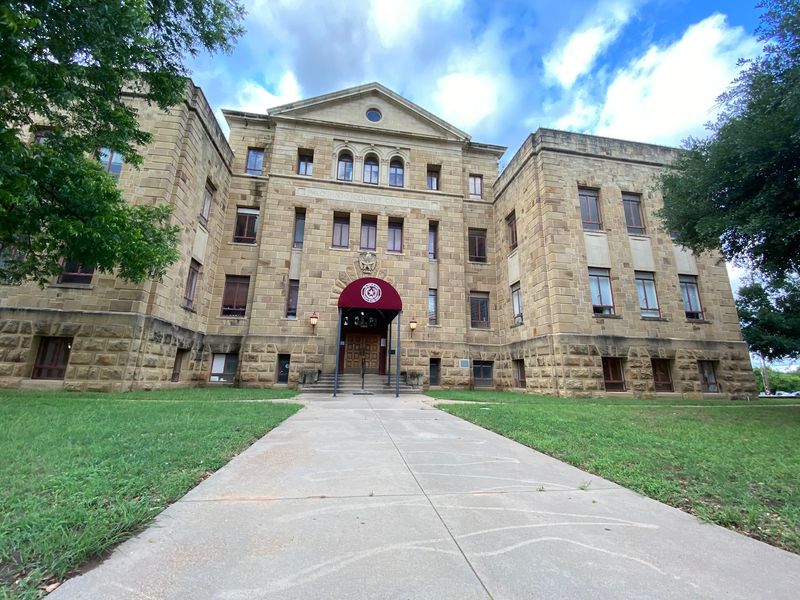
Palo Pinto is the kind of place that history quietly absorbed and then held onto. Once the county seat of Palo Pinto County, the town lost its prominence when the railroad chose a different route, but what remained is a community with deep roots and a landscape that feels refreshingly unhurried.
The 1880s courthouse ruins still stand as a reminder of what once was.
The surrounding North Texas Hill Country terrain is genuinely beautiful in a way that surprises people who associate the region only with flat plains. Rolling hills, rocky creek beds, and the peaceful presence of Tucker Lake create a natural setting that invites exploration rather than rushing.
The newest state park in Texas, Palo Pinto Mountains State Park, is still developing but already offers more than 16 miles of planned trails and over 4,000 acres to wander.
Tucker Lake opens up water activities including fishing, swimming, and motorless boating in a setting that feels removed from the modern world. White-tailed deer, turkeys, raccoons, and bald eagles have all been spotted within the park boundaries.
The land itself carries an ancient story, with archaeological evidence suggesting human habitation stretching back more than 8,000 years.
The Old Jail Museum Complex in town offers a fascinating look into the county’s past. Nearby, the ghost town of Thurber tells the story of a once-thriving coal and brick mining community that rose and fell within a few generations.
Palo Pinto rewards the kind of traveler who enjoys reading a landscape as much as admiring it.
6. Terlingua
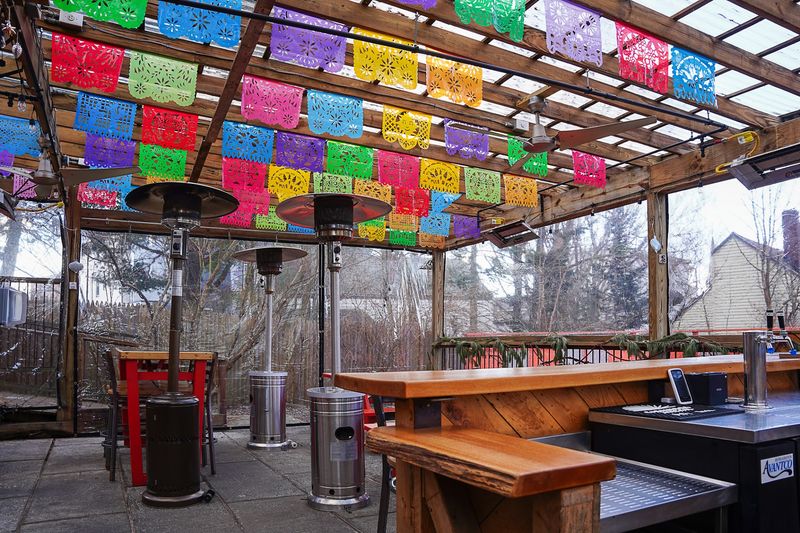
Terlingua defies easy description. It is technically a ghost town, but calling it that misses something essential about the place.
There is a living, breathing community here, one that has grown up around the ruins and the desert in a way that feels both eccentric and deeply sincere. The vibe is genuinely unlike anywhere else in Texas.
The Terlingua Ghost Town is the heart of the experience. Crumbling adobe houses, rusting old vehicles, and a historic cemetery dating to the early 1900s mercury mining era create an atmosphere that is part history lesson and part open-air art installation.
The Chisos Mining Company once made this one of the largest quicksilver producers in the country. That past lingers in every weathered wall.
The Starlight Theatre, originally a 1930s movie house, now serves as a lively restaurant known for its eclectic menu and live music on “The Porch.”
Musicians perform against a backdrop of desert sunsets that are genuinely hard to believe until you see one in person. The Terlingua Trading Company, housed in the old company store, functions as a community hub and a wonderfully odd shop.
Stargazing in Terlingua ranks among the best experiences the state offers. The Milky Way appears as a sharp, defined band across the sky on clear nights.
The town also draws visitors each year for its famous International Chili Cook-Off, a spirited and slightly chaotic event with real personality. Guided rafting and kayaking trips on the Rio Grande are available for those wanting to push further into the wilderness.
7. Gorman Falls, Colorado Bend State Park
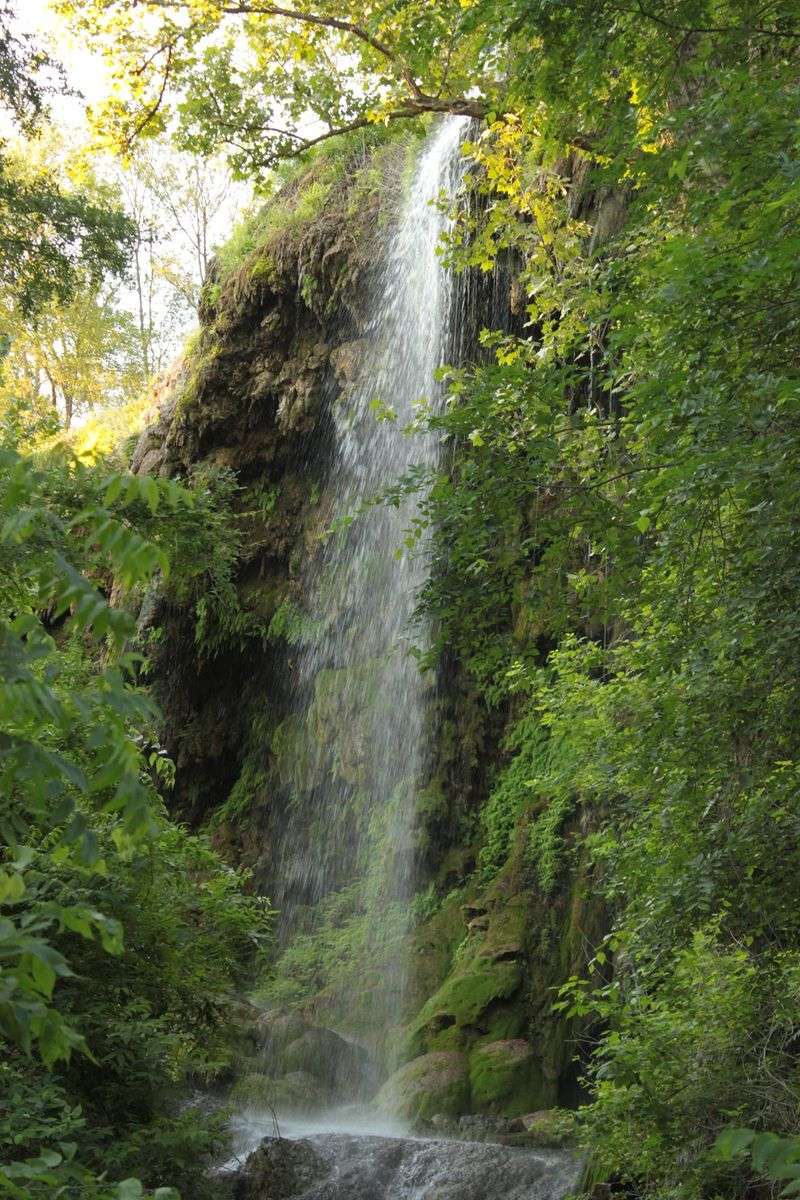
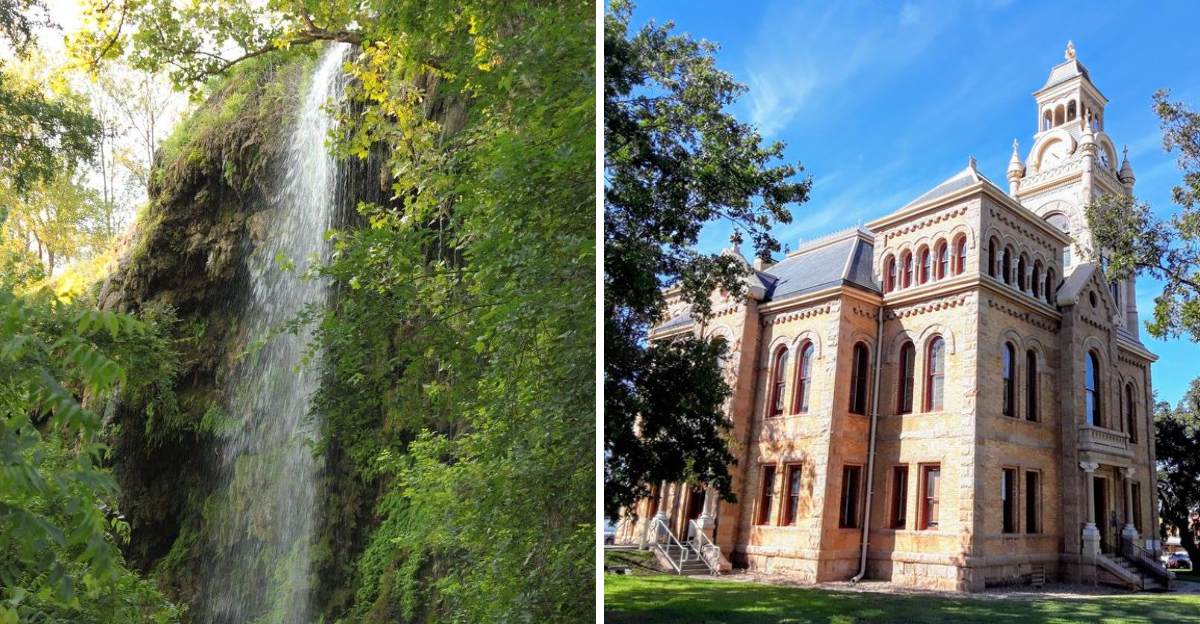
Gorman Falls earns every superlative thrown at it. Hidden inside Colorado Bend State Park, this 70-foot waterfall looks like it belongs in a tropical rainforest rather than Central Texas.
Green moss clings to every surface, ferns thrive in the constant mist, and the travertine formations surrounding the falls continue to grow as mineral-rich water deposits fresh layers of calcite over time. It is a living waterfall in the most literal sense.
The hike to reach it covers roughly 2.6 to 3 miles round trip over rocky terrain. Most of the trail is manageable, but the final descent into the canyon is steep and slippery, with cable handrails to assist.
The trail passes through Ashe junipers, prickly pear cacti, and native grasses before the vegetation thickens and the sound of rushing water begins to build.
At the base of the falls, the temperature drops noticeably. Small travertine dams create quiet, clear pools that shelter a pure strain of Guadalupe bass, the official state fish of Texas.
Swimming, wading, and climbing near the falls are all prohibited to protect the fragile ecosystem, which is a rule worth respecting given how extraordinary the place is.
A side detour along the trail leads to the Tie Slide Overlook, where the Colorado River and the surrounding Hill Country spread out 200 feet below.
The park draws fewer visitors than those closer to major cities, which means the experience tends to feel quieter and more personal than the scenery might suggest.
Address: 2236 Park Hill Dr, Bend, TX 76824
8. Devil’s Sinkhole State Natural Area
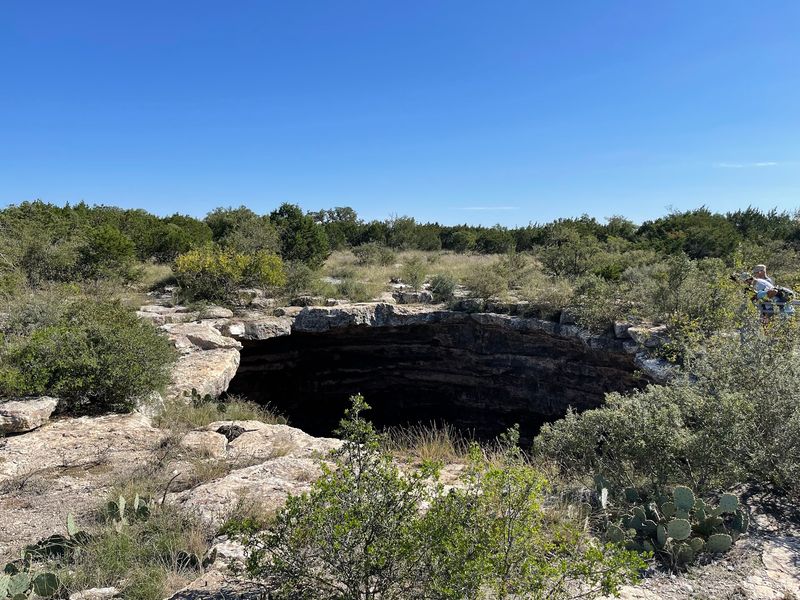
Few natural features in Texas carry the raw drama of the Devil’s Sinkhole. This massive circular cavern opens up to 60 feet wide at the surface and plunges 350 feet into the earth, making it one of the largest single-chambered and deepest caves in the state.
The surrounding landscape of limestone uplands, live oak shade, and craggy canyons adds to the sense that this is somewhere genuinely remote and special.
Access is strictly by guided tour, which actually enhances the experience rather than limiting it. Rangers lead visitors to a rim platform where the real spectacle unfolds each evening from late spring through early fall.
Approximately three million Mexican free-tailed bats emerge from the sinkhole at dusk, spiraling upward in a swirling mass that fills the sky. The sheer scale of it is difficult to process in the moment.
Scientists estimate that this colony can consume up to 30 tons of beetles and moths in a single night. That number sounds impossible, but watching the emergence makes it feel entirely believable.
Several thousand cave swallows also share the sinkhole, adding movement and sound to an already extraordinary scene.
The cave’s interior harbors rare organisms found nowhere else in the world, including an endemic amphipod and a rare aquatic isopod living in freshwater pools along the cavern’s perimeter. A unique Mexican fern clings to the sinkhole walls.
Ancient archaeological sites within the natural area suggest human presence for thousands of years, and several Native American tribes considered the sinkhole a sacred portal.
Address: 101 N Sweeten St, Rocksprings, TX 78880
9. Old Tunnel State Park
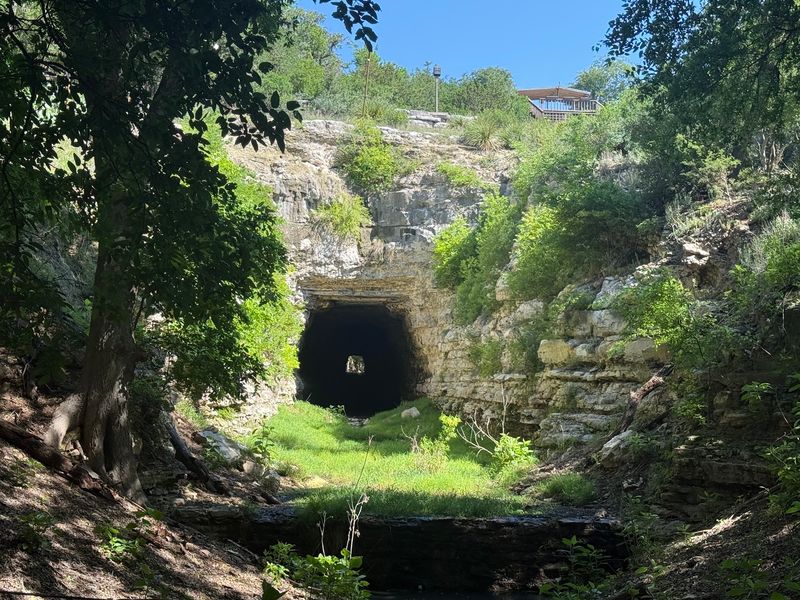
Old Tunnel State Park holds the title of the smallest state park in Texas, but what it lacks in size it more than compensates for in spectacle.
Nestled in the Roland Hills near Fredericksburg, this quiet park carries a sense of calm during the day and transforms into something extraordinary each evening from May through October.
It is the kind of place that rewards patience.
The park’s central feature is a 920-foot-long railroad tunnel, hand-dug and once used by the Fredericksburg and Northern Railway until 1941. That same tunnel now serves as a seasonal home for an estimated three million Mexican free-tailed bats and roughly 3,000 cave myotis bats.
Watching them emerge at dusk is one of those experiences that is difficult to describe without sounding hyperbolic.
Two viewing areas offer different perspectives on the emergence. The upper deck provides a panoramic view with the Hill Country rolling out behind the tunnel entrance.
The lower area puts visitors much closer to the action, close enough that the collective sound of millions of wings creates a noticeable breeze. Rangers often give educational talks before the emergence, sharing details about bat behavior and the tunnel’s history that make the event feel more meaningful.
During daylight hours, a short nature trail less than half a mile long winds through the park at an easy pace suitable for all ages. Painted buntings, cardinals, and wrens appear regularly along the trail.
Armadillos, raccoons, and deer have also been spotted here. Picnic tables sit under oak shade, offering a peaceful spot to settle in before the evening’s main event begins.
Address: 10619 Old San Antonio Rd, Fredericksburg, TX 78624
10. Monahans Sandhills State Park
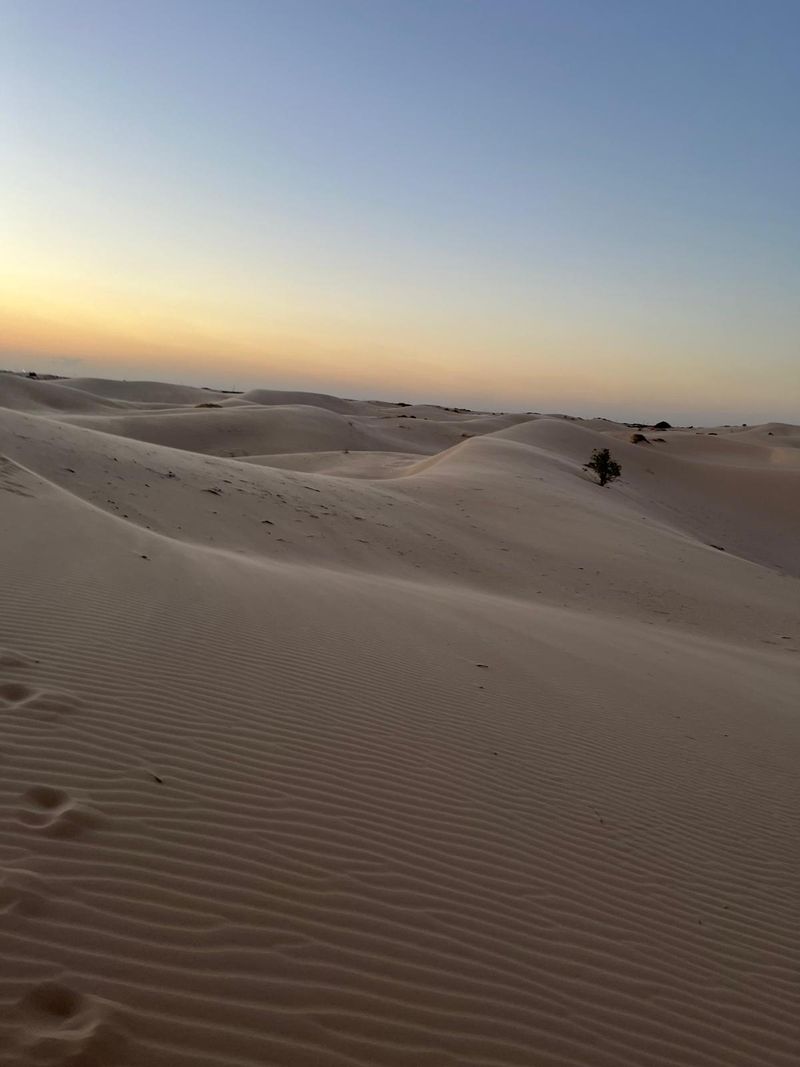
Monahans Sandhills State Park looks like a landscape that wandered in from another continent. The sand dunes here shift constantly, reshaped overnight by West Texas winds into new peaks and valleys that make the park feel different every single visit.
It is often described as Texas’s largest beach without an ocean, and that comparison captures the surreal quality of the place remarkably well.
There are no marked trails here, which is a deliberate and welcome choice. Visitors are free to wander in any direction, climb whatever dune looks most appealing, and find their own path through the landscape.
Sand surfing and sledding are among the most popular activities, and disc rentals at the park headquarters mean no special equipment is needed to join in. It is one of those rare parks where adults and kids tend to enjoy themselves equally and simultaneously.
An 800-acre equestrian area welcomes horseback riders who want to experience the dunes from a different vantage point.
The Dunagan Visitor Center provides educational context about the plants and animals that manage to thrive in this seemingly harsh environment, and its windows overlook a wildlife watering area where desert creatures occasionally appear.
Camping is available at 25 sites with water and electricity for those wanting to stay after dark. The desert quiet at night here is profound.
Sunsets over the dunes are particularly striking, with the light turning the sand through shades of gold, amber, and deep orange before fading into a sky full of stars. Monahans is the kind of place that earns a second visit almost immediately.
Address: Park Rd #41, Monahans, TX 79756
