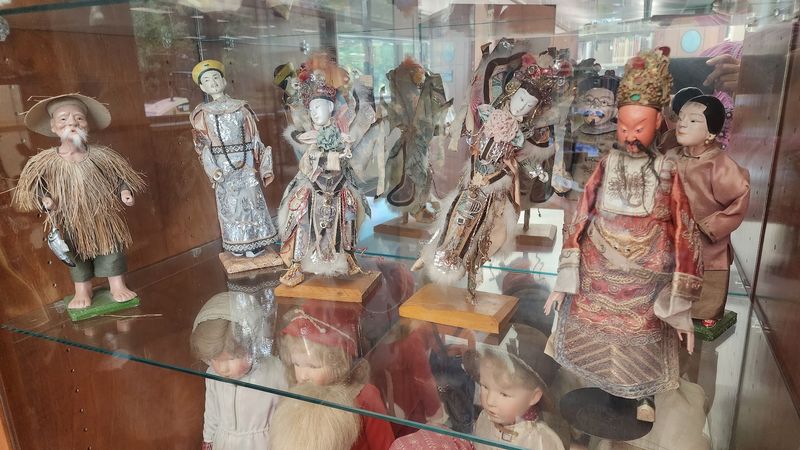
I walked into a quiet public library in southern Oklahoma expecting bookshelves, a water fountain, and maybe a cool spot to rest from the heat. Instead, rows of glass cases stared back at me, packed with tiny faces from centuries ago.
Some wore lace, some held miniature goods, and a few have stories that reach all the way to a royal court in France. It costs nothing to see, and it might be one of the strangest, sweetest surprises in the whole state.
A Doll Museum Tucked Inside a Library
Most museums announce themselves with big signs and ticket booths. Not here.
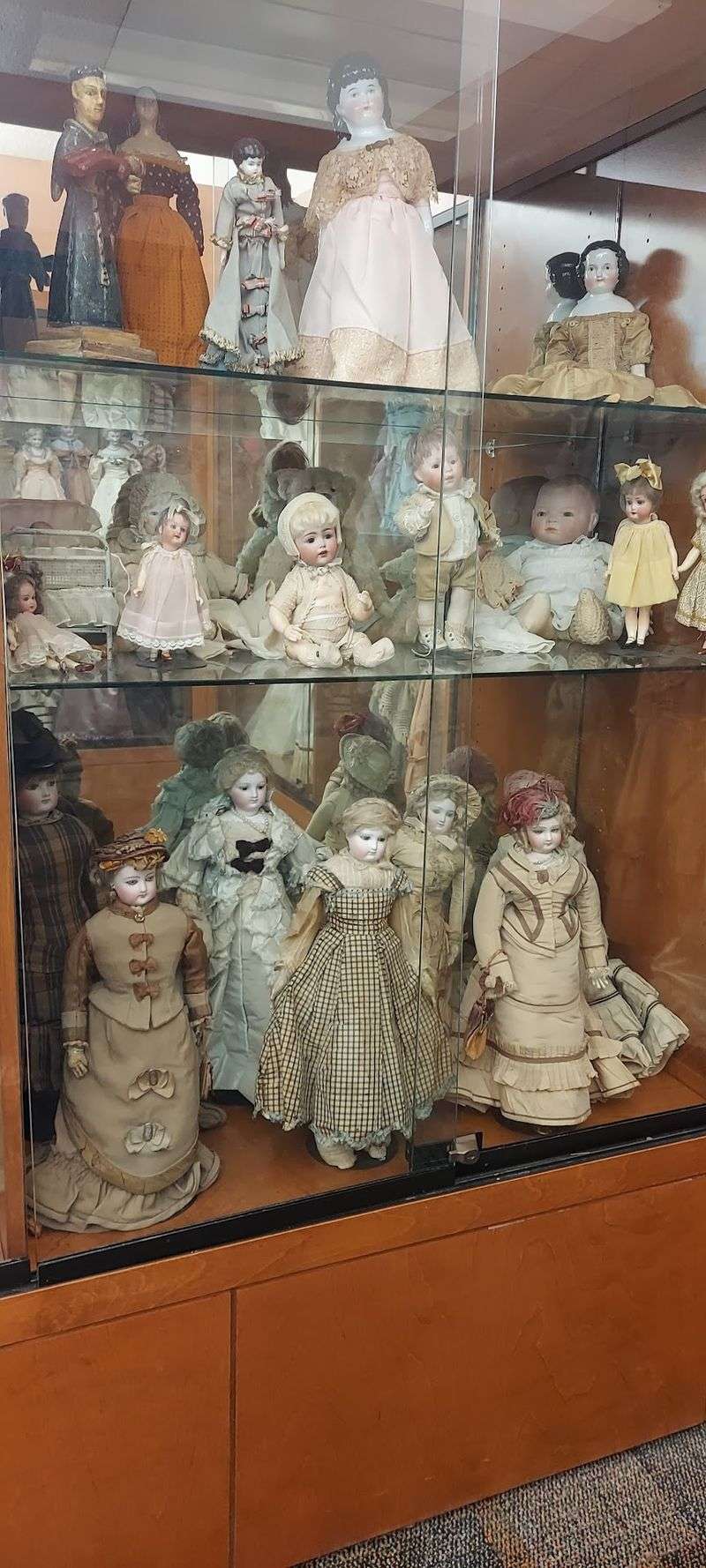
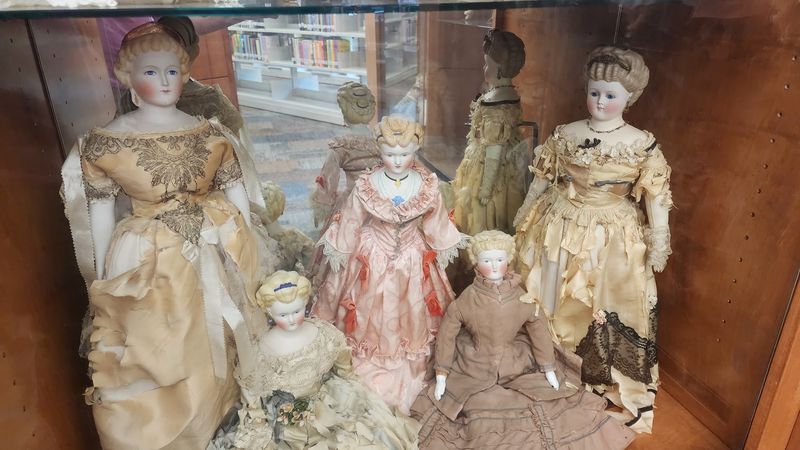
The Eliza Cruce Hall Doll Museum lives quietly inside a public library, where visitors simply walk past the shelves and find themselves face to face with about 300 rare and antique dolls.
Picture it as a gallery that borrowed a corner from the books. The dolls sit behind glass, arranged on shelf after shelf, and they come from across the United States and Europe.
Some date back several centuries, while others reflect frontier days and later eras of craftsmanship.
Part of the fun is how unexpected it feels. You can stop by on a weekday afternoon, check out a novel for the drive home, and also study a doll that may be older than the state of Oklahoma itself.
Few places mix the everyday and the extraordinary quite so casually.
Visitors often describe the collection as small but impressive, and that sums it up nicely. You will not need a whole day, and you will not need a map.
What you do need is a little curiosity and a willingness to lean in close, because the best details are tiny ones, from stitched hems to painted eyelashes.
The Governor’s Niece Behind the Collection
Every great collection starts with one determined person. In this case, that person was Eliza Cruce Hall, the niece of Lee J.
Cruce, who served as Oklahoma’s second governor.
Her love of dolls grew into something far bigger than a hobby. She gathered pieces made from porcelain, beeswax, carved wood, and leather, reaching across time periods and borders to build a remarkable assortment.
The result reads almost like a history book you can look at instead of read.
In 1971, the collection was donated to the public library, and it has stayed there ever since. That choice matters.
Instead of locking the dolls away in a private home or a pricey gallery, the gift placed them where anyone in town could wander by and enjoy them.
Hometown pride runs through that decision. Southern Oklahoma got a link to its political past and a window into how children and families around the world played, dressed, and dreamed long ago.
Some visitors say they feel grateful that little pieces of history like these still remain. Knowing who saved them, and why they ended up in a library, makes standing in front of those glass cases feel a bit more personal.
French Wooden Dolls With a Royal Legend
Here is the story that makes people stop in their tracks. Among the collection sit several rare French character dolls carved from wood, and legend connects them to Marie Antoinette and members of her royal court.
According to the museum’s history, these dolls represent figures such as Princess Lambelle, the Duc de Provence, and the Duc d’Artois. They were shown in Paris at the Exposition des Costumes Anciens in 1909, which tells you how seriously the art world once took them.
Records place their carving around 1870, so the royal tale is best enjoyed as a cherished legend.
The rarest part? Only seven of these dolls were ever made, and three of them live right here in Oklahoma.
That is almost half of a tiny worldwide set sitting quietly near a library’s children’s books.
Visitors who love older pieces often find themselves drawn to the wooden dolls most of all. There is something special about how they depict people and times, with carved faces that feel more like small sculptures than toys.
Take a moment with them. Study the clothing, the posture, and the expressions, then imagine the long road that brought them from Paris to the Red River country.
A Pedlar Doll and Her 150 Tiny Wares
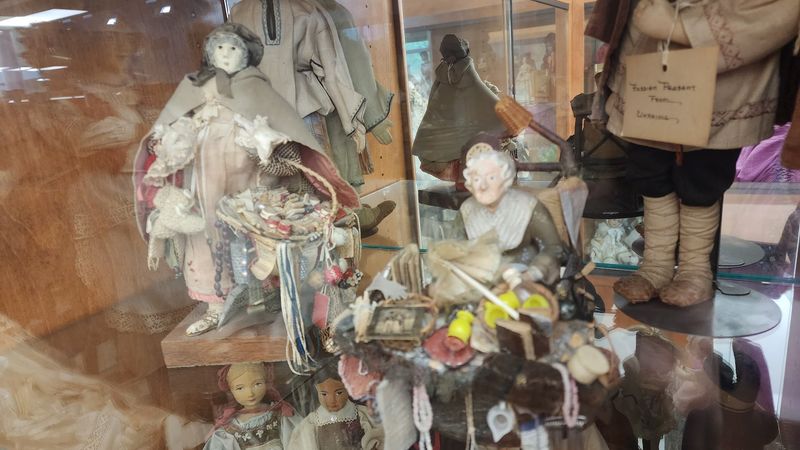
Ever wondered what a traveling salesperson carried in 1830? One English pedlar doll answers that question in delightful miniature.
She dates to around 1830, and her tray and waist hold more than 150 tiny items. Look closely and you may spot delicate needles, little dust pans, song sheets small enough to fit on a fingertip, and cameos.
There are even tiny jars labeled Bear’s Grease and Pomade Divine, which were once real grooming products people bought.
Pedlar dolls like her were made to show the goods that roaming merchants sold door to door. In a way, she works like a time capsule of everyday shopping, back before general stores dotted every crossroads.
Kids tend to love her because she feels like a treasure hunt. Grown-ups often get pulled in for the same reason, counting items and trying to guess what each one was used for.
Plan to spend a few extra minutes here. The level of detail is the whole point, and rushing past means missing the funny little labels and the careful craftsmanship that turned a simple doll into a walking marketplace frozen in time.
Porcelain, Parian, and Lifelike Hands
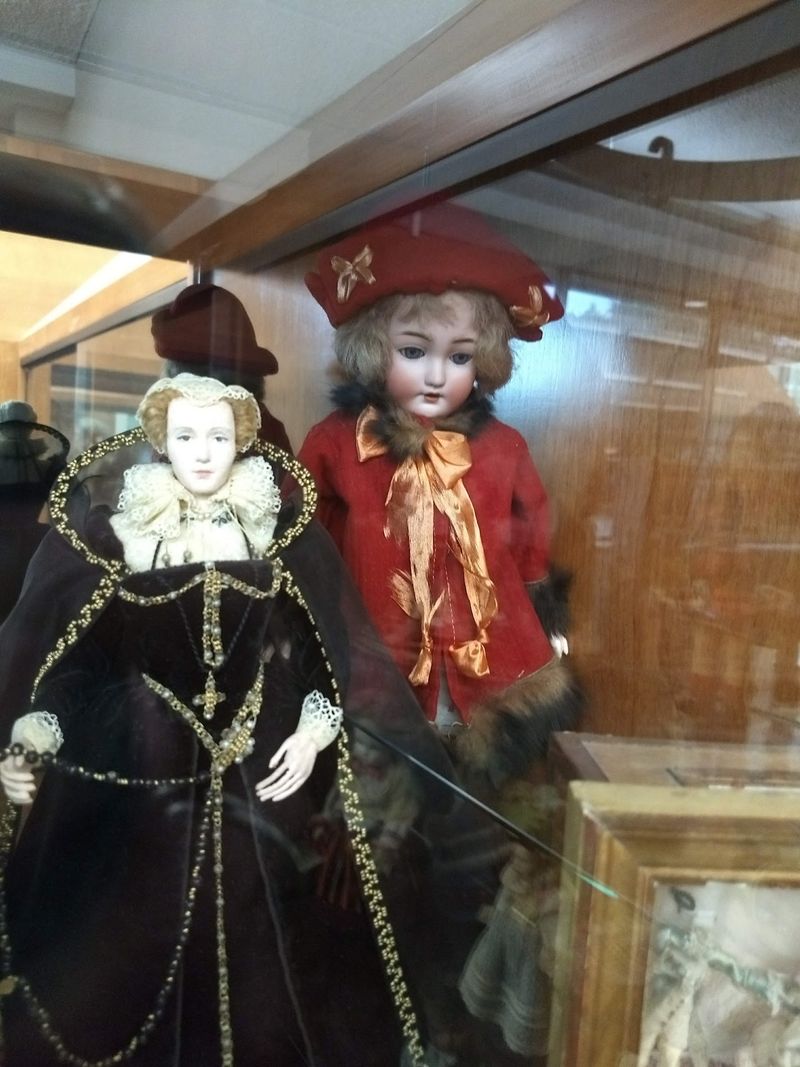
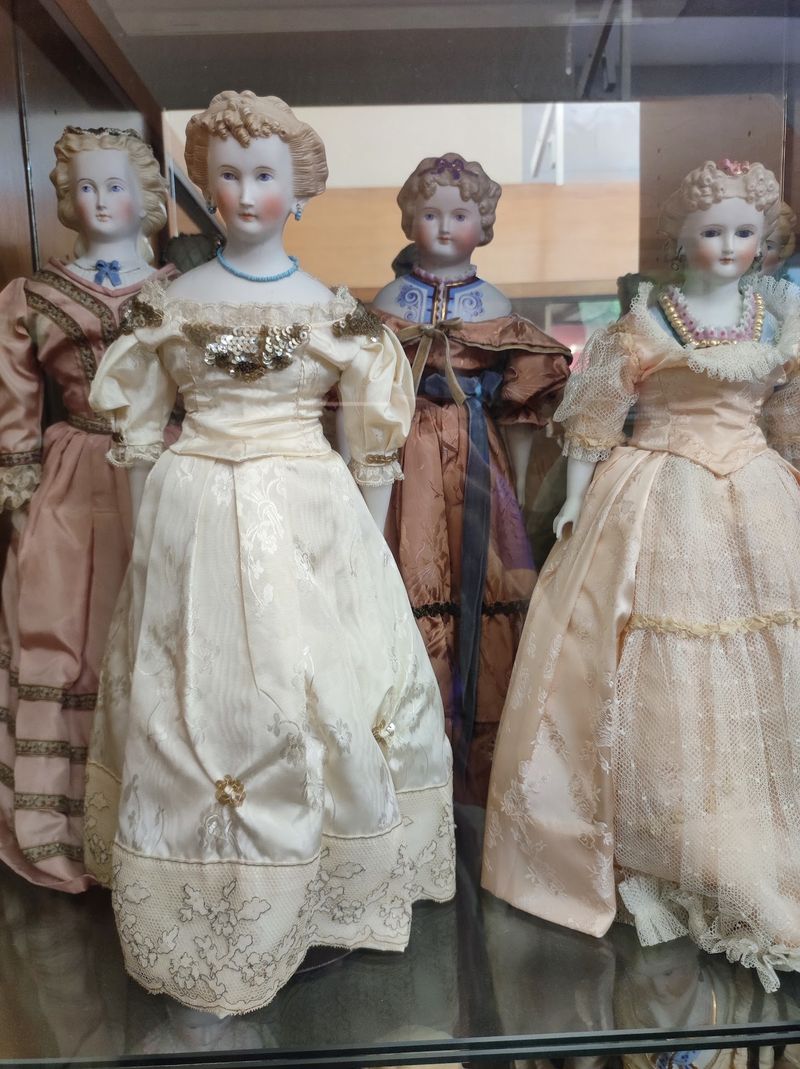
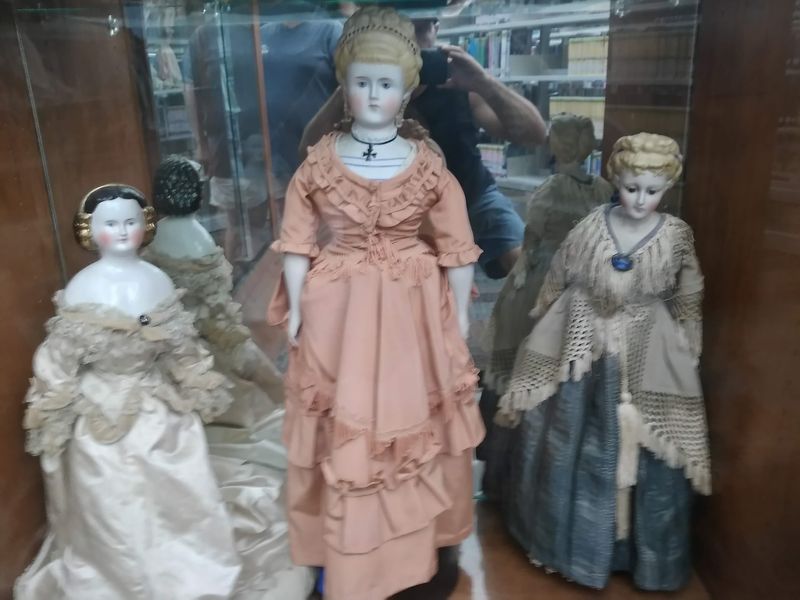
Elegance is the word many visitors reach for. Rows of porcelain dolls in beautiful dresses fill the cases, and a few pieces rise above even that fancy crowd.
One favorite is a grey-headed Parian doll from about 1830. She wears a gold-beaded headdress and intricate gold lace, with a molded gold cross on her breastplate.
Her pierced ears, leather arms, and fabric body show how dollmakers blended materials to get a refined, lifelike look.
Then come the hands. Some dolls in the collection have hands sculpted so carefully that they look like real human hands, complete with visible veins.
It is the sort of detail that makes you lean closer, then step back, then lean in again.
Honestly, a few visitors find these realistic faces a little eerie, and that is part of the conversation here. Old dolls can feel uncanny, especially in a quiet room.
Others see pure artistry in the same features.
Either way, the craftsmanship is hard to ignore. These were not mass-produced toys from a big box store.
Each one reflects hours of skilled work, careful painting, and patient sewing from an age when handmade simply meant normal.
Dolls From Around the World
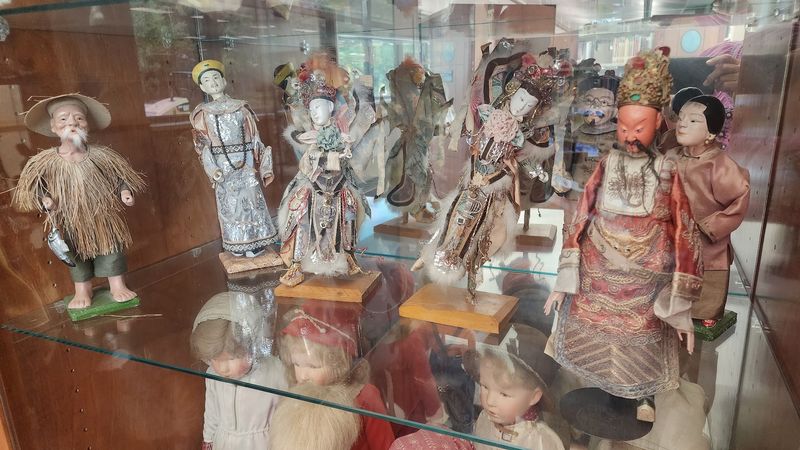
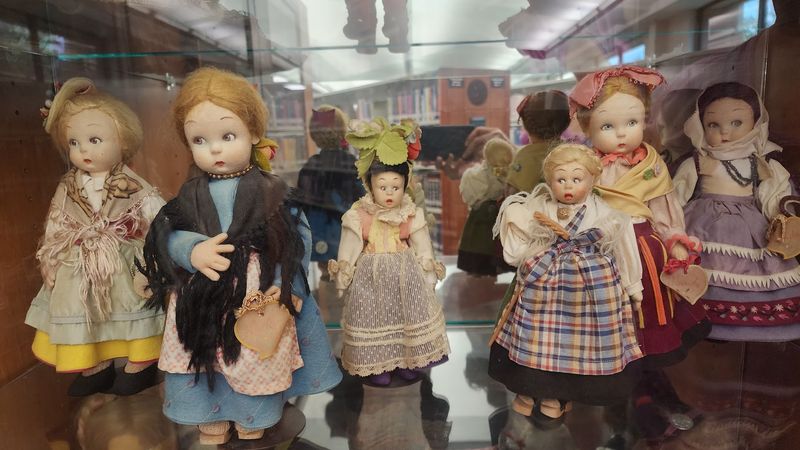
Travel without a passport, at least for an afternoon. The collection stretches well beyond American frontier styles, pulling in dolls from several countries and dollmaking traditions.
Keep an eye out for Lenci dolls, famous for their charming felt faces and stylish outfits. Spanish Klumpe dolls bring a playful twist, with wire frames that let them pose in lively, often comical scenes.
Ravca dolls, made of cotton and stockinet, show yet another approach, with soft, expressive features that feel almost like tiny portraits.
Alongside these, visitors mention shelves ranging from very old European pieces to early frontier relics. That mix gives the room a fun rhythm.
One case might feel like a French drawing room, while the next looks like something a pioneer child carried in a covered wagon.
For families, this section is a great conversation starter. Ask kids which country they would want to visit, or which doll looks like it has the best story.
You may be surprised by their answers.
Comparing styles side by side also helps you notice how materials changed over time, from wax and wood to porcelain and cloth.
Quiet Corners and Curious Visitors
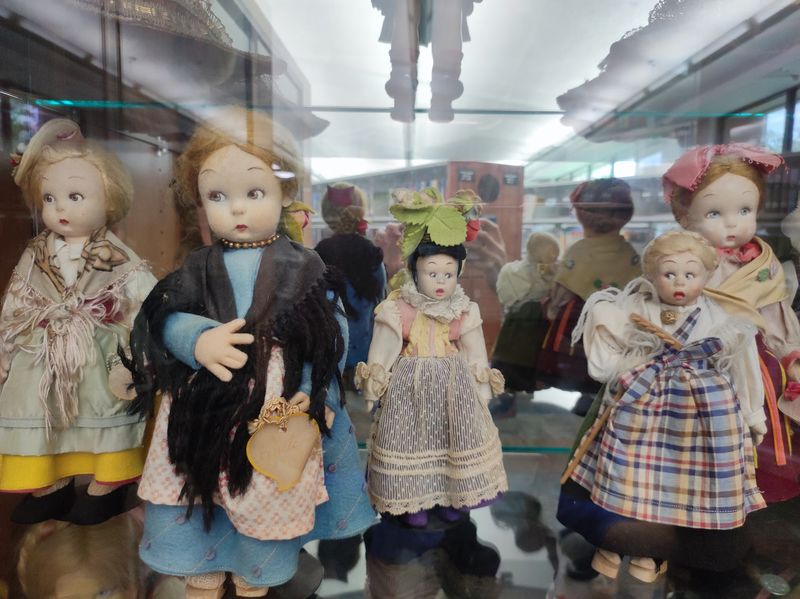
Silence helps. Because the dolls sit inside a working library, the mood stays calm and hushed, which suits slow looking and whispered comments.
Visitors note the cases sit in the children’s area, near the comics, so you might hear a story time in the distance or see kids browsing picture books nearby. That setting makes the stop feel welcoming rather than stuffy.
Nobody expects you to know anything about dolls before you arrive.
So who will love it most? Doll collectors, obviously, and history fans who enjoy old clothing and craftsmanship.
Grandparents often find it a sweet outing with grandkids, and road trippers looking for a short, free break will appreciate how easy it is to fit in.
Not everyone falls for the antique faces, though. Some guests joke that the old dolls give them goosebumps, and teens may enjoy that spooky angle more than the history.
Lean into it, it can make the visit more memorable.
A tip from past visitors: ask for the guidebook at the front desk. It points out the rarest and most unusual pieces and turns a simple browse into a much richer little tour.
Hours, Admission, and Getting to Ardmore
Good news first: the collection is free to see, as befits a public library. That makes it one of the easiest bargains in southern Oklahoma.
You will find it at the Ardmore Public Library, 320 E St NW, Ardmore, OK 73401. Recent listings show hours of 9 AM to 8 PM Monday through Thursday, 9 AM to 5 PM on Friday and Saturday, and closed on Sunday.
Library hours can shift, so calling ahead at 580-223-8290 is smart.
That call matters more than you might think. One out-of-state collector once arrived only to find the display closed for inventory, which is a tough break after a long drive.
A quick phone check can save that disappointment.
Ardmore sits right along I-35, roughly halfway between Oklahoma City and Dallas, so the drive from OKC runs around an hour and a half. That puts it squarely in easy day trip territory for most Oklahomans and plenty of North Texans.
Summer heat in this corner of the state can be fierce, and spring brings storm season. An air-conditioned library visit makes a handy break on scorching or rainy days, and an hour is usually plenty.
Worth the Detour Off I-35
Small places can leave big impressions. Three of only seven royal-legend French dolls, a pedlar with 150 tiny treasures, and hands so lifelike you can see veins, all tucked inside a free public library, add up to a stop that sticks with you.
No, it is not a sprawling museum with a gift shop and café. It is simple, quiet, and modest, which is exactly why it charms so many people.
You come for a quick look and leave chatting about bear’s grease jars and French dukes on the drive home.
If you are a collector, plan to linger and grab the guidebook. History lovers will enjoy the link to Governor Lee Cruce’s family.
Families get a free, air-conditioned adventure that sparks real questions from curious kids.
And if old dolls make you a bit uneasy? Bring a friend, laugh about it, and admire the craftsmanship anyway.
Even skeptics tend to walk away impressed.
Next time you are cruising through southern Oklahoma, consider pulling off the highway for an hour. Call ahead, step inside, and let a few hundred tiny faces from long ago remind you that wonder sometimes hides behind the comic books.
