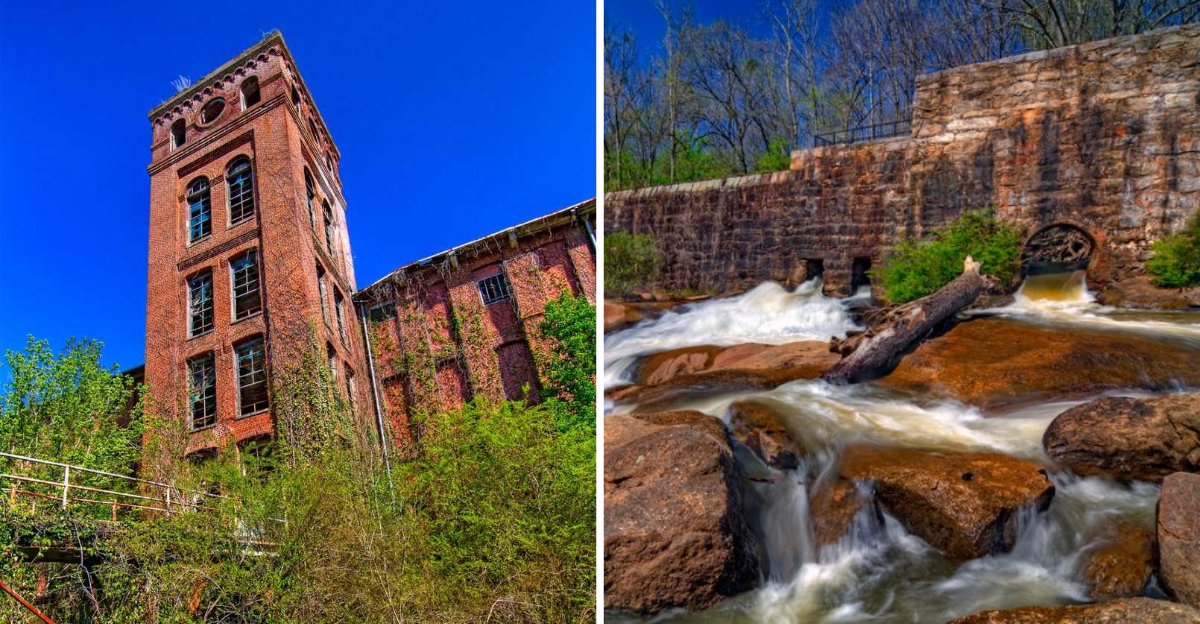
Piles of old bricks never seemed like much until I started finding them in South Carolina’s lowcountry marshes and upstate foothills, scattered across places where thousands of people once lived, worked, and worshipped before they simply left.
Some were emptied by floods, some by fever, some by railroads that decided to stop somewhere else, and a few by machines going quiet after a century of noise.
What surprised me most is how much is still there if you slow down and look, from a tabby fort made of oyster shells to smokestacks standing in the middle of a creekside park. The tabby walls are rough and crumbly, and the mortar holds the shape of the shells that were crushed into it over two centuries ago.
I planned this route thinking I would see ruins, and instead I found neighborhoods, churches, dams, and cemeteries that still carry names people once shouted across the street.
History you can walk through rather than read about behind glass is exactly what these ten stops deliver, and they are worth every mile of back road.
1. Colonial Dorchester State Historic Site, Summerville
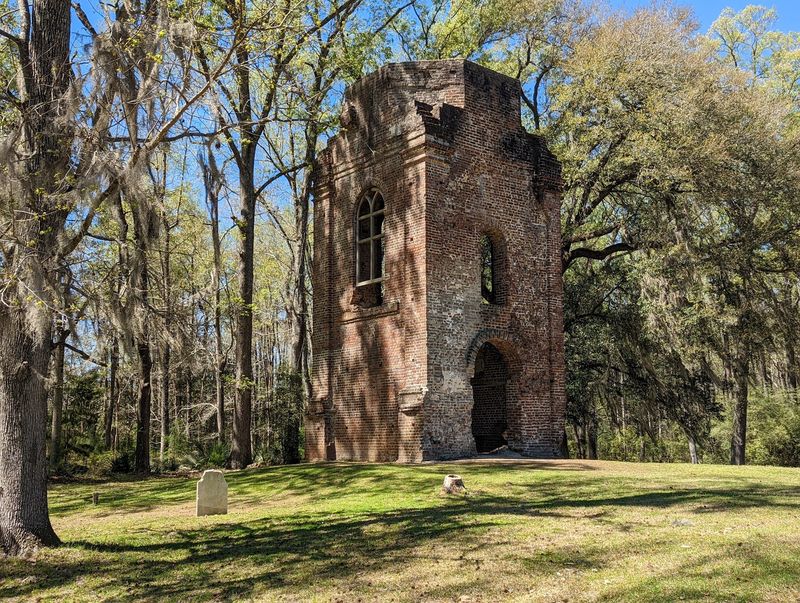
The first thing I noticed here was the quiet. A brick bell tower rises out of the trees along the Ashley River, and it belonged to St. George’s Anglican Church, built around 1750.
Dorchester was a busy trading town from 1697 until the Revolutionary War emptied it out. British destruction, shifting trade, and malaria in the swampy air all played a part, and by 1788 nobody was left.
Summerville later grew up nearby, and some of Dorchester’s own bricks were carted off and reused in new buildings there.
What survives is unusually good. The tabby fort from 1775, made of oyster-shell concrete, is considered one of the finest of its kind anywhere in the country, and the walls still feel solid under your hand.
At low tide you can spot remnants of an eighteenth-century log shipping wharf poking out of the mud, which felt like the strangest souvenir of all.
An interpretive trail loops past house sites, ruins, and a small cemetery where the headstones give you names to attach to all this brick. Archaeologists still dig here, so the story keeps growing.
Bring bug spray in summer and cash for the honor-system entry box.
Address: 300 State Park Rd, Summerville, SC
2. Glendale Shoals and Glendale Mill Ruins, Glendale
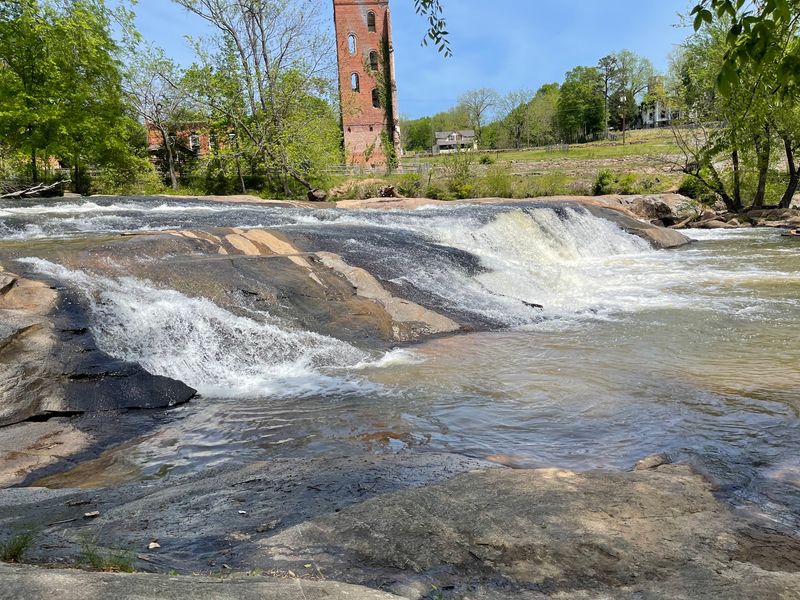
Water does most of the talking at Glendale. Lawson’s Fork Creek pours over a dam and natural shoals right beside the skeleton of a textile mill, and the combination of rushing water and crumbling brick is honestly hard to look away from.
James Bivings built one of South Carolina’s earliest textile mills at these shoals back in 1831, and the village around it took the name Bivingsville. Dexter Converse bought the operation in 1856 and renamed it Glendale in 1878.
Good years came and went. Money troubles hit around the turn of the century and again during the Great Depression, with brief boosts during both world wars, until the mill finally shut down in 1961 as the state’s textile industry faded.
Then came fire on March 21, 2004, which took down much of what was left standing.
Today the preserve wraps roughly 13 to 30 acres around those surviving towers and smokestacks. There are picnic spots, an amphitheater, nature trails, and a launch for kayaks and canoes.
The old mill office found new purpose as Wofford College’s Goodall Environmental Studies Center, which I thought was a fitting second act.
Address: Parking behind the Glendale Post Office, Glendale, SC
3. Pelham Mill Park, Greenville
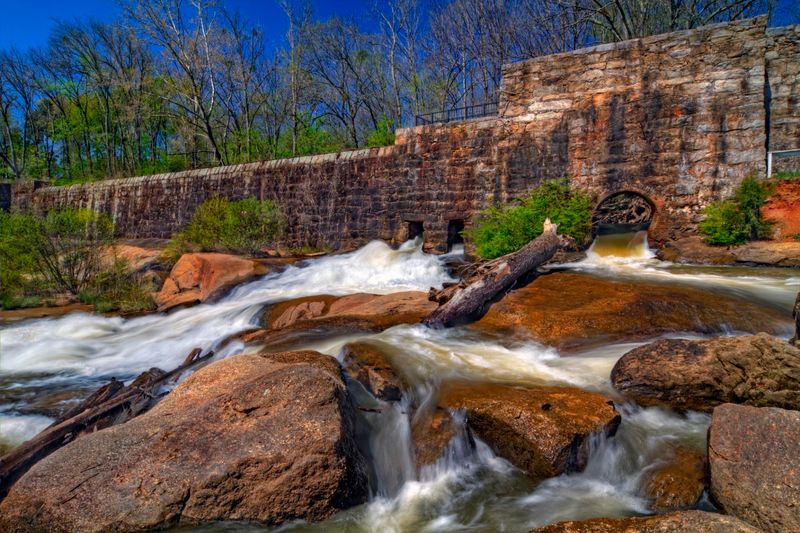
Nine brick pilings sitting in a row caught my eye before anything else did. They once held up spinning machinery, and now they look like something left behind by a much older civilization.
Reverend Thomas Hutchings started this operation in 1816, and by about 1820 it was running as the first cotton mill in the Greenville District. Early on it went by Buena Vista Mill.
Fire troubled the place from the beginning, with blazes in 1820 and again in 1853. Owners changed hands repeatedly, and business boomed during the Civil War before the mill finally closed in 1935.
A fire around 1940 finished off most of the factory complex.
Wandering the park now, you can pick out crumbling walls, foundations, the bases of two steam smokestacks, the powerhouse footprint, a wide cement slab, and an old vat sunk into the ground.
The showstopper is the mortared stone dam with six sluice gates still stretching across the Enoree River, with a channelized stream running alongside it.
The 1870 mill office building somehow made it through everything and is being restored as a community building.
Go after a rain and the river puts on a show.
4. Pacolet Mills Historic District, Pacolet
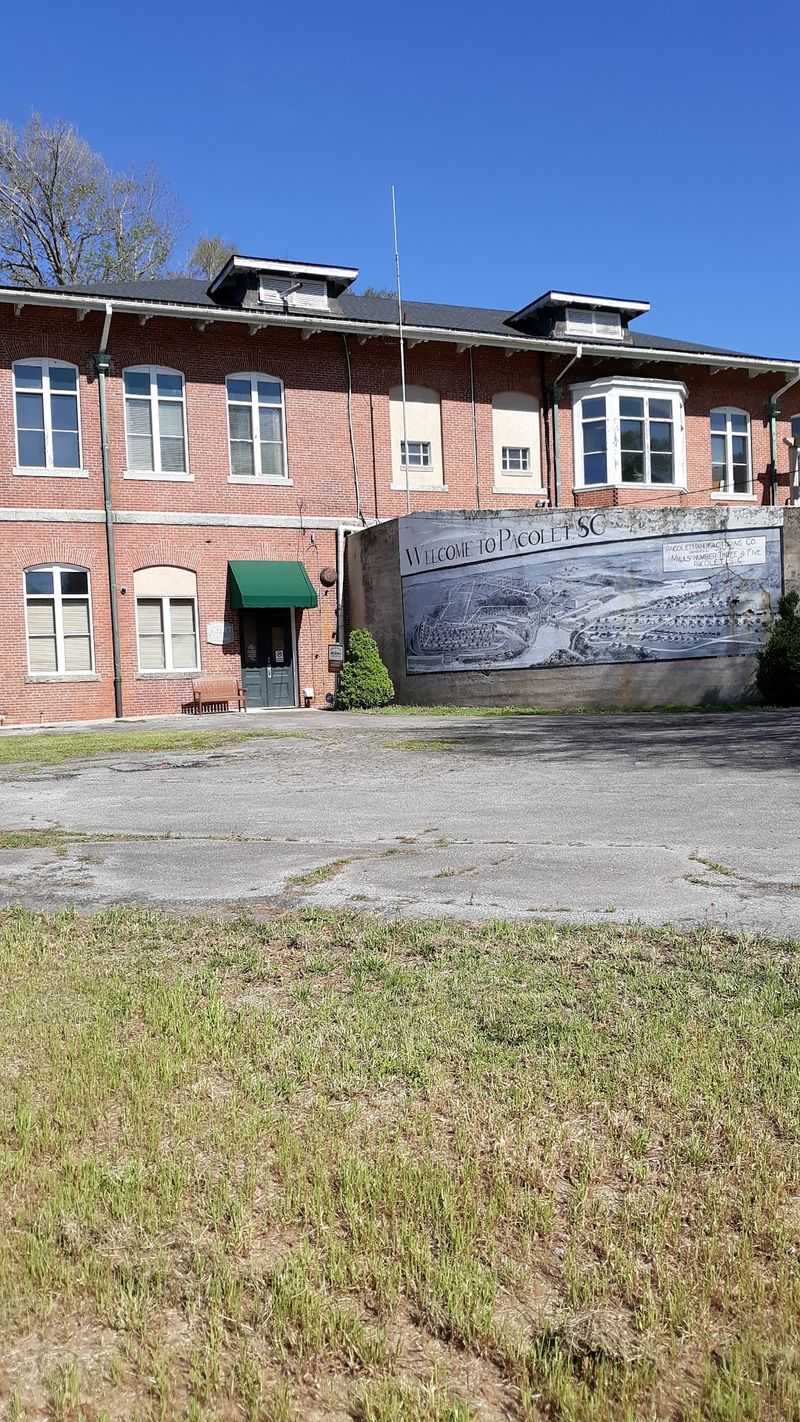
Here is the odd part about Pacolet Mills: the mills are gone, but the town they built is still standing. Driving through, I kept looking for the factory and eventually realized I was surrounded by everything else instead.
Pacolet Manufacturing set up shop in 1882, and the town incorporated in 1896. A brutal flood in 1903 wrecked much of the operation, yet it was rebuilt so successfully that by 1907 it ranked among the largest manufacturers in Spartanburg County and across the South.
The mill carried the town on its back until closing in the 1980s. Demolition of the three main mills, built between 1883 and 1891, plus a fourth from 1894, followed soon after.
What stayed behind is remarkable. The village laid out in 1919 still includes the mill office, a cloth room and warehouse, two churches, and 237 houses once assigned to supervisors and operatives.
Earle S. Draper designed the landscape in 1919, and his paved streets, sidewalks, stone terraces, walls, and pockets of green are all still readable.
The old Cloth Room and Warehouse is part of a redevelopment effort now.
Address: Roughly bounded by Brewster, Millikin, Walker, Montgomery and Moore Streets and Granite Avenue, Pacolet, SC
5. Pinckneyville Historic Site, Union County
Few places I have visited feel as genuinely forgotten as Pinckneyville. You drive out into the Union County countryside, park, and there in a clearing sit roofless brick walls with trees pressing in on all sides.
Founded on February 19, 1791, this was meant to be something big. It served as capital of the Pinckney District, covering Union, Spartanburg, Chester, and York counties, and planners imagined an upcountry version of Charleston.
The dream unraveled quickly. A flood in April 1792 caused damage, and when the Pinckney District dissolved in 1800, Union took over as county seat.
Railroads later pulled trade and travelers in other directions entirely. By 1835 the legislature authorized selling off the public lands and buildings, and the 1850 census no longer recognized the place as a town.
The historic site protects 1.75 acres of the original settlement. A brick structure from 1791, long miscalled the jail, still has intact walls even though its roof and floor collapsed long ago.
Another ruin nearby is known as the old store, and a stone monument dedicated in 1936 marks where the courthouse once stood.
Address: 13 miles northeast of Union on South Carolina Highway 13, Union County, SC
6. Old Pickens Courthouse Site, Pickens County
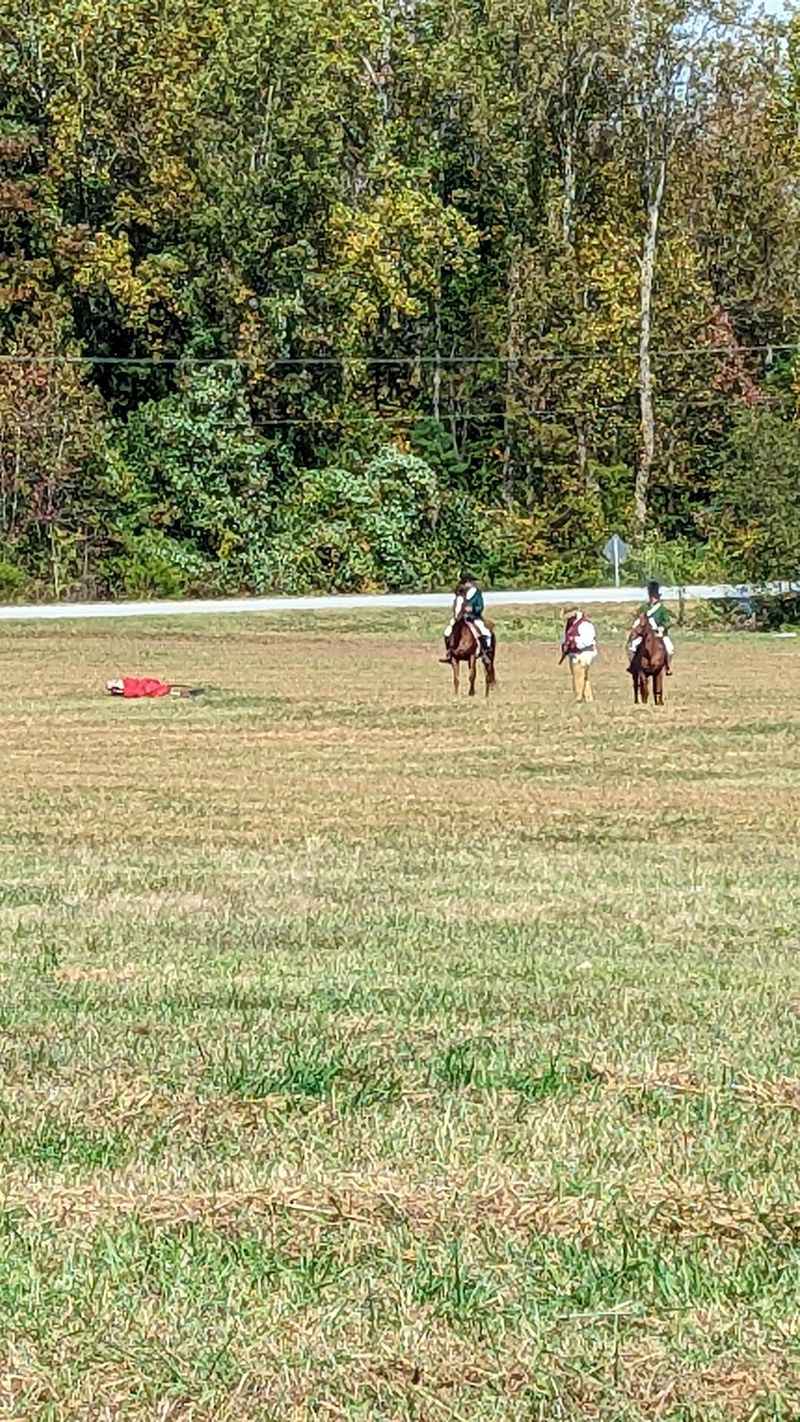
Imagine a whole town packing up and physically moving. That is more or less what happened at Old Pickens, and the leftovers make for one of the strangest stops on this route.
Pickens Court House was established in 1828 as the county seat of the Pickens District, sitting on the west bank of the Keowee River. It grew into a real community with a courthouse, jail, hotels, stores, and an academy.
Everything changed in 1868 when the district split into Pickens and Oconee counties. A new courthouse went up 14 miles east, and buildings here, including the courthouse and jail, were taken apart and hauled to the new site.
Then in the 1960s, Lake Keowee flooded a good portion of what was left when the reservoir was created for the Oconee Nuclear Station.
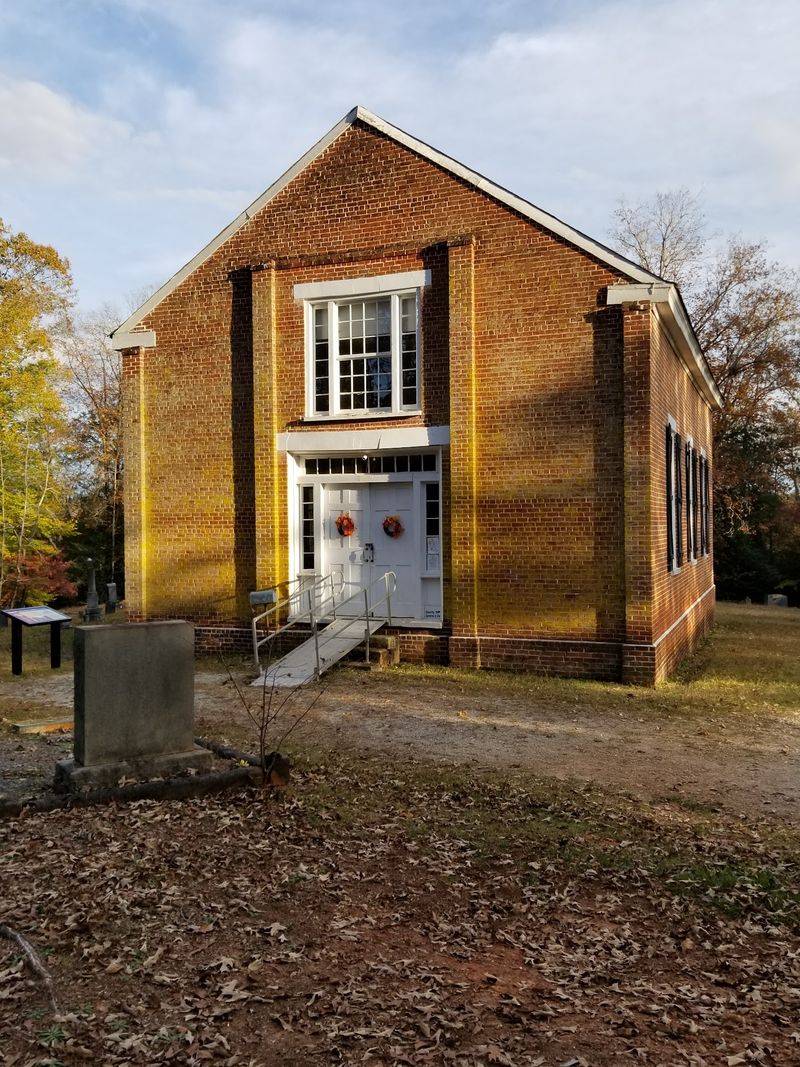
One building survived it all: the Old Pickens Presbyterian Church, built between 1849 and 1851 from bricks made of local Keowee River clay.
Inside are original heart pine floors, pulpit, and pews, plus a side entrance historically used by enslaved people. The cemetery holds more than 200 graves, and a kiosk maps the vanished town.
Address: Eastern Oconee County, bordering Lake Keowee, SC
7. Hamburg Historic District, North Augusta
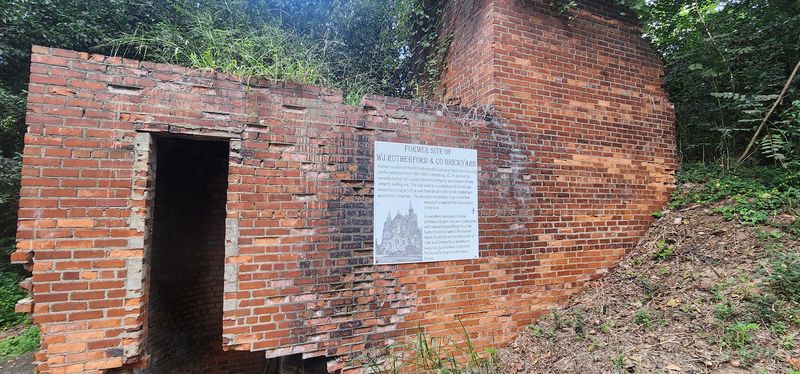
This one asks you to use your imagination more than your camera. Hamburg has basically vanished from the map, and Highway 1 now runs across part of where it stood.
Henry Shultz founded the town in 1821, planning a commercial port on the Savannah River that could compete with Augusta, Georgia. It worked for a while, shipping cotton and serving as the western terminus of the South Carolina Canal and Rail Road Company.
The advantage did not last. Once the railroad extended into Augusta in 1853, Hamburg lost its reason to exist as a shipping point.
After the Civil War, it found a second life as a thriving freedmen’s village, which makes what followed harder to read about. The Hamburg Tragedy of July 8, 1876, was a violent turning point, and floods in 1911 and 1929 pushed out whoever remained.
Many families resettled in Carrsville, where the First Providence Baptist Church and the Young Men’s Society Building still stand as direct links to the lost town.
Historical markers in Calhoun Park and off Barton Road tell the story, and some brick remnants are reported near the old footprint between the 5th and 13th Street bridges.
8. Granby Mill Village, Cayce
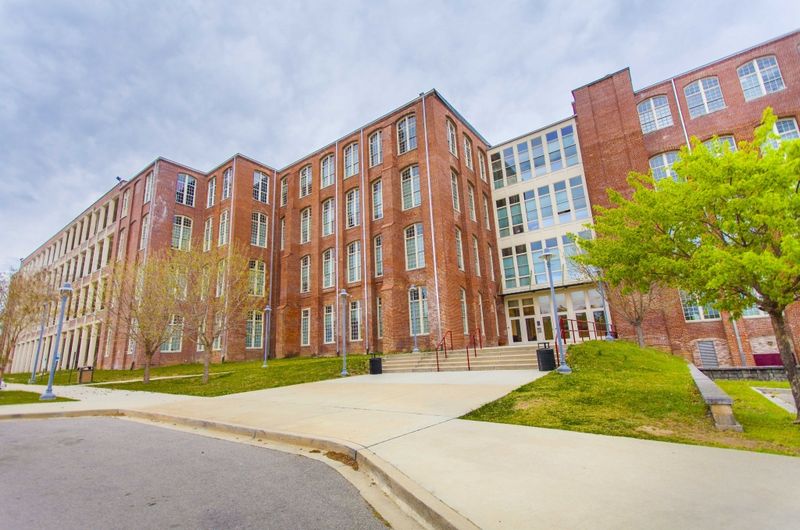
Two very different stories share one name here, and untangling them is half the fun.
The original Granby was the first European settlement in the area that became Columbia, started around 1718 as a trading post on the Congaree River. It grew into the largest town around and served as the county seat of Lexington County.
Flooding and mosquito-borne illness wore it down while Columbia rose as the state capital. The county seat moved in 1820, and by 1822 the place was nearly deserted, eventually absorbed into Cayce in 1960.
The mill came much later, built in 1896 and 1897 by W. B.
Smith Whaley, and it holds a genuine first: it was the first cotton mill in South Carolina powered by remote hydroelectricity.
Walking these streets, I counted rows of little saltbox cottages, and roughly 112 of the original 121 operative dwellings are still standing, which makes this one of the best-preserved turn-of-the-century mill villages in the state.
The four-story Romanesque Revival mill building anchors everything, joined by the gatehouse, a two-story office from about 1902, commercial buildings, and a Gothic Revival church.
Granby Cemetery survives on Cayce Quarry property.
9. Olympia Mill Village, Columbia
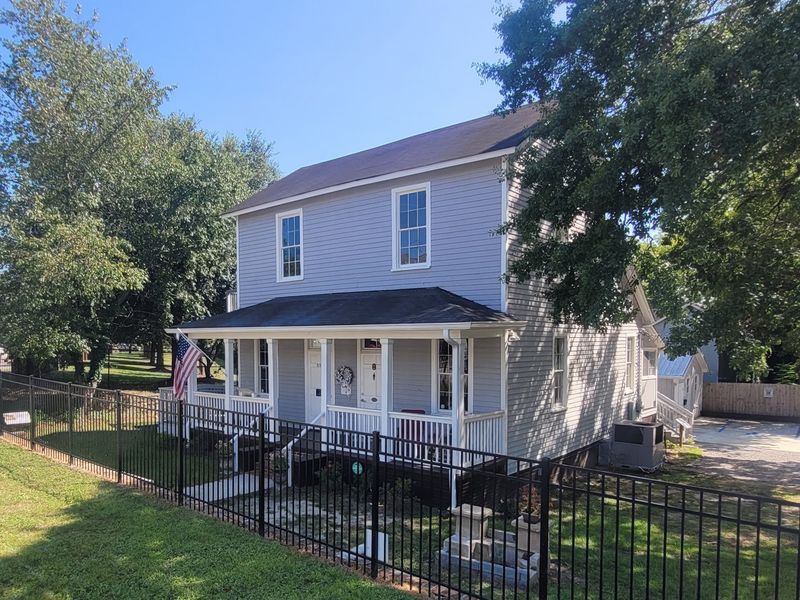
Largest cotton mill under one roof on the planet. That was Olympia when it was built in 1899, and even now the sheer size of the building stops you in your tracks.
Mill owners needed workers, so they built entire self-contained villages to draw families in from the countryside, offering steady jobs and modern conveniences that many rural homes did not have. The neighborhood that grew around the mill became a genuinely tight community.
Trouble arrived in the 1970s as offshore manufacturing reshaped the industry. A devastating fire in 1996 sealed the mill’s fate and forced it to close.
Rather than sitting empty forever, the building was converted into apartments in 2007, and people live inside those old brick walls today.
The village itself is listed on the National Register of Historic Places for its late nineteenth and early twentieth century architecture, and plenty of the original mill houses still line the streets.
Residents work hard to hold onto that character as new development creeps closer.
Two stops made the visit click for me: the Olympia Mill Village Museum and 701 Whaley, which served as the old recreation center and now hosts community gatherings.
10. Newry Historic District, Newry
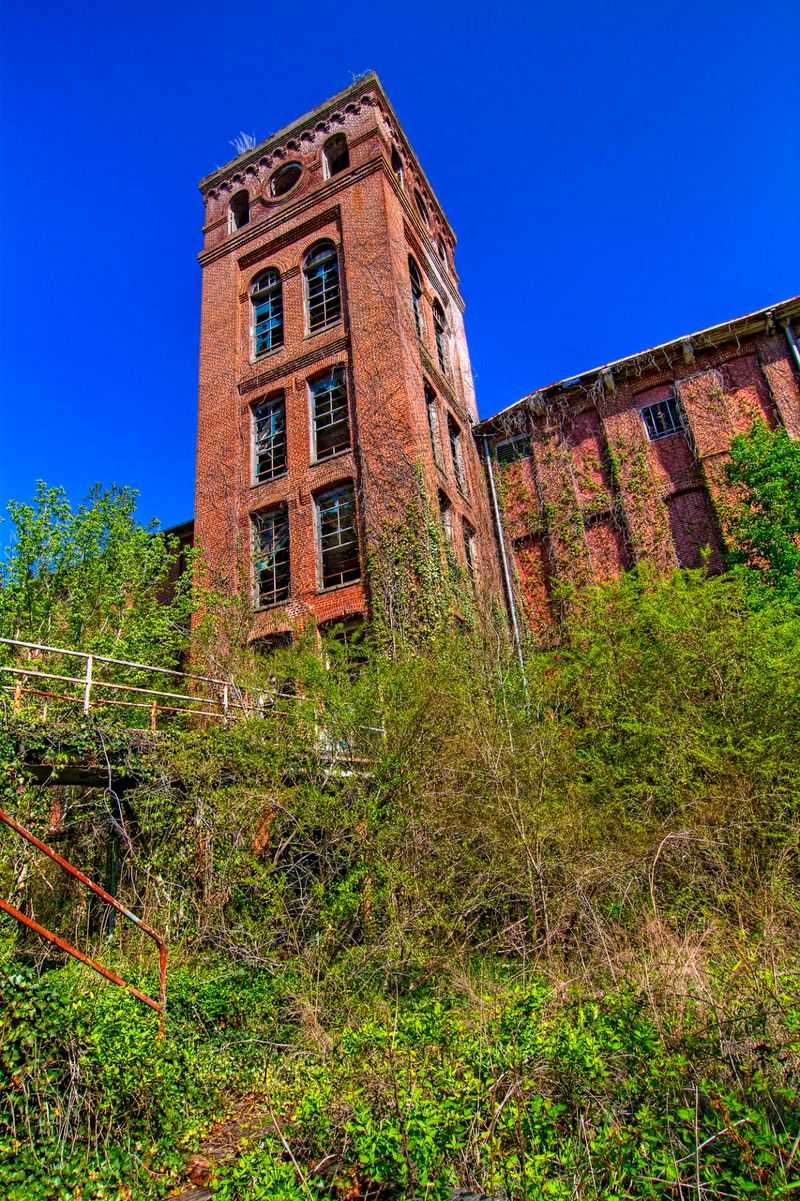
Tucked into a hollow ringed by ridges and thick forest, Newry feels sealed off from the rest of the state. The big earthen dam of Lake Keowee looms nearby, adding to the sense that this village is hiding.
Charleston businessman William Ashmead Courtenay founded the place in 1893, and by 1894 the mill was running, making Newry the first textile village in Oconee County.
Courtenay Manufacturing Company employed nearly everyone, and the town grew tightly around the work. Production held strong until the early 1950s, when foreign textile imports started eating into domestic business, and the mill closed for good in 1975.
The district covers 250 acres and includes 118 properties, so there is a lot to take in on foot.
The worn central section of the mill complex still stands, and the building is being converted into apartments. You will also find the historic post office and the village church, which mixes Late Gothic Revival and Classical Revival details.
Worker houses date mostly from 1893 to 1910, with duplexes added in the 1940s.
On a ridge southwest of the village sit the ruins of Innisfallen, the Neo-Classical home of the founder.
