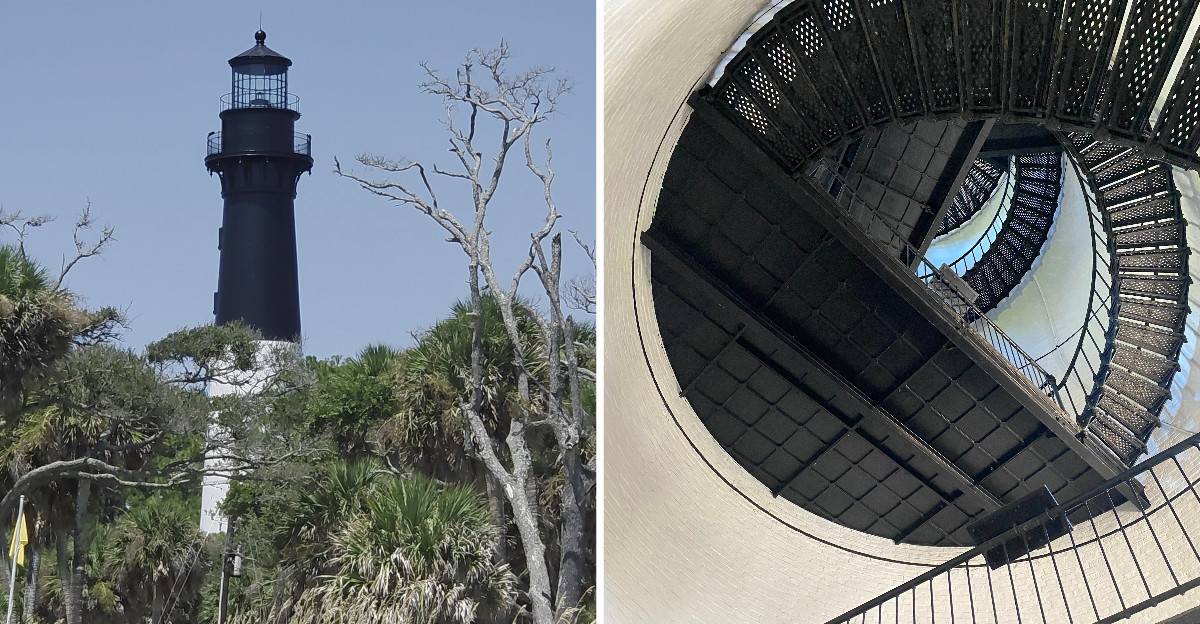
South Carolina knows how to make history compete with the scenery. One minute you are watching palms move in the coastal breeze, and the next you are staring up at a tower with a survival story that sounds almost impossible.
I expected the climb and the ocean views to be the memorable parts of this stop. Instead, I kept thinking about the people who once faced a much stranger problem: what do you do when the sea is slowly coming for an enormous structure that cannot simply be dragged somewhere safer?
Their solution involved dismantling it, moving every piece inland, and putting the whole thing back together again. Somehow, that worked.
More than a century later, visitors can still climb 167 steps while the Atlantic stretches beyond the trees below. Between coastal erosion, wartime history, engineering ingenuity, and those views at the top, this South Carolina landmark has survived far more than its peaceful surroundings suggest.
This is what makes its story worth the climb.
A Beacon Lost to War Before This One Was Built
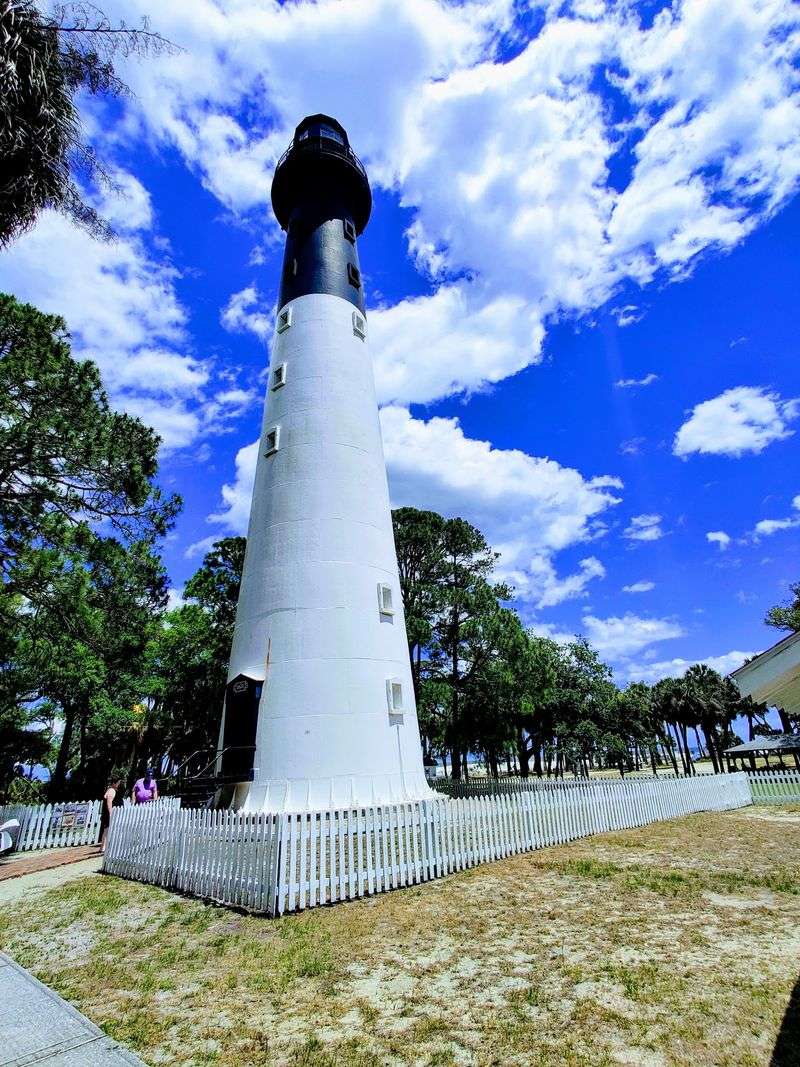
History here starts with a loss, which surprised me more than I expected. The first lighthouse on Hunting Island went up in 1859, guiding ships along a busy stretch of the South Carolina coast.
That tower did not last long. In 1862, during the Civil War, Confederate forces destroyed it so Union ships could not use it to find their way through local waters.
Picture a coastline suddenly gone dark, with sandbars and shallow spots hiding under the waves and no light to warn sailors.
For more than a decade, the island had no working beacon at all. Ships passing Beaufort had to rely on charts, skill, and luck.
I kept thinking about how nervous those captains must have been on stormy nights.
The loss made one thing clear. The coast needed a light again, and whoever built it would have to think carefully about what could go wrong next time.
War was one threat, but the island itself had another surprise waiting, one that was slower and much harder to stop.
Knowing this backstory makes the tower you see today feel less like a postcard and more like a comeback. It stands where it does because people refused to leave this shoreline in the dark.
Built Like a Giant Kit From Day One
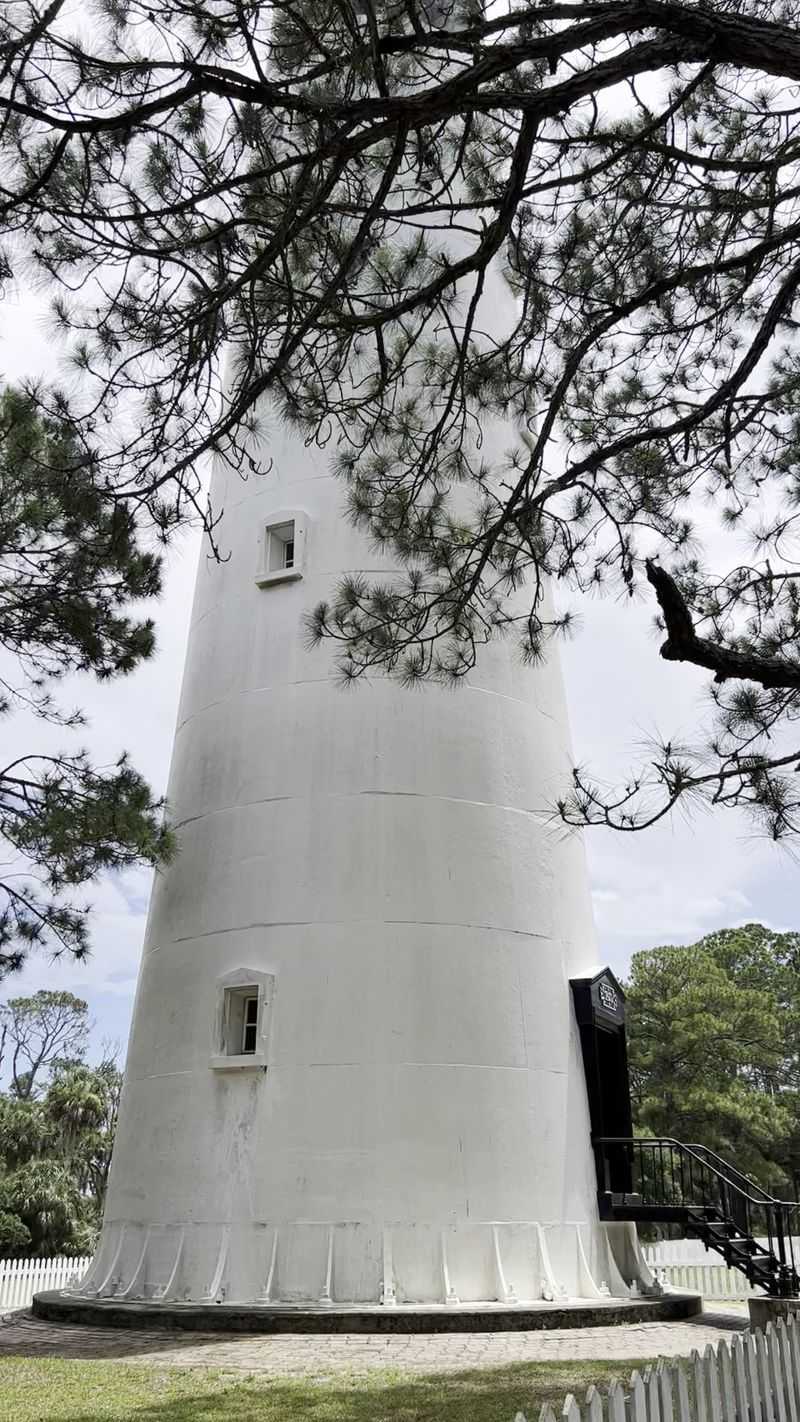
Engineers in the 1870s pulled off something clever, and it made me grin. When workers built the new lighthouse between 1873 and 1875, they designed it so it could be taken apart and put back together somewhere else.
The outside is made of cast-iron sections that bolt together, a bit like a massive building set. Some of those pieces weigh up to 1,200 pounds each, which is heavier than many grand pianos.
The Phoenix Iron Works company in Philadelphia, Pennsylvania, made the metal shell and shipped it south.
Inside, a brick lining does the heavy lifting. That brick carries most of the weight and keeps the tower strong, while the iron plates act as the tough outer skin against wind and salty air.
Why plan for a move before the paint was even dry? Builders already knew barrier islands shift over time, and sand does not stay put for anyone.
Planning ahead was smart.
When you visit, take a close look at the seams running across the tower. Those lines mark where the sections meet, and they are quiet proof of a plan that worked.
I found myself tracing them with my eyes all the way up, trying to guess where one piece ended and the next began.
When the Atlantic Crept Too Close
Numbers tell this part of the story better than any storm photo could. By 1887, waves had pushed to within 150 feet of the lighthouse tower and just 60 feet of the keeper’s dwelling.
Reports from 1888 said high tide was reaching within 35 feet of the keeper’s house. Imagine waking up, looking out the window, and seeing the ocean sitting in your front yard.
Hunting Island is a barrier island, which means it naturally moves and changes shape. Wind, tides, and storms carry sand away from some beaches and drop it in other places.
On this island, the stretch near the original tower kept losing ground year after year.
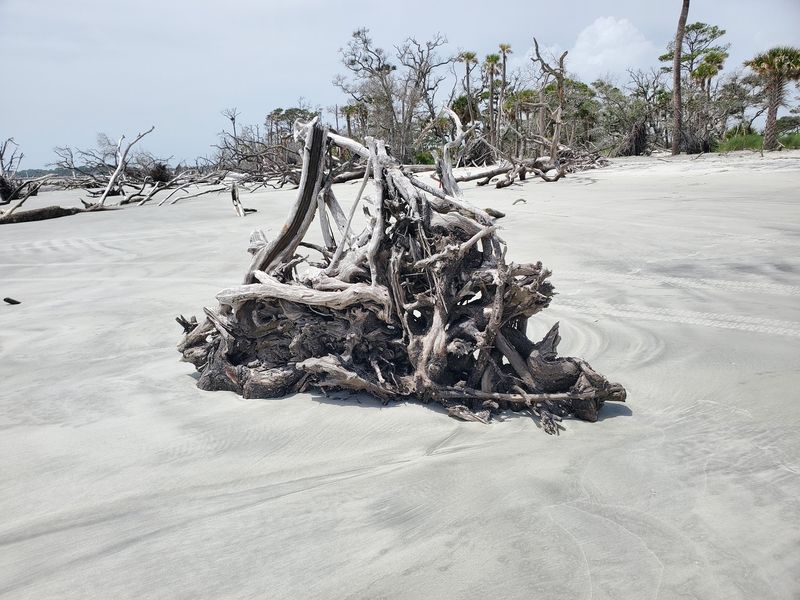
Even today, you can see the effects. The beaches near the lighthouse have driftwood and fallen trees scattered along the sand, a reminder that the shoreline is still on the move.
I thought these twisted trunks looked almost like sculptures.
So when you stroll the beach, keep an eye on the tide line and think about how fast it can creep inland. Knowing this history turns a simple beach walk into a small science lesson.
It also makes you appreciate why the people in charge decided the tower had to go before the water arrived.
The Big Move of 1889
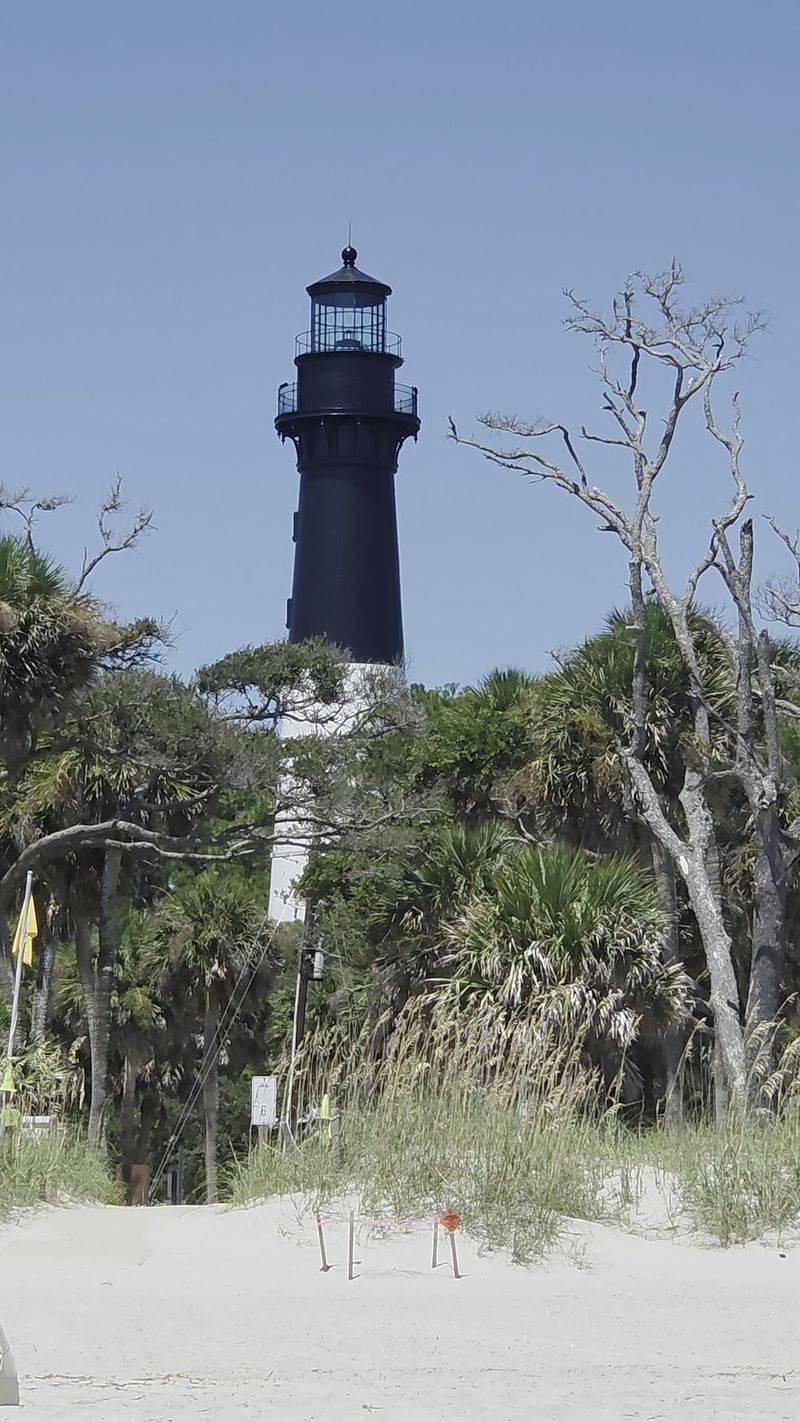
May 1889 is when the real adventure began. Crews started unbolting the tower piece by piece, carefully lowering heavy iron sections and keeping track of where each one belonged.
The pieces then traveled about 1.3 miles southwest to a safer spot farther from the surf. Along with the lighthouse, workers also moved the keeper’s home and two other buildings.
The whole job took roughly four to six months, all without modern cranes or trucks.
Think about that. No power tools, no GPS, just muscle, planning, and a lot of patience moving through sand, heat, and coastal bugs.
I get tired carrying groceries up a flight of stairs, so this part of the story humbled me.
On October 1, 1889, the light shone again from its new home. Ships could once more count on it to guide them safely past the island.
The spot where the tower stands now is the result of that move. When you arrive and look up at it, remember that the ground under your feet was chosen to buy the lighthouse time.
Moving it inland was a smart bet, and it paid off, since the tower has stayed put ever since.
Going Dark in 1933 and Getting a Second Life
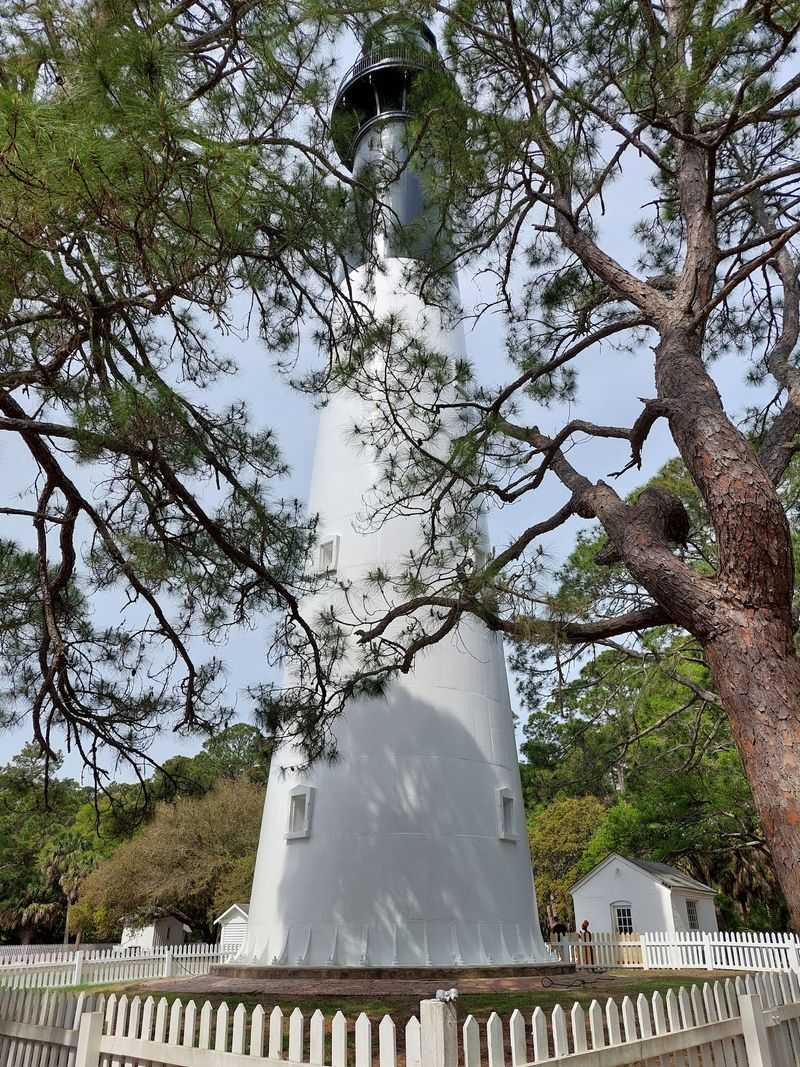
Lights do not shine forever, even the tough ones. In June 1933, the Hunting Island Lighthouse was deactivated, ending its long run as a working guide for ships along the coast.
It could easily have faded into the background. Instead, the tower became the heart of Hunting Island State Park, and in 1970 it was added to the National Register of Historic Places.
That listing helps protect it as an important piece of American history.
Time and salty air still take a toll, though. Between 2022 and May 2026, the lighthouse closed for major repairs to fix cracks, rust, and weak spots in the structure.
Many visitors during those years could only admire it from the ground.
The good news arrived on May 26, 2026, when the tower reopened to the public. I love that people cared enough to keep this old giant standing instead of letting it crumble.
Today it holds a special title as the only lighthouse in South Carolina that the public can climb. That makes it a rare treat for anyone who loves history, heights, or great views.
Around the park, you will also find historic buildings, a gift shop, and a museum with interactive displays to round out the visit.
Earning the View, All 167 Steps
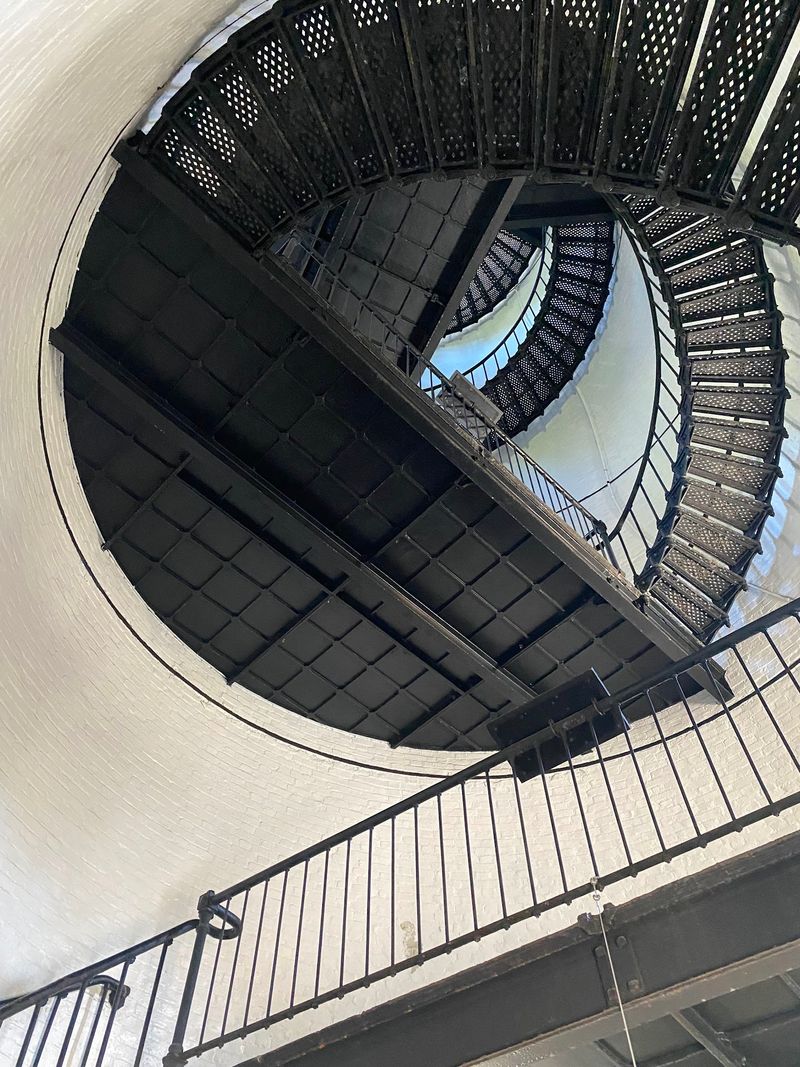
My legs started talking to me somewhere around the middle of the climb, and I was glad I wore real shoes. The tower has 167 steps winding up to the observation deck, and each one feels a little higher than the last.
Sturdy sneakers are a smart choice here. Flip-flops and steep iron stairs are not a great match.
Take breaks whenever you need them, since the landings give you a chance to catch your breath and read about the lighthouse as you go.
The payoff at the top is huge. You can see the Atlantic Ocean stretching out forever, the green barrier island below, and the marshes glowing in shades of gold and green.
A strong breeze usually greets you up there, which feels amazing on a hot day.
That wind is no joke, though. Leave your hat in the car or hold it tight, because loose items can blow away fast.
Keep phones secured when snapping photos over the railing.
Lines can form on busy days, so arriving early helps. Kids need to meet a height requirement to climb, so check with staff before you get your hopes up.
Once you reach the deck, give yourself a few quiet minutes to just look around.
Beach Time, Trails, and Tips for Your Visit
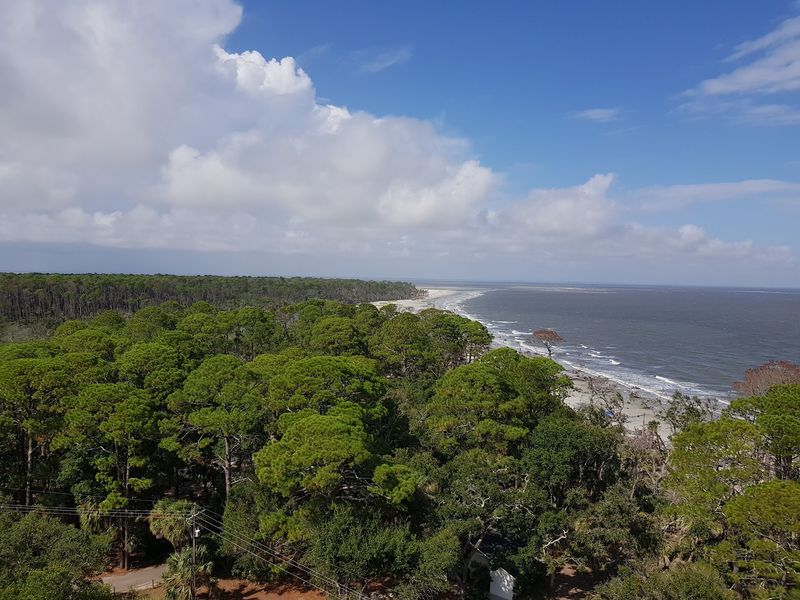
Sand dollars, shark teeth, and bits of coral turned my beach walk into a treasure hunt. After the climb, the shoreline near the lighthouse is the perfect place to cool off and wander at your own pace.
Hunting Island State Park has two main beaches, North Beach and South Beach. North Beach is a favorite for sunrise, when the sky turns pink and orange over the water.
Driftwood scattered across the sand makes a great backdrop for photos.
Trails wind through the maritime forest, and some are open to bikes while others work better on foot. Picnic tables sit close to the lighthouse and the beach, so packing lunch is an easy win.
Clean restrooms and rinse stations help you shake off the sand before heading home.
Timing matters here. Mornings tend to be calmer and less crowded, while weekends can get busy.
Cooler months are lovely too, since you can enjoy the trails and the climb without the summer heat.
The grounds are listed as open from 6 a.m. to 9 p.m. daily, so plan your day around the light and the tides. Calling the park at 843-838-2011 to confirm lighthouse climbing hours before you go is a smart move.
Address: 2555 Sea Island Pkwy, St Helena Island, SC 29920
