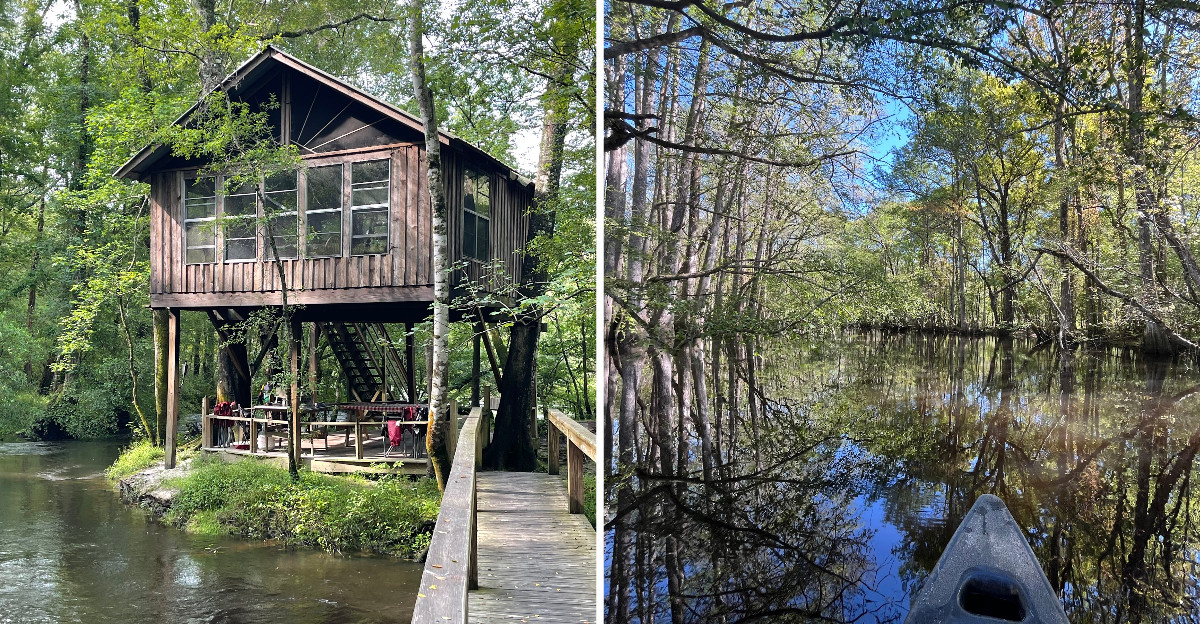
The only way to check in at these treehouses is by canoe or kayak. No driveway, no parking lot, and no shortcut.
You paddle down a blackwater river until your bed for the night shows up in the trees.
The first day covers miles of quiet water before you reach the cabins. The second day finishes the route back downstream.
I like how the river itself becomes both the road and the main attraction.
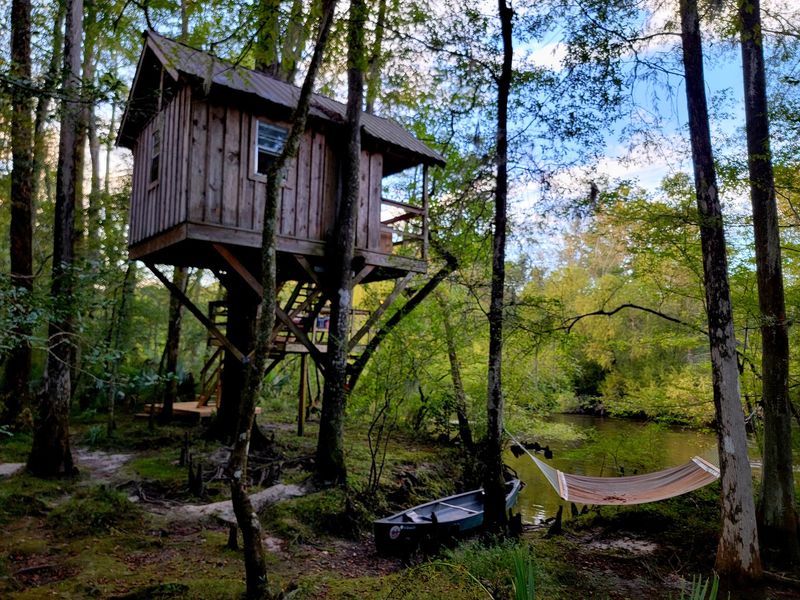
These South Carolina treehouses keep things simple on purpose. There’s no electricity and no running water waiting for you.
Instead, you get a grill, a fire pit, a porch, and a river sliding past below.
Spending the night above a quiet river feels like a reward after hours of paddling through the forest. The journey is as memorable as the treehouse itself, with two days on the water and an overnight stay far from ordinary roads.
Your Hotel Lobby Is Basically A River
Carolina Heritage Outfitters runs one of the most unusual overnight stays in South Carolina. Guests reach their lodging by paddling the Edisto River, then finish the trip by water the next day.
The Edisto is known as one of the longest free-flowing blackwater rivers in North America. That means no dams interrupt its path, and the water carries a dark, tea-like color from natural tannins.
Here’s how the classic trip works. You arrive at the outfitter, get a briefing, and catch a shuttle upstream to the put-in spot.
From there, you paddle downstream toward the treehouses. After your night in the woods, you keep going until you reach the take-out back at base.
The full overnight route covers approximately 23 miles, with about 13 miles of paddling on the first day and another 10 miles on the second.
That split matters when planning your energy. Expect several hours of paddling each day, plus breaks for snacks, swimming, or simply staring at turtles.
Canoes, paddles, and life jackets come with the trip. You bring your own food, bedding, and personal gear, all packed into the boat.
Think of it as a road trip without the road. Your luggage rides at your feet, and the scenery changes around every bend.
Rustic Treehouses That Keep Life Wonderfully Simple
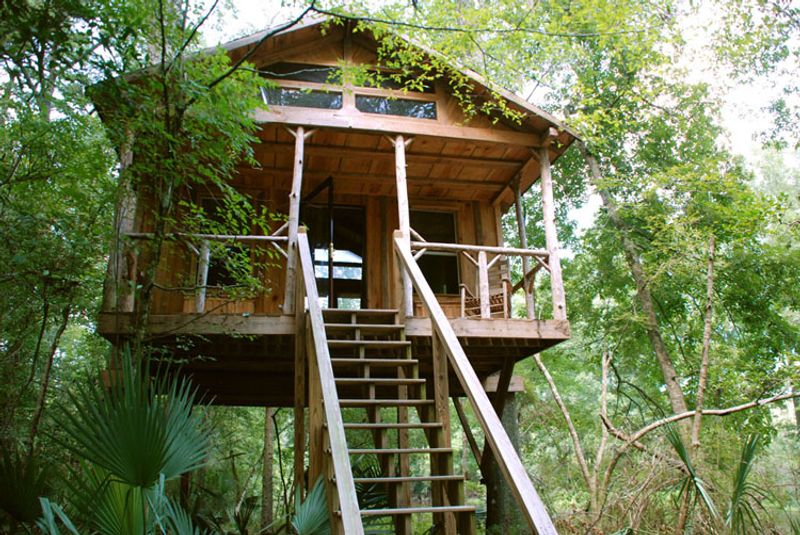
Nothing about these cabins pretends to be a fancy resort. The treehouses sit on a private stretch of land along the river, raised up among the trees.
Each one is built for an off-grid night. There’s no electricity, so no lights, heating, or air conditioning.
There’s also no running water, which means no sink, shower, or flushing toilet.
So what do you get? Inside, futons and sleeping space give you a dry, raised spot to rest.
The large treehouse adds a loft upstairs for extra sleepers.
Outside, you’ll find cooking gear and a gas grill for dinner. A fire pit waits nearby, and firewood is typically provided at the site.
Pots, pans, plates, cups, and utensils are stocked for guests. That frees up precious boat space for food, sleeping bags, and a decent lantern.
The cabins are open-air, so nature counts as your neighbor. A quick rinse of the pots before cooking is a smart habit.
Shared outhouses sit a short walk from the treehouses. Packing your own toilet paper is a small step that pays off.
It’s camping with a roof, basically. You skip the tent stakes but keep the frogs, cicadas, and starry sky.
Pick The Treehouse That Fits Your Crew
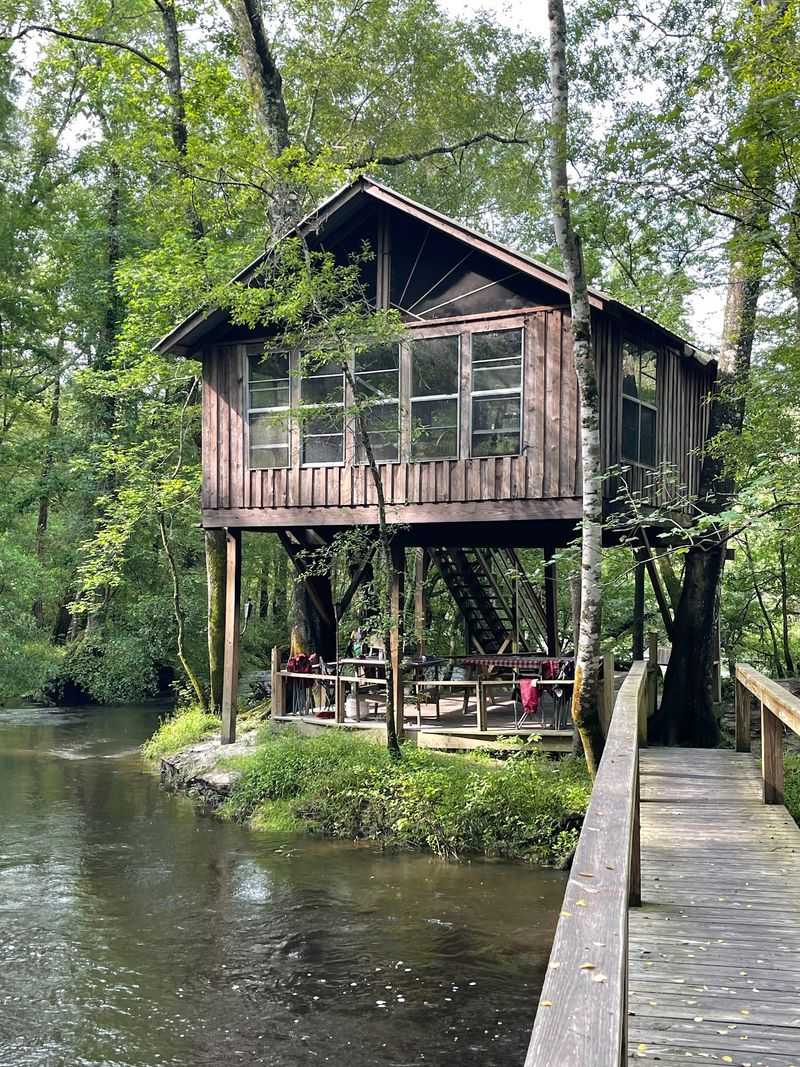
Two people and a big cooler need a different setup than a whole scout troop. Luckily, the outfitter offers multiple treehouses with different sizes.
The small treehouse works well for couples. It’s cozy, compact, and gives two paddlers everything needed for one peaceful night by the water.
The large treehouse handles bigger groups. Futons fill the main level, and a roomy loft upstairs offers extra space for sleeping bags.
That makes it a solid choice for families, friend groups, or a mother and daughter adventure. Everyone gets room to spread out after a long paddle.
The treehouses are connected by pathways on the property. Groups who book more than one cabin can wander between them easily.
The outfitter has also hosted Girl Scouts and Boy Scouts for river camping. Group trips can be arranged with planning ahead, including private campsite options.
Booking early is wise, especially for weekends in warm months. Treehouse space is limited, and the river trip depends on securing your cabin first.
Not sure which size to pick? Count the people, then count the coolers, and go one size bigger if gear might get crowded.
The Paddle Is Easygoing, But Bring Your Arms
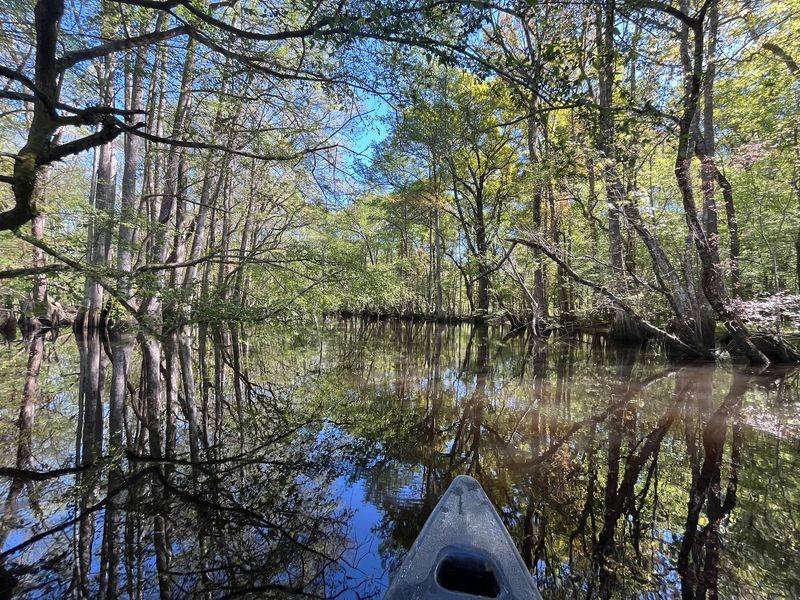
Slow current sounds like a free ride downstream. In reality, the Edisto asks for steady paddling and some smart steering.
The river moves gently, which makes it friendly for beginners. Still, fallen trees and branches show up along the route, so you’ll need to weave around them.
Expect about four to five hours of active paddling each day. Add breaks, and the day stretches longer, but nobody is racing.
Water levels change the experience a lot. Lower water often reveals sandy bars for lunch and swim stops, while high water hides them and speeds things up.
Checking river conditions before your trip is a good move. Asking the outfitter questions about levels helps you plan with confidence.
Canoes carry more gear, but kayaks can turn more easily around tight spots. Pick based on how much stuff you’re hauling.
A GPS app helps track your progress and distance. Cell signal may be weak on the river, so download maps ahead of time.
Always wear your life jacket on the water. Comfortable clothes, sun protection, and plenty of drinking water make those miles feel far friendlier.
Dinner Tastes Better After Twelve Miles
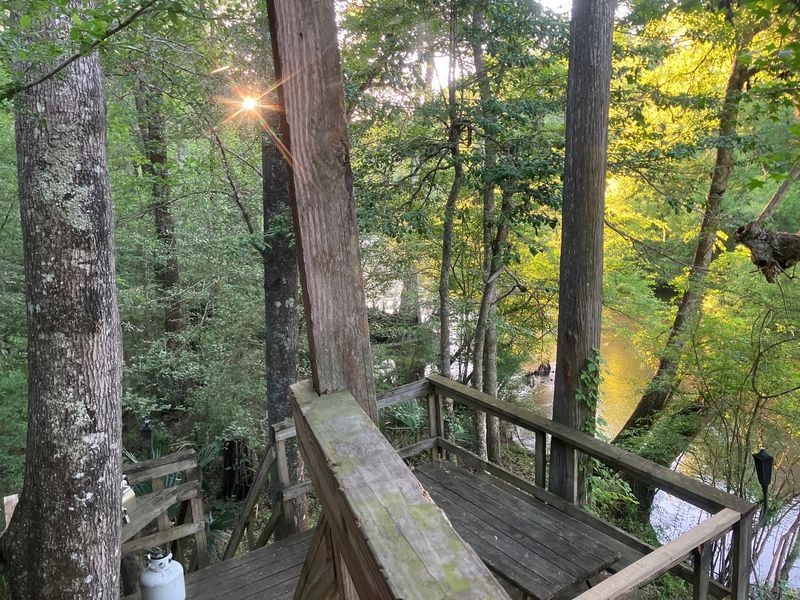
Grilled food after a long paddle hits differently. Your arms earned it, and the river provides the dinner music.
Each treehouse comes with a gas grill and cooking basics. Propane, pots, and bowls are part of the setup, so you mainly pack food and seasonings.
Planning meals is half the fun. Simple options cook fast, travel well in a cooler, and leave you more time on the porch.
Coolers fit inside the canoe, but size matters. A medium hard cooler plus a soft cooler usually works better than one giant chest.
Once the sun drops, the fire pit becomes the center of the evening. Firewood waits at the site, though a fire starter helps if wood gets damp.
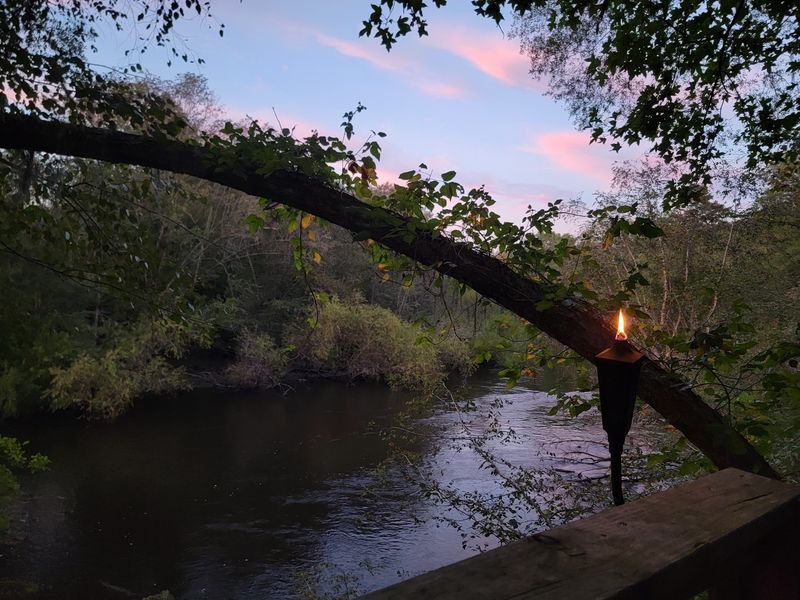
Tiki torches outside offer some light after dark. Inside, it gets dim fast, so a lantern or headlamp is essential.
Pack a trash bag too. Everything you bring in should leave with you, keeping the property clean for the next crew.
Then just sit. The cicadas tune up, the water slides past, and conversation flows without a single screen fighting for attention.
A Packing List Saves Your Whole Night
Forgetting a pillowcase is annoying. Forgetting a light source on an off-grid river island is a whole different story.
Because the treehouses have no electricity, smart packing makes or breaks the trip. Start with sleeping bags, pillows, and towels for every person.
Next, add light. A lantern plus headlamps covers both cooking and late-night trips to the outhouse.
Toilet paper and paper towels are worth tossing in. Supplies can run low, and a backup roll costs almost nothing in space.
A large portable charger keeps phones alive for photos and GPS. Dry bags protect electronics, clothes, and bedding if a splash happens.
Bring plenty of drinking water, since there’s no running water at the treehouses. Sunscreen and bug spray belong in the bag too.
Don’t forget a pen for the guest book. Reading old entries and adding your own is a sweet little tradition.
Pack everything in soft, squishable bags when possible. They tuck into canoe corners far better than stiff suitcases.
Finally, a small speaker or deck of cards adds evening fun. Keep the music low, though, because the river soundtrack is pretty great.
Turtles, Moss, And Total Quiet
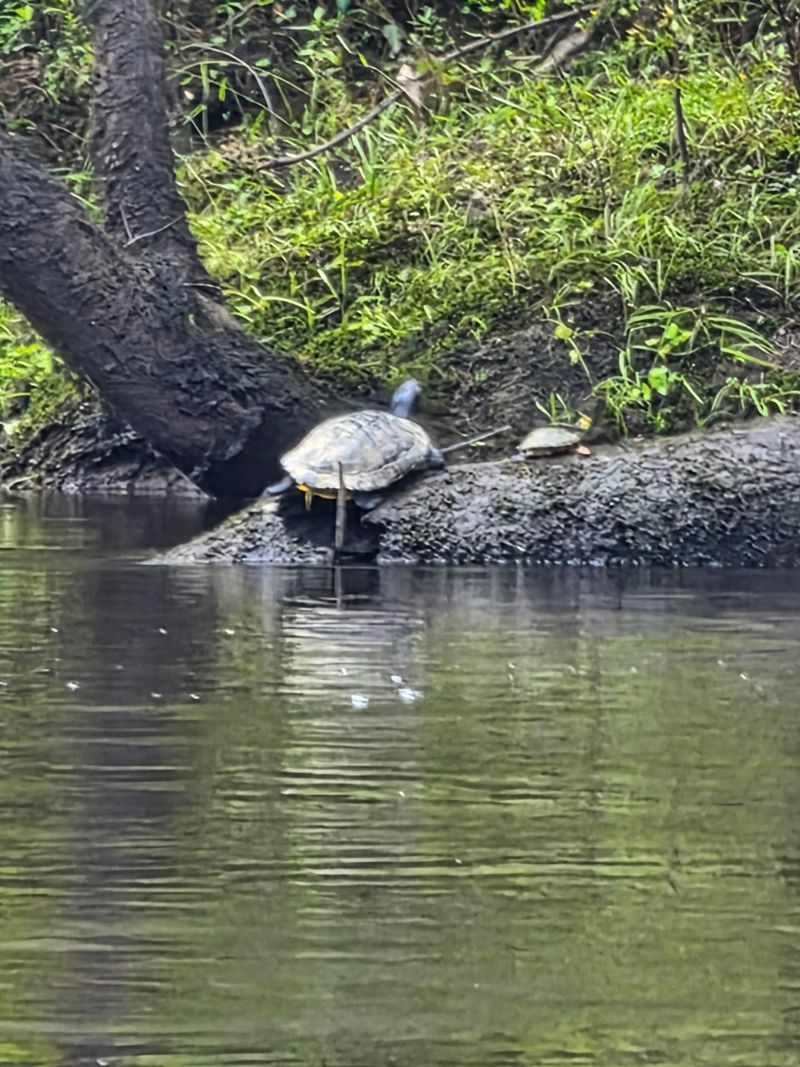
Turtles stacked on logs might become your favorite traffic jam. The Edisto shelters plenty of wildlife along its winding, tree-lined banks.
This stretch feels wonderfully remote. Some days, you may paddle for hours seeing more herons and turtles than people.
Cypress trees and Spanish moss frame much of the route. The dark water reflects everything, which makes even cloudy days look moody and pretty.
Snakes live here too, since it’s their home first. Give them room, keep your distance, and they’ll happily mind their own business.
Night brings a fresh soundtrack. Cicadas, frogs, and moving water fill the air around the treehouses as darkness settles.
The Edisto also has deep roots in South Carolina history. Its basin has supported people, farms, and communities across the Lowcountry for centuries.
Bring binoculars if you love birds. A waterproof camera or phone pouch helps capture shots without worrying about splashes.
Mostly, slow down and look around. The best parts of this trip often happen when you rest the paddle and simply drift for a minute.
No Overnight? A Day Trip Still Counts
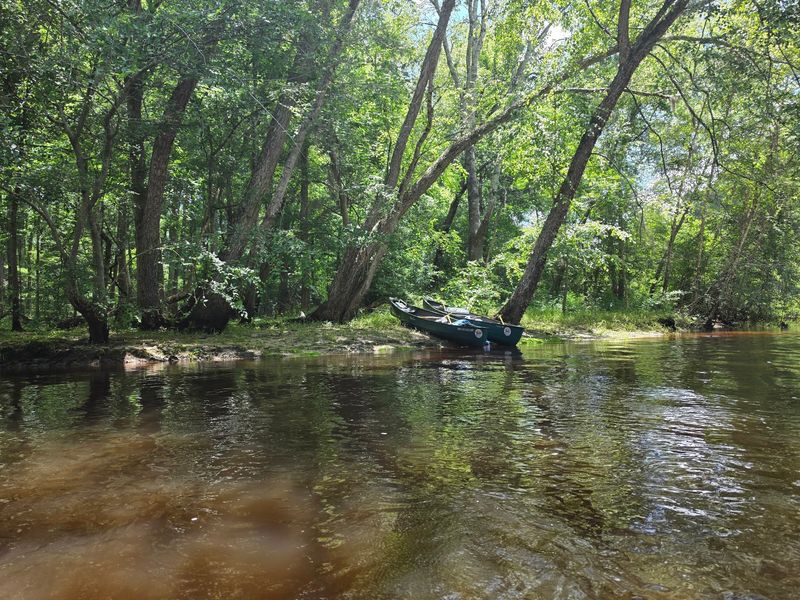
Not ready to sleep in a treehouse yet? The outfitter also offers canoe and kayak rentals for day trips on the Edisto.
Day paddles let you test the river first. You get the same dark water, mossy trees, and quiet scenery without packing bedding.
Trip length can stretch several hours with stops. Swimming breaks, snack pauses, and turtle spotting fill the time fast.
It’s a great option for birthdays or a first canoe outing. Families can see how kids handle the boat before committing to longer miles.
Day trips also work well for groups with mixed experience. Experienced paddlers can steer, while newer folks learn the rhythm of strokes.
Many people try a day trip, then return later for the full overnight. Think of it as a friendly preview with lunch on a sandbar.
The shuttle setup keeps things easy. You start upstream and float back toward base, so nobody has to fight the current.
Dress for getting wet, even if you don’t plan to swim. Quick-dry clothes and water shoes make the whole day more comfortable.
Finding Base Camp In The Lowcountry
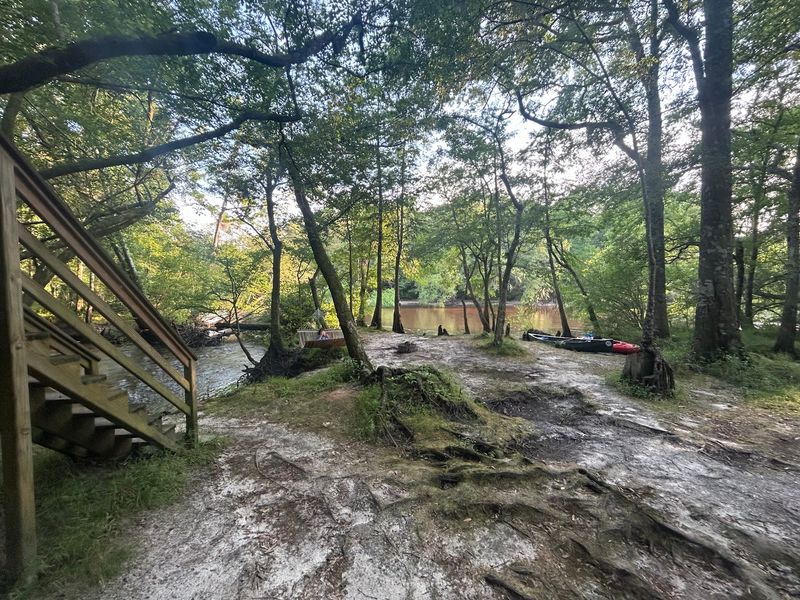
Your adventure begins at 1 Livery Ln, St George, SC 29477. That’s the home base for Carolina Heritage Outfitters and the spot where trips launch.
St. George sits in Dorchester County, inland from Charleston. The drive takes you through rural South Carolina, with pine forests and quiet country roads.
The location makes a weekend getaway easy from Charleston, Columbia, or Savannah. You can leave work Friday and be on the river by Saturday morning.
The office is open daily from 9 a.m. to 5 p.m. Arriving a little early gives you time to organize gear and attend the briefing calmly.
Staff explain the route, landmarks, and where to stop. Pay attention, because spotting your treehouse from the water matters.
Parking your car here is part of the magic. Once you shove off, your vehicle stays behind until the river brings you back.
Nearby, Colleton State Park and Givhans Ferry State Park also sit along the Edisto. Both make fun add-ons for extra river time.
So grab some friends and pack light. Few weekends end with a sentence like, we canoed home from our treehouse.
