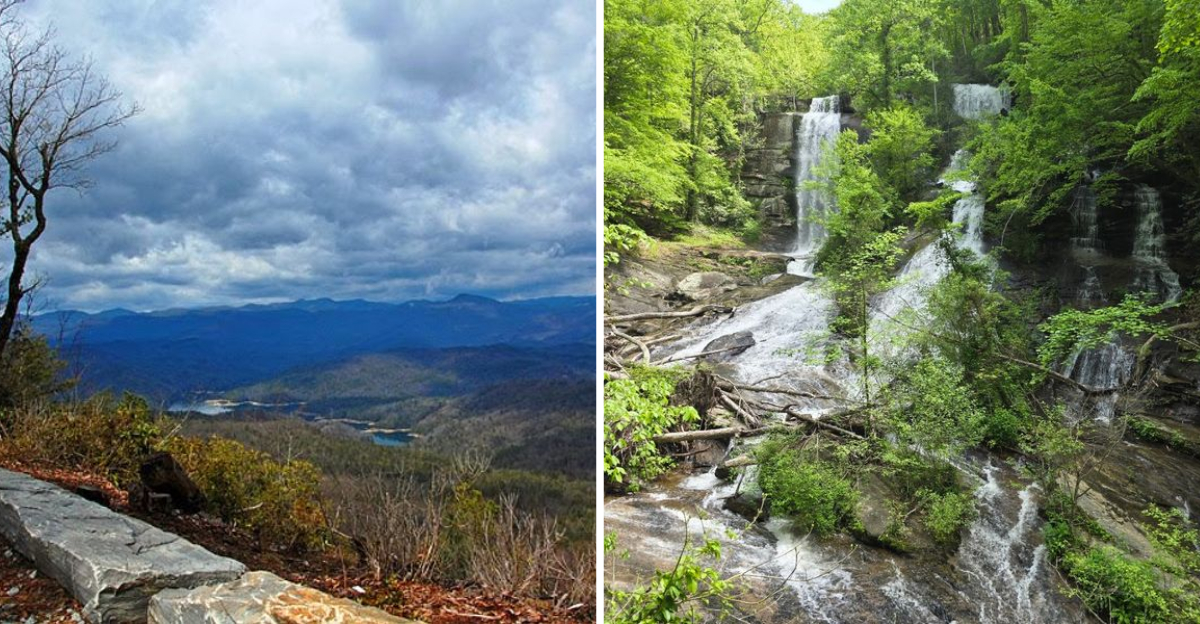
This South Carolina lake nestled into the Blue Ridge foothills is the kind of place that makes you forget your phone exists.
The water is so clear it looks almost fake, a deep blue-green that you can see straight through, down to the rocky lakebed far below. Four cold Appalachian rivers feed this 7,500-acre reservoir, keeping it cool and impossibly pristine year-round.
I first heard about it from a friend who kept saying it felt more like the Mediterranean than the Carolina mountains, and honestly, that stuck with me. When I finally made the drive out to the state park and got my first look at that water, I understood exactly what she meant.
I spent the afternoon just floating, staring up at the Blue Ridge sky, and wondering why it took me so long to get here. This place not only meets the hype but quietly exceeds it in ways you never expected.
The Unveiling of Jocassee’s Crystal-Clear Heart
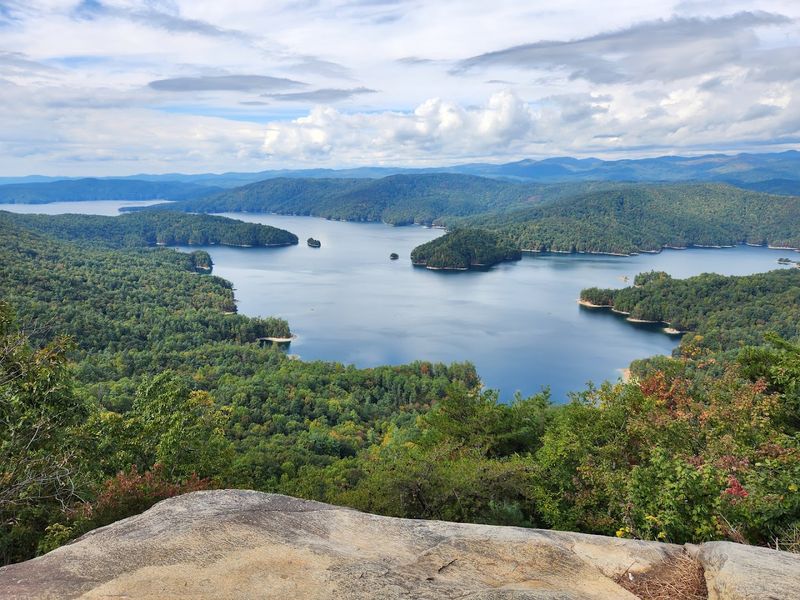
The clarity of Lake Jocassee is the first thing that hits you, and it hits hard. Most lakes carry a murky brownish tint, but Jocassee looks almost engineered by nature to be transparent.
On a calm morning, you can peer straight down twenty, sometimes thirty feet, watching the lakebed come into focus like a photograph developing in real time.
Four Appalachian mountain rivers feed the lake: the Whitewater, Thompson, Horsepasture, and Toxaway. Their cold, fast-moving mountain water keeps the lake refreshingly chilled and remarkably clean throughout every season.
That constant flow is what makes the difference. It prevents the algae blooms and sediment buildup that cloud most reservoirs.
I sat on a rock near the shoreline for a while, just watching the light shift across the surface. Small fish darted through the shallows like they owned the place.
The surrounding ridgeline reflected in the still water, doubling the scenery. It earned its reputation as South Carolina’s clearest lake honestly, no marketing required.
Every glance at the water feels like a small reward, quiet, unhurried, and genuinely beautiful in a way that stays with you long after you leave.
Whispers of Waterfalls: A Boat-Only Symphony
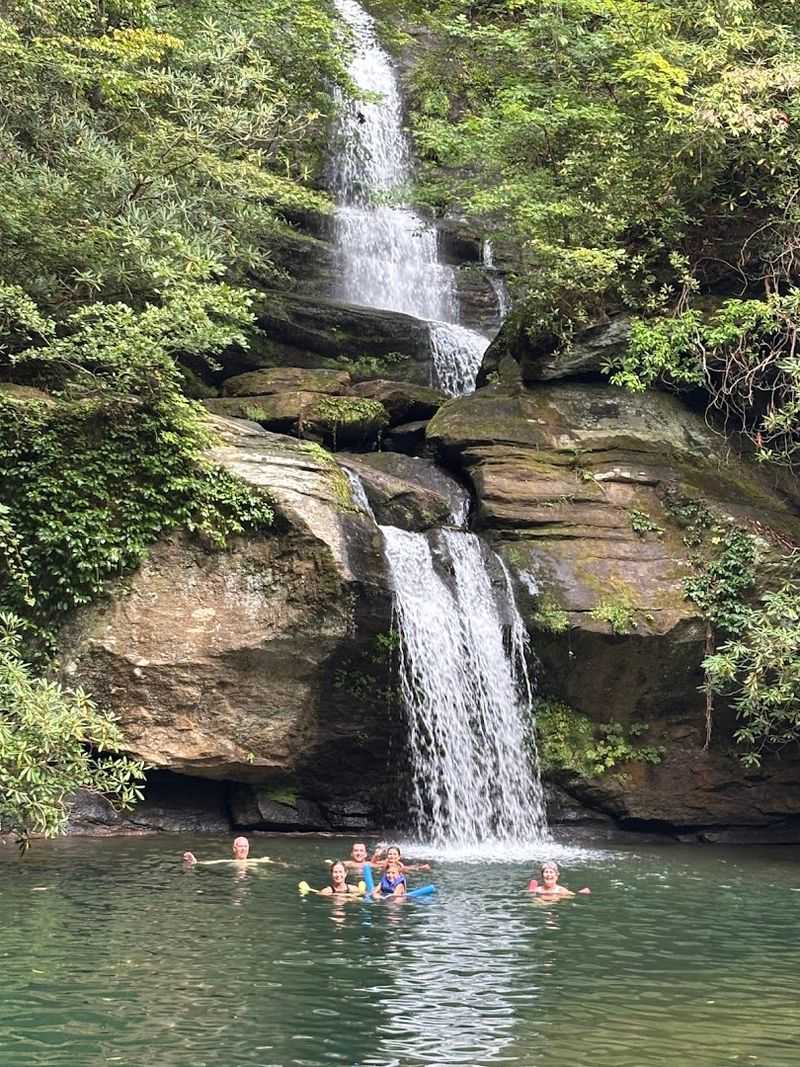
Nobody tells you about the waterfalls until you’re already on the water, and then suddenly, there they are. Laurel Fork Falls drops eighty feet in three breathtaking tiers, and the only way to truly appreciate it is from the lake itself.
The sound reaches you before the view does, a low rushing hum that grows louder as you round a wooded bend in your boat or kayak.
Wright Creek Falls adds its own drama with three distinct tiers, the lowest of which spills directly into the lake during higher water levels. Paddling a kayak right up to the curtain of falling water is one of those experiences that feels almost too good to be real.
Mill Creek Falls, tucked in the northwestern corner, lets you pull your boat close enough to feel the cold spray on your arms.
Smaller unnamed falls dot the northern shoreline too, each one adding another note to the lake’s natural soundtrack. The Whitewater River, one of the lake’s main tributaries, still rushes visibly where it enters Jocassee.
Exploring these cascades by boat or paddle craft gives the whole trip a sense of discovery. Every cove holds a possibility.
Every quiet stretch of water might open up into something genuinely spectacular.
Beneath the Surface: A Sunken World Worth Exploring
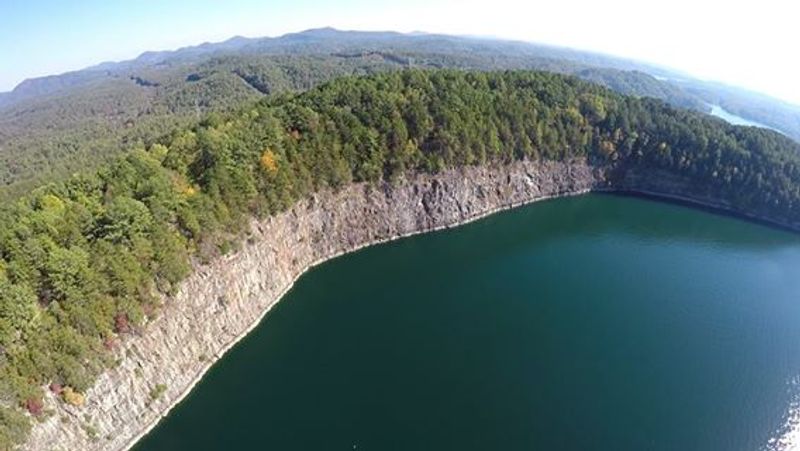
Here is something most visitors don’t know: an entire valley lies beneath the surface of Lake Jocassee. When Duke Power created the reservoir in 1973, it submerged communities, homesteads, and even a lodge.
Attakulla Lodge still stands somewhere around 300 feet down, preserved in the cold, dark water like a relic from another era.
Scuba divers come from all over the country specifically to explore these underwater remnants. Mount Carmel Cemetery rests more than 130 feet below the surface, its headstones still upright in the silt.
The exceptional visibility, sometimes reaching thirty feet, makes navigating these ghostly spaces feel more like flying through history than swimming through it.
For those who prefer shallower adventures, snorkeling in the lake’s clear coves is genuinely rewarding. You can spot fish species easily, watch light dance across submerged rocks, and get a real sense of the water’s extraordinary purity.
Some artificial attractions have also been placed intentionally for divers, including an old motorcycle and a sunken boat. The whole underwater dimension of Jocassee adds a layer of intrigue that most mountain lakes simply cannot offer.
It transforms a beautiful lake visit into something that feels layered, historic, and quietly mysterious.
Paddling Through Paradise: Kayaks and SUPs on Jocassee
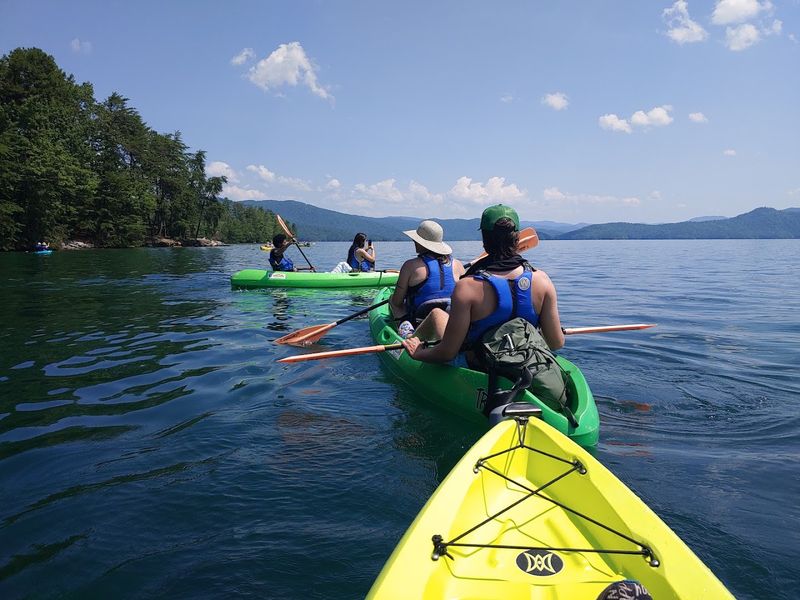
There is something deeply satisfying about exploring a massive lake at a slow, human-powered pace. A kayak or stand-up paddleboard puts you close to the water in a way that a motorboat simply cannot match.
You hear everything: the drip of your paddle, the call of a bird overhead, the distant rush of a waterfall growing louder as you approach.
Devil’s Fork State Park offers kayak, canoe, and paddleboard rentals right on site, which makes planning easy. Gear like paddles, personal flotation devices, and laminated navigation maps are all included.
The northern arms of the lake tend to be quieter, especially on weekday mornings, and those coves are where the real magic happens. Mist still clings to the tree line early in the day, and the water reflects the mountains like a mirror.
Multi-day paddling trips are also possible since boat-in campsites are scattered around the lake’s perimeter. Imagine spending an entire afternoon drifting between coves, stopping to swim in water so cold and clear it shocks your system in the best possible way.
Paddling Jocassee is less about covering distance and more about slowing down enough to notice everything. It rewards patience, curiosity, and a willingness to get a little lost along the way.
A Hiker’s Haven: Trails, Wildflowers, and Wild Things
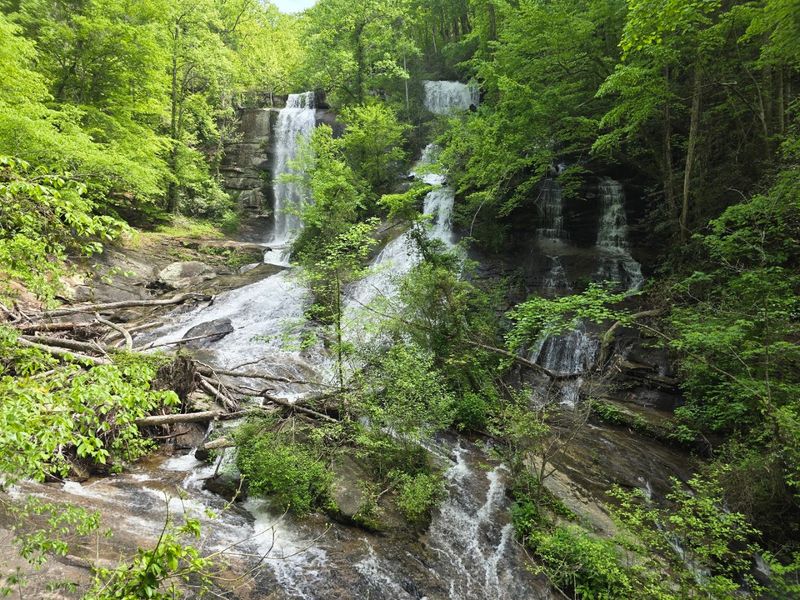
The land around Lake Jocassee is just as compelling as the water itself. Nested within the 50,000-acre Jocassee Gorges, a wilderness that National Geographic named one of the world’s last great places, the area carries a richness that goes well beyond scenic views.
A temperate rainforest climate shaped by the Eastern Continental Divide creates conditions found almost nowhere else in the region.
Devil’s Fork State Park is the jumping-off point for several trails, and the Oconee Bell Nature Trail stands out as something genuinely special. The trail is named for the Oconee Bell wildflower, a rare and delicate species that blooms in early spring.
About ninety percent of the world’s population of this plant lives right here in the Jocassee Gorges. Catching it in bloom, small white and pink bells trembling in the filtered forest light, feels like stumbling onto something sacred.
The Foothills Trail, a demanding 77-mile route, also passes through the gorges and rewards hikers with sweeping ridgeline views. Wildlife sightings are common here.
White-tailed deer move through the woods quietly, bald eagles patrol the sky, and during winter, common loons fill the air with their haunting calls. The forest feels alive in a way that reminds you nature was doing just fine long before we arrived.
Angler’s Dream: Trophy Fish in Mountain-Cold Water
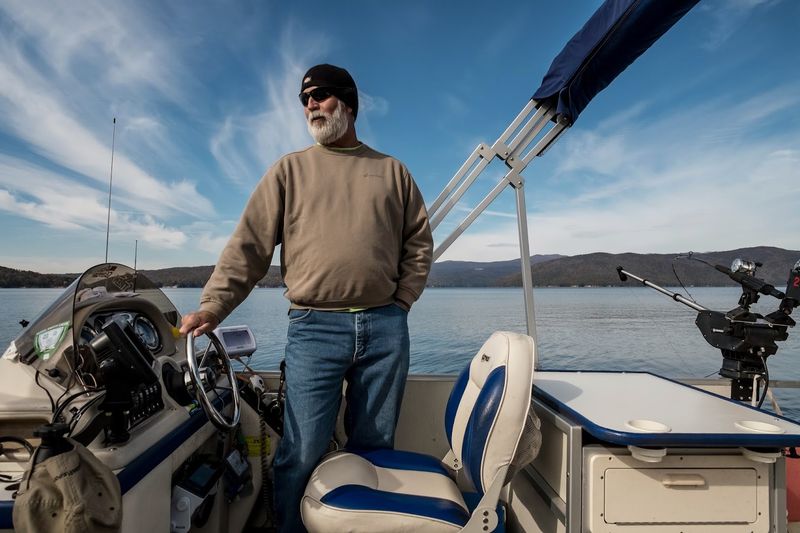
Lake Jocassee holds state records for five fish species, and that alone tells you something important about the quality of its water. Redeye bass, smallmouth bass, spotted bass, brown trout, and rainbow trout all thrive in the deep, cold, clear conditions that this mountain reservoir provides.
No other lake in South Carolina can claim the same combination of trophy trout and smallmouth bass fishing.
The South Carolina Department of Natural Resources stocks the lake with tens of thousands of trout each fall, keeping the population healthy and the fishing genuinely exciting. Rainbow and brown trout often suspend in the deeper water, feeding on schools of blueback herring.
Trolling with downriggers is a popular approach for targeting these deep fish, while fly fishing in the river inlets works beautifully for bass and trout during warmer months.
The four rivers feeding the lake, Whitewater, Thompson, Horsepasture, and Toxaway, all offer their own fishing character. Accessing the Horsepasture and Toxaway by boat adds a scenic dimension to any angling trip that is hard to beat.
Even if fishing isn’t your thing, watching dedicated anglers work the water from the shore or a passing kayak is oddly peaceful. The whole scene feels timeless, a quiet conversation between patient people and a generous, wild lake.
The Spirit of the Jocassee Gorges: History, Legend, and Legacy
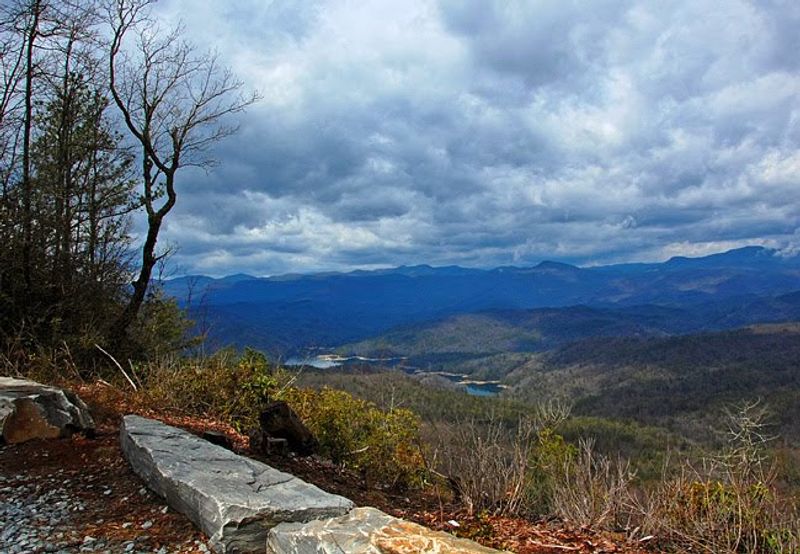
The name Jocassee comes from a Cherokee legend meaning Place of the Lost One. The story tells of a Cherokee maiden who walked across the water to reunite with the spirit of her lost love.
It’s a haunting origin for a lake that already carries a certain quiet mystery, and knowing it changes how you look at the water. There’s a depth here that goes beyond feet and meters.
The Jocassee Gorges were once part of the Cherokee Nation’s homeland, and that history feels present in the stillness of the forest and the ancient shape of the ridgelines. The largely undeveloped shoreline, protected through a partnership between Duke Power and the state of South Carolina, has kept the region free from the commercial sprawl that typically follows beautiful natural areas.
That restraint is rare and worth appreciating.
National Geographic recognized the gorges as one of fifty last great places on Earth, a designation that carries real weight when you’re standing at the water’s edge watching a bald eagle cross the sky. Rare orchids, threatened mosses, and peregrine falcons all call this place home.
Jocassee isn’t just a lake to visit. It’s a living landscape that reminds you what the world looks like when it’s genuinely cared for.
Address: Devil’s Fork State Park, 161 Holcombe Bridge Rd, Salem, SC 29676.
