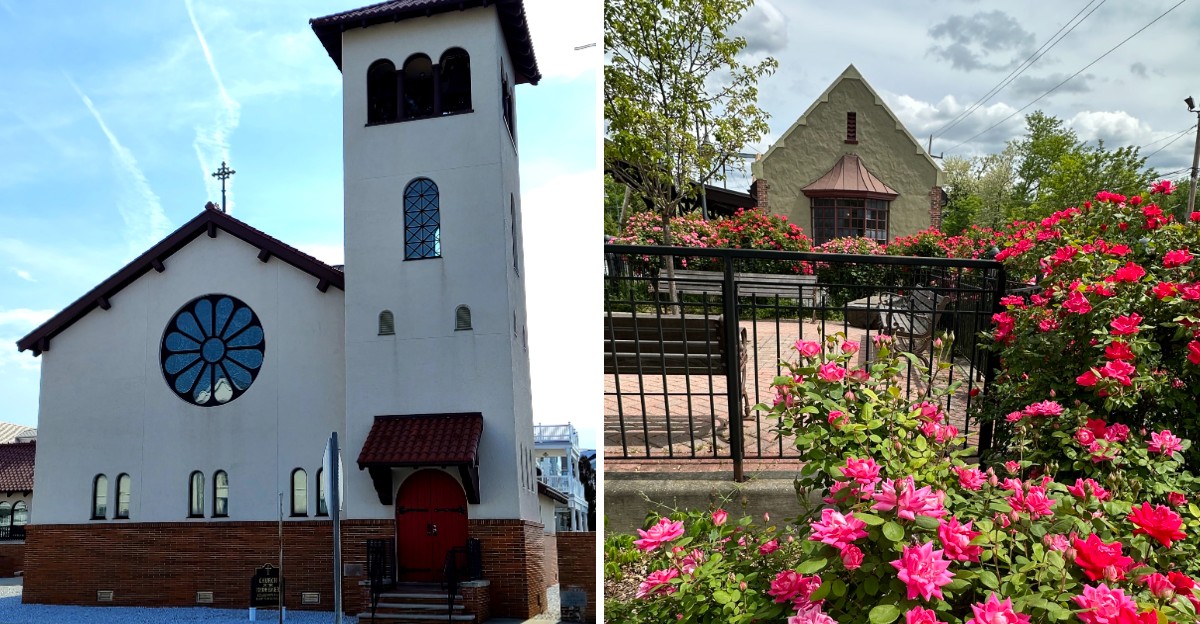
Red tile roofs. Arched doorways.
Stucco walls. Courtyards that look like they belong somewhere much sunnier.
And then… wait, this is New Jersey?
Yep. The state has more Spanish-style architectural surprises than most people realize.
If your mental picture of local architecture is all Colonials, Victorians, and brick downtowns, this list is about to shake things up.
These buildings bring serious Mediterranean drama, with bold curves, decorative details, towers, balconies, and enough old-world flair to make you do a double take from the sidewalk.
Whew. Suddenly the Garden State is feeling a little more like a European postcard.
These spots prove that architectural surprises can show up in the most unexpected places.
Keep your eyes up. The next beauty might be hiding right around the corner.
1. The Flanders Hotel, Ocean City
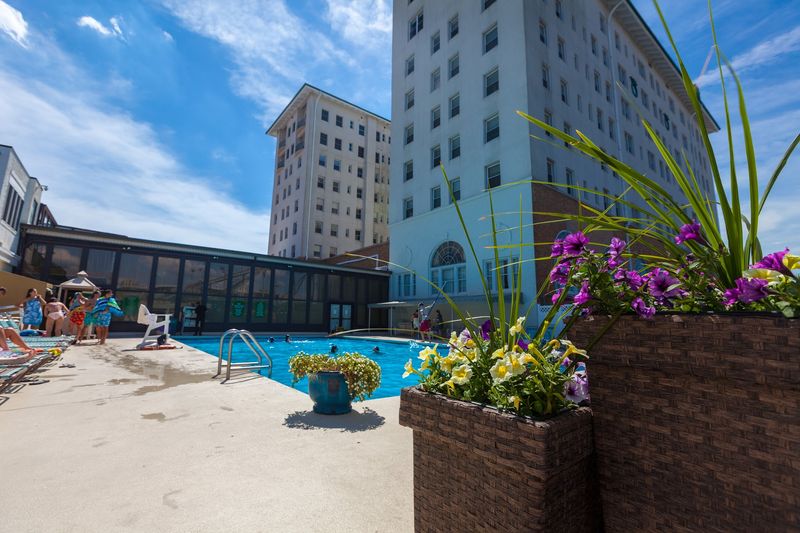
Red clay tiles against a blue shore sky are hard to beat, and The Flanders Hotel delivers that view with total confidence. White stucco walls stretch along the block, catching the sun the way a Mediterranean villa would.
Built in 1923 and designed by Vivian Smith, the hotel is one of the clearest examples of Spanish Mission Revival style anywhere along the coast. Its look proved so popular that nearby buildings borrowed the same vocabulary of arches and tile.
There is a practical story hiding underneath all that charm, too. The structure was built using steel girders and concrete, a decision that helped it survive a boardwalk fire in 1927 while lighter buildings suffered.
Recognition came later, with a listing on the National Register of Historic Places in 2009.
What I like most is how casual the setting feels. Beach towels, flip flops, families heading toward the sand, and then this stately white landmark standing above it all like a scene from somewhere much farther south.
Come in the late afternoon if you can. The low sun turns the stucco a soft gold, and the tile roof practically glows.
Address: The Flanders Hotel, 719 E 11th St, Ocean City, NJ 08226
2. Loew’s Jersey Theatre, Jersey City
Journal Square moves fast, with buses, commuters, and food smells drifting around every corner. Then the facade of Loew’s Jersey Theatre appears, and the pace of the whole block seems to slow down.
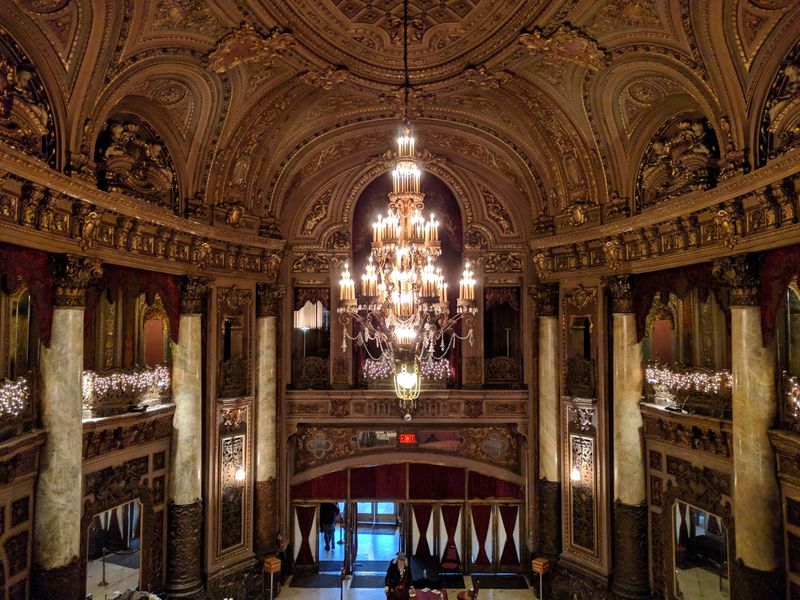
Designed by the nationally known firm Rapp and Rapp, the movie palace first opened on September 28, 1929. Its style is often described as a mix of Spanish Baroque and Italian Rococo, which basically means ornament everywhere you look.
The lobby section wears an elaborate terracotta face, topped by a grand marquee and a Seth Thomas clock. Above it sits a sculpture of Saint George battling a dragon, which is the kind of detail you point at without meaning to.
Inside, the proscenium arches, walls, and ceilings are richly decorated, creating an atmosphere that feels more cathedral than cinema.
It also holds real historical weight, having been one of five Loew’s Wonder Theatres built in the New York City area.
Give yourself a few extra minutes outside before heading in. The exterior rewards slow looking, especially once the marquee lights kick on and the carvings pick up shadows.
Address: Loew’s Jersey Theatre, 54 Journal Square, Jersey City, NJ 07306
3. The Clairidge, Montclair
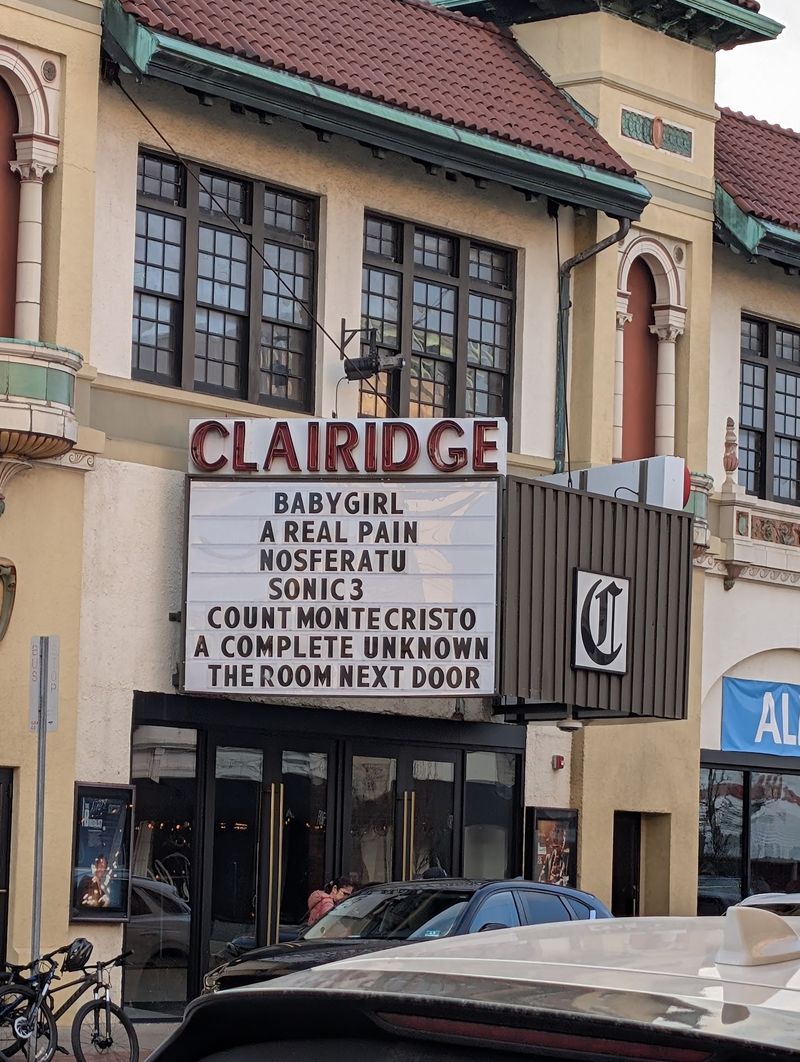
Bloomfield Avenue has plenty of competition for your attention, from bookshops to bakeries, yet The Clairidge still manages to hold its own. Its Mission Revival lines give the block a softer, sunnier edge.
The building was designed by Nathan Harris and William E. Lehman, and it works as a cinema, which means the architecture is part of an actual night out rather than a museum piece.
Mission Revival is rooted in Spanish influences, and you can read that in the smooth wall surfaces and the shaped profile along the top. It is restrained compared to a full movie palace, but the DNA is unmistakable.
Montclair happens to be a strong town for architecture fans in general, with buildings representing several different eras clustered within walking distance.
That context matters. Seeing a Spanish-influenced theater sitting near Victorian and early twentieth century neighbors makes the contrast far more interesting than it would be on its own.
My advice is simple. Walk the avenue for a few blocks before or after a screening, look above the shop signs, and let the rooflines tell you how much the street has changed over time.
Address: The Clairidge, 486 Bloomfield Ave, Montclair, NJ 07042
4. Ridgewood Train Station, Ridgewood
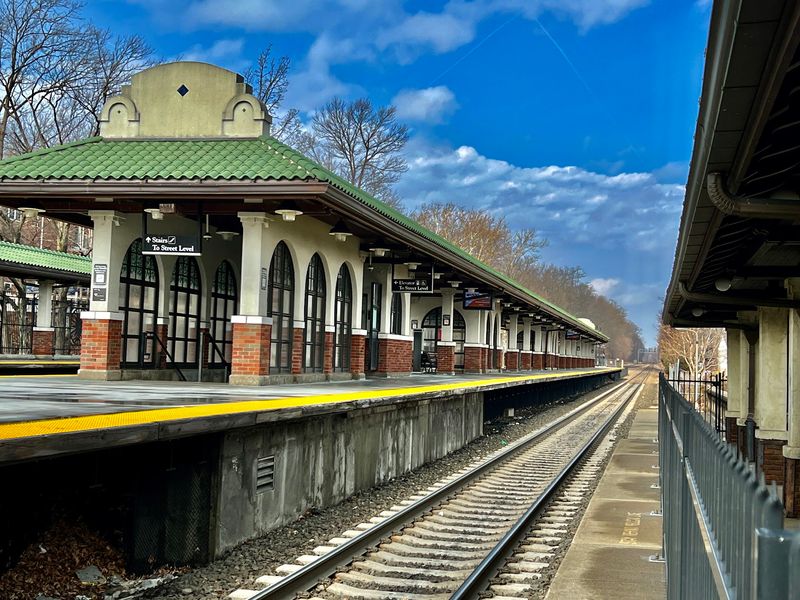
Commuter stations rarely make anyone stop and admire them, which is exactly why Ridgewood Train Station is such a pleasant surprise. Stucco walls, shaped gables, and a Spanish tile roof greet you before the train does.
Erie Railroad built the station in 1916, and the Mission and Spanish Revival details run through the entire complex rather than being limited to one showy entrance.
Round arch arcades repeat along the structure, and a curvilinear parapet crowns the composition. Together they create rhythm, the kind you notice once you start following the arches with your eyes.
There is a neat backstory behind the style choice. Frank A.
Howard, an engineer on the building, had previously worked in California for the Southern Pacific, a railway closely associated with popularizing Mission Revival design.
Both the State and National Registers of Historic Places added the station in 1984, which helps explain why it still looks so complete.
Weekday mornings are busy, so a weekend visit is easier if you want to actually study the details. Stand across the tracks, take in the full roofline, then walk the arcade slowly.
It feels like a small vacation before your train arrives.
Address: Ridgewood Train Station, Garber Square, Ridgewood, NJ 07450
5. Collingswood Grand Ballroom, Collingswood
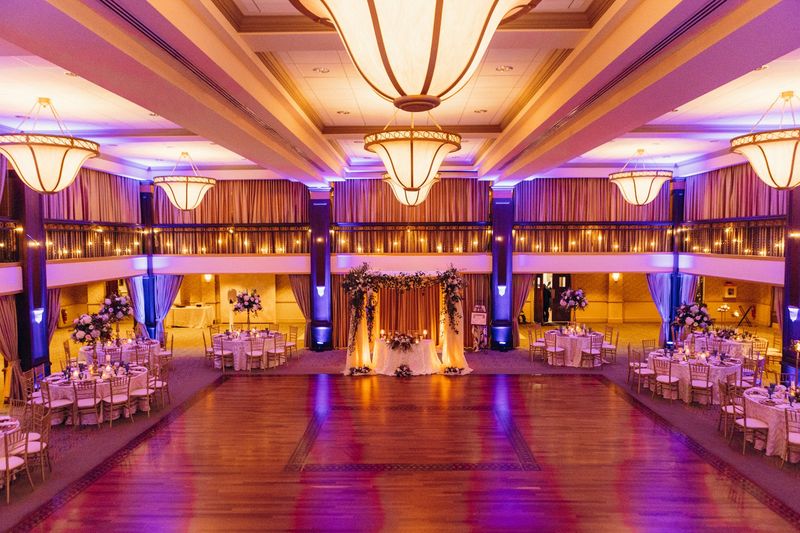
Some buildings win you over with the entrance alone, and the Collingswood Grand Ballroom is firmly in that camp. A dramatic grand staircase sets the mood the second you step inside.
The design dates to the 1920s and leans Art Deco rather than Spanish, so think geometry, polish, and glamour instead of tile roofs and arches.
Polished cherry wood details run through the space, giving the interior a warm depth that photographs never fully capture. A mezzanine level overlooks the main ballroom, which is a genuinely fun perch for watching everything below.
Including it here is about context. Once you start studying 1920s buildings across the state, you notice how differently architects handled the same decade, and the contrast makes the Spanish-influenced examples stand out even more.
The scale is generous without feeling cold, and the ornament rewards a second look at ceilings and railings.
White Horse Pike is not where most people expect a room like this, which is half the charm. Collingswood itself is walkable and easygoing, so pair a visit with a stroll through the downtown and let the neighborhood fill in the rest of the story.
Address: Collingswood Grand Ballroom, 315 White Horse Pike, Collingswood, NJ 08107
6. Church of the Redeemer, Longport
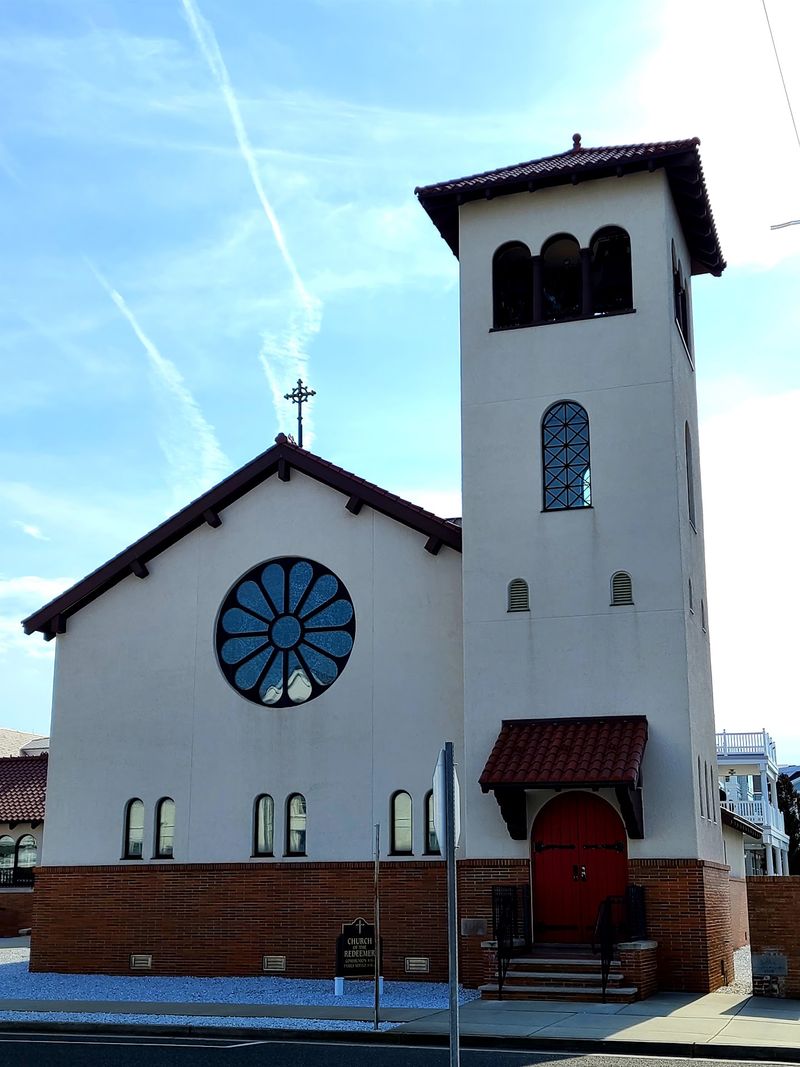
Down at the quiet end of the barrier island, past the bigger beach crowds, sits a small church that genuinely stops people mid-walk. Church of the Redeemer wears its Spanish styling proudly and without fuss.
Originally built in 1908, the church was designed by the firm of Duhring, Okie & Ziegler, most likely by H. Louis Duhring Jr. Its design carries Mission and Spanish Revival along with Spanish Colonial Revival elements.
Fire severely damaged the original wooden structure in June 2012, and losing it could easily have been the end of the story.
Instead the building was rebuilt and reopened in June 2014, following the original architectural drawings and style closely enough that the character survived intact.
It had been added to the National Register of Historic Places back in 1992, a reminder that its importance was recognized well before the rebuild.
Longport is small and calm, which suits the church perfectly. Salt air, low rooflines, and then this warm Spanish silhouette catching the light.
Visit on foot if you can manage it. Parking near the shore gets tight, and the walk lets you appreciate how the building anchors its corner of the island.
Address: Church of the Redeemer, 20 S 20th Ave, Longport, NJ 08403
7. Winfield Scott Tower, Elizabeth
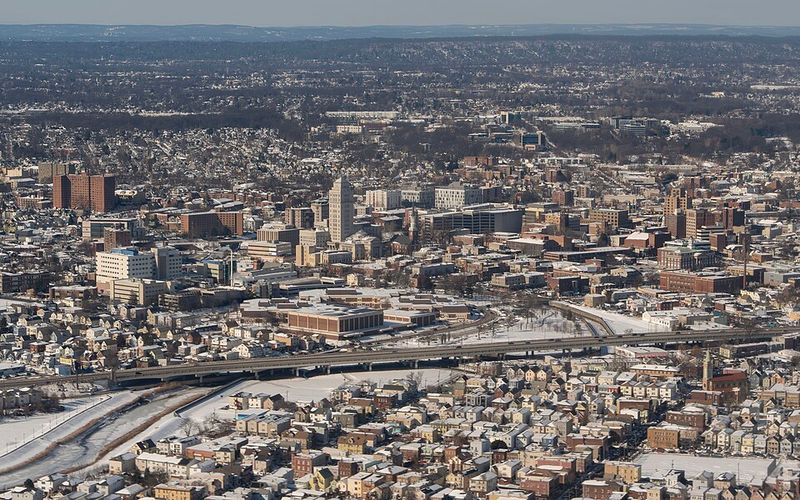
Eleven stories of 1928 ambition still rise over North Broad Street, and the Winfield Scott Tower has lost none of its presence. Originally known as the Hotel Winfield Scott, it was built in the Spanish Colonial style.
The construction is a rigid frame of steel and brick, dressed up with applied masonry that carries the decorative punch. From the sidewalk the upper floors read as a stack of texture and shadow.
Its original purpose was glamorous by any measure, serving as a premier banquet hall and hotel tower for the city.
Life changed in the 1990s, when the building was converted into senior housing. That second act is part of why it survived rather than disappearing like so many hotels of its era.
Elizabeth is a working city with a fast rhythm, and the tower fits into that energy instead of standing apart from it. People pass beneath the ornament every day without breaking stride.
My tip is to cross the street before looking up. Distance lets you see the whole vertical composition, especially the way the decorative elements cluster near the top where the designers knew they would show best.
Address: Winfield Scott Tower, 323 N Broad St, Elizabeth, NJ 07208
8. Lyons Train Station, Basking Ridge
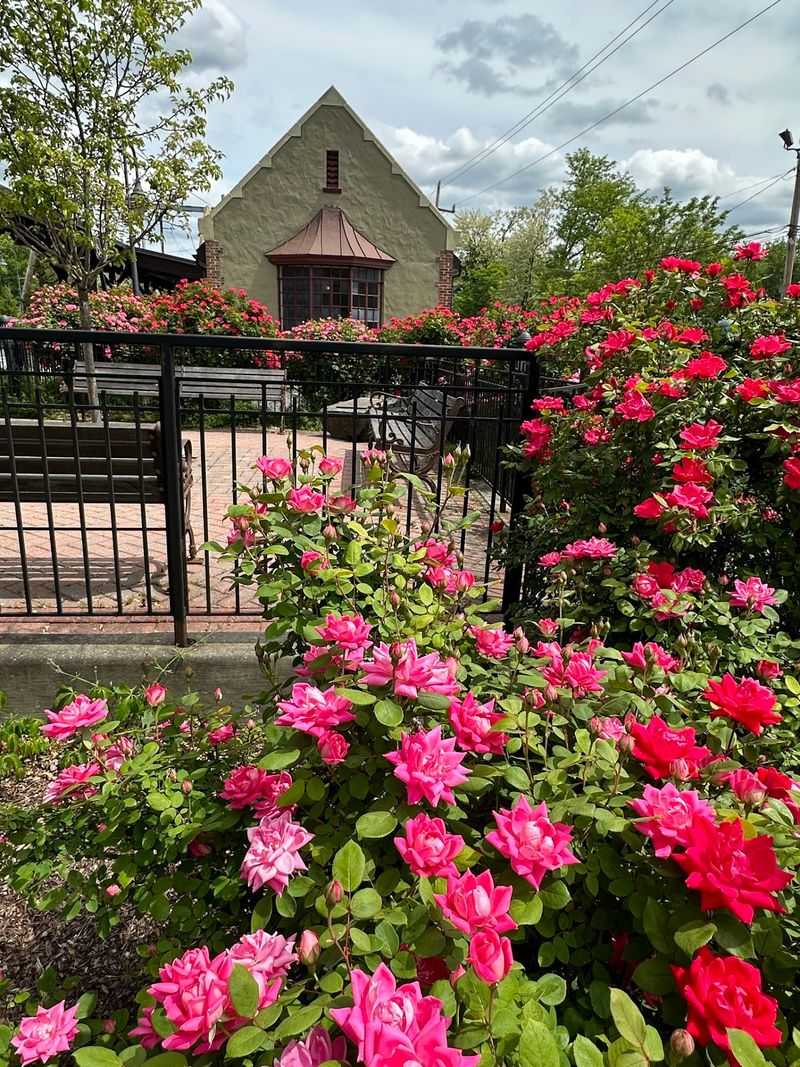
Two architectural styles usually fight for control of a building, but at Lyons Train Station they seem to have reached a truce. Tudor Revival and Mission Revival share the same one-story structure surprisingly well.
The Delaware, Lackawanna and Western Railroad built the depot in 1931, with the design credited to architect D.T. Mack or someone on his staff.
Brick and stucco form the walls, trimmed in limestone, and carved rosette ornamentation decorates the gable ends. Those little rosettes are the detail worth hunting for, since they are easy to miss from a moving car.
Both the New Jersey Register of Historic Places and the National Register of Historic Places listed the station building in 1984.
More recently, restoration work in late 2017 stripped away old paint to bring back the original brick and stucco surfaces, which sharpened the contrast the designers intended.
The setting helps enormously. Quiet roads, leafy edges, and a platform that feels almost rural compared to the busier lines elsewhere.
Go when a train is not due and simply walk the length of the building. It takes ten minutes and gives you a completely different sense of scale than a platform dash ever would.
Address: Lyons Train Station, 19 Cross Rd, Basking Ridge, NJ 07920
9. Stanley Theater, Newark
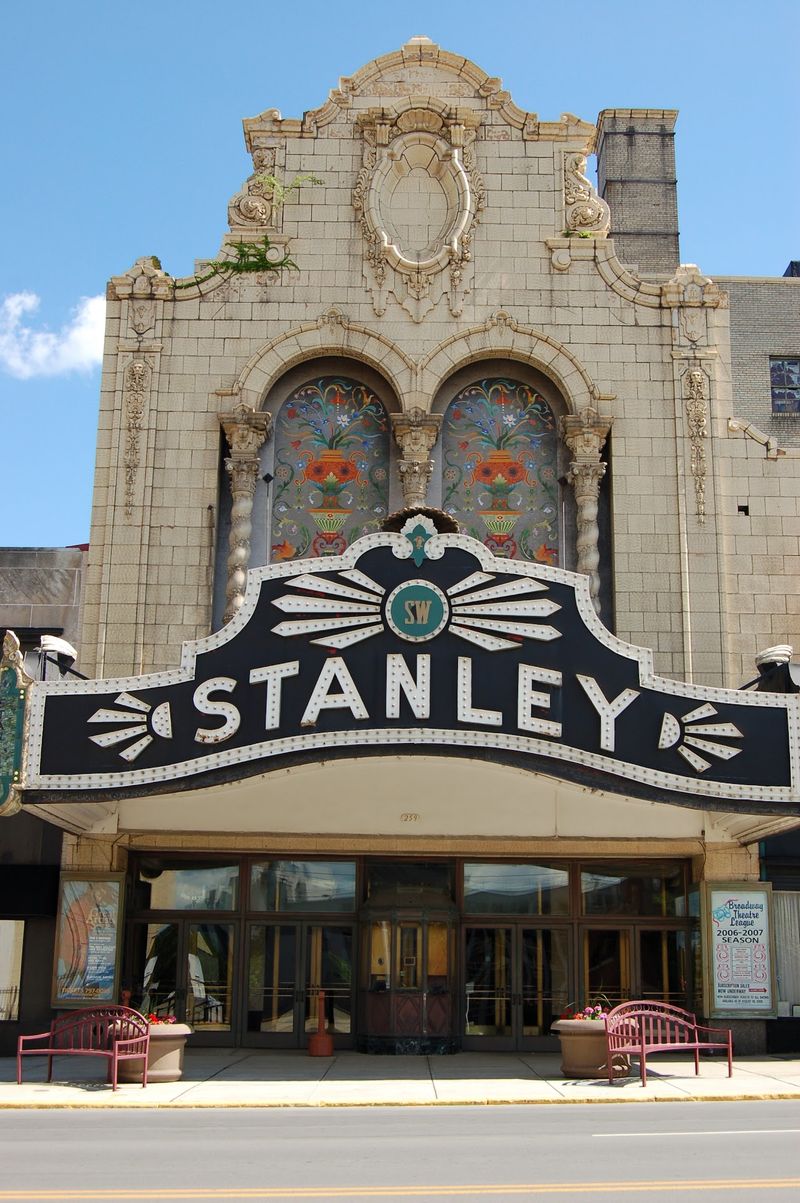
Imagine a theater ceiling painted deep blue and rigged to produce clouds and stars, and you have the heart of the Stanley Theater. It opened on May 26, 1927 as an atmospheric movie palace with a strong Spanish influence.
Local architect Frank Grad designed it, and the facade layers stucco, terra cotta ornament, tile, and wrought iron into something far richer than a neighborhood cinema needed to be.
The real magic was inside the auditorium, built to resemble an outdoor Spanish courtyard. Architectural fronts, balconies, tile roofs, towers, loggias, grilles, and awnings line the side walls like a village street.
Sitting there was meant to feel like an evening outdoors under a southern sky, which is a wildly ambitious idea for a building in New Jersey.
The National Register of Historic Places added the theater in 1986, recognizing how rare this level of atmospheric design has become.
South Orange Avenue has changed plenty over the decades, yet the Spanish detailing still signals what this place once was.
Approach on foot, scan the terra cotta closely, and let the ironwork catch your eye. The craftsmanship is the whole point.
Address: Stanley Theater, 985 S Orange Ave, Newark, NJ 07106
10. Florence Public School No. 1, Florence
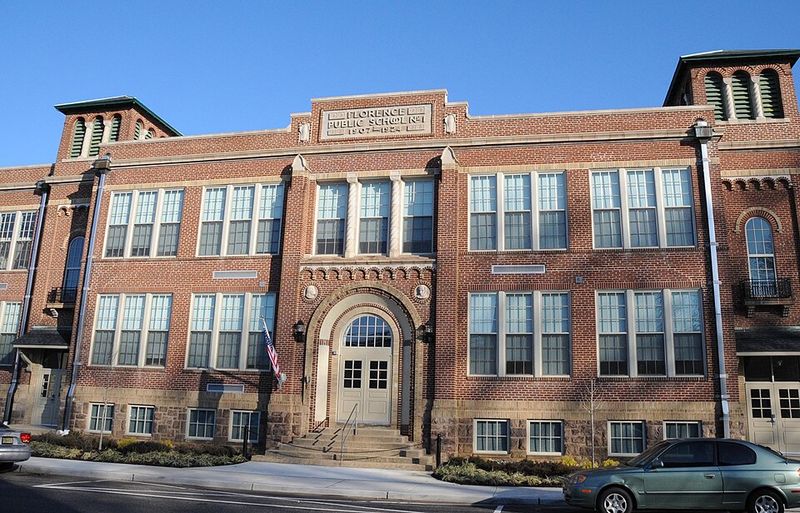
Old schools carry a particular kind of atmosphere, and Florence Public School No. 1 has it in abundance. The building opened in 1921 and has since been converted into apartments.
That reuse is the interesting part. Instead of sitting empty or being demolished, the classrooms became homes, which keeps the structure part of everyday life in town.
Its architectural style is not documented as Spanish or Mission Revival, so think of this stop as a useful comparison rather than another tile roof. Seeing what a 1920s civic building looked like without Spanish influence sharpens your eye for the ones that have it.
Tall windows, solid massing, and a confident street presence do most of the work here.
Florence sits along the Delaware River in the southern part of New Jersey, and the surrounding streets are quiet and low key. It is an easy place to slow down.
Since the building is now residential, admire it respectfully from the sidewalk and keep your distance from entrances.
Pair it with a short drive through town, and you get a genuine sense of how these early twentieth century landmarks still shape small communities.
Address: Florence Public School No. 1, 201 Cedar St, Florence, NJ 08518
