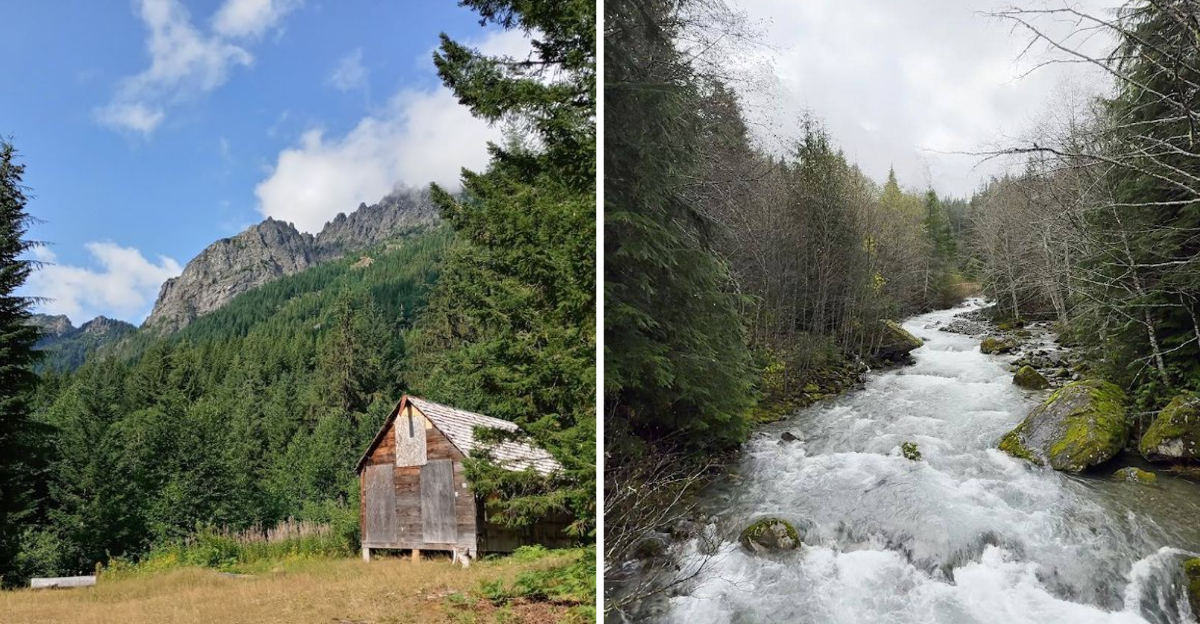
This Washington ghost town gets under your skin before you even reach the ruins. The trail pulls you through a corridor of towering second-growth forest, the air cool and damp, carrying that particular stillness that only abandoned places seem to hold.
By the time the first crumbling foundations come into view, you already feel like you are walking through someone else’s memory.
This town tucked deep in the Cascades was once a roaring silver and gold mining camp, home to over a thousand people chasing a fortune that the mountains were not quite willing to give.
I stood among the rusted machinery and moss-covered relics, trying to picture the chaos of a boomtown that thrived and faded in less than two decades. What remains today is a haunting and beautiful tangle of stories that refuse to stay quiet.
Whether you believe in the unexplained or not, this place has a way of making you look twice over your shoulder.
The Monte Cristo Trail, Following the Old Railroad Grade Into History
Most hikes start with a climb that tests your legs right away. The Monte Cristo Trail does something different entirely.
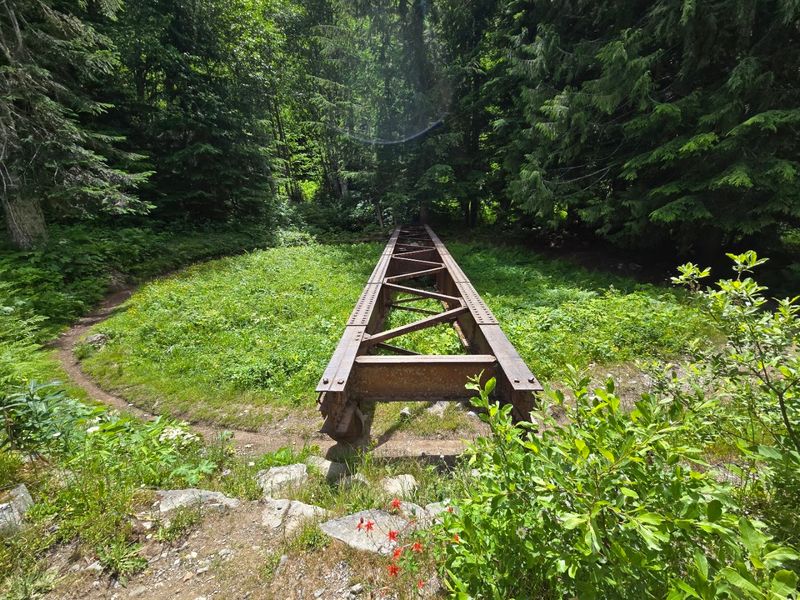
It begins at Barlow Pass, at the far end of the Mountain Loop Highway, and almost immediately settles into a long, gentle walk along the historical grade of the Everett and Monte Cristo Railway, a line that once carried heavy ore out of these mountains back in the 1890s.
The flatness of the trail is genuinely surprising. You can feel the logic of it, how a railroad demands level ground, and how that old engineering now makes for one of the more relaxing approaches to a historical site anywhere in Washington state.
The path stretches roughly 4.25 miles one way, making the round trip about 8.5 miles total.
Families bring kids here regularly, and it makes sense. The terrain is mostly smooth, the forest is gorgeous, and there is always something interesting to spot along the way.
Informational plaques appear at intervals, narrating the landscape as you move through it. Download your map before you leave, because there is no cell service out here.
A Northwest Forest Pass is required for parking at Barlow Pass, so plan accordingly before the drive out.
The trail earns its reputation as easy to moderate, but do not let that fool you into packing light on water. The river running alongside it is contaminated with heavy metals from the old mining operations and is not safe to drink from under any circumstances.
Crossing the South Fork Sauk River, The Bridge That Washed Away
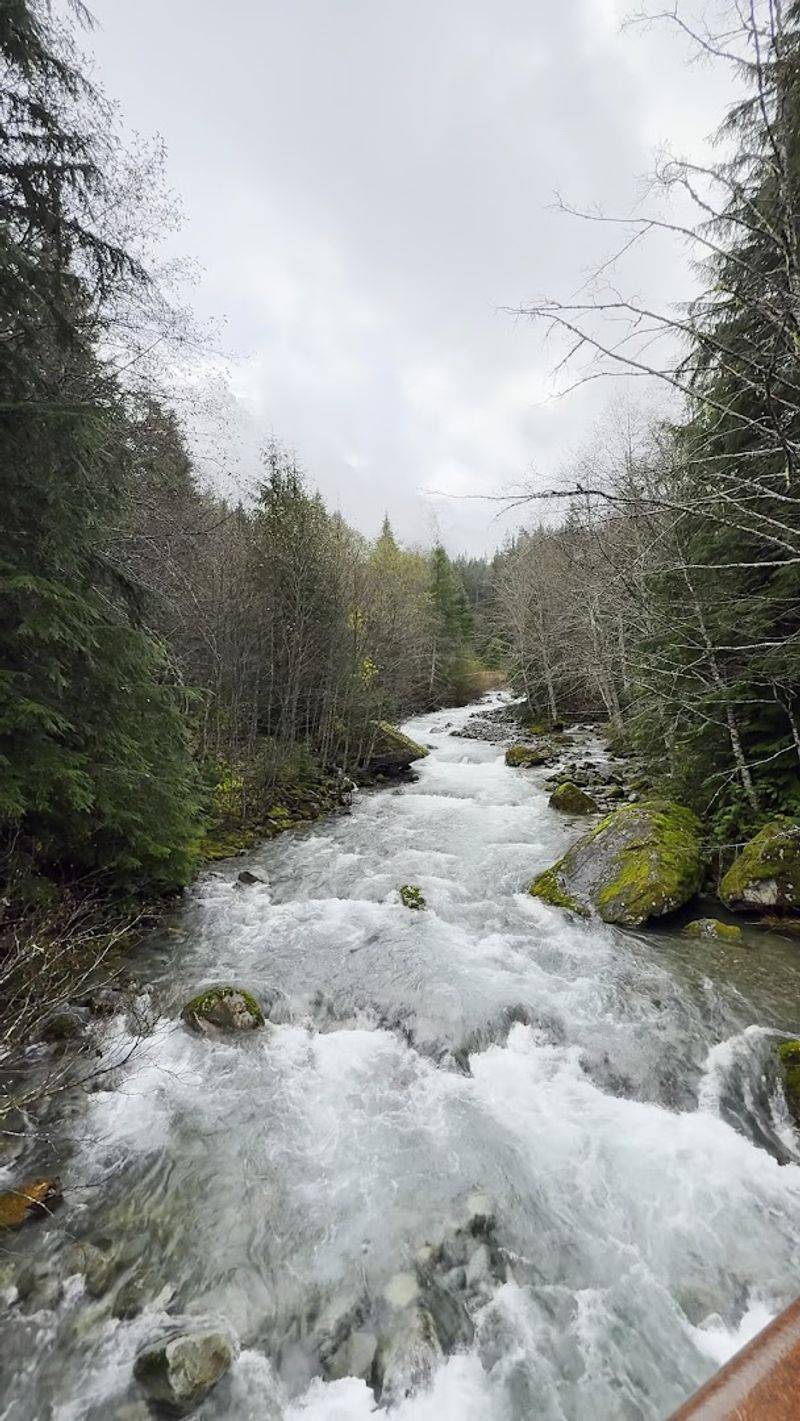
About halfway to the ghost town, the trail delivers one of its most memorable moments. The South Fork Sauk River cuts across the path, and the bridge that used to span it is long gone, swept away by one of the many floods that have battered this corridor over the decades.
What replaced it is a massive fallen log, wide enough to walk across carefully if you take your time. It sounds more dramatic than it is for most hikers, but it does require a bit of balance and a willingness to get your shoes muddy if the crossing is wet.
The U.S. Forest Service is clear that this log is not a formal bridge, so hikers should use their own judgment depending on conditions.
Some visitors ford the river directly when water levels are low enough.
Kids actually tend to love this part. There is something genuinely fun about crossing a river on a log in the middle of a forest, and it adds a small adventure to what is otherwise a very walkable trail.
Just after the crossing, the path can get a little confusing where smaller side trails branch off near the riverbed. Stick to the main route and follow any orange ribbon markers if you spot them.
The river itself is beautiful, cold, and fast-moving depending on the season. Spring crossings can be trickier than summer ones.
Whatever the conditions, this moment feels like the true threshold between the ordinary world and Monte Cristo’s strange, suspended one.
The Ruins of Monte Cristo, What the Mountains Left Behind
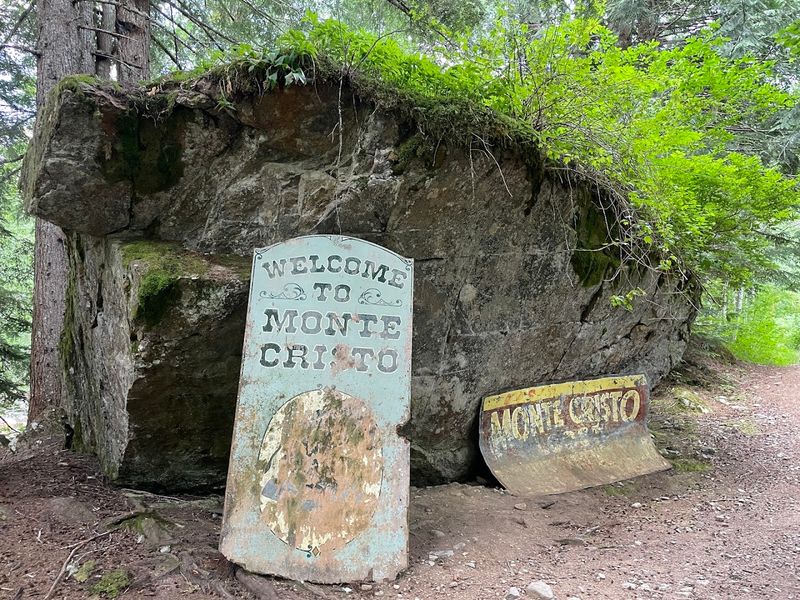
Arriving at Monte Cristo for the first time is oddly quiet. You expect something bigger, maybe, given the history.
At its peak in 1894, over a thousand people lived here, drawn by gold and silver deposits that prospector Joseph Pearsall first traced in the summer of 1889. What you find instead is a clearing where the forest is slowly, patiently taking everything back.
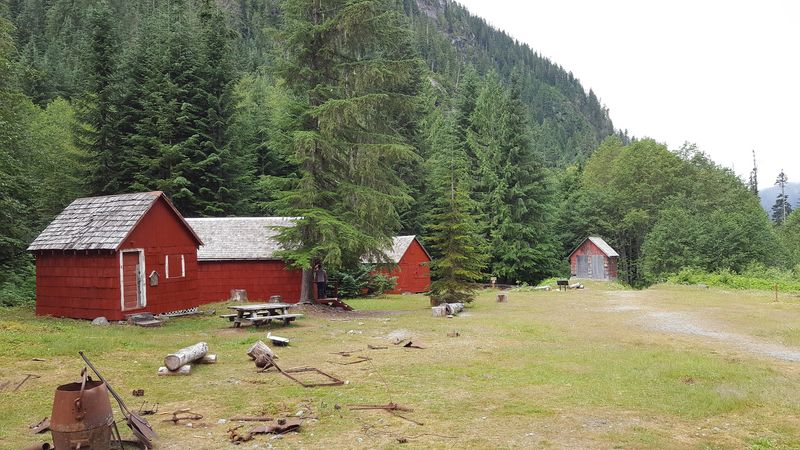
Old foundations poke up through the moss. Fragments of stamping mills sit rusting in the undergrowth.
The skeletal shell of a former garage still stands, barely, alongside the decaying remains of a hotel that once served miners and investors alike. A power generator from another era rests nearby, looking like it belongs in a museum rather than a meadow.
The Monte Cristo Preservation Association has done remarkable work here. Volunteers maintain the site and have installed thoughtful interpretive signs with photographs and narrative details that give real context to each ruin.
Standing next to a crumbling wall and reading about what it once was makes the whole place feel layered in a way that a typical trailhead sign never quite achieves.
There are also small side paths branching off the main area, each one leading to another relic or another angle on the ruins worth exploring. Spend time wandering rather than rushing through.
The site rewards curiosity. Even visitors who came in expecting little tend to leave surprised by how much there is to see and absorb in a place the mountains have been quietly dismantling for over a century.
The Haunted Reputation, Sounds, Shadows, and Unexplained Encounters
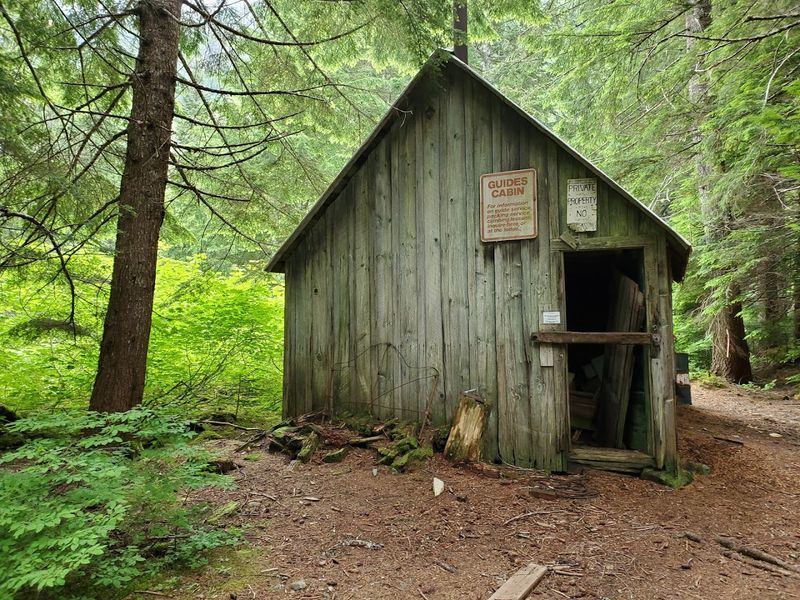
Not everyone who visits Monte Cristo leaves feeling entirely comfortable. The ghost town has built a reputation over the years for a particular kind of unease, the sort that does not announce itself dramatically but settles in slowly as you explore.
Visitors have described hearing the sounds of men’s voices echoing through the ruins when no other hikers were around. Others have reported the distinct clang of equipment, the shifting of rocks, all coming from directions where the old mine shafts would have been.
One account that circulates among hikers involves a dog that barked persistently at a solid mine entrance wall, refusing to settle down despite the surrounding silence and complete absence of other people.
None of this is verifiable, and it would be dishonest to present these stories as established fact. But they are also not easy to dismiss when you are standing alone in the ruins at midday and the forest goes oddly quiet around you.
The place has a weight to it that is hard to name precisely.
Part of it is certainly the history. Over a hundred years of hard labor, loss, floods, and eventual abandonment have soaked into this ground.
The miners who worked these ridges and tunnels gave years of their lives to a boom that fizzled out faster than anyone expected. Whether that leaves something behind in a literal sense is a question each visitor has to answer for themselves.
What is certain is that Monte Cristo does not feel like just another trailhead destination.
The Rise and Fall of a Cascade Boomtown, Monte Cristo’s Brief, Brilliant History
By 1891, Monte Cristo already had 40 claims and 13 mines. Two years later, that number had exploded to 211 mining claims.
Eastern investors took notice fast, including figures connected to some of the biggest financial names of the era. The Everett and Monte Cristo Railway arrived in 1893, making it finally possible to haul ore efficiently down to a smelter in Everett.
Aerial tramways were engineered to move ore from high ridge mines at places like Mystery Hill and Glacier Basin down to a concentrator near town. The engineering was ambitious and genuinely impressive for the period.
For a few years, Monte Cristo felt like it might actually deliver on its extraordinary promise.
The problem was the ore itself. Rich near the surface, the deposits thinned out unpredictably as miners dug deeper.
Below around 500 feet, the returns rarely justified the effort. Then the floods came.
A devastating November 1897 flood destroyed large sections of the railroad and stranded the operation. By 1900, many miners had already left for the Klondike.
Major operations wound down by 1907 and ceased entirely by 1920.
The town tried one more chapter as a resort, operating until 1983 when the last guest lodge burned down. That fire effectively ended Monte Cristo’s functional existence.
What the mountains took decades to dismantle through floods and avalanches, fire finished in a night. The whole arc from boom to ghost town covers barely thirty years, which makes the scale of the ruins feel even more poignant when you walk among them today.
Planning Your Visit, Practical Tips for the Trail to Monte Cristo
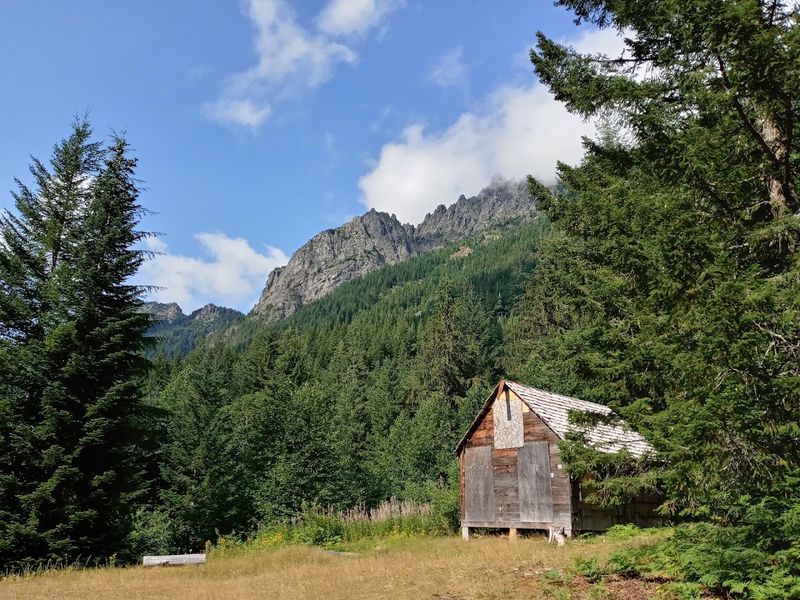
Getting to Monte Cristo takes some preparation, mostly because the wilderness does not accommodate shortcuts. The trailhead starts at Barlow Pass, at the eastern end of the Mountain Loop Highway in Snohomish County.
A Northwest Forest Pass is required for parking, and there is a pay-by-day option available on site if you do not have an annual pass.
Cell service disappears well before you reach the trailhead, so download your maps offline before leaving home. A few visitors have started at the wrong trailhead due to the confusing network of paths near the river, so reading a recent trip report the night before is genuinely useful rather than just optional.
Bring more water than you think you need, since the river is not a safe source due to mining contamination.
Wear shoes with decent grip, especially if you plan to visit in spring or after rain. The log river crossing and a few washed-out sections of trail after it require a bit of agility.
Good hiking shoes make the whole experience more comfortable rather than anxious.
The hike itself is around 8.5 miles round trip and takes most people between four and seven hours depending on how long they linger in the ruins. Camping is available at Monte Cristo for those who want to extend the experience, and some visitors use the site as a base for longer day hikes to Silver Lake or Glacier Basin.
The site is open year-round, though winter visits require extra preparation for potential snow and ice conditions on the trail.
Address: Monte Cristo Trail, Washington
