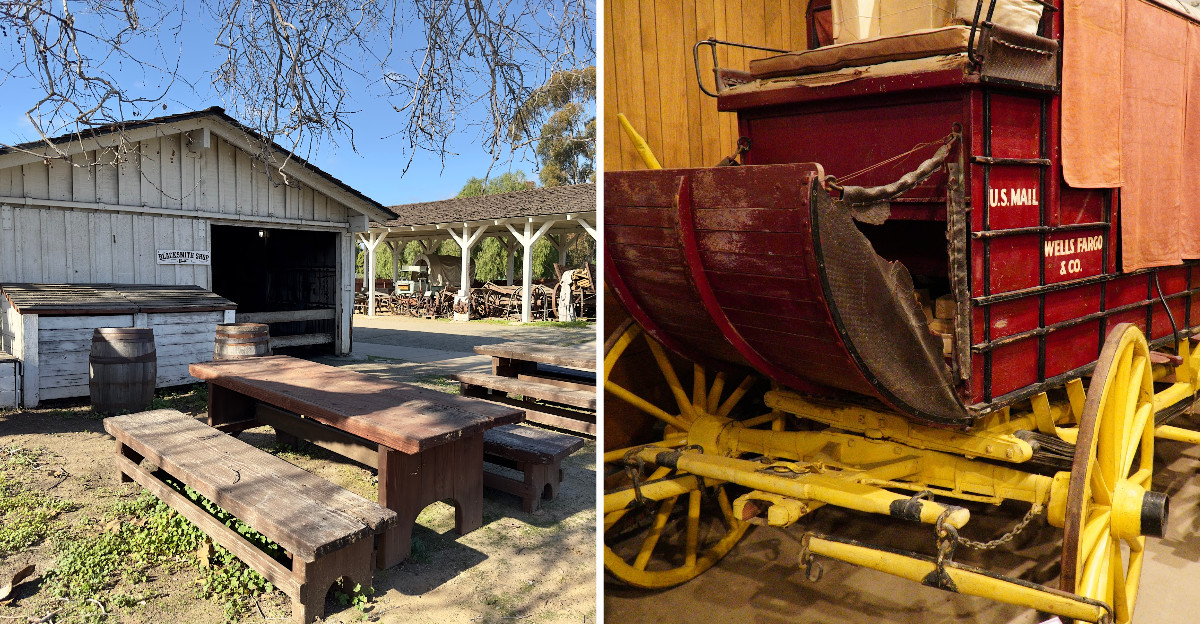
Bumpy wagon wheels and cramped stagecoaches are not what most people expect to find inside a California historic park. Big wooden barns wait with real stagecoaches, wagons, and saddles from the 1800s.
Back then, traveling between the southern end of the state and the northern city took two full days, with an overnight stop at a mission along the way. Standing next to a Concord coach, the imagination fills in the dust and the jolts, and the back aches just thinking about it.
What makes this museum special is that it costs nothing, welcomes everyone, and fits easily into a relaxed afternoon. Hours can disappear while studying the leather and the wood.
Here are the moments and details that made this old stable one of the favorite surprises in California.
A Barn With a Big Story Behind It
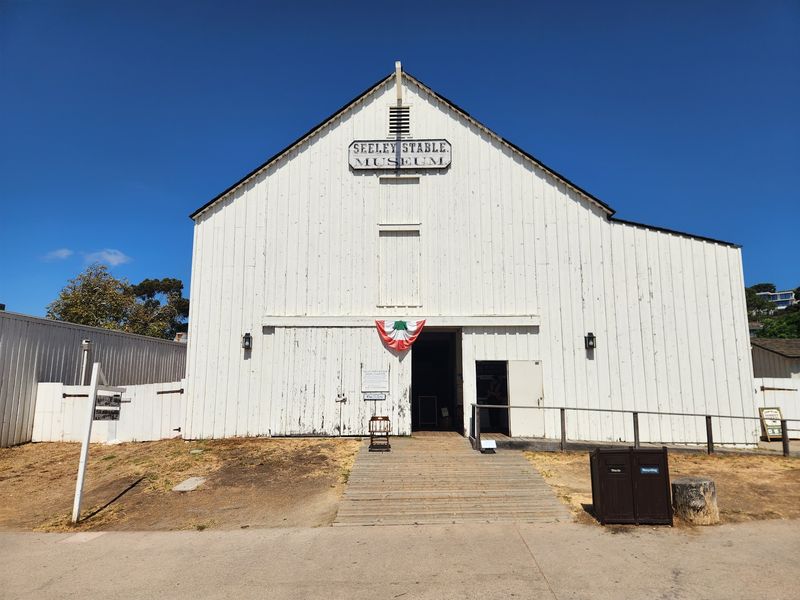
My first glimpse of the place made me smile, because it looks exactly like a barn from an old western movie. Tall wooden walls, a shingled roof, and a dusty yard give it a sturdy, no-nonsense feel.
The history here goes back to 1869, when a businessman named Albert Seeley built the original stable. He needed a home for the horses and stagecoaches of his stage line, which ran between Old Town and Los Angeles.
That same year, he bought the old Bandini house nearby and turned it into the Cosmopolitan Hotel, which became a busy stage depot and a gathering spot for travelers.
Sadly, the first barn was torn down sometime in the late 1920s. The building you see today is a careful reconstruction finished in 1974, built to match the original look.
Knowing that made me look at the walls a little differently. Even though the boards are newer, the spot itself is where horses once stamped and coaches rolled out before sunrise.
My tip is to pause outside for a minute before heading in. Look at the hotel across the way and imagine passengers hauling bags over to board, because that simple picture makes everything inside feel more real.
Two Days on the Road to Los Angeles
Five in the morning. That was when Seeley’s coaches usually left San Diego, and I groaned out loud when I read it on a sign inside.
From 1868 to 1877, Albert Seeley ran the San Diego-Los Angeles Stage Line. Passengers rode north all day, then spent the night in San Juan Capistrano before climbing back aboard.
They finally rolled into Los Angeles around 4 PM the next afternoon.
Records from 1871 even describe the daily run from the Cosmopolitan Hotel as a 35-hour trip. The distance was roughly 130 miles, though another account puts it closer to 145 miles.
Today most of us complain if that drive takes three hours in traffic, so I felt pretty spoiled.
Travel before Seeley was even rougher. Back in 1852, stagecoach service between the two cities was unreliable and still needed two full days.
The end came with the railroad, which offered faster trips and slowly pushed the stage line out of business by 1877.
Reading these placards slowly is worth it. I found that knowing the schedule helped me imagine the tired faces, sore legs, and dusty clothes of people who made this trip on a regular basis.
Face to Face With a Concord Coach
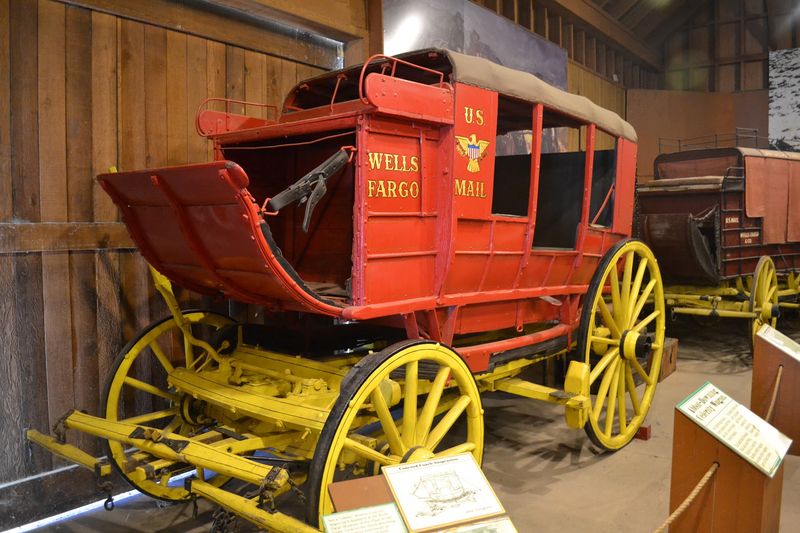
Honestly, I did not expect a vehicle to have so much personality. The Concord stagecoach at Seeley Stable has curved sides, huge spoked wheels, and a look that says it has seen some adventures.
Concord coaches were the kind Seeley used on his route to Los Angeles. They were famous for riding on thick leather straps instead of metal springs, which let the body rock back and forth.
Some folks say it felt a bit like being on a boat, and after seeing it, I believe them.
Up close, you can study the driver’s seat perched high in front. Picture holding the reins for hours while dust flies up and the horses pull hard on hilly roads.
Kids especially seem to love this piece. It is big enough to feel impressive but detailed enough to spark tons of questions about where the bags went and how many people fit inside.
Here is a small trick I used. Crouch down near the wheels and look up at the coach from a low angle, since that view shows just how tall and heavy these machines were and makes a great photo too.
The Wells Fargo Mud Wagon and Its Mountain Miles
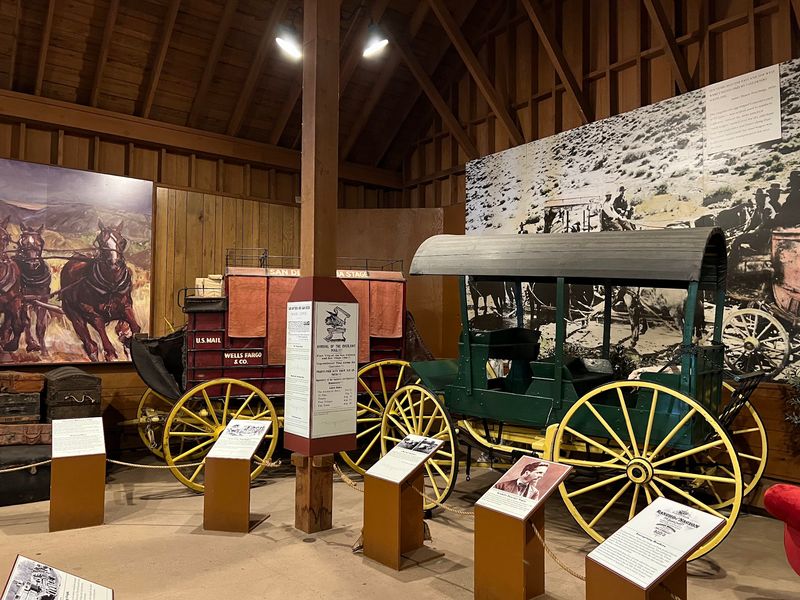
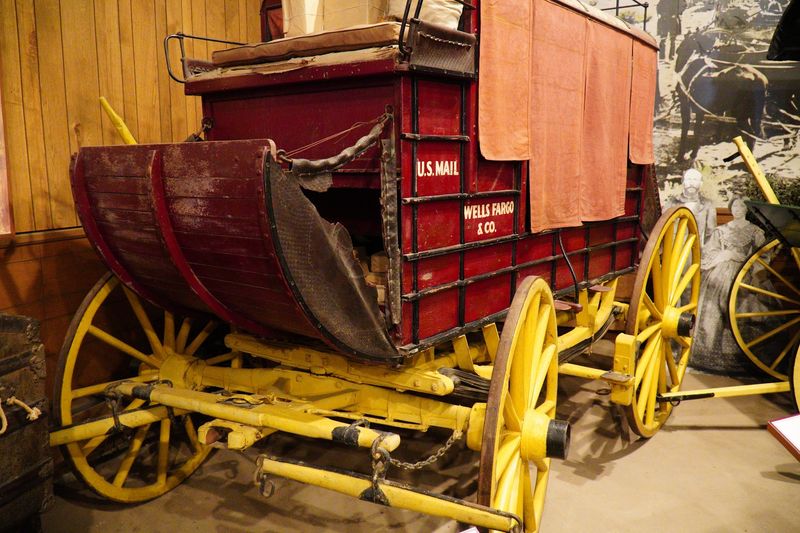
Mud wagon sounds like something a toddler would name, and that made me giggle before I even found it. Once I did, though, I got a lot more respect for the humble thing.
Mud wagons were lighter and simpler than fancy Concord coaches. They often had canvas sides instead of solid wood, which helped them handle rough, muddy roads without getting stuck as easily.
Think of it as the tough work truck of the stagecoach world.
The Wells Fargo mud wagon on display here has a cool local story. It once traveled the routes between San Diego and Julian, the mountain town many locals now visit for apple pie.
Those roads climbed through hills and valleys, so this wagon earned every scratch.
I liked comparing it side by side with the Concord coach. One feels like first class, while the other feels practical and ready for bad weather.
If you are visiting with kids, try a little game. Ask them which vehicle they would pick for a rainy trip to Julian and why, since it gets them looking closely at wheels, sides, and seats instead of rushing past.
Ox Carts, Freighters, and a Generous Rancher
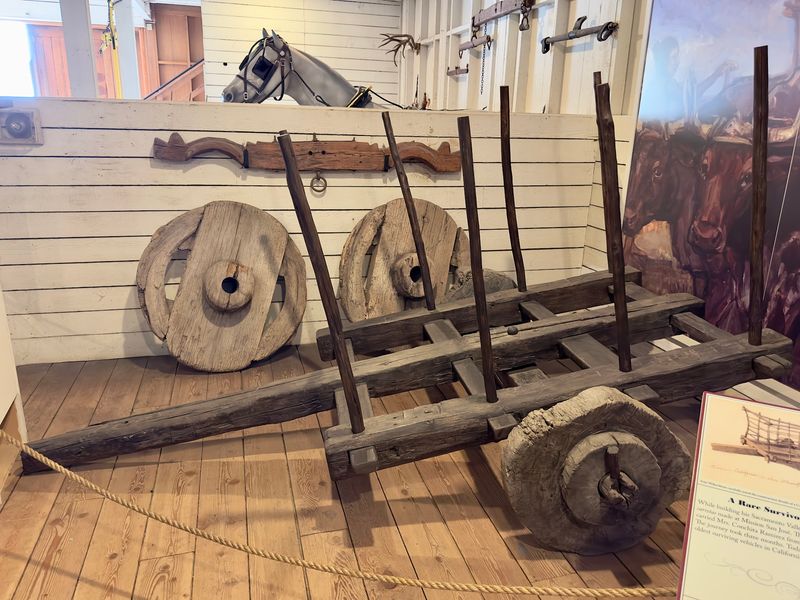
A pair of solid wooden wheels caught my eye right away. They belonged to a carreta, an ox-drawn cart that looks simple but carried heavy loads across early California.
Nearby sits a large tow-wagon freighter, and the size difference is almost funny. The carreta feels small and handmade, while the freighter looks like it could haul a whole general store.
Together they show how moving goods changed over time.
Many of these pieces came from one man. Roscoe E. “Pappy” Hazard, a former rancher and highway contractor, donated much of this collection to California State Parks.
Because of that gift, visitors today can see vehicles that might otherwise have rotted away in some forgotten field.
I found it kind of fitting that a road builder saved these old travelers. His modern work and these old wagons are connected by the same idea of getting from one place to another.
Spend a moment reading about each vehicle’s job. Some carried people, some carried supplies, and knowing the difference helps you understand how busy and hardworking early San Diego really was, long before trucks and freeways took over the job.
Saddles, Stalls, and the Upstairs Loft
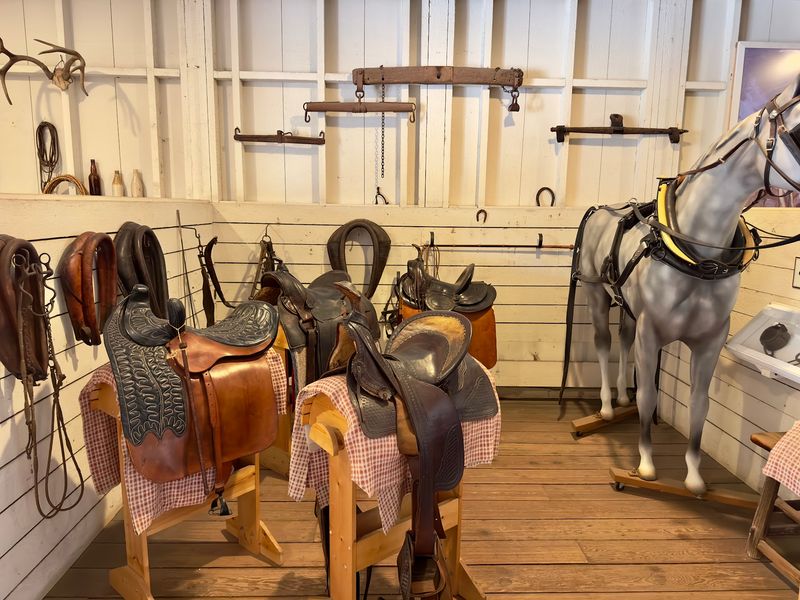
There is a horse in here. Well, not a live one, but the life-size model in the recreated stable scene surprised me for a second.
This corner shows what a working stable looked like, with saddles, gear, and a horse standing ready. Leather saddles hang in rows, each one worn and shaped by real use.
I caught myself wondering how many long days each one had spent under a rider.
Head upstairs if you can, because the loft adds a whole new layer. Displays cover the furnishings and lifestyle of early cattle barons, plus exhibits on Native American history in the region.
It gives a fuller picture of who lived in and moved through this area.
The first floor is wheelchair accessible, so everyone can enjoy the main collection of vehicles. There is also a short film presentation inside, which is handy if your feet need a break.
My advice is to slow down in the stable scene. Notice the small details, like buckles, straps, and tack, since those tiny items tell you just as much about daily life as the huge coaches do.
Sparks Flying at the Blacksmith Shop
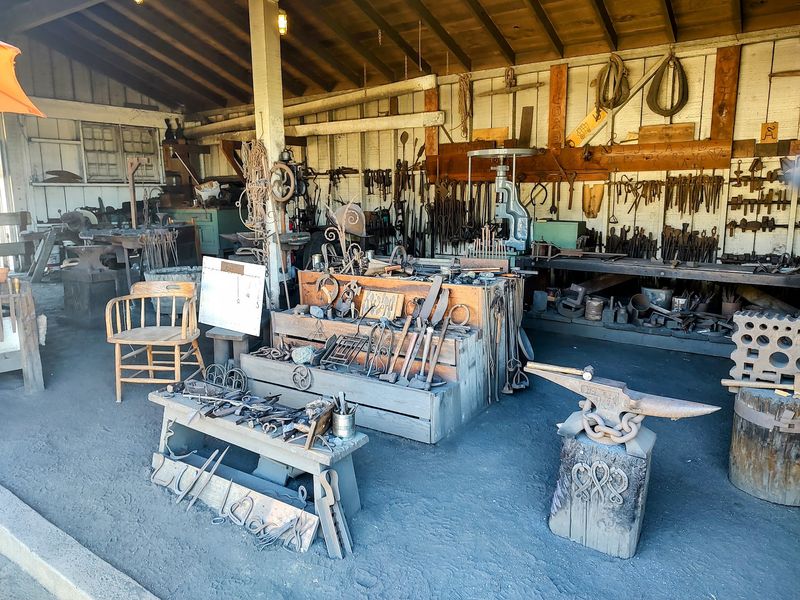
Clang, clang, clang. I heard the blacksmith shop before I saw it, and the sound pulled me right around the back of the stable.
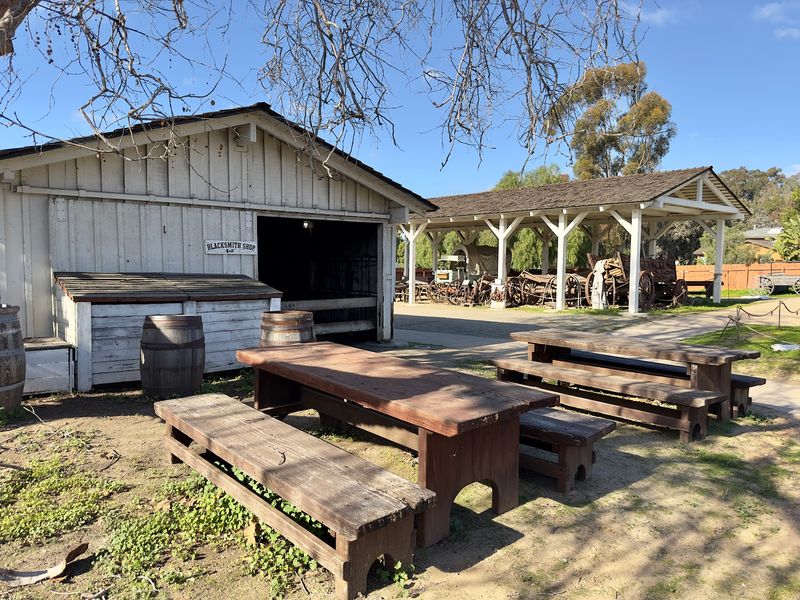
Behind the main building, you will find a real working blacksmith shop. On some days, skilled hobbyists fire up the forge and shape red-hot iron with hammers and tongs.
Watching glowing metal bend like clay is mesmerizing, and I stayed much longer than I planned.
Blacksmiths were super important in the stagecoach days. Horses needed shoes, wagons needed metal parts, and broken tools needed fixing, so a good blacksmith kept the whole operation rolling.
Demonstrations do not happen every single day, so it helps to be flexible. If the forge is quiet when you arrive, check back later while you explore the rest of Old Town.
Out in the Seeley Yard, there is also a collection of carriages dating from 1850 to 1910. Wander slowly and compare their shapes, because you can almost watch design ideas change over sixty years.
Keep a safe distance from the fire and follow any instructions. Then just enjoy the heat, the smell of the forge, and that satisfying ring of metal on metal.
Planning a Smooth Visit
Good news first: admission is completely free. That made me happy, and it also made me want to drop a small donation to help keep the place going.
Timing matters here, so check the hours before you go. Seeley Stable is usually open Thursday through Sunday from 10 AM to 5 PM and closed Monday through Wednesday.
Showing up on a Tuesday means staring at a locked door, which is nobody’s idea of fun.
Most people spend around 20 to 30 minutes inside, though history fans can easily stretch that to an hour or more. I recommend pairing it with other stops in Old Town State Historic Park, since everything sits within an easy walk.
The interior stays comfortable, which feels great on a hot, sunny afternoon. There is no restroom in the building, but public restrooms are close by across the walkway.
Parking can get busy in Old Town, so arriving earlier in the day helps a lot. Kids tend to love this stop, and staff members are friendly and full of stories, so ask questions.
Address: 2648 Calhoun St, San Diego, CA 92110
