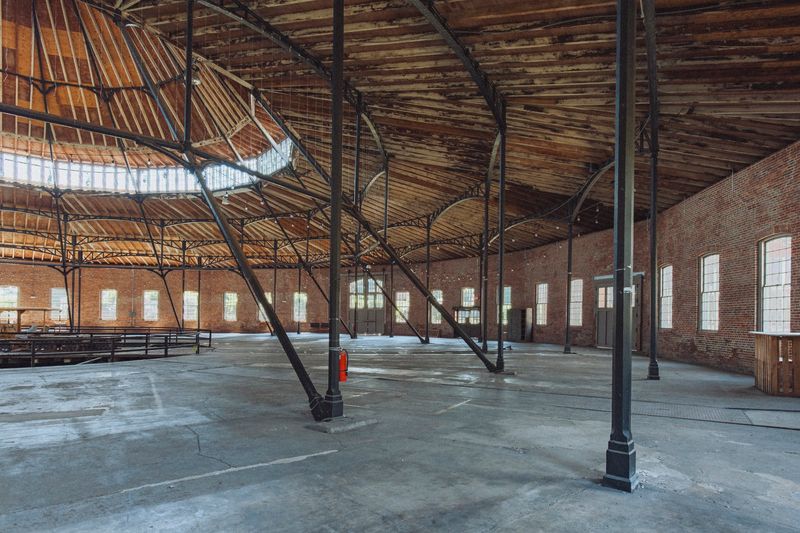
Some places look like just another old brick building until you step inside and look up. In the Eastern Panhandle of West Virginia, one round structure hides a ceiling of iron that spreads out like a spider web over a giant turntable.
Steam engines once rolled in here to rest, get fixed, and spin around for their next trip. If you love trains, history, or simply a good surprise on a weekend drive, this spot deserves a place on your list.
A Circle of Brick and Iron in the Eastern Panhandle
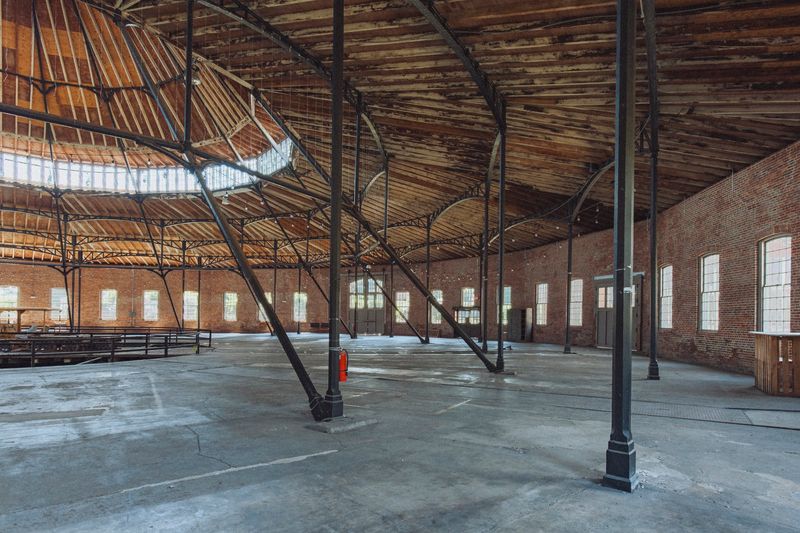
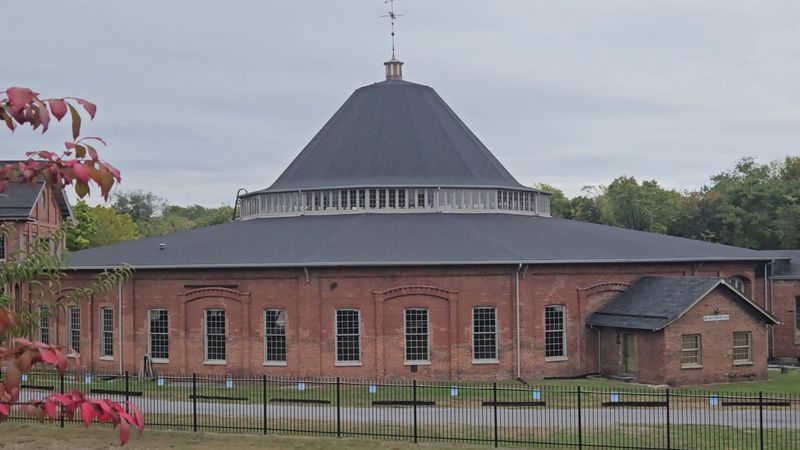
Picture a building with no corners at all. Sixteen brick walls form a near-perfect ring, and on top sits a dome crowned with a little cupola that once let smoke and steam drift away from hardworking locomotives.
That ring is a roundhouse, a special kind of railroad shop. Engines rolled onto a turntable in the middle, spun to face an open bay, and then backed into their stall for cleaning, repairs, or a night of rest.
Railroads across the country once relied on buildings like it, yet most have vanished, been torn down, or collapsed over the decades.
Here in West Virginia, one has held on since 1866. It is widely recognized as the oldest remaining domed roundhouse in the United States, and some sources say it may be the oldest anywhere.
It is also reportedly the only surviving cast-iron framed roundhouse on the planet.
For folks who grew up hearing train whistles echo through the hollows, standing beside a place like this feels a bit like meeting an old friend. You do not need to be a rail buff to appreciate it, either.
The shape alone stops people in their tracks, and the story behind it only gets better from here.
Railroad Roots Stretching Back to 1842
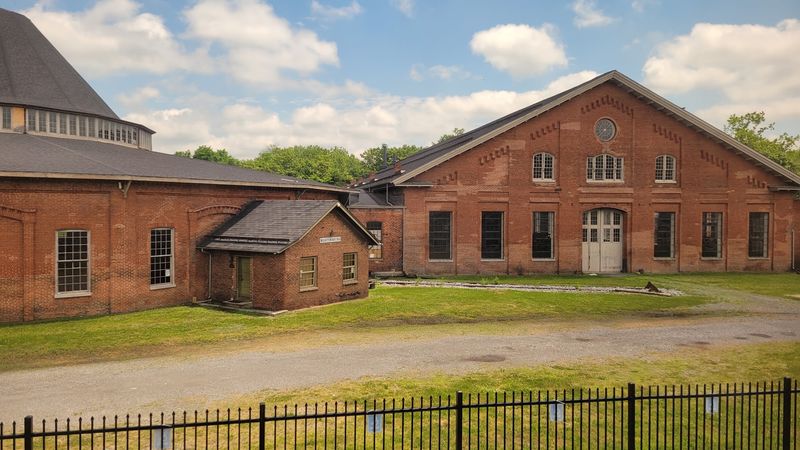
Long before highways carved through the mountains, the Baltimore and Ohio Railroad was the lifeline of this valley. The first steam engine pulled into town in 1842, and life changed almost overnight.
Trains meant jobs, goods, visitors, and a steady heartbeat of activity. By 1848, the B&O built its first roundhouse here, recognizing the spot as a smart place to service engines heading east toward Baltimore or west toward the Ohio River.
The town quickly grew into one of the railroad’s most important hubs.
Shops went up for machining, woodworking, and building rail cars. Families settled nearby because the railroad promised steady paychecks, and generations followed fathers and grandfathers into the yards.
Many West Virginia households can still trace a relative or two back to rail work like this.
Those early years built more than buildings. They built a sense of pride that runs deep in railroad towns across the Mountain State.
Ask longtime residents about the old days, and stories of shift whistles, sooty overalls, and lunch pails tend to pour out. That shared memory is part of what makes the surviving roundhouse feel so personal today, a reminder of when this valley helped keep the whole country moving.
Burned Twice, Rebuilt Stronger
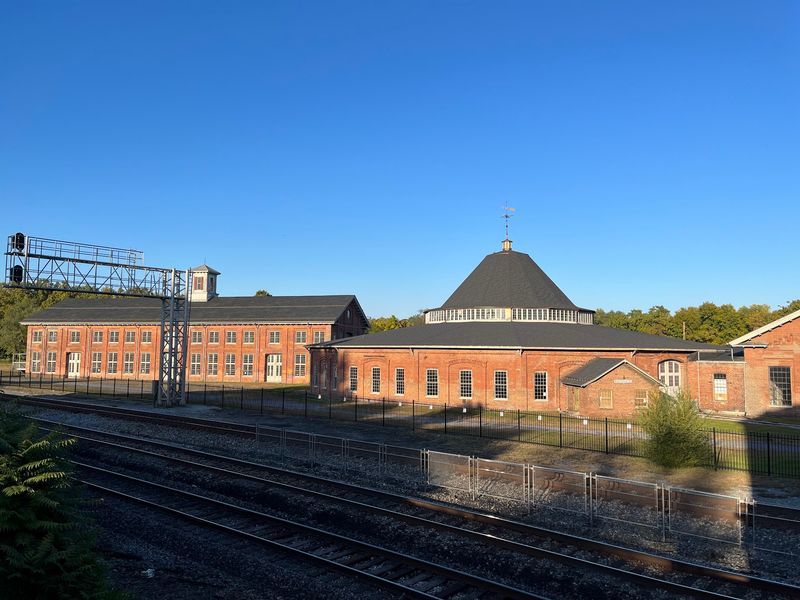
Being important came with a price during the Civil War. Because the railroad mattered so much, the shops here became a frequent target.
Confederate troops under General Stonewall Jackson struck the B&O facilities more than once. In mid-1861 and again in October 1862, his forces reportedly burned shop buildings, tore up track, and seized or wrecked many locomotives and pieces of equipment.
The original roundhouse, the shops, and the depot were all lost.
Plenty of towns might have given up after that kind of loss. Instead, once the war ended, the B&O launched a major rebuilding effort across its system.
Here, crews raised the present West Roundhouse in 1866, along with a Machine and Woodworking Shop and a Car Shop.
Some folks like to call the complex a phoenix, and the nickname fits. The new buildings were designed with iron frames that resisted fire far better than the older ones, a lesson learned the hard way.
Walking around the grounds today, you can almost feel that stubborn spirit in the brickwork. It is a fitting symbol for West Virginia itself, a state that has known hard times and has always found a way to build again.
The Engineering Minds of Albert Fink and Benjamin Latrobe
Behind every great building stands someone with a pencil and a big idea. For this roundhouse, that someone was Albert Fink, a respected civil engineer who later became well known as a railroad economist.
Fink worked alongside Benjamin H. Latrobe, another key figure in early B&O engineering.
Together, they came up with a design that was bold for the 1860s. Rather than relying on rows of wooden posts, they used a cast-iron internal framework to hold up a fully circular, domed roof.
What made the plan so clever was the use of standardized, prefabricated iron parts. Pieces could be made ahead of time and assembled on site, an early example of the kind of thinking that later shaped modern construction.
The result was efficient, sturdy, and much harder to burn than traditional shops.
Thanks to that work, the complex has earned recognition as a National Historic Landmark and a National Historic Civil Engineering Landmark. Those titles are not handed out lightly.
Engineers still study the building as a turning point in American industrial architecture, which is quite a legacy for a train garage in a West Virginia creek valley.
Looking Up at the Spider Web Ceiling
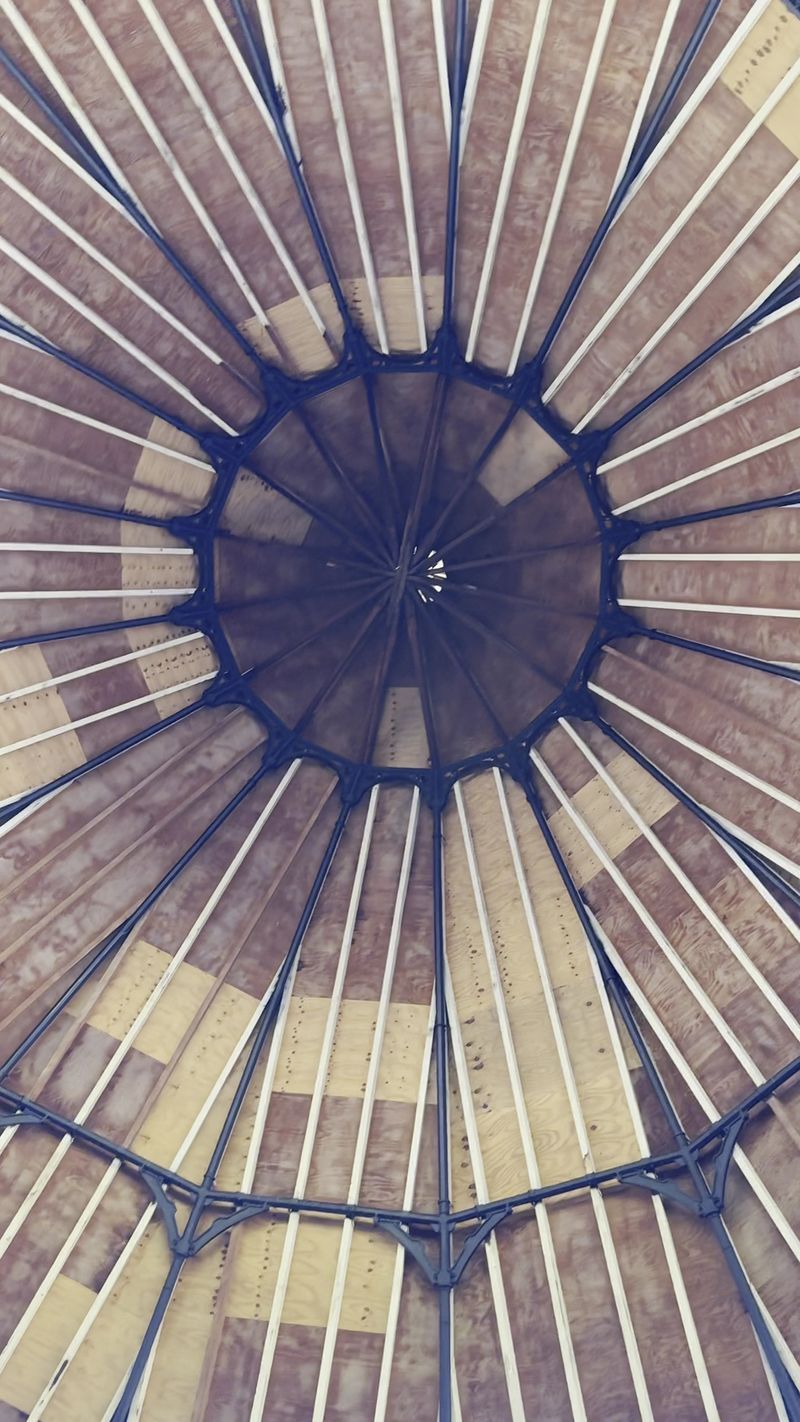
Tilt your head back once you get inside, and you will probably say wow out loud. Most visitors do.
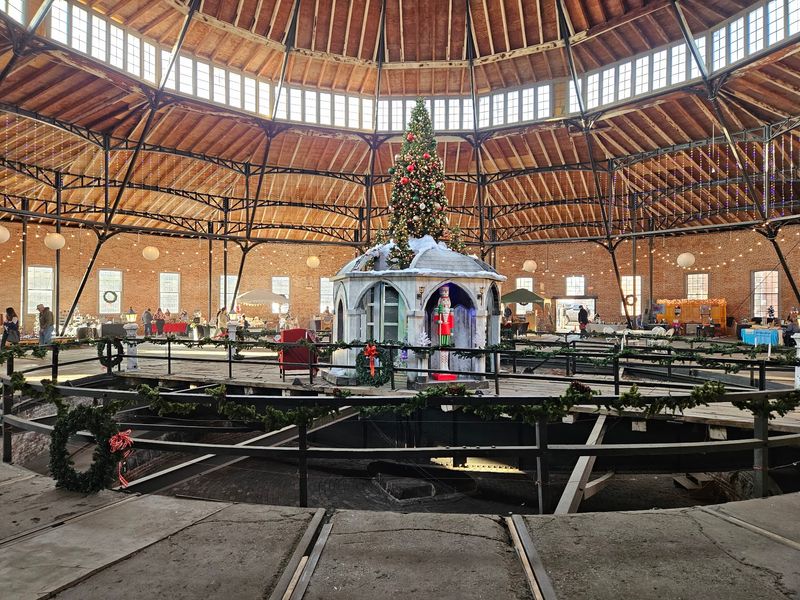
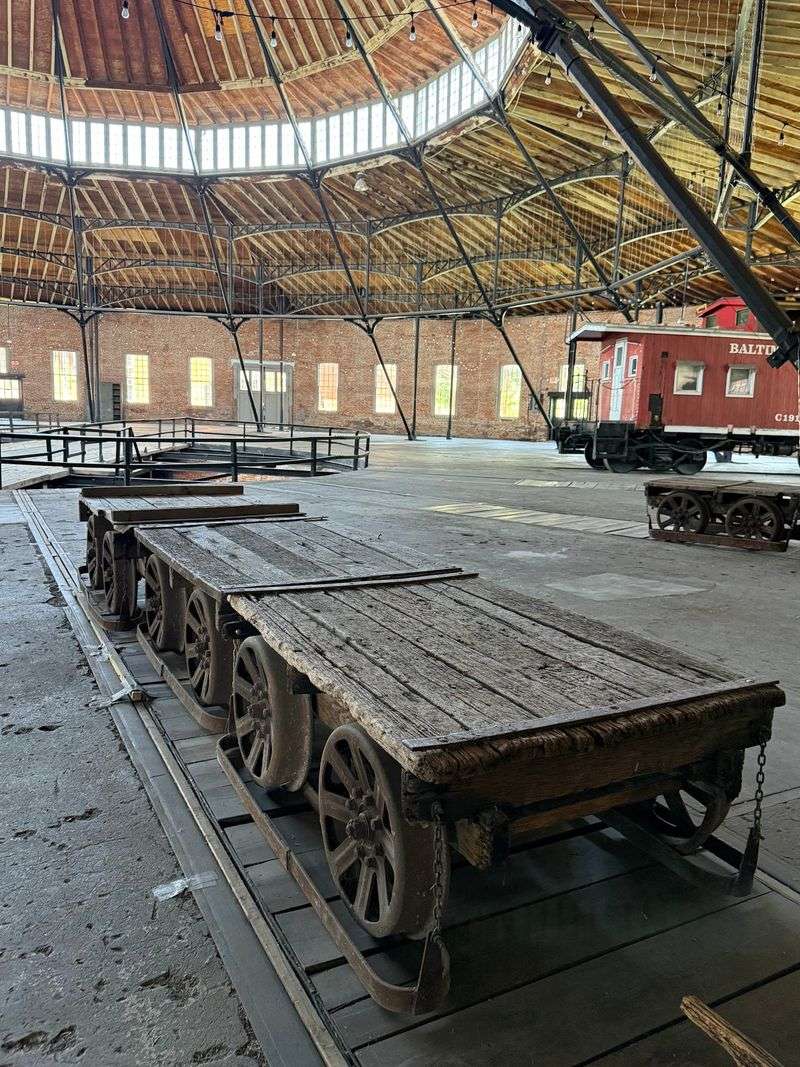
Overhead, slender cast-iron members fan out from the center and connect in a pattern often compared to a spider’s web. The lines radiate outward toward the brick walls, crossing and linking in a way that looks delicate but has held strong for more than 150 years.
Sunlight slipping through the windows makes the whole thing glow on a clear afternoon.
Guests frequently describe the architecture as jaw-dropping and remarkable, and it is easy to see why. Architecture and railroad design come up again and again when people talk about their visits, more than almost anything else.
Photographers love it too. The repeating pattern creates natural frames for pictures, and no two angles look quite the same.
Bring a phone with plenty of storage, because you may find yourself snapping shot after shot.
Part of the magic is knowing the purpose behind the beauty. Every beam was put there to protect engines and the men who cared for them.
Function and art meet in that ceiling, and it may be the single best reason to make the trip.
Turntable and Sixteen Locomotive Bays
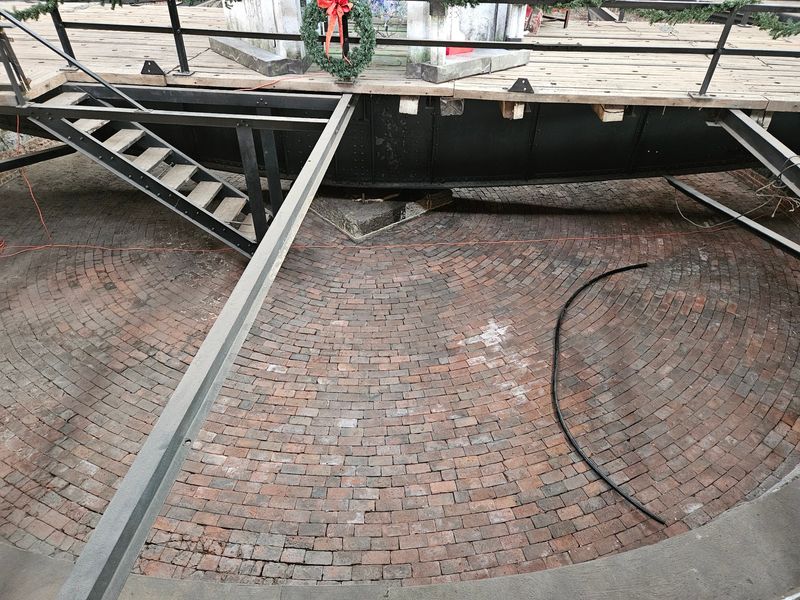
Here is a fun fact for the grandkids: a steam engine could not simply turn around like a car. It needed help, and that help came from the turntable.
At the heart of the roundhouse sat a 50-foot turntable. An engine rolled on, the platform rotated, and the locomotive lined up with one of 16 bays arranged around the circle.
Crews could then back it into its stall for repairs or a rest. It was a smart, space-saving system that kept trains moving on schedule.
The iron frame overhead allowed more than 20,000 square feet of open interior space, with no forest of columns getting in the way. That openness gave workers room to maneuver heavy machinery and huge engines.
Visitors over the years have pointed out how fascinating that giant contraption for moving trains really is. Even people who arrive knowing nothing about railroads tend to leave explaining how it worked to whoever will listen.
Stand near the center and imagine the scene: hissing steam, clanging tools, and a massive locomotive slowly swinging around. It takes only a little imagination to hear the sounds that once filled this room every single day.
Where the Great Railroad Strike of 1877 Began
History did not just pass through this yard. Sometimes it started here.
In 1877, railroad workers in this town grew fed up with wage cuts and the way the B&O treated them. They walked off the job, and their stand sparked what became known as the Great Railroad Strike of 1877.
The movement spread quickly along rail lines across the country and is often described as one of the most significant labor uprisings in American history.
For many West Virginia families, labor history is family history. Coal miners, rail men, and mill workers all fought for fair pay and better conditions, and those efforts shaped the rights many workers enjoy today.
Knowing that one of the biggest early chapters began right on these grounds adds real weight to a visit.
Nothing about the setting feels loud or dramatic now. The grounds are calm, the bricks quiet.
Yet standing here, you may find yourself thinking about the ordinary men who carried lunch pails through these doors and decided enough was enough. Their courage is part of the story, every bit as much as the iron and brick, and it reflects a fierce independence West Virginians recognize well.
A Lost Twin and Years of Quiet
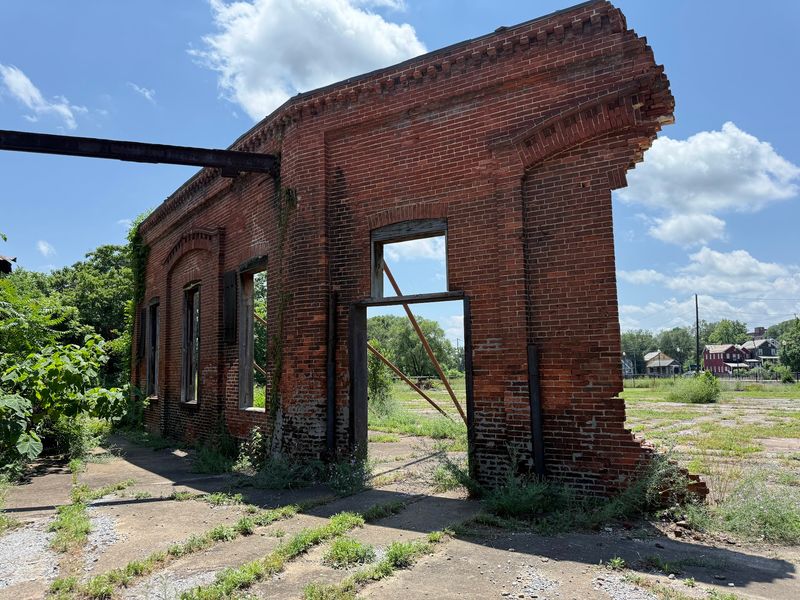
Few people realize the West Roundhouse once had a matching partner. In 1872, the B&O built an East Roundhouse using the very same design, giving the yard a pair of iron-framed domes.
Sadly, the twin did not survive. An arson fire in 1990 destroyed the East Roundhouse, leaving only parts of its walls.
Those remnants still stand as a sober reminder of how fragile old buildings can be.
The West Roundhouse had its own ups and downs. Locomotive maintenance here wound down in 1898 when that work moved to Brunswick, Maryland.
Still, the broader complex stayed in railroad hands, and CSX used it until 1988.
After that, the buildings sat empty for years. Weeds crept in, windows clouded over, and many wondered whether the old roundhouse would follow its twin into memory.
Eventually a nonprofit stepped up, acquired the property, and began restoration work. Today, the Berkeley County Roundhouse Authority manages the site.
That rescue is a story worth cheering. Plenty of small-town treasures disappear quietly.
This one got a second chance because local people cared enough to fight for it.
Finding It on East Liberty Street
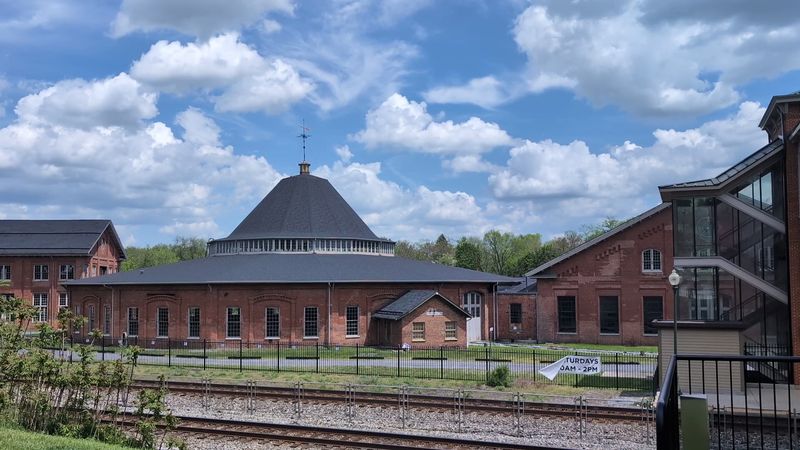
So where exactly is this treasure? The roundhouse sits in Martinsburg, the Berkeley County seat, tucked into a shallow valley along Tuscarora Creek.
The official address is 100 E Liberty St, Martinsburg, WV 25404. The complex lies just off Spring Street, roughly a two-block walk from Queen Street, the main north-south road through downtown.
Historic sources also place the West Roundhouse at the east end of Race and Martin Streets, which can help if you are exploring on foot.
Getting around is pleasantly easy. Visitors mention ample parking, and one traveler noted the lot is roomy enough for big rigs and RVs, a nice perk for retirees traveling the state in a camper.
The grounds have been described as clean and well kept.
Active rail lines still run nearby, carrying freight and passenger trains, so keep your ears open for a rumble and a horn. Hearing a modern train roll past this 1866 building makes for a neat moment of old meeting new.
Martinsburg sits in the Eastern Panhandle, so it is an easy drive for folks from Charles Town, Shepherdstown, or Berkeley Springs looking for an affordable day out.
Free Tours With a Passionate Guide
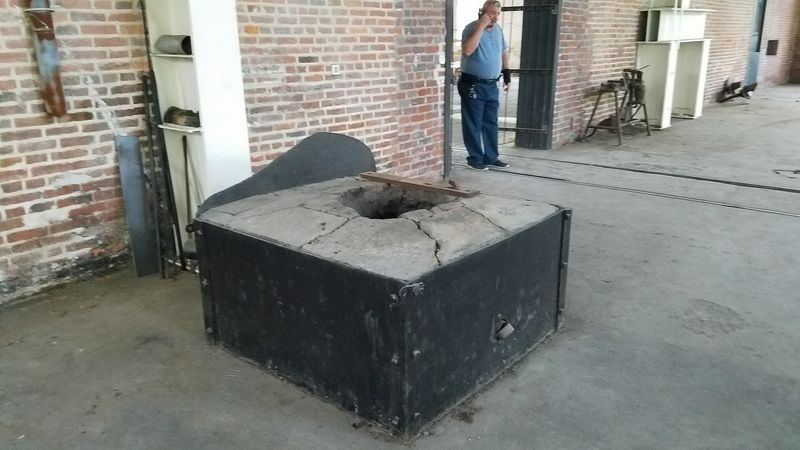
Good news for anyone on a fixed income: tours here are free, with donations gladly accepted. That alone makes it one of the best bargains in the Eastern Panhandle.
Visitors often rave about a guide and curator named Leo, who is described as patient, knowledgeable, and clearly in love with the place. He reportedly takes time to answer every question, no matter how basic or detailed.
One family stopped in on an ordinary Wednesday with a train-crazy toddler, expecting a quick distraction, and ended up enjoying a genuinely informative tour.
Inside, guests find original buildings, artifacts, and plenty of stories. Rail fans and architecture lovers both seem to walk away happy.
A few visitors have mentioned wishing for more interpretive signs and displays, so asking questions is the best way to get the full picture.
Hours, based on current listings, run Wednesday through Saturday from 10 am to 4 pm and Sunday from noon to 5 pm. The roundhouse is closed Monday and Tuesday.
Schedules can shift for events, so checking the official website at roundhousewv.com before you drive is a smart move. Several folks have arrived to find it closed and still enjoyed the outside.
Farmers Markets, Craft Shows, and Holiday Cheer
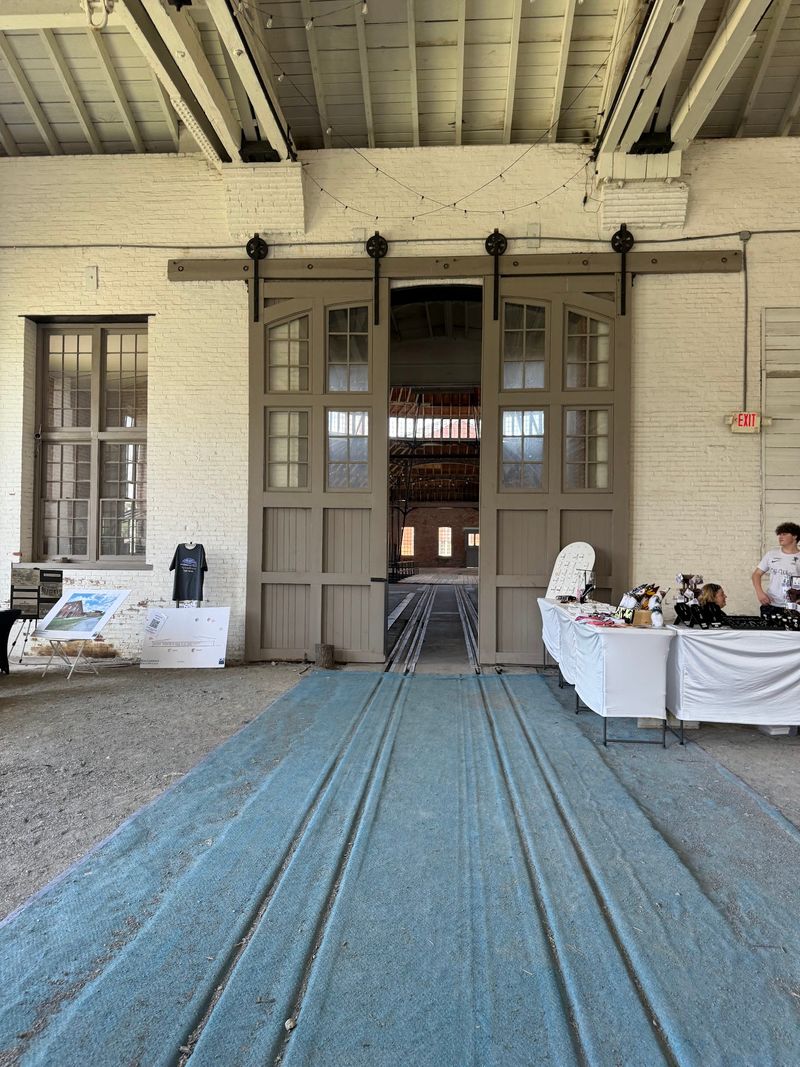
Saturday mornings bring a different kind of energy to the old shop. The Martinsburg farmers market sets up here during its season, and shoppers enjoy browsing local goods with the historic building as a backdrop.
One visitor happily picked up fresh bread while snapping photos of the roundhouse.
Come the holidays, the space really sparkles. Events like the Merry Makers Holiday market fill the floor with crafters and local vendors.
Past guests describe free admission for all ages, sample tables from local makers, animatronic characters, and even Santa with his pup offering free pictures. A towering T. rex and baby apparently stole the show for young and old alike.
Vendors seem to love the venue as much as shoppers. One first-time seller called the building absolutely beautiful and said she fell for it right away.
Craft shows have long been part of the roundhouse calendar, and proceeds from some past events have gone toward restoring the buildings and grounds. That means your shopping can help keep history standing.
Some visitors have even suggested it would make a lovely wedding venue. With that ceiling, it is hard to argue.
Ghost Hunts, Fireworks, and Other Surprises
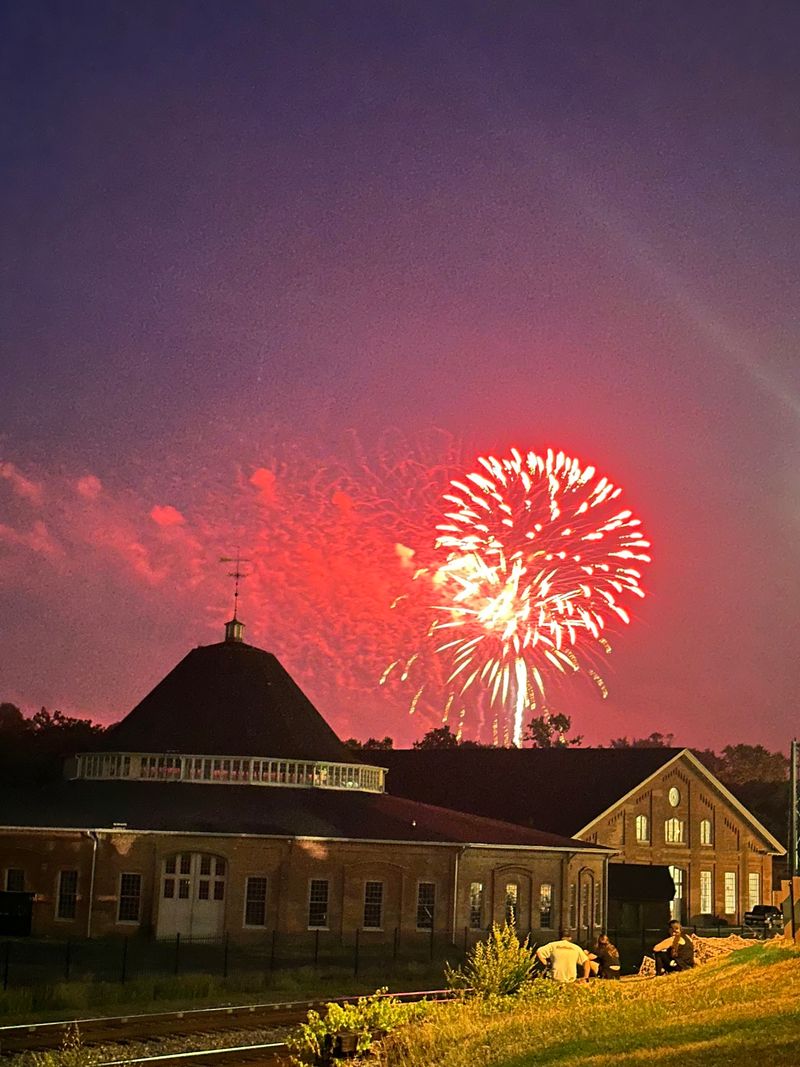
Old buildings collect stories, and this one has picked up a few spooky ones. The roundhouse has hosted paranormal gatherings, including Paracon 2018, with proceeds reportedly supporting restoration.
Guests who attended a ghost hunting event described appearances from several paranormal groups and plenty of eerie fun.
Whether or not you believe in things that go bump in the night, it is easy to see why the setting appeals. Dim corners, echoing brick, and over 150 years of history make for great campfire-style tales.
On a cheerier note, the grounds have become a favorite fireworks spot. One parent shared that watching the show burst right above the roundhouse made for the perfect viewing place for his son.
Picture that iron-framed dome lit up in red, white, and blue. It is small-town summer at its finest.
There has also been talk of plans for an outdoor amphitheater, and visitors who have seen the concepts call them impressive. Nothing is promised, but it suggests the site has a lively future ahead.
Keep an eye on the event calendar. You never know whether your visit will bring ghosts, fireworks, or holiday lights.
Caboose, Train Station, and a Children’s Museum Next Door
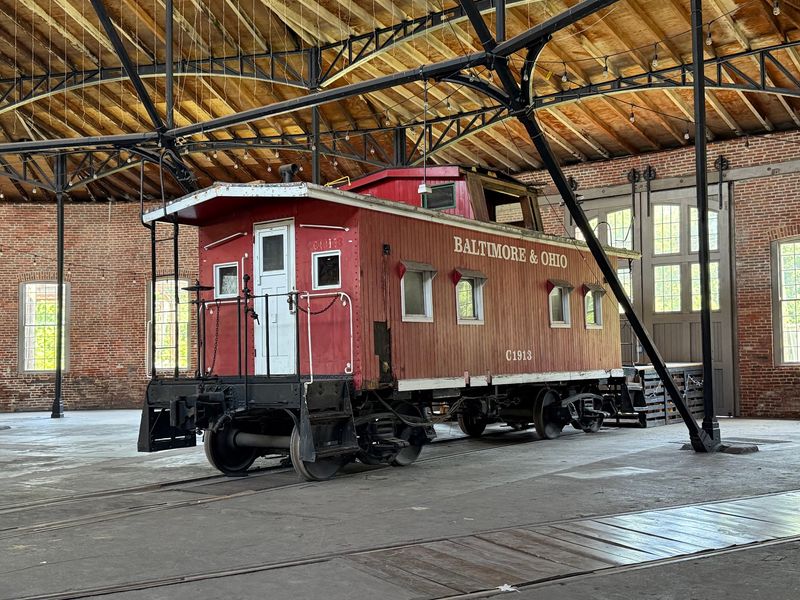
Little ones who love trains will think they have struck gold. Right outside the West Roundhouse, a short stretch of track was relaid in 2001, and a historic B&O caboose from around 1930 sits on display.
It makes a perfect photo stop.
Across the tracks waits the Caperton Transportation Center, housed in a former historic hotel and passenger station. Inside, you will find exhibit space, a children’s museum, and a working Amtrak station.
A bridge connects the center to the roundhouse complex, so moving between them is easy.
Visitors who found the roundhouse closed have still enjoyed touring the station and the kids’ interactive museum, so the trip rarely feels wasted. One traveler did mention that not much else was open on that end of town during their visit, so plan meals and errands accordingly.
Grandparents especially seem to appreciate this combination. You can share stories about riding the rails years ago while the grandkids press their noses to the windows, waiting for a real train to rumble by.
Bring comfortable shoes. Between the caboose, the bridge, the station, and the roundhouse grounds, you will likely do a fair bit of happy wandering.
Why the Old Roundhouse Deserves Your Saturday
Some places impress you with size. Others win you over with heart.
The Martinsburg Roundhouse somehow manages both.
In one stop, you get a building that survived war, outlasted its twin, sparked a national labor movement, and earned engineering honors few structures anywhere can claim. Add free tours, a caring guide, seasonal markets, and a caboose for the kids, and you have a day out that is easy on the wallet and rich in memories.
Is it polished like a big-city museum? Not entirely.
Some visitors would love to see more signs, more displays, and further restoration. That honesty is part of its charm, though.
You are seeing a real piece of West Virginia railroad heritage that local people are still working hard to save, and every donation helps.
Plan for a Wednesday through Sunday visit, double-check the website, and give yourself time to look up and simply take it in.
Do you have family who worked on the B&O, or memories of trains rolling through your hometown? Share them when you go.
Places like this stay alive because people keep telling their stories, and yours might be the next one worth hearing.
