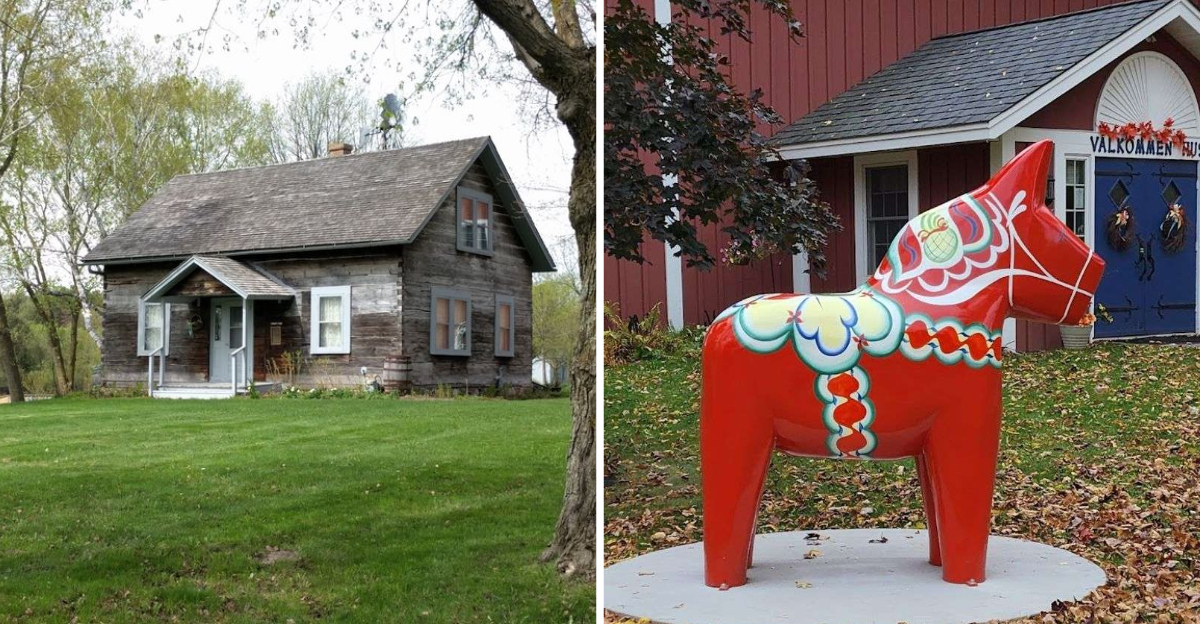
History feels different when you can walk through it, touch the buildings, and imagine the people who once lived there. Minnesota has places where old traditions, cultural stories, and preserved landscapes come together in a way that feels personal instead of distant.
Historic villages offer a chance to slow down and appreciate craftsmanship, heritage, and the simple details that shaped earlier generations.
It is an enjoyable stop for curious travelers, families, and anyone who likes finding meaningful places with stories behind them.
The Grounds You Can Roam for Free, Any Time of Year
Most people assume a museum means a ticket booth and a velvet rope. Gammelgården quietly breaks that assumption the moment you pull into the parking lot.
The outdoor grounds are open and free to explore year-round, no admission required, no one checking your pass at the gate.
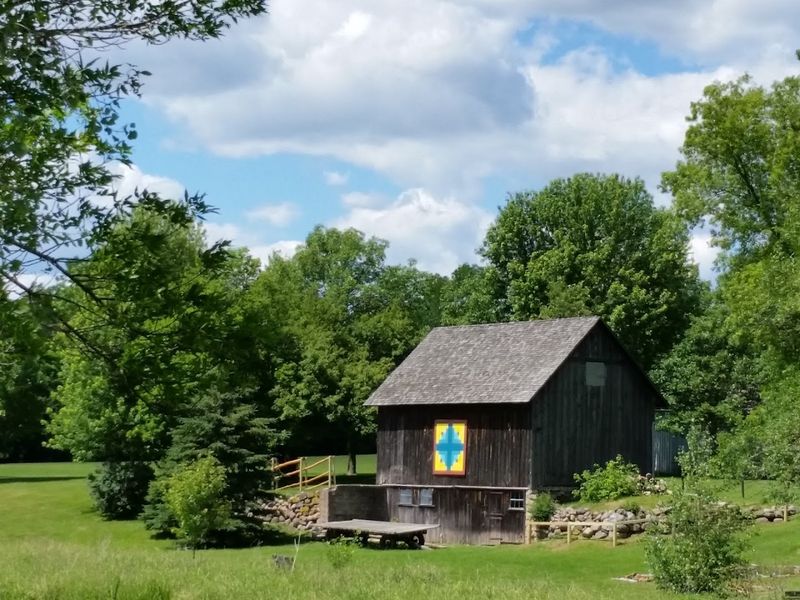
The 11 acres stretch out in a way that feels less like a museum and more like a small Swedish village that simply never left. You can wander past the historic barn, circle around the old church, and read the bilingual plaques posted near each building, written in both English and Swedish, which adds a genuinely thoughtful touch.
Prairie grass sways between the structures, and depending on the season, you might spot wildlife moving through the open land. In winter, the snow-dusted rooflines of the 1800s buildings look almost like a painting.
In summer, the whole place is lush and alive with color.
Photography enthusiasts especially love this spot. The light hits the old wood siding in ways that make every shot feel effortless.
Families with kids can let them run and explore without worrying about fragile exhibits nearby.
Even if you only have an hour and no plan, walking these grounds leaves you with something. There is a stillness here that city parks simply cannot replicate.
It is the kind of place that makes you slow down, look more carefully, and actually notice the details of lives lived very differently from your own.
Minnesota’s Oldest Lutheran Church Building Still Stands Here
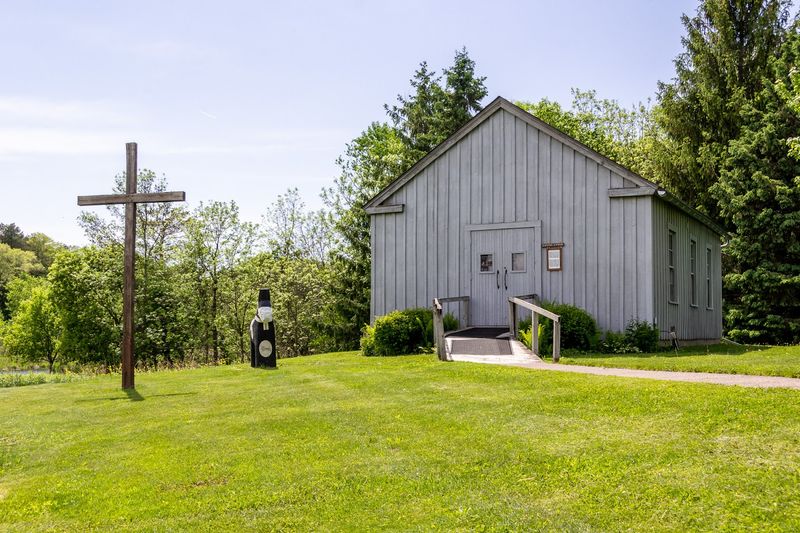
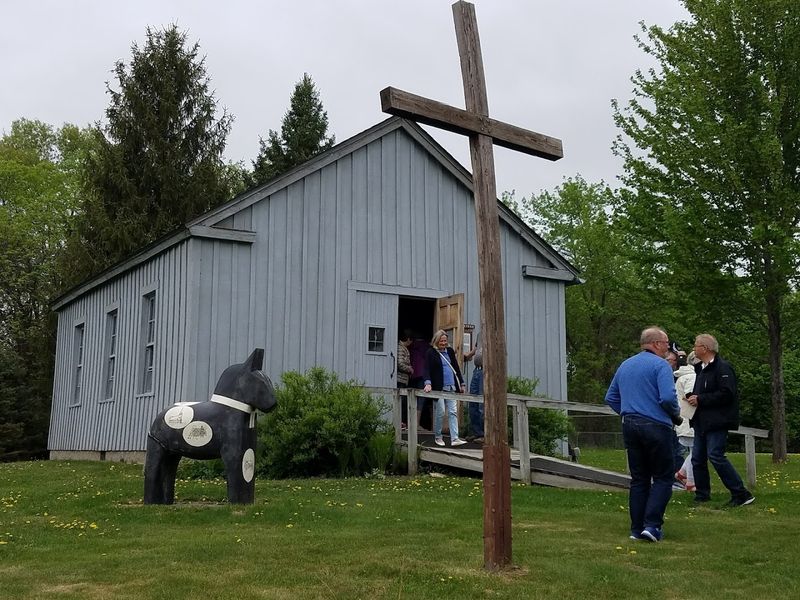
There is something quietly remarkable about standing in front of a building that has been holding its ground since 1856. The oldest Lutheran church building in Minnesota sits right here at Gammelgården, and it does not look like a relic behind glass.
It looks like it is still waiting for Sunday morning.
Built by Swedish immigrants who had traveled enormous distances to settle this land, the church is small by modern standards. The wooden walls are worn smooth by decades of Minnesota weather, and the interior, when you get a chance to see it on a guided tour, carries that particular hush that old sacred spaces always seem to hold.
One reviewer described attending a sunrise service inside the church for St. Lucia Day as unforgettable, and honestly, that tracks. The building has a presence to it that photographs only partially capture.
You feel the age of it differently in person.
The congregation that once gathered here was part of Minnesota’s first Swedish settlement, established in Scandia in 1850. That context matters.
These were not wealthy colonizers building grand cathedrals. They were ordinary families trying to keep their faith and community intact in a brand new country.
Seeing the church as part of the broader museum landscape, surrounded by the other historic structures, helps you understand just how tightly knit this immigrant community really was. Everything they built, they built close together, and that closeness still shows.
The Välkommen Hus: A Free Welcome That Actually Means It
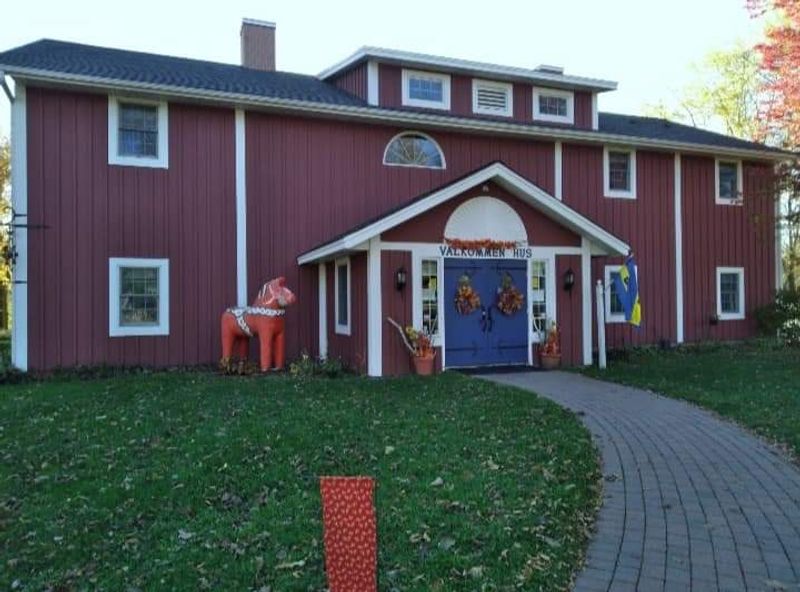
The Välkommen Hus, which translates to Welcome House, is the contemporary building on the Gammelgården property, and it earns its name completely. Access to the indoor exhibits inside is free, which already sets a generous tone before you even step through the door.
Inside, there is a non-lending board game and book library that visitors can use freely during their visit. There is also a seed and little book exchange, the kind of community-minded detail that makes a place feel like it genuinely cares about the people who show up.
Swedish-language books line the shelves at various reading levels, including options for kids, which is a thoughtful inclusion for families exploring their heritage.
The building itself is more impressive than you might expect from a small-town museum. Two full floors, an elevator, and large clean restrooms make the space comfortable and accessible for everyone.
Community craft events are held here periodically, so checking the museum calendar before your visit is worth the extra minute.
A gift shop on the premises stocks hand-painted items and other locally crafted goods. It is the kind of gift shop you actually browse slowly rather than glancing at on your way out.
Nothing feels mass-produced or generic.
The Välkommen Hus is open Wednesday through Saturday from 10 AM to 4 PM and Sunday from 1 PM to 4 PM, May through December. It serves as both visitor center and the heart of the museum experience, and it does that job warmly.
Five Historic Buildings That Tell the Real Immigrant Story
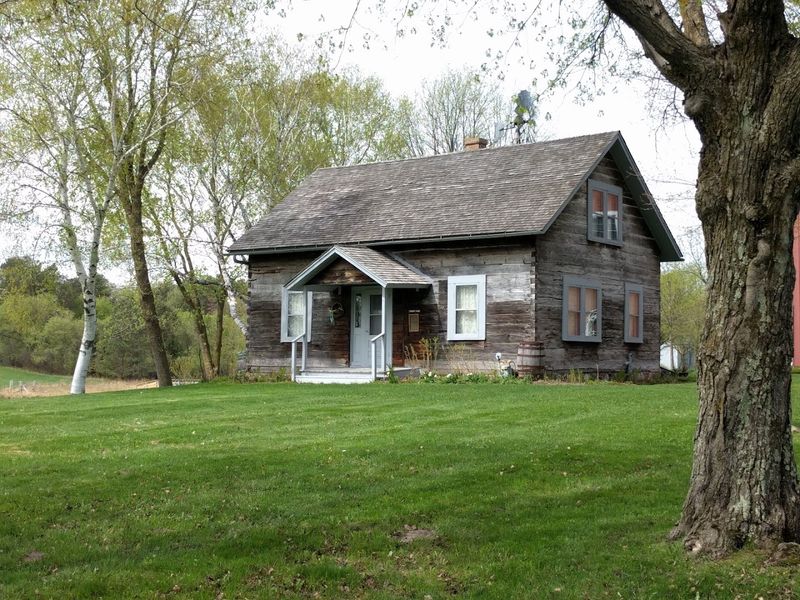
History has a way of feeling abstract until you are actually inside a 170-year-old immigrant house looking at the tools someone used to survive a Minnesota winter. That shift from concept to reality is exactly what the five historic buildings at Gammelgården make possible.
The oldest is the Immigrant House, dating to 1855. Next comes the church from 1856, followed by the Pastor’s House parsonage from 1868, the Barn from 1879, and the Stuga, a peasant’s home from 1930.
Each building is furnished with artifacts from the periods they represent, so the interiors feel inhabited rather than staged.
Two of the buildings, the Pastor’s House and the Barn, are original to the site. The others were relocated here, which is its own kind of preservation story.
Moving a 19th-century structure without destroying it takes serious commitment, and it reflects how seriously this community takes its history.
Guided tour guides dress in period-appropriate clothing, which adds a layer of immersion that audio guides simply cannot replicate. Each outbuilding also contains a small key, a detail designed to help younger visitors remember something specific and unique about each space.
It is a small touch, but kids respond to it immediately.
Tours of the historic buildings generally require an admission fee, though children under 12 get in free, as do members of Gammelgården and current members of the American Swedish Institute. Active duty military personnel also receive free admission through the Blue Star Museums program, typically from Armed Forces Day through Labor Day.
The Dala Horses Outside Are Worth the Drive Alone
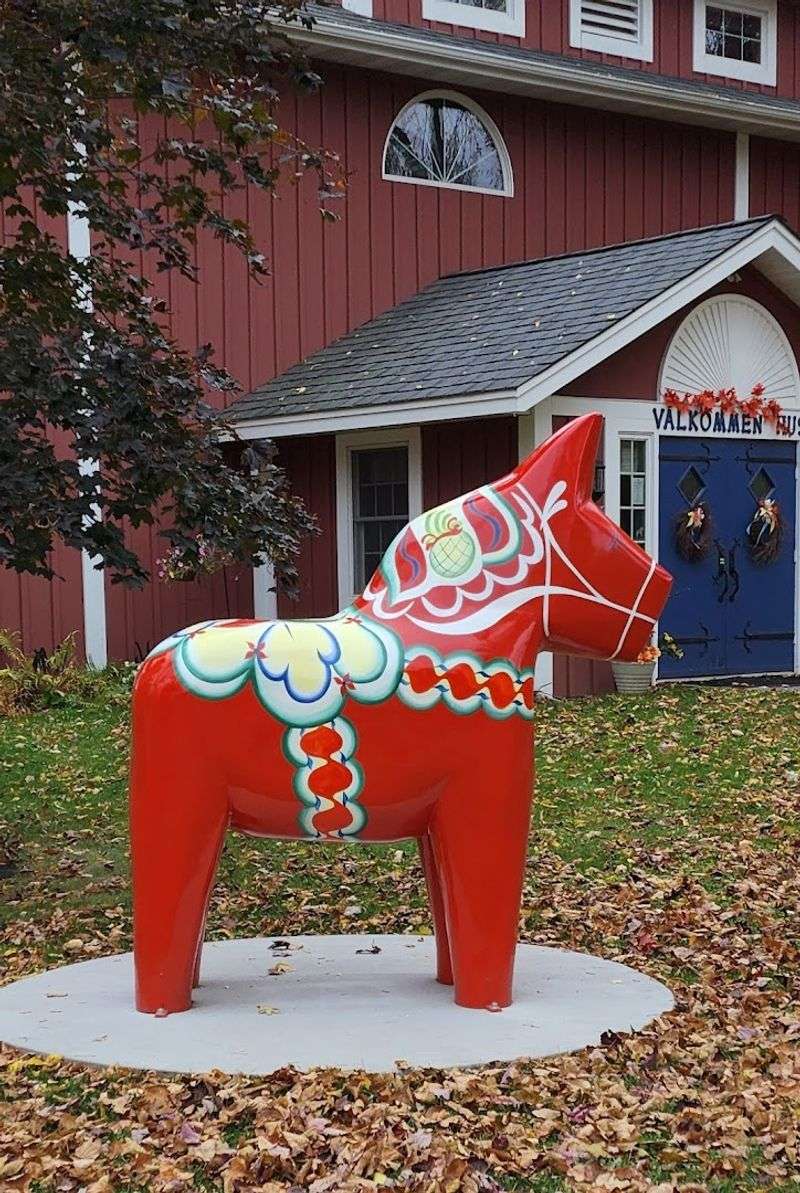
Bright, bold, and completely unexpected, the large Dala horses scattered around the Gammelgården grounds have a way of stopping you mid-step. Each one is painted in a completely different artistic style, so no two look alike, and together they create this lively outdoor gallery that nobody seems to talk about nearly enough.
The Dala horse is one of the most recognized symbols of Swedish culture, originally carved from wood in the Dalarna region of Sweden. Here at Gammelgården, the tradition gets a creative reinterpretation.
Some horses feel traditional and folk-art inspired, while others lean more contemporary and abstract. The variety makes wandering between them genuinely fun rather than repetitive.
For photographers, this is an obvious highlight. The color contrast against the natural landscape is striking, and the different styles mean you can spend a surprising amount of time just moving around each piece to find the right angle.
Families with younger children tend to gravitate here naturally, since the horses are large enough to feel impressive up close.
A small playground sits directly behind the welcome house, making this corner of the grounds especially good for visitors with little ones. Parents can keep an eye on kids at the playground while still being a few steps away from the Dala horse displays.
The horses are part of the free outdoor experience, visible and accessible any time you visit the grounds. They are the kind of detail that makes you realize how much thought went into making this museum genuinely enjoyable for everyone who shows up.
Festivals and Events That Bring the Village Back to Life
A museum that hosts a Midsummer Festival and a Spelmansstämma, which is a traditional Swedish folk music gathering, is not a museum that takes itself too seriously. Gammelgården comes alive during its seasonal events in a way that feels more like a community celebration than a scheduled program.
The Spelmansstämma Festival is one of the highlights, and notably, it offers free admission. Folk musicians gather to play traditional Scandinavian music, and the whole atmosphere shifts from quiet reflection to something much more festive and communal.
It is the kind of event where you might arrive expecting to stay an hour and end up lingering for most of the afternoon.
The St. Lucia Day sunrise service held inside the historic church is another event that visitors consistently describe as memorable. The combination of the old wooden church, the early morning light, and the traditional ceremony creates an atmosphere that is genuinely hard to replicate anywhere else in Minnesota.
Community craft events happen periodically inside the Välkommen Hus throughout the year, giving visitors a reason to return across different seasons. The museum also reports weekly events during the open season, so checking the website before your visit is always a smart move.
What makes the events feel special is that they are rooted in real cultural tradition rather than manufactured entertainment. The Swedish-American community in Scandia has been celebrating these traditions for generations, and that continuity shows in how the events are run.
It is participatory, warm, and genuinely welcoming to newcomers.
Address: 20880 Olinda Trail N, Scandia, MN 55073
