The floorboards creak under your feet, and the walls hold stories from the late 1700s.
This stagecoach stop was constructed around 1795, with an addition in 1818, and it began its life as a general store before becoming a regular stop for travelers between Philadelphia and New York.
The tavern operated for over a century before closing its doors in 1934.
The Girl Scouts took over the building for decades, and then a historical society stepped in to save it from destruction.
It is now a museum and a beautifully preserved piece of New Jersey history that keeps a little bit of the past alive.
You will see the old stagecoach route, learn about tavern life, and maybe even hear about the Victorian-era murder mystery that still intrigues visitors.
A step inside is a step back in time.
A Roadside Landmark That Hides In Plain Sight
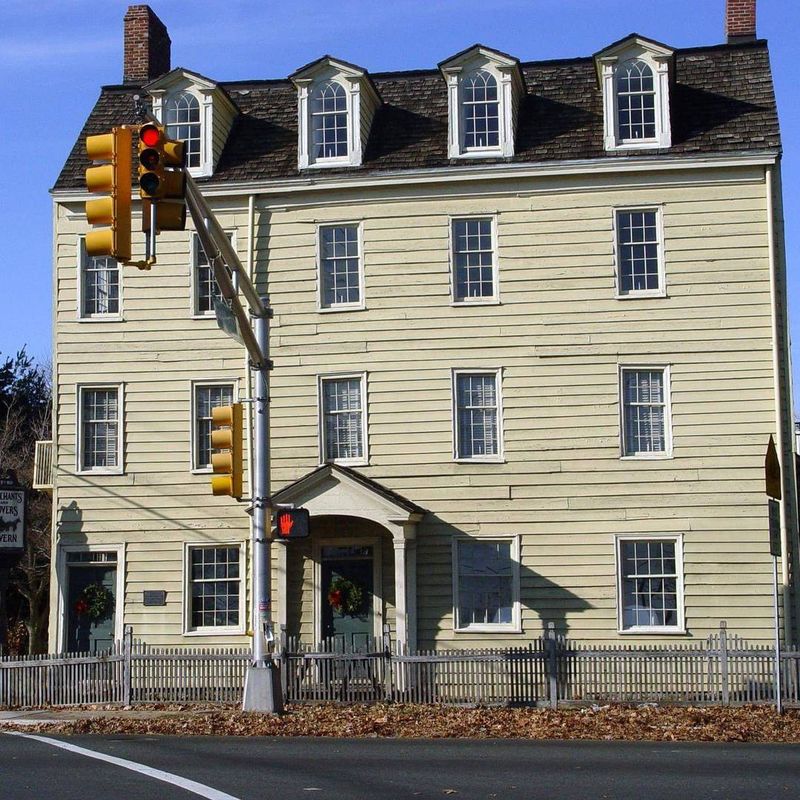
Most drivers on St Georges Avenue zip past without a second glance, which is exactly what makes the first sighting of The Merchants & Drovers Tavern Museum so satisfying.
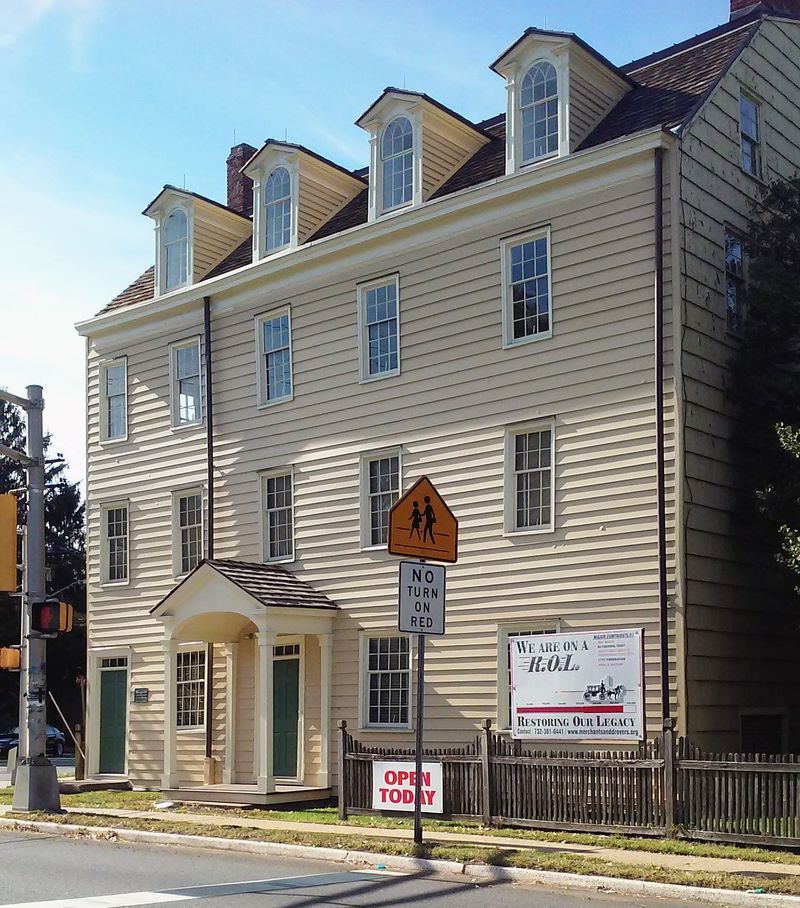
The building rises four stories, five bays wide, its cedar shake gambrel roof catching light in a way modern siding never will.
Dormer windows poke out near the top like sleepy eyes. Traffic hums by, and the contrast is honestly a little funny.
The oldest section went up around 1795 as a two-story home with a general store inside, then grew into the tall Federal-style landmark you see now during the 1820s expansion. Knowing that, you start reading the walls like chapters.
Parking is simple, and the grounds are small enough to circle in a few minutes before heading in. Take that walk first, because the exterior details set up everything waiting inside.
Bring a camera with a wide lens if you have one. Fitting the whole height of the place into a single frame from the sidewalk is trickier than it looks, and half the fun is trying.
The Stagecoach Route That Made This Corner Matter
Long before highways, getting between Philadelphia and New York meant days of jolting along rough roads. This tavern sat squarely on one of the main routes, which turned it into a natural pause point for stagecoaches, drivers, and worn-out passengers.
Horses needed swapping. People needed food and sleep.
Guides at the museum explain how that traffic shaped everything about the building, from the size of the public rooms to the number of beds crammed upstairs. Once you picture coaches pulling up out front, the layout suddenly makes total sense.
The name itself tells the story. Merchants moved goods, drovers moved livestock, and both groups needed a reliable roof between cities.
What sticks with me is how the place worked like an early transit hub, part rest stop, part news exchange, part meeting hall. Travelers swapped information here because there was no faster way to get it.
Standing in those rooms today, the distance between 1820 and now feels a lot shorter than the calendar suggests.
Rooms Restored To Look Like 1820 All Over Again
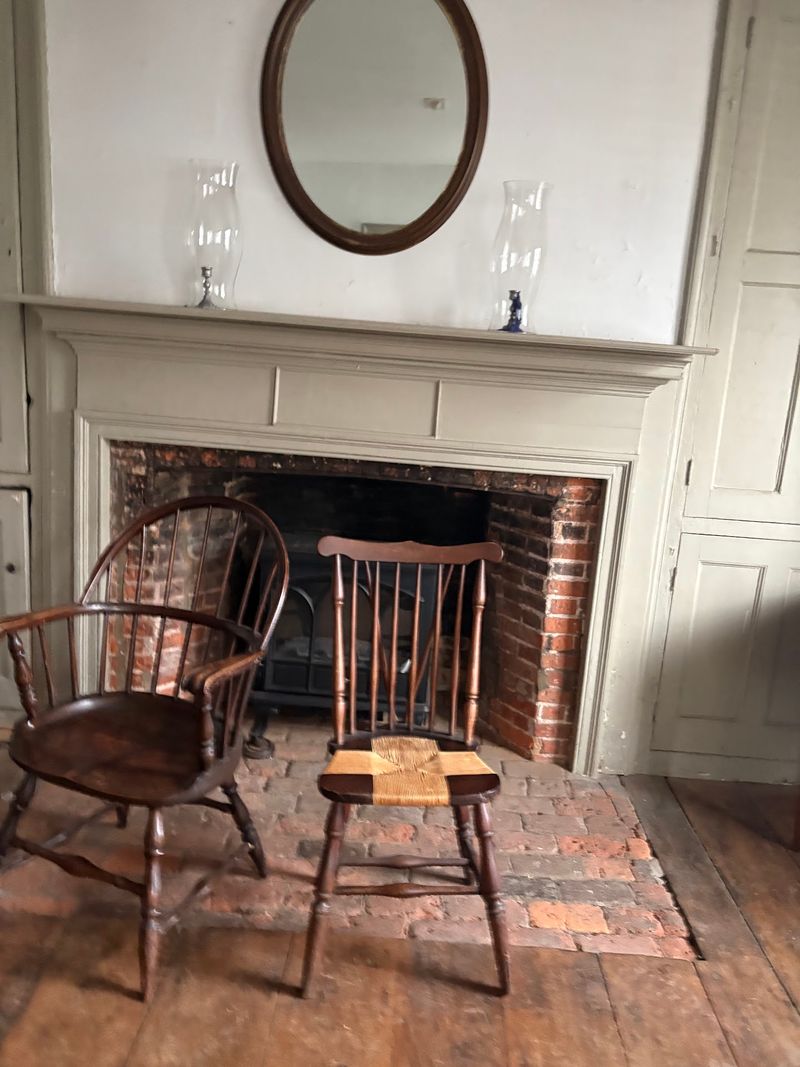
Restoration at The Merchants & Drovers Tavern Museum went far beyond a coat of fresh paint. The interiors were researched and returned to their circa 1820 appearance, right down to period-accurate paint colors that surprise a lot of first-time visitors.
Those greens and ochres are bolder than expected. Colonial does not always mean beige.
Furnishings match the era too, arranged the way a working tavern would have used them rather than roped off in tidy display cases. Chairs sit near fireplaces, tables wait for guests, and the whole effect leans lived-in instead of museum-stiff.
Look down while you walk. Wide floorboards, worn stair edges, and hand-fitted joinery quietly show the age of the place better than any plaque.
Ongoing projects keep the work moving, with grant-supported efforts covering window restoration, chimney rebuilding, and archaeological digging on the property. Preservation is not finished business here.
Ask about whatever restoration is currently underway. Staff tend to light up when someone shows interest in the nuts and bolts.
Rope Beds And The Reality Of Sleeping On The Road
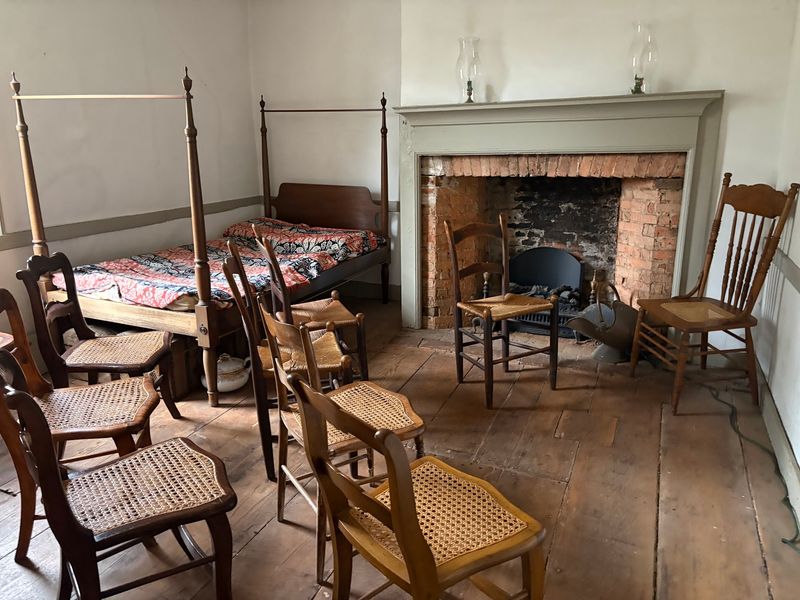
Forget cozy hotel suites. Upstairs, the rope-strung beds tell you exactly how rough overnight travel could be in the early 1800s.
Ropes were tightened by hand to keep the mattress from sagging. Sleep quality depended on how much effort someone put into that job.
Sharing a room with strangers was normal, and privacy barely existed for ordinary travelers passing through. Seeing the actual furniture drives that home faster than any textbook paragraph.
Kids usually latch onto this part of the tour immediately, mostly because it makes their own bedroom feel luxurious. Adults get quiet for a second, doing the math on days of travel without heat or plumbing.
Details like chamber pots, low ceilings, and small windows fill in the rest of the picture. Nothing is dramatized, which somehow makes it land harder.
Take a minute in the upper rooms before moving on. The light up there is soft, the floors creak on cue, and the whole experience of nineteenth-century New Jersey travel suddenly stops being abstract.
Second Floor Ballroom Where The Whole Town Gathered
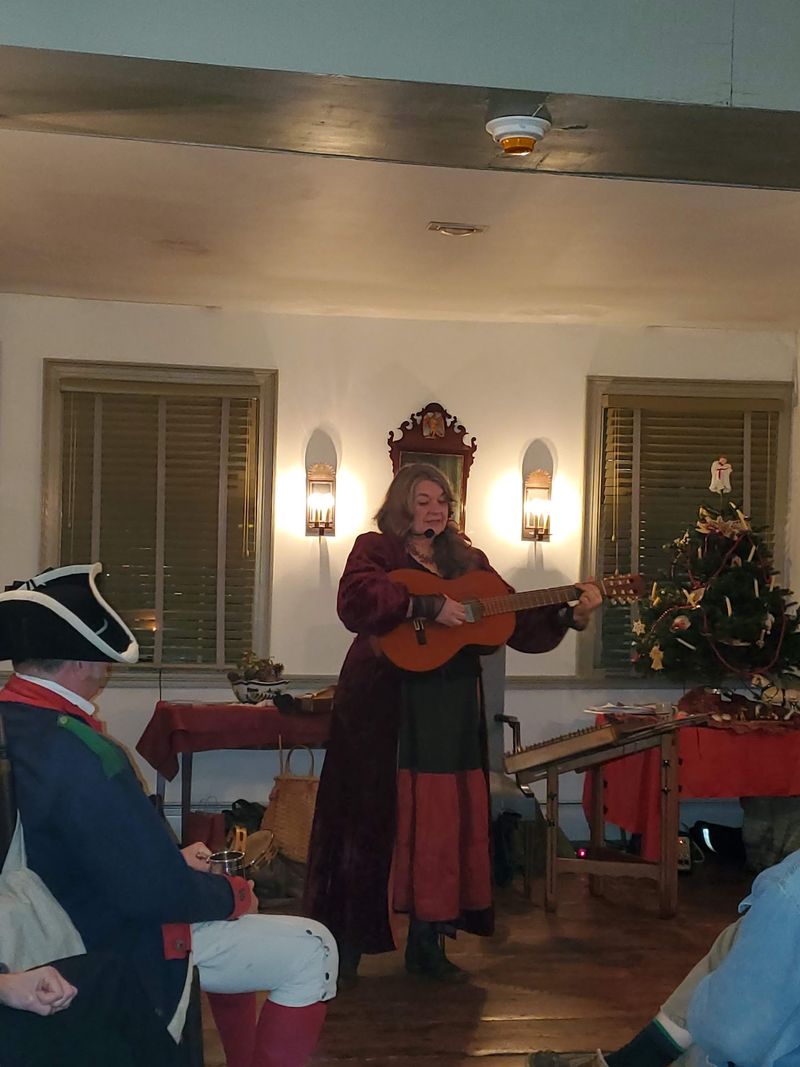
Climb to the second floor and the mood shifts. A large open room stretches out, and for years it served as Rahway’s main social space.
Meetings happened here. So did celebrations, gatherings, and community events of every kind.
Before town halls and event centers existed, taverns filled that role, and this one filled it well. The scale of the room makes sense once you realize how few large indoor spaces a small town had back then.
Sound behaves differently up here, a little more open and echoey than the tight rooms below. Footsteps carry.
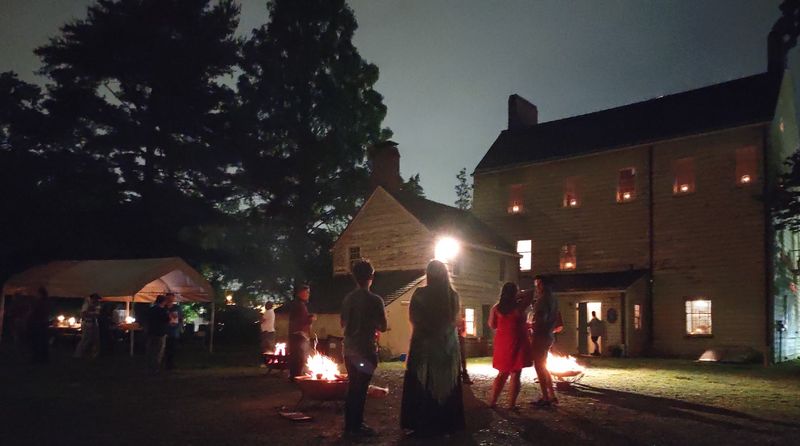
This New Jersey museum still puts the space to use for programs and special events throughout the year, which keeps it from feeling like a frozen exhibit. Seeing a historic hall in active use beats staring at it through a doorway.
If your visit lines up with an event, grab the chance. Experiencing the room with people in it gives you a completely different read on why this building mattered to the community for generations.
Costumed Interpreters Who Make The Details Click
Labels can only do so much. What really opens up the story here are the costumed interpreters who guide visitors through the rooms and explain how daily life actually worked.
Questions get real answers. Tangents are welcome.
Topics range widely depending on who is guiding, covering tavern operations, the local community, immigrant experiences in the 1800s, and women’s history connected to the building. Conversations tend to wander in the best way.
Because tours are personal rather than scripted recordings, no two visits feel identical. Someone curious about architecture gets a different walkthrough than someone chasing family history.
Volunteers keep much of this running, and their enthusiasm is contagious even on a quiet weekday morning. You can tell they genuinely like this building.
My advice is to ask at least one nosy question early on. Wondering aloud how food was cooked, or where the horses went, usually unlocks a story you would never find on a sign, and it makes the whole visit stick in your memory.
Terrill Tavern, The Older Neighbor Out Back
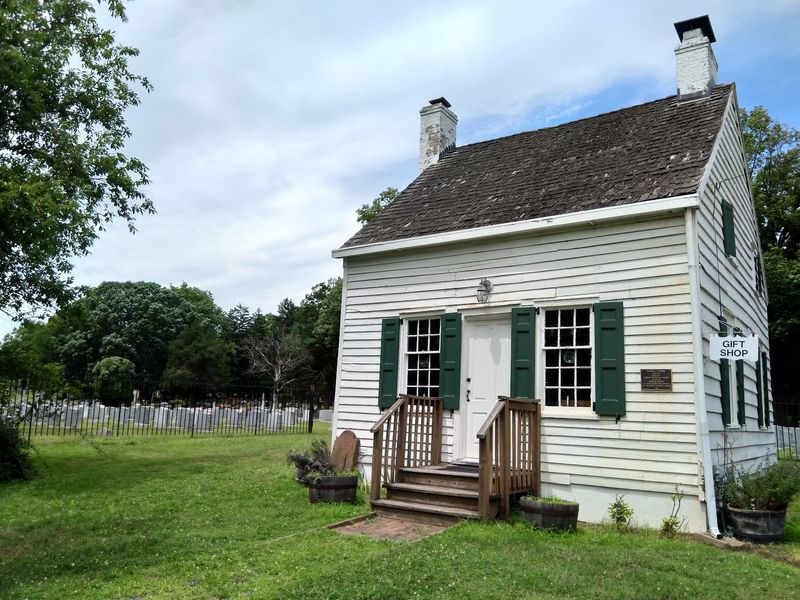
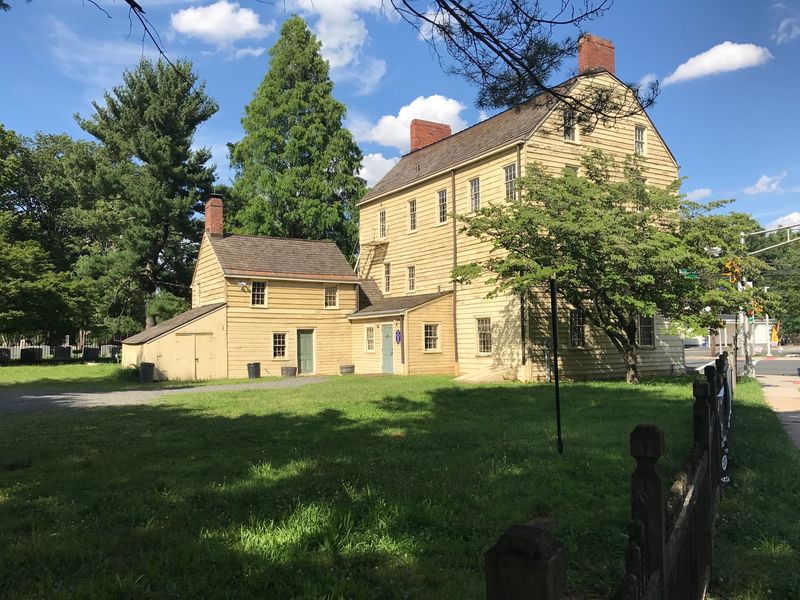
Here is a bonus most visitors do not expect. Sharing the grounds is the Terrill Tavern, a Revolutionary War era structure dating to roughly 1735.
It is smaller and plainer than the main building. It is also older by decades.
Rather than let it disappear, the structure was moved to this site in 1976 specifically so it could be preserved. Relocating an entire eighteenth-century building is no small task, and knowing that adds weight to the sight of it sitting there.
Set side by side, the two buildings show how quickly American architecture changed. One is modest and low, the other tall and formal, and only a few generations separate them.
Walk the grounds slowly and compare the framing, the roof lines, and the window placement. The differences are easy to spot once you start looking.
Preservation stories like this one rarely get top billing, but they explain why anything old survives at all. Someone decided it was worth the trouble.
The Historic Cemetery Right Next Door
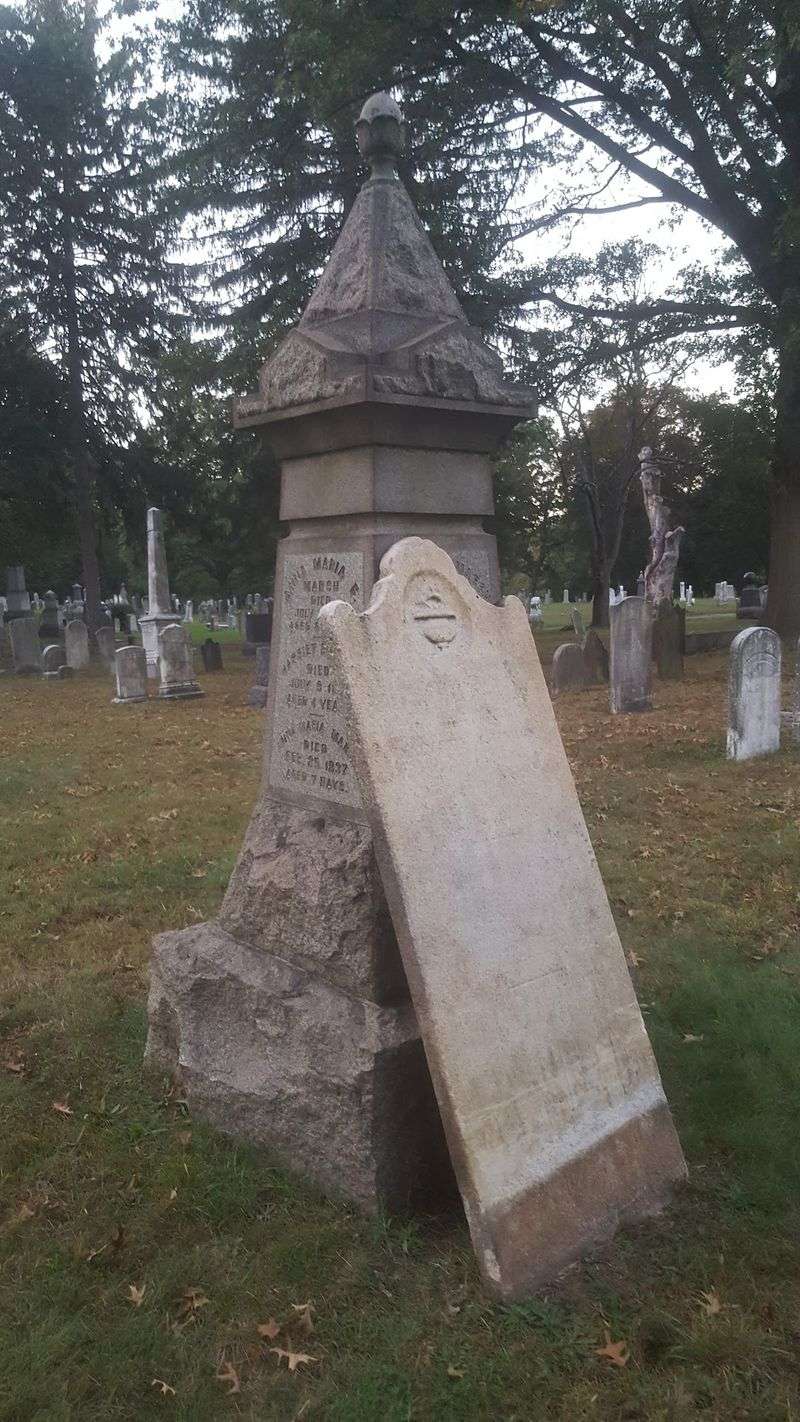
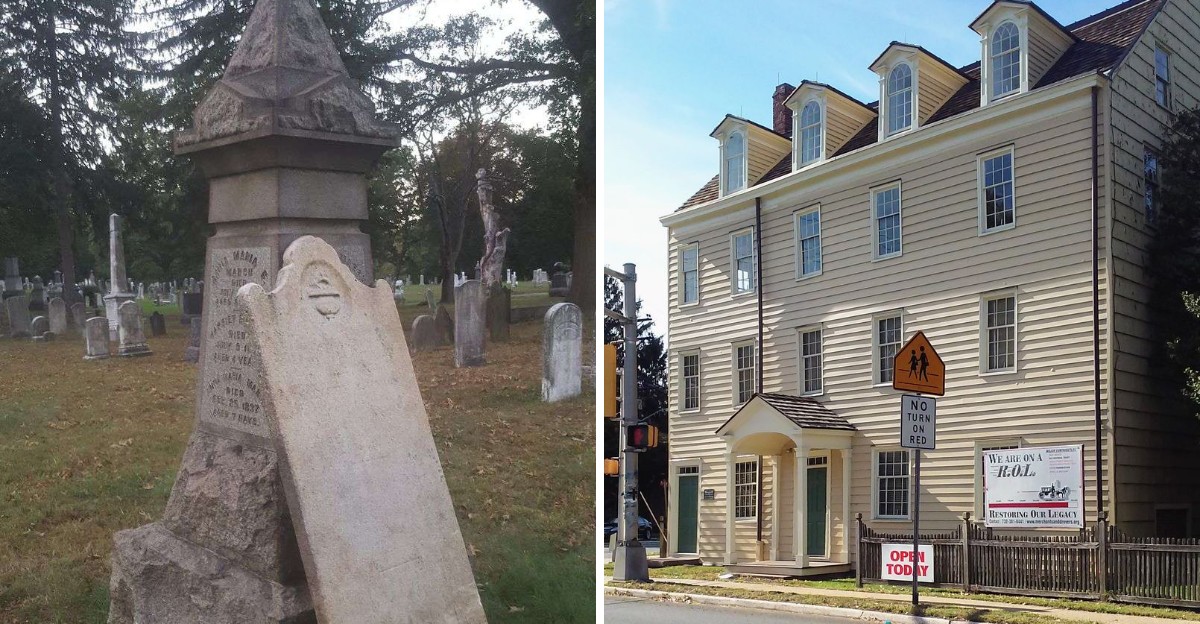
Step outside of and history keeps going. The The Merchants & Drovers Tavern Museum sits beside the historic Rahway Cemetery, whose roots reach back to the early eighteenth century.
Headstones lean at soft angles. Lettering has weathered into faint shadows.
Among those buried there is a signer of the Declaration of Independence, which puts a surprising amount of national history within a short walk of the tavern’s front door. Not many roadside museums can say that.
Pairing the two makes for a fuller afternoon. Inside, you learn how people traveled, worked, and gathered.
Outside, you see the names of the community that grew around this crossroads.
Wear shoes you do not mind getting a little damp, since the ground can be uneven and grassy in spots.
Go slowly and read the older stones. Carved symbols, epitaphs, and family groupings tell their own quiet stories, and the whole area feels calmer than the busy avenue running past it just a short distance away.
From Girl Scout Headquarters To Rescued Museum
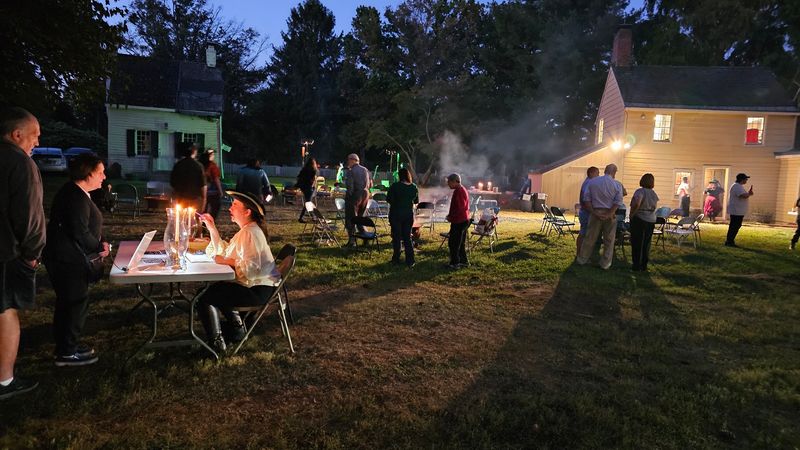
Buildings this old rarely survive by luck alone. After serving as a hotel and tavern for well over 130 years, operations here wound down in the mid-1930s, and the story could have ended right there.
Instead, a new chapter started. From the 1930s into the 1960s, the building worked as a regional headquarters for the Girl Scouts.
Locals still remember it as the Girl Scout house, and that stretch of use kept the place occupied and cared for during decades when plenty of historic structures were torn down.
In 1971, the Rahway Historical Society, known today as The Merchants and Drovers Tavern Museum Association, purchased the property and launched the restoration work that created the museum.
Recognition followed when the site was added to the National Register of Historic Places in November 1978 for its significance in architecture, commerce, and transportation.
Layered histories like this are my favorite kind. The building kept finding new purposes, and each one bought it more time.
Planning A Visit Without Missing The Doors
One practical warning saves a lot of frustration here. Opening days are limited, so arriving on a random weekend afternoon can leave you admiring the building from outside.
Regular hours run Tuesday, Thursday, and Friday from 10 AM to 4 PM, while Mondays, Wednesdays, and weekends are closed for standard visits.
The Merchants and Drovers Tavern Museum sits at 1632 St Georges Ave, Rahway, NJ 07065, right along a main road in Union County with straightforward parking. That makes it easy to work into a broader New Jersey history day trip.
Special programs and events sometimes fall outside the regular schedule, and they are worth checking for in advance since the museum can feel especially lively when something extra is happening.
Plan on at least an hour, with more time if you like asking questions, exploring the grounds, or walking through the neighboring cemetery.
