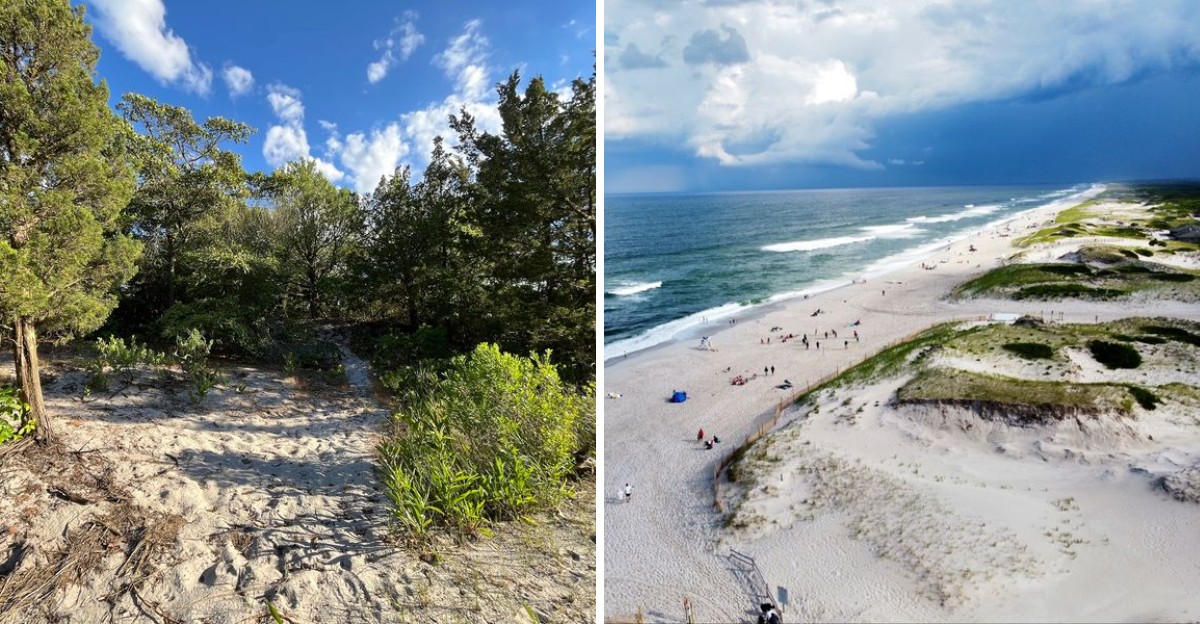
Listen, you know how every Jersey Shore town feels like a postcard of boardwalks, high-rises, and crowds? Well, this one does not.
This is ten miles of wild, undeveloped barrier island where the only thing you will hear is the ocean and the ospreys. No boardwalk.
No commercial strip. No buildings at all.
Just sand dunes, maritime forests, and a beach that looks exactly the way it did when Henry Hudson sailed past in 1609. The state’s largest osprey colony nests here, with over thirty pairs returning every spring.
Red foxes trot along the dunes. More than four hundred plant species thrive in nine distinct ecosystems.
It is one of the last stretches of untouched coastline on the entire Atlantic seaboard. And you can walk it, fish it, or just sit in the sand and wonder why you ever bothered with the crowded beaches.
This is New Jersey at its wildest. Go see it before everyone else figures it out.
A Slim Ribbon Of Sand Between Ocean And Bay
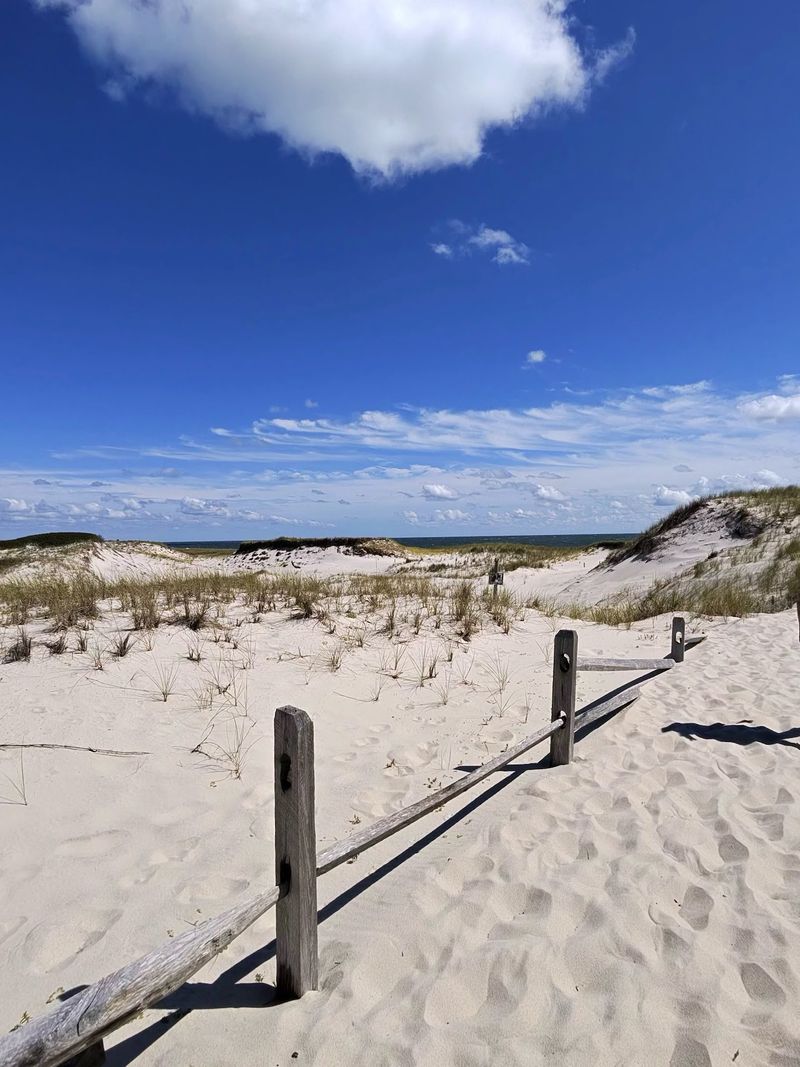
Geography does something special here. The island is only a narrow band of land, roughly ten miles long, with the Atlantic crashing on one side and the calm water of Barnegat Bay resting on the other.
You can genuinely see both from certain spots, which never stops being strange in a good way. One side roars, the other barely ripples.
Island Beach State Park protects more than three thousand acres of coastal dunes, making it one of the few undeveloped stretches left on the North Atlantic coast. That statistic sounds dry until you’re standing there with no rooftops in sight.
The main road runs down the center, with numbered parking areas scattered along it, so you pick your own slice of shoreline and remember the number for the walk back.
Practical tip worth knowing. Weekdays tend to feel emptiest, and arriving earlier gives you more choice since vehicle entry is limited to keep the beach from filling up.
It’s a simple layout that somehow makes the place feel enormous.
Dunes That Have Barely Changed In Centuries
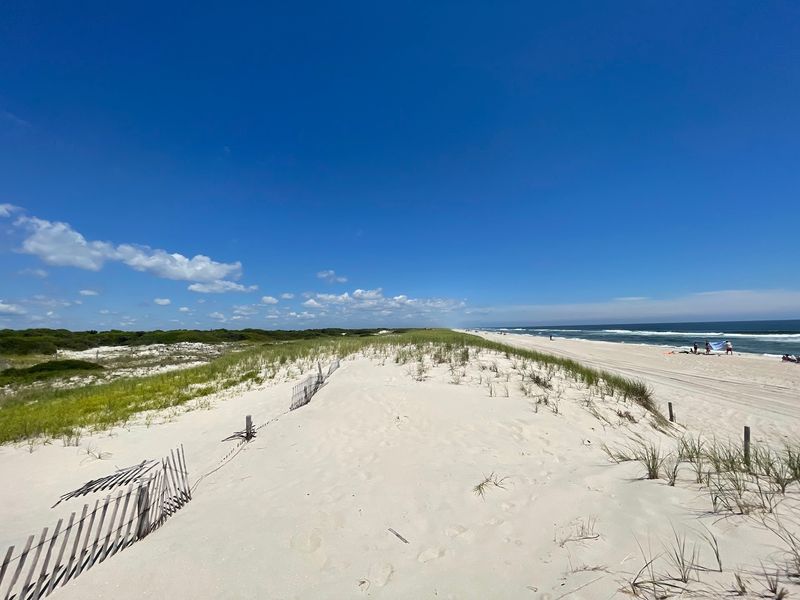
Most New Jersey Shore beaches have been smoothed, built on, or rebuilt. Not this one.
The dunes rising along the shoreline here stand much as they have for centuries, sculpted by wind and salt rather than bulldozers. Some of the largest expanses of beach heather in the state grow across them in low, tough green mats.
Over four hundred plant varieties have been identified inside the park, which explains why the landscape shifts every few steps. Thickets give way to open sand, then to marsh grass nearer the bay.
Walking on the dunes isn’t allowed, and the reason becomes obvious once you see how fragile the root systems look. Wooden walkways cross over the ridges at the parking areas, keeping feet off the plants and sand out of your shoes.
What I appreciate is how untidy it all looks, in the best sense. Nothing manicured, nothing trimmed.
Just wind-bent growth doing exactly what it wants across three thousand protected acres.
Ospreys, Falcons And A Front Row Seat On The Flyway
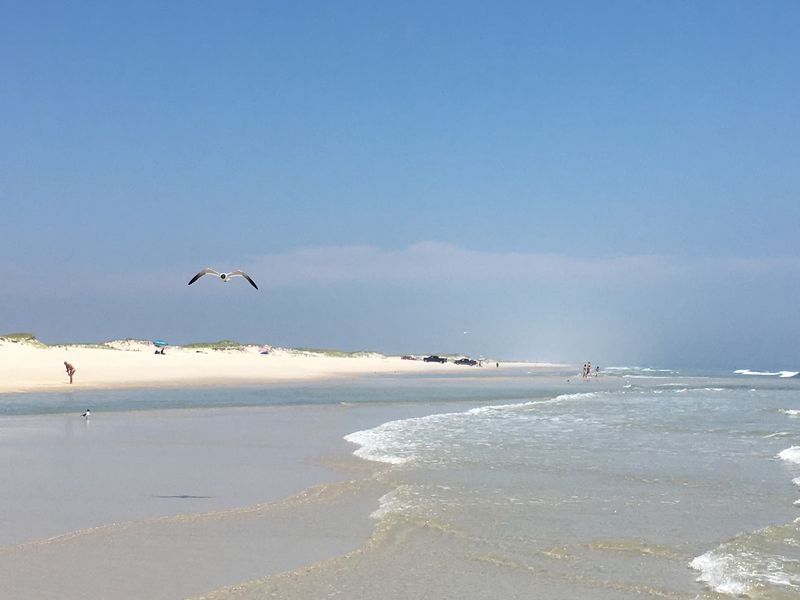
Bring binoculars. Seriously.
The park sits directly along the Atlantic Flyway, the great north-south highway migrating birds follow, which turns spring and fall into something close to a wildlife show. Flocks stop here to rest and feed before pushing on.
New Jersey’s largest osprey colony makes its home in the park, and those birds are hard to miss. They circle high over the water, then drop fast when they spot a fish.
Peregrine falcons pass through too, along with wading birds, shorebirds, waterfowl, and songbirds that vanish into the thickets the second you look away. The Spizzle Creek Bird Blind Trail gives you a sheltered spot to sit and watch without spooking anything.
Foxes turn up as well, trotting across the sand with total confidence. Feeding them is discouraged for good reason, since human food harms wild animals and teaches them bad habits.
Early morning is the sweet spot. Cooler air, softer light, and far more movement in the dunes.
Short Trails With Surprisingly Big Payoffs
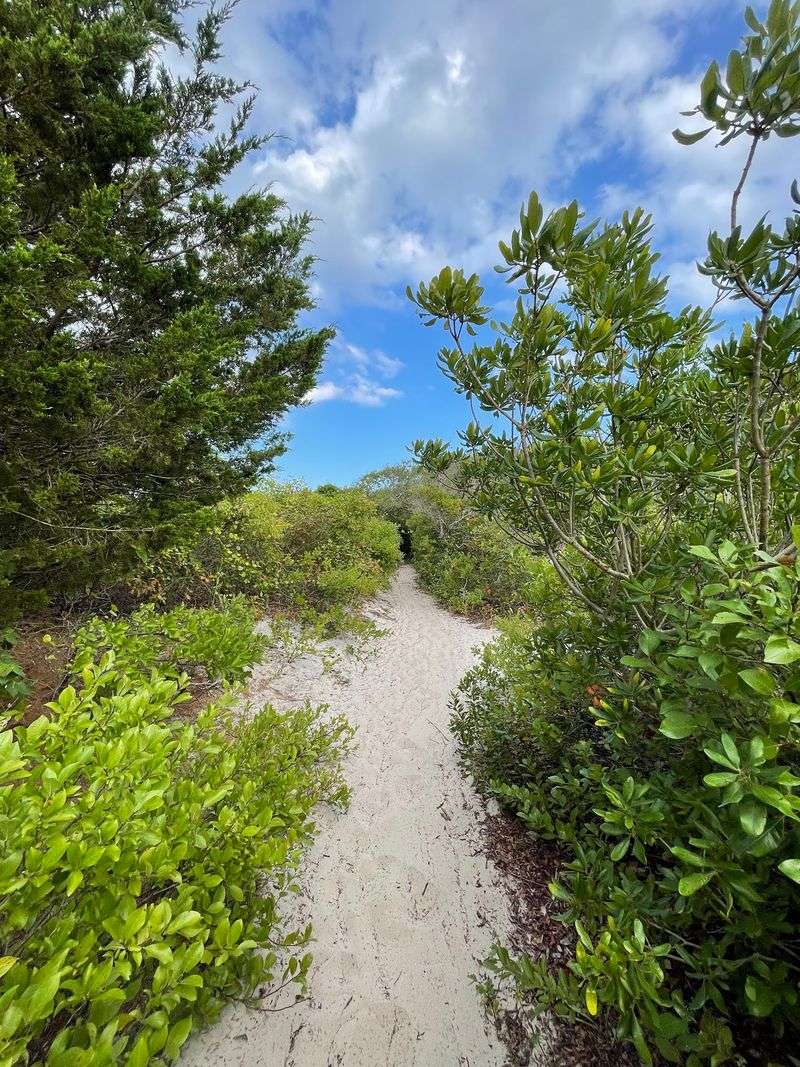
None of the trails here will exhaust you. Each one runs under a mile, which makes them easy to knock out in an afternoon.
What they lack in length, they make up for in variety. Paths thread through rolling dunes, duck into pockets of maritime forest, and open suddenly onto wide salt marshes where the light bounces off shallow water.
The ground stays mostly flat and sandy, so the walking is relaxed rather than strenuous. Good shoes help anyway, since loose sand has a way of slowing your pace.
Fisherman’s Walkway Trail and the Spizzle Creek Bird Blind Trail are two of the better known routes, each leading toward a different edge of the island.
One warning I’d pass along to anyone. Bug spray is not optional on the bay-side paths, especially in warm months, because mosquitoes gather thickly in the sheltered thickets.
Slather it on, walk slowly, and you’ll notice rustling in the brush that most beachgoers drive right past.
Swimming Beaches With Room To Spread Out
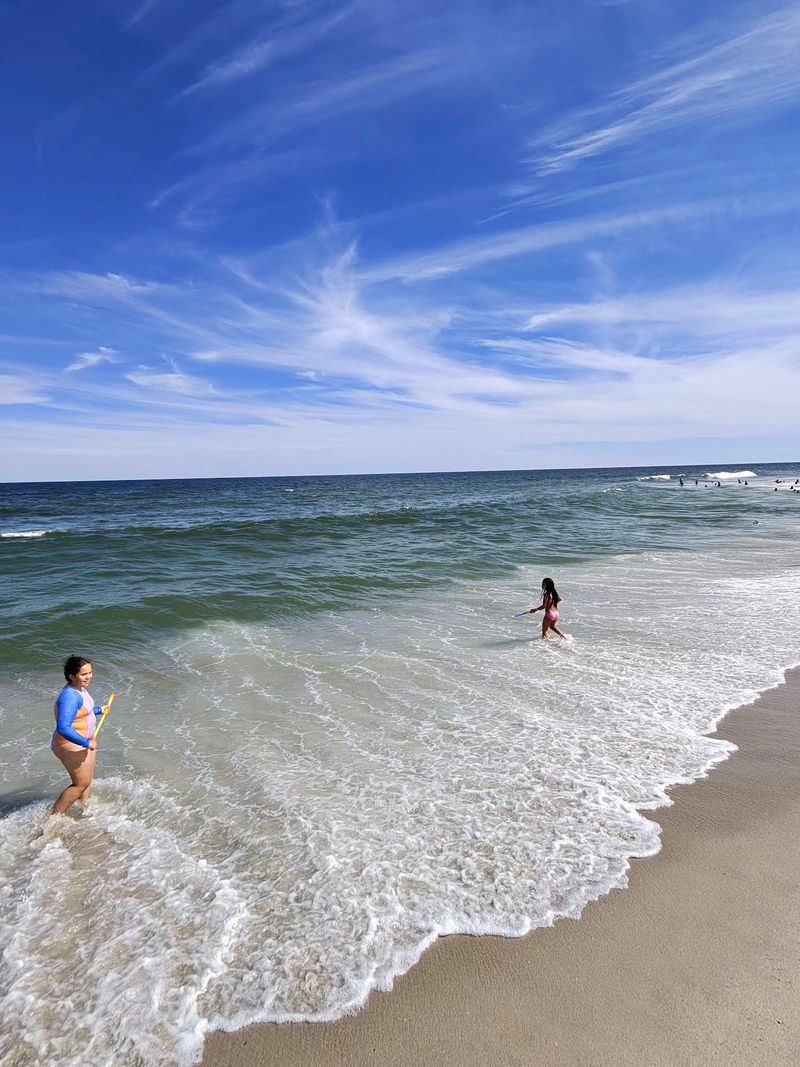
Turquoise. That’s the word people keep reaching for when they describe the water on a clear day, and it isn’t an exaggeration.
About one mile of the ten-mile ocean beach is set aside for guarded swimming during the warmer season, with lifeguards on duty and bathhouses nearby. Two designated swimming areas mean you’re never squeezed shoulder to shoulder.
Facilities are genuinely useful here. Changing rooms, restrooms, showers, and a food concession sit close to the main beach area, which matters when you’ve got kids or a long day planned.
Outside the guarded zone, swimming isn’t permitted, and the schedule tightens after Labor Day, so checking before you go saves disappointment.
The sand itself is fine and soft, though broken shells turn up in patches, making flip-flops a smart call for the walk down.
Waves can run strong and rip currents do form. Staying near a lifeguard stand is the easiest way to keep the day carefree.
Surf Fishing That Locals Take Seriously
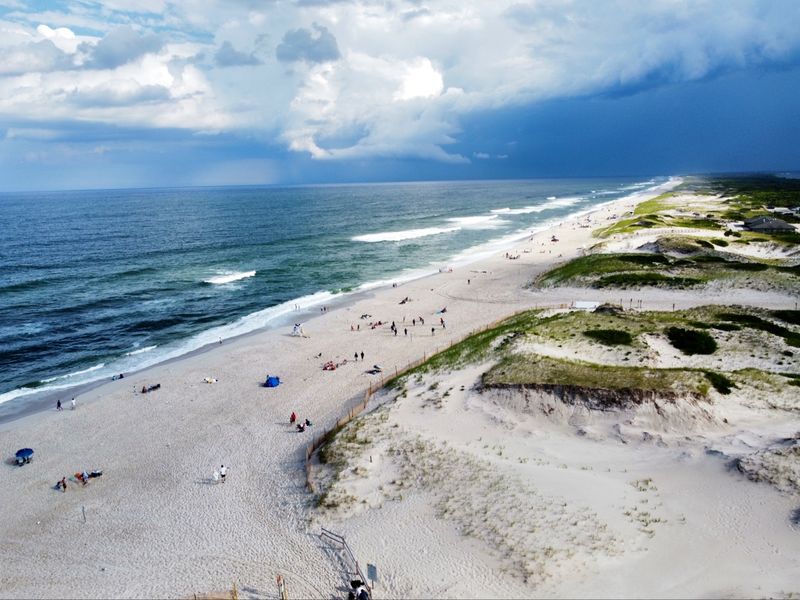
Ask around about this New Jersey park and fishing comes up fast. Surf anglers treat the shoreline as prime territory, and you’ll spot rods planted in the sand at sunrise and again near dusk.
Vehicles with the proper permits can drive onto designated sections of the beach, which is why you’ll see tire tracks running along the sand in places. It lets anglers reach spots far from any parking lot.
Rules apply, and they’re enforced. Mobile sport fishing access requires the right permit and equipment, so reading the current requirements before you drive down saves a frustrating turnaround at the gate.
The southern end near the inlet draws the biggest crowd of regulars, where moving water concentrates fish.
Crabbing happens too, especially on the bay side, and kids with nets seem to have the most fun of anyone.
Even if you never cast a line, watching the routine is oddly calming. Wait, cast, wait again.
Barnegat Bay And The Sedge Island Marine Conservation Zone
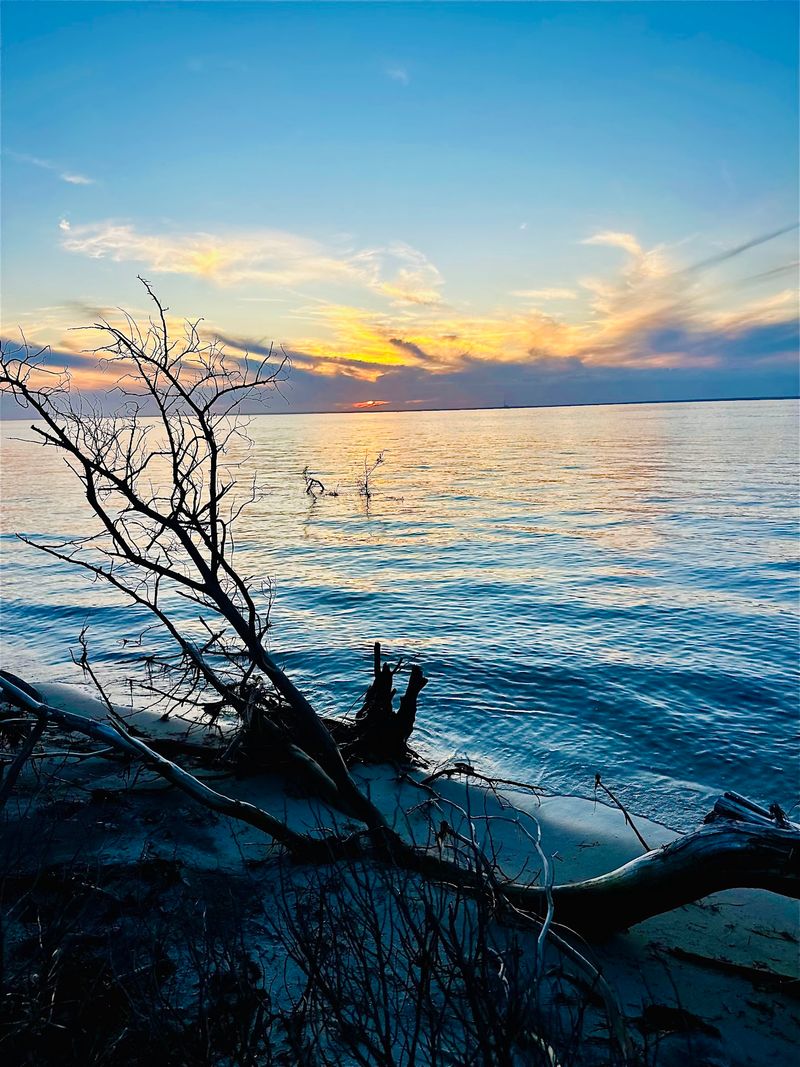
Flip to the western side of the island and the mood changes completely. Barnegat Bay lies flat and shallow, better suited to paddling than pounding surf.
Kayaks, canoes, and paddleboards all work well out there, gliding through channels cut between marsh grass. Herons and egrets stalk the edges, freezing into statues before striking.
The Sedge Island Marine Conservation Zone covers roughly sixteen hundred acres of tidal marshes, creeks, ponds, and open water inside the park. Biologists consider marsh like this among the most productive habitat anywhere, which explains the constant activity.
Sunsets over the bay get all the attention, and fairly so, since the water turns soft pink while the ocean side has already gone dim.
Access points are marked along the main road, and the wind matters more than you’d expect on such calm-looking water.
Check the forecast, pack water, and go slow. Rushing through a marsh defeats the whole point of being there.
Hands On Learning At The Interpretive Center
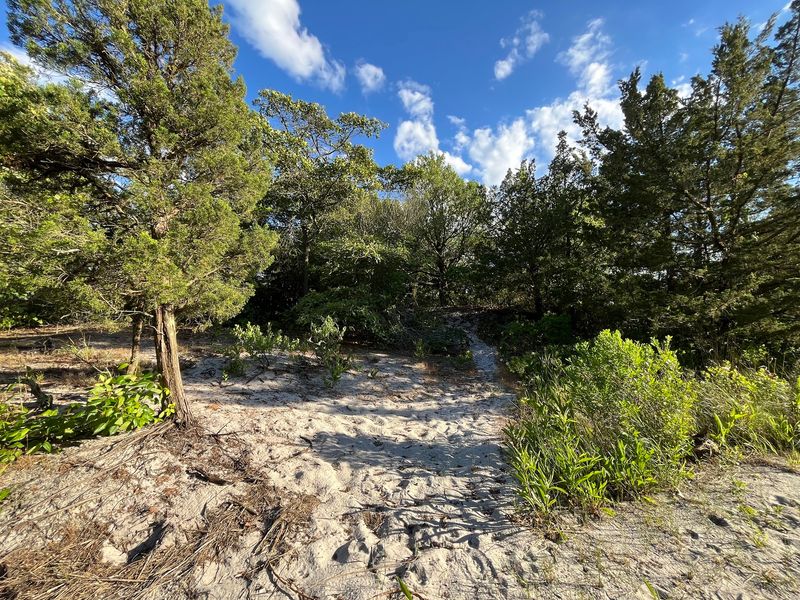
Rainy afternoon? There’s a plan for that.
Interpretive programs run through the park, many based at the Forked River Interpretive and Nature Center, and they lean heavily on doing rather than listening. Touch tank talks let visitors meet creatures pulled from the bay up close.
Seining is another favorite, where groups learn to work a net through shallow water and identify whatever comes up wriggling. Shellfish gardening sessions explain how filter feeders keep bay water clear.
Naturalists lead these programs and clearly enjoy them, happy to identify a shell or an odd feather someone found on the beach.
A small museum on site adds context for free, covering the island’s ecology and its coastal past. Two historic Coast Guard stations, dating to 1901 and 1938, still stand within the park as reminders of how working coastline once looked.
Families with curious kids get the most out of these stops, though honestly, the seining is entertaining at any age.
Lighthouse Views From The Southern Tip

Drive south until the road simply ends. That’s the move.
From the southern tip of the park, a short walk out toward the rocks brings Barnegat Lighthouse into view across the inlet, standing red and white against the sky. Clear days make it look almost close enough to touch.
Photographers tend to linger here, and the reason is obvious once the light starts shifting. Wind-carved dunes, salt-shaped shrubs, and moving water all sit in the same frame.
Sunrise over the Atlantic gives you gold and long shadows across the sand. Evening belongs to the bay, where the colors go softer and cooler.
The jetty rocks can be slick and uneven, so steady footing matters more than a good angle.
Bring a hat, because there’s no shade whatsoever at the point. It’s a fitting end to the drive down Island Beach State Park, a last wide look at the coast before you turn around and head back north.
Seasons That Reshape The Whole Experience
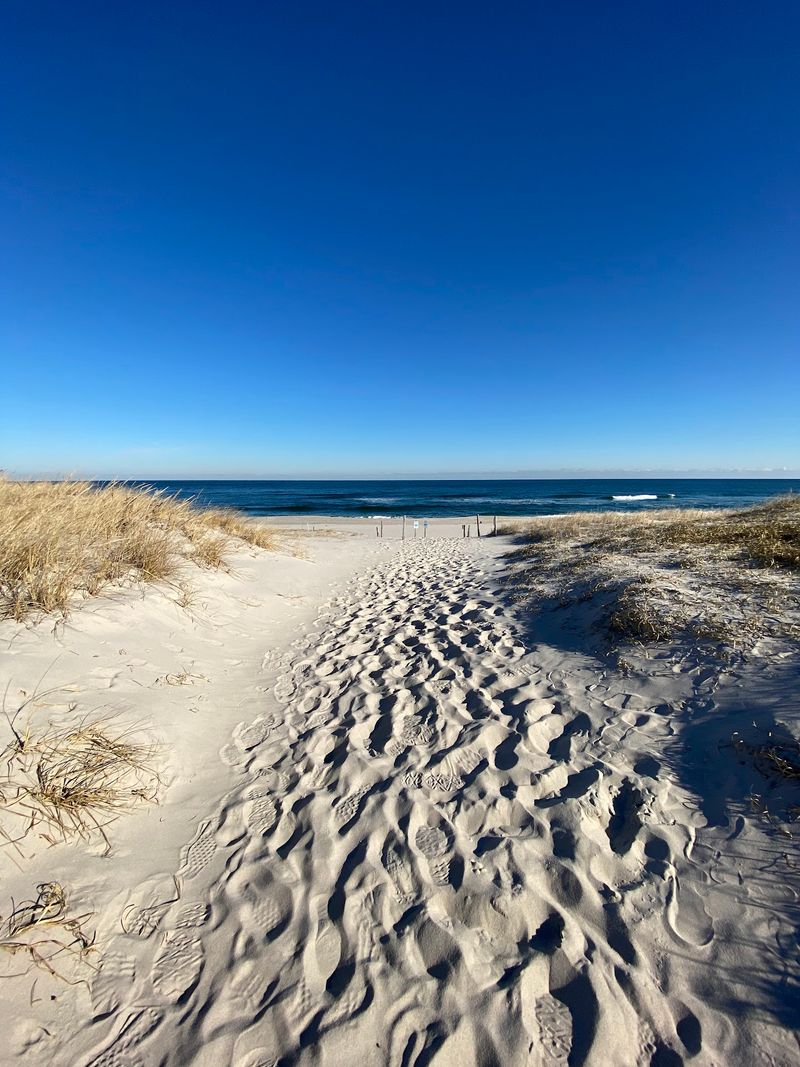
Summer gets the headlines, but the off-season may be the best-kept secret here.
Cooler months empty the parking areas almost completely, and the shoreline turns wonderfully solitary. Spring and fall bring comfortable hiking weather plus the strongest bird activity of the year.
Horseback riding is permitted from October 1 through April 30, covering six miles of ocean beach, with reservations required in advance. Riding along open sand in autumn light sounds about as good as it gets.
Dogs are welcome during the off-season on leash, which makes the park a favorite for anyone traveling with a pet. Rules differ in summer, so confirming current policy before loading the car is wise.
Entry fees apply per vehicle and shift depending on the season and whether you’re a state resident. Bicycles ride in free, and plenty of people park outside the gate and pedal the length of the road.
You’ll find Island Beach State Park at 2401 Central Ave, Seaside Park, NJ 08752, a short hop from the Seaside boardwalk in New Jersey.
