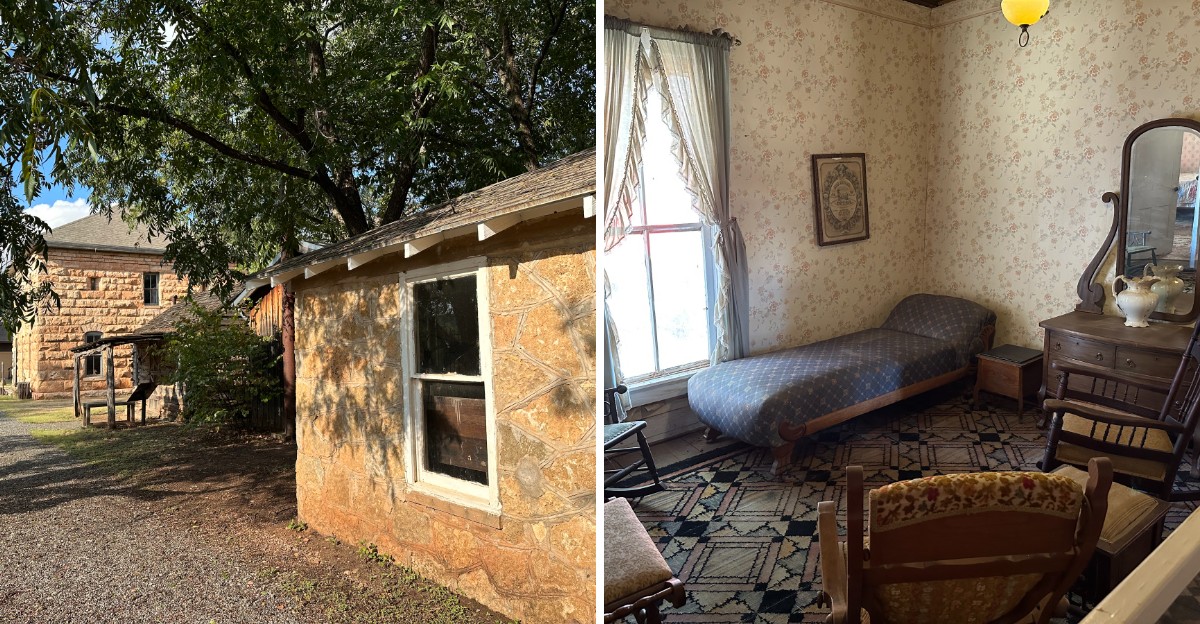
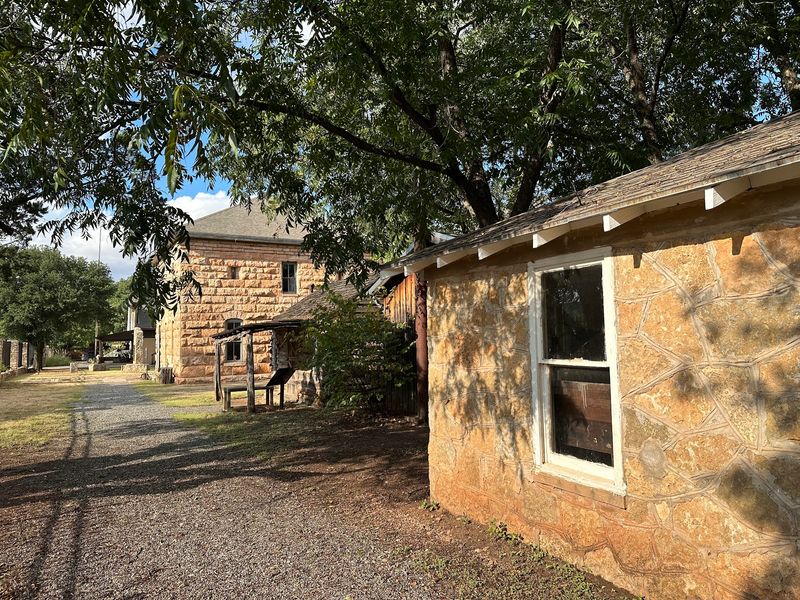
Walking through a village of historic buildings feels like stepping onto a movie set, except everything around you is real, and this Texas spot has gathered structures from different eras and placed them together so visitors can experience what life looked like decades or even a century ago.
The buildings have been carefully preserved and arranged to create the feel of a working town, complete with storefronts, homes, and the kind of details that make the past feel tangible rather than distant.
You can walk the grounds at your own pace, peek inside the structures, and imagine what daily life was like for the people who once lived and worked in them.
It is the kind of place that appeals to history lovers, curious families, and anyone who has ever wondered what their town looked like before everything changed.
Bring comfortable shoes and a camera, because there is plenty to see and even more to think about once you leave.
A Stone Courthouse That Started It All
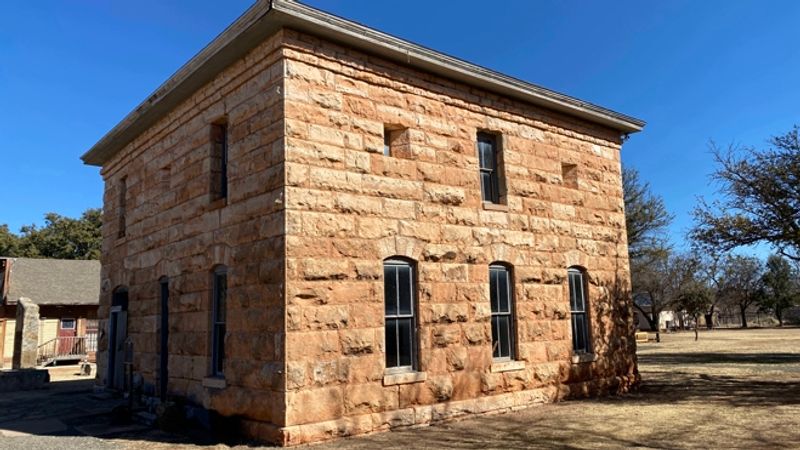
Some buildings just have presence, and the old Taylor County Courthouse has plenty of it. Built from stone in 1880, it still sits right where it was first placed.
That alone makes it special, since many neighbors here were moved in from elsewhere.
For three short years, this was the center of county government. Then the county seat packed up and moved to Abilene, leaving Buffalo Gap with a sturdy building and a lot of history.
Not a bad consolation prize, honestly.
Inside, the layout is simple and surprisingly cozy. A small room downstairs once served as the office for the Judge and County Clerk.
The larger room hosted County Commissioner meetings and trials, so picture farmers, ranchers, and lawmen packed shoulder to shoulder, waiting for a decision.
Right next door stands the old jail. It has a small cell meant for dangerous criminals and a bigger one for everyone else who caused trouble.
Peeking inside gives a pretty clear idea of how tough frontier justice could be.
The courthouse also holds a place in the village story beyond the 1800s. Back in 1956, Ernest Walter Wilson bought the building to show off his personal collection of artifacts.
That small start grew into the whole village seen today.
Start a visit here if possible. Standing in the main room first helps everything else make sense, since the rest of the village grew up around this solid stone heart.
Take a moment, look at the thick walls, and imagine the voices that once filled the air.
The Oldest Cabin in Taylor County
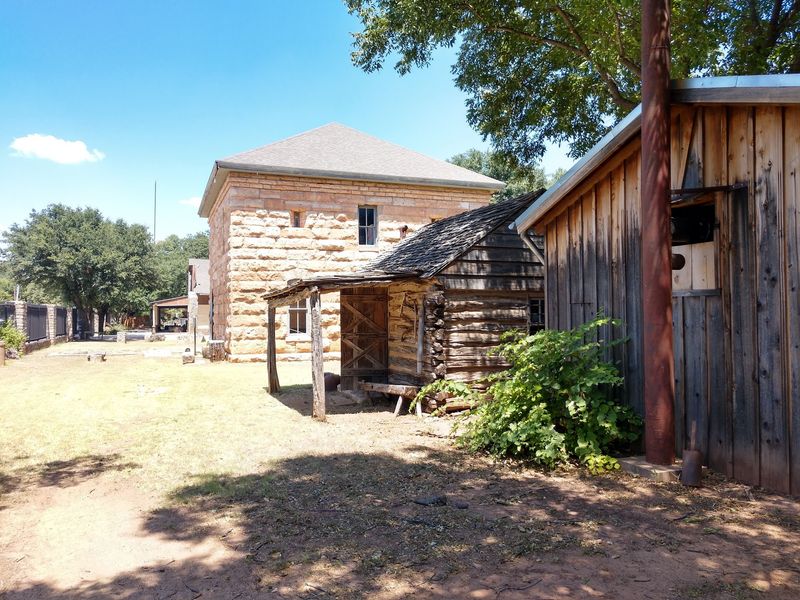
Rough logs, a low doorway, and almost no frills. The Knight-Sayles Cabin dates back to 1875, which makes it the oldest structure in all of Taylor County.
It might be small, but it carries a big story.
Duck inside and the first thing to notice is how little space there is. Families cooked, slept, worked, and probably argued in rooms that would barely fit a modern living room couch.
It puts every complaint about a cramped apartment into perspective pretty quickly.
Look closely at the walls. Each log was shaped by hand, without power tools or delivery trucks.
Settlers used what the land gave them, and that meant hard work from sunrise until well after dark.
Nearby sits the Marshal Tom Hill House, another important home in the village. It was the first house in Abilene built with lumber instead of logs.
Comparing the two side by side is like watching frontier life level up.
That jump from logs to milled boards meant towns were becoming more settled. Sawmills, railroads, and steady trade made it possible.
Suddenly, homes could be a little straighter, a little sturdier, and maybe even a little prettier.
Here is a helpful tip for families. Ask kids to guess where people stored food, clothes, and tools in each house.
It turns a quiet look around into a fun detective game, and it sparks real conversation about how different daily life used to be. Few things make history click faster than seeing how tiny a pioneer bedroom truly was.
Haircuts, Headlines, and House Calls
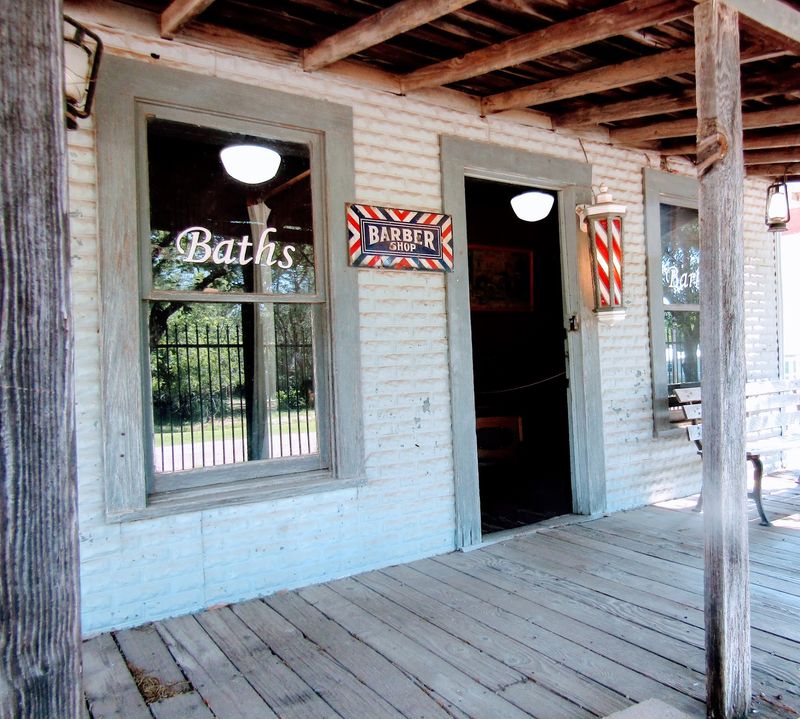
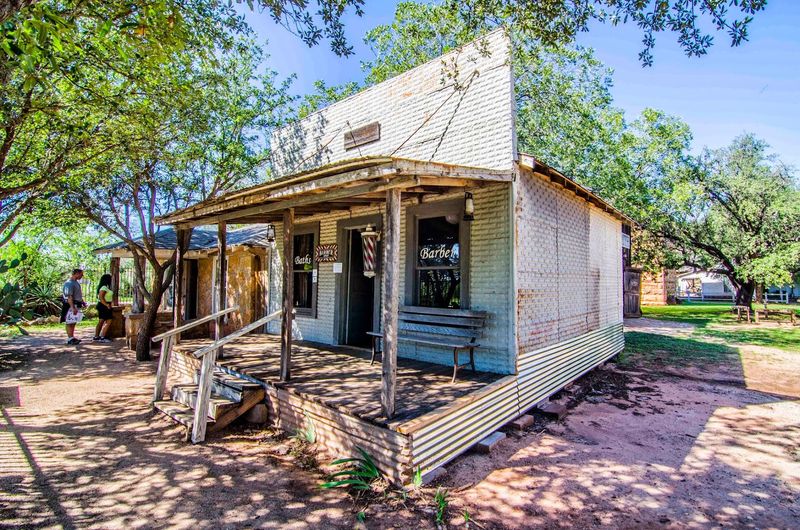
Every small town needs a place to get a trim and catch up on gossip. In the early 1900s, the barbershop handled both jobs at once.
The village version still has that old-time feel, with a classic chair that looks ready for its next customer.
Back then, a haircut came with news about cattle prices, weather, and whose cousin just moved to town. Think of it as social media, only with combs and a lot more talking.
No likes required.
Just a short stroll away sits the doctor’s office. Period instruments and furniture fill the room, and some of those tools look a bit scary to modern eyes.
Medicine on the frontier was simple, risky, and often done with whatever was on hand.
The print shop tells another side of town life. Newspapers, notices, and flyers rolled out of shops like this one, keeping spread-out families informed.
Without it, news would travel only as fast as a horse.
Then there is the post office. Letters, packages, and goods passed through here, linking lonely ranches to the wider world.
A single letter from back home could brighten a whole month.
Spend a little extra time in these buildings. Together, they show how a scattered group of settlers slowly became a real community.
Try imagining a typical week in town, from a doctor visit to mailing a letter. Suddenly, these quiet rooms seem full of footsteps and chatter, and that is exactly the kind of magic this place does best.
Money, Rails, and Gas Pumps
Few places capture a town growing up quite like its bank. The Buffalo Gap Banking Company opened in 1918, after an earlier bank in town had failed.
Folks clearly still believed in this little community, even after a rough start.
It only stayed open until 1923. Still, its original fixtures, furniture, and teller cage have been brought back and set up for visitors to see.
Standing near that cage, it is easy to picture nervous ranchers waiting to talk about a loan.
Look down in front of the building for a neat detail. The letters ANB are carved into the stone, standing for Abilene National Bank.
It is a small clue that money moved through this spot even before 1918.
The train depot tells a bigger story. Railroads changed West Texas fast, connecting tiny towns to faraway markets and travelers.
Cattle, cotton, and people could finally move without weeks of dusty wagon travel.
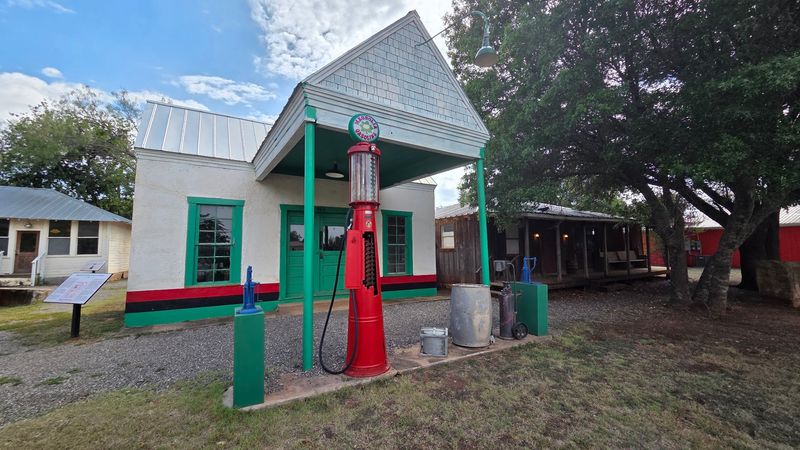
Then there is the old filling station, a favorite for photos. Vintage pumps and signs mark the moment cars started rolling into the picture.
Horses were slowly getting replaced, and towns had to adjust.
Put these three buildings together and they show how the frontier went from wagons to wheels in a surprisingly short time. A good habit is to visit them back to back, since the change in technology really jumps out.
Also, snap a picture at those classic pumps. It is basically a rule, and nobody will argue about it.
Lessons and Hymns Under One Sky
Old school desks have a funny way of making grown adults feel ten years old again. The two-room Cottonwood Flat Schoolhouse does exactly that.
It was built in 1930 and moved here from Scurry County.
Inside, simple desks and basic learning materials show how rural kids got their education. No laptops, no fancy projectors, and probably plenty of chalk dust.
Teachers worked with very little and still managed to teach reading, math, and good manners.
Compare it to a modern classroom and the difference is huge. Students of different ages often shared space, so older kids helped younger ones.
That kind of teamwork was a big part of country schooling.
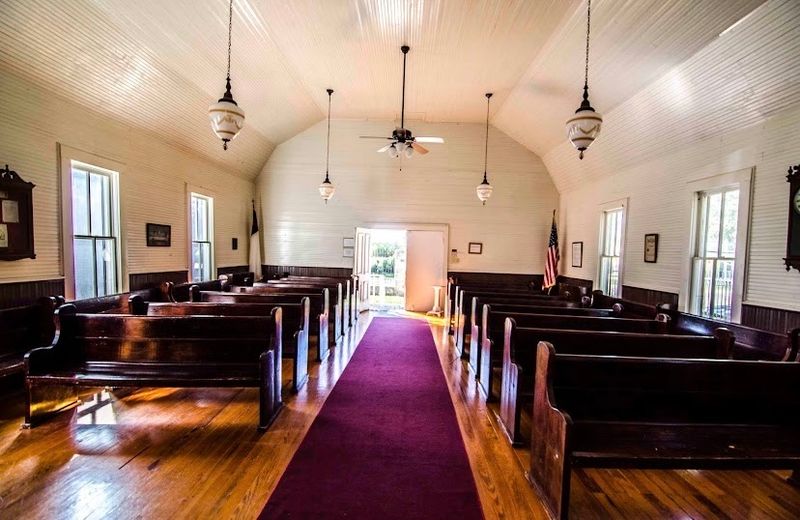
Not far away stands the historic chapel, known as the Nazarene Church. It was more than a place for Sunday services.
Weddings, funerals, and community gatherings all happened here, making it a true center of town life.
The room has a calm, peaceful feeling that is hard to describe. Light comes through the windows, and the noise of the road fades away.
It is a nice spot to pause and rest tired legs.
For families, the schoolhouse is a great place to talk about how school has changed. Ask kids which they would pick, a modern classroom or this one.
The answers can be pretty entertaining. The chapel, meanwhile, offers a quieter moment to think about how faith and friendship helped people survive tough times on the frontier.
Tiny Treasures in Every Corner
More than 9,000 artifacts fill this village, and honestly, that number starts to make sense after the third building. Dr. R.
Lee Rode and his wife Ann bought the property in 1977 and spent over two decades growing the collection. Their hard work shows in every room.
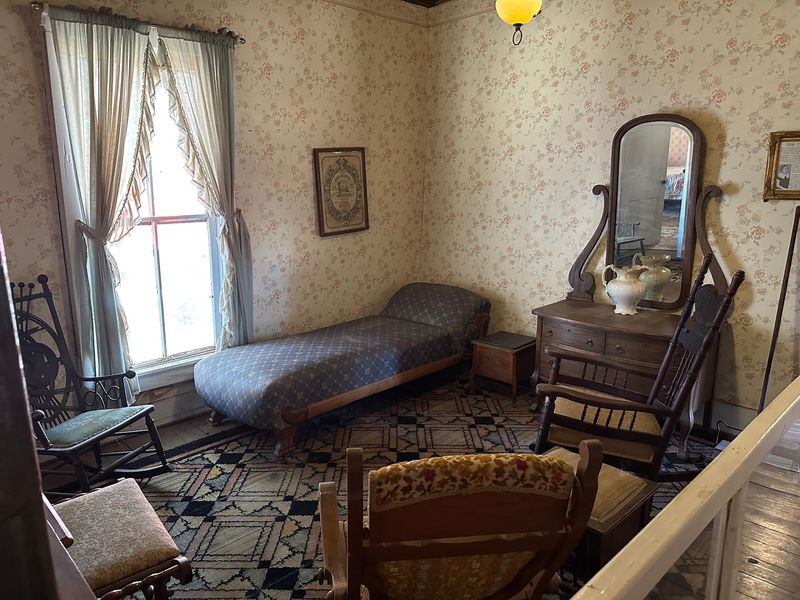
The best part is the small stuff. An old sewing machine sits in one home, while medical instruments line the shelves of the doctor’s office.
In the print shop, heavy presses hint at the noisy work that once happened there.
Frontier firearms are also on display, adding a bit of Wild West flavor. Clothing, kitchen tools, and everyday objects round things out.
Each piece feels like a clue left behind by someone who actually lived this life.
A gallery shows historic maps and artwork from the region. Studying the old maps is a fun way to see how West Texas looked before highways.
Some towns grew, while others quietly disappeared.
Another neat feature is the sound wand. This handheld device plays short narrated stories about the buildings and the people tied to them.
It adds voices to the silence, which really helps everything come alive.
Go slow here. Rushing through means missing tiny details like faded labels, worn handles, and hand-stitched fabric.
Pick one object per building and guess what it was used for before reading about it. That simple trick makes the visit way more fun, especially for curious kids who love solving little mysteries.
A Town Named for Wandering Buffalo
Long before tourists arrived, buffalo herds were the main traffic around here. They moved through a natural gap in the Callahan Divide, and that is how the town got its name.
Simple, honest, and very Texas.
Buffalo Gap traces its roots to the early 1870s. In 1878, it became the official county seat of Taylor County, before that honor shifted to Abilene.
Today, fewer than a thousand people call it home, which keeps things calm and friendly.
The village itself sits at 133 William St, Buffalo Gap, TX 79508, just minutes south of Abilene. Live oaks shade much of the grounds, and that shade is a real gift on a hot summer afternoon.
The whole setting feels relaxed, like the town forgot to hurry.
Across the street stands the Historical Reddell House, built in 1879. It is noted as the oldest house in Taylor County still in its original spot.
Even better, it offers overnight stays, so a day trip can easily turn into a sleepy little getaway.
Driving into town is part of the fun. Rolling hills, open land, and big sky set the mood before the first building even comes into view.
Roll the windows down if the weather allows.
Plan to wander a bit beyond the village gate too. The surrounding streets are peaceful and quaint, perfect for a slow stroll after exploring.
Small towns like this reward visitors who take their time and notice the quiet charm hiding in plain sight.
Planning a Relaxed Day in the Village
Good planning makes a great visit even better, and this village is easy to enjoy with a little prep. The village is open Tuesday through Saturday from 10 a.m. to 5 p.m.
Sundays and Mondays are closed, so plan around that.
Arriving early is smart. It gives plenty of time to explore all the buildings without feeling rushed near closing.
Most people find that a few hours feels just right.
Tickets are handled at the visitor center, where guests usually receive a map for a self-guided tour. The layout is simple to follow.
Matching the map to each building turns the walk into a fun little adventure.
Bring a picnic lunch if possible. There is a covered picnic area, along with modern restrooms, which makes a long afternoon comfortable.
Kids will also spot a small play area, perfect for burning off extra energy.
Wear sturdy shoes, since paths include gravel and uneven ground. A hat and water bottle help a lot during warmer months.
West Texas sun does not mess around.
Keep an eye on the event calendar too. The village hosts happenings like the Scarecrow Festival and a Chautauqua Learning Series, which add extra life to the grounds.
Special exhibits sometimes visit as well, so checking the official website before heading out is a good idea. With a bit of planning, a stop here becomes a slow, happy day spent poking around the past, one creaky doorway at a time.
