Long before highways and rest stops, travelers depended on stagecoach stops for food, shelter, and a place to rest, and this Texas site preserves one of those old inns so visitors can still step inside and see what that life was like.
The building has been carefully maintained, with original rooms, furnishings, and details that bring the past into focus without feeling like a museum display behind glass.
Walking through the old inn gives you a sense of how different travel used to be, when a journey across Texas took days instead of hours and every stop mattered.
Guides share stories about the people who passed through, the stagecoach routes that connected the state, and the role these stops played in shaping early Texas communities.
It is the kind of place that makes history feel tangible rather than distant, and whether you are a history buff or just curious, there is plenty to take in. Stop by, step inside, and imagine what it was like to arrive by stagecoach after a long day on the road.
A Log Cabin With Big Plans
Some of the best stories start small, and this one began with just two rooms. Back in 1834, Henry Fanthorp built a cedar log dogtrot cabin in a place that was still part of Mexico.
A dogtrot, by the way, is two rooms joined by an open breezeway, which helped catch a cool breeze on hot Texas days.
Henry was an English immigrant who asked Stephen F. Austin for permission to settle in his colony in 1832.
He ended up with about 1,100 acres of land. Smartly, he placed his home right where two major stage roads crossed.
That choice changed everything. Travelers kept showing up at his door, hungry and tired after long days on the road.
Henry saw a chance and started offering meals, beds, and goods for sale.
By 1835, the provisional Texas government made him postmaster. Suddenly the cabin was more than a home.
It became a meeting point where neighbors and strangers crossed paths every single day.
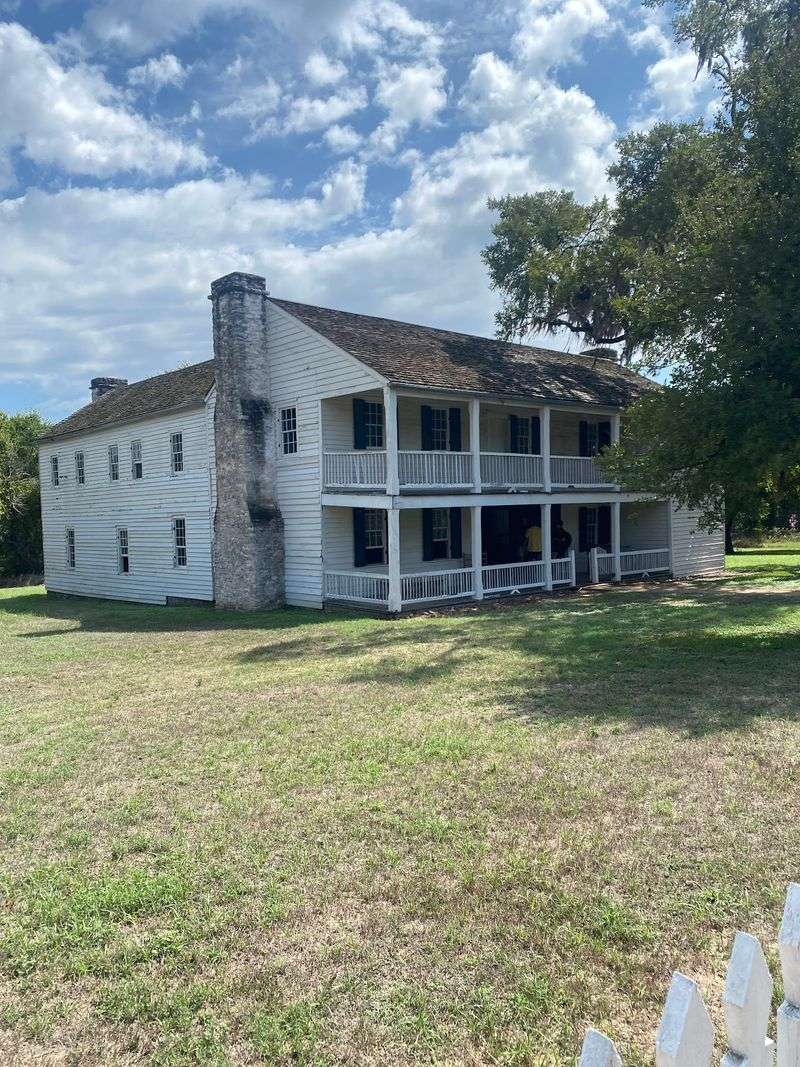
Visitors today can still spot traces of that original cabin inside the larger building. It is fun to imagine a newlywed couple living in those first rooms, with no idea their home would someday host presidents.
Some reports say Henry built the house as a gift for his bride, Rachel, which adds a sweet touch to the tale.
Take a moment to look closely at the older wood and joints. Those humble walls hold the seed of everything that came after, and they make the whole site feel personal.
Four Flags Over One Front Porch
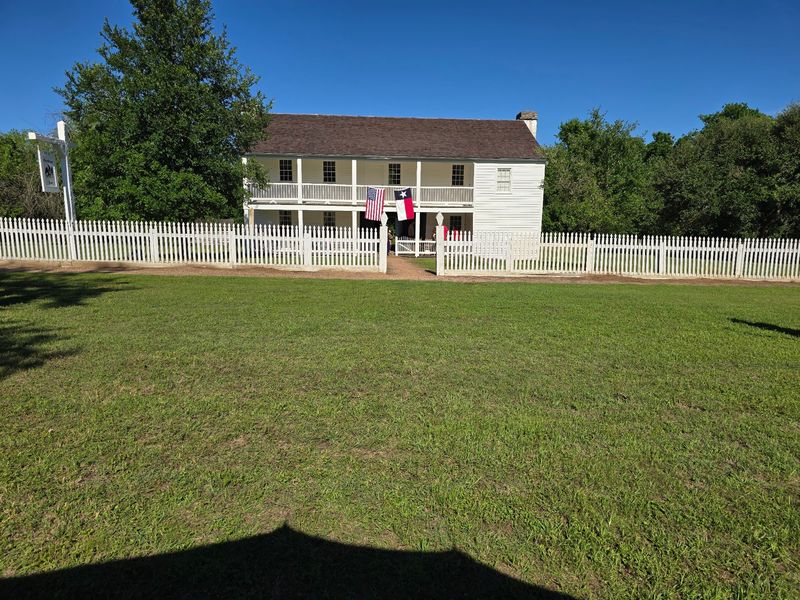
Here is a fun fact to share at dinner. Fanthorp Inn existed under four different national flags and never moved an inch.
Mexico, the Republic of Texas, the United States, and the Confederate States all claimed this patch of ground at different times.
That alone makes the porch worth a long pause. News about wars, annexation, and new laws often reached Anderson through this very building.
Stagecoaches rolled in with letters, newspapers, and gossip, and people gathered to hear the latest.
The inn worked like a small-town hub. It served as a post office, a general store, and a place to sleep.
On top of that, it acted as a polling place, so local folks came here to cast their votes.
Dances and parties happened here too. Picture fiddles, boots on wooden floors, and neighbors catching up after a long week of farm work.
Fun was not optional on the frontier, it was survival for the spirit.
There is one more surprise. The community’s first school began here in the 1840s, which means kids once did lessons in the same place where travelers ate supper.
When visiting, try reading a bit of Texas history before arriving. Knowing about the Republic years and statehood makes every room click into place.
Suddenly the creaky floors start telling stories, and the porch feels like a front-row seat to the birth of a state.
Famous Guests Slept Here
Sam Houston liked this place. He stayed at the inn more than thirteen times, which is a strong vote of confidence from the first president of the Republic of Texas.
He was far from the only big name. Jefferson Davis, Robert E.
Lee, Zachary Taylor, and Ulysses S. Grant are all linked to the inn.
Dr. Anson Jones, the last president of the Republic, also passed through.
One story carries real weight. Kenneth Lewis Anderson, vice president of the Republic of Texas, died at the inn on July 3, 1845.
The town was later renamed Anderson in his honor, so the inn quite literally shaped the name on the map.
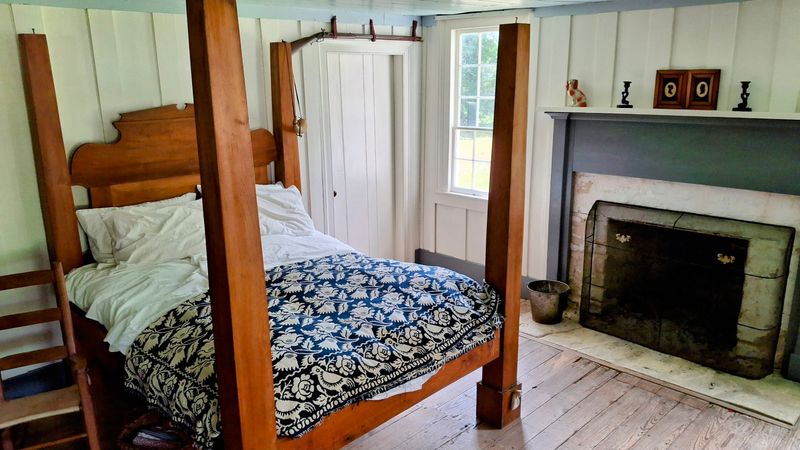
Walking past the guest rooms today, it is easy to wonder who slept in which bed. The rooms are furnished the way they would have looked around 1850.
Simple frames, quilts, and washstands show that even famous travelers roughed it a little.
No room service here. Guests often shared space with strangers, which sounds awkward by modern standards.
Still, a dry bed and a hot meal must have felt like luxury after hours bouncing in a coach.
A good tip is to ask the interpreter about specific visitors. The staff often know little details that make these historic figures feel human.
Hearing that a future general once ate at the same table where guests now peek makes history feel close enough to touch.
Seventeen Rooms of Everyday Life
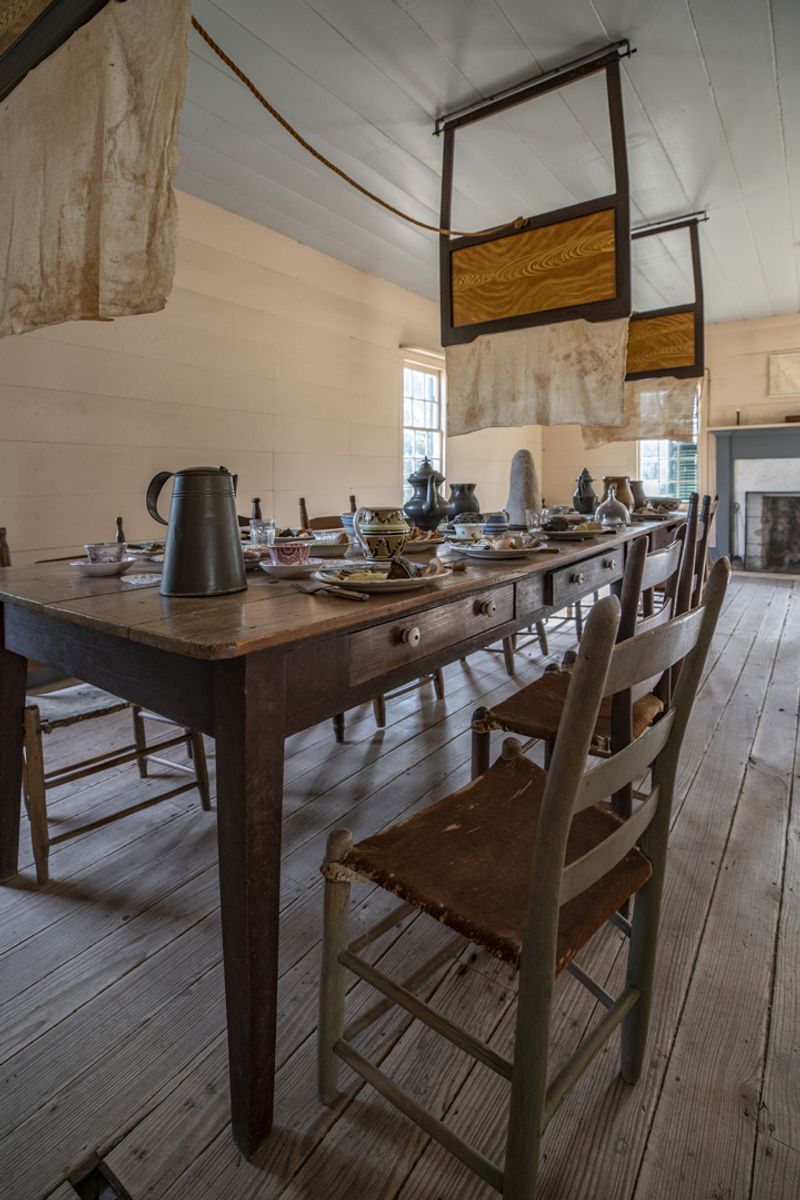
By 1850, the little cabin had grown into a seventeen-room complex. That is a big jump, and exploring those rooms is the heart of any visit.
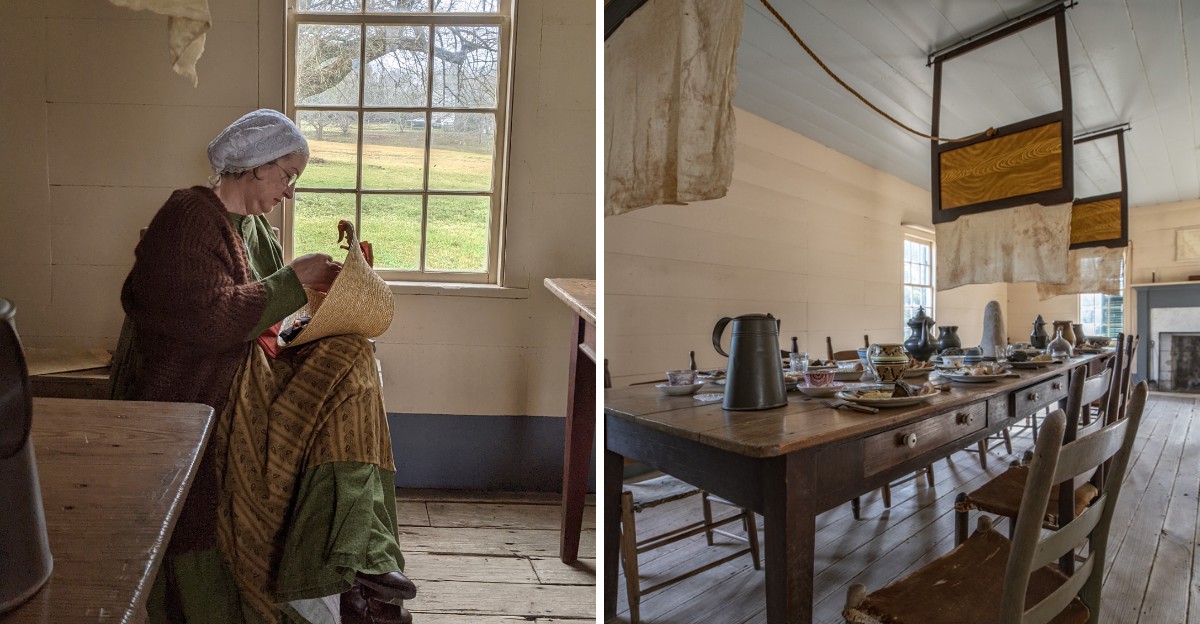
The inn is staged so it feels lived in. A dining table sits set for dinner, with plates and dishes waiting for guests who will never arrive.
Bedrooms are made up, and the parlor looks ready for a quiet evening.
Each space shows a different part of life. Some rooms belonged to the Fanthorp family, while others were for paying travelers.
Seeing both sides side by side shows how a home and a business blended into one.
The mail room is a highlight. It reminds visitors that this building connected people across long distances.
Letters might have taken weeks to arrive, so mail day was a pretty big deal.
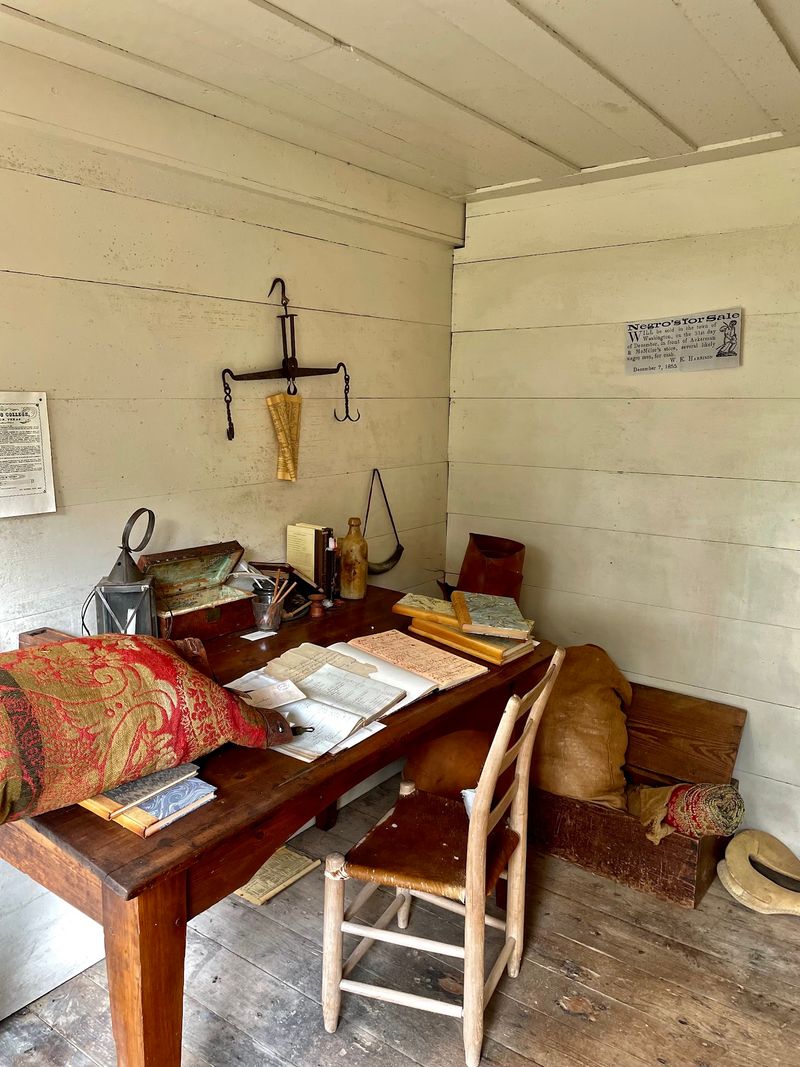
Look for original furniture pieces mixed in with period items. Small details like candle holders, cooking tools, and fabrics paint a picture better than any textbook.
Kids especially enjoy spotting objects and guessing what they were used for.
Plan to move slowly. The tour is not very long, but rushing would miss the charm.
Guides usually let visitors linger in each area for as long as they want.
Bring curiosity and plenty of questions. A good question can turn a simple room into a whole story about how people cooked, slept, and lived before electricity changed everything.
All Aboard the Stagecoach
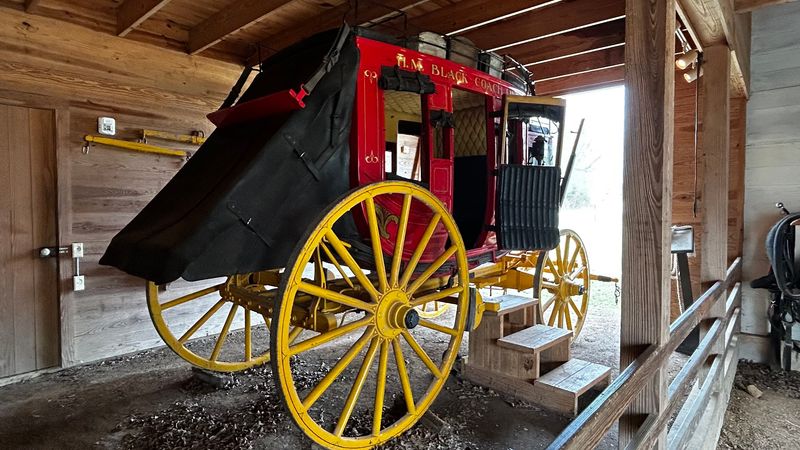
Okay, this part is just plain fun. A replica stagecoach sits on the grounds, and visitors can climb inside and snap photos.
Sitting in the coach gives a quick lesson in travel history. The seats are snug, the windows are small, and it becomes clear that long trips were no picnic.
Now imagine bumping along dirt roads for hours with strangers pressed against both elbows.
On certain days, the site offers rides in a mule-drawn stagecoach. These rides are usually scheduled about once a month, so check the official calendar before planning a trip around one.
Feeling the wheels roll and hearing the mules clop along brings history off the page.
For families, this might be the moment everyone remembers most. Kids love the idea of riding like pioneers.
Adults tend to enjoy it just as much, even if they pretend otherwise.
Photos in the coach make great souvenirs. Try a shot from outside with the inn in the background to capture the full scene.
The contrast of old wood, big wheels, and open sky looks great on camera.
Even without a ride, simply seeing the coach helps explain why the inn existed. These vehicles were the buses of their day, and inns like this were their stations.
One look at the coach and the whole purpose of Fanthorp Inn suddenly makes perfect sense.
Music, Events, and Living History
History sounds different when there is music in the air. During some events, musicians play dulcimers on the inn’s front porch, the same way entertainment drifted through the inn long ago.
The site hosts a range of living history programs throughout the year. Reenactments, demonstrations, and special gatherings help explain daily life in the 1800s.
Some events have focused on Texas foodways, which show how people cooked and ate back then.
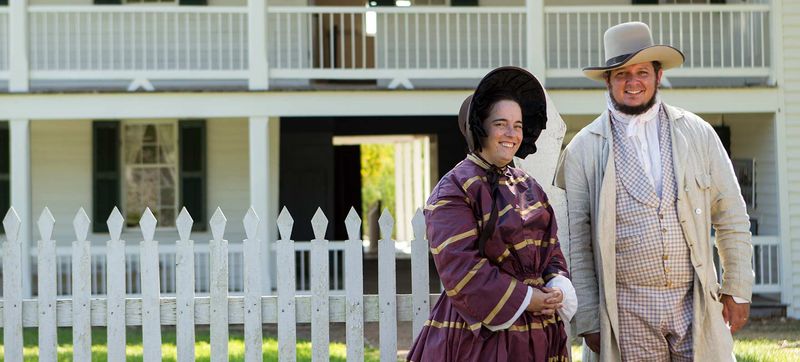
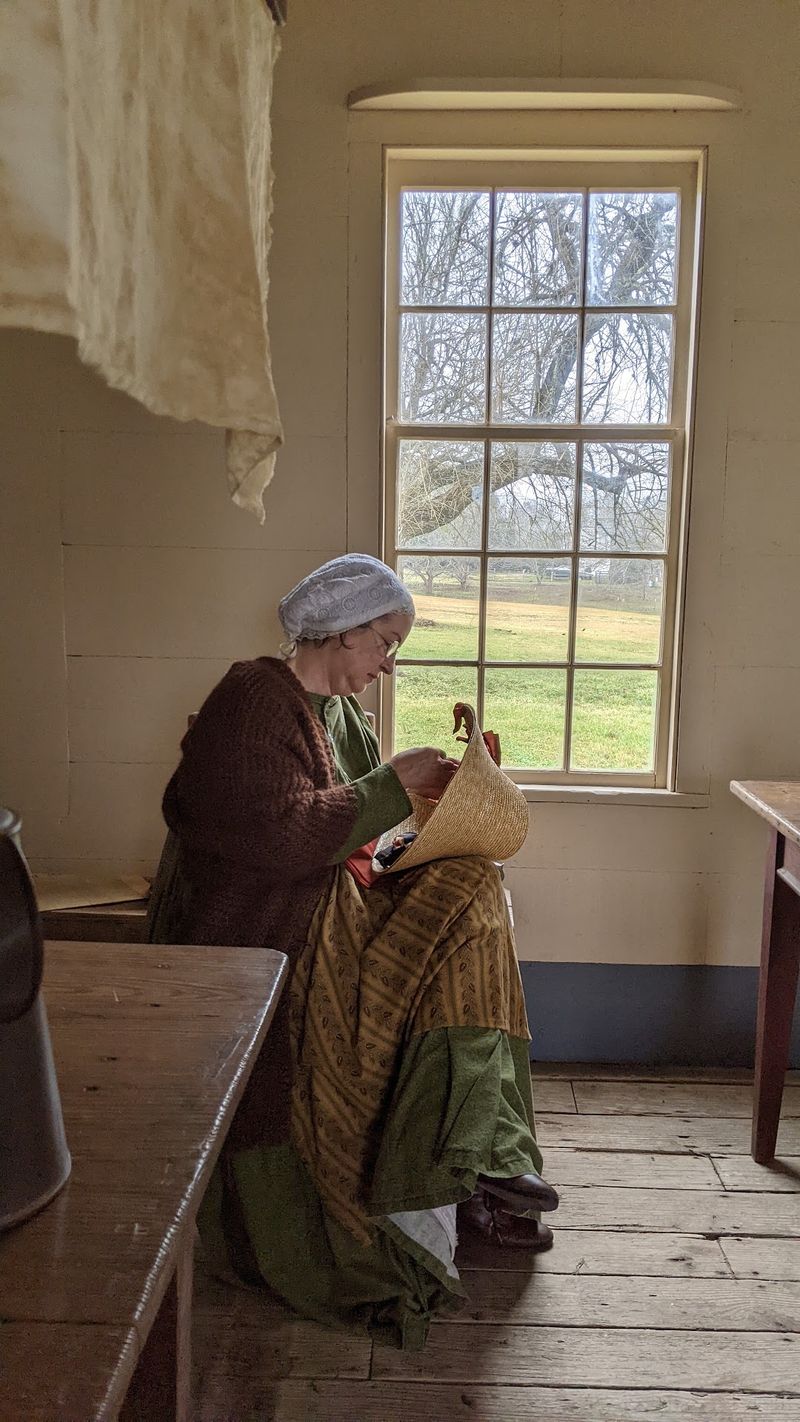
Interpreters sometimes wear period clothing, and it really adds to the mood. Talking to someone dressed like an innkeeper makes questions feel natural.
Before long, the conversation turns into a mini time-travel session.
Seasonal programs are worth watching for. Holiday events and special dances have drawn repeat visitors who look forward to them each year.
Checking the Texas Historical Commission website is the easiest way to see what is coming up.
Events can be busier than regular weekends. Arriving early helps with parking and gives more time to explore before crowds build.
A calm morning is perfect for photos too.
These programs work well for families and school groups. Kids get to see, hear, and sometimes try things instead of just reading signs.
Group tours and school programs can also be arranged by reservation.
Even a short event can make a visit memorable. The sound of strings, the swish of long skirts, and the smell of an outdoor fire create a scene that sticks around long after the drive home.
Bringing an Old Inn Back to Life
Saving an old building takes patience, and this one needed plenty. After Henry and Rachel Fanthorp both died of yellow fever in 1867, their daughter Mary turned the inn back into a private family home.
The house stayed in private hands for more than a century. It remained a residence until 1976.
Then, in 1977, the Texas Parks and Wildlife Department bought the property from a Fanthorp descendant.
What followed was about a decade of hard work. Researchers dug through records, archaeologists studied the ground, and builders carefully restored the structure.
The goal was to make the inn look as it did around 1850, as both a family home and a travelers’ stop.
The effort paid off. The site opened to the public on October 4, 1987, and it has welcomed curious guests ever since.
Today it is managed by the Texas Historical Commission.
Knowing this backstory makes the visit richer. Every floorboard and window frame reflects careful decisions about what was original and what needed repair.
Nothing here happened by accident.
Take a walk around the outside to appreciate the work. Notice the barn, which now holds exhibits about travel and trade in that era.
Across the street sits a small family cemetery, a quiet and respectful spot to pause.
The family cemetery adds a gentle, human note. It reminds visitors that real people built this place, raised children here, and left behind a legacy still standing strong.
Tips for a Smooth Weekend Visit
Timing matters most here. Fanthorp Inn is open only Friday, Saturday, and Sunday, from 10 a.m. to 4:30 p.m., so plan around the weekend.
Find it at 579 S Main St, Anderson, TX 77830, on the south side of this small town. Anderson sits in the rolling countryside of East Central Texas, and the drive itself is pleasant.
Wide fields and leafy trees set a relaxed tone before arrival.
Admission is free, though donations are welcome and help support preservation. Visitors can explore on their own or join a guided tour.
An interpreter is usually on hand to answer questions and share stories.
Most visits take an hour or so. That makes the inn a great break on a longer road trip.
Still, history fans may want extra time to soak in every room.
Accessible pathways connect the parking area, the inn, and the exhibit barn. Outside food and drinks are not allowed inside the historic buildings, which helps protect them.
Pack snacks for the car instead.
Collect a stamp too. Fans of the Texas Historical Commission’s historic sites passport can add a stamp here, and there is a small gift shop to browse.
Comfortable shoes are a smart choice for wandering the grounds. Bring a camera for the stagecoach and porch.
Most of all, bring an open mind. A little imagination turns this quiet inn into a lively crossroads, full of the voices and footsteps of early Texas.
