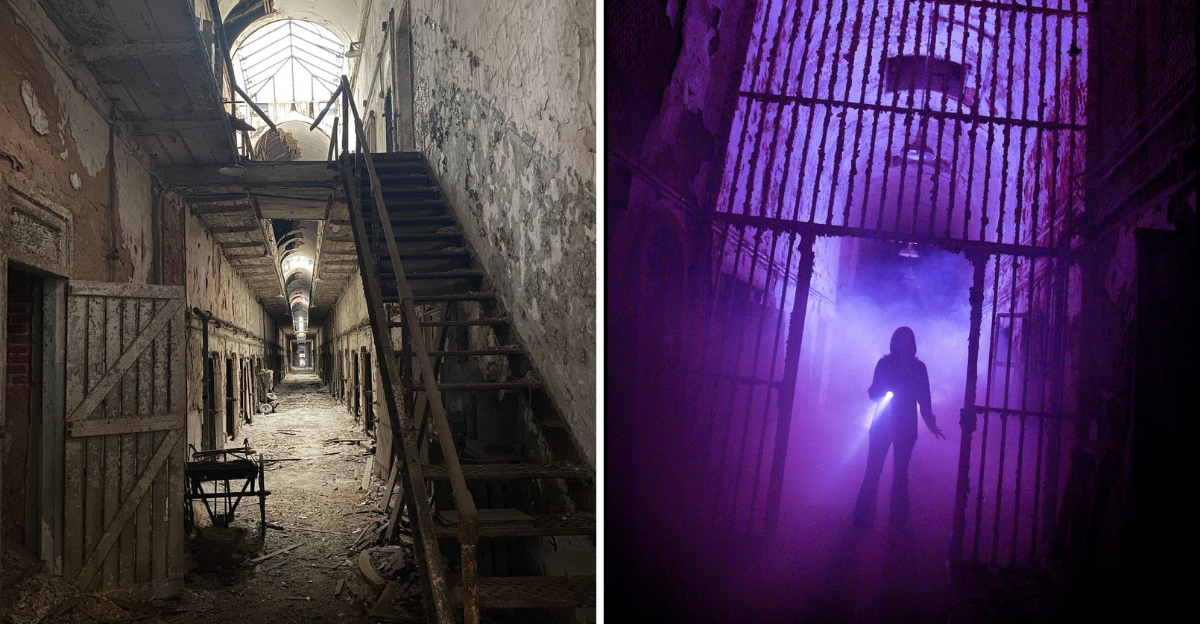
That gray stone wall with pointed towers rises straight out of a row house neighborhood in Pennsylvania, where people water their plants and walk their dogs just a few blocks away.
I had heard about this prison for years, mostly the ghost stories, but nothing prepared me for how quiet it gets once you step past the gate and into those long, peeling cellblocks.
Sunlight drops through broken skylights, paint curls off the ceilings, and your own footsteps sound louder than they should. The building operated from 1829 until 1971, and its radial design was copied by prisons around the world.
I spent nearly three hours wandering with a headset on, listening to stories about the men and women who lived behind those doors, from Al Capone to the thousands of others whose names have been forgotten.
The cellblocks stretch out like spokes on a wheel, and the silence in each one feels different, heavier in some, emptier in others.
Architecture, history, or just a good story will find this place stays with you long after you leave.
A Castle Hiding in a Regular Neighborhood
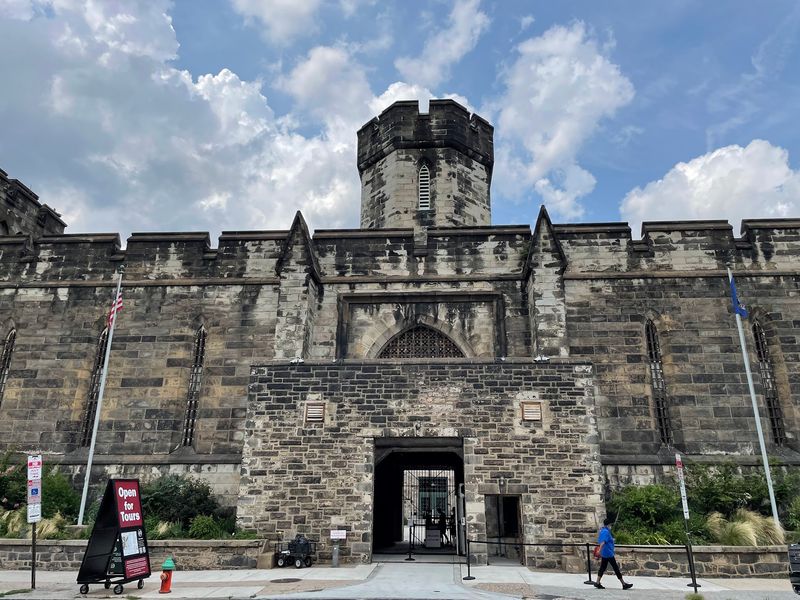
Nobody warns you that the entrance looks like something out of a medieval movie set. British architect John Haviland designed the facade in a Gothic style on purpose, hoping the sheer sight of it would scare people away from crime before they ever went inside.
Those thick stone walls stretch for a full city block, and the turrets are mostly decoration. Real guards watched from towers set further back.
What surprised me most was the setting. Fairmount is a friendly, walkable neighborhood with cafes, bakeries, and kids on scooters, and then this enormous fortress just appears at the corner.
When it opened in 1829, the prison sat on farmland well outside the city center. Philadelphia grew around it over the next century, which is why the contrast feels so odd today.
Give yourself a few minutes outside before buying your ticket. Walk along the exterior, look up at the arched gateway, and notice how the stone changes color where weather has beaten it for nearly two hundred years.
The Rocky steps at the art museum are within walking distance too, so plenty of visitors pair the two in one afternoon.
Cellblocks Built Like the Spokes of a Wheel
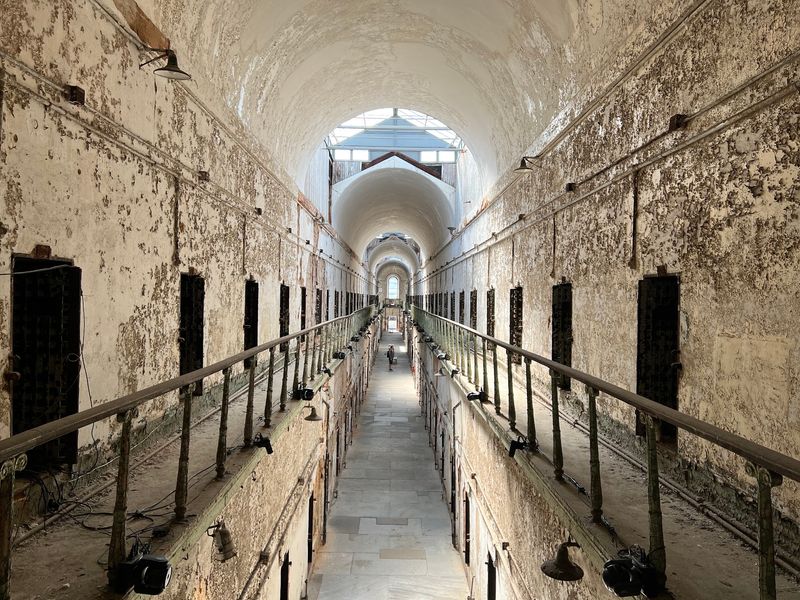
My favorite moment came when I reached the central rotunda and looked down seven corridors at once. Haviland arranged the cellblocks like spokes on a wagon wheel, so a single guard standing in the middle could glance down every hallway without moving his feet.
It was a radical idea in the 1820s. Prisons all over the world copied the layout afterward, from South America to Asia.
The corridors themselves feel oddly beautiful. Barrel vaulted ceilings, tall arched skylights, and long stretches of cracked plaster make the space look more like a ruined church than a jail.
Photographers love it, and honestly I understand why. Light pours through the roof openings and lands in bright pools on the concrete floor.
Walk slowly here and count the doors. Some cellblocks were added later and rise two stories, which tells you how quickly the original plan got stretched past its limits.
Comfortable shoes matter more than you would think. Between the seven original blocks, the added ones, and the outdoor yards, seeing everything means a lot of walking on uneven ground.
Silence Was the Punishment Here
Standing inside one of the original cells changed how I understood this place. Eastern State was built around the Pennsylvania System, sometimes called the separate system, and it was the first true penitentiary anywhere in the world.
The idea sounds almost gentle at first. Give a person total silence and time alone, and they will feel regret and reform themselves.
In practice it was brutal. Inmates stayed in their cells nearly all day doing simple labor like shoemaking or weaving, and when guards moved them anywhere, they placed a hood over their heads so they could not see or be seen.
Each cell had a small private exercise yard out back, used on a strict rotation so no two men were outside at the same time.
The cells came with central heat, running water, a flushing toilet, and a skylight, which was fancier than many Philadelphia homes at the time. That detail still stuns visitors.
Overcrowding eventually broke the system, and by 1913 the prison switched to housing men together. Many who endured long isolation reportedly suffered lasting mental harm.
Al Capone, Slick Willie, and a Dog With a Prison Number
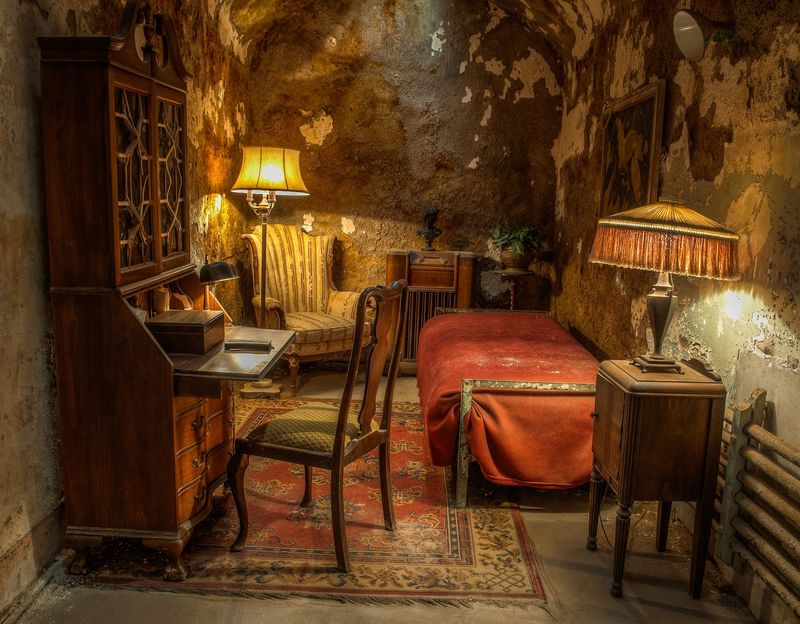
Roughly 75,000 to 85,000 people passed through these gates across 142 years, and a few of their names stuck. Chicago gangster Al Capone served about eight months here between 1929 and 1930, and his cell has been recreated with a desk, a lamp, a rug, and a radio cabinet.
It looks less like a jail and more like a small study. That contrast tells you plenty about how influence worked inside.
Bank robber Willie Sutton, nicknamed Slick Willie, also did time at Eastern State and took part in a tunnel escape attempt that failed. The story gets told along the audio route, and you can see where the digging happened.
Then there is Pep, a dog who was issued an inmate number and supposedly sentenced to life. Historians believe he was actually brought in as a companion animal for the men.
Records show a boy named John Maxfield arrived in 1840 at just eleven years old, one of the youngest ever held here.
Those individual stories are what make the ruins feel human rather than just old.
Twenty Years of Being Left Completely Alone
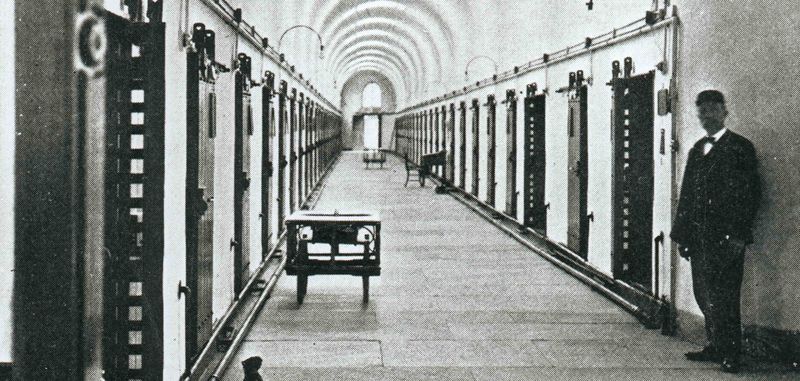
Here is the part that fascinated me most. When the prison closed in 1971, the doors basically shut and everyone walked away for nearly two decades.
Trees pushed up through the exercise yards until a small forest grew inside the walls. Stray cats moved into the cellblocks and multiplied.
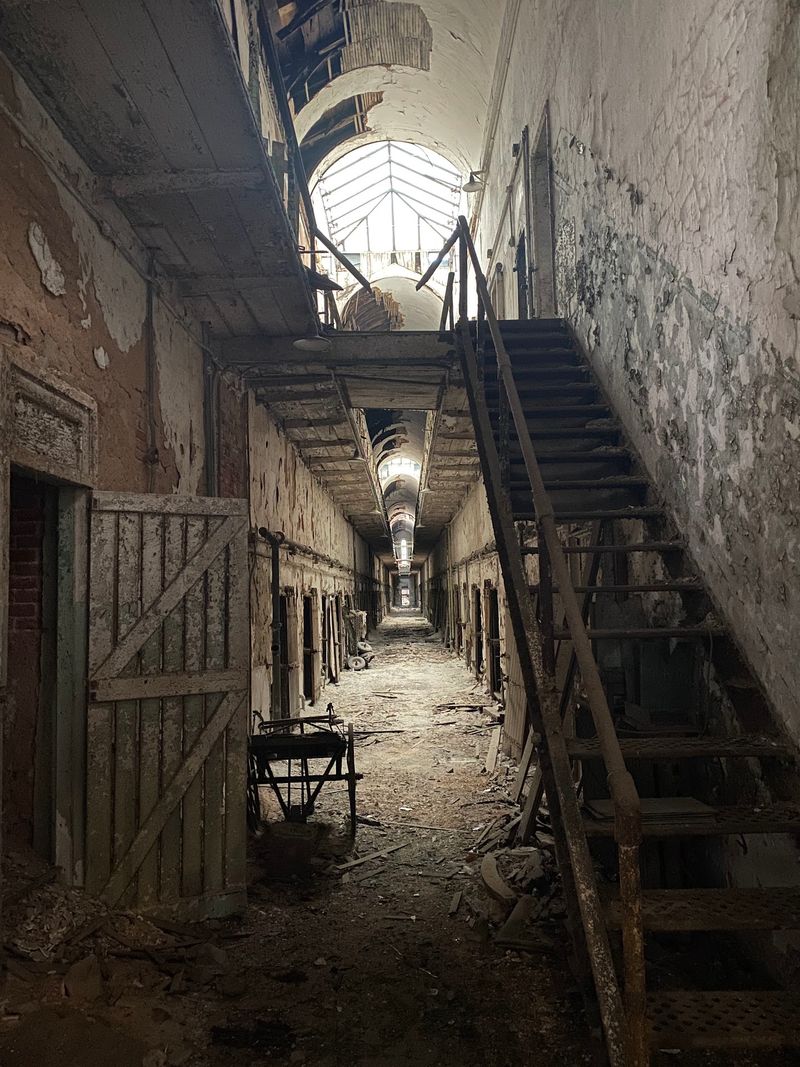
Roofs collapsed, paint peeled in sheets, and plaster fell in piles across the floors. Developers eyed the land, and for a while it looked like the whole complex might be torn down for something new.
Preservation work started in 1988, and public tours opened in 1994. Instead of rebuilding everything to look shiny and new, the site chose what it calls a stabilized ruin approach.
That decision is why your visit feels so raw. Broken toilets, rusted bed frames, and abandoned chairs sit exactly where they were left, with just enough repair work to keep the ceilings from falling on your head.
Several sections remain fenced off and untouched, and you can peer straight into that decay. It is the closest thing to genuine time travel I have found in Philadelphia.
Cold Spots, Shadow Figures, and Cellblock 12
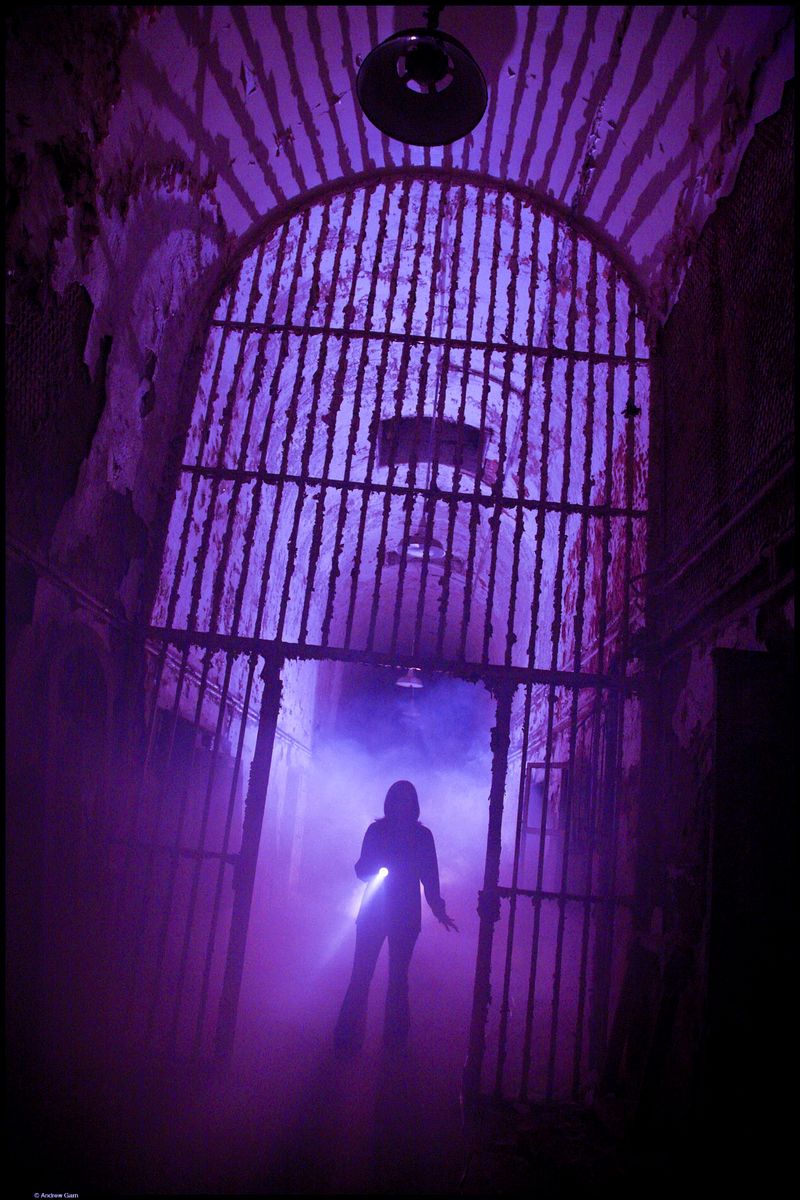
Ghost hunters have been drawn to these hallways for decades, and it is easy to see why the reputation stuck. The building is enormous, mostly dark, and full of doorways that lead into black nothing.
Reported experiences pile up across the site. Visitors and staff describe heavy, sinking feelings in Cellblock 4, and shadow figures sliding along the walls of Cellblock 6.
Cellblock 12 has a reputation for disembodied voices and echoing laughter, while Cellblock 15, the end row block, comes up constantly in paranormal accounts. Pep the dog turns up in the legends too, with claims of howling and jangling tags.
People also mention sudden cold spots, whispering, weeping, and the sensation of being touched. In the early 1990s a maintenance worker described feeling an unexplained force grip him while he worked on a lock.
Whether you believe any of it or not, the atmosphere does something to you. I felt a strange pressure in the solitary cells, and I could not tell if that was history, imagination, or something else entirely.
Planning Your Visit Without Missing the Good Stuff
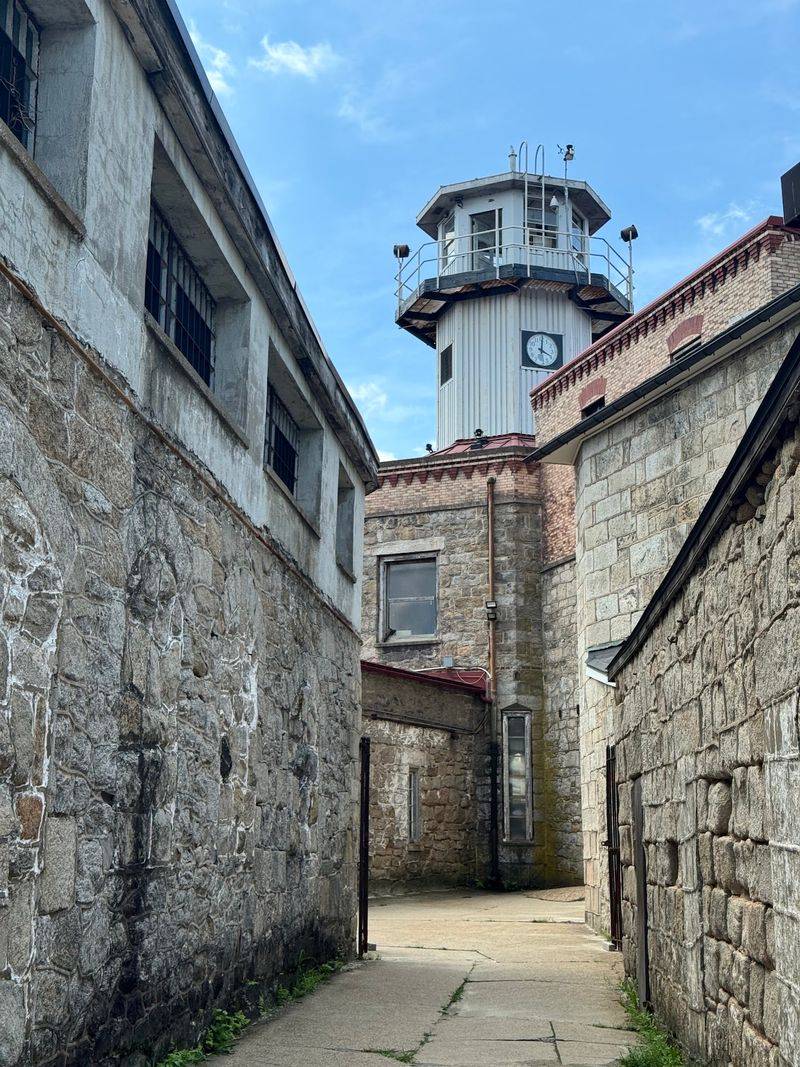
A little planning goes a long way with a site this size. Admission includes a self guided audio tour narrated by actor Steve Buscemi, and it is genuinely one of the best I have used anywhere.
Numbered markers appear along the route, and you punch the number into your handheld player. Optional side stories let you go deeper on topics that interest you.
Staff members are stationed throughout the cellblocks and happily answer questions, and free guide led tours run on a daily schedule. Give yourself at least two hours, though three passes quickly if you read every exhibit.
Doors open at 10 AM and close at 5 PM daily, so arriving earlier means fewer people and quieter corridors. Buying tickets online ahead of time speeds up entry.
Dress for the weather because much of the route is outdoors or unheated, and it stays chilly inside even in warm months. Restrooms are trailer style, and there is no on site parking, though nearby lots and street spots exist.
During autumn the site hosts Halloween Nights, a ticketed after hours haunted event that sells out fast.
Address: 2027 Fairmount Avenue, Philadelphia, Pennsylvania
