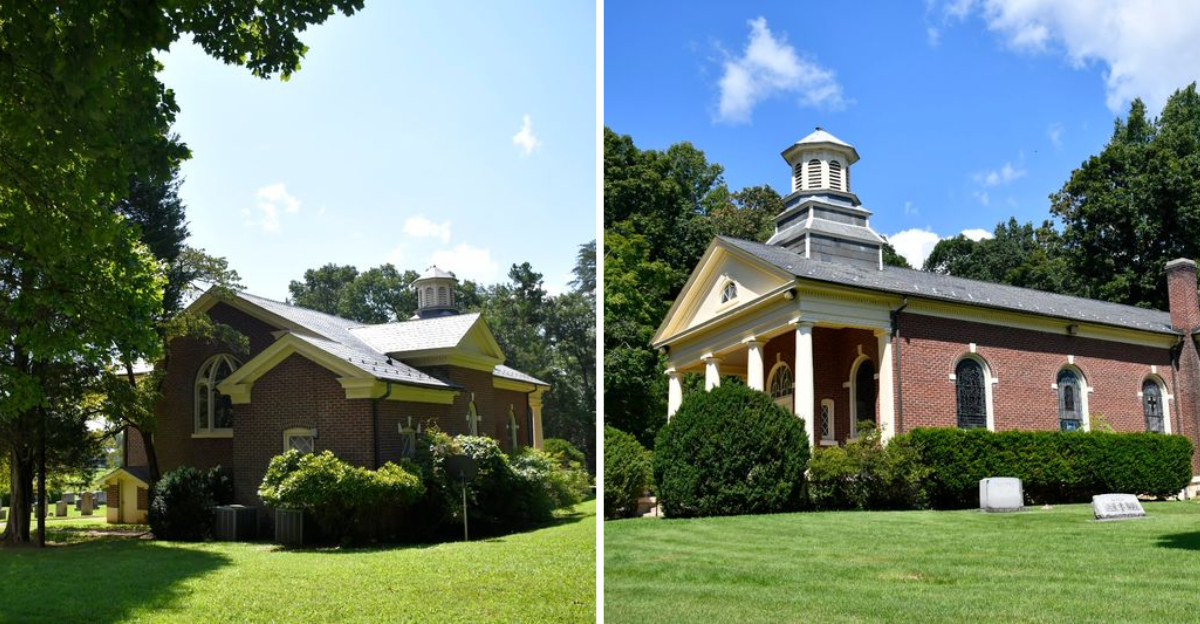
Small churches along the James River usually blend into the landscape, but this one in Virginia stopped me cold. Modest in size, heavy in weight.
Its walls hold stories most history books never fully told. The bricks here connect directly to the lives of enslaved people who built, worshipped, and left their literal marks on this land.
I visited on a calm Sunday morning and left feeling like I had touched something genuinely rare, a place where history is not just remembered but physically present.
The handprints in the bricks, the worn pews, the quiet that settles over everything, all of it spoke louder than any plaque ever could.
The Bremo Slave Chapel: Virginia’s Only Known Surviving Slave Chapel
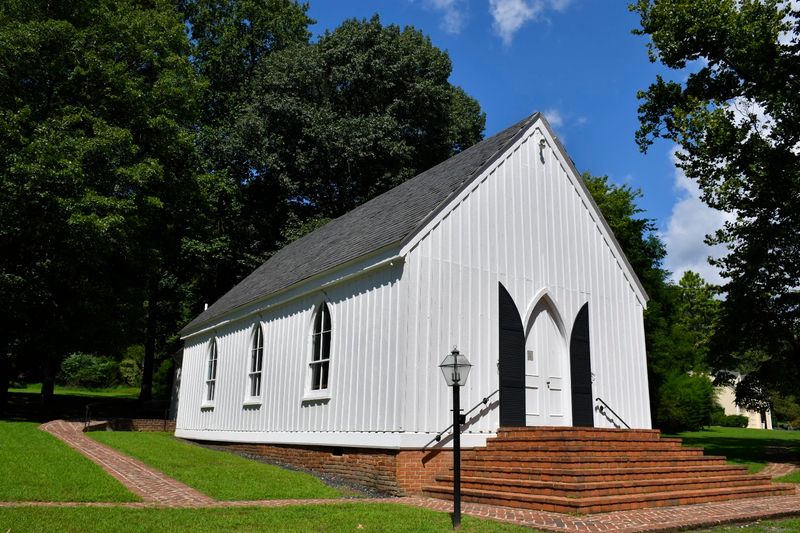
Some buildings carry a silence that speaks louder than any sign or plaque ever could. The Bremo Slave Chapel, now serving as the parish house beside the main church, is one of those places.
Built in 1835 on the Bremo Plantation by General John Hartwell Cocke, it holds the distinction of being the only known surviving slave chapel in all of Virginia.
General Cocke had it constructed specifically for the enslaved people living and working on his plantation. It was originally a board-and-batten Gothic Revival structure, modest in design but enormous in historical meaning.
The fact that it still stands today, moved from its original site between 1882 and 1884, feels almost miraculous.
When it was relocated to Bremo Bluff, the chapel was consecrated as Grace Church and served as the main place of worship until 1924. A brick foundation was later added, and the front elevation received a new brick facing in 1966.
Those layers of change tell their own story about how communities hold onto the past while still moving forward.
Visiting this chapel is not a dramatic experience in the way tourist attractions often are. It is quieter than that, more personal.
You find yourself standing near a structure that once gathered people who had no legal rights, no freedom, and yet created something that outlasted the system that oppressed them.
That kind of permanence is hard to put into words, but you feel it the moment you see the building.
General John Hartwell Cocke and the Complicated History of Bremo Plantation
History rarely gives us simple villains or simple heroes, and General John Hartwell Cocke is a perfect example of that uncomfortable truth.
He was a slaveholder who publicly expressed opposition to slavery, a contradiction that defined much of his life and the legacy he left behind at Bremo Plantation.
Cocke believed in providing religious instruction and some form of education to the enslaved people on his property, which was genuinely unusual for the era.
At the same time, teaching enslaved people to read or write was illegal in Virginia, so whatever learning happened at the chapel had strict limits imposed by law.
He worked within a brutal system while claiming to oppose it, and that tension is woven into every wall of the structures he had built.
The enslaved laborers at Bremo Plantation were highly skilled. They were masons, carpenters, and craftspeople who cleared land and constructed buildings of real quality.
Their expertise was not accidental. It was developed, practiced, and passed down, even within a system designed to deny them ownership of anything, including their own labor.
Understanding Cocke’s contradictions does not excuse them. What it does is make the history richer and more honest.
The chapel he built for enslaved worshippers still stands today, which means the people he claimed to care about, in his limited and flawed way, ended up leaving a more lasting mark on this land than almost anything else.
That irony is worth sitting with for a moment.
Skilled Enslaved Masons and the Bricks That Still Bear Their Marks
There is something deeply human about a handprint pressed into clay before it hardens.
It is not a signature in any formal sense, but it is undeniably personal, proof that real hands shaped this material before it became part of something permanent.
Across Virginia and much of the American South, handmade bricks from the 18th and 19th centuries carry exactly these kinds of marks left by the enslaved laborers who produced them.
At Bremo and throughout the region, enslaved people were not unskilled workers doing simple tasks. Brick-making required knowledge of clay composition, firing temperatures, and timing.
Masons had to understand structural weight, mortar ratios, and how to lay courses that would last for generations. The people who built these structures were craftspeople in every meaningful sense of the word.
The handprints found on historic bricks are sometimes accidental, a hand pressed against wet clay while stacking or moving it. Other times they appear more deliberate, a thumb pressed in, fingers dragged across the surface.
Either way, they humanize the labor in a way that written records often fail to do. You are not looking at statistics or property inventories.
You are looking at a person’s actual hand.
Recognizing this history at sites like Grace Episcopal Church changes how you see the building itself. The walls are not just architectural features.
They are records of human effort, skill, and presence that survived long after the people who made them were denied the chance to be remembered by name. That is a powerful thing to carry with you.
The 1926 Brick Church: A New Building Rooted in Local Hands
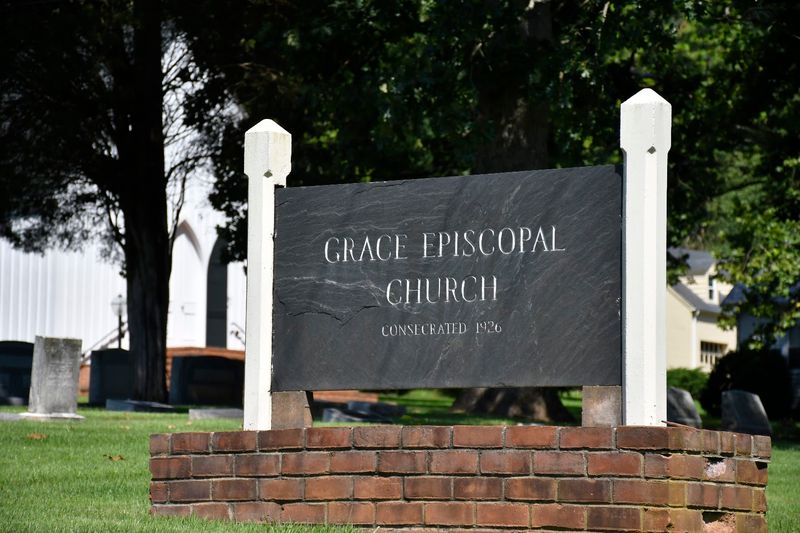
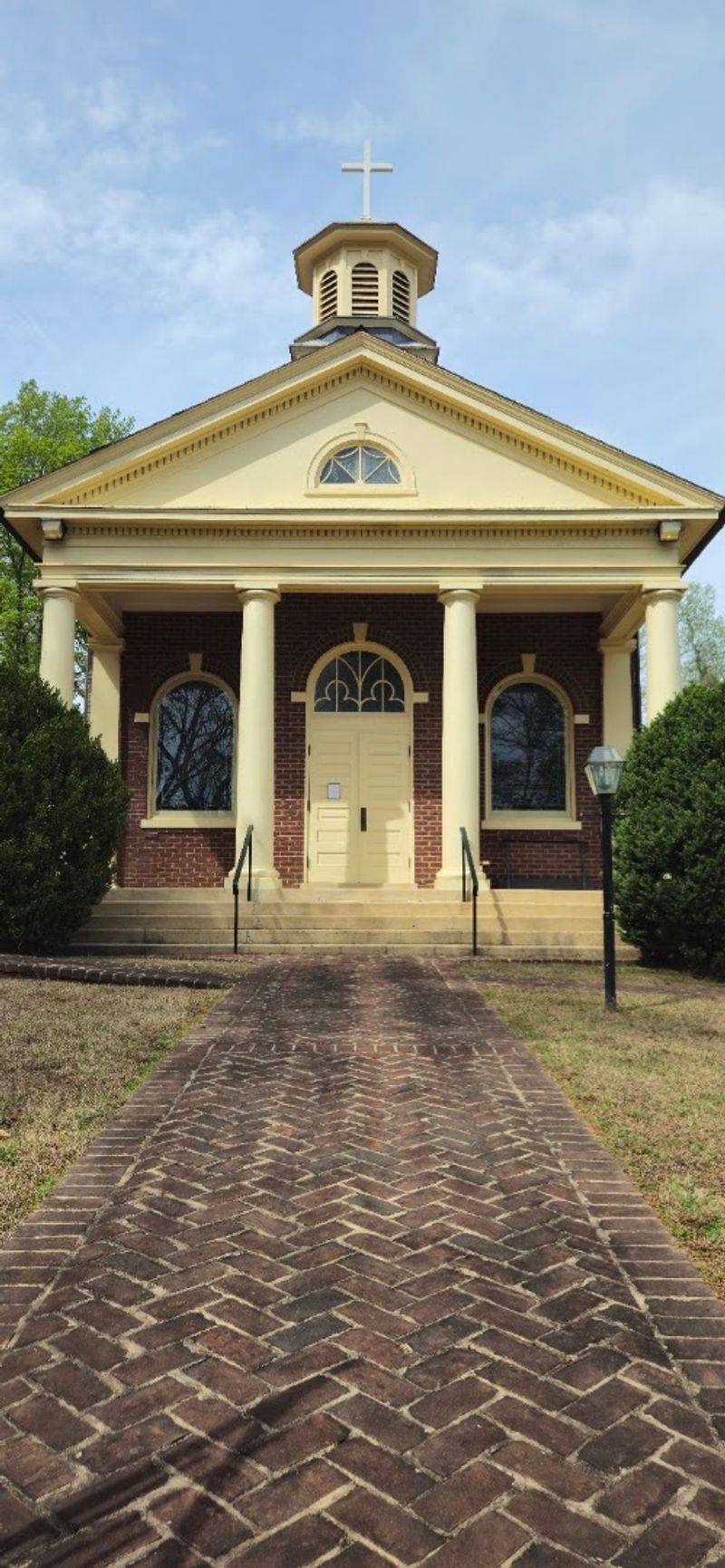
By the early 1920s, the congregation at Grace Church had outgrown the old chapel, and plans moved forward for a new, larger brick structure on the same property.
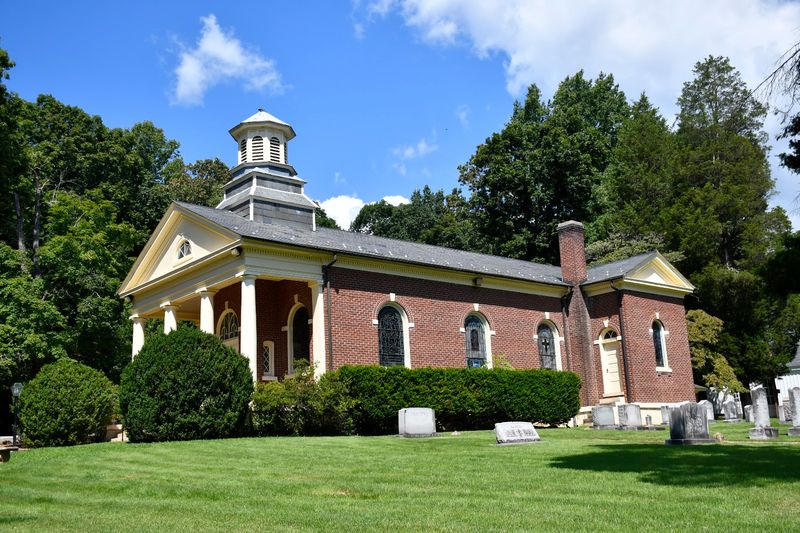
The current Grace Episcopal Church was completed in 1926 and dedicated on May 16 of that year, becoming the main place of worship for the community.
The construction was led by Samuel T. Ranson and William H.
Ranson, with master builders Grover Clements and R.A. Shipp overseeing the work.
A local mason named Rowdy Blackburn handled the bricklaying, bringing genuine skill to a building that the congregation clearly intended to last.
These names matter because they remind us that local craftsmanship, carried by real individuals with specific expertise, shaped this place.
The building itself is modest and unpretentious, which somehow makes it more appealing. It does not try to impress you with scale or ornament.
It sits comfortably in its rural setting along the James River, looking like exactly what it is: a community church built to serve people who needed a steady place to gather.
What makes visiting the 1926 church meaningful is its relationship to the older chapel beside it. Together, the two structures tell a longer story about this community, spanning nearly a century of change, loss, and continuity.
The newer church carries forward a tradition started in a place built for people who were never supposed to be remembered. That connection is quiet but unmistakable once you know what you are looking at.
Visiting Grace Episcopal Church: What to Expect in Bremo Bluff
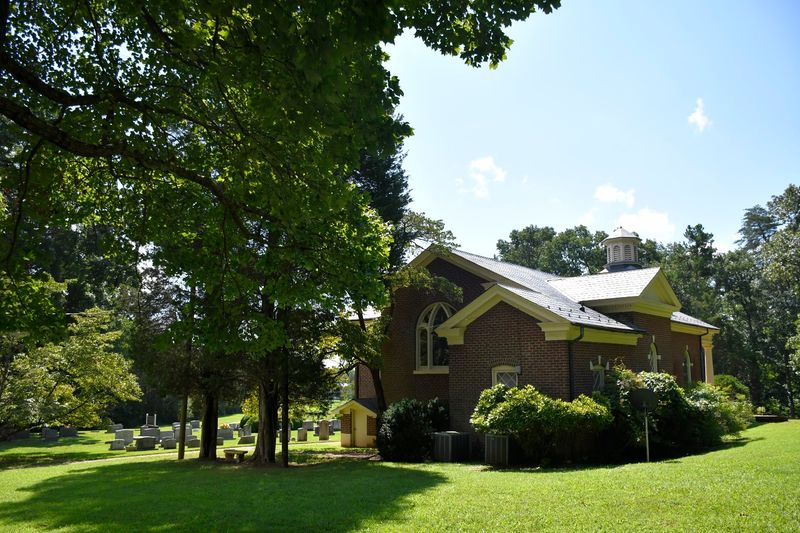
Bremo Bluff is not a place most people pass through by accident. It sits in Fluvanna County along the James River, about an hour west of Richmond, and the drive there already sets a certain mood.
The landscape opens up into farmland and woodlands, and the pace of things slows down noticeably before you even arrive.
Grace Episcopal Church is located at 754 Bremo Bluff Road. Sunday services run from 11 AM to 1 PM, and outside of that window the grounds are generally quiet.
The church is small, the parking area is simple, and there are no tourist facilities to speak of. That is actually part of what makes it worth visiting.
The two structures on the property, the 1926 brick church and the older Bremo Slave Chapel now used as the parish house, are close together and easy to observe from the grounds. The chapel in particular rewards a slow look.
Its exterior tells the story of its changes over time, from its original board-and-batten form to the brick additions that came later.
If you are someone who finds meaning in quiet historical sites rather than polished visitor centers, this is your kind of place. There is no narrated tour, no gift shop, and no crowd.
What there is, is a genuinely rare piece of American history sitting in a small Virginia town, largely undisturbed. Bringing some background knowledge before you visit helps a lot.
The more you know going in, the more the place gives back.
Why This Place Matters: Memory, Labor, and the Walls That Outlasted Silence
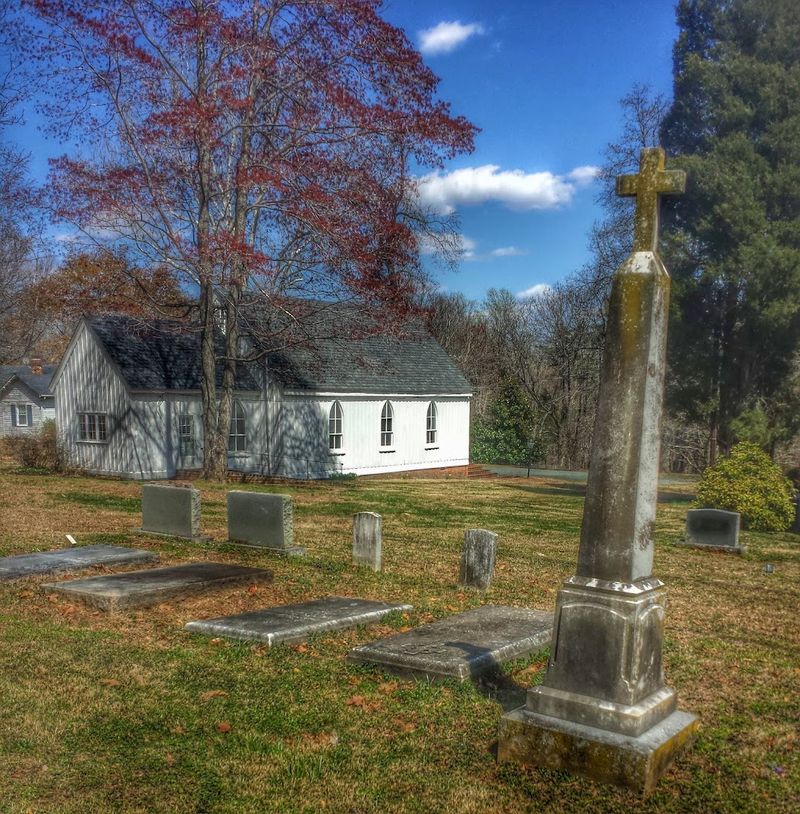
Places like Grace Episcopal Church matter precisely because they are not famous. No major highway sign points toward them.
No blockbuster documentary has made them a household name. They exist in a kind of quiet historical dignity that requires you to seek them out, and that seeking feels appropriate given what happened here.
The Bremo Slave Chapel is the only known surviving slave chapel in Virginia. That fact alone should stop you for a second.
Out of everything built during that era for enslaved people across the entire state, this one structure made it.
It survived not because someone preserved it perfectly from the start, but because communities kept finding reasons to maintain it, repurpose it, and hold onto it.
The handprints on historic bricks throughout the region are a similar kind of survival. They were not meant to be preserved.
They were accidents of the firing process, moments of physical contact that got baked into permanence. And yet here they are, still legible, still human, still pointing back at real people whose names are mostly lost to us.
Visiting a site like this is not about feeling guilty or performing a kind of historical grief. It is about paying honest attention to what the past actually looked like, who built things, whose labor made permanence possible, and whose stories got left out of the official record.
Grace Episcopal Church in Bremo Bluff offers a rare chance to look at all of that directly.
Address: 754 Bremo Bluff Rd, Bremo Bluff, VA 23022
