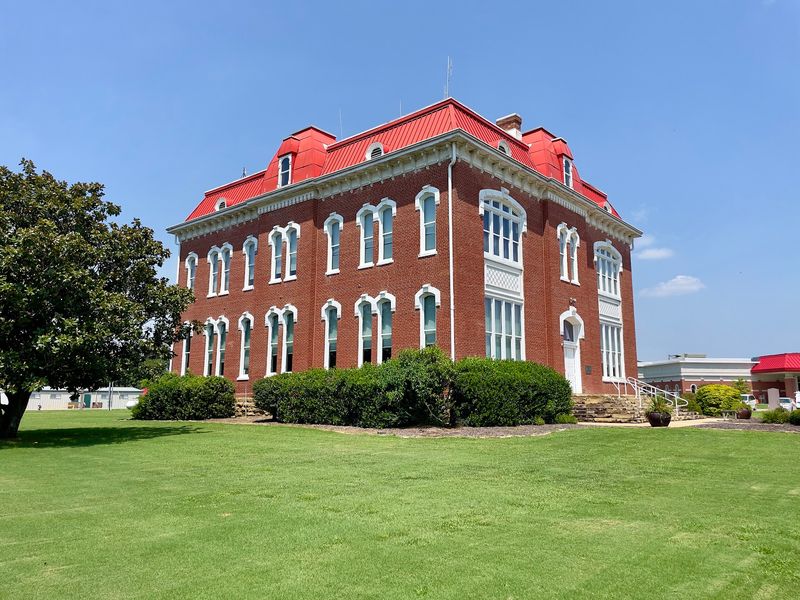
Out past the pine-covered hills of southeastern Oklahoma, I expected a quick roadside stop and maybe a plaque or two. Instead I found a red brick building with a fancy roof standing tall in a quiet green valley, looking like it wandered out of a storybook.
Inside, a whole nation shares its history in its own words, and nobody even asks for a ticket. By the time I left, I was already planning a second trip and wondering why nobody had told me sooner.
A Red Brick Capitol in the Kiamichi Country Hills
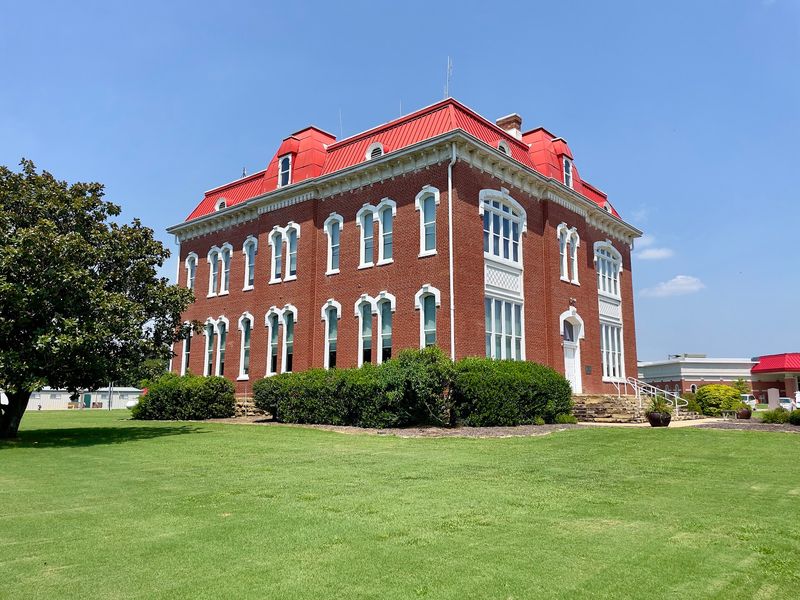
Picture a three-story brick building with a steep mansard roof rising out of rural pastureland, and you have the first impression of this place. It feels grand without trying too hard, a little like an old courthouse that decided to settle down in the countryside.
Officially, it goes by the Tvshkahomma Capitol Museum, though many folks still call it the Tuskahoma Capitol Museum. The name Tvshkahomma means red warrior in the Choctaw language, and it fits the deep red native brick that gives the building its warm color.
Here is the big idea. From 1884 until Oklahoma became a state in 1907, this was the working seat of the Choctaw government.
Lawmakers met here, judges heard cases here, and the Principal Chief kept an office down the hall.
Today the building serves a new purpose. The Choctaw Nation uses it to tell its own story, from ancient ancestors to modern heroes, in a setting that once held its real government.
That makes a visit feel less like reading a textbook and more like being invited into someone’s family home.
Best of all for budget travelers, walking through the front door costs nothing at all.
Built Brick by Brick for $30,000
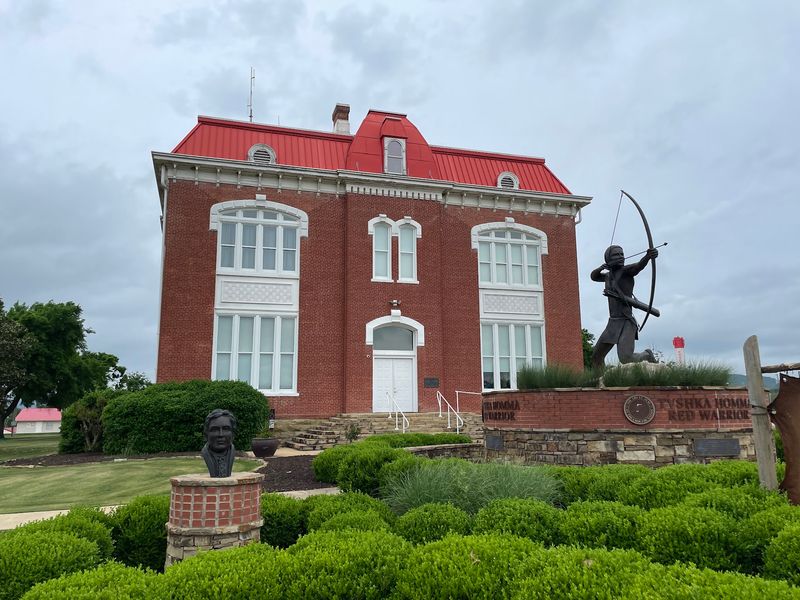
Thirty thousand dollars. That was the price tag for a capitol that would serve a sovereign nation, and every dollar shows in the craftsmanship.
Work started in 1879, and crews wrapped up the building by September 1884.
Builders leaned on what the land offered. Local red brick, sandstone, and timber came together in a design that mixes Italianate touches with the Second Empire style, which explains that eye-catching mansard roof up top.
Inside, the Choctaw Senate and House of Representatives held sessions. The Supreme Court met here too, along with the Principal Chief and other constitutional officers.
For more than two decades, important decisions for the Choctaw people were made in these rooms.
Statehood in 1907 changed everything, and the building sat mostly unused for a while. Then, in the 1930s, Choctaw leaders bought it back for community use and began a major renovation.
Later, in the late 1960s, the Choctaw Historical Society pushed to give the old capitol a fresh life. Their work paid off on September 1, 1975, when the building was dedicated as a museum.
It now holds a spot on the National Register of Historic Places, a well-earned honor for a survivor this sturdy.
Exhibits That Trace Ancestors, the Trail of Tears, and Code Talkers
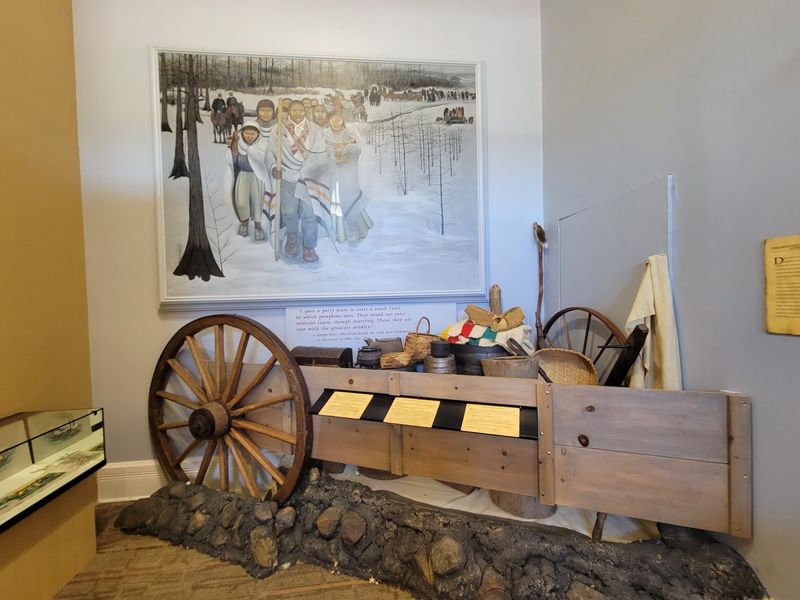
Walk upstairs and the story starts long before Oklahoma existed. Exhibits begin with Choctaw ancestral life before European contact, then move through the hard journey of the Trail of Tears and on to Choctaw life after arriving in what is now Oklahoma.
Visitors often mention the informative plaques and artifacts, which make the timeline easy to follow even for younger readers. Kids who groan at the word history may find themselves leaning in closer.
Two groups get special attention. The Lighthorsemen, who kept law and order in the Choctaw Nation, have their own spotlight.
So do the Choctaw Code Talkers, who used their language to send messages the enemy could not crack during World War I.
Fun fact for the car ride home: these Choctaw soldiers are widely recognized as the first Code Talkers, and one visitor noted how much they helped turn the tide of that war.
Other displays cover the building’s pre-statehood days and the 20th-century Choctaw leaders who fought to save it. Several guests say the exhibits helped them connect with family surnames and learn how those names fit into tribal history.
For anyone exploring their roots, this floor can feel deeply personal.
Courtroom Seats and Second-Floor Portraits
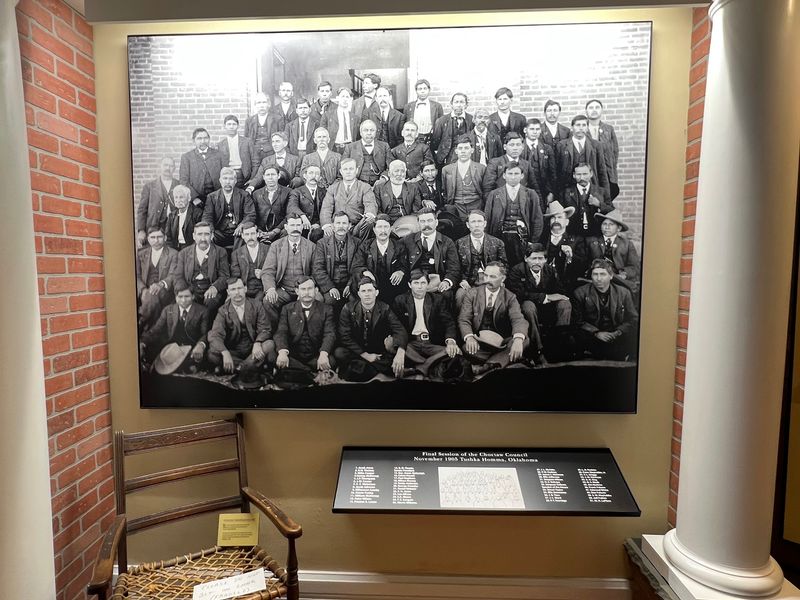
Sometimes the most moving part of a museum is simply the chance to sit down. In the old capitol, visitors can step into the courtroom where Choctaw judges once heard cases, and that quiet moment sticks with people.
One guest who drove 12 hours to get here shared that relatives had served as judges on the Choctaw tribal council. Sitting in that same room, they said, made it the best trip of their life.
Stories like that pop up again and again.
Portraits line the second floor, including Choctaw chiefs from the nation’s capitol years. Families tracing their ancestry often spend extra time here, searching faces and names for a link to their own past.
Out front, a tribute honors Chief Pushmataha, one of the most famous leaders in Choctaw history. The county itself carries his name, which is a neat detail to point out to kids.
Even without a family connection, the rooms carry weight. Creaky halls, tall windows, and old wooden details help you imagine lawmakers debating and leaders signing papers.
It is history you can stand inside, not just read about behind glass.
Gift Shop Finds from Choctaw Artisans
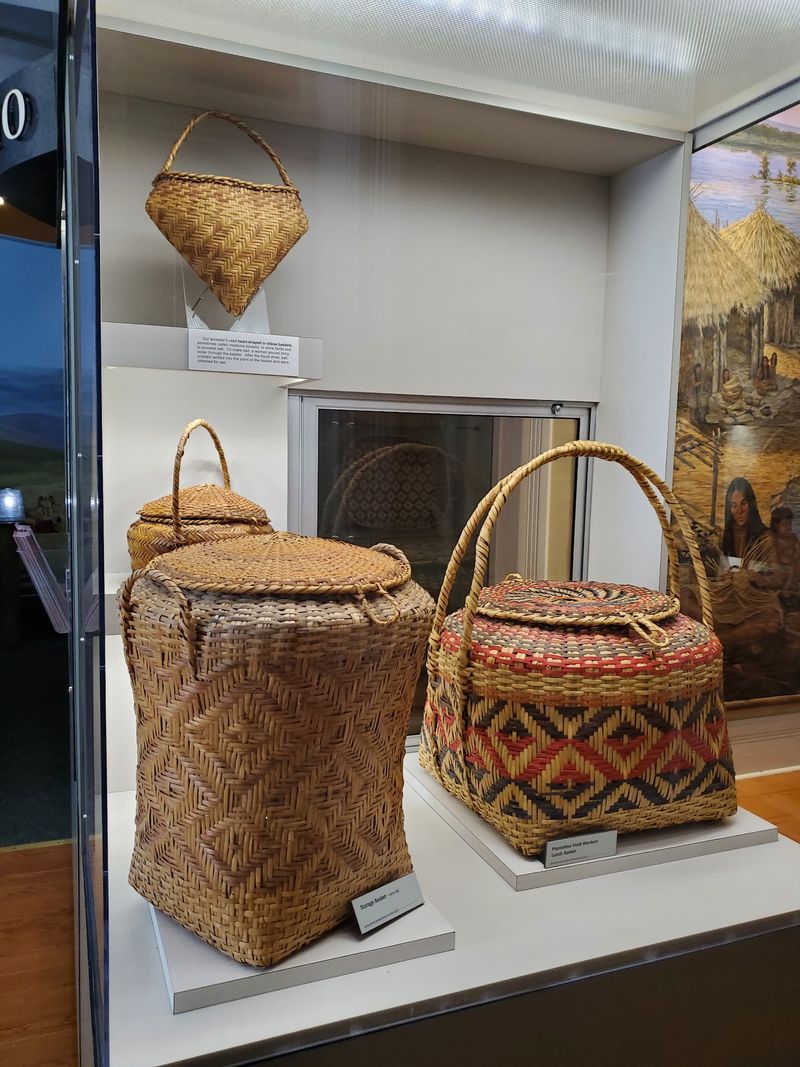
Save a little room in the budget, because the downstairs gift shop is a favorite stop. Guests bring it up often, and one visitor called it the highlight after years of wanting real Choctaw souvenirs.
Shelves hold handcrafted items made by Choctaw artisans, so your keepsake supports the people whose story you just learned. You will also find books, apparel, and jewelry, with plenty of choices for different tastes.
Basket lovers should look closely. The museum also showcases Choctaw basketry in its displays, and seeing the craft upstairs makes the handmade pieces downstairs feel even more special.
Art fans get another treat. A gallery highlights work by Choctaw artists, offering a modern side to the culture that balances the older artifacts nicely.
Grandparents shopping for grandkids can usually find something meaningful, like a book about Choctaw history or a small piece of jewelry. Teens tend to gravitate toward the apparel.
A quick tip from past visitors: the shop sits on the ground floor while the museum fills the upstairs, so you can browse at the end without backtracking. Prices and stock can change, so bring flexibility and enjoy the hunt for a one-of-a-kind piece.
Walking Trails, Memorials, and a Peaceful Lawn
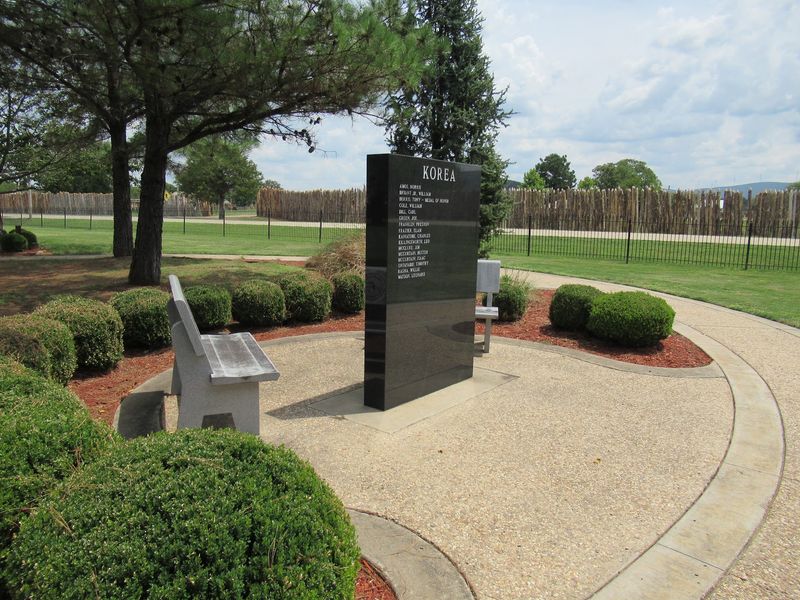
Arrive on a weekend and find the doors locked? Plenty of visitors have, and most left smiling anyway.
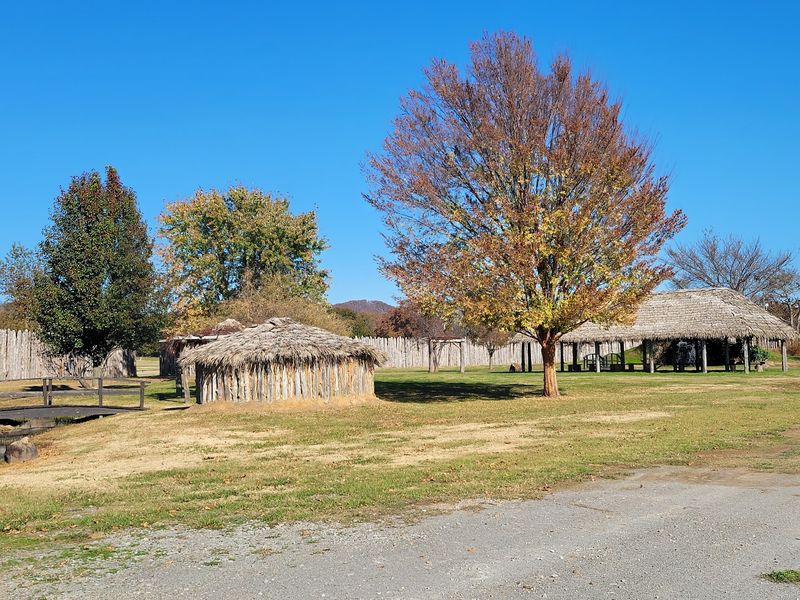
The grounds stay full of things to see, even when the museum is closed.
A Choctaw History trail winds across the property with markers sharing the nation’s story step by step. It leads into a War Memorial trail that honors Choctaw men and women who served the United States.
One guest called the outdoor displays fascinating and beautiful all on their own.
Look for the Veterans’ Memorial and a special tribute to the Choctaw Code Talkers. Both are thoughtful spots for a quiet pause, and families with veterans often linger here.
Visitors keep using words like immaculate, pristine, and peaceful to describe the lawns. Even during big crowds, one person said, a sense of calm hangs over the place.
The setting helps. Rolling hills, tall pines, and nearby lakes surround the capitol in this part of Kiamichi Country, so the drive itself becomes part of the fun.
Wear comfy shoes, bring water during the hot months, and keep an eye on Oklahoma’s spring storm season. A stroll here pairs nicely with a picnic and a slow afternoon.
Labor Day Festival Weekend on the Capitol Grounds

Ask locals about this place and the Labor Day Festival comes up fast. It is easily the most talked-about event here, and many families treat it like a yearly reunion.
Traditional stickball games take over the grounds, along with Choctaw social dancing and powwow dances. Watching stickball in person is a real treat, since it is one of the oldest team sports in North America.
Budget-friendly families, listen up. Past guests say the rides, concert, and parking were all free, which makes this one of the best deals around for a big outing.
Details can shift from year to year, so check with the Choctaw Nation before you go.
Craft lovers rave about the craft building and the helpful volunteers. One family said they drove a long way to support Native nations and decided to make it a yearly trip.
Other community events happen here too. A visitor once caught an Independence Day fireworks show and called it the best of six they saw that summer, complete with a double rainbow at sunset.
Expect crowds and late summer heat. Bring sunscreen, lawn chairs, and patience, and you will fit right in with the locals.
Planning Your Free Visit and Final Thoughts
Good news first: admission is free. That makes this a wonderful day trip for families, retirees, and anyone watching their gas money.
The museum sits on Council House Road, about two miles north of Tuskahoma in Pushmataha County. Hours generally run Monday through Friday from 8 AM to 4 PM, and some sources list a 4:30 PM close.
It shuts on holidays and weekends, though Saturdays may open between Memorial Day and Labor Day.
Want a deeper look? Guided tours can be arranged by appointment on weekdays from 9 AM to 3 PM.
Call 855-569-4465 or 918-569-4465 to set one up or confirm hours before you leave.
One visitor mentioned an on-site cafe that was closed during their stop, so packing snacks is a smart move. The drive is rural, and one guest from farther away said it took about an hour and a half, with lovely scenery the whole way.
So is it worth the trip? For anyone who loves Oklahoma history, Native culture, or simply a peaceful place to wander, the answer leans strongly toward yes.
Few stops let a nation speak so clearly for itself, and fewer still charge nothing to listen.
