Some Oklahoma buildings look ordinary from the parking lot and then quietly rearrange how you think about the ground you’re standing on. I pulled up expecting a quick walk-through and ended up losing most of an afternoon to touchscreens, hand-carved canoes, and a room that smells faintly of sweetgrass.
It costs nothing to walk in the door, which still seems hard to believe once you see what’s inside. If you have ever wondered where your family name came from, this place takes that question seriously.
A Low Brick Landmark on Gordon Cooper Drive
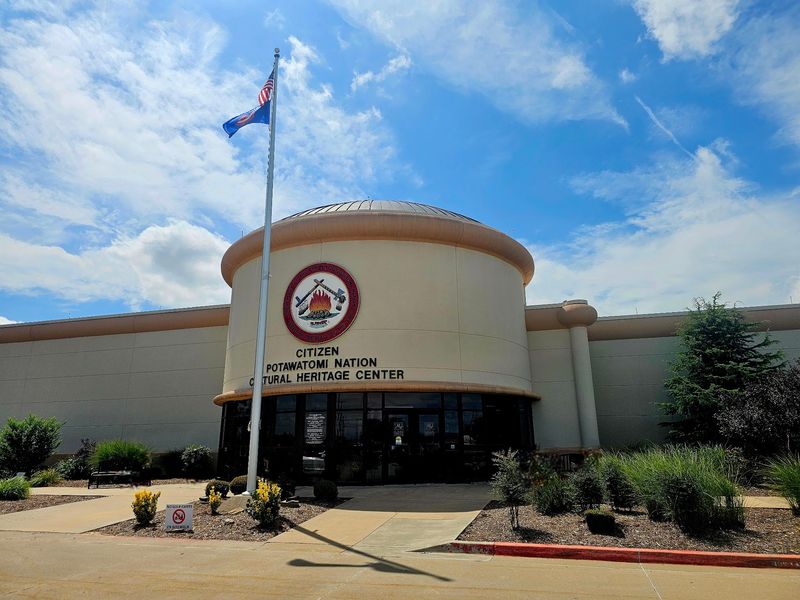
Drive south out of downtown Shawnee on Gordon Cooper Drive and the Citizen Potawatomi Nation’s tribal campus opens up around you, ball fields and offices and, at 1899 S Gordon Cooper Dr, the Cultural Heritage Center itself.
It reads as a museum from the outside, understated and well kept, without any of the roadside signage you might expect from a tourist stop. Inside, it functions as three things at once: an exhibit hall, an archive, and a genealogy research center used by tribal members from across the country.
The Association of Tribal Archives, Libraries, and Museums has named it a Top Ten Model Museum and Cultural Center, which puts it in serious company nationally.
What surprises most first-timers is the scope. Eleven galleries carry the story of the Nation from pre-contact life through removals and allotment and into the present day, and the building doubles as the place where Potawatomi families come to find their ancestors on paper.
Visitors regularly describe it as clean, modern, and far more substantial than they anticipated for a stop that charges nothing at the door.
Family Names, Census Rolls, and the Search for Ancestors
Genealogy is the beating heart of the place, and it is what separates this center from a standard history museum.
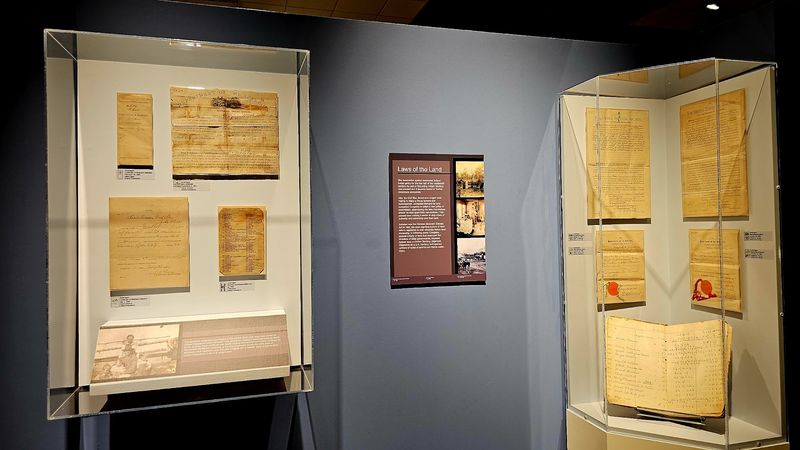
The research center and library hold more than 7,000 pieces of mixed media covering tribal history and culture, and the Family Manuscripts Collection lets you search by founding family or individual name to turn up documents, genealogical records, and photographs spanning over 300 years of Potawatomi heritage. Archival holdings include photographs and family histories for every founding Citizen Potawatomi family.
A Family History Specialist in the Collections and Research Division works with tribal members walking in with little more than a surname and a hunch.
The advice she gives is refreshingly practical: start with CPN history itself, then work through the online collections organized by family name, then census documents and allotment information.
Before any of that, talk to your elders. Gathering names, dates, and stories from relatives first tends to make the archival work go faster, and it often turns up details no record ever captured.
Local libraries and online census forms round out the beginner’s toolkit.
Mezodanek and the Digital Family Tree
Not everyone can make the drive to Shawnee, so the Nation built the archive a second front door.
Mezodanek is the genealogical research platform hosted on the center’s revamped website, potawatomiheritage.com, and it lets users do real research, construct family trees, and connect with Potawatomi relatives scattered across the globe.
The Ancestors program inside Mezodanek launched in June 2021 and has already produced 932 profiles and 641 family trees, numbers that represent an awful lot of late nights and long-lost cousins found.
Here’s the practical upside for Oklahomans: you can do the groundwork from your kitchen table in Tulsa or Lawton, then arrive in Shawnee with specific questions instead of a blank page.
Staff can point you toward the physical documents that fill in what the database only hints at.
Digital tools like this also help younger family members stay involved, since a shareable tree tends to travel through a family group chat faster than a shoebox of photographs ever could.
Features and content may change as the platform grows, so check the site before your trip.
Eleven Galleries That Move From Creation Stories to Today
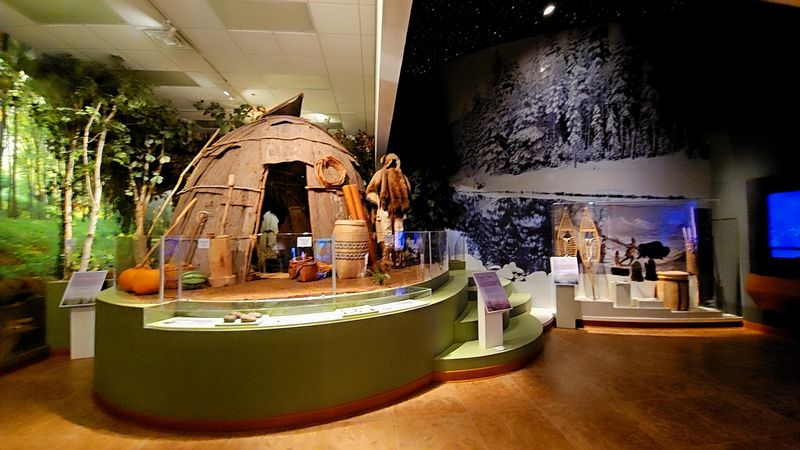
Walking the exhibit loop feels less like reading plaques and more like following a thread that never breaks.
Eleven galleries carry the narrative in order, starting with the Seven Fires gallery and its early oral traditions and prophecies, then the Origins Gallery, known as Mamogosnan’s Gifts, which gathers stories of creation and early Potawatomi life.
From there the path moves through periods of conflict and forced removals, into U.S. and Oklahoma history, and finally to the resilience of the Nation as it stands now.
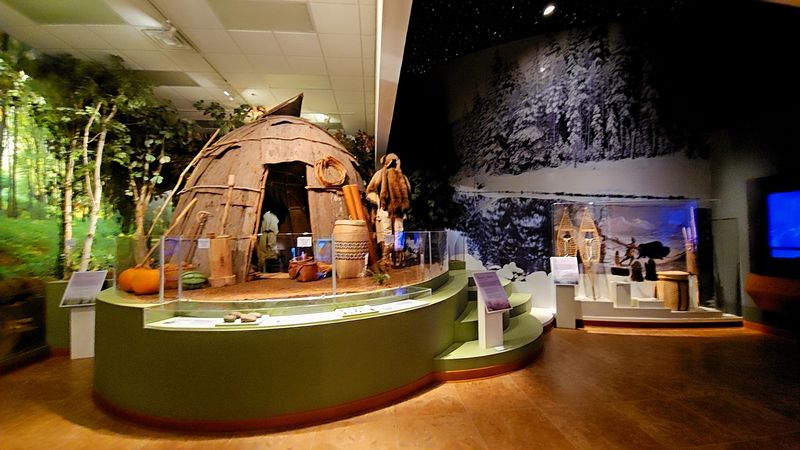
Renovations in recent years added interactive digital displays and life-size dioramas, and visitors consistently praise how naturally the whole thing flows from beginning to present day.
There is a fair amount of reading involved, but the video panels break it up, and several guests mention leaving with a few Potawatomi words rattling around in their heads.
One long-standing favorite is the wigwam display, which some tribal members remember seeing as children two decades ago.
Expect to spend an hour minimum. Plenty of people stretch it to several.
The Wedasejek Veteran Memorial and Wall of Honor
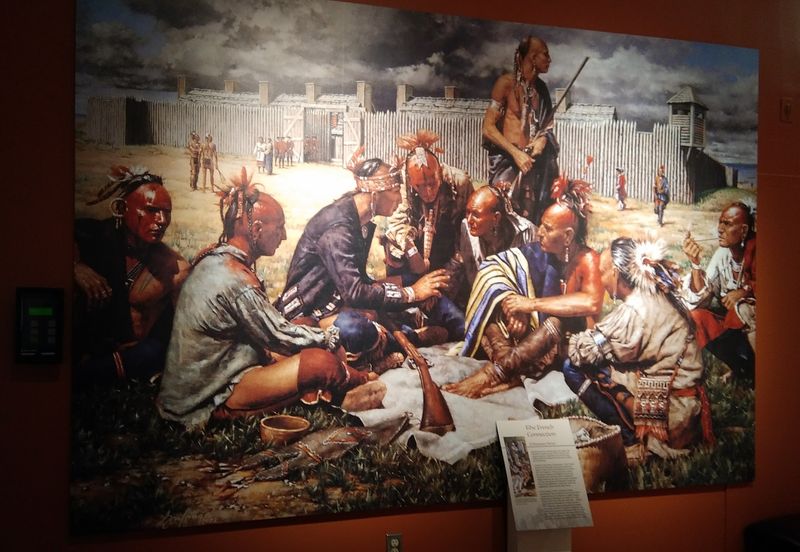
Service runs deep in Potawatomi families, and the center gives that its own dedicated space.
The Wedasejek Veteran Memorial honors Potawatomi warriors alongside a Veteran’s Wall of Honor recognizing those who served and those currently on active duty.
It is a quiet corner of the building, and most people slow down without being told to.
Years back, the museum hosted a traveling Smithsonian exhibit focused on Potawatomi veterans of the First and Second World Wars, an early sign of how seriously this institution takes military history as family history.
For visitors tracing genealogy, service records often become an unexpected doorway. A grandfather’s enlistment paperwork can confirm a birthplace, a parent’s name, or a hometown that census rolls left fuzzy.
If you have a veteran in your own line, ask staff how service records intersect with the archive’s holdings.
The memorial also gives families with young kids a natural conversation starter about why the Nation preserves all of this in the first place, and why a name carved somewhere permanent matters to the people who share it.
Bourbonnais Cabin, Standing Before the Land Run
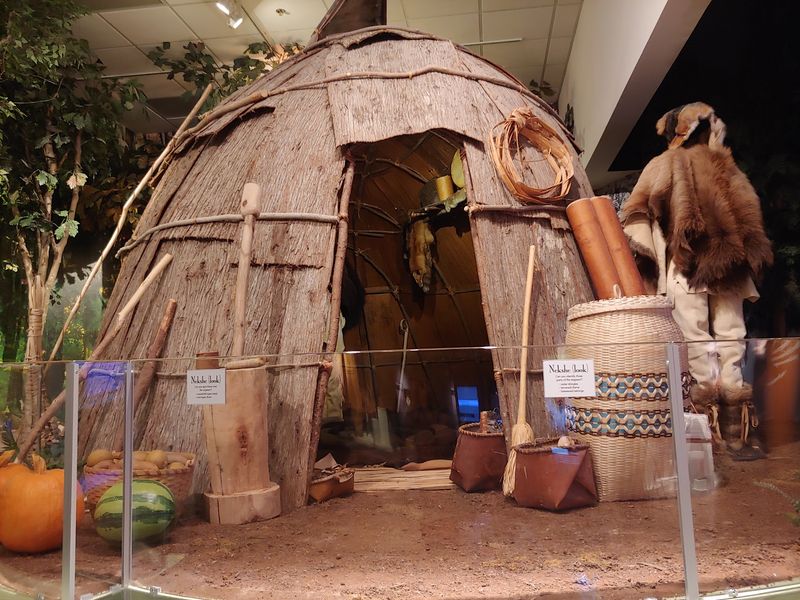
Step outside the main doors and there is a log structure that predates almost everything else in the area.
The Bourbonnais Cabin is an original Potawatomi settler cabin, recognized as the first home built in what was then called Shawneetown, well before the land run reshaped this part of Oklahoma.
For a state where so much history gets dated from 1889 onward, that timeline correction lands hard.
Small, weathered, and unpretentious, the cabin does something the polished galleries cannot. It gives you scale, and a sense of what a family actually lived inside.
Kids who glaze over at text panels tend to perk up here, mostly because they can circle it and picture themselves in it.
Photographers should note the outdoor light is best in the morning or late afternoon, and Oklahoma summer heat makes a midday stroll around the grounds less pleasant than it sounds.
Pair the cabin with the galleries rather than treating it as an afterthought. Seeing the structure first, then the removal exhibits inside, changes how the story reads.
Language, Oral Tradition, and Voices on Screen
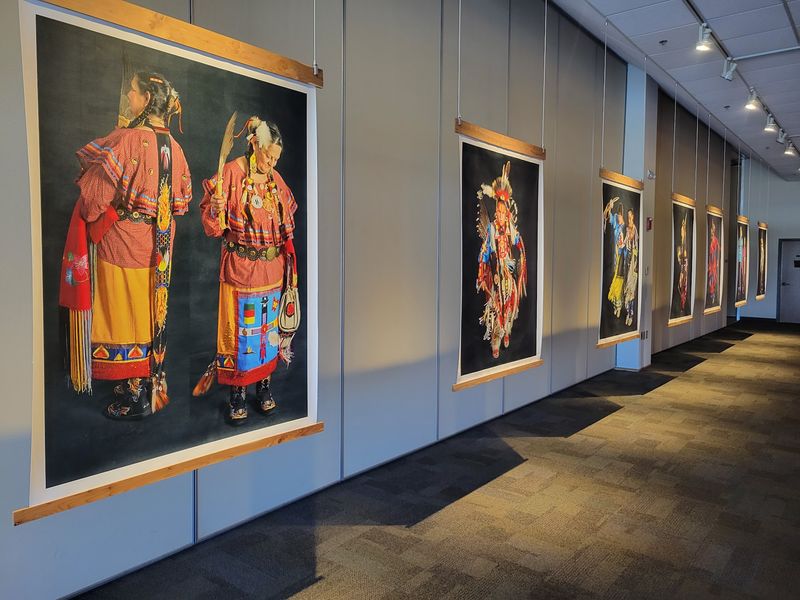
Sound matters here as much as objects do.
Preserving Potawatomi oral tradition is a stated mission of the center, and interactive videos throughout the galleries record beliefs, cultural practices, and accounts of early ways of life in the words of the people who carry them.
Guests frequently single out those video panels as the highlight, which says something in a building full of beautiful displays.
Language work extends beyond the museum walls. Potawatomi can be taught for high school credit in local schools, and language resources are available for anyone wanting to start learning.
Pick up even a handful of words during a visit and the exhibit labels start making a different kind of sense.
A fair warning from regulars: there is real reading involved, and a monitor occasionally acts up, so ask at the desk if something is not cooperating.
Staff are described as friendly and genuinely informative, the kind who will answer a question about pronunciation without making you feel silly for asking.
Take the time. Rushing the videos misses the point entirely.
The Gift Shop Where Local Artists Set Up Shop
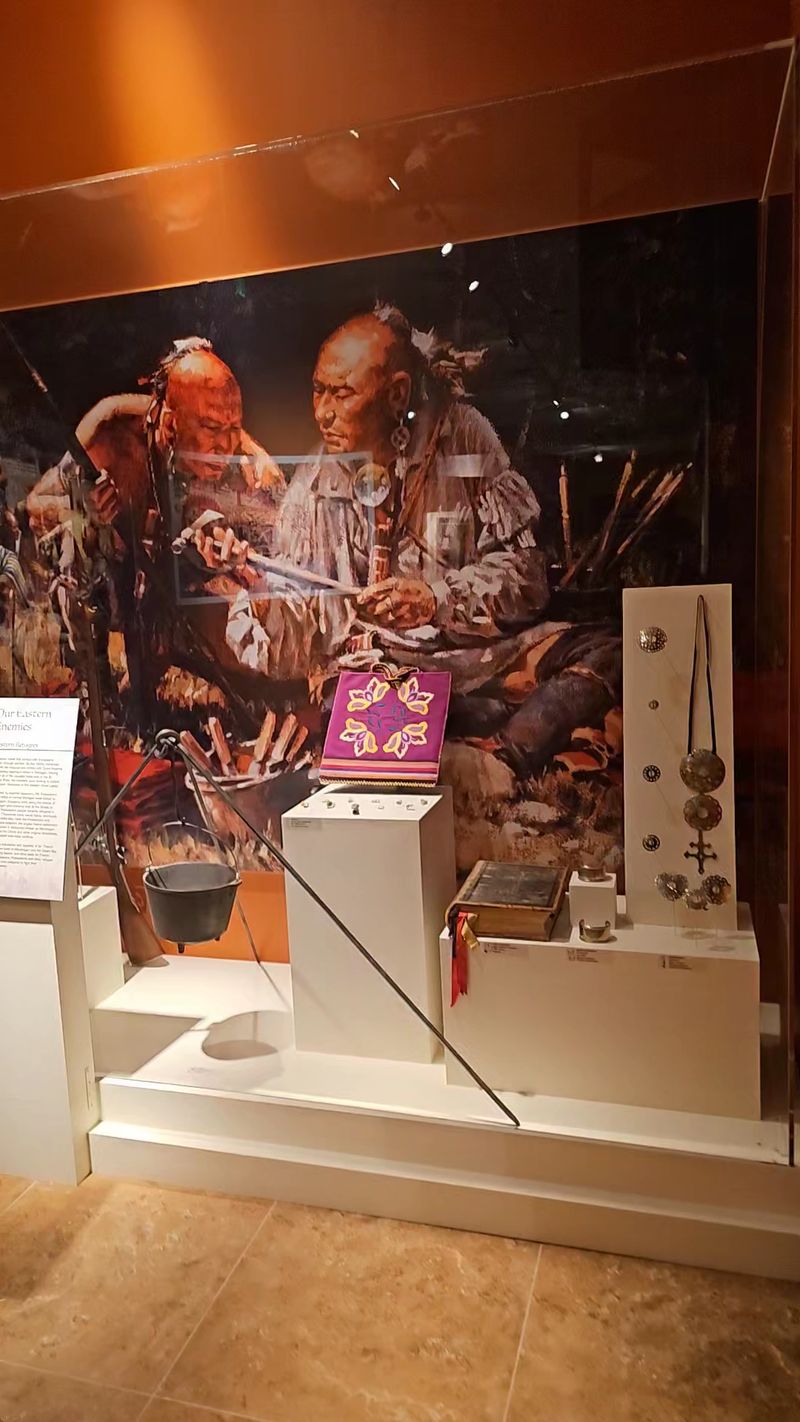
Twenty-three separate visitors have gone out of their way to mention the gift shop, which is not a statistic most museums can claim.
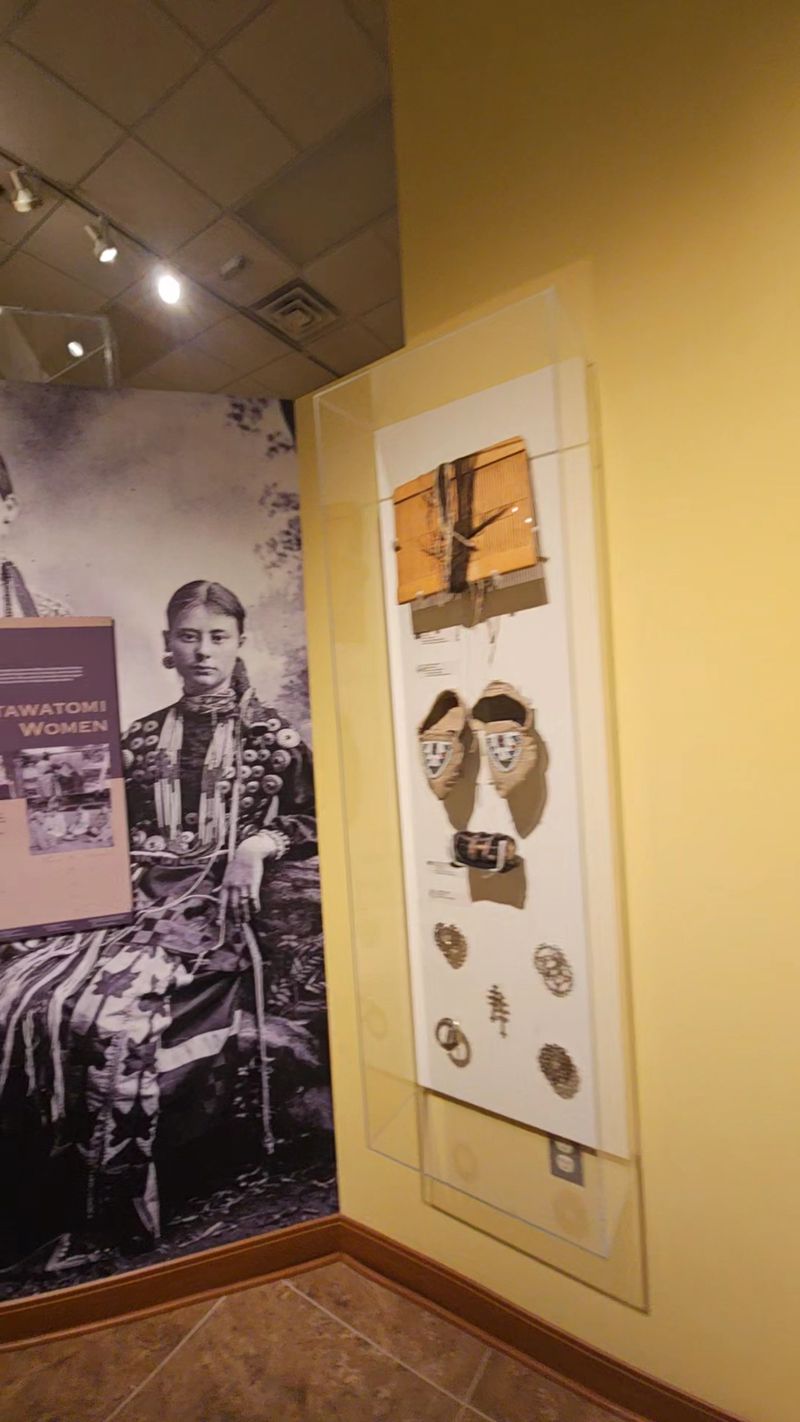
Shelves hold authentic, locally made Native American goods: beaded jewelry crafted by local artists, ceremonial items, traditional attire, dolls, lotions, and Pendleton blankets.
The price range is genuinely wide, which is part of the charm.
One parent recounted her children picking out small leather-strung keepsakes for a dollar each while finer art pieces sat nearby for serious collectors.
That mix means a family can walk out with something meaningful without a painful receipt, and buying here supports the artists directly.
Since admission costs nothing, a lot of guests treat the shop and the donation box near the entrance as the natural way to give something back.
Several say so plainly, encouraging others to drop something in so the center can keep running.
If you are shopping for a hard-to-buy-for relative in Oklahoma, this beats another mall gift card by a wide margin.
Inventory shifts, so what is on the shelf today may be gone next month.
Free Admission, Easy Parking, and a Drive Worth Making
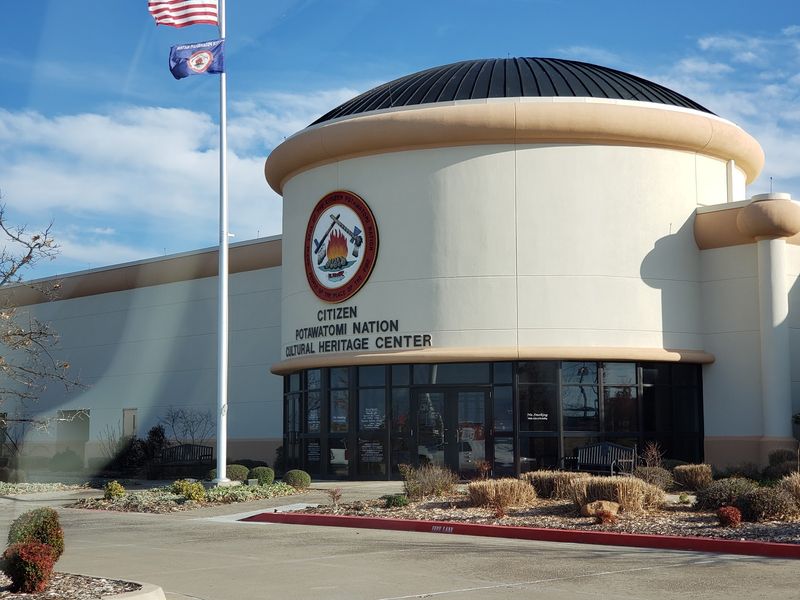
Cost first, because it is the best part: admission is free for everyone, with a donation box by the front door for those who want to chip in.
Hours run Monday through Friday from 8 am to 5 pm and Saturday from 10 am to 3 pm, with Sunday closed. Call 405-878-5830 to arrange school or large group tours, and note that tours generally run by appointment.
Shawnee sits roughly 45 minutes east of Oklahoma City and about 90 minutes southwest of Tulsa, well inside easy day-trip range.
Parking is plentiful, including space for buses and motorcoaches, and the building is clean, accessible, and comfortable on a hot or stormy Oklahoma afternoon.
Bring the kids. Interactive exhibits and educational programs make it workable for younger visitors, though one honest tip from guests is that seating is limited, so wear good shoes.
Community events like Bead and Tea classes and Open Sew with Skills Instruction happen throughout the year.
Plan an hour, stay two, and leave knowing something about Oklahoma you did not know that morning.
