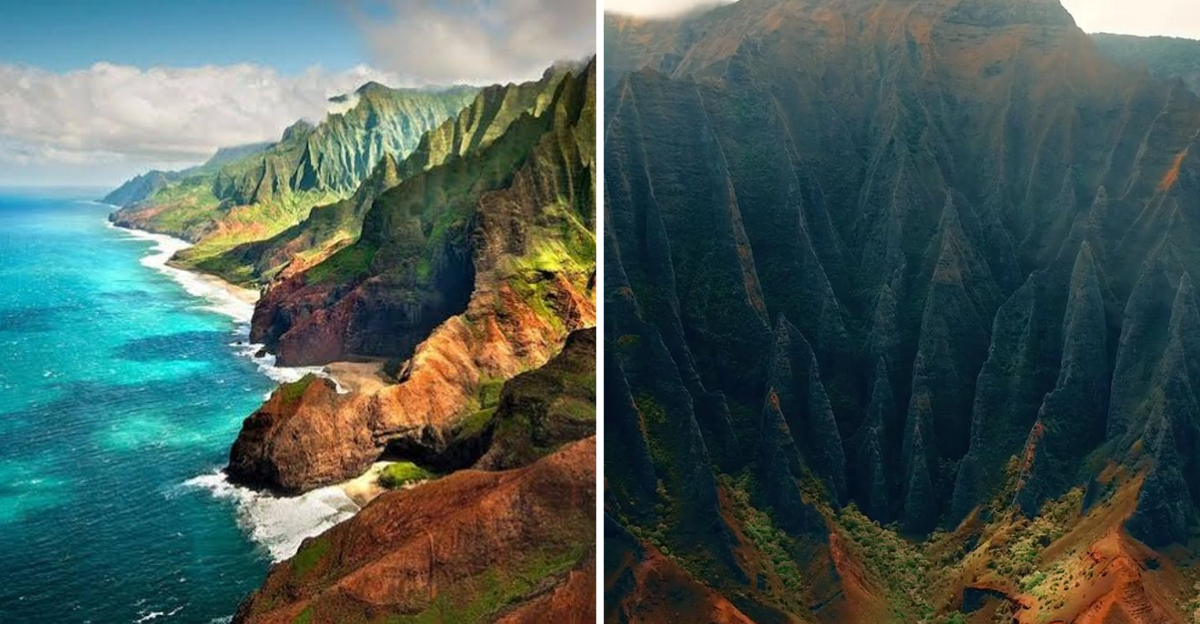
Sharp emerald-green ridges soar up to thousands of feet above the Pacific, and no road will ever take you there. Hawaii has a stretch of coastline that genuinely stops you in its tracks, the kind of place that makes you feel like the island is showing off just a little.
I remember the first time I saw those cliffs from a boat, the scale of everything felt almost unreal. The name simply means the cliffs, and that is exactly what you get, mile after dramatic mile.
That raw, volcanic coastline is one of the most visually stunning places in the entire United States.
I spent an afternoon on the water, craning my neck to take in the full height of those ridges, waterfalls streaming down their faces like silver threads.
Approach it from the water, the air, or on foot, and that place will leave a mark on you that does not fade easily.
Exploring Na Pali by Boat, Sea Caves, Cliffs, and Dolphins
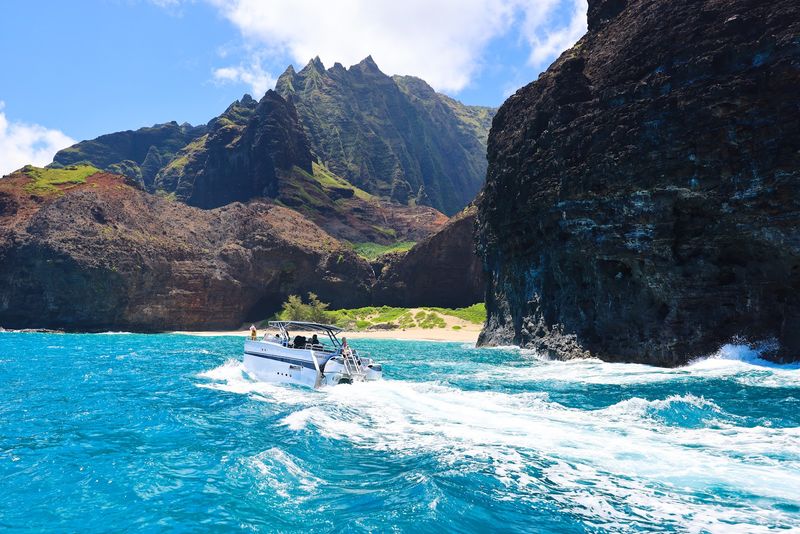
There is something about approaching those cliffs from the ocean that feels genuinely humbling. From sea level, the scale is hard to process.
The ridges climb straight up, draped in deep green, and the base of each cliff is carved with sea caves that the waves have been working on for millions of years.
Boat tours typically depart from Port Allen or Waimea on the west side of Kauai, with some summer departures also leaving from Hanalei Bay on the north shore.
The summer months, roughly May through September, offer calmer ocean conditions that make sea cave exploration and snorkeling much more accessible.
Some of the most popular sea caves along the route include Pirates Cave, also known as Honololo Sea Cave, and Waiahuakua, which is often called Double Door Cave because of its two openings.
The Open Ceiling Cave is another favorite, where a collapsed roof lets sunlight pour directly into the cavern.
Spinner dolphins are a common and thrilling sight on these tours. They often swim alongside the boat in groups, cutting through the clear blue water just off the bow.
During winter months, humpback whales migrate through these same waters, adding another layer of wonder to an already remarkable experience.
Many tours are designed to pass beneath waterfalls that drop directly into the ocean. Getting lightly splashed by one of those falls while staring up at a 3,000-foot cliff is the kind of moment you will be talking about for years.
Book early because these tours fill up fast.
The View from Above, Helicopter Tours Over Na Pali
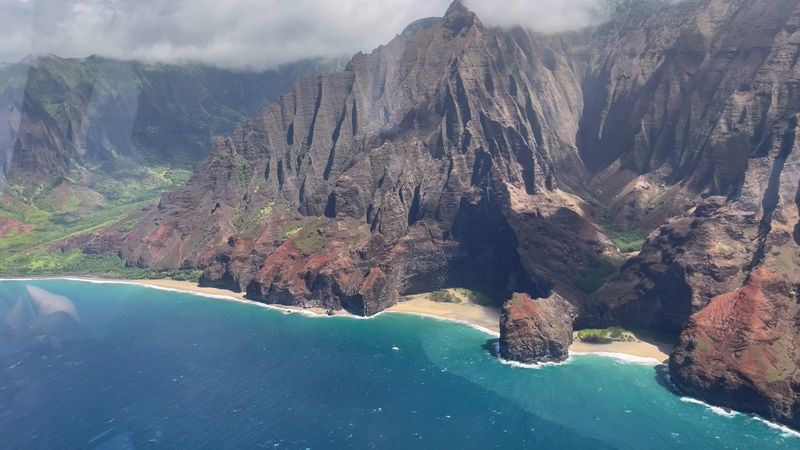
From the air, the Na Pali Coast looks like something a painter invented. The ridgelines are razor-sharp, the valleys are impossibly deep, and thin silver waterfalls thread their way down cliff faces that no hiker will ever reach.
A helicopter tour gives you the full picture in a way that nothing else can.
Pilots adjust their routes based on weather, which in Kauai can shift quickly. Morning flights are generally recommended because the air tends to be smoother and the light is better for photography.
The golden morning sun hitting those green cliffs is a sight that photographs really struggle to capture accurately.
One of the highlights of flying this coastline is getting a view of Honopu Valley, a remote and deeply sacred place that cannot be accessed by land at all.
Kalalau Beach, the legendary destination at the end of the famous hiking trail, also appears from above, looking like a small crescent of sand tucked between towering walls of rock.
The entire 17-mile coastline can be covered in a relatively short flight, which makes helicopters a great option for travelers with limited time or physical limitations that make hiking or boat tours difficult.
That said, the experience is anything but rushed.
Every few seconds brings a new angle, a new waterfall, a new fold in the cliffs that you did not see coming.
I found myself pressing my face against the window like a kid, trying not to miss a single ridge. It is that kind of place.
The Kalalau Trail Hiking the Edge of the World
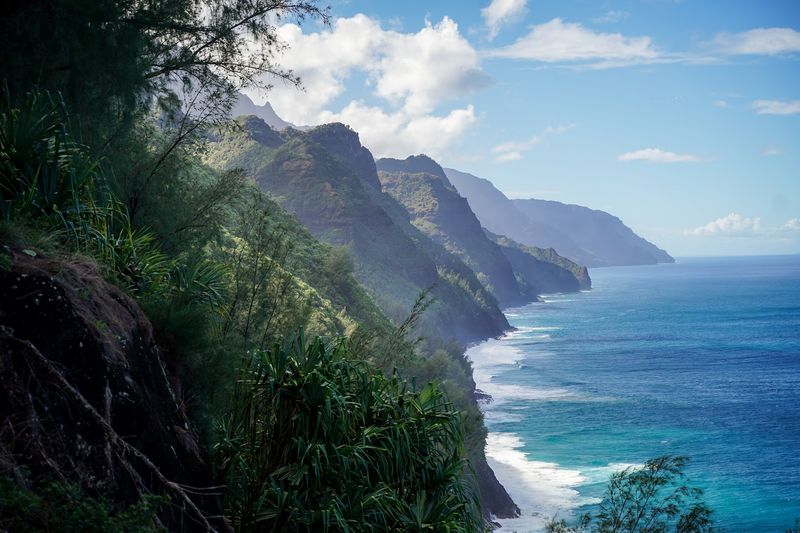
The Kalalau Trail is not a casual stroll. It is an 11-mile one-way trek that begins at Ke’e Beach and winds along cliff edges, through dense jungle, and across stream crossings that can be deceptively powerful after rain.
The payoff, though, is extraordinary at almost every turn.
Permits are required for anyone hiking beyond the first two miles, which lead to Hanakapiai Beach. That initial section is popular and gives a solid taste of what the trail offers without requiring the full commitment of the longer route.
Even those two miles involve real elevation gain and terrain that demands proper footwear.
Continuing past Hanakapiai Beach and heading inland for another two miles brings you to Hanakapiai Falls, a 300-foot waterfall that drops into a wide pool. Many hikers consider this side trip the highlight of their entire Kauai visit.
The trail conditions leading to the falls are often muddy and rocky, so trekking poles make a noticeable difference.
The full trail ends at Kalalau Beach, a secluded stretch of sand framed by cliffs that seem to close off the rest of the world entirely. Camping is available there for permit holders, and sleeping under stars in that valley is a deeply memorable experience.
The trail requires physical stamina, good preparation, and a genuine respect for the terrain.
Start early. The first shuttle typically departs at 7 AM, and getting on the trail before the heat builds up makes the whole day significantly more enjoyable.
Bring at least two to three liters of water.
Ancient Hawaiian History Hidden in the Valleys
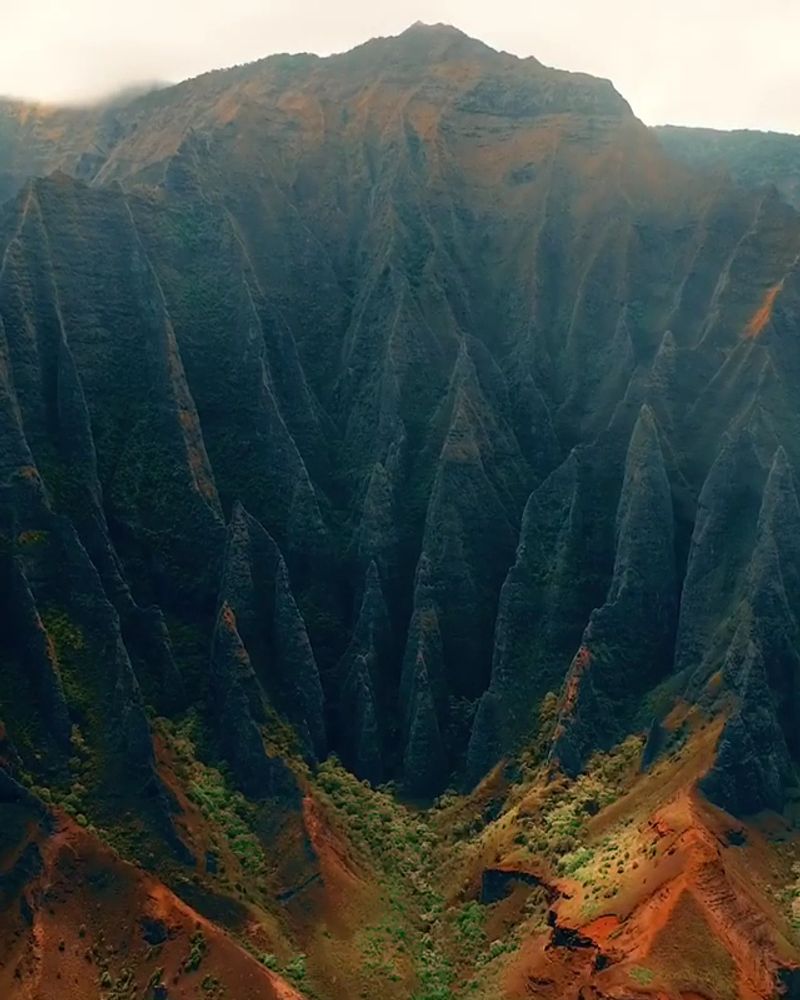
Long before tourists and tour boats, people actually lived along the Na Pali Coast. Ancient Hawaiian communities settled in the deep valleys here, farming taro on terraced fields and fishing the rich waters just offshore.
The first Polynesian navigators are believed to have arrived around 1200 AD, followed later by Tahitian migrants who shaped much of what became Hawaiian culture and religion.
What makes this history feel so alive is that the physical evidence is still there. Stone-walled terraces used for growing taro can still be seen in the valley floors, weathered but intact after centuries of rain and growth.
Kalalau Valley, the largest along the coast, holds the most significant remnants of these early settlements.
The Na Pali Coast also served as a trading route between different parts of the Hawaiian islands. Its valleys were productive enough to support communities that thrived in genuine isolation from the outside world.
That sense of self-sufficiency, of a civilization that carved a life out of these dramatic cliffs, adds real weight to the experience of visiting.
Hawaiian legend is deeply woven into this landscape. Kalalau Valley is said to be watched over by mo’o, powerful water spirits that inhabit the streams and pools.
Whether or not you follow those traditions, there is an undeniable feeling in the valley that the place holds something older and quieter than what we typically encounter.
Approaching these sites with respect matters. This is not just scenery.
It is someone’s ancestral home.
Wildlife Along the Coast, What Lives in These Waters and Valleys
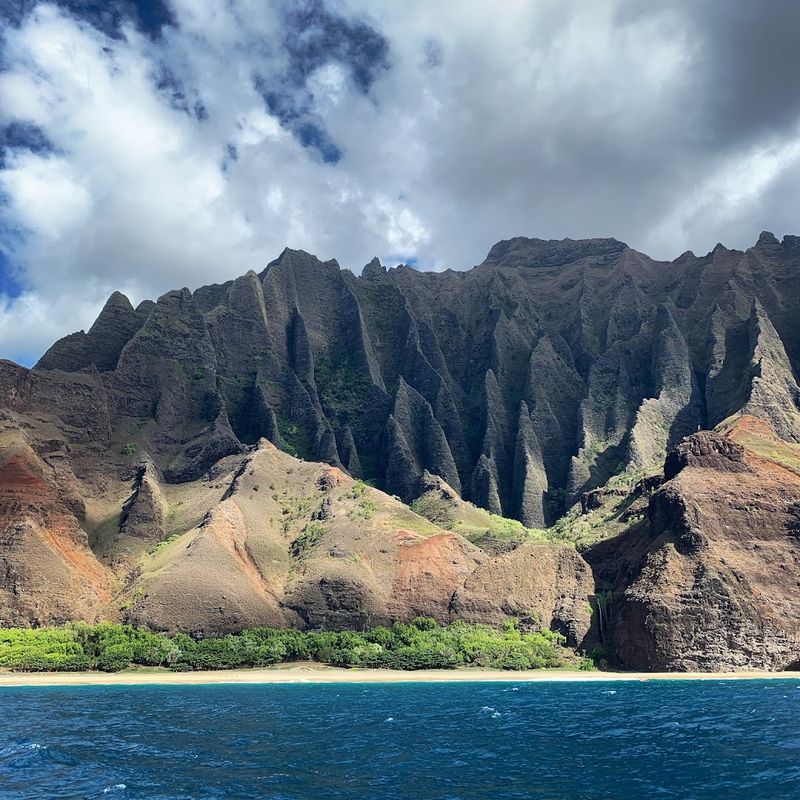
The Na Pali Coast is not just dramatic scenery. It is a functioning ecosystem packed with life both above and below the waterline.
Hawaiian green sea turtles, known locally as honu, are a regular and beloved sight along the coast. They move slowly and gracefully through the clear water, sometimes surfacing right next to a boat, close enough to see the texture of their shells.
Spinner dolphins are another highlight of any boat tour here. They tend to travel in large groups and have a habit of riding the bow wave of boats, leaping and spinning in ways that seem almost playful.
On some tours, hundreds of dolphins have been spotted at once, moving together in a loose, energetic mass just off the coastline.
Winter brings humpback whales to these waters. They migrate from Alaska to Hawaii’s warm seas between December and May to breed and give birth, and the Na Pali stretch of coastline is within their range.
Seeing a humpback breach near those cliffs is one of those moments that makes you go completely quiet.
The forested valleys above the waterline support native bird species including the I’iwi, the Apapane, the Amakihi, and the Nene, which is Hawaii’s state bird.
These birds are not always easy to spot, but their calls carry through the valley air in a way that adds to the feeling of being somewhere genuinely wild.
Snorkelers will find vibrant coral reefs in the calmer summer months. The humuhumunukunukuapuaa, Hawaii’s state fish, is one of many colorful species waiting just below the surface.
Planning Your Na Pali Adventure, What You Need to Know
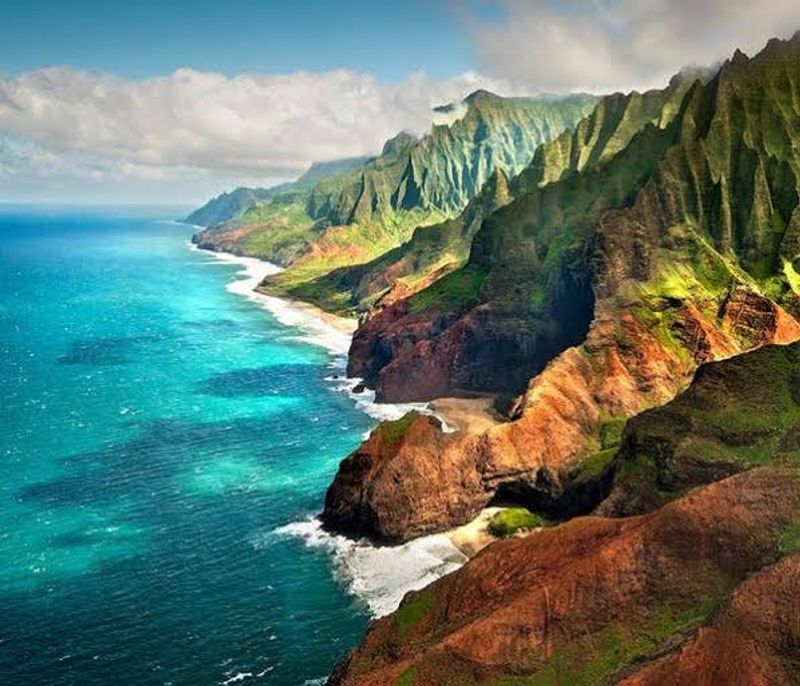
Getting to the Na Pali Coast takes a little advance planning, and that planning genuinely pays off. Boat tours, helicopter excursions, and Kalalau Trail permits all book up well ahead of time, especially during the summer months when conditions are at their best.
Waiting until the last minute usually means missing the options you actually wanted.
The choice between boat, helicopter, or hiking depends on what kind of experience you are looking for. Boat tours put you right at the base of the cliffs with access to sea caves and snorkeling.
Helicopter tours give you the full aerial perspective of the entire 17-mile stretch in a condensed and visually overwhelming way. The Kalalau Trail is for those who want to earn the view one muddy step at a time.
For the trail, bring trekking poles, at least two to three liters of water, sturdy waterproof shoes, and snacks. The terrain is rocky, rooted, and often slippery.
Starting at 7 AM on the first shuttle is strongly recommended by nearly everyone who has done it. Afternoon heat and crowding on the trail are both real factors.
The Na Pali Coast State Wilderness Park operates daily from 7 AM to 6:45 PM. The park can be reached by calling 808-274-3444, and more information is available through the Hawaii DLNR website.
Ke’e Beach, at the start of the Kalalau Trail, is on the north shore of Kauai.
However you choose to experience it, the Na Pali Coast rewards preparation. This is one of those rare places that actually lives up to the anticipation.
