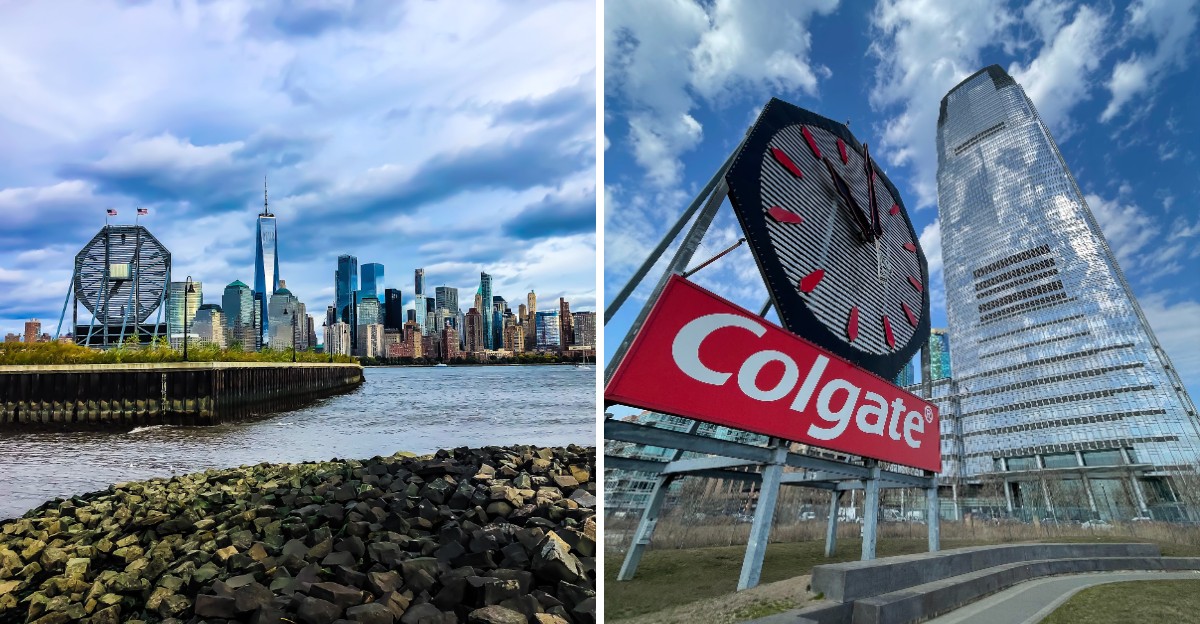
A minute hand nearly 26 feet long sweeps around a clock face so big you can read it from Manhattan. Yep, from across an entire river.
That’s the detail I can’t get over.
The clock once sat on top of a busy soap factory. Then the factory vanished, and the clock just kept on ticking.
I have to admit, that’s a pretty stubborn piece of machinery.
Its shape is an octagon, borrowed from an old laundry soap bar. Pilots even use it as a checkpoint when they fly low over the water.
Now that is a lot of responsibility for a timepiece.
Today it stands right on the New Jersey waterfront, glowing at night and free to visit any hour. I’d absolutely make a detour for that, and the skyline behind it seals the deal.
Fifty Feet Across And Built To Be Seen From Another State

Size is the whole point here, and the Colgate Clock does not hold back. Its face measures 50 feet across, making it one of the largest clocks in the world.
Let that number sink in for a second. A standard school bus is about 40 feet long, so you could park one across this face with room to spare.
The surface covers about 1,963.5 square feet. That’s bigger than plenty of family homes, and it’s all devoted to telling you the time.
Then come the hands. The minute hand stretches 25 feet 10 inches, while the hour hand reaches 20 feet.
Those hands aren’t just for show either. The clock is designed to stay accurate within one minute of the correct time.
It also gets regular maintenance to keep it honest. Goldman Sachs handles that job these days, which is a funny twist for a soap company’s sign.
All this scale serves a purpose. The clock was meant to be read from far away, and it still is.
You can spot it clearly from Lower Manhattan across the Hudson River. Few clocks in America can claim that kind of reach, and fewer still do it while standing in New Jersey.
Blame An Old Bar Of Laundry Soap For That Odd Shape
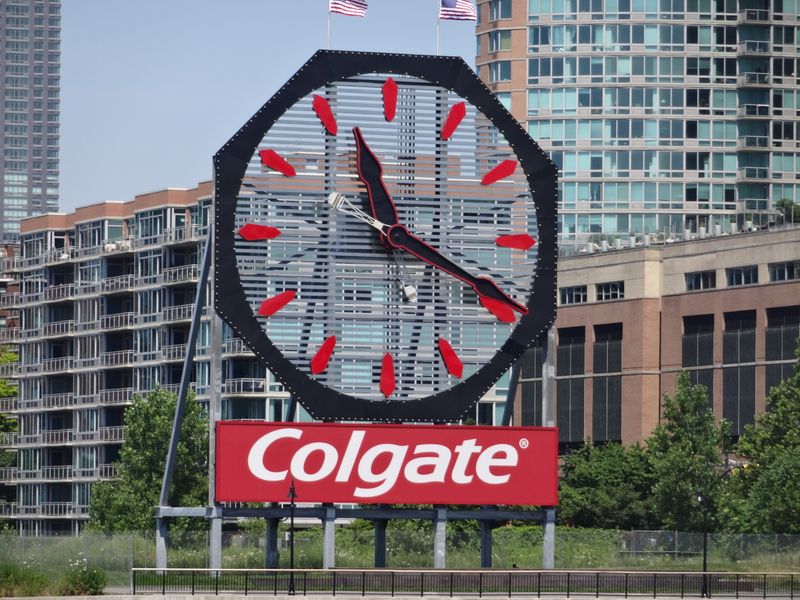
Most big clocks are round. This one has eight sides, and the reason is wonderfully practical.
Colgate made a laundry cleanser called Octagon Soap, first produced in 1887. The clock’s shape was inspired by that product.
So in a way, the clock is a giant soap bar that tells time. Clever marketing from a company that knew how to stick in your memory.
Once you know the story, you can’t unsee it. Every angle of that frame is a quiet nod to washday.
The octagon also makes the clock instantly recognizable. Even from across the water, the outline stands out against the skyline.
That shape gives photos a strong, bold look. It frames the face like a badge rather than a plain circle.
It’s a small design choice with big staying power. Octagon Soap is a distant memory for most people, yet its shape still greets thousands of passersby.
Fun fact for your next trivia night. The clock is basically a century-old advertisement that outlived the product, the factory, and the original sign wording.
That’s a pretty good return on a design idea. Not bad for something inspired by laundry.
The Earlier Clock Was Smaller, And It Moved To Indiana
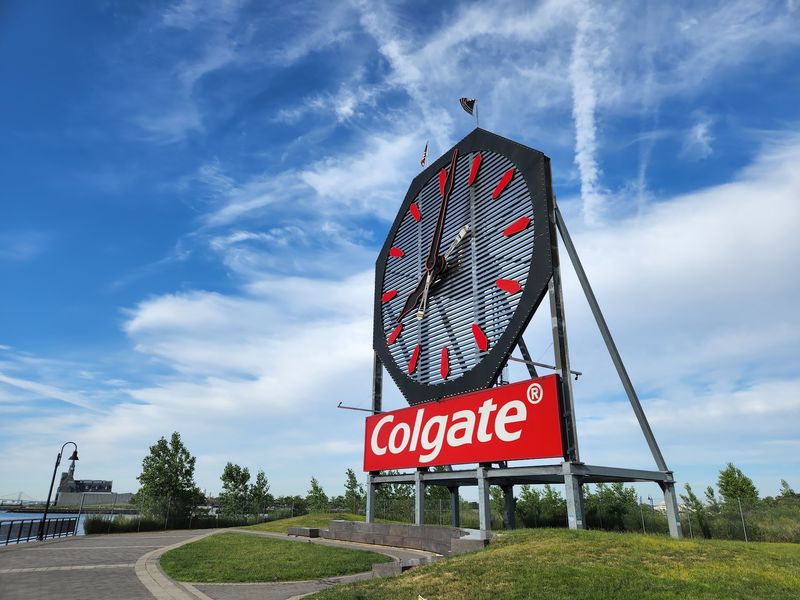
Before this giant arrived, there was a warm-up act. In 1906, Colgate built a 38-foot clock for its 100th anniversary.
Colgate engineer Warren Davey designed it. The Seth Thomas Clock Company built it, and it sat on an eight-story warehouse at 85-99 Hudson Street.
By 1908, it glowed with 1,607 light bulbs. Huge 20-foot letters beside it spelled out Colgate’s Soaps-Perfumes.
Think about how dazzling that must have looked in the early 1900s. Electric signs were still a novelty, and this one was enormous.
Still, Colgate wanted something bigger. In 1924, the current 50-foot clock replaced the original.
The older clock didn’t go to waste. It was relocated to a Colgate factory in Clarksville, Indiana.
I love that the first clock got a second career out west. It’s like a retired athlete coaching in a new town.
The company’s roots in the area run deep too. William Colgate founded the business in New York City in 1806, and a starch factory opened in Jersey City in 1820.
By 1910, Jersey City had become the company’s headquarters. The clocks were basically the business announcing it was here to stay.
A Mayor Started It Ticking On A December Day In 1924
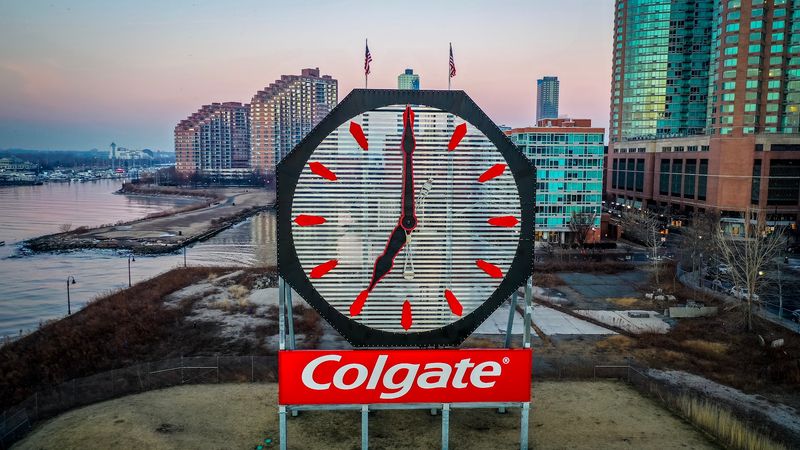
December 1, 1924, was the big day. Jersey City Mayor Frank Hague started the brand-new clock, and it has been marking time ever since.
Back then it sat high on the Colgate factory roof. From that perch, it watched over decades of river traffic and a changing city.
Keeping a clock this size running takes dedication. John A.
Winters looked after it from the 1930s until 1976.
That’s roughly four decades with one caretaker. Imagine having a 50-foot clock as your main coworker.
The signage changed over the years too. In 1983, the Soaps-Perfumes letters were swapped for a giant toothpaste tube advertisement.
That update fits the brand most people know today. Colgate had shifted from soap fame to toothpaste fame, and the sign followed along.
Every era left a mark on the clock’s story. Mayors, maintenance workers, and marketing teams all played a part.
So when you look at it now, you’re seeing a century of small decisions. Each one helped keep this landmark relevant instead of letting it fade into scrap.
Plenty of old rooftop signs disappeared. This one kept earning its spot.
When The Factory Disappeared, The Clock Came Down To Earth
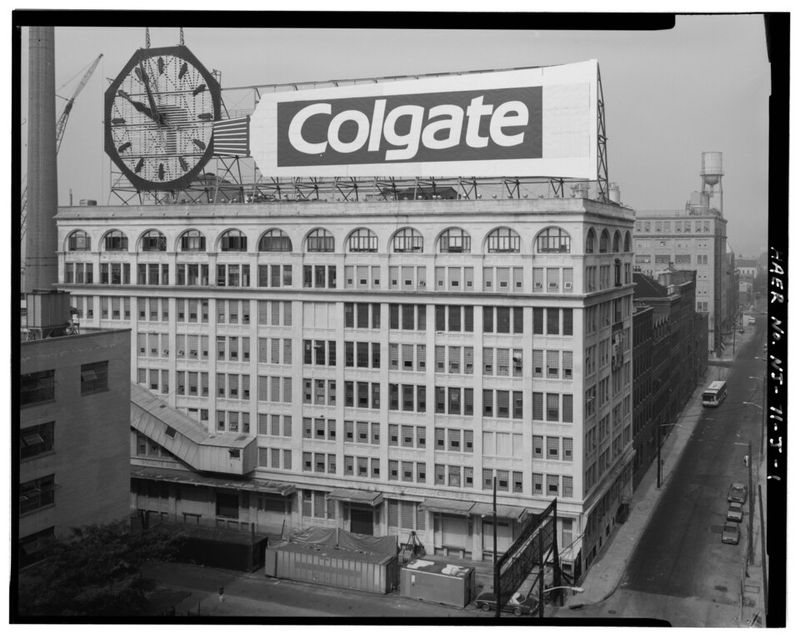
Here’s the plot twist in the title. Colgate announced plans to leave Jersey City in 1985, but its historic factory continued operating until August 1988.
Most of the factory complex was demolished, although one of the original Colgate buildings still stands at 95 Greene Street. Yet somehow, the clock survived the cleanup.
In 1988 and 1989, crews lowered it from the old rooftop to ground level. The toothpaste tube ad was removed around that time.
Picture the engineering puzzle of moving something this huge. Even the minute hand alone is longer than many living rooms.
The moves weren’t finished, though. In the early 2000s, the clock shifted south to make room for the Goldman Sachs Tower.
The attached Colgate sign also shrank then. That change followed the Hudson River No Billboard law.
Things got a little messy behind the scenes. In 2009, Jersey City sought money from Colgate over an alleged promise tied to maintaining the clock.
Through all that shuffling, the clock kept its spot as the waterfront star. It’s a survivor in the truest sense.
And that might be my favorite part of the whole story. Buildings came and went, but this clock simply refused to leave the riverbank.
Pilots Use It As A Checkpoint Over The Hudson

Some landmarks just look nice. This one actually helps keep the sky organized.
The Colgate Clock is a mandatory reporting point for flights in the Hudson River VFR corridor. That’s the low-altitude route below the busy Class B airspace.
In plain words, small planes and helicopters flying along the river use the clock as a marker. Pilots report their position when they pass it.
Now that’s a job title most clocks never get. It’s part timekeeper, part traffic signal for the sky.
The giant face makes sense for this role. A 50-foot octagon is hard to miss, even when you’re moving fast.
So the next time you’re standing nearby, glance up at the river air. Any aircraft cruising past might be checking in because of the very clock in front of you.
It adds a fun layer to a simple visit. You’re not just looking at an old ad.
You’re looking at a working piece of New York area aviation. Kids especially might get a kick out of that detail.
A soap sign turned flight landmark? Only in this stretch of New Jersey.
After Dark, Those LED Lights Steal The Show
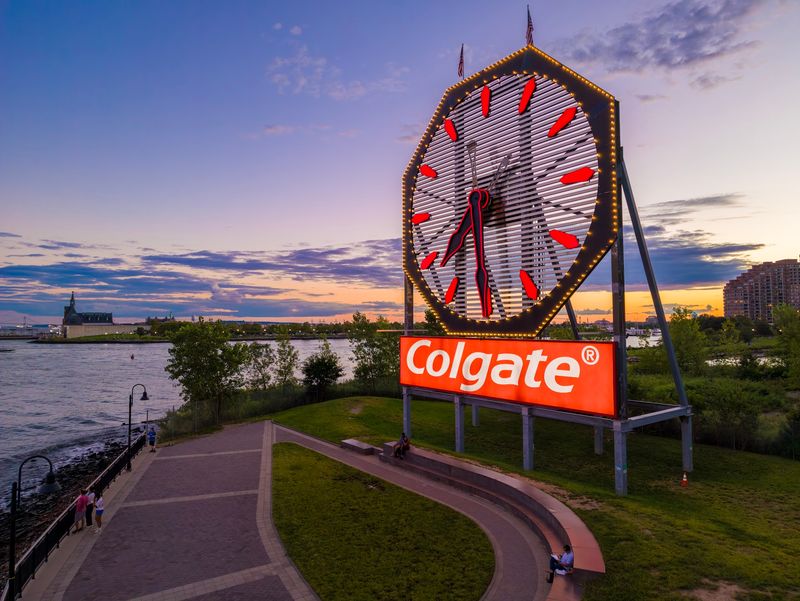
Sunset changes everything at this spot. As the sky dims, the clock face lights up and Lower Manhattan starts to sparkle across the water.
The clock got a refresh in 2013. That refurbishment added new LED lights, giving it a bright, modern glow.
It’s a nice callback to the old days. The first Colgate clock dazzled with 1,607 bulbs back in 1908.
Today’s version shines more efficiently. Same spirit, smarter lighting.
In 2014, the clock was set on a new foundation and platform. A bench at its base carries an inscription you’ll want to read.
It says the clock has been marking the passage of time since 1908. Pretty poetic for a soap company sign.
Evening is a great time for photos. The lit clock in the foreground with the glowing skyline behind makes a striking shot.
The site is open 24 hours, so you can catch it whenever your schedule allows. Early risers and night owls both get their turn.
Bring a phone with decent night mode. You’ll probably take more pictures than you planned.
Getting There Is Easier Than Setting An Old Alarm Clock
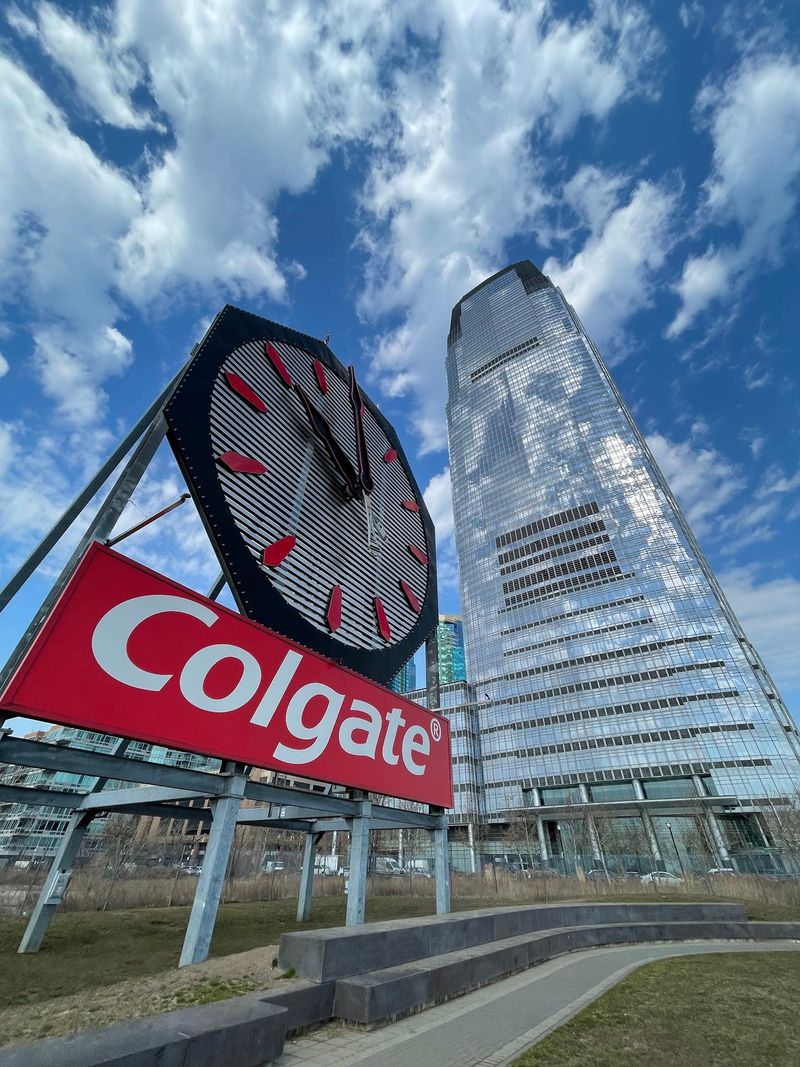
Good news for anyone coming from Manhattan. The PATH train’s Exchange Place station sits close to the clock, making the trip simple.
From the station, head south along the waterfront. The walk is short and comes with river views the whole way.
Driving is possible, but parking right by the clock is limited. Public transit or walking is usually the smoother choice.
The Colgate Clock works well as part of a bigger outing. Pair it with a stroll along the walkway or a coffee from somewhere nearby.
It’s a quick stop, not an all-day attraction. Plan on enjoying the clock, snapping photos, and soaking in the skyline.
Timing matters if you love good light. Golden hour and sunset make the clock and Manhattan look their absolute best.
Since the site never closes, you can make it fit almost any plan. Morning jog, lunch break, or late-evening walk all work.
For a slice of New Jersey history with a view to match, it’s hard to beat. The factory may be gone, but this clock is still right on time, mostly.
