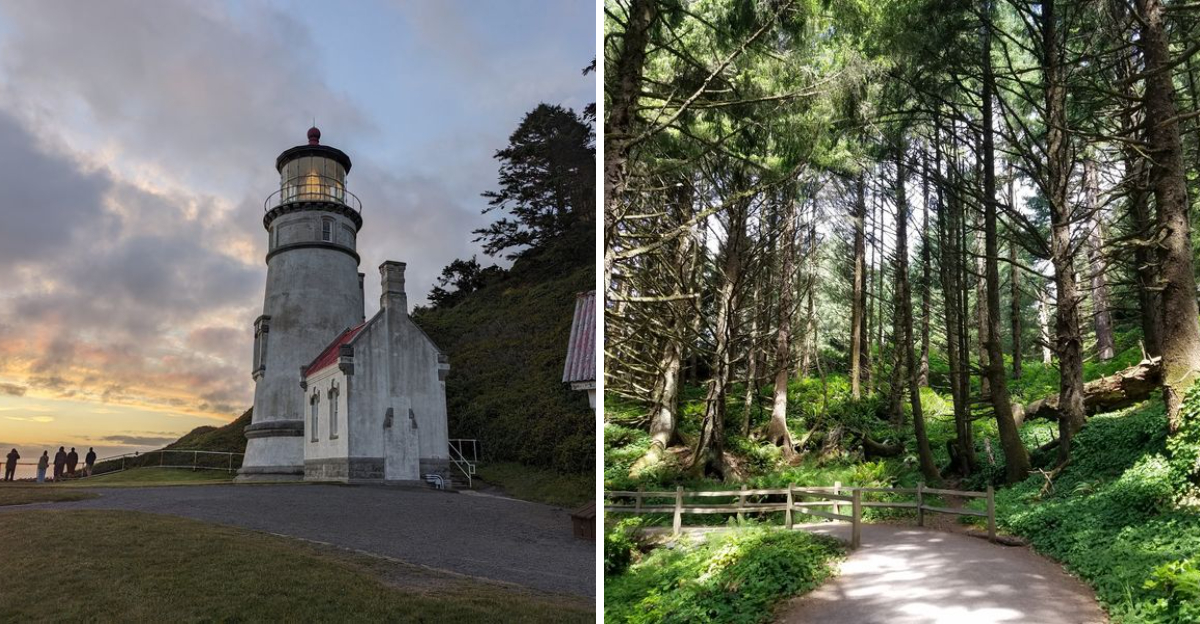
Fall is a time when the veil feels thin, and no place in Oregon embodies that eerie sensation quite like this historic landmark. The iconic lighthouse, perched on a dramatic cliff, is one of the most photographed in the world.
But behind its postcard-perfect beauty lies a reputation for ghostly encounters.
The source of the haunting is said to be a Victorian-era spirit named “Rue,” uncovered during a Ouija board session years ago. Guests have reported disembodied footsteps, knocking, and the feeling of a spectral presence in bed.
The historic keeper’s quarters, now a bed and breakfast, are believed to be the center of this activity.
Fall is the perfect time to experience this blend of history and mystery. The season brings a special atmosphere, inviting the brave to explore its haunted halls. It’s a chance to step into a living ghost story on the Oregon coast.
The Grey Lady Legend That Made This Headland Famous
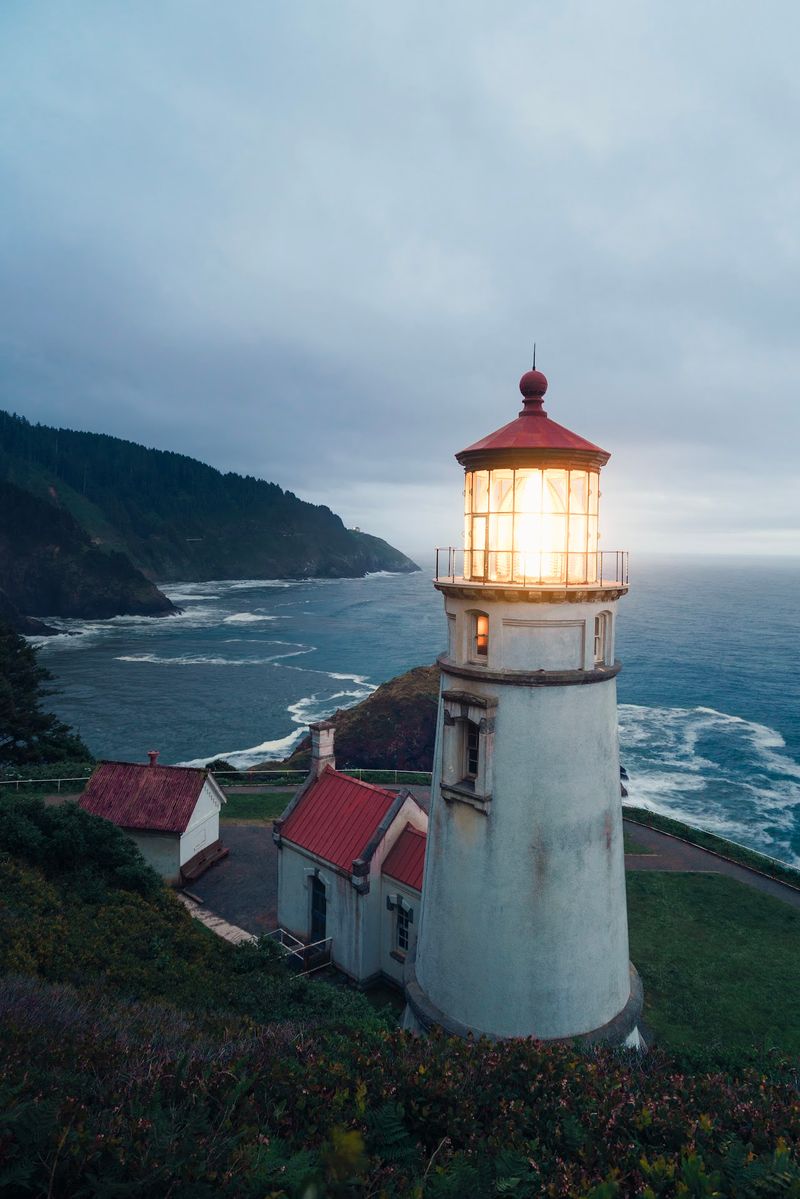
Ask anyone along the central Oregon coast about ghost stories, and Heceta Head comes up fast. The legend centers on a figure people call the Grey Lady, said to be the spirit of a woman connected to the old keeper’s quarters from the lighthouse’s early days.
Stories about her have circulated for decades, passed along by caretakers, guests, and workers who spent time in the building. Most accounts describe small, harmless oddities rather than anything frightening.
Creaking floors upstairs. A window that seemed to open on its own. Movement glimpsed near the attic.
What makes the tale stick is the setting itself, since a remote headland wrapped in fog does half the storytelling for you. The lighthouse still functions as a navigational aid, so the property is very much alive rather than abandoned.
Volunteers and park staff often share the history and the folklore side by side, letting visitors decide what to make of it. That balance is exactly why horror fans love the place in fall.
Autumn Fog Turns The Whole Coastline Into A Movie Set
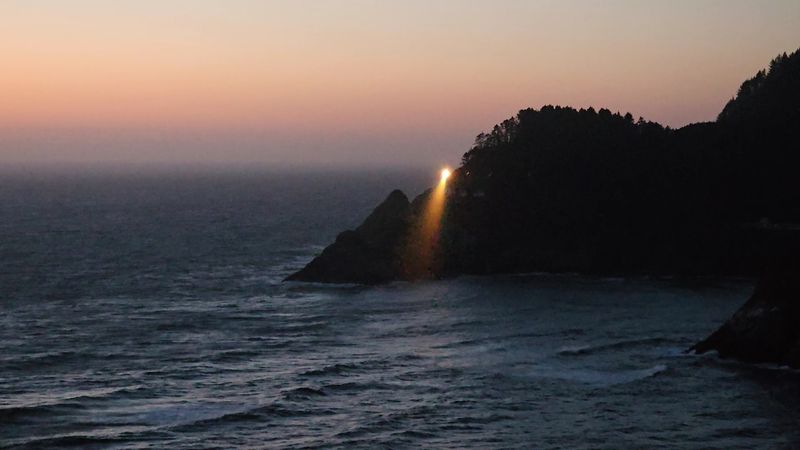
October along this stretch of Highway 101 delivers weather that feels custom-built for ghost stories. Mist hangs low over the water, the headland disappears and reappears, and the beam from the tower slices through the grey in a way summer sunshine never allows.
Photographers show up specifically for these conditions. A clear blue day is pretty, sure, but fog gives the images atmosphere that no filter can fake.
Dress for it, because coastal damp sinks in quickly. A waterproof layer beats a heavy coat, and shoes with grip matter on wet gravel.
Sound changes too when the fog settles. Waves get muffled, gulls sound farther away, and the barking of sea lions on the rocks below carries strangely up the cliff face.
Visibility can drop enough that the tower vanishes entirely from the parking area, only to reappear as you climb the trail. That slow reveal is genuinely thrilling, and it happens far more often in autumn than in July.
Climbing The Half Mile Trail To The Tower
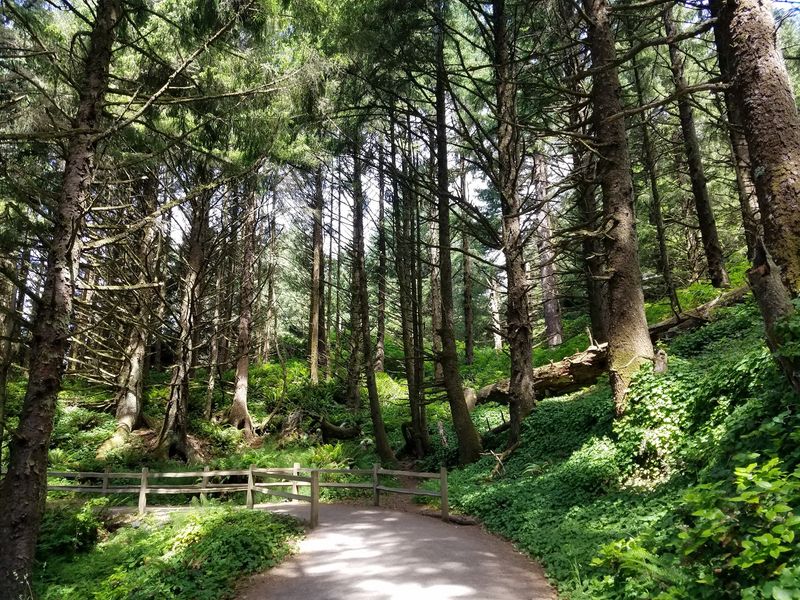
Getting to the lighthouse requires a short uphill walk, roughly half a mile of gravel path from the lower parking area. Nothing extreme, but the grade is steady enough that most people pause at least once.
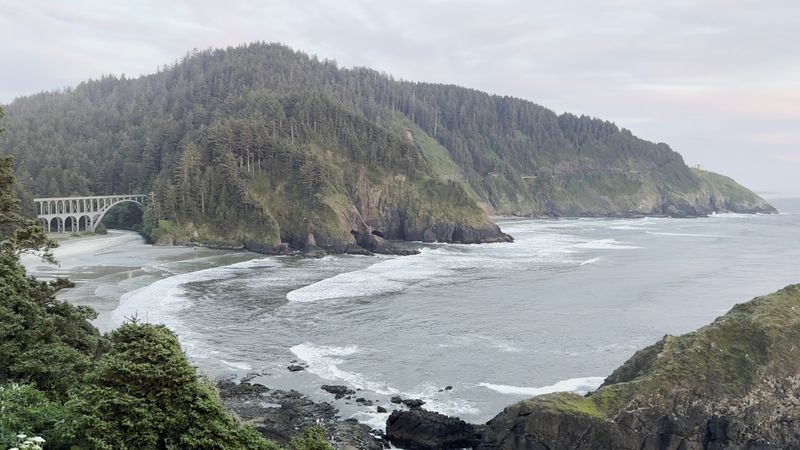
Honestly, the pauses are the best part. Every switchback opens up another view of the beach below and the arched bridge in the distance.
Blackberry bushes crowd the edges in late summer and early fall. Chipmunks dart across the path constantly, and garter snakes sun themselves on warm gravel when the clouds break.
Plan on five to ten minutes if you move quickly, longer if you keep stopping for photos, which you will. The surface is loose in spots, so wheelchairs and strollers will struggle here.
Older visitors manage it fine by taking a slow pace and using the wide shoulders to rest. Reaching the top and seeing the tower up close, framed by wind-bent trees, makes the effort feel completely worthwhile.
Inside The Keeper’s Quarters And Its Bed And Breakfast Rooms
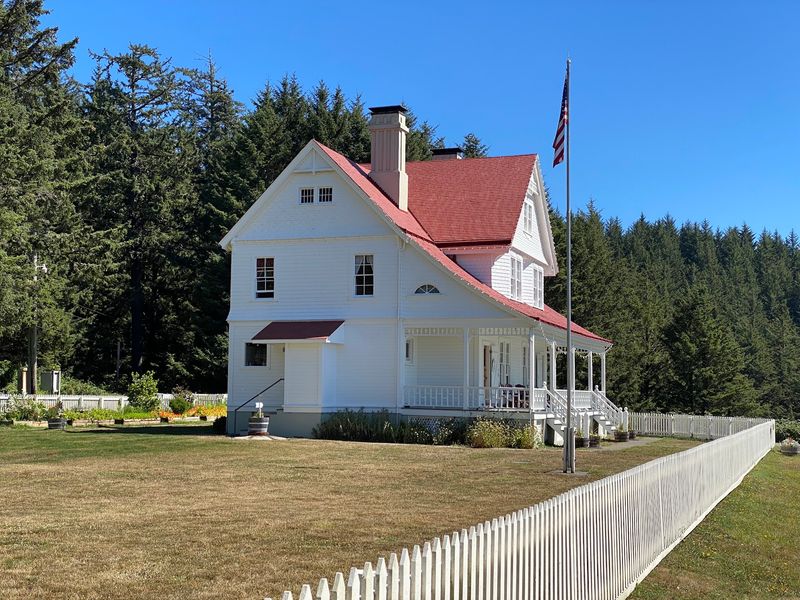
The old keeper’s house sitting just below the tower is the true heart of the ghost stories. Built in the 1890s to house the families who tended the light, the structure now operates as a bed and breakfast with six rooms.
Guests who stay overnight get something day visitors never experience, which is the headland after everyone else drives away. Picture the beam sweeping across the fog while you sit on the porch with the ocean roaring below.
Rooms carry period furnishings and views that stretch straight out to open water. The attic, the spot most often tied to the Grey Lady tales, sits above the guest floors.
Booking ahead matters year round, and fall weekends fill quickly because horror fans specifically target the season. Even if an overnight stay is not in the plan, the exterior and grounds are open to wander.
Standing near that white siding with the wind pushing at your back, the legend suddenly feels a lot less far-fetched.
What The Volunteers And Park Hosts Will Tell You
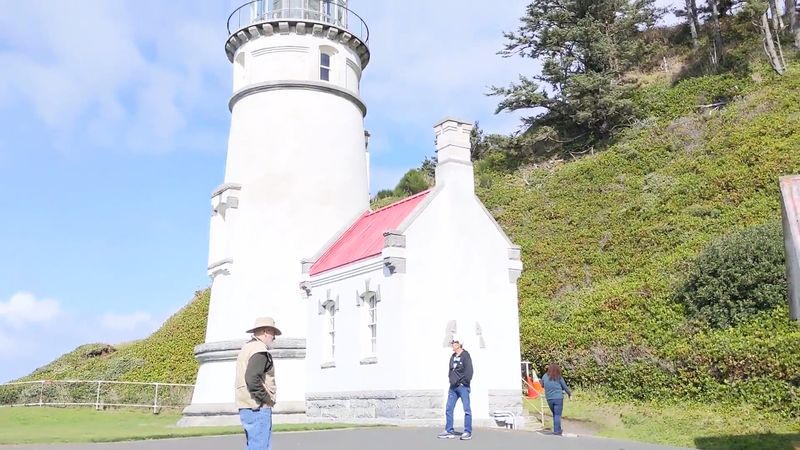
Some of the best material at Heceta Head does not come from a plaque. Volunteers and park hosts stationed at the lighthouse during open hours share stories about construction, shipwrecks, keeper families, and yes, the hauntings.
They tend to be generous with their time. Ask a question and you may get fifteen minutes of coastal history you never knew you wanted.
Tower access is limited, so visitors usually get into the base structure rather than climbing to the lantern room. Interpretive displays and historical exhibit rooms fill in the gaps nicely.
Volunteer coverage often runs during midday hours, roughly late morning through mid afternoon, though schedules shift with the season. Arriving in that window gives the best chance of catching a talk.
Rangers sometimes set up spotting scopes on the cliff edge so people can watch sea lions hauled out on the rocks far below. Small touches like that turn a quick photo stop into an afternoon.
Tide Pools And The Beach Below The Cliffs
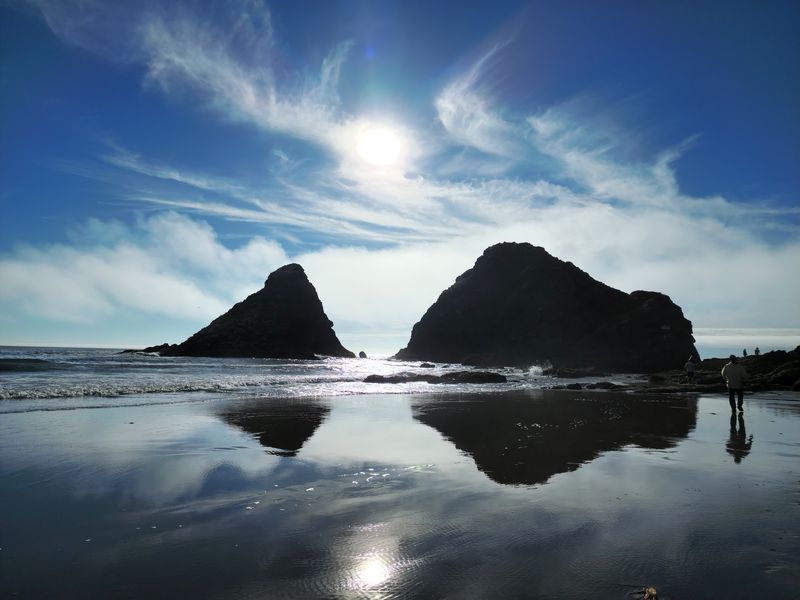
Down at the bottom of the hill, before the trail even begins, there is a beach that plenty of people drive right past. Big mistake.
At low tide the rocky edges reveal pools packed with anemones, tiny crabs, and sea stars clinging to the stone. Check a tide chart before the trip, because timing changes everything here.
Kids lose their minds over these pools, and adults quietly do the same. Sea caves become visible when the water pulls back far enough.
The sand is easy to reach from the parking area, no climbing required, which makes it a fine spot for anyone skipping the uphill walk. Driftwood piles up after storms, and fall brings some impressive wave action.
Footing on wet rock is slippery, so move carefully and keep an eye on incoming water. Looking up from the beach, the lighthouse sits impossibly high above, and that angle gives you a real sense of how dramatically this headland rises out of the sea.
Whale Watching And Wildlife From The Headland
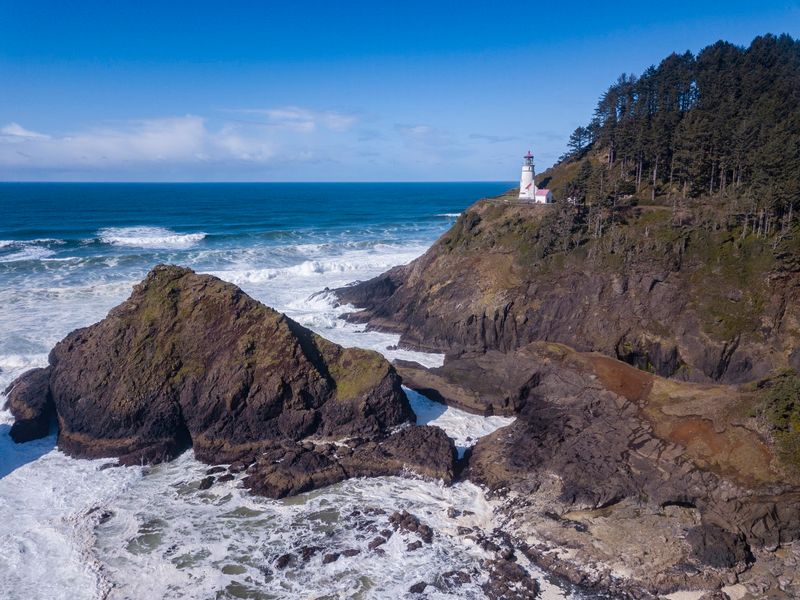
Wildlife shows up here without much effort on your part. Sea lions occupy the rocks below the cliffs and announce themselves loudly, especially on calm mornings when sound carries.
Grey whales pass along this coast during migration seasons, and the elevated viewpoints near the lighthouse make solid observation spots. Bring binoculars if you have them.
Bald eagles nest in the area, and younger birds with mottled brown plumage often confuse first-time spotters. Cormorants and murres crowd the offshore rocks in noisy clusters.
Just south of the park, past the tunnel on Highway 101, there is a pullout that looks back toward the lighthouse. It doubles as a good place to scan the water and often puts sea lions in easy view.
Patience pays off more than luck. Sit for twenty minutes with your eyes on the horizon and something usually breaks the surface, whether it is a spout, a fin, or a raft of birds working a bait ball.
The Gift Shop That Punches Above Its Size
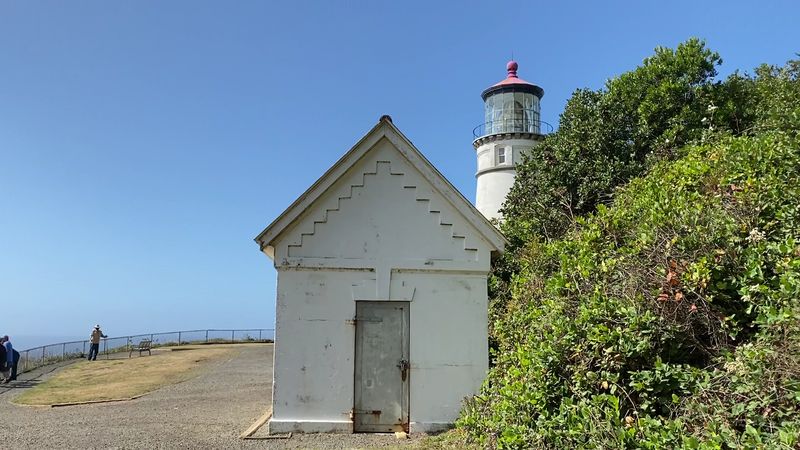
Tucked near the keeper’s house, the little gift shop surprises almost everyone who wanders in. The space is small, but the shelves are stocked thoughtfully with maritime books, lighthouse models, postcards, and local goods.
Staff there take real care with packaging. Fragile items get wrapped properly, which matters when your souvenir has to survive a long drive home.
Autumn brings a heavier lean toward the spooky side of the inventory, with ghost story books and lighthouse lore filling more shelf space. Horror fans tend to leave with reading material.
It also functions as a warm-up station on cold, windy days, which should not be underestimated in November.
Chatting with whoever is behind the counter often yields a tip about where to catch the best sunset angle or which pullout has the clearest view of the tower. Local knowledge beats any app.
Buying something here supports upkeep of the site, so the purchase does a little more than clutter your shelf at home.
Timing Your Visit For Golden Hour And Long Autumn Shadows
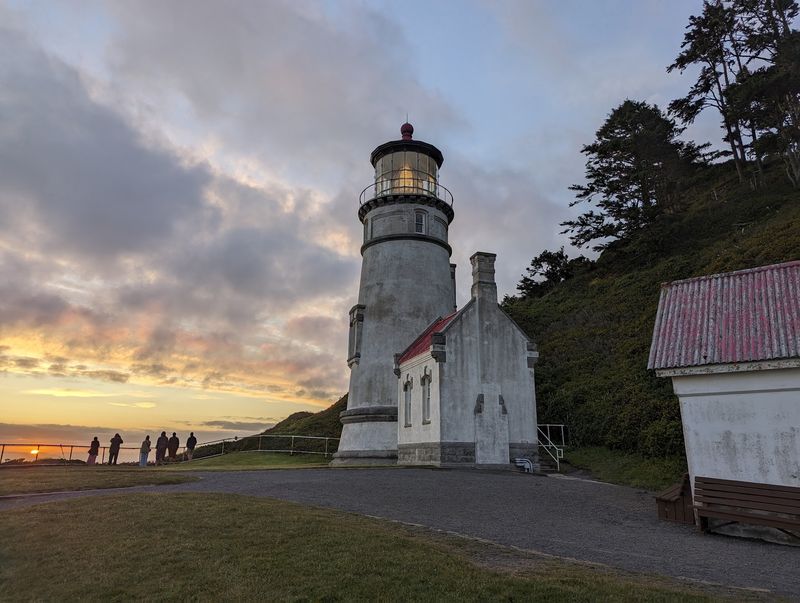
Late afternoon changes the character of this place completely. Around six in the evening during shoulder season, the sun drops low and washes the white tower in warm orange light that makes the whole headland glow.
Shadows stretch long across the gravel path. The ocean turns from grey to copper.
Park gates operate from early morning until evening, generally six to nine, though the lighthouse building itself keeps shorter hours than the grounds. Checking current schedules before driving out saves disappointment, since maintenance and cleaning occasionally close interior access.
Autumn sunsets arrive much earlier than summer ones, which works in your favor if you would rather not wait until nine at night.
Bring a headlamp or phone light for the walk back down once the light fades. The path is not lit, and the forest darkens fast under those trees.
That descent in near darkness, with the beam sweeping overhead and the surf pounding below, might be the most memorable few minutes of the whole trip.
Practical Notes Before Making The Drive
A few logistics smooth out the whole experience. Parking sits in a paid state park lot near the beach, and there is room for RVs, which helps if you are road-tripping the coast.
Restrooms are available near the lot and kept in decent shape, though they run campground-style with hand sanitizer rather than full sinks.
Cell service gets patchy along this section of Highway 101, so download directions ahead of time. The turnoff comes up quickly if you are driving north from Florence.
Weather shifts fast out here, and a sunny start can turn into sideways drizzle within the hour. Layers solve most problems.
Combining the visit with nearby stops works well, since Hobbit Beach and the Cape Creek Bridge overlook sit close by and add variety to the day.
Give yourself at least two hours to walk up, explore, and get back down without rushing.
Address: 725 Summer St, Florence, Oregon
