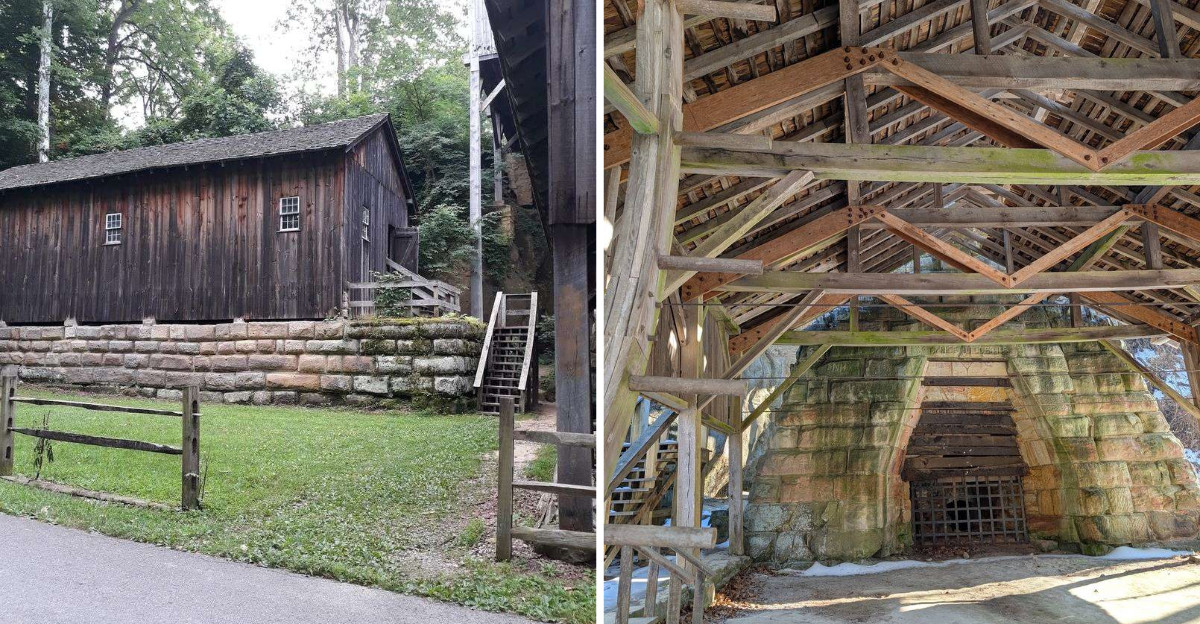
That gravel road winding through hayfields and thick stands of oak in Ohio did not look like the kind of road that ends at anything important, and that is exactly why I loved the surprise waiting at the end of it.
A stone stack rose out of the trees like something a giant left behind, the furnace that made iron from the 1850s until the 1890s, and reading about it before the visit and standing in the shade of the casting shed are two completely different experiences.
The little company town that once surrounded it is mostly gone now, though the bones of it are still here in the store, the ironmaster’s house, and the old covered bridge.
I spent about an hour and a half wandering, and I kept finding small details I had missed on the first pass, bits of metal and broken brick half-swallowed by the grass.
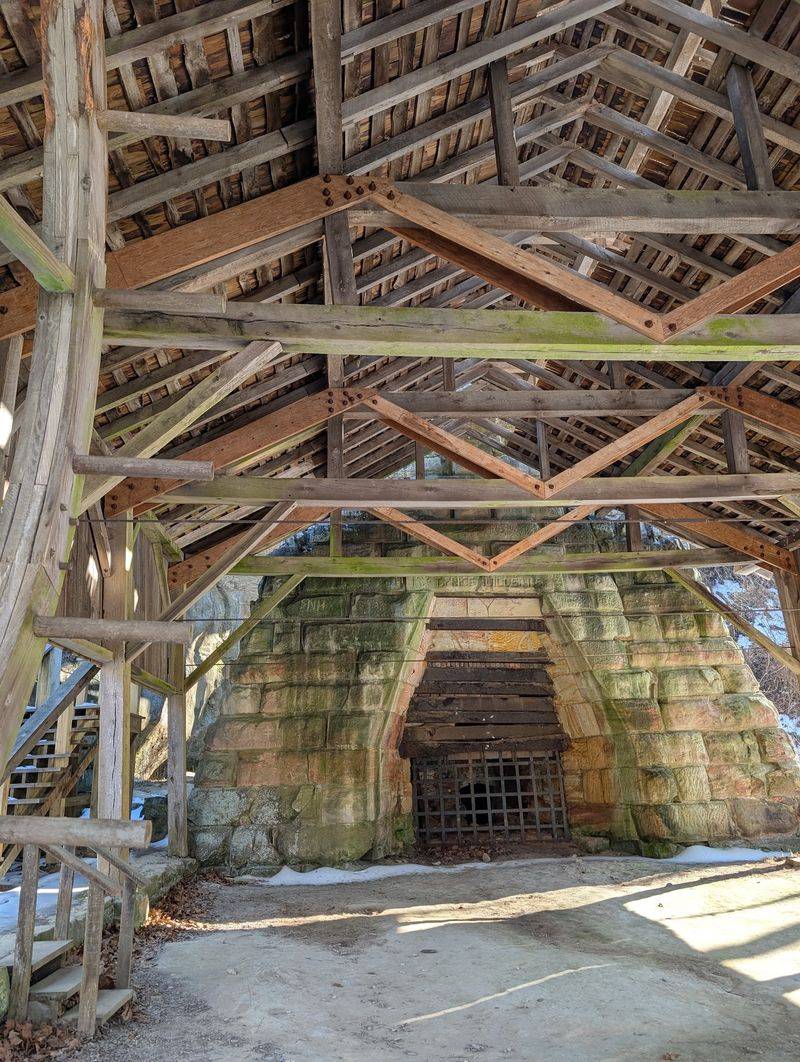
The stack rises sixty feet above the forest floor, and the stonework is still tight after more than a century of weather.
History that feels physical instead of behind glass lives in this quiet corner of the state, and it deserves a spot on any traveler’s map.
The Stone Stack That Refused to Fall
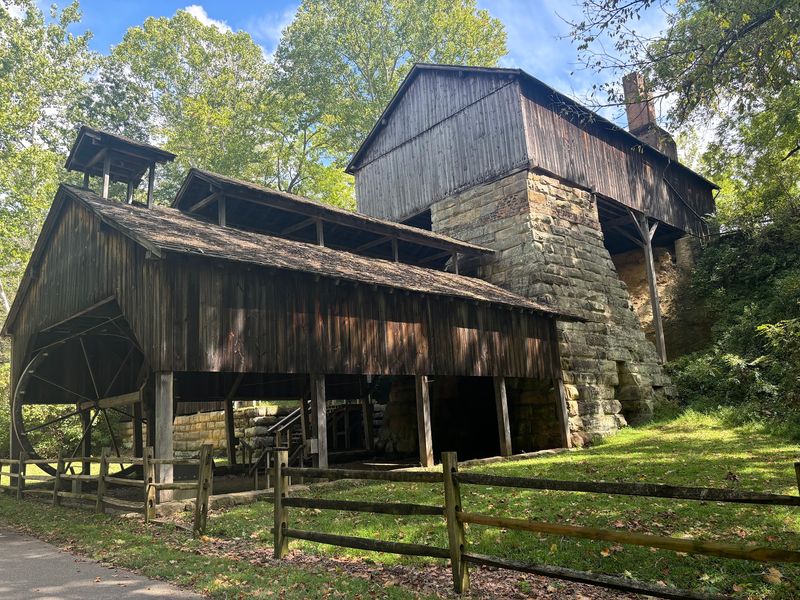
My first reaction was simple: it is bigger than I pictured. The furnace stack at Buckeye is the real thing, original stonework that has been holding its shape since the early 1850s, and it towers over the clearing with a kind of stubborn patience.
Thomas Price built it, backed by Newkirk, Daniels and Company, and it began turning out charcoal iron in 1852. Early on it produced somewhere around seven tons of iron a day.
After the stone stack was rebuilt and improved, that number climbed to roughly twelve tons daily, which was serious output for the time. Reviewers often mention how well preserved this one is compared to other furnaces scattered across Jackson and Vinton counties, where usually only crumbling rock walls remain.
Walk a slow circle around the base and you start noticing the scorch-darkened stone near the hearth, plus the way the whole structure was built into the hillside so materials could be dumped in from above. That hillside placement was not decoration.
It was clever engineering, letting gravity do work that would otherwise take dozens of men and mules.
Inside the Casting Shed Where Pig Iron Got Its Name
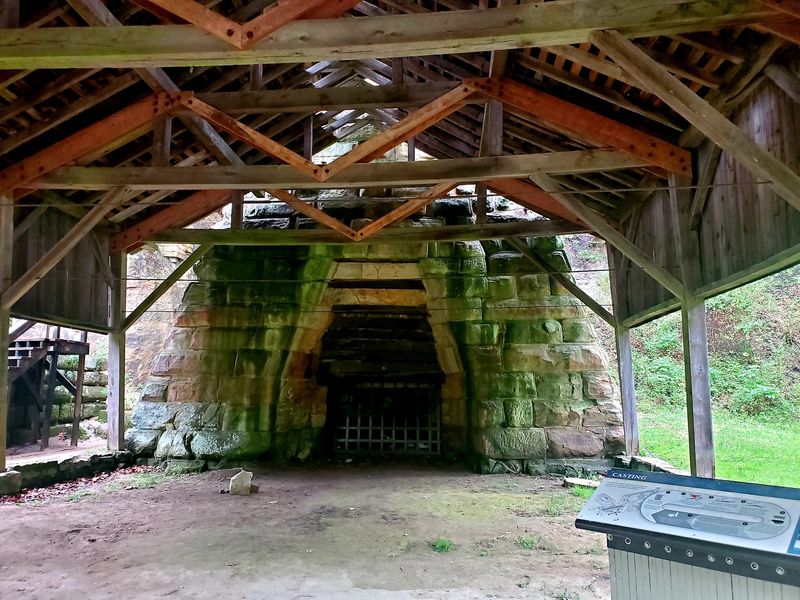
Here is the fact that stuck with me longest, and it is one plenty of visitors mention too. Molten iron was poured into a long sand channel called a sow, with smaller side channels branching off it, and when the metal cooled workers broke those chunks free.
Somebody thought the arrangement looked like piglets nursing, and the name pig iron stuck for good.
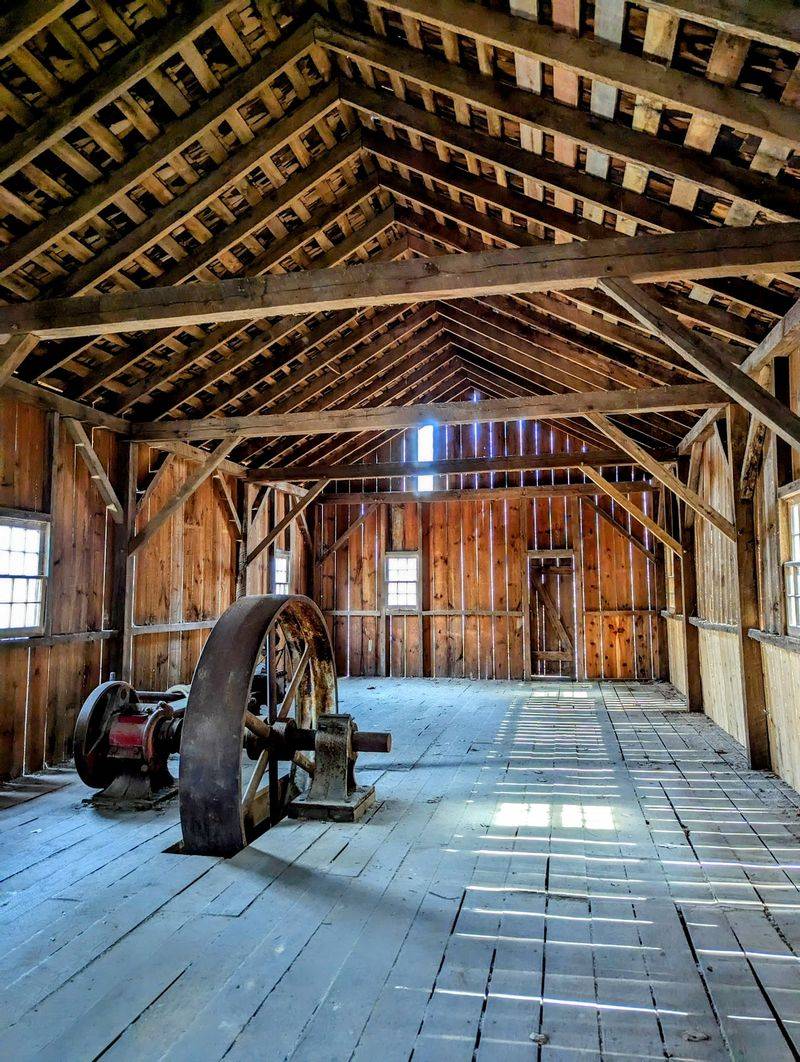
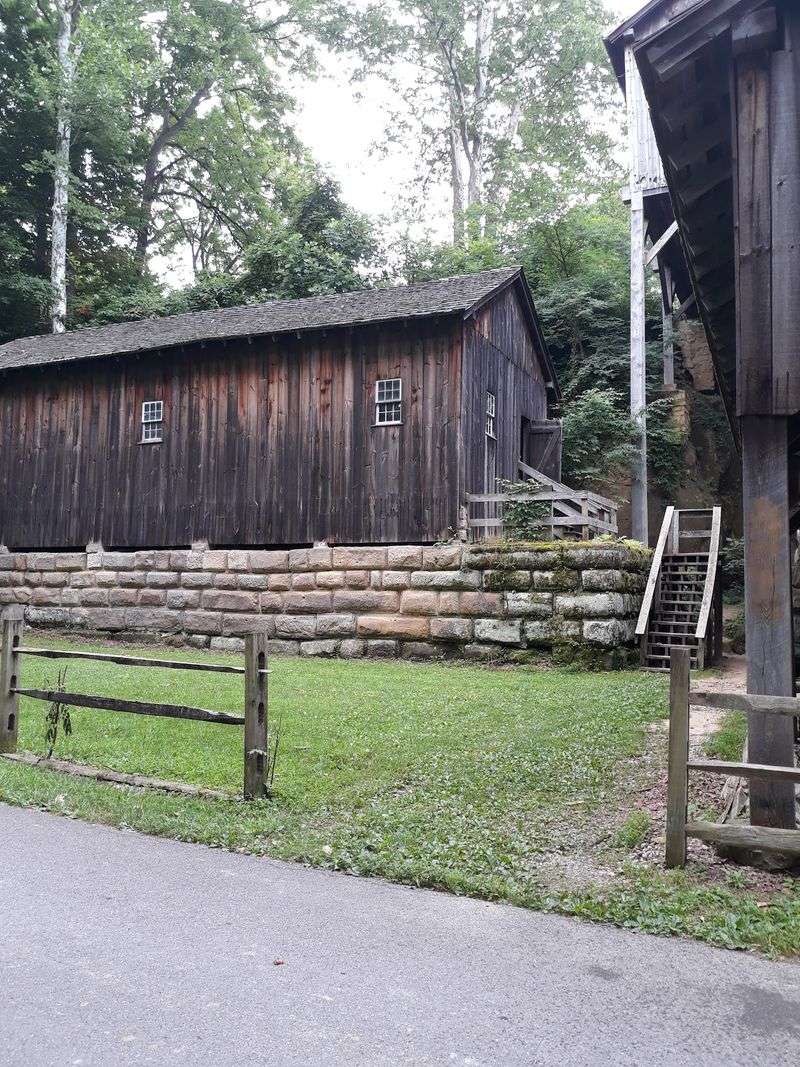
The casting shed at Buckeye lets you see the layout instead of just imagining it. Sand floor, heavy timber overhead, open sides to let the heat escape.
I stood there trying to picture the noise and the temperature, because this was not a comfortable job by any measure. Men worked near liquid metal in a wooden building during Ohio summers.
Interpretive plaques nearby explain each step, which makes the self-guided walk genuinely useful even if you show up on a day the museum is closed. Kids seem to latch onto the pig iron story immediately, and honestly, so did I.
It is the kind of small detail that turns a pile of old stone into an actual workplace with actual people.
Climbing Toward the Charging Loft
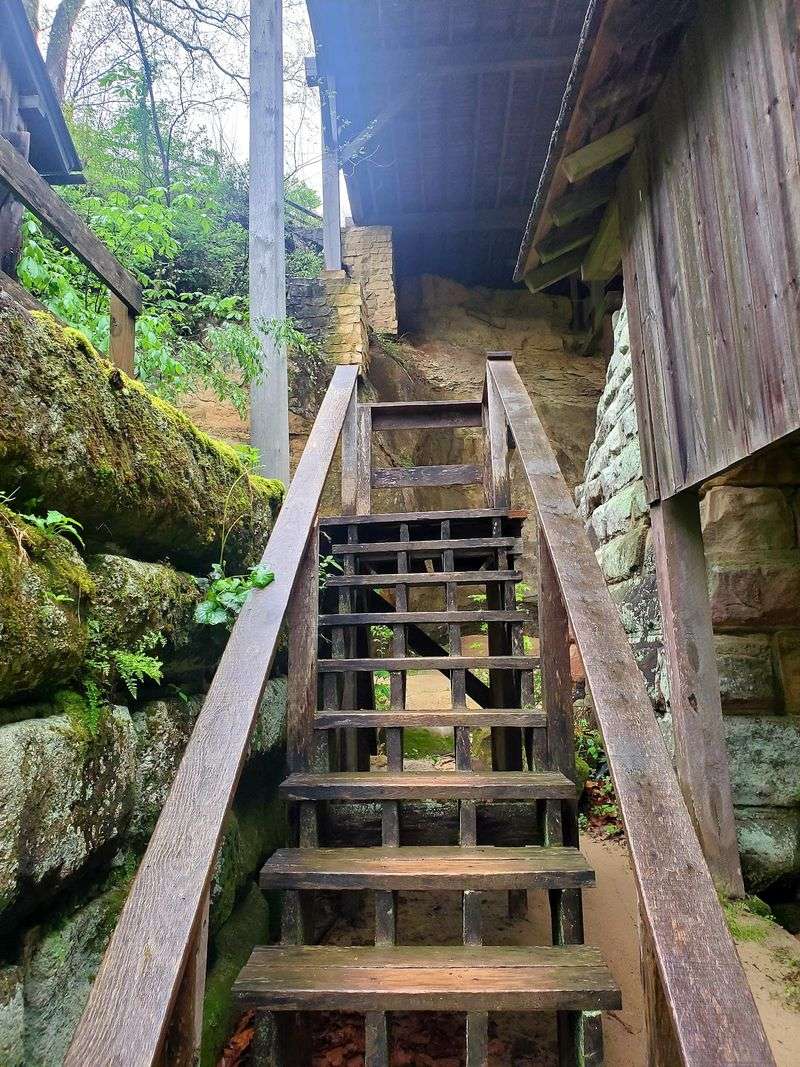
Up above the stack sits the charging loft, and it might be the part of the site that best explains how the whole operation actually functioned. Workers hauled iron ore, limestone, and charcoal across a wooden bridge from the hillside and dumped them straight down into the burning throat of the furnace.
Load after load, hour after hour, day and night. Once a furnace went into blast it typically stayed lit for months at a stretch.
Standing near the top gave me a better sense of why this location made sense in the first place. Ore was in the ground here, limestone was nearby, and the surrounding forests supplied endless wood for charcoal.
Everything the furnace needed sat within a few miles, at least until the trees ran short. The reconstruction of these buildings happened in the 1960s and early 1970s, and what makes it trustworthy is that researchers interviewed men who had actually worked at furnaces like this one.
That detail matters. It means the wooden structures you are looking at were shaped by memory, not guesswork, and that gives the whole complex an unusual level of accuracy.
The Company Store, Now a Museum Worth Your Time
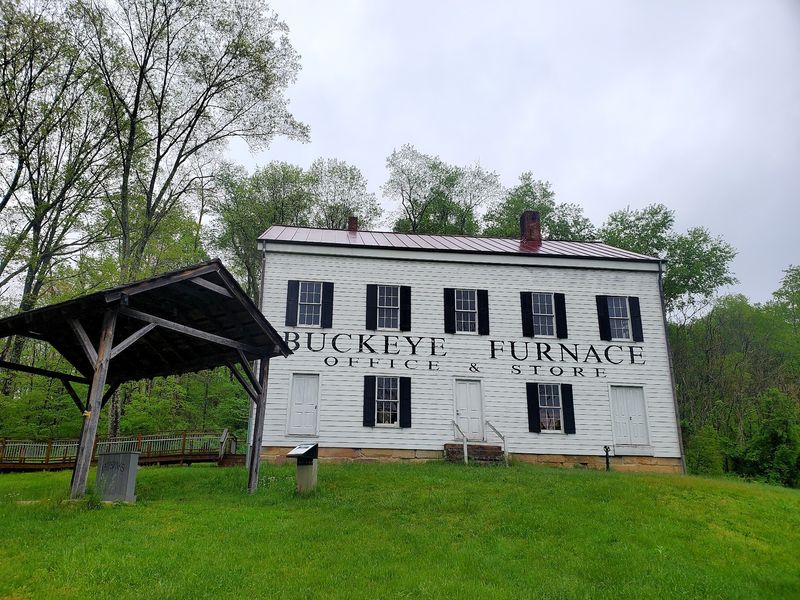
Do not skip the store down the road. It looks modest from the outside, but inside is where the whole story gets stitched together with exhibits on iron production and local Jackson County history.
The building serves as the orientation point, museum, and gift shop all at once. There is also a video room with a presentation about daily work and life at the furnace.
What the store represents historically is a little uncomfortable, and the exhibits do not shy away from it. Company stores were where workers spent wages that often came as credit rather than cash, which tied families tightly to the furnace that employed them.
Visitors regularly mention how knowledgeable and welcoming the staff are, and several note that the curator is especially good at explaining things to children. If you have questions about the region, this is the place to ask them.
One practical warning: the museum runs seasonally, generally from late spring into October, and usually on weekends from around midday to late afternoon. Check hours before driving out, because plenty of people have arrived on a Wednesday and found only the grounds open.
A Covered Bridge From 1872 Still Standing Nearby
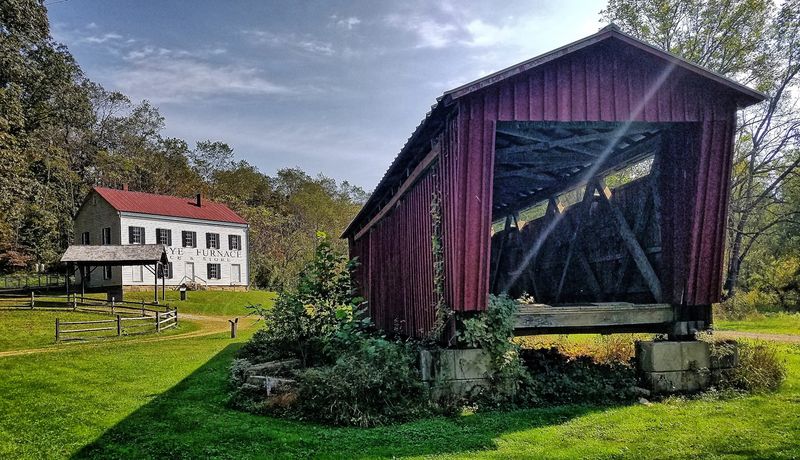
Covered bridges have a way of making a place feel older than it is, except in this case the bridge really is old. The Buckeye Furnace Covered Bridge dates to 1872, built while the furnace was still running hot, and it uses a Smith Truss design that bridge enthusiasts get genuinely excited about.
Not every covered bridge in Ohio survived. Many were replaced by steel and concrete decades ago.
Seeing one that shared its working life with the furnace adds a layer to the visit that a plaque alone could not deliver. Wagons hauling iron, charcoal, and supplies would have crossed structures just like it.
I found it a good spot to slow down and take pictures, especially with the creek and the surrounding woods framing the timbers. Bring a camera with something wider than a phone lens if you have one.
The bridge also helps explain how isolated this community once felt. Roads out here were rough, transportation was slow, and a solid crossing over water was a small piece of infrastructure that kept the entire iron operation moving.
Where the Ironmaster Lived, and Everyone Else Didn’t
Class differences in a company town were not subtle, and the restored ironmaster’s house makes that plain without needing a lecture. The man who ran Buckeye Furnace lived in a proper home on the property while the laborers occupied small dwellings clustered nearby.
The village supported somewhere between three and four hundred people at its peak. It had its own school, church, and commerce, functioning almost like a tiny independent world tucked into the hills.
Thinking about that population helps put the scale in perspective. Every one of those residents depended on one furnace staying in blast, which is a fragile way to build a community.
When the fires went out for the last time in 1894, the town had no backup plan. Families moved on, buildings came down, and the forest quietly took back a lot of ground.
Looking at the ironmaster’s house now, surrounded by grass instead of workers’ cabins, gave me an odd feeling. It is the last house standing from a neighborhood that once had children running between the buildings, and that absence says as much as any exhibit inside.
Two Trails, 270 Acres, and a Wetland Bonus
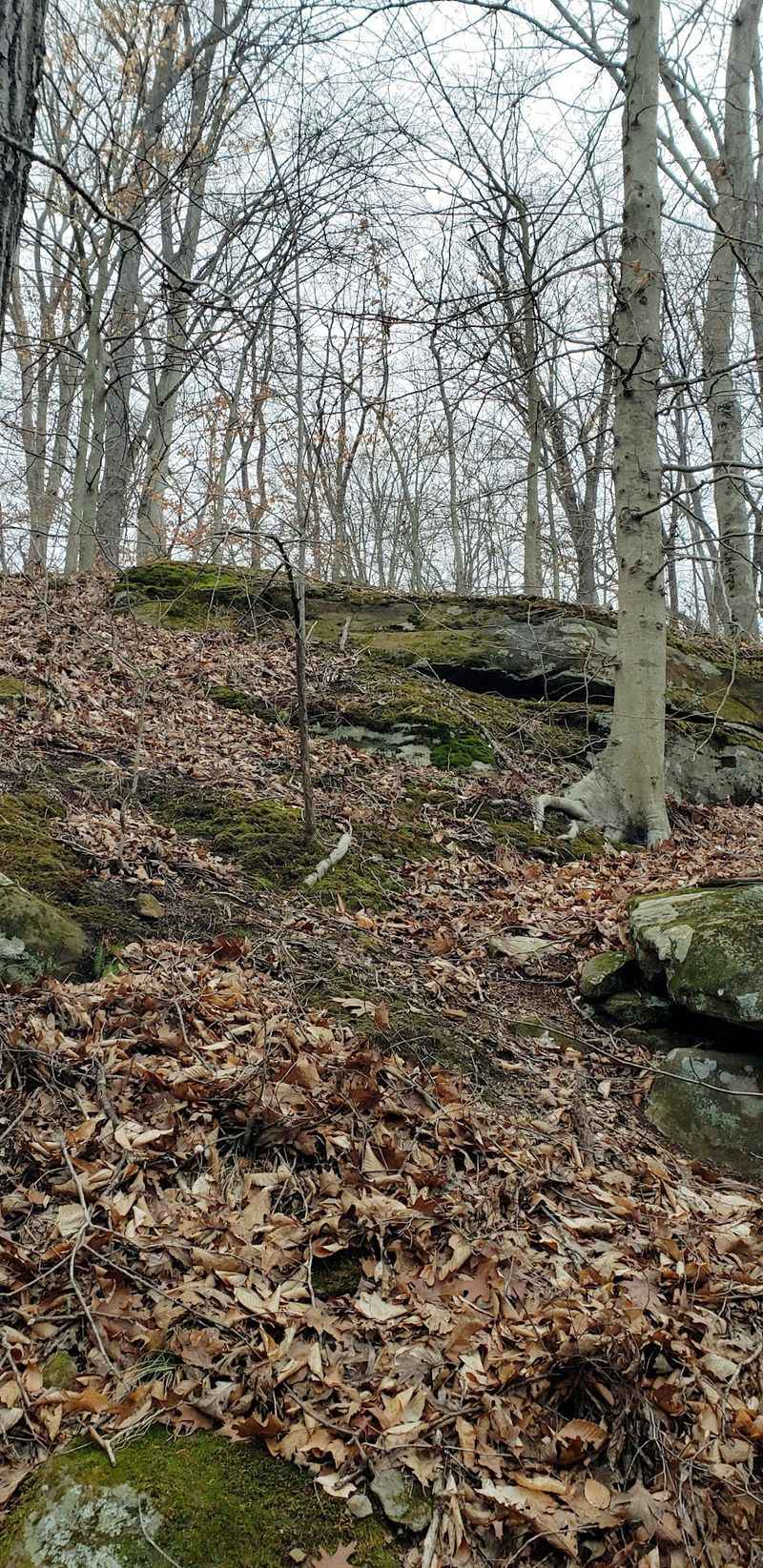
Beyond the historical buildings, this property covers about 270 acres, and two nature trails give you a reason to stay longer than the furnace tour alone would take. The terrain is classic southeastern Ohio: hardwood ridges, narrow hollows, and enough shade to keep a summer walk pleasant.
Wetlands sit near the site too, and families often mention them as an unexpected highlight. Frogs, birds, and dragonflies show up without much effort on your part.
What I appreciated was how the walking puts the industrial story in context. Every one of those trees represents the resource that fed the furnace, since making charcoal consumed forests at an alarming rate.
The hills around here were stripped nearly bare during the iron boom, and what you see now is regrowth that took generations. There is a shaded picnic area with tables and charcoal grills if you want to make an afternoon of it.
Pack water and snacks, though, because there are no restrooms or concessions on the grounds. Comfortable shoes matter more than you would expect for a place billed as a historic site.
Why 1894 Was the Year Everything Stopped
Nothing dramatic ended Buckeye Furnace. No explosion, no fire, no single bad day.
It simply could not compete anymore.
Newer furnaces burning coke instead of charcoal made iron faster, cheaper, and of better quality, and older charcoal operations across the region began shutting down one after another.
Two other problems piled on. The forests that supplied charcoal had been cut hard for decades, and the easy-to-reach iron ore in these hills was largely used up.
By the 1890s the math no longer worked, and in 1894 Buckeye went out of blast for the final time. Jackson County did not vanish afterward, which I find genuinely encouraging.
The area shifted toward coal mining, and nearby Wellston later got a boost from the Wellston Jackson Beltline Railway in the early 1900s. Communities adapted, jobs changed shape, and people stayed.
That is the part the memorial quietly tells alongside the iron story. Industries rise and fall, but the towns around them often find a second and third life, which is exactly why the name Buckeye Furnace still means something around here today.
Planning Your Trip Down the Gravel Road
A few practical notes will save you frustration, starting with the drive itself. The road back is not fully paved, and while any regular car handles it fine, the last stretch is bumpy enough that you will slow down and enjoy the scenery whether you planned to or not.
Follow the signs carefully. Cell service in these hills can be unreliable, so screenshot your directions before you leave Wellston.
The grounds stay open during daylight hours all year, which means even an off-season visit gives you the furnace, the trails, and the plaques. Museum access is the seasonal part.
Budget roughly sixty to ninety minutes for the buildings and exhibits, longer if you add a trail or a picnic. Group tours can be arranged by appointment if you are bringing a class or a club.
Events pop up through the year too, including an Easter egg hunt in March, the Raccoon Creek Market in June, and a fall festival in October. Autumn is my pick, with the hills turning color behind that old gray stack.
Address: 123 Buckeye Park Rd, Wellston, OH 45692
