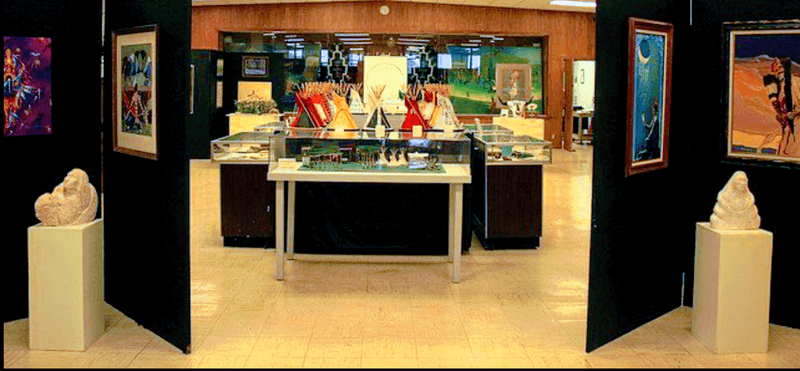
I pulled off a quiet two-lane road in southwest Oklahoma expecting a quick stretch break and maybe a cold drink. Instead, I found painted walls that told a story stretching back centuries, told by the very people who lived it.
The admission price was nothing at all, yet I left feeling like I had been handed something valuable. If you think you already know what a small-town museum looks like, this one might change your mind.
A Tribal Museum Inside a Living Headquarters
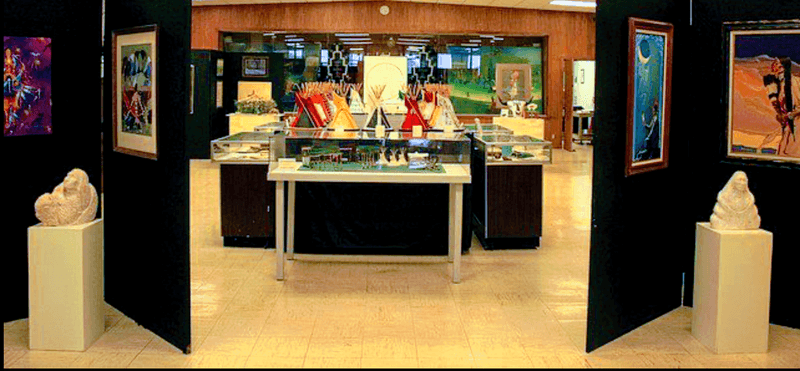
Picture a museum that shares a building with car tag offices, tribal meetings, and family business. That is the everyday setting for the Gáuihòñàun Museum, which sits inside the Kiowa Tribal Complex, the headquarters of the federally recognized Kiowa Tribe of Oklahoma.
The name is pronounced roughly “Koiye-hoe-auhn,” and learning to say it is a nice first step toward respect. The museum exists to protect and celebrate Kiowa language, art, songs, history, and traditions.
It is not a dusty storage room of old objects. It is a cultural center run by the people whose story it tells.
That difference matters. When you walk the halls, you are not reading an outsider’s guess about Kiowa life.
You are seeing how the Kiowa choose to present themselves, in their own colors and their own words.
Visitors who stop by often mention the people as much as the exhibits. Tribal members come and go, staff greet guests, and the place hums like a real community hub rather than a quiet gallery.
For many Oklahomans, that blend of daily life and deep heritage is the reason the trip feels so personal and so worthwhile.
Carnegie and the Kiowa Homeland
Blink on Highway 9 and you might miss Carnegie entirely. One longtime visitor described it as a very tiny town where you are either on business or visiting someone you know.
Yet this small spot in Caddo County holds an outsized role as the home base of the Kiowa Tribe.
The museum’s address is 100 OK-9, Carnegie, OK 73015. For context, the region around nearby Anadarko is famous for Native history, and one guest called the whole area rich enough in stories to belong on every American’s bucket list.
Locals also notice how the tribe shows up for the town. A resident shared that the Kiowa have helped replace roads, streets, and even a school parking lot.
That kind of investment gives the complex a neighborly feel.
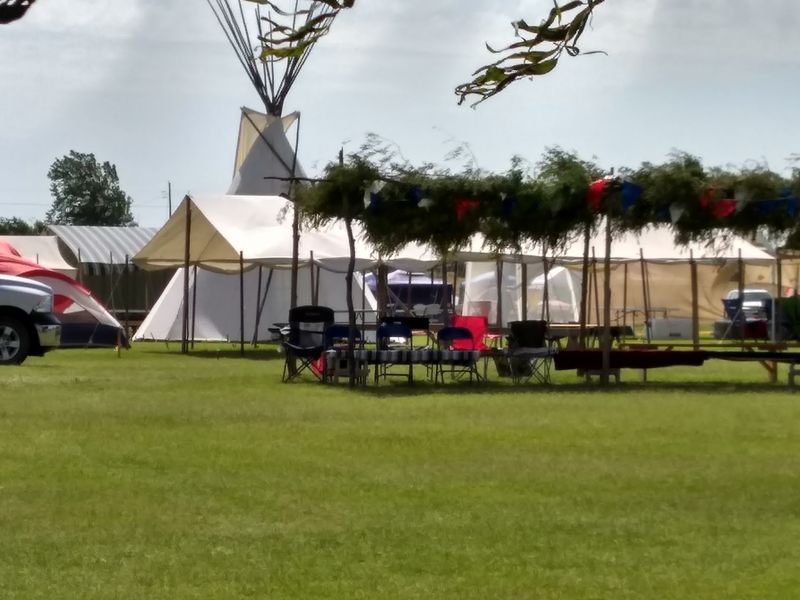
Summer brings a big moment, too. The tribal grounds are known as home of the annual Fourth of July Kiowa Gourd Clan gathering, a cherished cultural tradition.
Even outside festival season, the open plains and quiet roads set a calm mood before you ever step inside. Give yourself time to notice the landscape.
It is the same land that shaped every story waiting on the museum walls.
Ten Murals, One Unbroken Story
Start at the first wall and keep walking. Ten murals painted by Kiowa artists stretch through the museum, carrying viewers from the earliest Kiowa beginnings all the way to the present day.
Each panel works like a chapter. Some scenes show ceremonies, others capture social life or stories handed down through oral history.
Together they form a timeline you can read with your eyes instead of a textbook.
Kids tend to love this part. The images are big, bright, and full of horses, dancers, and people in detailed clothing, so even young visitors who skip placards can follow along.
Ask them what they think is happening in each scene. You may be surprised by the conversations that follow.
Adults often find the murals moving for a different reason. Guests have described learning about the hardships the Kiowa survived, the importance of family, and the strong effort to protect their native language.
The murals put those themes in plain view without needing a single word.
Plan on lingering here longer than you expect. The details reward a second and third look, and the painted walls quickly become the part of the visit people remember most on the drive home.
The Kiowa Six and Their Bold Flatstyle
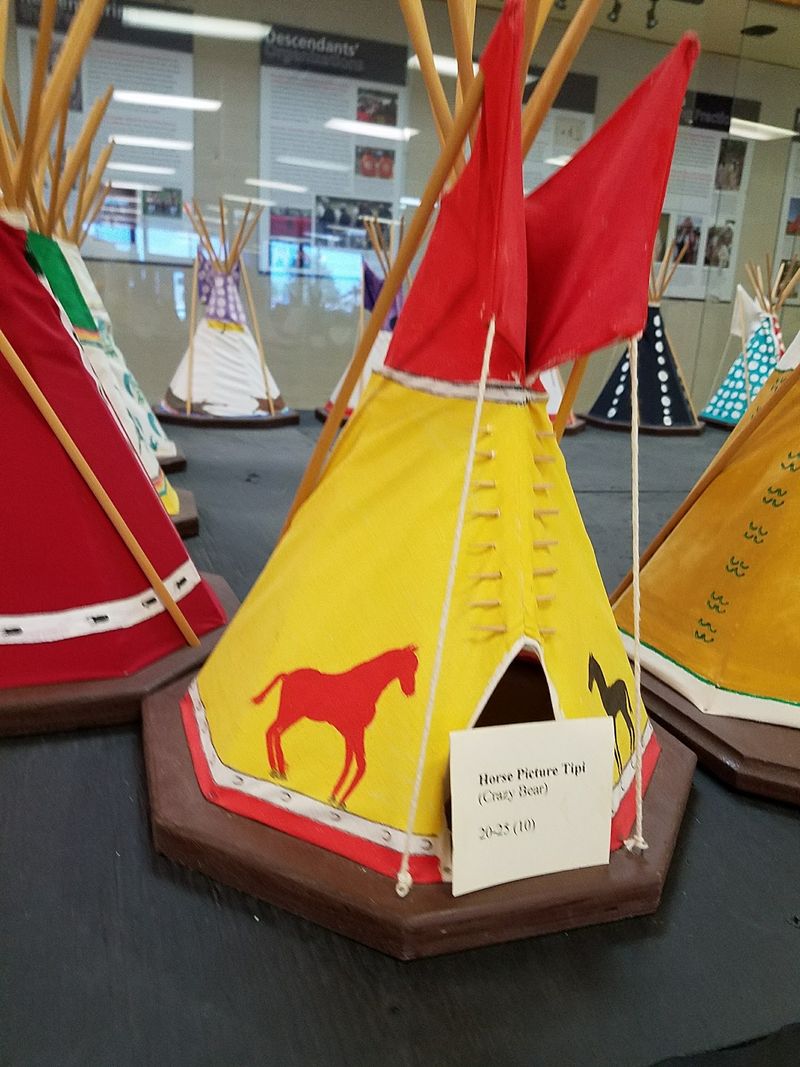
Ever notice how some paintings feel like they float off the canvas? That effect is a hallmark of the Kiowa Style, and understanding it makes the museum’s art come alive.
In the early twentieth century, a group known as the Kiowa Five, later the Kiowa Six, changed Native painting. The artists were Spencer Asah, James Auchiah, Jack Hokeah, Stephen Mopope, Monroe Tsatoke, and Lois Smoky.
Their work drew from older Kiowa traditions found on tipis, calendars, and ledger art.
The look is easy to spot once you know the rules. Figures have no shading.
Backgrounds stay empty or shallow, so all attention lands on the people. Colors are bold and solid, with no fading.
Fine outlines do quiet but important work. Details in dance regalia, for example, can signal a person’s age, gender, or social standing.
What seems simple at first glance is actually packed with information.
This style is sometimes called Flatstyle or Oklahoma Style, and it spread well beyond the state. Seeing it here, on Kiowa land and in a Kiowa space, gives it extra weight.
Look closely and you can trace the line from those pioneers to today’s artists.
Sundance Teepee at the Heart of the Gallery
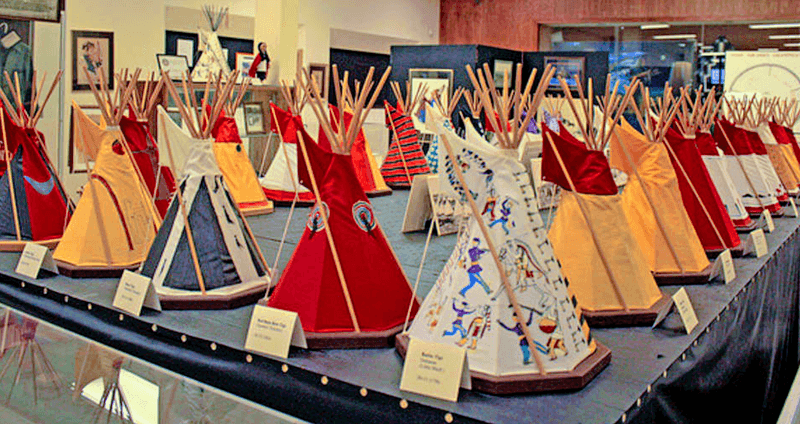
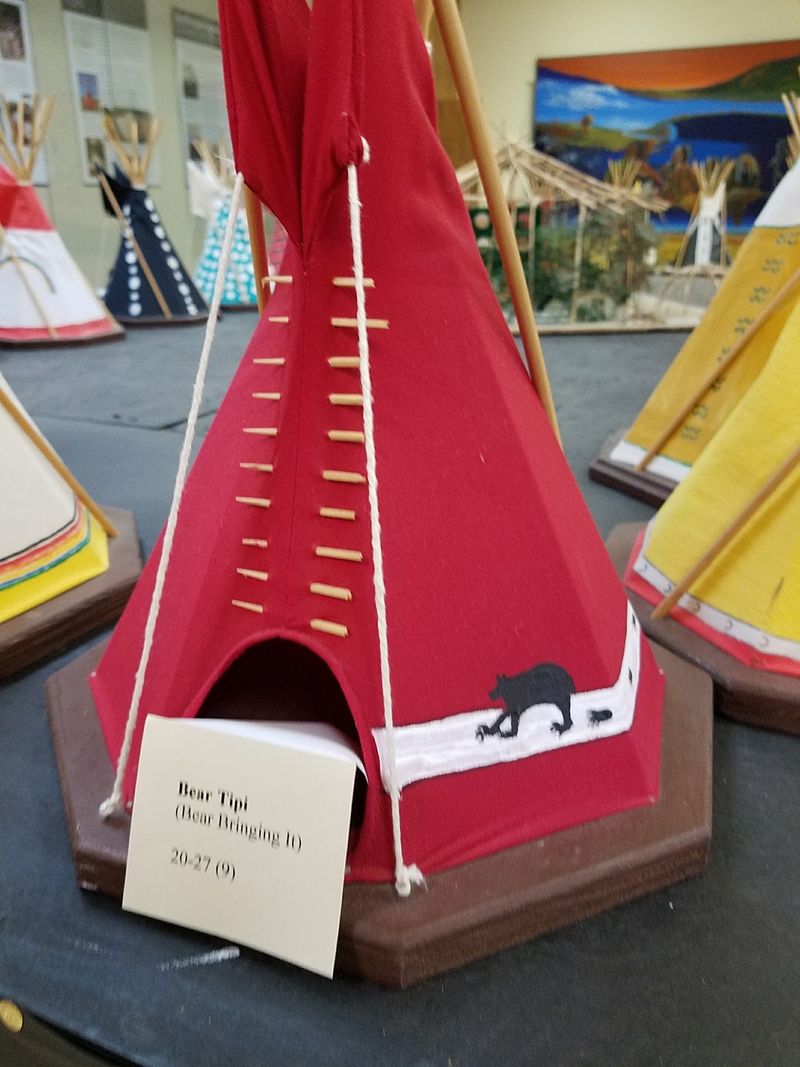
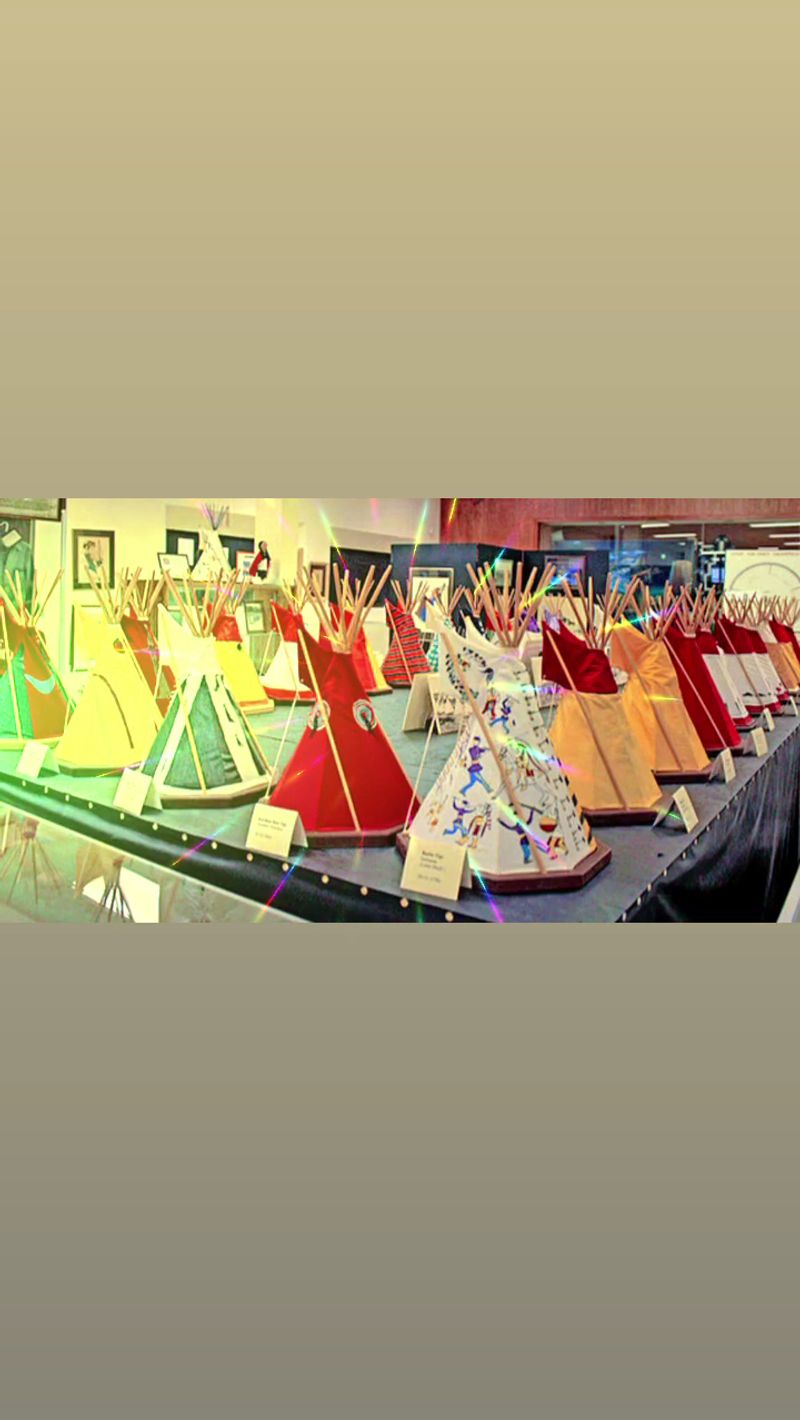
Standing beside a full teepee indoors is a strange and wonderful feeling. Among the museum’s highlights is a Kiowa Sundance Teepee, a striking piece that offers a real connection to sacred traditions.
Photos in books never quite capture the scale. In person, you sense how a family or community might gather inside, and how much skill goes into raising and decorating such a structure.
Respect is the right mood here. The Sundance holds deep spiritual meaning for the Kiowa, so treat the display the way you would treat an important object in a place of worship.
Keep hands to yourself, keep voices low, and ask staff before taking photos.
That small bit of care tends to open doors. Visitors often describe the staff as patient, respectful, and happy to share.
A polite question about the teepee might lead to a richer explanation than any sign could offer.
Families with curious kids can use this moment as a teaching chance. Talk about how homes looked long before houses with walls, and how art was painted right onto them.
The teepee links straight back to the painting traditions that inspired the Kiowa Six, tying the whole gallery together nicely.
Beadwork, Baskets, and Everyday Objects
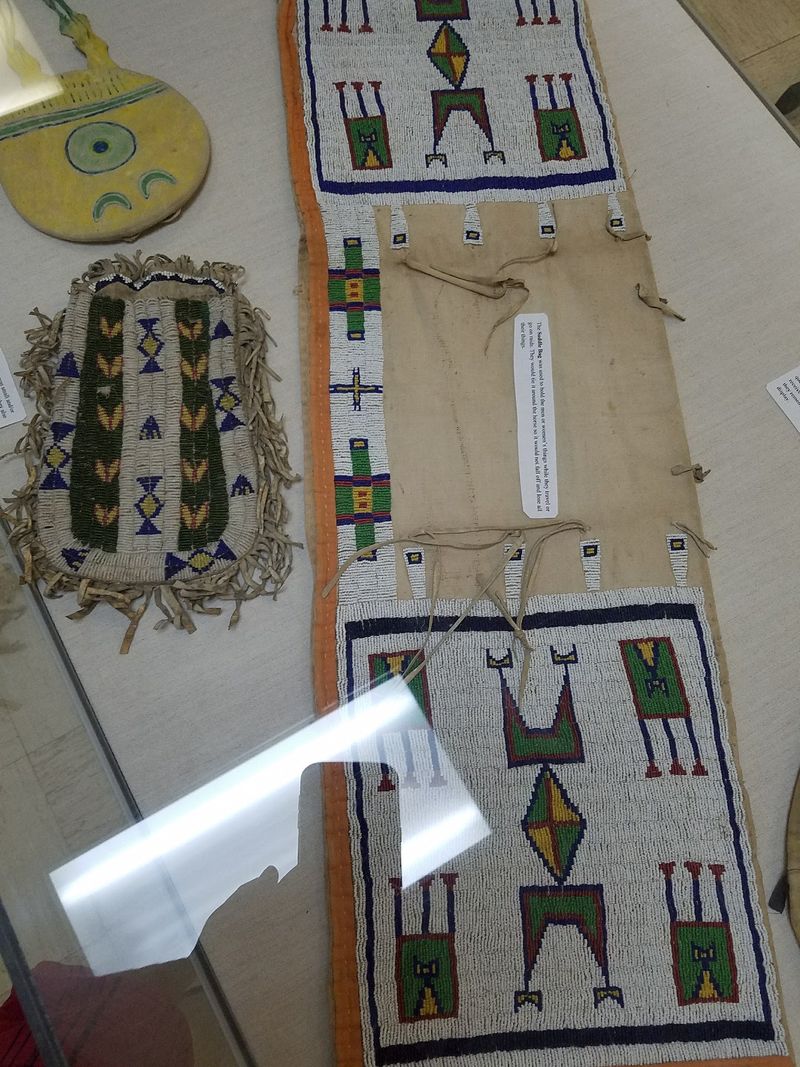
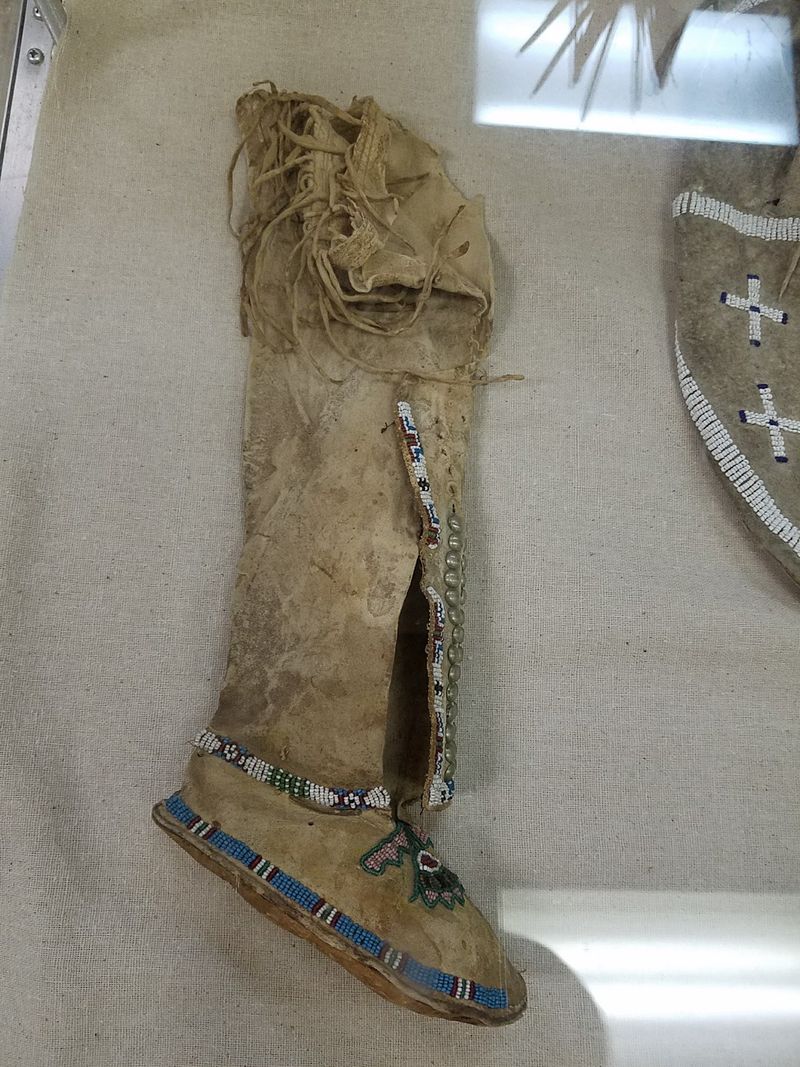
Tiny glass beads, stitched one by one, can say a lot about a culture. The museum honors intricate beadwork and traditional basket weaving alongside its paintings, giving visitors a fuller view of Kiowa craft.
Display cases also hold handmade clothing, tools, and traditional toys. These everyday pieces reveal how people dressed, worked, and played.
Children especially enjoy spotting the toys and comparing them with what sits in their own bedrooms back home.
Photographs add another layer. Old images of Kiowa families and gatherings sit near the crafted objects, so you can often see an item and then see someone wearing or using something similar.
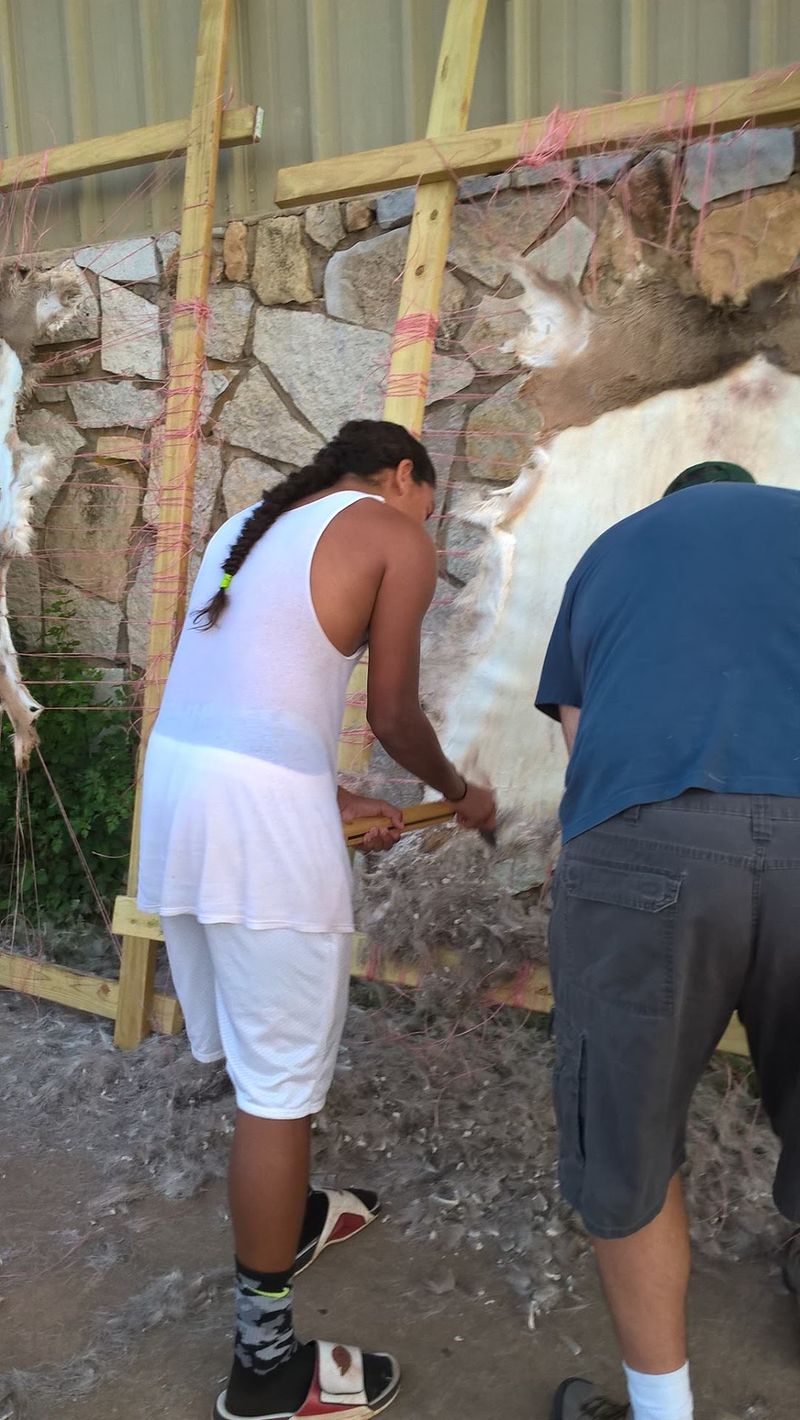
Craft here is not frozen in the past. The museum has offered beadwork classes to the community, passing skills to new generations.
That detail shifts the whole exhibit from history lesson to living tradition.
One longtime visitor praised the excellent display of Kiowa paintings, arts, and crafts, along with well-informed staff. If something catches your eye, ask about it.
Many pieces carry stories about the makers, techniques, and meanings that are easier to understand when someone explains them in person. Bring patience, because the fine detail in beadwork rewards slow, careful looking.
Culture Camps and the Next Generation
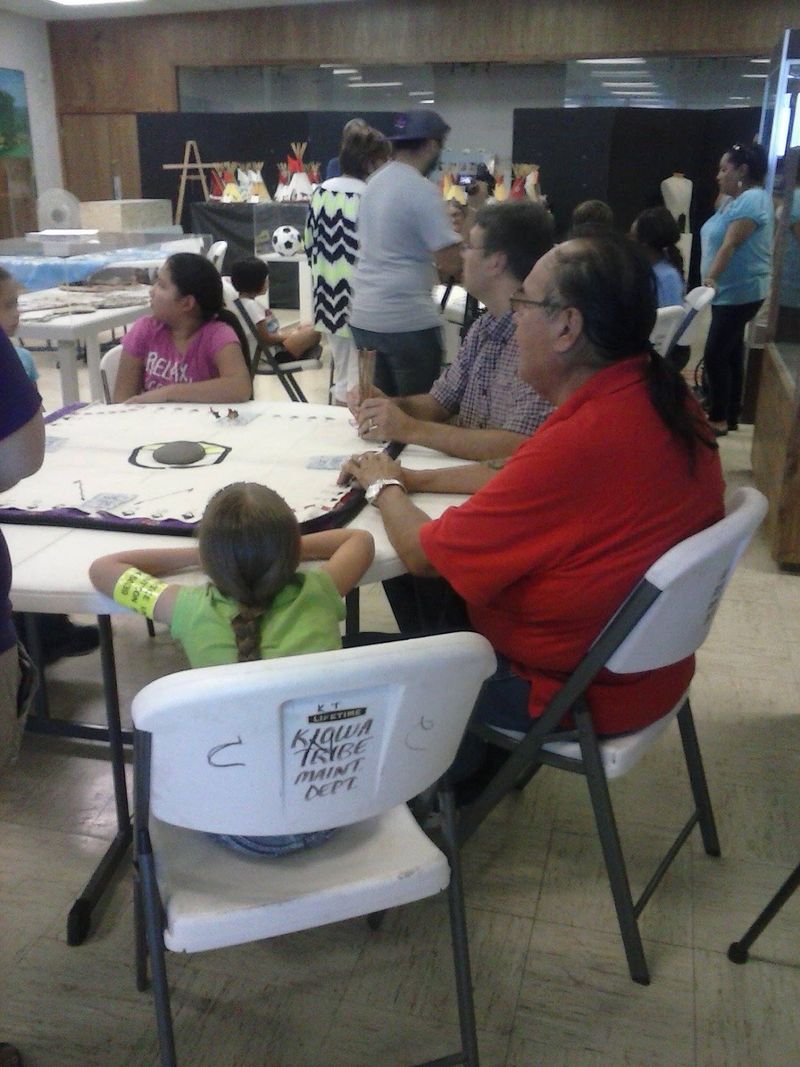
Some of the most important work at this museum happens away from the display cases. The institution makes a point of giving tribal youth real chances to learn their heritage, hands first.
One standout program is the Mini-Kiowa Culture Camp. Children make traditional Kiowa items, including games and gourds, gaining practical skills that connect them with their grandparents’ world.
Why does that matter for a visitor? It shows the museum is not just preserving culture for outsiders to view.
It is actively helping Kiowa kids carry language and traditions into the future. That purpose shapes the whole place.
Language protection is a big part of the mission, too. Guests have called the effort to safeguard the Kiowa language truly impressive.
Hearing even a few words spoken during your visit may stay with you for days.
For traveling families, the youth focus offers a nice example to share with children. Kids often respond when they learn that young people their own age are learning these crafts and songs.
It turns the visit into something relatable rather than distant. Check with the museum about programs, since offerings can change from season to season and may be geared mainly toward tribal members.
Gift Shop Finds Worth the Extra Stop
Save a few minutes, and a few dollars, for the gift shop. One visitor called browsing it a whole adventure in itself, which is high praise for a small museum store.
Shoppers often mention finding cool items to rep the Kiowa side. For tribal members, that means a chance to show pride.
For guests, it can mean bringing home a keepsake tied to the people and place you just learned about.
Buying from a tribal shop also supports the community directly. That is a nice bonus when the museum itself charges nothing to get in.
Inventory varies, so there is no promise of any particular item on any given day. Prices may shift as well.
A good habit is to set a small budget before you walk in, especially with kids who will want everything.
The complex also houses a tag agency, so you may share space with locals handling routine errands. Do not be surprised by a bit of bustle.
It is part of what makes this stop feel genuine instead of staged. Take your time, chat with whoever is behind the counter, and you may leave with a story along with your purchase.
Warm Welcomes and Who Will Love It
Hospitality might be the quiet star of a visit here. Guests describe the place as welcoming and heartwarming, praising staff for being respectful and patient with everyone who walks through the door.
History lovers will feel right at home. Several visitors have singled out the rich history on display, and one guest even enjoyed a behind-the-scenes tour from the tribal historian during a past renovation period.
Kiowa families get something extra. Tribal members have shared how meaningful it is to see their own heritage on the walls, and some bring elders to visit relatives and kinfolk.
That makes the atmosphere feel like a reunion as much as a museum trip.
Non-Native visitors are clearly welcome, too. One guest who is not Kiowa urged neighbors to come learn the history and struggles that shaped the tribe.
That spirit of sharing runs through the whole experience.
Road-tripping grandparents, homeschool families, and art fans will likely find plenty to enjoy. Visitors who want flashy, high-tech exhibits may find it modest, but that modesty is the charm.
Arrive with curiosity and an open mind, and the people here tend to meet you more than halfway.
Hours, Free Admission, and Drive Times

Here is the best price in Oklahoma travel: free. Admission to the Gáuihòñàun Museum costs nothing, which makes it an easy add-on to any southwest Oklahoma road trip.
Timing takes a little planning. The museum is open Monday through Friday, 8 AM to 4:30 PM, and closed Saturday and Sunday.
Weekend travelers will need to adjust, so a weekday swing works best.
Hours can change, especially around holidays or tribal events. Calling ahead at 580-654-6366 is a smart move.
You can also ask about guided tours, which can be arranged with advance notice.
Getting there is straightforward. The complex sits at 100 OK-9 in Carnegie, right on State Highway 9.
From Oklahoma City, plan on roughly a 90-minute drive, while Lawton folks are closer still.
Parking is generally simple at the complex. Southwest Oklahoma summers can be scorching and windy, and spring brings storm season, so check the forecast and pack water.
Pairing the museum with other stops near Anadarko can turn a short visit into a full heritage day. Leave room for lunch at a small-town café along the way, and you have a budget-friendly outing everyone can enjoy.
Worth the Detour Down Highway 9
Long after the drive home, the murals tend to linger. That is the simplest way to sum up a visit to this small but meaningful museum in Carnegie.
It is not a grand building with endless galleries. What it offers is something many larger museums cannot: a story told by the people who own it.
The Kiowa share their art, language, and traditions on their own terms, and visitors get to listen.
Value is hard to beat. Free admission, friendly staff, and a gift shop that supports the tribe make it a stop that respects both your wallet and your time.
Families, history buffs, and anyone curious about Oklahoma’s 39 tribal nations will likely leave with fresh appreciation.
A few tips help the day go smoothly. Visit on a weekday, call ahead to confirm hours, and treat sacred items with care.
If you time your trip around summer, ask about the Fourth of July Kiowa Gourd Clan gathering, a beloved tradition in the area.
Oklahoma is full of places that prove the state has stories worth the drive. This one ranks high on that list, quietly waiting just off the highway for you to stop in.
