A vintage gas station frozen in time, a fish the size of a pickup truck with the head of an alligator, and a cat that greets you at the gate. That is what I found when I drove over from the city side of the lake expecting a quick photo stop, and I ended up staying long enough to lose track of the afternoon.
Every wall, shelf, and ceiling corner here holds something handmade, hand-painted, or hand-glued into place, and almost none of it makes sense until you slow down and look.
There is a century?old cottage that works as an art studio, an old barn covered in thousands of broken plates, and a hallway of tiny towns that come to life when you press a button.
The whole place was built out of stubborn creativity rather than a marketing plan, and a neighborhood cat wandered along beside me for part of the walk, which somehow felt exactly right. This Louisiana spot sticks with you long after you leave.
Buford the Bassigator, the Fish That Greets You First
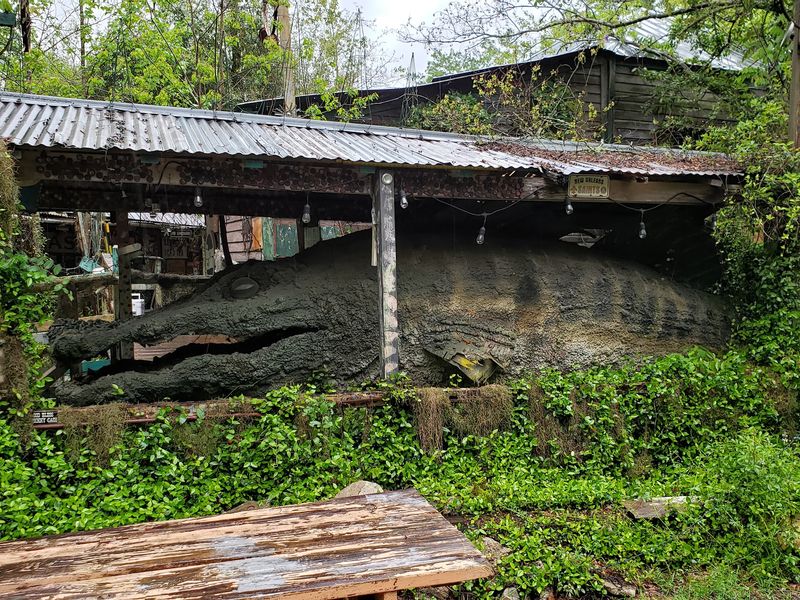
My first reaction to Buford was laughter, then genuine awe at the scale of the thing. Twenty-two feet long and ten feet tall, he has the plump body of a largemouth bass and the grinning snout of an alligator.
Artist John Preble built him with fellow artist Dave Kelsey, and Buford started life as a Mardi Gras parade float rather than a museum piece. Look closely at his eyes and you will notice they are plastic beach balls, which is the kind of practical, resourceful detail that runs through this entire property.
He sits where everyone can see him, so he ends up being the unofficial mascot and the reason half the cars on LA-36 slow down.
I circled him twice trying to figure out how the body was framed, and I still cannot tell you. What struck me most was how the paintwork holds up to close inspection, with scales layered in shades of green and gold.
Bring a wide-angle lens or step back farther than you think you need to. Getting Buford entirely in one frame takes more room than most people expect, and the photo is worth the extra steps backward.
A Century-Old Creole Cottage Turned Working Art Studio
Tucked among the museum buildings sits a Creole cottage roughly a hundred years old, and it functions as the art studio where much of what you see was made. That detail changed how I looked at everything else on the property.
Creole cottages are a classic south Louisiana building style, with simple squared rooms, tall openings, and a roofline built for heat and heavy rain. Seeing one used as a working studio instead of a preserved showpiece felt refreshingly alive.
Paint, tools, and half-finished pieces belong here just as much as the finished exhibits do.
I found myself lingering near it longer than I expected, mostly because it explains the whole place. The museum did not arrive fully formed.
It grew, room by room, out of a house where somebody kept building things.
If you appreciate old Louisiana architecture, take a moment with the exterior lines and the way the cottage sits low to the ground. It is a quiet counterweight to all the loud, wonderful chaos surrounding it, and a reminder that folk art often starts at somebody’s kitchen table.
Stepping Through a 1930s Standard Oil Gas Station
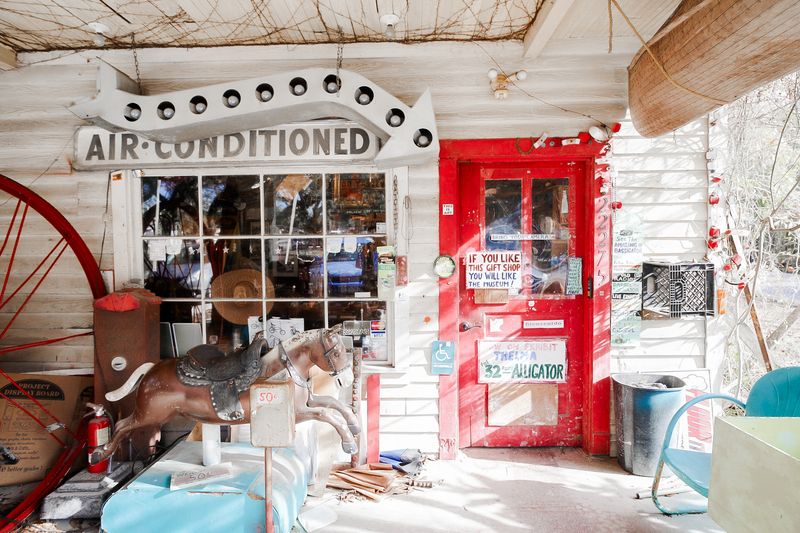
Entering through an old gas station is a great trick, and it works. The vintage 1930s Standard Oil filling station serves as the front door to the whole museum, complete with period signage and the kind of details that make you check twice.
Old service stations like this one used to dot every highway in the South before interstates rerouted traffic. Preserving one as an entrance gives visitors a soft landing into a slower era before the real strangeness begins.
I paused outside just to take in the paint and the pumps.
Inside, you will find the gift shop area and the person collecting admission, which is where the atmosphere really sets in. Shelves are packed with prints, postcards, shirts, hats, and signs, and I noticed how many people wandered back out with something small tucked under an arm.
Ask questions if the owner is around. From what other travelers have described, he is happy to talk about how the place came together.
Photographers should shoot the station exterior in the late afternoon, when the light catches all that old metal.
The House of Shards and Its 15,000 Broken Pieces
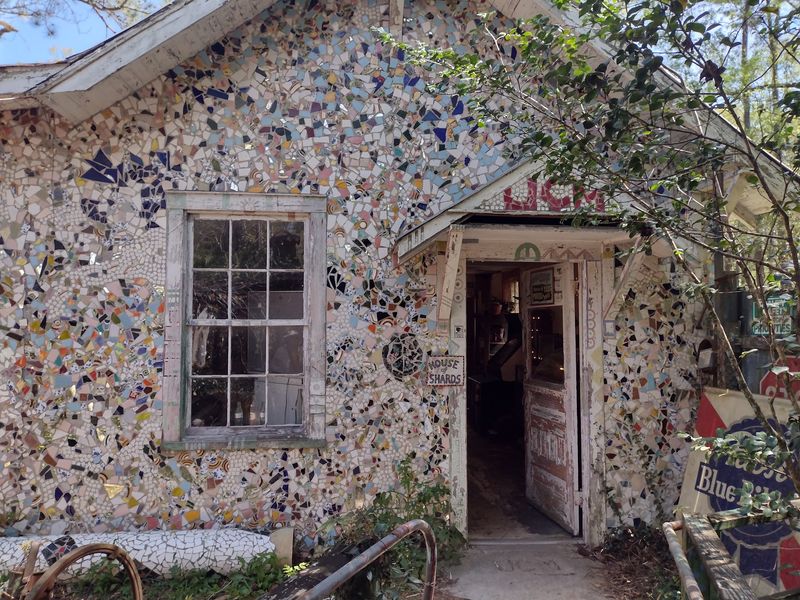
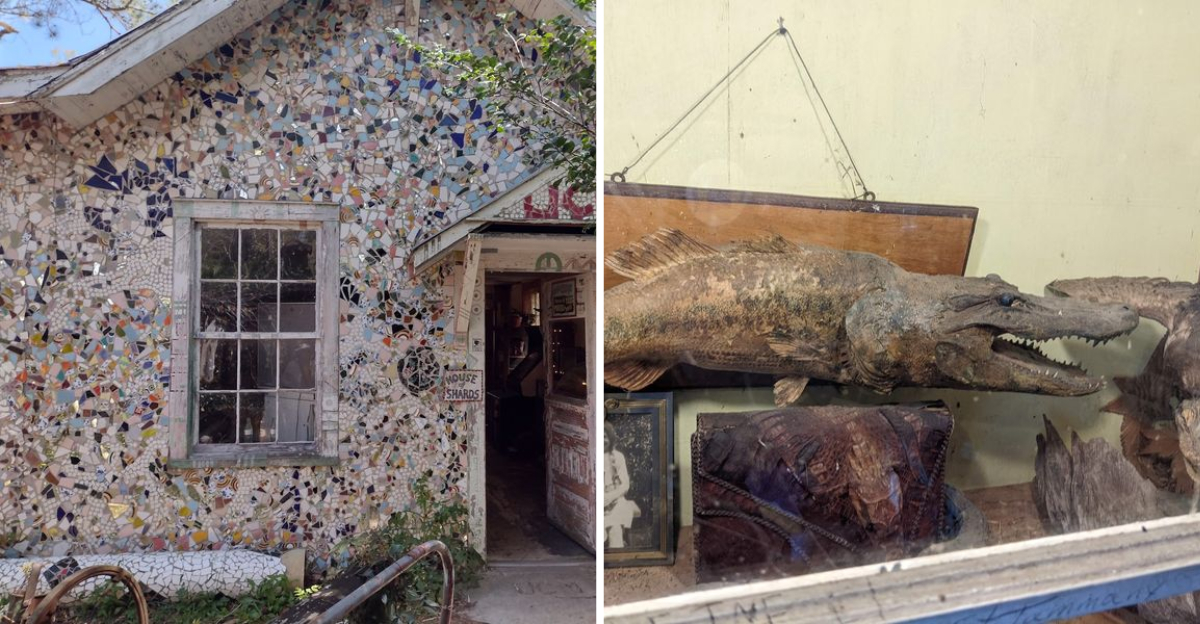
Glitter is not a word I expected to use about a 1920s barn, but the House of Shards earns it. The structure was built from an old barn and reclaimed barge wood, then covered entirely in more than fifteen thousand pieces of ceramic plates, tile, colored glass, and mirror.
Sunlight hits it and the whole surface scatters light in a hundred directions. From a distance the mosaic reads as texture, but up close you start recognizing individual plate patterns, floral rims, and chips of blue willow china.
Somebody sat with each one of those fragments and decided where it belonged.
Inside, there is an infinity mirror, which is the kind of exhibit that stops kids mid-sentence. I stood in front of it far too long watching the reflections stack into a corridor that seems to have no end.
The barge wood detail matters too, since barges are part of daily working life on Louisiana waterways. Reclaiming that material and turning it into something that shines feels very much in keeping with the spirit of the place.
Take your time here and touch nothing sharp.
Tiny Southern Towns You Bring to Life With a Button
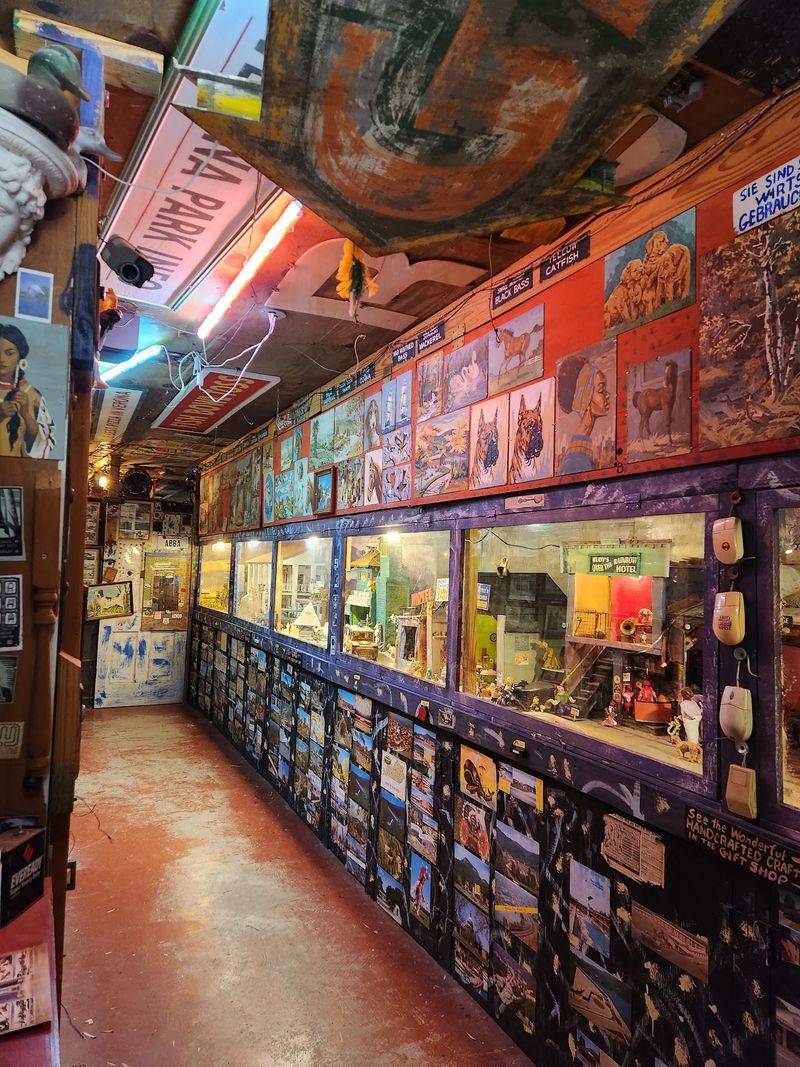
Push buttons. Seriously, that is the single best piece of advice for this museum.
Scattered through the buildings are miniature dioramas and animated scenes built entirely by hand, and many of them only move when you press something.
One shows a miniature Southern town, another a Mardi Gras parade, another a New Orleans jazz funeral, and there is a rhythm and blues dance hall along with a haunted Southern plantation scene.
Each is stuffed with figures no bigger than your thumb.
I worked my way down a row of them, pressing buttons and watching arms swing, wheels spin, and little crowds shuffle in place. Some are wonderfully clumsy, which somehow makes them more charming than smooth animation ever could.
Not every button works, so try the next one and keep moving.
The detail rewards patience, especially in the parade scene where tiny riders toss impossibly small throws. Kids latch onto these displays immediately, and honestly so did I.
Quarters come in handy for certain coin-operated exhibits, and staff have been known to hand some out at the entrance. Slow down here and you will notice jokes hidden in the background of nearly every scene.
Darrel, Edmond, Thelma and the Rest of the Gator Family
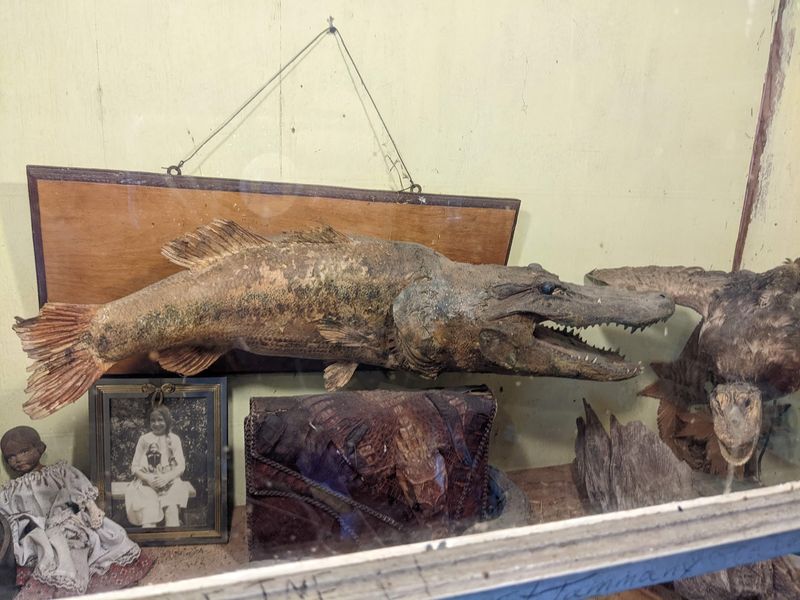
Buford is not an only child. The museum keeps a whole family of alligator hybrids, and meeting them one by one turned into my favorite scavenger hunt of the visit.
Darrel the Dogigator is half dog, half alligator, with a face that manages to look both friendly and completely unhinged. Edmond the Allisapien takes the concept further, part alligator and part Homo sapiens, which is exactly as odd as it sounds.
Then there is Thelma, a thirty-two foot alligator that visitors talk about constantly.
Louisiana has a long tradition of gator imagery in signs, souvenirs, and swamp tour advertising, so building sculptural mashups out of that imagery feels like an inside joke the whole state is in on.
Each hybrid gets its own name and its own personality, which makes wandering the grounds feel less like touring exhibits and more like being introduced around.
Look for them in unexpected corners rather than assuming they are all lined up together. I nearly walked past one entirely.
Photograph them at eye level with the sculpture, not from above, since the expressions read far better that way. The kids in your group will pick favorites within minutes.
Fifty Thousand Found Objects, One Flying Saucer, and a Marble Machine
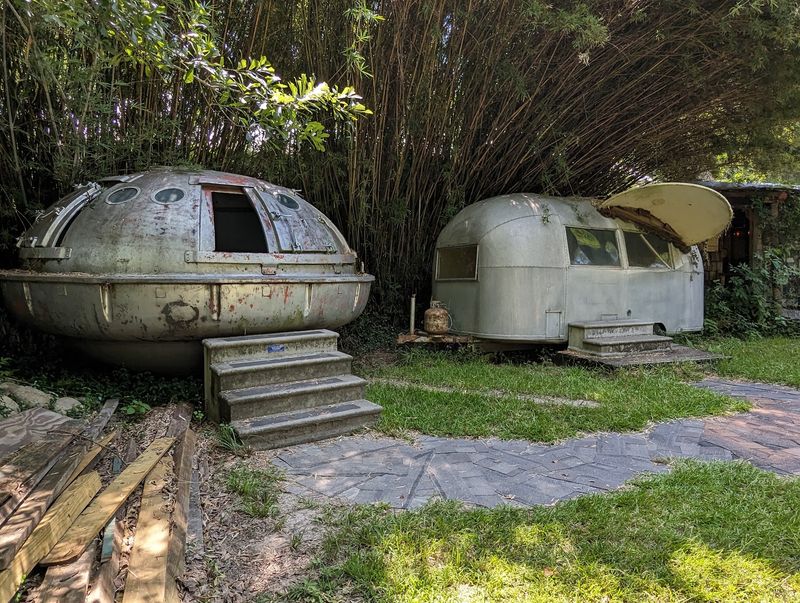
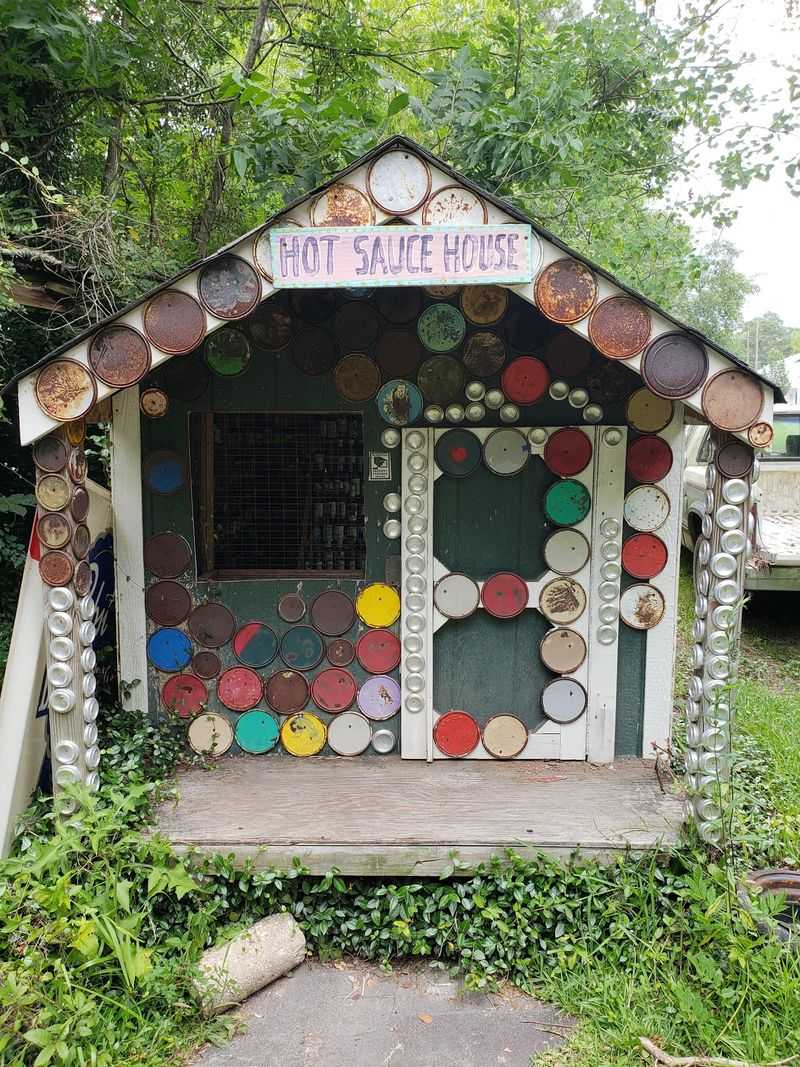
Over fifty thousand found objects live in this place, and the number stops feeling abstract about ten minutes in. Vintage radios, arcade machines, old bicycles, bottles, bottle caps, and license plates cover nearly every available surface.
Outside sits the UFO vs. Airstream installation, where a flying saucer appears wedged into the side of a silver travel trailer. It is the single most photographed thing on the property after Buford, and for good reason.
I stood there grinning like an idiot.
The marble machine deserves special attention. Built from thousands of popsicle sticks, hot glue sticks, salvaged pinball machine parts, and plumbing supplies, it sits inside an old movie house ticket booth and does exactly what you hope it does.
Watching a marble rattle through that contraption is oddly satisfying.
Practical notes from my walk through: the older back buildings feel dustier and more weathered than the front rooms, so anyone sensitive to dust may want to plan accordingly. A couple of working video game cabinets round out the collection.
Open daily from 10 AM to 5 PM except major holidays. Plan an hour minimum, two if you press every button.
Address: 22275 LA-36, Abita Springs, Louisiana 70420
