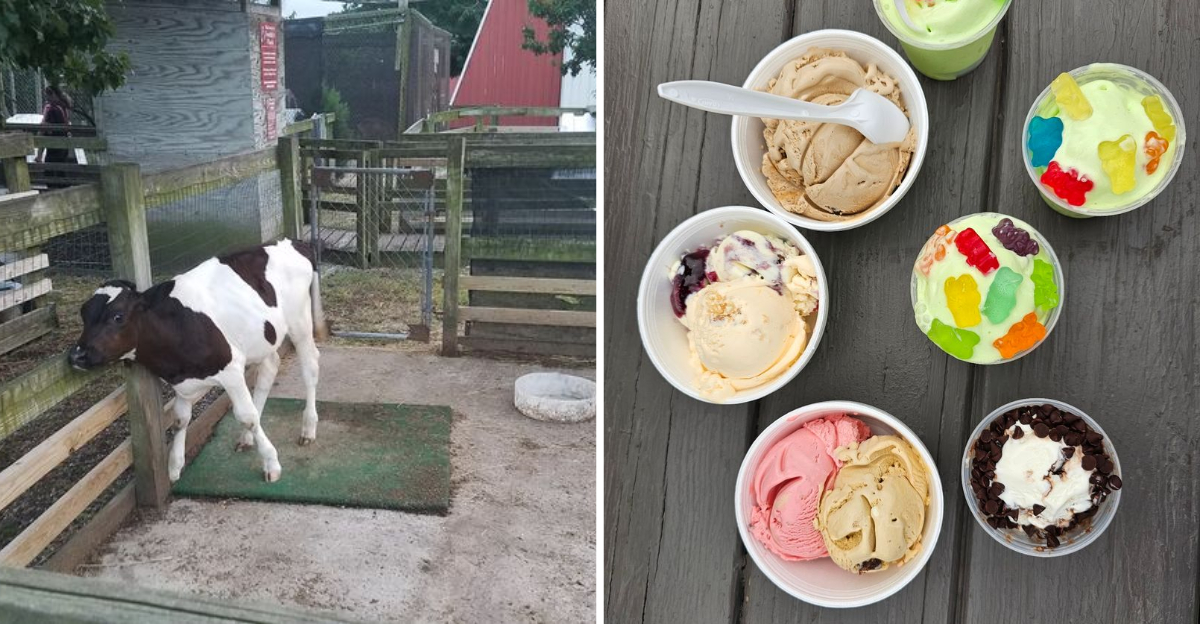
The scent of hay, grass, and warm summer air hit me before I even parked the car at that Pennsylvania farm. A line stretched at the ice cream window, kids swung putters near the mini golf course, and the soft thump of baseballs came from the batting cages behind the building.
I ordered a milkshake, sat down at a picnic table, and realized the pasture was right there, cows and all, just a short walk from my straw. That kind of thing sticks with you, because most creameries hide the farm part somewhere you never see.
This one put it front and center for over fifty years, from the day the retail store opened in the early 1970s until the family retired at the end of the 2025 season.
The cows grazed within sight of the picnic tables, and the whole place hummed with the kind of easy energy that only comes from a family-run operation that has been doing the same thing for generations.
I want to walk you through what made this spot such a beloved stop, because places like it deserve to be remembered properly.
A Dairy Story That Started with One Family and a Degree in Dairy Husbandry
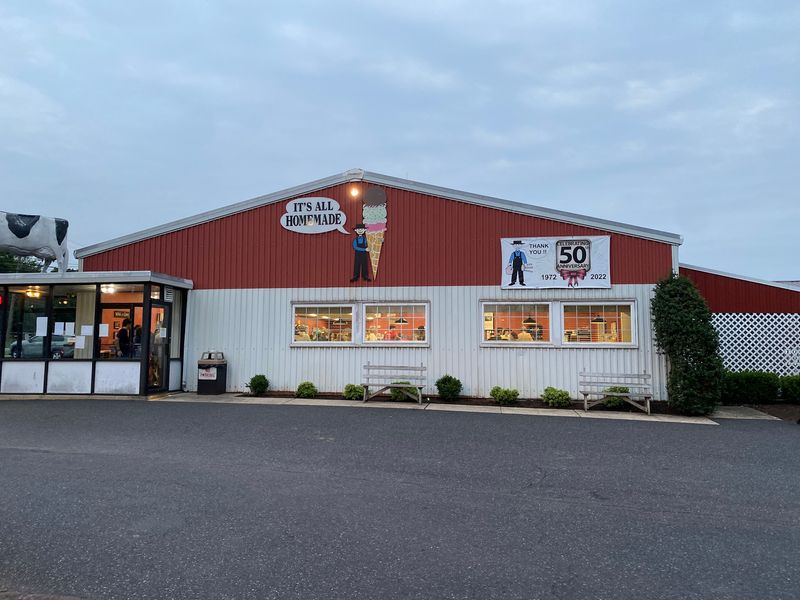
Every good farm has an origin story, and Freddy Hill’s belongs to Fred L. Seipt.
He grew up on a dairy farm and went on to earn a degree in Dairy Husbandry, which is a fancy way of saying he studied cows and milk for a living.
In 1972, the family opened a small retail store on the property selling homemade ice cream and milk. That was the whole idea at first.
No mini golf, no petting zoo, just dairy sold close to where it came from.
What I find genuinely impressive is that the Seipt family kept their hands on the process the entire time. They mixed the base themselves in their own dairy plant, combining milk, cream, sugar, and stabilizer before it ever became a flavor.
Over the years, they began processing milk from a nearby dairy farm rather than relying only on their own herd, but the recipe and method stayed the same. Fifty-three years of one family running the same operation is rare in food, and rarer still in farming.
When the store finally closed, it wasn’t a business failing. It was a family choosing retirement.
Picnic Tables with a Pasture View
Here’s the detail that gives this place its whole personality: the seating faces the farm. You grab your shake, find a spot at a table, and there are cows out there, tails swishing, doing absolutely nothing important.
Kids figure this out fast. Half of them abandon their cones on the table and go stand at the fence, pointing and making cow noises, while parents get a rare two minutes of quiet.
Sitting there, the connection between dairy and dessert stops being an abstract idea. You can smell the farm.
One reviewer put it plainly and said the place smells like a farm, which honestly felt like the point rather than a complaint.
There was indoor seating too, which mattered plenty in a Pennsylvania February or during a sudden thunderstorm. But on a good evening, outside was the only real choice.
Walking the farm path let visitors see more than cows. Pigs, goats, and chickens were part of the lineup, and the whole loop took maybe fifteen minutes at a toddler’s pace.
Small pleasure, big memory.
Thirty-Two Flavors and a Shake Worth the Drive
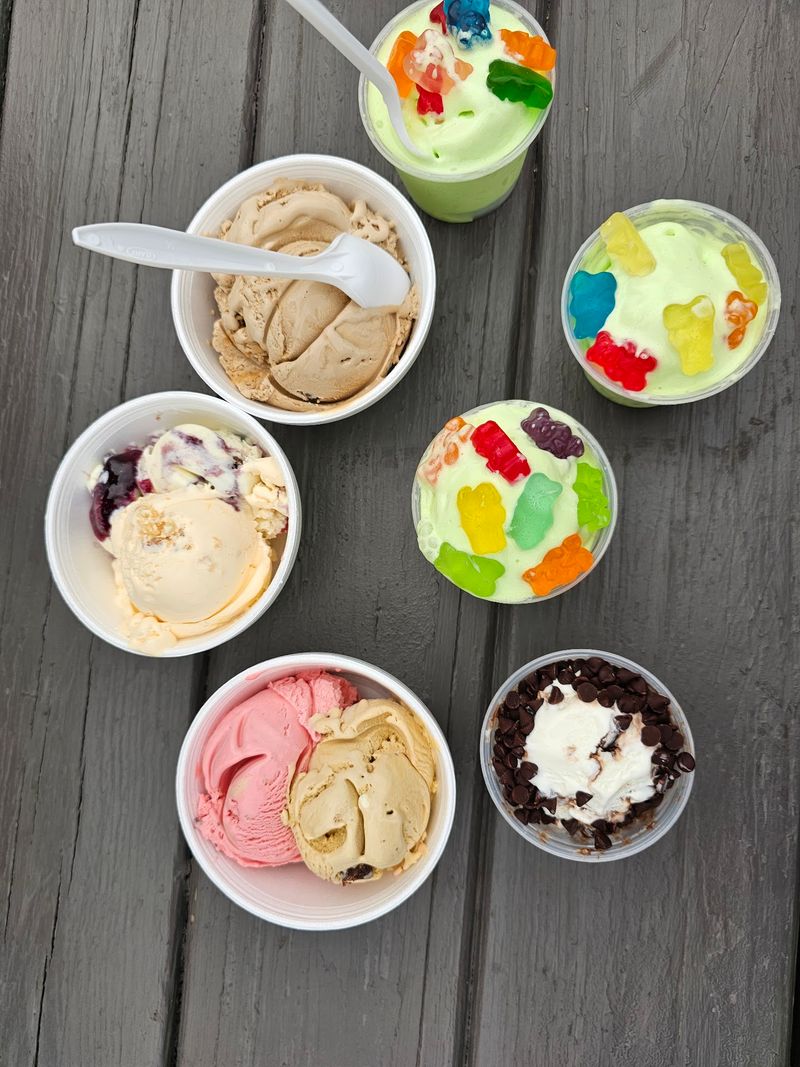
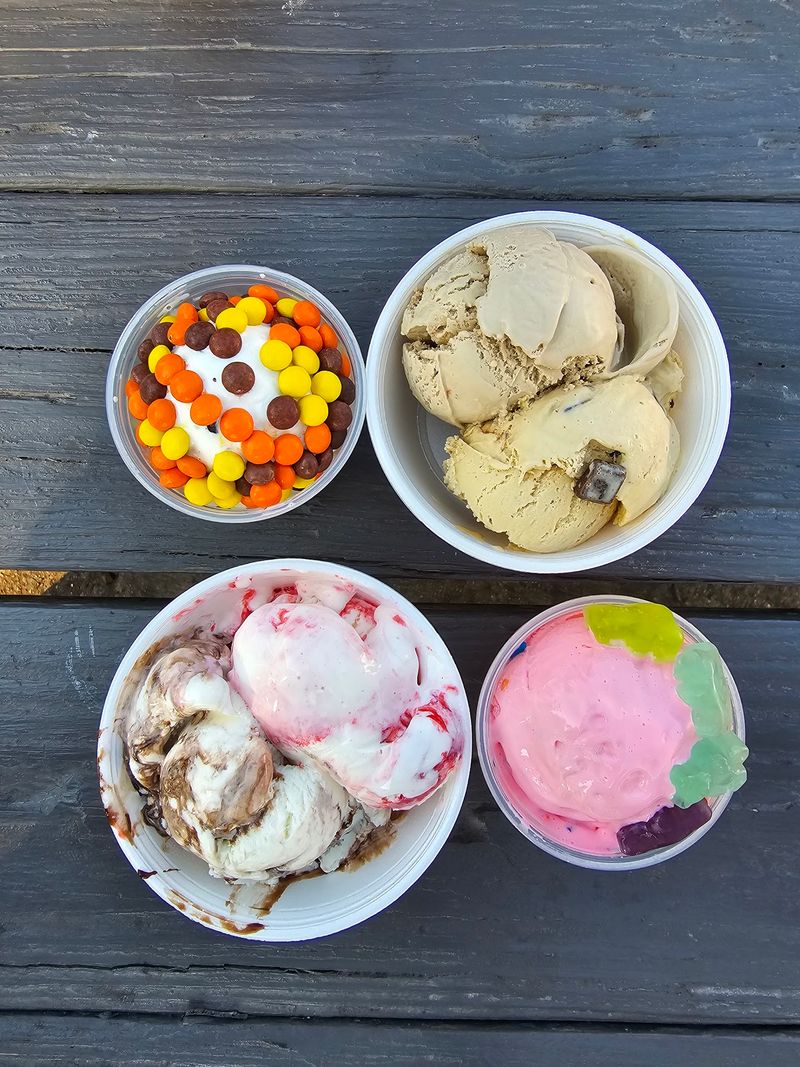
Thirty-two flavors is a serious number for a farm creamery. Not a hundred gimmicks, not four safe choices, just a solid rotating lineup that gave everyone something to argue about in line.
Salted caramel got mentioned constantly. So did butter pecan, cookies and cream, strawberry shortcake, cherry vanilla, and an espresso flavor that people talked about like it was a secret worth guarding.
The milkshakes came out thick, cold, and rich in a way that only happens when the base mix has real cream in it. You could taste the difference immediately, and that richness was the whole reason people drove out from Philadelphia suburbs on a Tuesday night.
A limited-run Mint Cookies and Cream showed up in March some years, which gave regulars a reason to mark their calendars.
One smart tip regulars shared: buying by the half gallon or gallon from the attached shop cost far less than scoops. Though if you wanted to sit and look at the pasture with a shake in hand, the cone window was the only way to do it.
I never regretted paying the premium.
The Petting Zoo Where Bison Shared the Neighborhood
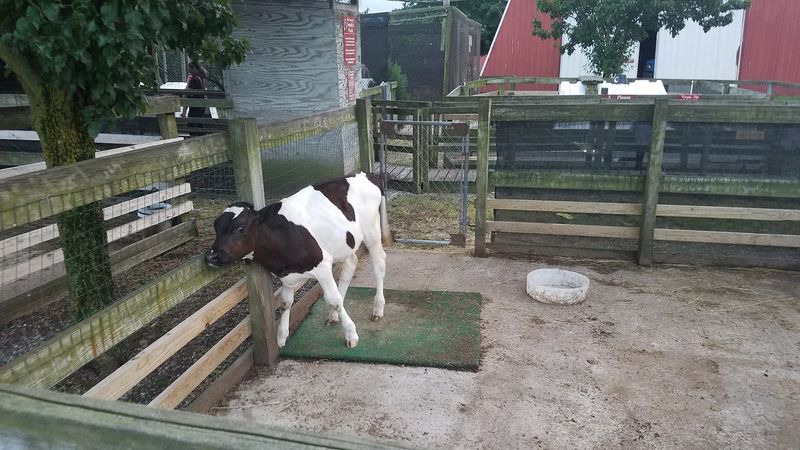
Nobody expects bison in Montgomery County. Freddy Hill added a petting zoo in 1989, and the animal list read like a wildlife documentary got lost on the way to Bucks County.
Elk, bison, emu, deer, and alpacas all lived on the property alongside the everyday farm animals. Alpacas have a way of staring at you with total judgment, and emus somehow look even more skeptical.
My favorite part was how casually it was arranged. You’d finish your ice cream, wander a few dozen yards, and suddenly be face to face with an animal you’d only seen in a zoo two hours away.
Kids loved the goats most, because goats will always be the extroverts of any farm. The chickens kept busy, the pigs kept sleeping.
For families visiting Lansdale, the zoo turned a quick dessert stop into an actual outing worth an hour or two. Adding animals in 1989, seventeen years after opening, showed the family kept thinking about what would make the visit better rather than just selling more cones.
Two Mini Golf Courses, Waterfalls Included
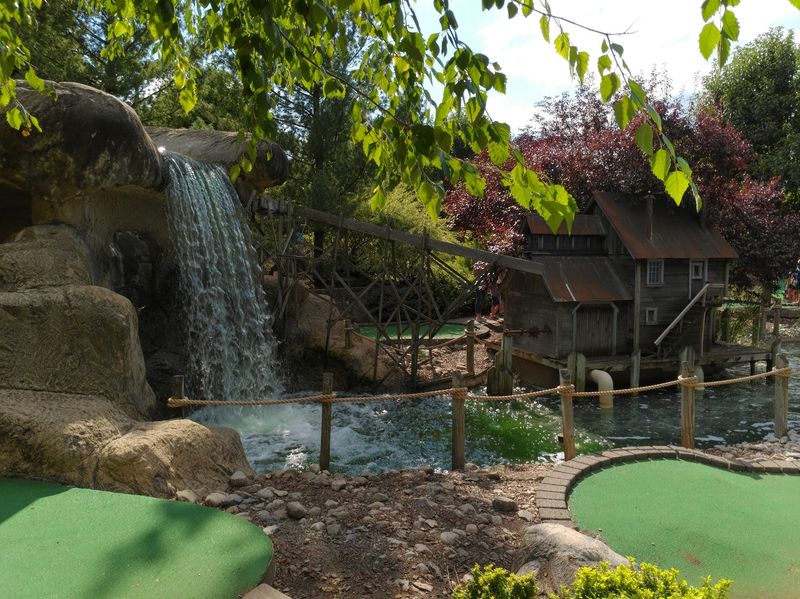
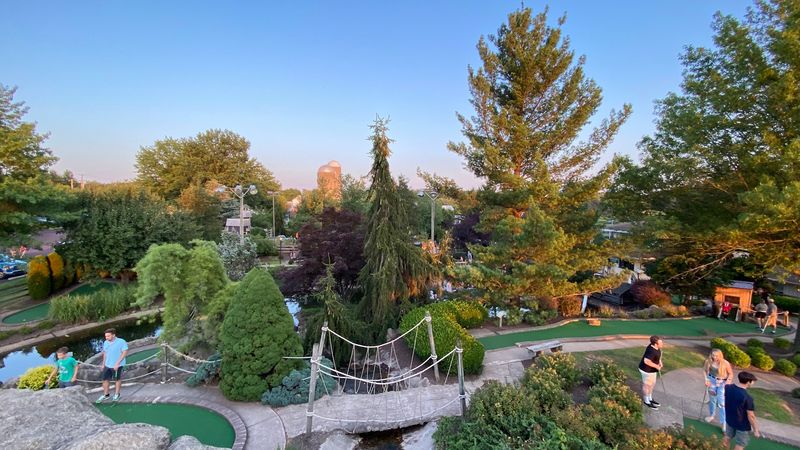
The Family Fun Center opened in 1991 and turned a dairy stop into an all-evening destination. Two full 18-hole miniature golf courses, and they were not the sad, cracked-carpet kind.
One course had a big waterfall and a cave, plus signs explaining each hole as a sort of journey across America. Reading them while waiting your turn was oddly enjoyable.
The other course sat to the left and played harder, with fewer crowds and small model houses scattered along the holes. If you actually wanted a challenge instead of a photo op, that was the side to pick.
Plants, water features, and stonework got real attention. Mini golf that looks like someone cares is genuinely rare, and it made the rounds feel less like killing time and more like a proper activity.
Difficulty stayed friendly. Fun without being frustrating, which is exactly the balance you want when a seven-year-old and a competitive uncle are in the same group.
Then, ice cream afterward. That order of operations was practically law out there.
Batting Cages and a Driving Range That Locals Swore By
Cheap batting cages are a public service, and Freddy Hill delivered. They came up more often in conversation than almost anything else at the property besides the ice cream itself.
Little League teams, high school players, and dads who swore they still had it all took swings there. Affordable pricing meant families could actually stay a while instead of budgeting three tokens each.
The driving range had both covered and uncovered bays, which is smart planning in a state where the weather changes its mind constantly. Buckets of balls cost little enough that hitting a few dozen never felt like a splurge.
I liked how the range sat right up against open farmland. Swinging a club with a pasture in your sightline beats a fenced-in city range by a mile.
Friday nights had a particular rhythm to them. Cages first, mini golf next, ice cream last, everyone slightly sweaty and completely happy.
That combination is why so many people described Freddy Hill as their childhood. It wasn’t one attraction.
It was the whole stacked evening.
Fall Fest, Farm Store Shelves, and a Goodbye After 53 Years
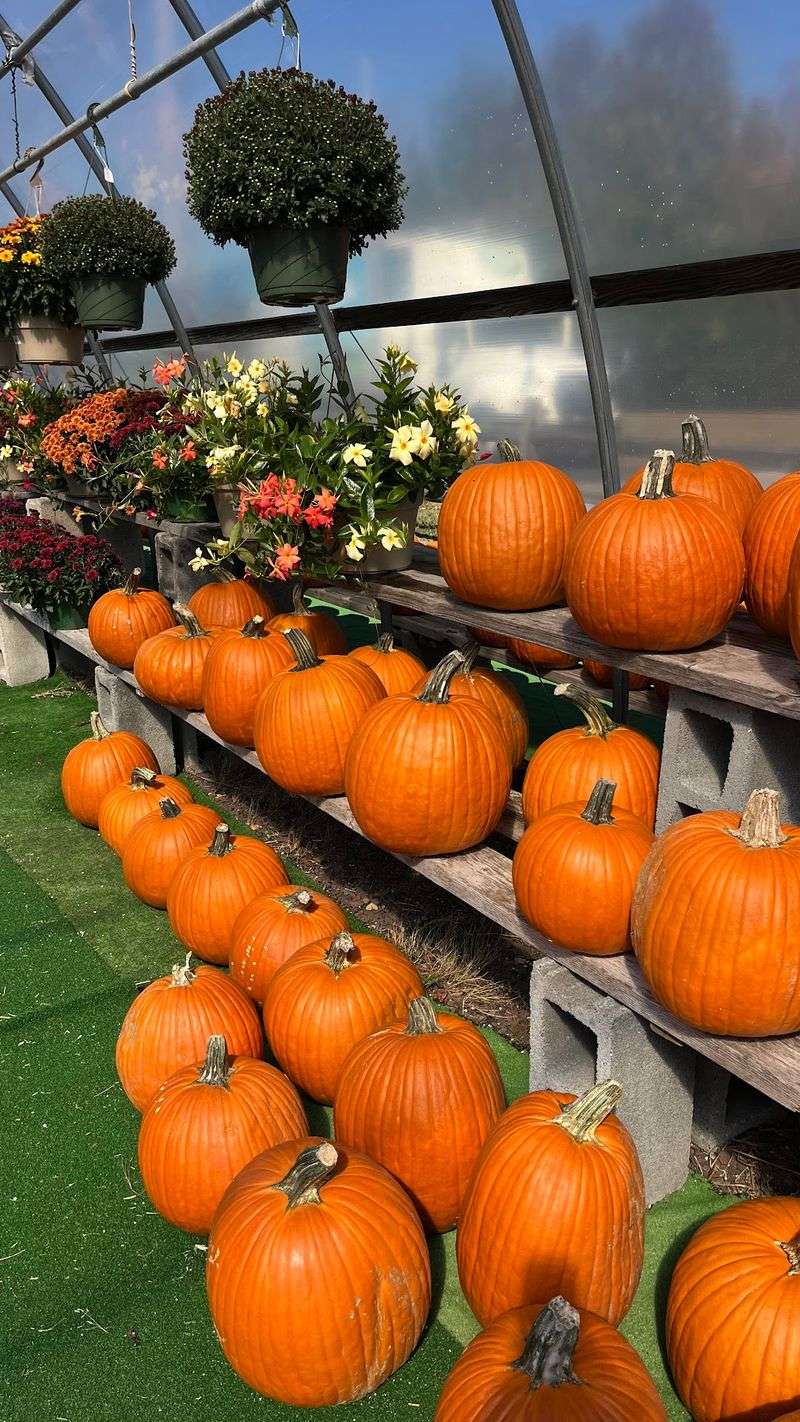
Autumn is when Freddy Hill really showed off. Fall Fest brought a corn maze, hayrides out to the pumpkin patch, and pig races, which are exactly as ridiculous and delightful as they sound.
Pumpkins and flowers filled a small designated area, and prices ran lower than at bigger operations nearby. Locals noticed that kind of thing.
Inside, the farm store went well beyond cones. Eggs, butter, cream, milk, ice cream cakes, and Amish baked goods lined the shelves, so you could turn a dessert run into actual grocery shopping.
Half gallons and gallons went home by the armload. Peanut butter, mint chocolate, and salted caramel were common repeat offenders.
The Seipt family announced their retirement and closed at the end of the 2025 season. The property sold for 26 million dollars to Pinnacle Realty Development and Toll Brothers, with 210 homes planned where the pasture used to be.
So the creamery is no longer open. But 53 years of shakes served in view of the cows is a legacy worth raising a cup to.
Address: 1440 Sumneytown Pike, Lansdale, Pennsylvania 19446
