Someone says “zoo.” You picture giraffes. Maybe a tiger.
Definitely not a dolphin. Then Indiana ruins the whole expectation.
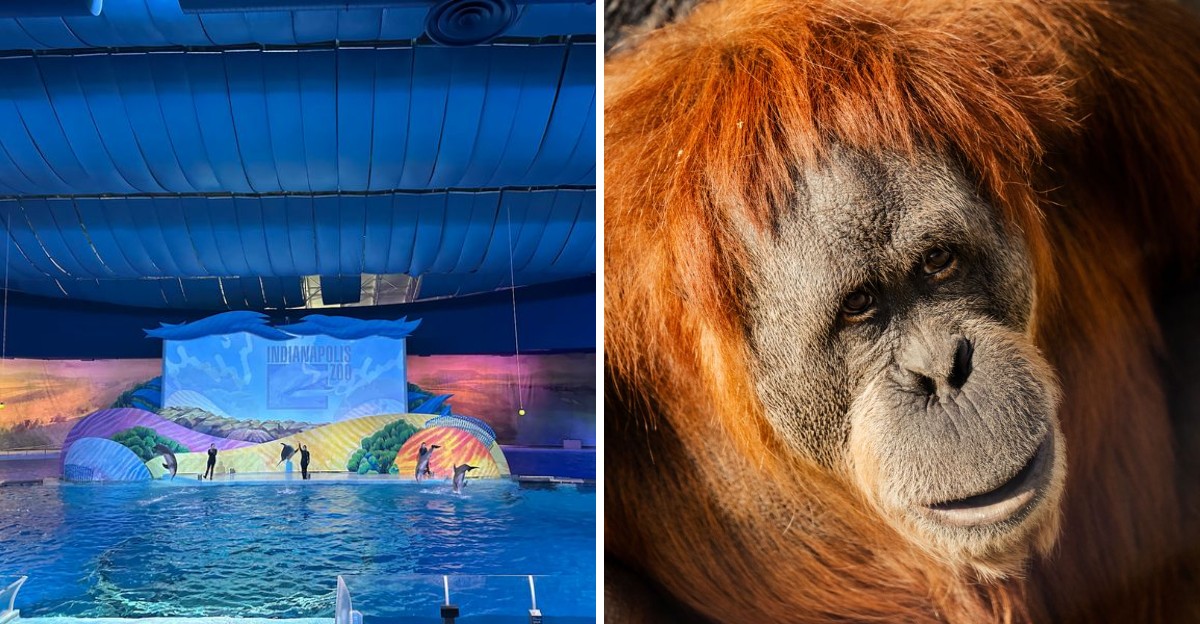
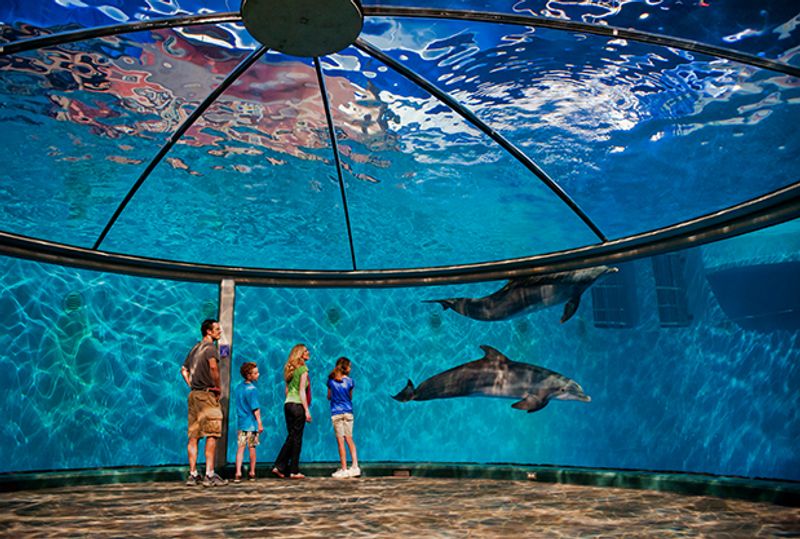
Less than a mile from downtown, blue water sits behind glass while bottlenose dolphins glide past visitors. Eighty feet above them, orangutans swing across steel cables like they own the place.
The whole setup is happening at a 64-acre zoo that somehow also functions as an aquarium and botanical garden. That means one morning can get ridiculous fast.
Watch a dolphin. Walk outside.
Look up. There is an orangutan overhead.
Then notice thousands of plants around you. It was supposed to be a normal zoo visit.
Instead, it apparently ordered one of everything.
The Dolphin Pavilion That Changed What a Midwest Zoo Could Be
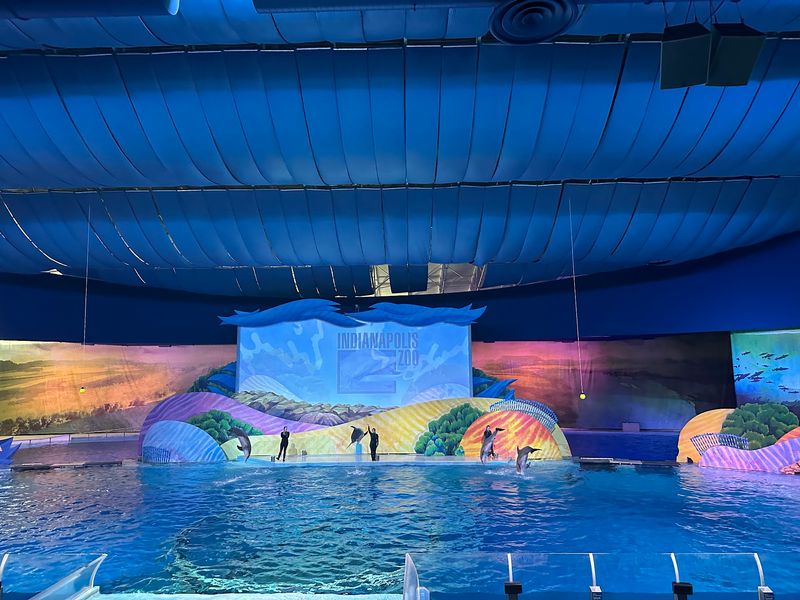
Water slaps the edge of the pool, a whistle sounds, and suddenly a bottlenose dolphin is airborne. The Ascension St. Vincent Dolphin Pavilion anchors this whole section of the Indianapolis Zoo, and it draws a crowd well before each presentation begins.
Seating fills fast, especially on warm weekends. Arriving fifteen minutes early usually means a decent view without the scramble.
What happens during the presentation leans more toward education than spectacle. Trainers explain how dolphins use echolocation, why they breathe voluntarily, and what those clicks and squeaks actually accomplish underwater.
The animals respond to hand signals and whistles, moving through behaviors that mirror what they would do in open ocean. Tail walks, spins, and synchronized jumps get the applause, but the quieter moments hold their own weight.
Watching a dolphin drift near the barrier, clearly studying the humans studying it, tends to stick with people longer than any leap.
Front rows come with a warning worth taking seriously. Splash zones at this pavilion are honest about their name, and a well-timed tail slap can soak an entire section.
Families with small children often pick seats a few rows back for that reason. Either way, the underwater viewing area below the pool deserves a stop afterward, since it offers a completely different angle on the same animals moving through open water, all located at 1200 W.
Washington Street, Indianapolis.
Poolside Adventure, Where Guests Cross Into Trainer Territory
Behind the public seating sits a stretch of deck most visitors never see. The Dolphin Poolside Adventure opens that door, letting participants step into space normally reserved for staff and animal care teams.
Group sizes stay small. That matters more than it sounds.
Things begin with a learning session covering dolphin biology, daily care routines, and how the training relationship actually functions. Then comes the part everyone signed up for, a hands-on 25-minute session at the water’s edge.
Guests feed a dolphin, touch its skin, and hear vocalizations up close without glass in between. The texture surprises nearly everyone, smooth and firm, closer to a wet inner tube than to a fish.
Trainers walk through hand signals and explain how dolphins choose to participate rather than being forced into anything.
Practical notes help here. Closed-toe shoes work best on wet concrete, and clothes that can handle a splash are a smart call since proximity to the pools makes getting wet a real possibility.
Cameras are usually restricted during the hands-on portion, so the memory has to do some of the work.
Spots are limited and tend to fill during summer months, which makes booking ahead of a visit considerably less stressful than hoping for an opening at the gate.
A Double High-Five With a Member of the Pod
Not everyone wants a full program, and the Dolphin Meet and Greet exists for exactly that reason. Short, simple, and surprisingly memorable.
The encounter takes place right after a scheduled Dolphin Presentation, so timing runs on the pavilion’s clock. Staff guide participants to a spot at the rim of one of the behind-the-scenes pools, away from the main viewing stands.
Kneeling on a mat, guests come face to face with a dolphin that surfaces just inches away. The signature moment involves a double high-five, both pectoral fins meeting two outstretched hands at once.
Kids light up. Adults, honestly, do too.
Because the format is brief, it fits neatly into a busy day without eating up an afternoon. Families juggling nap schedules or short visits often find this option easier to manage than longer programs.
Personality differences between individual dolphins become obvious in these few minutes, since some approach with immediate curiosity while others take their time.
Staff members share details about the specific animal present, including its name and a bit of its history within the pod.
Small details like that turn a quick photo opportunity into something with actual context, and visitors leave knowing one dolphin as an individual rather than as part of a blur.
Landlocked Indiana Turns Out to Matter for the Ocean
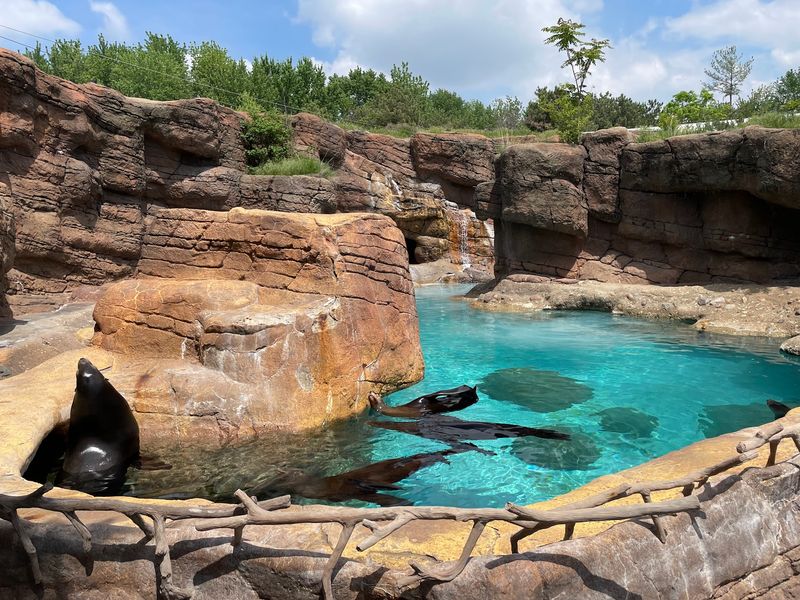
Here is a connection most visitors do not expect to find in the middle of the Midwest. Rivers running through Indiana eventually feed into the Gulf of Mexico, which means what goes into a local creek can end up in dolphin habitat.
The zoo builds that message directly into the dolphin experience rather than tucking it onto a sign somewhere.
Bottlenose dolphins are doing reasonably well as a species worldwide, but plastic pollution remains a genuine threat across marine environments. Signage and trainer commentary explain how discarded bags, bottles, and fishing line travel farther than anyone assumes.
The Indianapolis Zoo partners with The Nature Conservancy on the Gulf Project, an effort focused on building public understanding of Gulf of Mexico conservation.
What makes the approach work is how specific it stays. Instead of vague pleas to help the planet, the message points at watersheds, storm drains, and everyday choices happening hundreds of miles from any coastline.
Kids grasp it quickly, especially when the dolphin they just watched becomes the reason to care.
Reading through these displays takes only a few minutes, yet it reframes the rest of the visit.
Suddenly the animals stop being entertainment and start looking like ambassadors for places most Indiana residents will never see in person.
Simon Skjodt International Orangutan Center, an Award Magnet
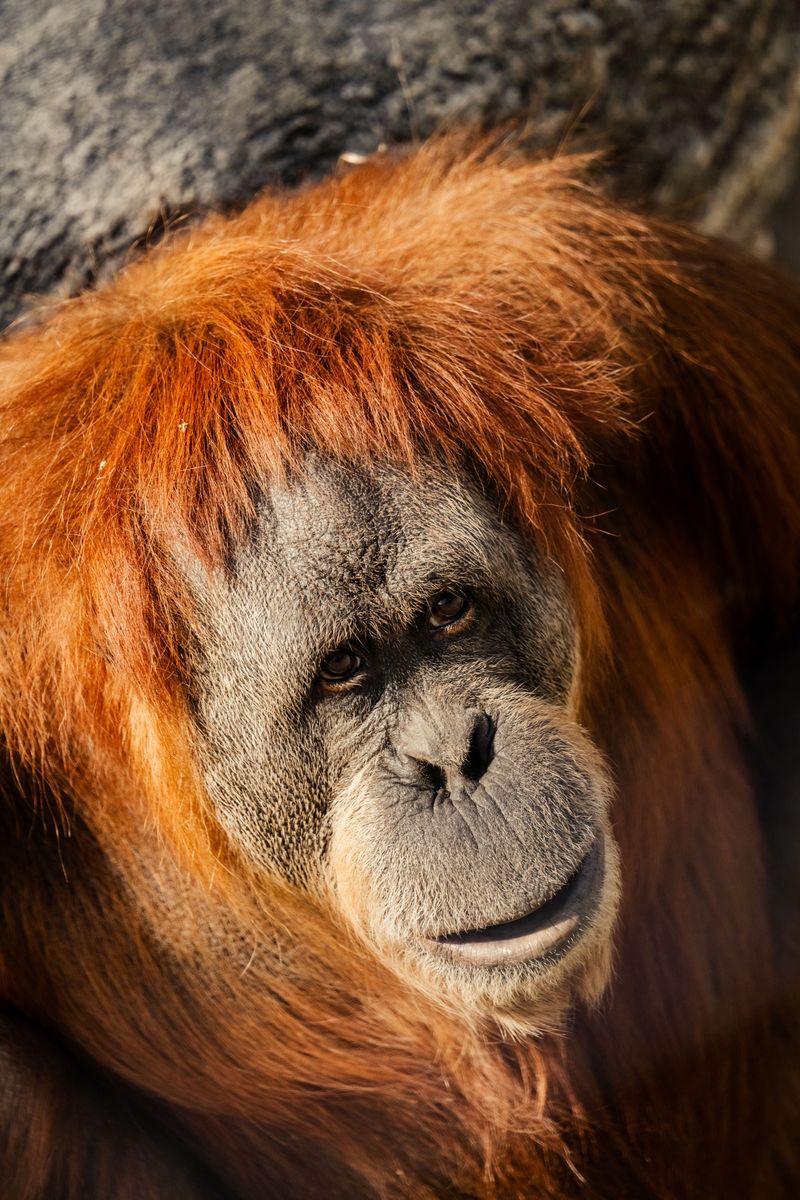
Few zoo exhibits collect the kind of recognition this one has. The Simon Skjodt International Orangutan Center has been named Best Zoo Exhibit in the US multiple times, and the reasons become obvious within about thirty seconds of arrival.
Scale is the first thing that registers. The structure rises well above the surrounding grounds, all steel towers and suspended cables.
Inside lives one of the largest groups of orangutans in any American zoo, a notable fact given how critically endangered these great apes have become in Borneo and Sumatra.
Designers built the space as a functional forest, meaning every element aims to challenge the animals physically, socially, and mentally. Climbing structures, varied surfaces, and puzzle-style feeding setups keep the apes busy in ways a flat enclosure never could.
Beyond the viewing areas, the center operates as an education, research, and conservation hub rather than just a display.
Staff work on questions about orangutan behavior and cognition while visitors watch from the other side of the glass.
Plan on spending real time here. Rushing through means missing the slow, deliberate way orangutans move and interact, which is honestly half the appeal.
Benches and shaded spots make lingering easy, and patience nearly always pays off with something worth seeing.
Eighty Feet Up on the Hutan Trail
Necks crane upward across this part of the zoo, and for good reason. The Hutan Trail sends orangutans along cables and bridges strung between towers that reach 80 feet into the air.
Ground-level visitors become an audience looking almost straight up.
Rainforest canopies are where wild orangutans spend most of their lives, rarely touching the forest floor. Recreating that vertical world required serious engineering, and the result lets the apes travel between structures using the same hand-over-hand technique they would use among trees.
Watching an adult male haul his considerable weight along a cable with what looks like zero effort is a lesson in strength that no plaque could deliver.
Movement up there is unhurried. Orangutans are not showy climbers, and they test each grip before committing.
The center includes several indoor and outdoor spaces, but the trail is where the animals spend a large share of their time, which makes the viewing genuinely unpredictable from visit to visit.
Bring sunglasses. Squinting into bright sky for twenty minutes gets old fast.
Early morning and late afternoon often bring more activity, though orangutans keep their own schedule and nobody consults the visitors.
Anyone hoping for guaranteed action should build in a return trip later in the day.
Great Ape Brains on Display, Computers and All
An orangutan tapping a touchscreen is not something most people expect from a zoo visit. Yet the orangutan center was purpose-built for cognitive research, functioning as a public research facility as much as an exhibit.
Screens sit where visitors can watch the whole process unfold.
Participation stays optional for the apes, which is central to how the work operates. When an orangutan chooses to approach a computer task, scientists gather data on how these animals learn, categorize, and perceive the world around them.
Demonstrations led by zoo experts, sometimes including President and CEO Dr. Rob Shumaker, translate what is happening on screen into plain language for the crowd.
Breeding success adds another layer to the story here. The zoo has become a leader in orangutan reproduction, using carefully managed programs that borrow techniques from human reproductive medicine, including prenatal vitamins and training apes to cooperate with pregnancy testing.
Knowledge gained from the resident population gets shared with conservationists working in Borneo and Sumatra, supporting disease management and care for rescued animals.
Beyond that, the zoo has directed more than a million dollars toward international conservation grants over three recent years.
Its Global Center for Species Survival extends that reach further still, which means a ticket here quietly supports work happening half a world away.
