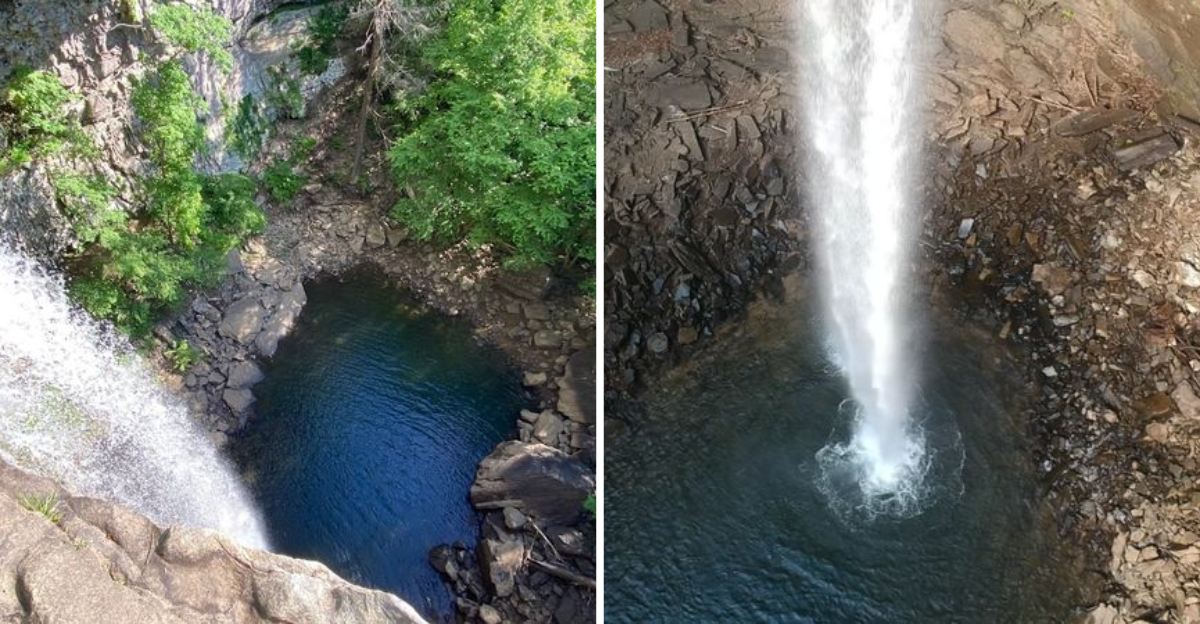
Water has been carving its path through sandstone for roughly 300 million years, and the result is nothing short of breathtaking. A 110-foot plunge waterfall crashes into a deep, rock-lined swimming hole in Tennessee, drawing hikers, swimmers, and nature lovers across the state.
The rock beneath the falls has been shaped so smoothly over centuries that it resembles a natural waterslide, polished by the relentless patience of the creek. I first heard about this place from a friend who described it as feeling almost prehistoric.
That description stuck with me long before I ever made the drive. The air near the falls carries a cool, misty freshness that hits you before you even see the water.
I stood at the edge and watched the cascade drop, the spray cooling my face, the pool below so clear I could see every stone. This is one of those rare Tennessee gems that earns every bit of its reputation.
The 110-Foot Plunge Waterfall That Started It All
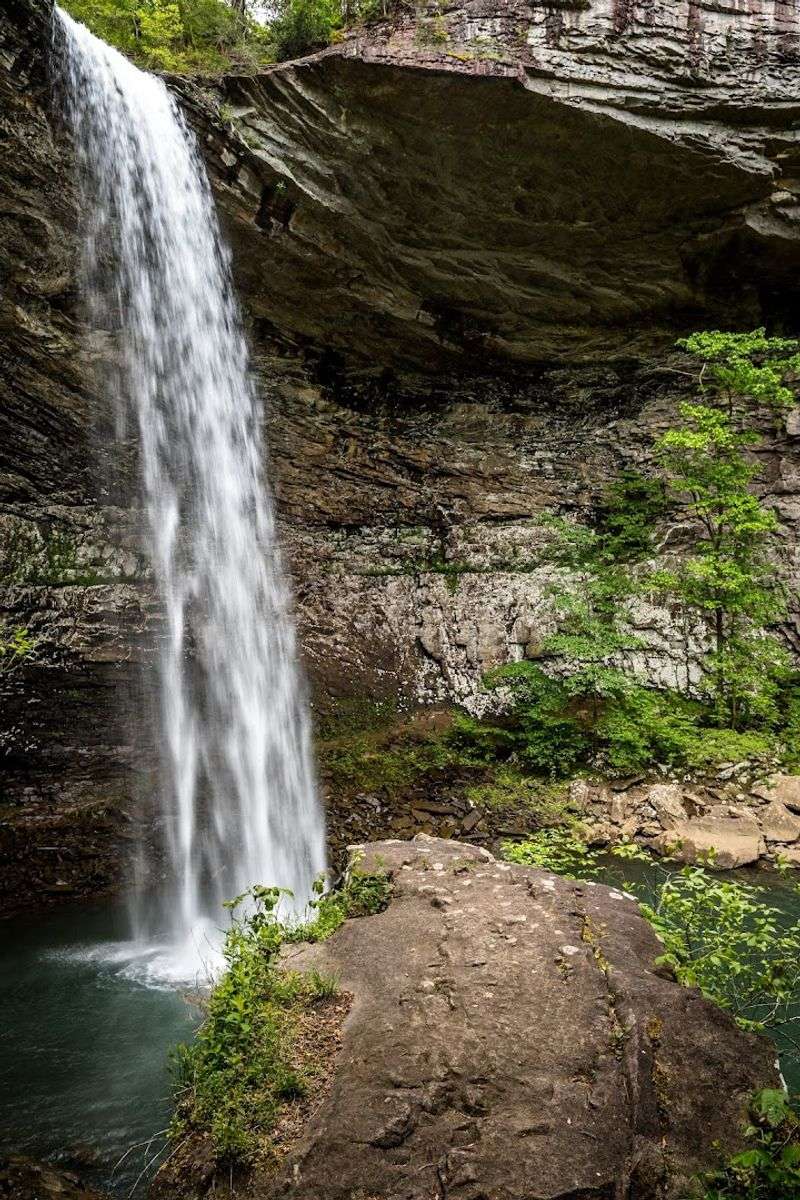
The first time you actually see the full drop of Ozone Falls, your brain takes a second to process the scale. The water launches off a sandstone cap rock and free-falls 110 feet before hitting the pool below, sending mist in every direction.
It is genuinely one of the most dramatic single-drop waterfalls in all of Tennessee.
What makes this waterfall particularly special is the geology behind it. The sandstone formations here date back approximately 300 million years, and the cap rock that sends water flying outward has been shaped by millennia of freeze-thaw cycles, erosion, and the steady persistence of Fall Creek.
The result is a smooth, curved launch point that looks almost engineered, even though nature did all the work.
From the top overlook, the view is both beautiful and a little nerve-wracking since there are no railings, so careful footing is a must. The perspective from above gives you a real sense of just how far that water falls.
Getting down to the base changes everything, though.
At the bottom, the falls tower above you in a way that feels almost theatrical. The mist keeps the surrounding rocks slick and the air noticeably cooler than the surrounding forest.
The sound is constant and deep, like a natural white noise machine turned all the way up. Visitors who make the effort to reach the base consistently say it is one of the most memorable natural sights they have experienced in the Southeast.
Fall Creek and the Rock It Has Been Sculpting for Centuries
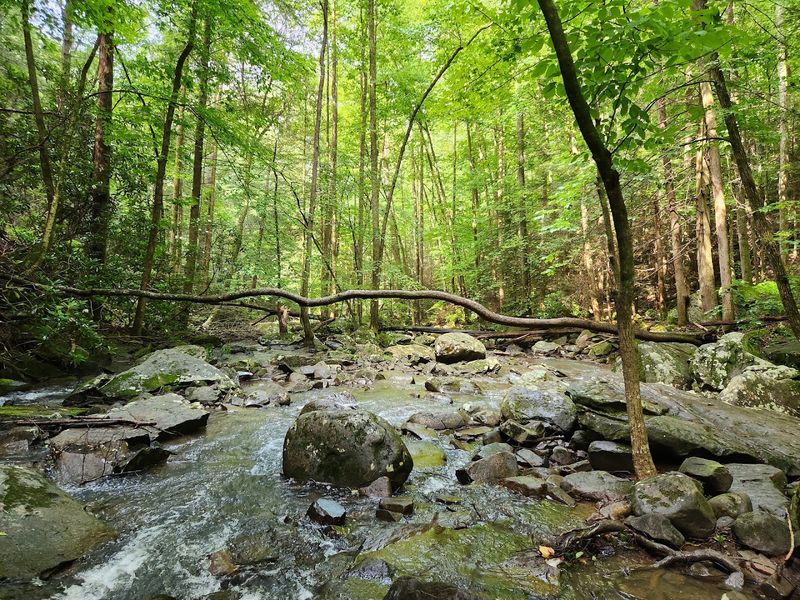
Fall Creek is the quiet force behind everything remarkable at Ozone Falls. It does not look like much from the road, but follow it toward the gorge and you start to understand what centuries of moving water can accomplish.
The creek has carved, polished, and shaped the sandstone beneath it into formations that feel almost alive.
One of the most fascinating quirks of Fall Creek is what happens after it feeds the main pool at the base of the falls. The water actually disappears underground before reappearing several yards downstream.
That kind of geological behavior makes this creek feel less like a simple waterway and more like a character in the landscape with its own personality and tricks.
Downstream from the main falls, the creek opens up into a series of smaller, calmer pools nestled between enormous boulders, some reportedly as large as houses. These secondary pools offer a quieter swimming experience away from the energy of the main falls.
The water here is clear and cold, with the kind of clarity that makes you want to sit on a rock and just stare into it for a while.
The smooth surfaces along the creek banks are a direct result of water working the same paths over and over again across geological time. You can run your hand along certain rock surfaces and feel how impossibly smooth they are, almost like polished tile.
That tactile detail alone tells you more about the history of this place than any sign ever could.
The Rock Amphitheater Behind the Falls
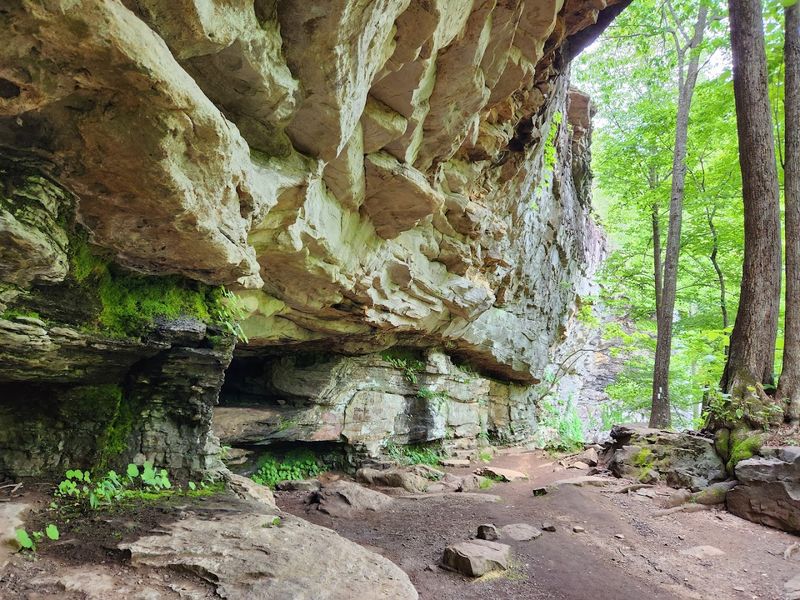
Behind the main curtain of water at Ozone Falls, there is a hollowed-out rock chamber that feels like it belongs in a fantasy novel. This natural amphitheater was carved out over geological time by water, wind, and the repeated expansion and contraction of rock through freeze-thaw cycles.
The ceiling curves overhead in a way that seems almost intentional, like something an architect would design if they had a few million years to work with.
The acoustics inside are something else entirely. The sound of the falls echoes and layers inside the chamber, creating a deep, resonant rumble that you feel as much as hear.
Stepping behind the waterfall and looking out through the falling water is one of those experiences that genuinely sticks with you. The visual of water pouring past you while you stand dry in a carved rock room is hard to describe without sounding dramatic.
The walls of the amphitheater are streaked with mineral deposits and patches of moss, giving the whole space a rich, textured look. Light filters in from the edges of the falls in shifting patterns depending on the time of day.
It is the kind of place that makes you want to just stand quietly and absorb it for a few minutes before moving on.
Disney apparently agreed with that assessment, since the production team for the 2016 live-action version of The Jungle Book chose this very spot for filming. The location has that rare quality of looking cinematic without any effort at all.
The Hike Down Into the Gorge
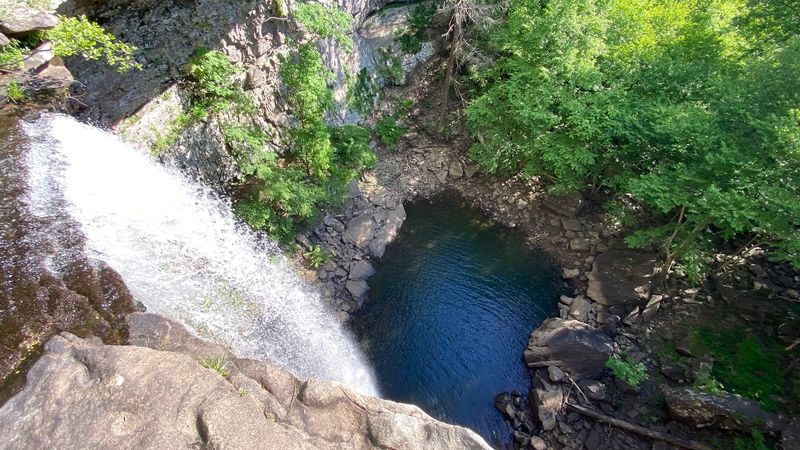
Getting to the base of Ozone Falls is not a casual stroll, and that is honestly part of what makes it feel earned. The trail down into the gorge is short, somewhere between 0.3 and 0.75 miles depending on which path you take, but it involves real elevation change, boulder scrambling, and sections of slick, mist-damp rock that demand your full attention.
Good footwear is not optional here.
The descent starts manageable enough, with natural rock steps lining parts of the trail. As you drop further, the terrain gets more rugged and the footing becomes less predictable.
The white trail markers on trees help guide the way, though some sections of the trailhead are not especially well-signed, so paying attention matters. The effort level is moderate rather than extreme, and plenty of people of varying fitness levels complete it successfully every day.
Along the way down, hikers pass a small rock shelter known as Gamblers Den, a low-ceilinged overhang that offers a brief moment of shade and curiosity. It is easy to miss if you are moving quickly, so slowing down occasionally pays off.
The gorge itself starts revealing itself through the trees before you reach the bottom, and the sound of the falls grows steadily louder with every step.
Coming back up takes noticeably more out of you than going down, so saving some energy for the return trip is genuinely good advice. The climb rewards patience, and taking short breaks to look back at the gorge below makes the whole thing feel less like exercise and more like exploration.
Swimming in the Pool Below the Falls
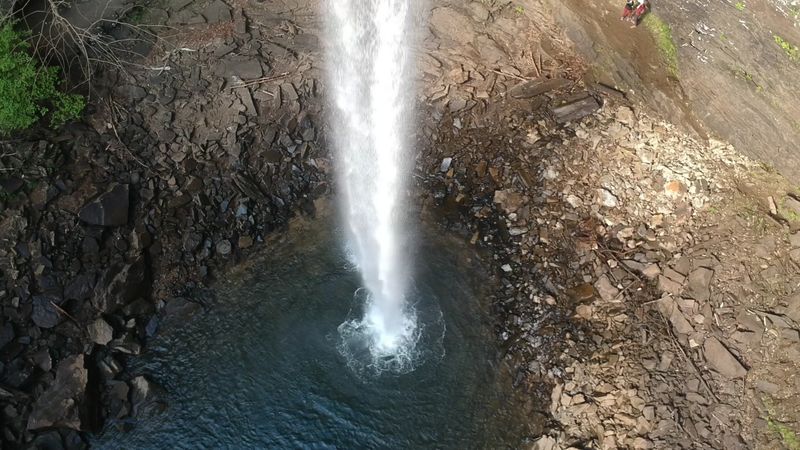
The pool at the base of Ozone Falls is the payoff for everyone who makes the hike down. Cold, clear, and deep enough for a proper swim, it sits right beneath the full force of the 110-foot drop, which means the water near the falls themselves moves with real energy.
Most swimmers stay toward the edges of the pool where the current is calmer and the depth more manageable.
There are no lifeguards here, and the water temperature runs genuinely cold even in the height of summer. That combination of cold water and the constant roar of the falls overhead creates a swimming experience that feels nothing like a public pool or a lake beach.
It is rawer and more immediate than that, in the best possible way.
The rocks surrounding the pool are smooth from years of water flow, which makes finding a comfortable perch to sit and watch the falls surprisingly easy. Some visitors wade in just enough to cool off and then spend the rest of their time sitting on the rocks taking it all in.
Others go for a full swim and come out looking both freezing and completely happy about it.
The best swimming conditions typically show up between May and September when the air temperature makes the cold water feel refreshing rather than punishing. Visiting after a period of rain tends to bring the falls to their most dramatic and the pool to its fullest.
No facilities exist on site, so bringing everything you need, including a dry change of clothes, is the smartest approach.
The Old-Growth Forest and the Natural Area Around the Falls
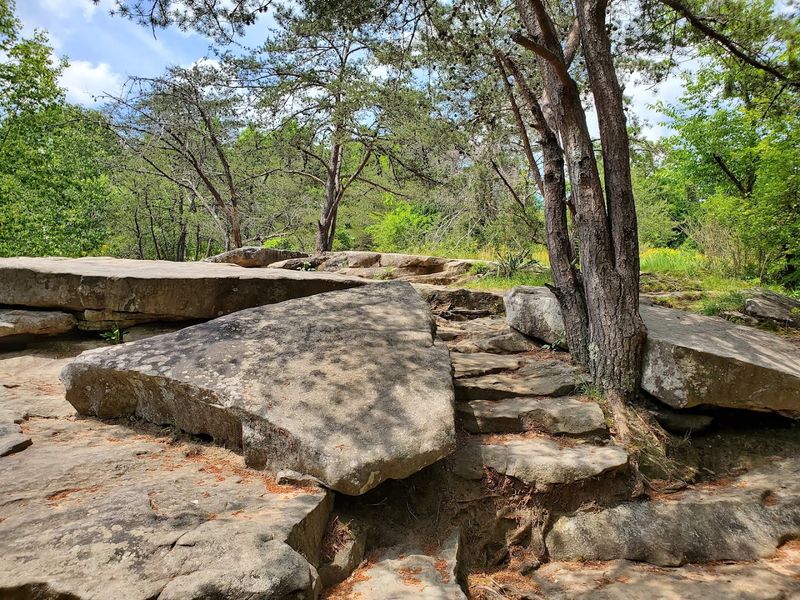
The forest surrounding Ozone Falls is not just backdrop scenery. It is a remnant old-growth mixed mesophytic community, which is a fancy way of saying this patch of woodland has been largely undisturbed for an extraordinarily long time.
Eastern hemlock, white pine, magnolia, yellow birch, sugar maple, tulip poplar, and red oak grow here in a layered canopy that filters light in constantly shifting patterns throughout the day.
The shrub layer beneath the trees is thick with rosebay rhododendron, which blooms in late spring and early summer in clusters of pale pink and white flowers. Walking through a rhododendron thicket in full bloom alongside the sound of falling water is one of those sensory combinations that is genuinely hard to forget.
The whole forest floor feels dense and alive in a way that younger second-growth forests simply do not replicate.
Up on the sandstone bluffs above the falls, the vegetation shifts completely. Small open glades host native grasses and prairie plants adapted to the thin, dry soil on top of the exposed rock.
The contrast between those open sunny bluffs and the cool, shaded gorge below is striking and makes the 43-acre natural area feel larger and more varied than its size suggests.
Ozone Falls was formally established as a state natural area in 1973 and expanded in 1996, recognizing its ecological significance. The Tennessee Department of Environment and Conservation manages the site, with support from Cumberland Mountain State Park.
Address: 14563 TN-1, Ozone, TN 37854.
