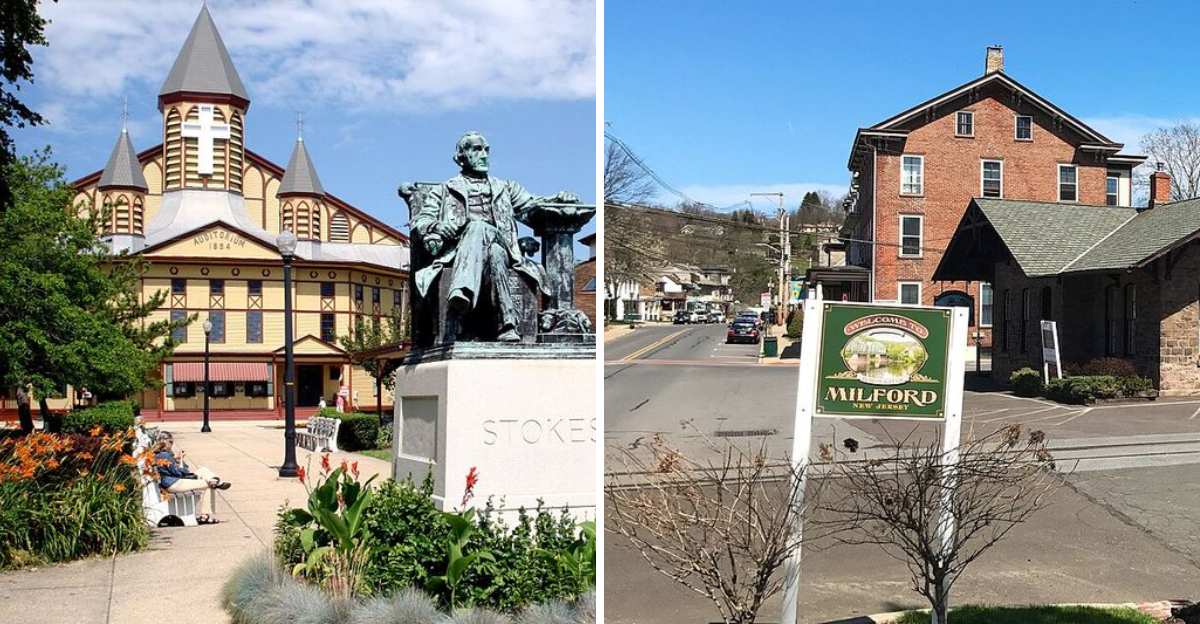
Forget the neon lights and late-night crowds. In these New Jersey towns, the streets roll up early and the quiet takes over after dark.
No bars. No clubs. No bustling nightlife to speak of.
Just peaceful neighborhoods, chirping crickets, and the occasional car passing through.
Some people call it boring. Others call it bliss.
If your idea of a perfect evening involves a good book, a quiet porch, or a long walk under the stars, these towns are your paradise. You will not find much open past nine.
Dinner is usually the main event and breakfast starts early. It is a different pace of life, slower and simpler.
No noise. No chaos. Just the hum of a quiet night. And honestly?
That sounds pretty good right about now.
1. Cape May Point
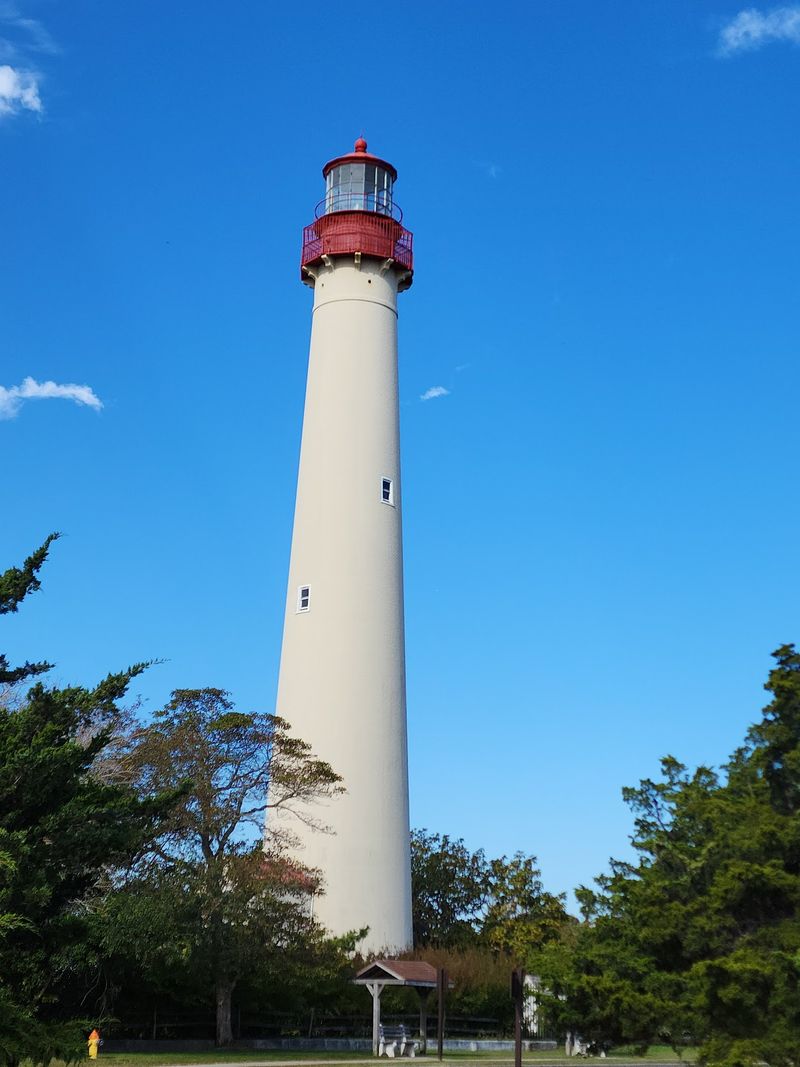
My first evening here, the loudest sound was the wind pushing through beach grass. Streetlights are scarce on purpose, and that is part of the charm.
Cape May Point sits at the very bottom tip of New Jersey, where the ocean and the bay meet. The town is mostly cottages, dunes, and a lighthouse that has been guiding boats since 1859.
Once the sun drops, the whole place seems to exhale. Shops shut down early, porches fill up with folded beach chairs, and people wander toward the water instead of toward anything with a neon sign.
If you visit, plan your evening around the sky rather than a schedule. The dark conditions make this one of the better spots in the state for watching stars appear without city glow washing them out.
Bring a flashlight. Sidewalks are limited, and the roads bend around dunes in ways that surprise first-timers walking after dark.
A fun bit of history: the town was originally developed in the 1870s as a quiet religious retreat, which explains why the layout still feels intentionally peaceful rather than commercial.
What I liked most was how unbothered everyone seemed about the early closing times. Nobody rushes here, and nobody apologizes for it either.
Address: Cape May Point, Cape May County, New Jersey
2. Stockton
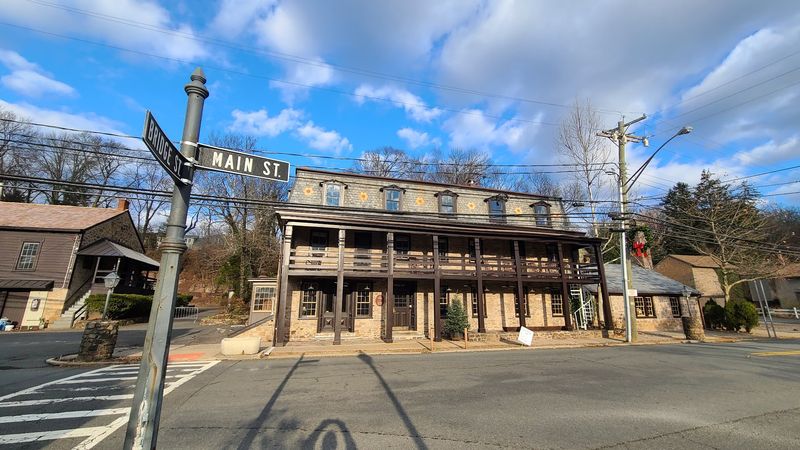
Walking Stockton after sunset feels like stepping inside a snow globe that somebody forgot to shake. The Delaware River runs alongside, and its steady sound fills in the gaps where traffic noise would normally be.
Fewer than 600 people live here, making it one of the smallest boroughs in New Jersey. That population number tells you almost everything about how the evenings go.
Stone buildings line the short main stretch, and most of them close their doors while there is still light in the sky. By eight o’clock, the sidewalks belong to whoever is out walking a dog.
The river path is the real evening activity. I strolled it slowly, listening to water move over rocks, which honestly beats any playlist.
Photographers love this town for that soft blue hour glow on old stonework. If you want good shots, arrive before dusk rather than after.
Here is a quirky detail: the village once inspired a well-known song about a bridge over the Delaware, cementing its reputation as a place where slowness is celebrated.
Come prepared, because there is no late corner store waiting to rescue you. Pack water, a jacket, and patience.
Quiet like this is rare, and Stockton wears it well.
Address: Stockton, Hunterdon County, New Jersey
3. Califon
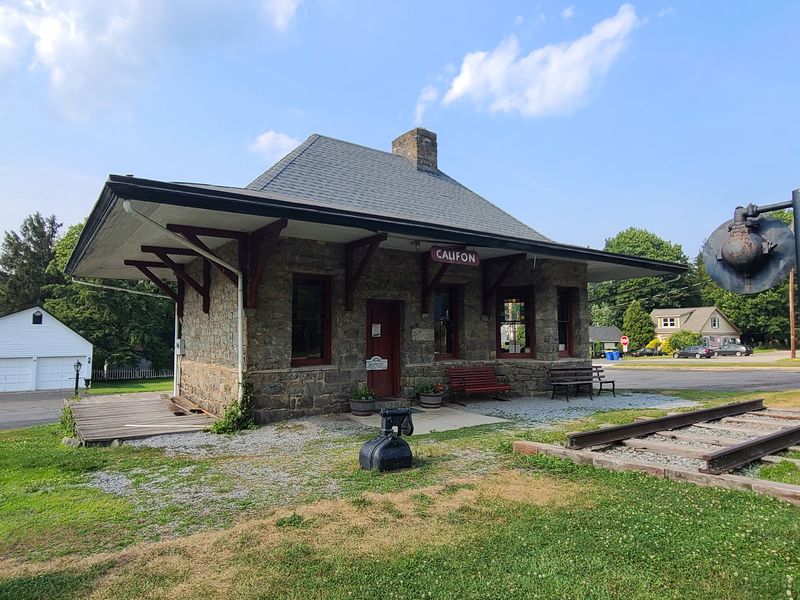
Rolling farmland surrounds Califon, and the roads leading in curve enough that you slow down without meaning to. By the time I parked, the sky had gone orange and the town had already gone still.
Tucked into the Hunterdon County hills along the South Branch of the Raritan River, Califon holds around 1,000 residents. Its historic district is listed on the National Register, which keeps the old buildings looking properly old.
The restored train depot is the landmark everyone photographs. Trains stopped running long ago, and somehow that adds to the hush.
Evenings here revolve around porches, backyards, and the sound of the river. There is no strip of late-night activity, and residents seem perfectly content about that.
Cyclists use the surrounding hills constantly during daylight hours. If you plan a ride, finish before dark because the country roads have no lighting whatsoever.
A naming oddity worth knowing: the town’s name reportedly came from a sign painter who ran out of space while trying to spell out California, and the shortened version stuck.
What stayed with me was the stillness between houses. You can actually hear leaves shifting.
Bring a book. Evenings here reward people who packed one.
Address: Califon, Hunterdon County, New Jersey
4. Milford
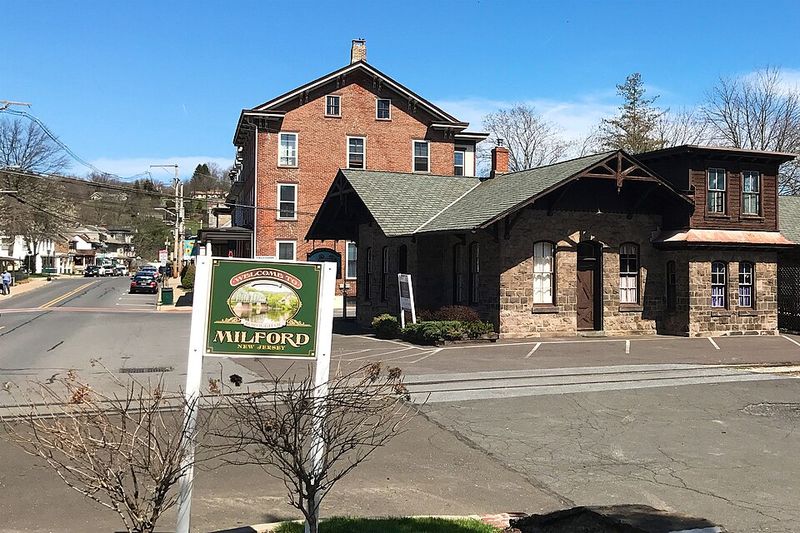
Crossing into Milford in the evening, I half expected a bustle near the bridge. What I found instead was a handful of glowing windows and a whole lot of calm.
Milford sits right on the Delaware River in Hunterdon County, with about 1,200 residents and a compact downtown you can walk end to end in ten minutes. Hills rise up behind the town, which makes the sunsets arrive early.
Businesses here keep daytime hours, and once those roll-down shades come down, the street belongs to the river breeze.
Walking the bridge area after dark became my favorite part of the visit. Water moves loud enough to drown out everything else, and the air smells faintly green and cool.
Practical tip: cell service can get spotty in the river valley, so download directions before you arrive. Getting turned around on unlit rural roads is not the adventure you want.
Milford has a papermaking past dating back to the 1800s, and several old industrial buildings still stand as reminders of that working history.
The town keeps its lighting soft, which means stars show up quickly overhead.
I left thinking that early closing times are underrated. Sometimes a place saying goodnight early is exactly what a traveler needs.
Address: Milford, Hunterdon County, New Jersey
5. Far Hills
Driving through Far Hills at dusk, the headlights kept catching white fence rails stretching across dark pastures. It felt less like a town and more like a landscape painting that happens to have a zip code.
Far Hills covers a wide area of Somerset County but holds only a few hundred residents. Estates, horse farms, and woodland make up most of the acreage.
Because the population is so small, there simply is not a commercial center that stays lit. The historic stone train station is the main gathering point, and it goes quiet once the last commuters head home.
Evenings here are for open sky. Standing near a fence line, I could see more stars than I expected this close to the state’s busier corridors.
If you drive at night, take it slow. Deer are common, roads are narrow, and shoulders are basically decorative.
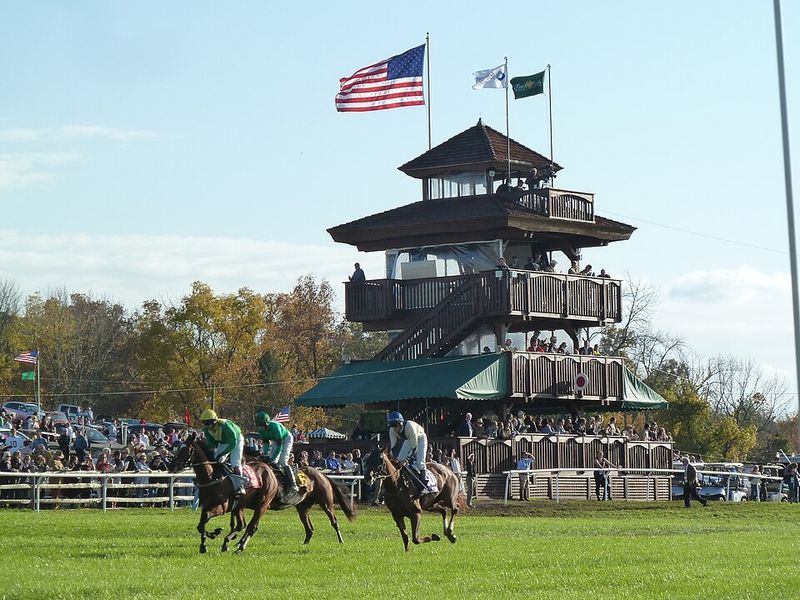
The town is nationally known for a steeplechase horse racing event held each autumn, which is the one day the quiet genuinely lifts.
Otherwise, the rhythm stays gentle year-round.
I appreciated how the darkness felt intentional rather than empty. There is something grounding about a place where evening means fields, fences, and the occasional owl.
Address: Far Hills, Somerset County, New Jersey
6. Barnegat Light
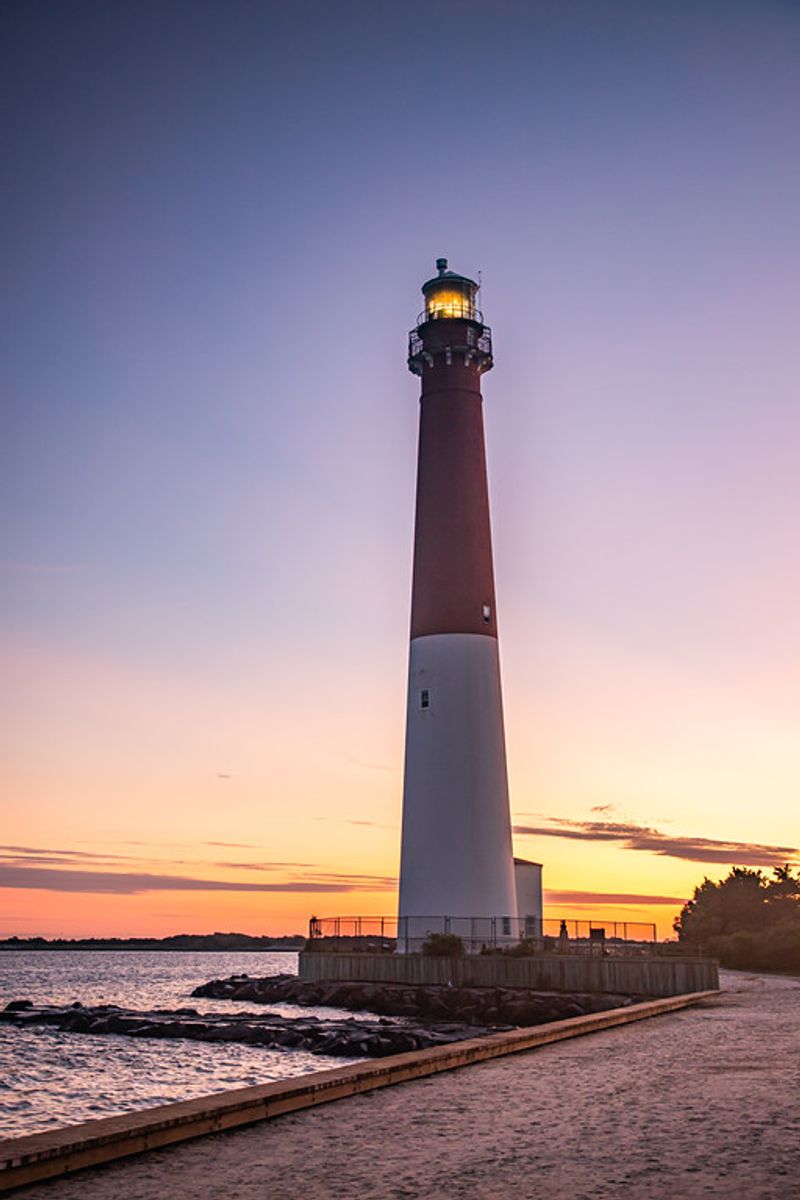
Old Barney, as locals call the lighthouse, stood glowing against a deep blue sky the evening I arrived, and honestly it stole the whole show. Everything else had already dimmed.
Located at the northern tip of Long Beach Island, Barnegat Light is a working fishing community with roughly 600 year-round residents. The commercial fishing fleet sets the schedule, and that schedule starts painfully early.
Early mornings mean early nights. Streets empty out while there is still color in the sky, and the town settles into a steady coastal hush.
The jetty is where I ended up. Waves smack the rocks in a rhythm that makes you forget to check the time.
Wear sturdy shoes if you go out there, because the granite blocks are uneven and slick near the waterline.
The lighthouse first lit up in 1859 and once marked one of the most dangerous stretches of the Atlantic coast, guiding ships past shifting shoals.
Even in summer, the evening energy here stays mellow compared to the rest of the island. Families bike home, porch lights flick on, and that is about it.
Sometimes the best beach town is the one that stops performing after sunset.
Address: Barnegat Light, Ocean County, New Jersey
7. Harvey Cedars
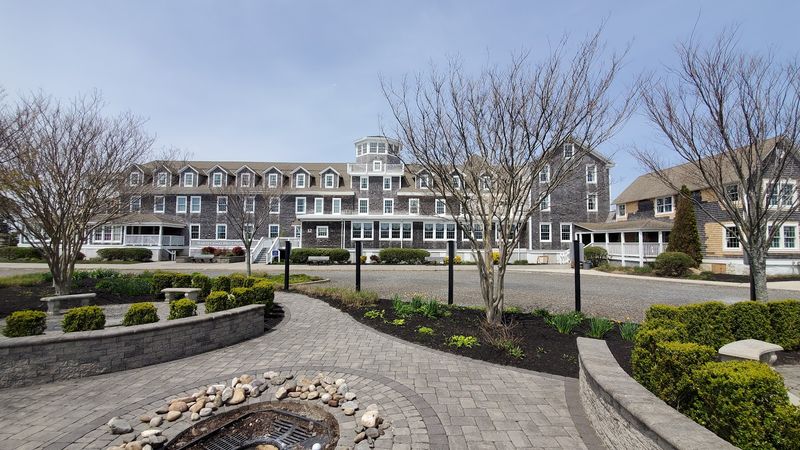
Standing on a bayside overlook in Harvey Cedars, I got one of those sunsets that makes you stop mid-sentence. Then the color faded, and the town basically tucked itself in.
This borough sits on one of the narrowest sections of Long Beach Island, with the ocean on one side and Barnegat Bay on the other. Around 300 people live here year-round.
With a footprint that slim, there is barely room for a commercial district, let alone anything that stays open late. Homes on pilings line most of the streets.
Evening entertainment means walking to the water. I did the ocean side one night and the bay side the next, and both felt like private events.
Bring bug spray in summer months, especially near the bay where the marsh air gets thick and still.
Harvey Cedars once served as a whaling settlement in colonial times, one of the earliest inhabited spots on the island.
What surprised me was how quickly the temperature drops after dark, even in warm months. That ocean breeze cuts right through a t-shirt.
Pack a hoodie, grab a spot on the sand, and let the quiet do its thing.
Address: Harvey Cedars, Ocean County, New Jersey
8. Cranbury
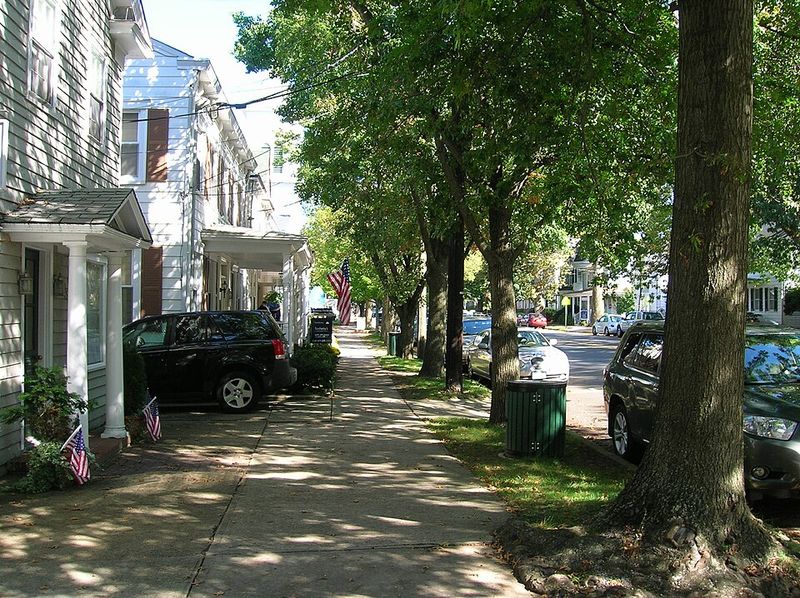
Cranbury’s main street looks like a movie set, and at dusk it acts like one too, right after the crew has gone home. Lamps glow, windows darken, and nobody rushes anywhere.
The township holds one of the best-preserved historic districts in New Jersey, with buildings dating back to the 1700s and 1800s. Roughly 4,000 people live in the area.
Despite sitting near major highways, the village center keeps daytime hours. Once shops close, the sidewalks turn into a walking loop for residents and their dogs.
I circled the small lake at the edge of the village as the light faded. Frogs handled most of the noise.
For visitors, the sweet spot is late afternoon into early evening. You get the historic architecture in golden light, then the calm settles in without any awkward waiting.
A neat fact: Cranbury served as a stopping point for Continental Army troops in 1778 during the march toward the Battle of Monmouth.
Parking is easy, and the whole district is flat and walkable, which makes an evening stroll genuinely pleasant.
There is something reassuring about a town that has kept the same peaceful evening rhythm for a couple hundred years.
Address: Cranbury, Middlesex County, New Jersey
9. Allentown
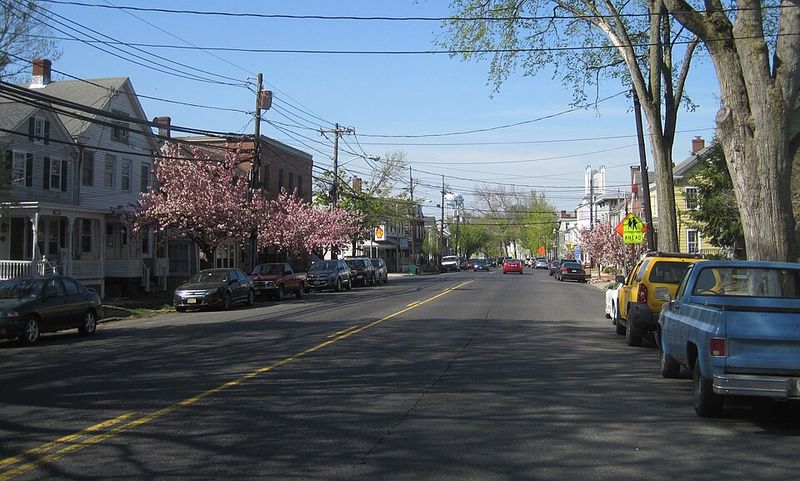
The millpond in Allentown turns glassy right around sunset, doubling the sky. I stood there longer than planned, mostly because there was nowhere else demanding my attention.
Allentown is a small borough in Monmouth County with about 1,800 residents and a historic downtown built around an old grist mill. Water once powered the entire local economy here.
Storefronts close on the early side, and the streets settle quickly. Evening traffic amounts to a car or two.
Walking the loop around the pond became my nightly routine. Geese, frogs, and the occasional splash filled the soundtrack.
If you visit, aim for a clear evening and wear comfortable shoes, because the sidewalks near the water can be narrow in spots.
The mill dates back to the 1700s, and the town’s layout still follows those early working patterns, which is why everything clusters so tightly around the water.
Fall is especially good here. Reflections of turning leaves on the pond look almost unreal in low light.
I came expecting a quick stop and stayed until it was fully dark. That is usually the sign of a town doing quiet the right way.
Address: Allentown, Monmouth County, New Jersey
10. Ocean Grove
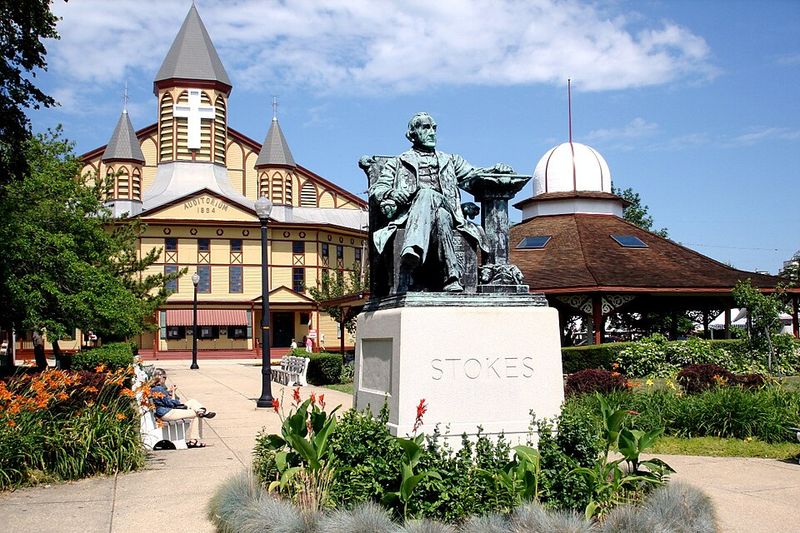
Ocean Grove surprised me. Sandwiched along the shore, it still keeps a hush after dark that feels almost deliberate, like the whole town agreed on it.
Founded in 1869 as a seaside retreat, the community is famous for its tent colony, where canvas-topped cottages are set up each summer. The Great Auditorium anchors the center of town.
Victorian homes crowd the narrow streets, painted in colors that pop even in fading light. Shops wind down early, and the beach empties out.
The boardwalk here has no rides and no arcades, which changes the entire evening mood. People walk, sit, and listen to the surf.
Bring a light blanket if you plan to stay out. Benches face the ocean, and the breeze picks up once the sun is gone.
A detail I found charming: the town’s historic district contains hundreds of preserved buildings, giving the whole place a consistent nineteenth-century look that photographs beautifully at twilight.
Sunrise crowds are bigger than sunset crowds, which tells you plenty about the local rhythm.
By ten o’clock, the loudest thing around is water hitting sand. For a shore town in New Jersey, that is genuinely remarkable, and it is exactly why people keep coming back.
Address: Ocean Grove, Monmouth County, New Jersey
