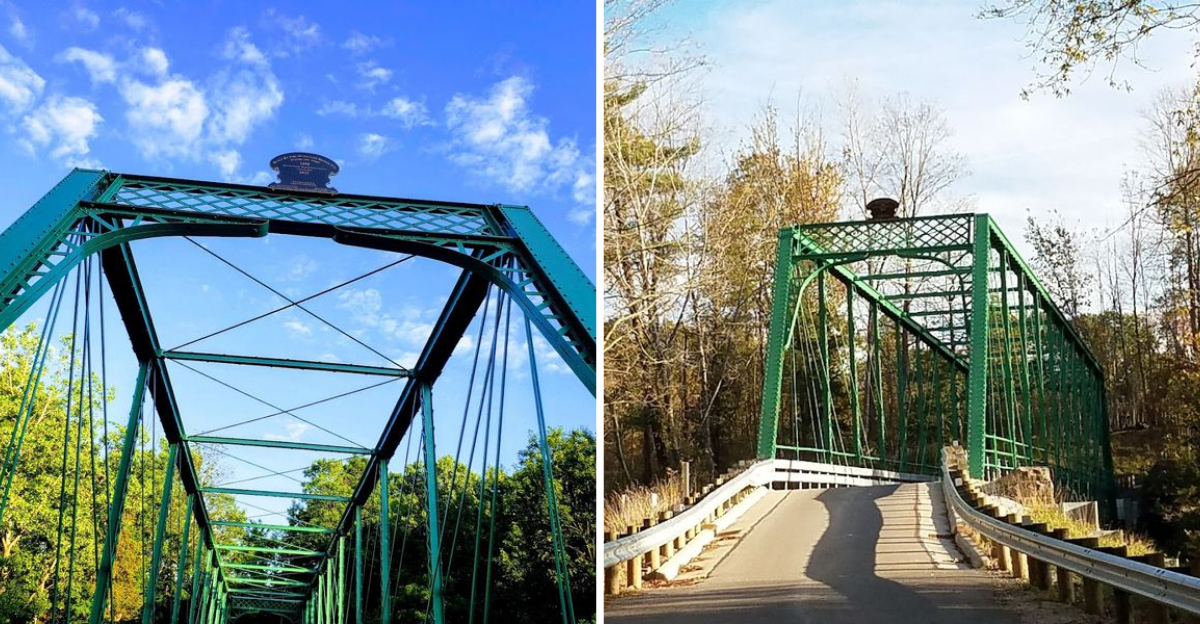
An Ohio bridge sits quietly at the end of a rural road, and most people drive past without a second thought. But the ones who know its name never quite forget it.
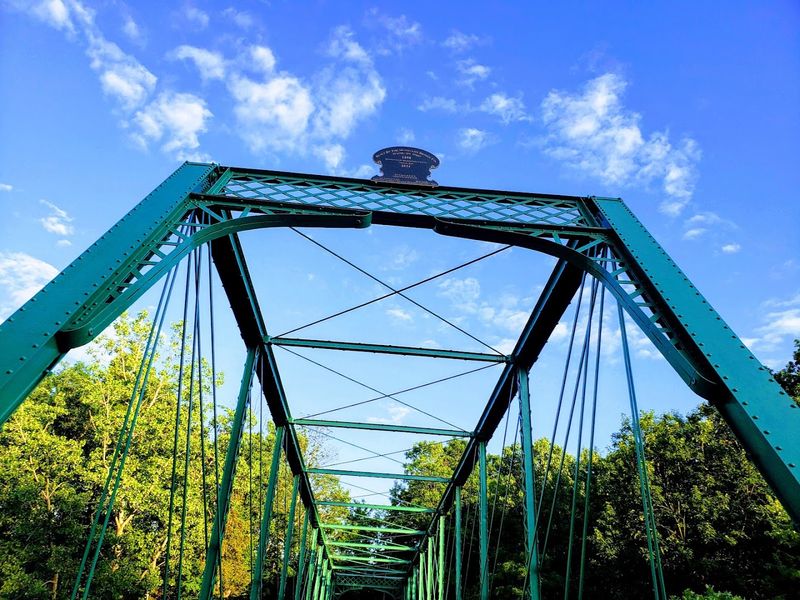
A Pratt truss structure built in 1898, it carries a weight that goes far beyond its wooden deck and iron trusses.
Local legends have swirled around that crossing for generations, stories of ropes, shadows, and a hollow that seems to hold onto its past like a fist.
I first heard about it from someone who grew up nearby, and the way their voice dropped when they said the name told me everything I needed to know.
I stood at the approach on a gray afternoon, the creek moving slow beneath me, and felt that particular stillness that only old places seem to hold.
Listed on the National Register of Historic Places in 1978, even historians thought it deserved to be remembered.
Come for the scenery, the history, or the legends, that bridge never lets you leave without leaving something behind in you too.
The 1898 Pratt Truss Bridge That Outlived Its Own Legends
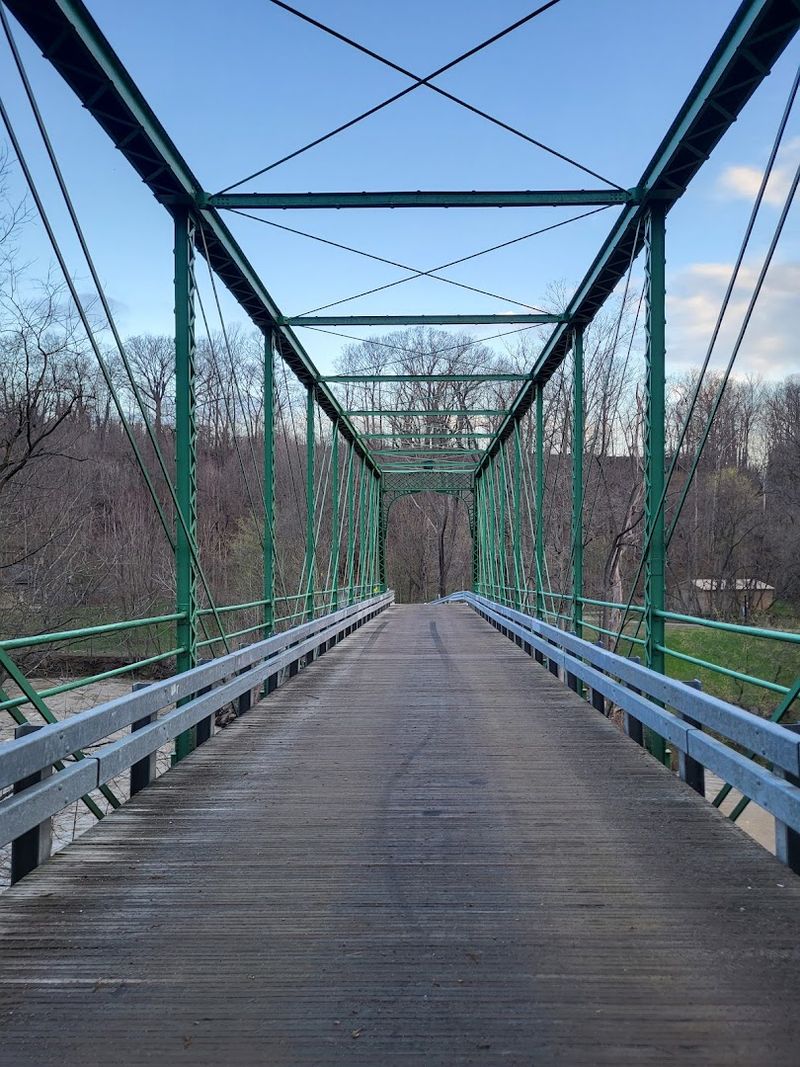
Some structures earn their age gracefully, and Dean Road Bridge is one of them. Built in 1898 by the Massillon Bridge Co., this single-lane Pratt truss bridge has been standing over the Vermilion River for well over a century, watching the world change around it while barely changing itself.
The Pratt truss design, recognizable by its diagonal metal supports, was one of the most practical and trusted bridge styles of its era. Engineers loved it for its strength and relatively straightforward construction.
Seeing one still in use today feels almost like finding a working piece of a museum exhibit out in the open air.
The wooden deck gives the bridge a sound and feel that modern concrete crossings simply cannot replicate. There is a low rumble when tires roll across it, almost like the bridge is clearing its throat.
It was revitalized in 2013, which helped preserve its structure without stripping away its character. For history lovers and curious travelers, arriving at this bridge for the first time feels like the road itself is offering you a gift nobody else thought to open.
How a National Register Listing Changed the Bridge’s Fate
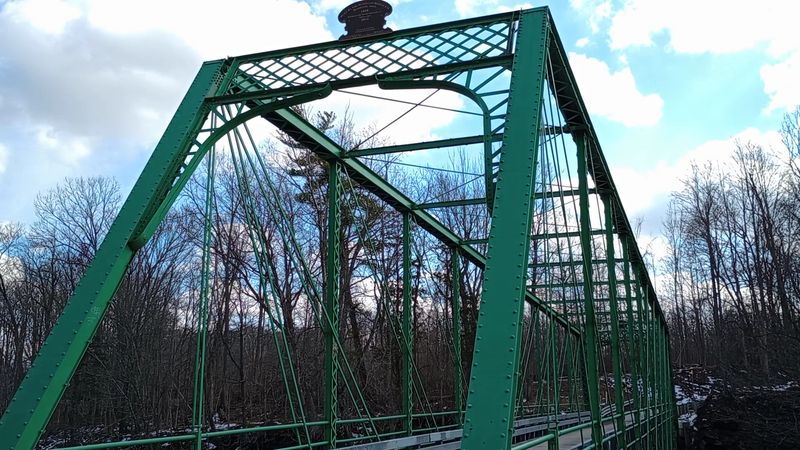
Not every old bridge gets a second chance, but Dean Road Bridge earned one in 1978 when it was officially listed on the National Register of Historic Places. That listing might sound like a formality, but it carried real consequences.
Bridges without that protection often get quietly demolished when repair budgets run thin.
The National Register designation essentially tells the federal and state governments that a structure has cultural, architectural, or historical significance worth protecting. For Dean’s Bridge, it meant that any future decisions about its fate had to go through a more careful review process.
That single listing likely saved it from the fate of dozens of other rural Ohio bridges that simply disappeared over the decades.
It also changed how locals saw the bridge. Once something is officially recognized as historically important, people start paying attention in a different way.
Families who had crossed it for years began pointing it out to their kids as something special. The 2013 revitalization project followed years later, breathing new life into the structure without erasing what made it worth saving in the first place.
Recognition, it turns out, can be its own form of preservation.
The Rope That Nobody Removed and the Story That Spread
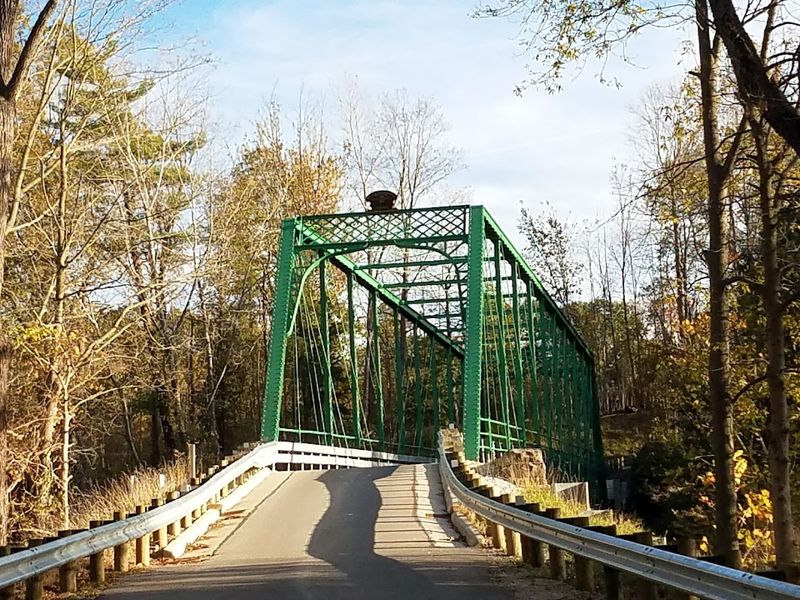
The legend at the center of Dean’s Bridge is not subtle. According to local lore, a man once took his life by hanging himself from the rafters of the old bridge that previously occupied this spot.
What made the story stick was what happened next: the rope was reportedly left hanging long after his body was removed.
That detail, small and specific, is exactly the kind of thing that burrows into a community’s memory and refuses to leave. People drove past it.
Kids dared each other to look at it. The rope became more than rope.
It became a symbol of something unresolved, something the town never quite processed out loud.
The story evolved over time, as these things tend to do. A supernatural warning attached itself to the tale: if you drove over the bridge at night and saw the rope still hanging, you would pass soon after.
Nobody can trace that part of the legend to a specific source, which is part of what makes it so persistent. When the original bridge was finally torn down, the rope went with it, but the story had already found a new home in the imaginations of everyone who had heard it.
Dean’s Hollow and the Devil’s Heartbeat Below the Bridge
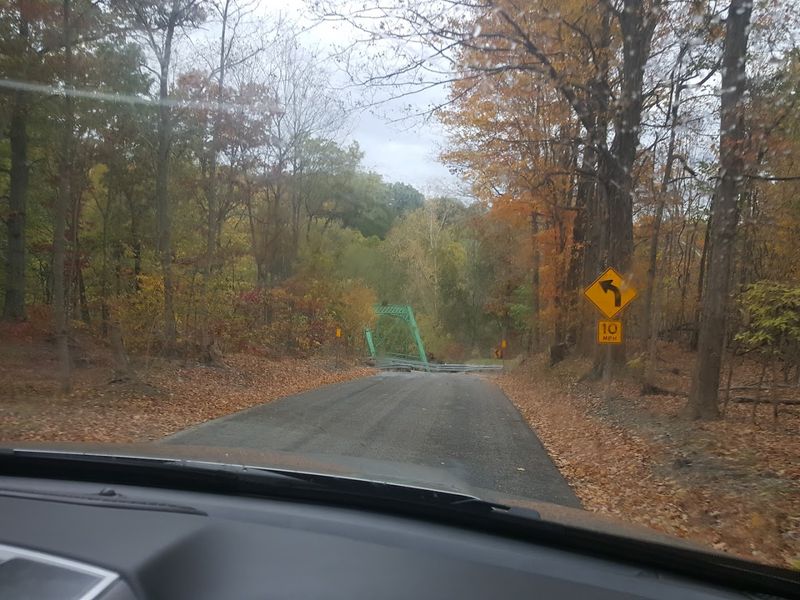
The bridge itself is only part of the story. The land surrounding it, known locally as Dean’s Hollow, carries its own layer of legend that predates most of the bridge tales.
The hollow has a distinct atmosphere, the kind of quiet that feels less like peace and more like something holding its breath.
One of the most unusual local legends tied to this area is the so-called Devil’s Heartbeat. Locals have described hearing a rhythmic, deep thumping sound coming from beneath the ground in and around Dean’s Hollow.
The explanation that gets passed around most often connects it to the area’s history as an oil derrick site. Old equipment, underground pressure, or residual mechanical effects could theoretically produce strange sounds, though no formal study has ever confirmed that.
Whether the explanation is geological or purely imaginative, the legend adds a layer to the hollow that makes it feel genuinely different from surrounding farmland. The combination of the bridge overhead and the hollow below creates an environment where the ordinary and the unsettling sit right next to each other.
That tension is exactly what draws people out here on weekends, flashlights in hand, looking for something they cannot quite name.
The Haunting Legend and What It Says About Rural Fear
Rural communities have always generated their own mythology, and Dean’s Bridge collected more than its share. Alongside the hanging rope legend runs a darker story about a figure locals call the Hook, a supposed serial criminal who allegedly terminated people on the bridge and hung them from its rafters.
There is no verified historical record of such a criminal connected to Dean’s Bridge specifically. But that absence of documentation does not make the legend any less interesting.
Stories like the Hook tend to emerge in places that feel isolated, where the nearest neighbor is far away and the road home runs through darkness. They serve a social function, warning people away from certain places or behaviors without requiring any actual authority to enforce the warning.
What the Hook legend really reveals is how rural communities process fear. Instead of filing reports or holding town meetings, they tell stories.
Those stories get passed from older kids to younger ones, from parents to children on long car rides. Dean’s Bridge became a container for all of that anxiety, a physical place where abstract fears could be given a location and a shape.
That is something no historical marker will ever fully explain.
What It Actually Feels Like to Cross Dean’s Bridge Today
All the legends aside, crossing Dean Road Bridge is a genuinely memorable experience on its own terms. The road leading to it narrows significantly, and the descent into the hollow means you are dropping downhill at a noticeable angle before the bridge even comes into view.
The approach alone sets a mood.
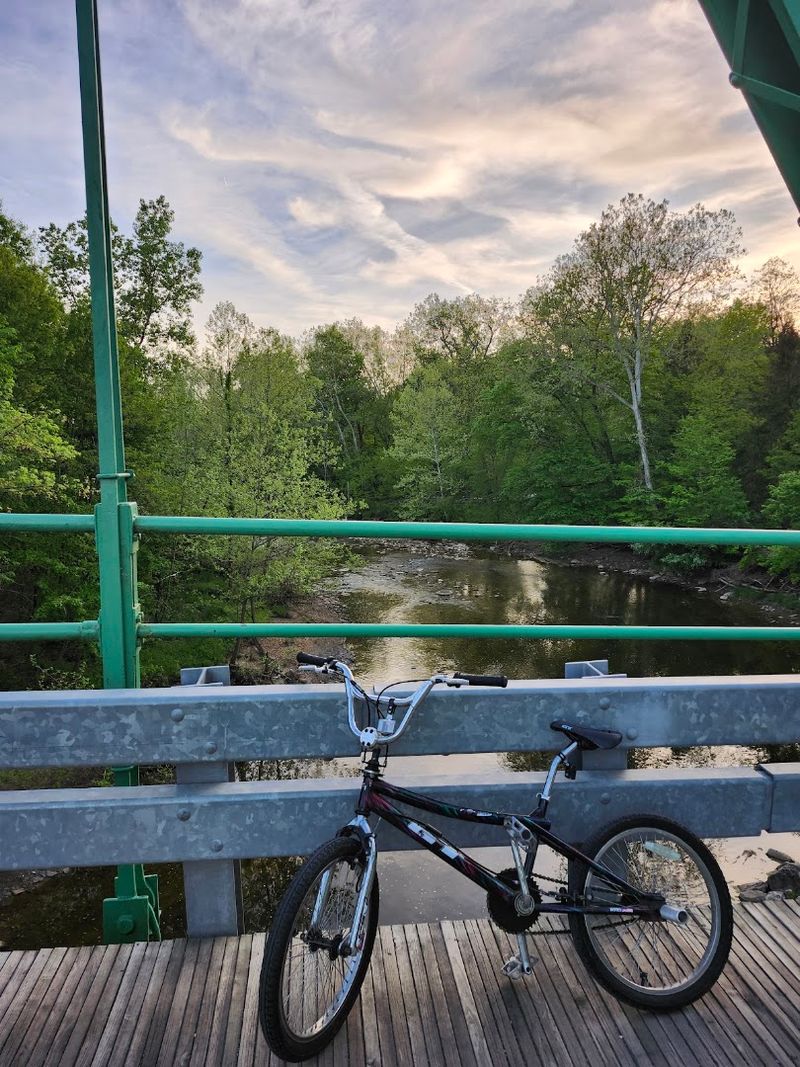
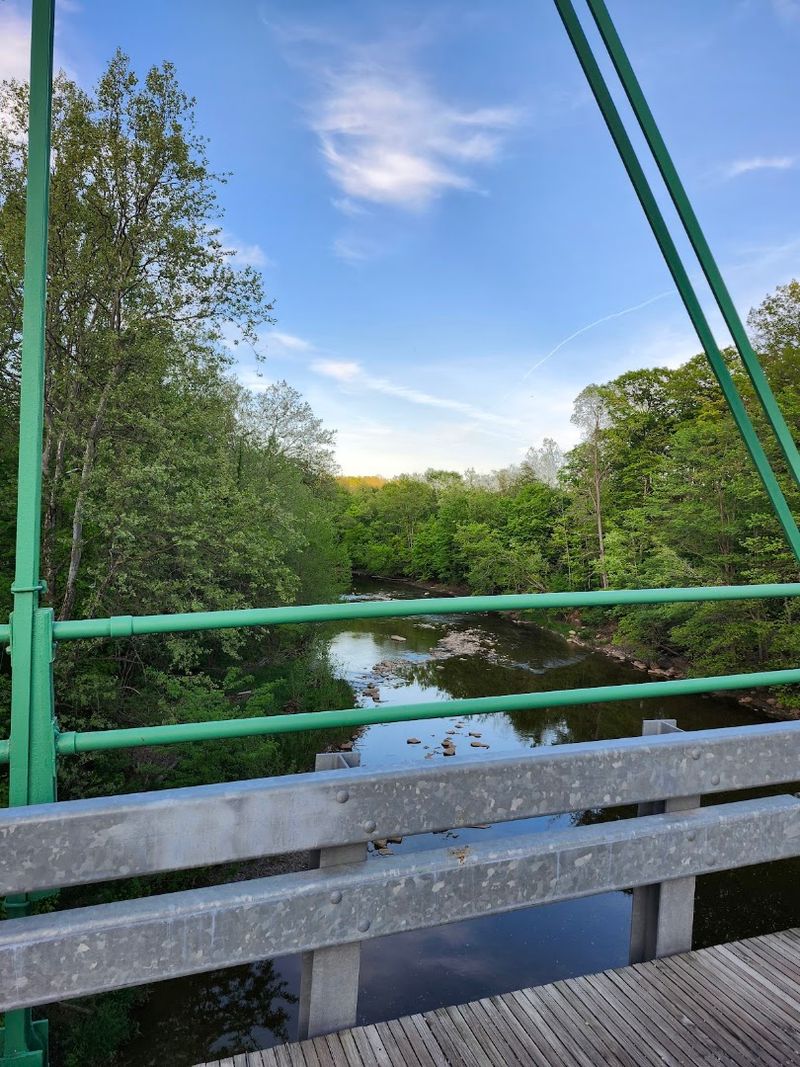
Once on the bridge, the wooden deck announces itself immediately. The sound changes, the feel through the steering wheel changes, and the Vermilion River becomes visible below at a height that surprises most first-time visitors.
The bridge sits higher above the water than people expect, which explains why at least one visitor described being genuinely impressed by how elevated it was.
The speed limit through the area drops to 10 mph, which is not just a suggestion. The combination of the narrow lane, the wooden planks, and the steep road on either side makes patience a practical requirement.
Parking is tight, with just enough room for two cars south of the bridge if you are careful. Fall visits are especially rewarding, when the surrounding trees turn and the hollow fills with color.
It is the kind of place that rewards slow travel and punishes anyone in a hurry.
Why Dean’s Bridge Keeps Pulling People Back Year After Year
A bridge rated 4.7 stars on Google Maps might seem like an odd thing to celebrate, but Dean Road Bridge earned those reviews honestly. People come back to it for reasons that are hard to pin down in a single sentence, which is itself a sign of a place that has genuine staying power.
Some visitors are drawn by the history, the 1898 construction date, the National Register listing, the Massillon Bridge Co. craftsmanship. Others come for the fishing in the Vermilion River below, though getting to the water requires navigating some tricky terrain.
A few come specifically because they heard the legends and want to see the place where the stories live.
What keeps people returning, though, seems to be something simpler. The bridge feels real in a way that a lot of historic sites do not.
Nobody has turned it into a tourist attraction with a gift shop and an admission fee. It sits at the end of a narrow country road, doing what it has always done, connecting two sides of a hollow that would otherwise be separated.
That quiet persistence, unbothered by trends or attention, is more compelling than any ghost story.
Address: 9604 Dean Rd, Wakeman, Ohio
