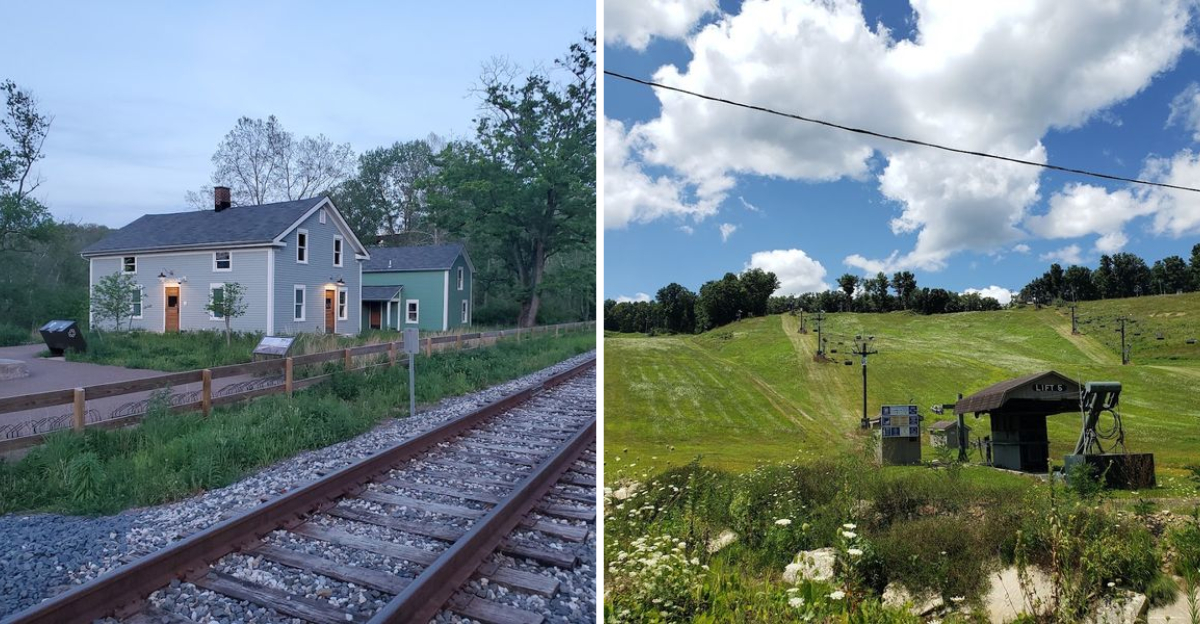
Deep inside the Cuyahoga Valley in Summit County, Ohio, a place exists that most people have only heard about in whispered stories and late-night urban legends. That place is not a ghost town born from economic collapse or natural disaster.
The federal government forced roughly 400 families out of their homes in the 1970s to make way for a national recreation area, and what was left behind became one of the most eerie and talked-about places in all of Ohio.
Boarded-up houses, overgrown roads, and hand-painted signs of protest were all that remained for years. I first heard about this place from a friend who described driving past rows of empty homes with “No Trespassing” signs nailed to every door, and I knew immediately I had to learn more.
The story here is not just about ghost stories and spooky folklore, it is about real people, real loss, and a community erased almost overnight.
How the Government Turned a Living Community Into a Ghost Town
Most ghost towns fade slowly over decades, but Boston Mills did not get that kind of time. On December 27, 1974, President Gerald Ford signed legislation designating land in Boston Township as part of the Cuyahoga Valley National Recreation Area.
Almost immediately, the National Park Service began using eminent domain to purchase private properties throughout the area.
Eminent domain is a legal power that allows the government to take private land for public use, usually with some form of payment. But for the families living in Boston Mills, the process felt anything but fair.
Many residents described being pressured into quick sales with little room to negotiate, and some felt the compensation they received did not come close to matching what their homes and land were truly worth.
Approximately 400 families were displaced from the community they had built and loved. Neighbors who had known each other for generations were suddenly scattered across the region.
The houses they left behind were boarded up by the government, creating block after block of silent, empty structures. What had once been a quiet, functioning Ohio township transformed almost overnight into something that looked like the set of a horror movie.
The Real Reason Helltown Got Its Unsettling Nickname
The nickname “Helltown” did not come from any single event. It grew slowly out of the combination of empty streets, boarded-up buildings, and a landscape that the government had essentially left to rot while demolition plans stalled for years.
When you drive through an area where dozens of homes sit vacant and every structure has warning signs posted on it, your imagination tends to fill in the blanks.
Urban legends spread quickly once the area emptied out. Local teenagers and thrill-seekers began exploring the abandoned streets, and stories started circulating about Satanic cults performing rituals in the woods, a serial killer lurking near the old church, and even mutants supposedly created by a nearby chemical spill.
None of these stories were ever verified, but that did not stop them from spreading.
The old Peninsula Python Road, a stretch with a sharp curve near the end, became known in legend as “The End of the World.” The Boston Cemetery, still standing within the park, added another layer of spookiness to the local mythology. The nickname stuck, and today Helltown remains one of Ohio’s most recognized pieces of roadside folklore, even though the real story behind it is far more grounded and human than any legend.
What Life Was Like Before the Government Moved In
Before the federal government arrived with its paperwork and purchase orders, Boston Mills was simply a quiet township in northeastern Ohio. Families had lived there for generations, farming the land, raising children, and building the kind of tight-knit community that most people only read about in novels.
It was not flashy or famous, but it was home.
The Cuyahoga Valley itself had long been considered one of the most scenic areas in Ohio, with the Cuyahoga River winding through it and dense forests covering the hillsides. Residents took pride in that natural beauty because it was part of their everyday lives, not something they needed a park pass to access.
Kids played in the creeks and woods the same way kids anywhere else played in their own backyards.
Small businesses, churches, and community gathering spots gave the township its character. The Boston Store, which had served the area for well over a century, was one such landmark.
When the government began its land acquisition, residents did not just lose their houses. They lost the familiar rhythm of their daily lives, the neighbors they relied on, and the sense of belonging that had taken decades to build.
That kind of loss does not show up in any property appraisal.
The Protest That Still Echoes From an Empty Wall
Anger has a way of finding expression even when there is no one left to listen. As residents packed up their belongings and prepared to leave their homes for the last time, someone wrote a message on the wall of one of the houses being vacated.
It read: “Now we know how the Indians felt.”
That single sentence said more about the emotional weight of the situation than any formal complaint or legal filing ever could. It connected the forced removal of Boston Mills residents to a much longer and darker history of people being pushed off land they considered their own.
The comparison was raw and pointed, and it clearly came from a place of real grief and frustration.
The message was never officially acknowledged by the government, but it has been repeated in countless articles, documentaries, and local history discussions ever since. It became a symbol of the community’s resistance and sorrow.
The families of Boston Mills did not leave quietly or willingly. They left because they had no legal choice, and that distinction matters.
Their story is a reminder that large government projects, even ones framed as being for the greater public good, always come with a human cost that rarely makes it into the official press releases.
The Boarded-Up Houses and the Long Wait for Demolition
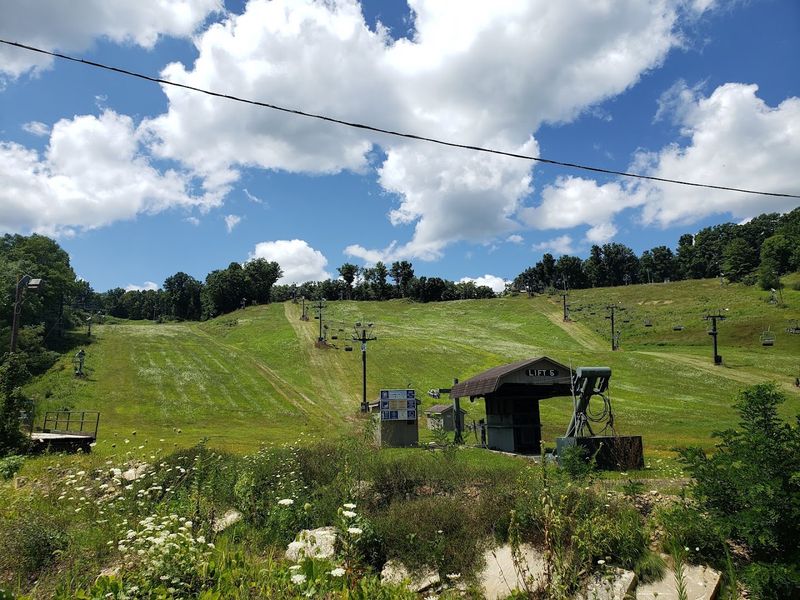
After the government purchased the homes in Boston Mills, the plan was to eventually clear the land and restore it to its natural state as part of the new national recreation area. That plan, however, did not move quickly.
For years, sometimes more than a decade in some cases, the purchased homes simply sat empty and boarded up while the bureaucratic process of demolition slowly inched forward.
Some of the structures were intentionally burned down as part of fire department training exercises, which added a layer of visible destruction to the already unsettling landscape. Charred foundations and collapsed rooftops became part of the scenery that visitors and curious locals encountered when they drove through the area.
The contrast between the natural beauty of the Cuyahoga Valley and the decaying human structures within it was striking.
Major demolition efforts finally picked up pace around 2016 and continued into 2022, with most of the remaining abandoned structures eventually cleared away. The land began to look more like the national park it was always meant to become.
But for the people who remembered what those houses once held, no amount of new tree growth could fully erase the memory of a community that was simply ordered to disappear.
What Still Remains Inside Cuyahoga Valley National Park
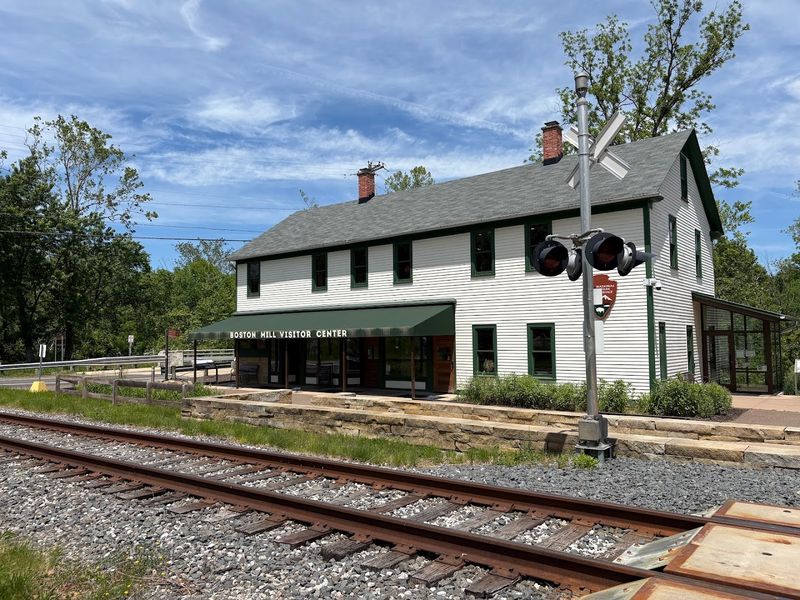
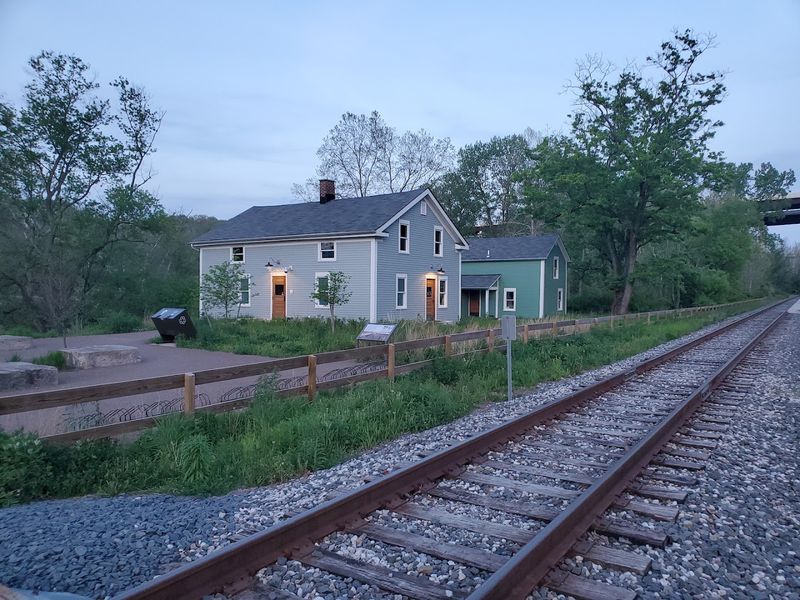
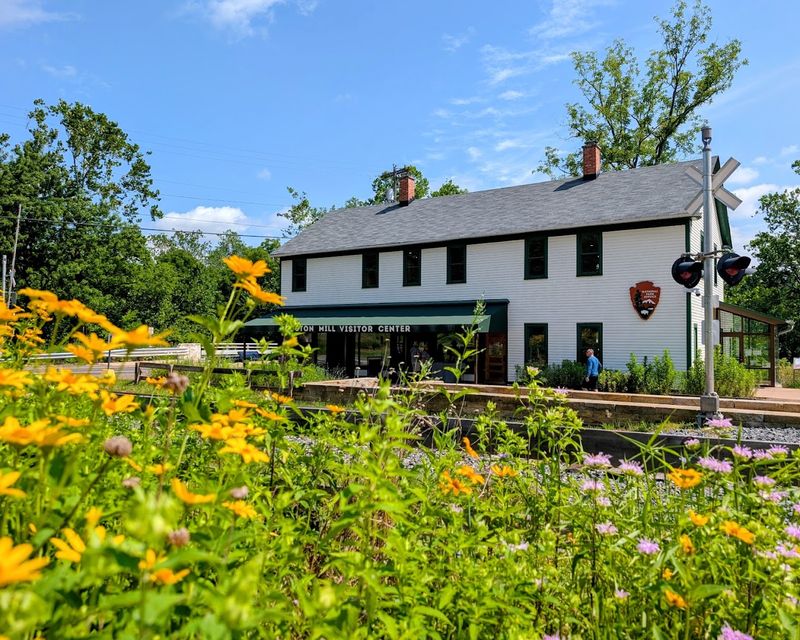
Not everything from the old community of Boston Mills was erased. A few historic structures survived the decades of abandonment and government clearing, and they now serve as quiet reminders of the township’s long history.
The most notable of these is the Boston Store, a building with roots going back to the early 1800s that once served as a general store and canal-era hub for the region.
Today, the Boston Store operates as a visitor center within Cuyahoga Valley National Park, giving hikers and tourists a place to learn about the area’s natural and cultural history. It sits near the towpath trail that follows the old Ohio and Erie Canal route, a popular destination for cyclists and walkers throughout the warmer months.
The building itself is modest, but its age and survival give it a quiet kind of dignity.
The Boston Cemetery also remains within the park boundaries, with graves dating back generations. Visiting it today, you get a genuine sense of how long people lived and worked in this valley before the government decided the land served a different purpose.
The park itself is genuinely beautiful, covering more than 33,000 acres of forest, wetlands, and river valley. Cuyahoga Valley National Park is located in the greater area between Cleveland and Akron, Ohio.
Visiting Helltown Today: What the Experience Is Actually Like
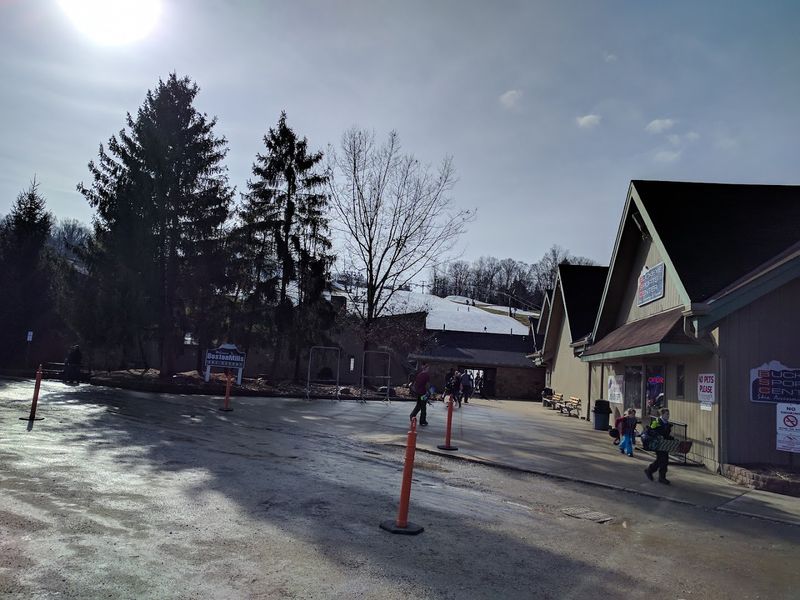
People still come to the Helltown area, though the experience today is very different from the creepy abandoned-town vibe that drew thrill-seekers in the 1980s and 1990s. Most of the derelict structures are gone now, replaced by trails, open meadows, and regenerating forest.
The Cuyahoga Valley National Park has transformed much of the land into exactly the kind of natural space it was always intended to become.
Hiking trails wind through the valley, and the Boston area trailheads offer access to some genuinely lovely stretches of woodland and riverside paths. The Towpath Trail is especially popular, running for miles along the historic canal route and offering a peaceful, flat walk or bike ride through the heart of the valley.
On a quiet weekday morning, it is easy to forget the strange and troubled history that sits just beneath the surface of this landscape.
The Boston Cemetery is still there if you want to feel the weight of the past a little more directly. A few curious visitors still arrive hoping to catch a glimpse of the Helltown of legend, but most leave with something more interesting: the real story.
A community was displaced here, and the land they were pushed off of is now a national park that millions of people enjoy. That tension is worth sitting with.
Address: Boston Township, OH 44264
