Some of the best surprises in West Virginia are hiding just off a busy road, where you would never think to look. I pulled over expecting a quick photo and a stretch of the legs, and somehow lost a whole afternoon.
The wooden landmark waiting there was built back when this land was still part of Virginia, and its timbers have a tale or two to tell. If you love old places, hometown pride, and the kind of history you can actually touch, this one belongs on your list.
A Wooden Landmark Tucked Into North-Central West Virginia
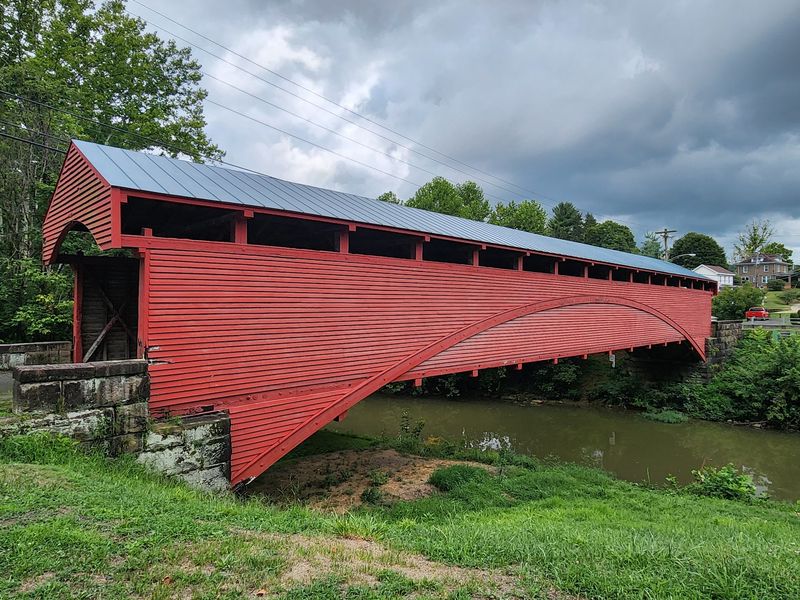
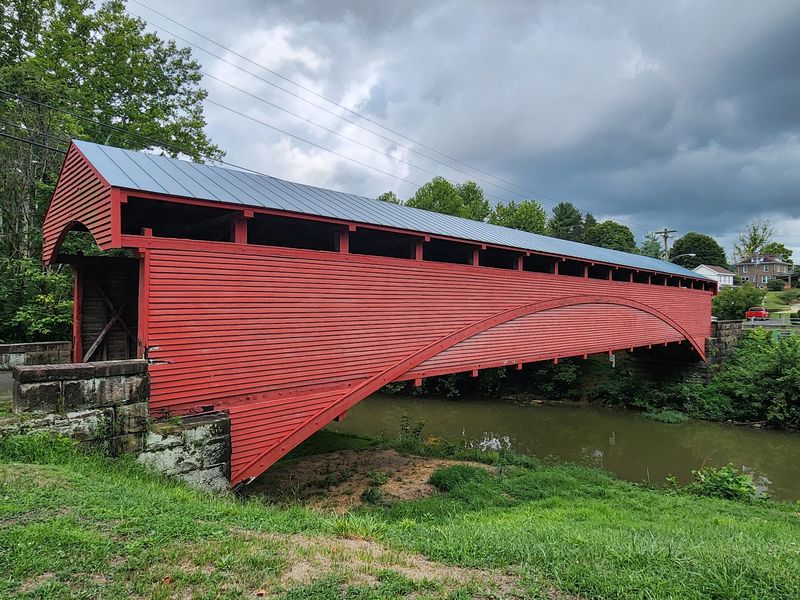
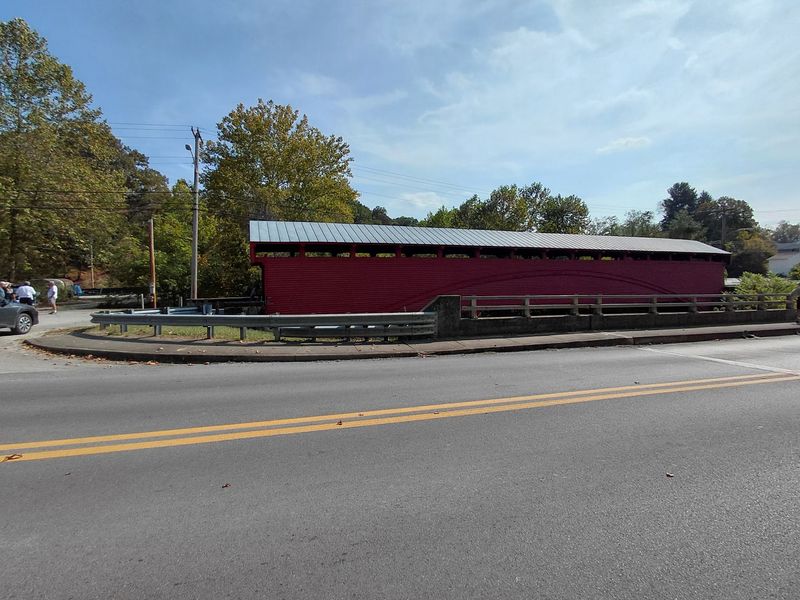
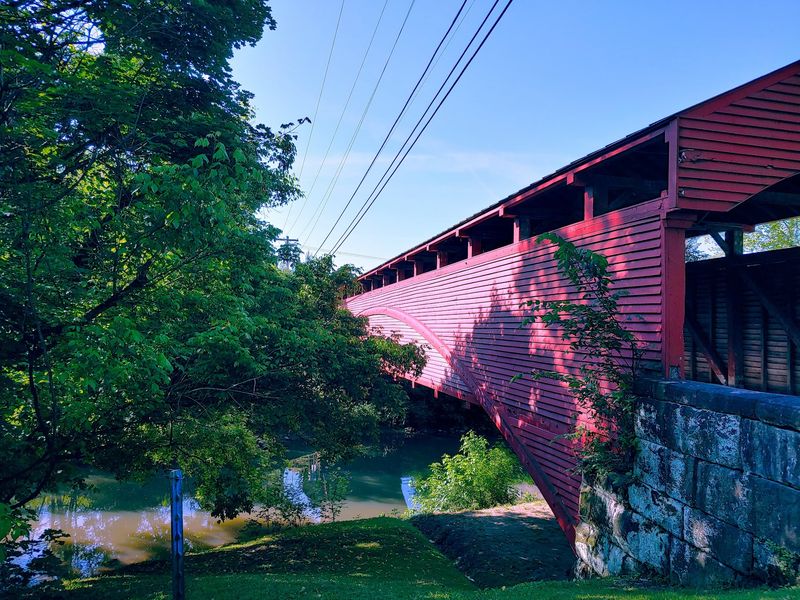
Picture a long red barn that decided to stretch itself across a creek, and you are halfway to imagining it. Our subject here is a covered bridge in the rolling coal country of north-central West Virginia, a place where old mining roads and quiet hollows sit side by side.
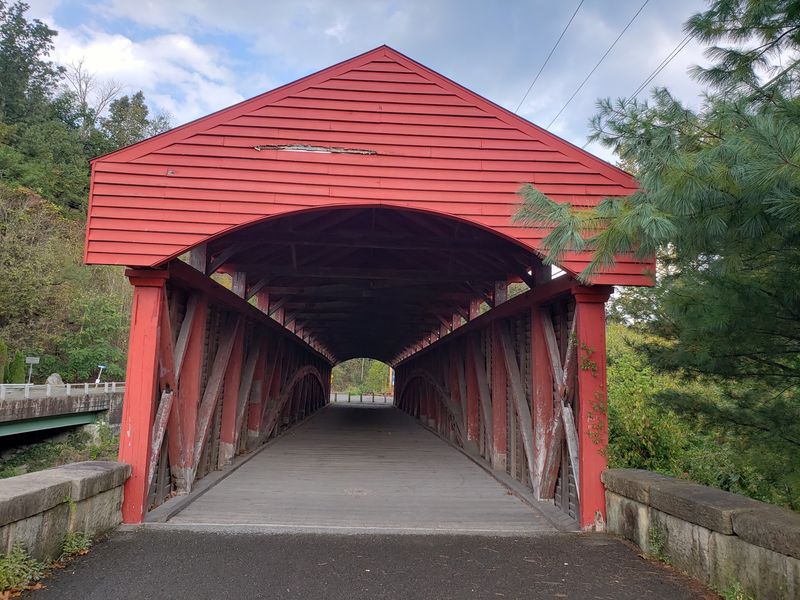
From the outside, it looks simple enough. Wooden siding, a pitched roof, and a dark doorway that seems to pull you inside before you even decide to walk in.
Up close, though, the details start piling up, and you realize this is no roadside replica built for tourists.
Covered bridges were once common across the Mountain State, carrying wagons, livestock, and families over countless streams. Most of them are gone now, lost to floods, fires, and the march of steel and concrete.
The handful that remain feel a little like elders at a family reunion, quietly holding memories everyone else has forgotten.
What makes this particular bridge so special is its age and its survival story. It has outlasted wars, storms, and changing times, and it still stands proud on its stone footings.
Before revealing exactly where it sits, let us step back to the years when it was first raised.
Raised Before There Was a West Virginia
Here is a fun one to share at the next family dinner. When the carpenters finished this bridge, reportedly around 1853, nobody living nearby called themselves West Virginians yet.
The area was still part of Virginia, and statehood would not arrive until June 20, 1863. That means the bridge is roughly a full decade older than the state it now represents.
Think about that the next time someone calls a building from the 1950s old.
Back then, travel was slow and rough. Dirt roads turned to mud in spring, and crossing a creek with a loaded wagon could be a real gamble.
A sturdy bridge was a big deal for farmers, millers, and merchants, since it connected them to markets and neighbors on the other side.
The roof and siding were not just for looks either. Covering a wooden bridge protected the main beams from rain and snow, which helped the whole structure last far longer than an open span would.
Builders of that era often said a covered bridge could stand for generations, while an uncovered one might rot in a couple of decades.
Clearly, that old wisdom paid off here.
The Chenoweth Brothers and Their Craft
Ask any covered bridge fan in West Virginia about Lemuel Chenoweth, and you will likely get a smile. He was a self-taught Appalachian builder from Beverly whose name is tied to some of the finest wooden bridges the region ever saw.
Lemuel and his brother Eli are generally credited with building this bridge, around the same time they were finishing their famous span at Philippi. The brothers had a reputation for careful planning and solid joinery.
According to local lore, Lemuel would sometimes show off a model of his designs to prove they could hold real weight.
Their work relied on muscle, hand tools, and good timber. No power saws, no cranes, just crews of men hauling heavy beams and fitting them together with pegs and patience.
One visitor summed it up nicely, saying they simply could not imagine the labor that went into building it.
Many travelers mention the workmanship when they talk about this place. The joints still line up neatly, and the frame feels strong underfoot.
More than 170 years later, the brothers’ craftsmanship is still doing its job, which might be the best review any builder could hope for.
A Close Call in the Spring of 1863
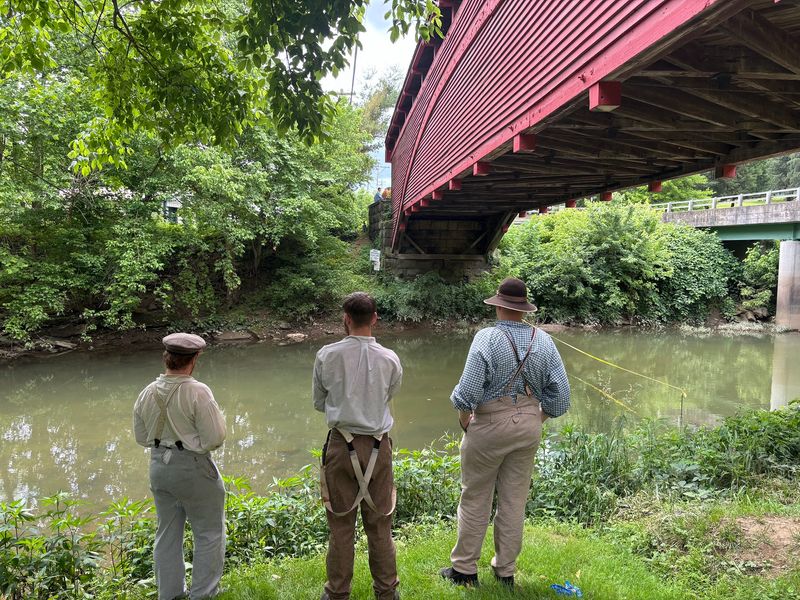
Most old bridges have a quiet past, but not this one. During the Civil War, wooden bridges were frequent targets, since knocking one out could slow down an opposing army.
In the spring of 1863, Confederate raiders reportedly rode through this area during the Jones-Imboden Raid, a campaign that hit railroads and bridges across the region. Local tradition says the Barrackville span was marked for burning.
Then something unexpected happened.
As the story is often told, a local miller and his family had shown kindness to some of the soldiers, and in return the bridge was spared. Details vary depending on who is telling it, so treat the specifics as cherished hometown lore.
Still, the heart of it has stuck around for generations.
Visitors seem to love this part most. One traveler noted that the way the bridge was saved proves a simple act of kindness can make a real difference.
That is a pretty powerful message to find carved into a creek crossing.
It also explains why folks nearby feel so protective of the old structure. It is not just wood and stone to them.
It is a reminder that good neighbors can change history.
The Friendly Rivalry With Philippi
Now for a little honest bridge talk. On paper, the Philippi Covered Bridge in Barbour County holds the title of oldest and longest covered bridge in West Virginia, completed in 1852 by the very same Chenoweth team.
So why does our smaller bridge deserve a spot in the conversation? Timing, for one.
It was reportedly finished just a year later, which makes the two spans close siblings rather than distant cousins.
Then there is history. The Philippi bridge suffered a serious flood in 1985 and a fire in 1989 that nearly destroyed it, followed by a careful restoration finished in 1991.
It now carries U.S. Route 250 on a steel-reinforced concrete deck, which is impressive but quite modern underneath.
Meanwhile, the Barrackville bridge is often praised for how much of its original character visitors can still see. One traveler mentioned enjoying a chance to walk through and spot the original details for themselves.
No need to pick a winner, really. Both are treasures, and both carry stories older than statehood itself.
If you have time, visiting the pair makes a wonderful Chenoweth road trip across the Mountain State.
Buffalo Creek and the Little Town of Barrackville
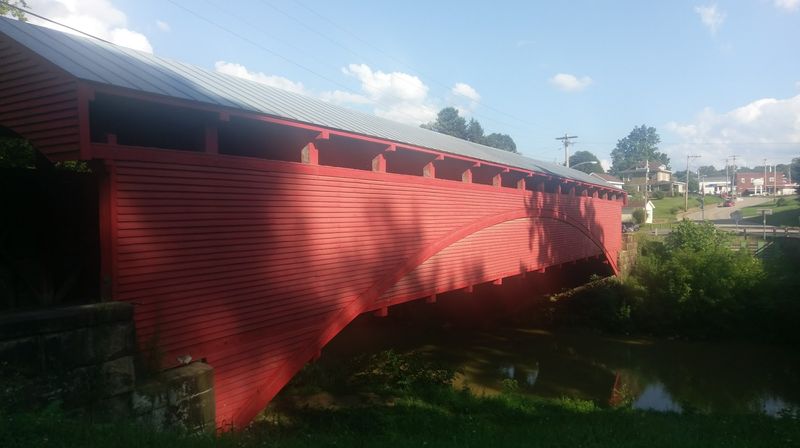
Time to spill the secret. This bridge lives in Barrackville, a small Marion County town just a short drive from Fairmont, where it spans Buffalo Creek.
Barrackville is the kind of place many West Virginians drive past without a second thought. It has the familiar mix of modest homes, a gas station, and roads busy with work trucks.
Yet right in the middle of it sits a piece of history that predates the state.
Visitors often describe the setting as peaceful, even with traffic nearby. The creek moves slowly under the bridge, and the trees along the banks soften the scene.
One traveler suggested taking the road that runs alongside the water, calling it worth the ride and adding a playful bit of advice to be brave.
For those who grew up in coal country, the area will feel familiar in the best way. You might hear heavy trucks rumbling by, a reminder that this is still a working region.
It gives the bridge an honest backdrop, not a polished theme park.
What many people appreciate is that the town kept the bridge as part of daily life. It is not fenced off or hidden away.
It belongs to the community, plain and simple.
Timber Arches and the Burr Truss Inside
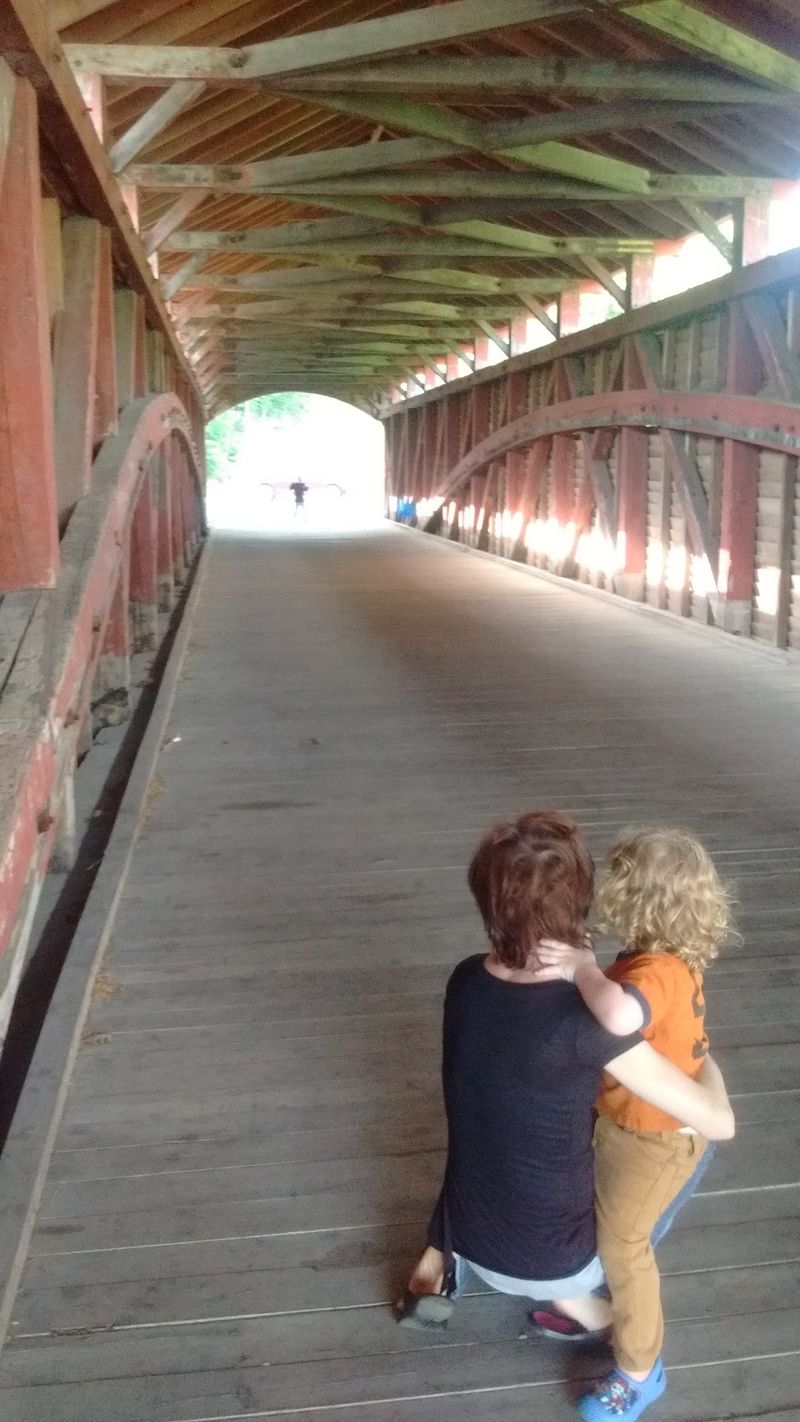
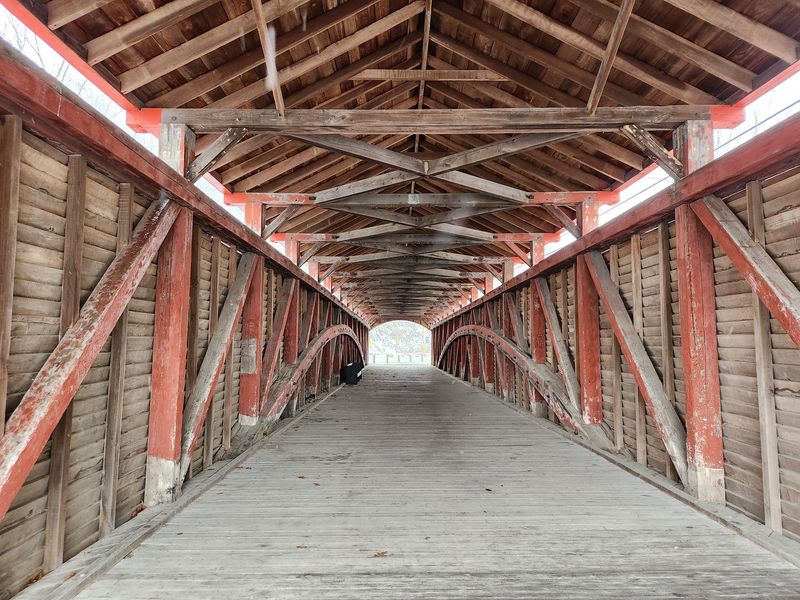
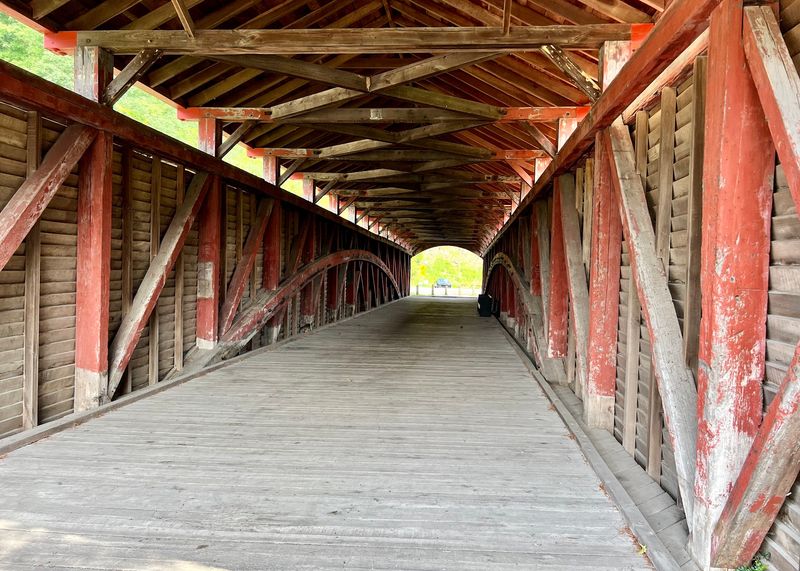
Step inside and look up. Those big curved beams running along the walls are the real stars of the show.
The bridge uses a Burr arch truss design, a popular choice in the 1800s. It combines a series of upright and diagonal timbers with long wooden arches that sweep from one end to the other.
The arches help carry the load, while the truss keeps everything stiff and steady.
For non-engineers, here is the easy version. Imagine a bow and a ladder working together as a team.
The ladder gives shape, the bow adds strength, and together they can span a creek for well over a century.
Visitors regularly comment on how well the construction has held up. The wood shows its age in a warm, weathered way, with knots and grain you can study up close.
Light slips through small gaps in the siding and paints stripes across the floor.
If you enjoy building things, bring along someone who shares that interest. Kids especially tend to get curious about how something so old can still be so solid.
A few minutes inside makes for a great history lesson nobody will find boring.
Footsteps Only on the Old Planks
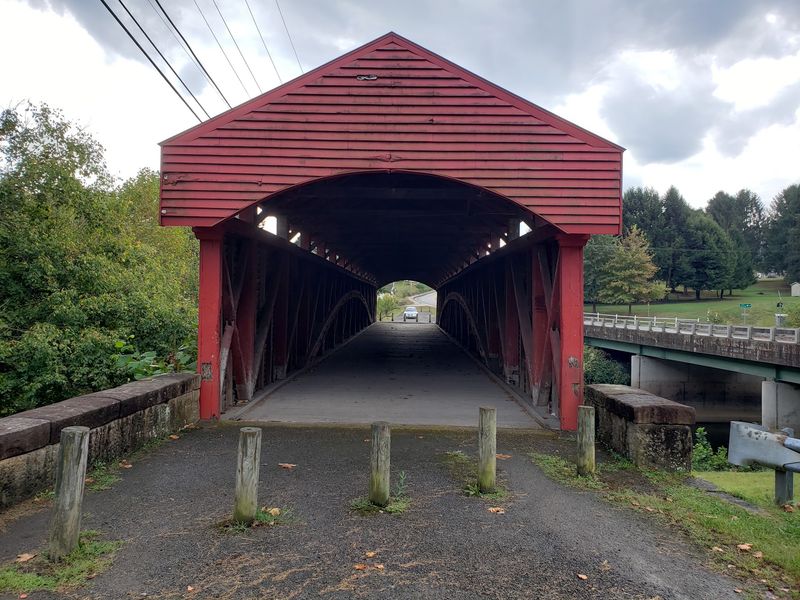
Leave the car keys in your pocket. Cars no longer cross this bridge, so the only way through is on foot.
Several visitors point that out, sometimes with a touch of surprise. One said plainly that there is no driving through this one but it is still worth a look.
Another described it as a walking trail across the creek, which captures the relaxed feel nicely.
Honestly, walking is the better way to experience it anyway. You hear your footsteps echo against the wood.
You notice the smell of old timber, and you can stop whenever something catches your eye.
There is even a bench inside, and that small detail makes a big difference. One traveler loved being able to sit inside the bridge and simply take it all in.
For older visitors or anyone who likes to linger, a seat in the shade of those historic beams is a real treat.
A sidewalk runs along the roadside nearby, making it easier to reach the entrance safely. Take your time, keep an eye on traffic near the road, and enjoy a slower pace.
Old bridges are best appreciated one step at a time.
Snowfall, Fall Color, and Photo-Ready Angles
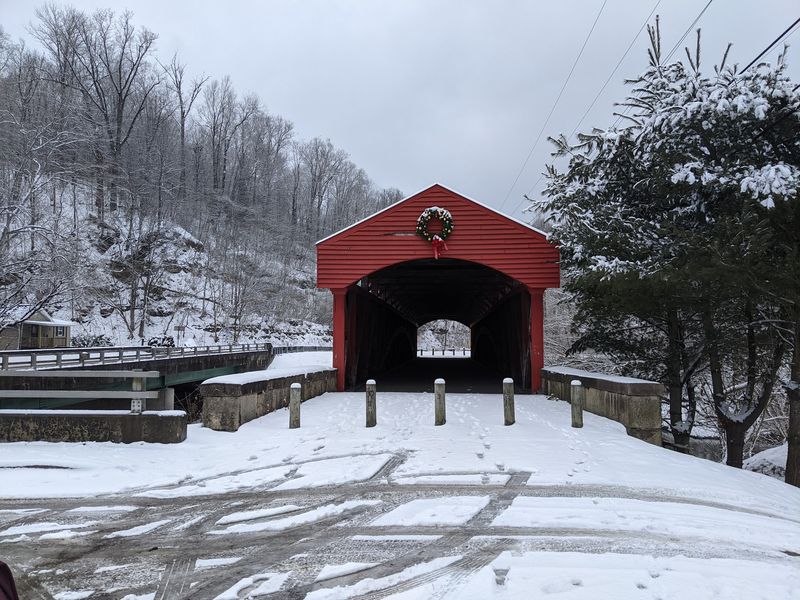
Bring a camera, or at least a charged phone. Photographers and families alike call this spot a terrific photo opportunity.
Every season gives it a different personality. Summer wraps it in thick green leaves.
Autumn adds splashes of orange and gold along Buffalo Creek, which makes that classic covered bridge look even more storybook.
Winter might be the sleeper hit, though. One visitor said the bridge is pretty in any season but best after a fresh snow.
A dusting of white on the roof, dark water below, and bare trees all around can make for a postcard image you will want framed on the living room wall.
Families also use the bridge for portraits. Its wooden walls make a warm backdrop for holiday cards, graduation pictures, or just a casual snapshot of the grandkids.
Since many people report having the place nearly to themselves, you usually will not need to wait long for a clear shot.
Try shooting from the creek bank for the full side view. Then step inside and frame the far opening, letting the beams lead the eye toward daylight.
Both angles show off what makes this bridge so charming.
An Annual Festival With Hometown Spirit
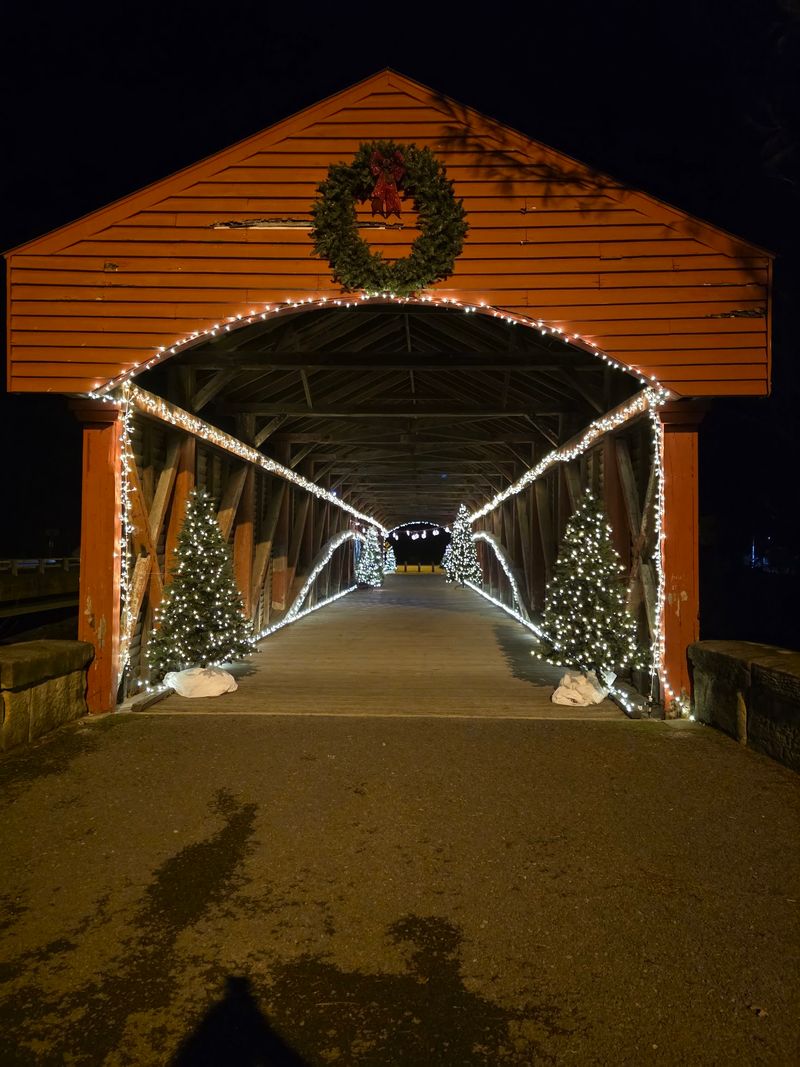
Small towns know how to throw a party, and Barrackville is no exception. Visitors mention that the town hosts a Covered Bridge Festival every year, with the old span as its proud centerpiece.
Festivals like this are a big part of life across West Virginia. They bring neighbors together, draw former residents home for a visit, and give kids a reason to learn about local history.
Specific dates and events can change, so it is smart to check local listings before planning a trip around it.
One traveler recalled chatting with a resident who mentioned an upcoming summer celebration at the bridge. That small exchange says a lot about the community.
People here are happy to share their story with anyone who stops by.
If you grew up going to county fairs and church suppers, this kind of event will feel like coming home. Picture folding chairs, friendly faces, and plenty of conversations that start with do you remember when.
Even outside festival season, that hometown spirit lingers. The bridge is clean and cared for, and you can tell people take pride in it.
That pride is the real reason it still stands today.
Grandparents, Grandkids, and Curious Travelers
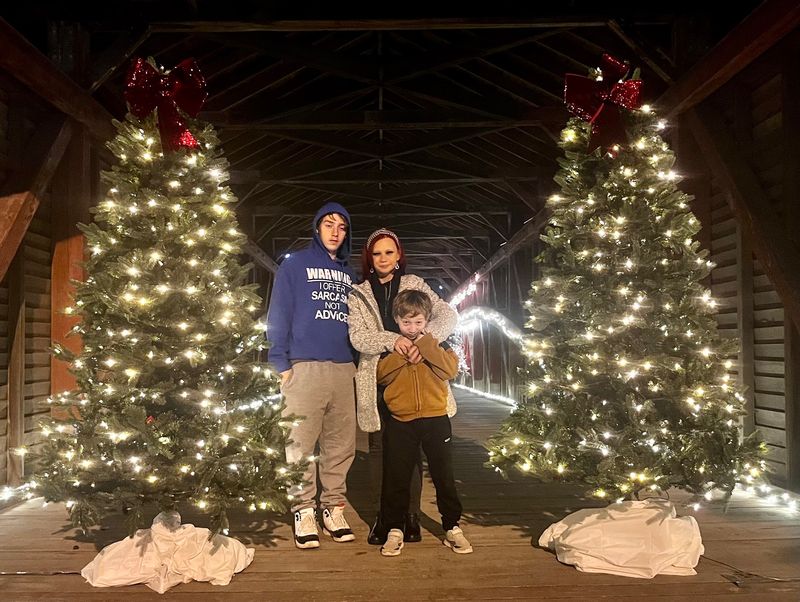
Some places get passed down like a family recipe. One visitor shared that their grandparents used to take them to see covered bridges as a child, and now they bring their own son, who loves them just as much.
That sums up the appeal pretty well. Retirees looking for an easy, low-cost outing will appreciate how simple it is to visit.
History buffs will enjoy the Chenoweth connection and the Civil War legend. Young families get a safe, short walk with a big story attached.
Out-of-state visitors seem impressed too. A traveler from Kentucky called this bridge exceptional in how well it is kept, and others praised its cleanliness and quiet feel.
A few honest notes help set expectations. One older visit mentioned some inappropriate writing on the inside walls, so parents may want to glance around first.
Another remarked that the area can be busy with coal trucks and noisy traffic.
For most folks, though, those details do not spoil the fun. If you enjoy old bridges, small-town charm, and a story worth retelling, you will feel right at home.
Bring the grandkids and start a new tradition.
Parking, Hours, and the Exact Address
Good news for planners on a budget. The bridge is listed as open 24 hours a day, seven days a week, and it is an outdoor landmark rather than a ticketed attraction.
Parking is the one thing to think about ahead of time. Visitors describe it as limited, though there are spaces on either side of the bridge and some say parking is very near and convenient.
Many report being the only ones there, so finding a spot is usually easy.
Since the bridge sits fairly close to the road, take care when getting in and out of your vehicle. A sidewalk along the roadside helps you walk to the entrance safely.
Watch for larger trucks passing through.
You will find a few picnic tables nearby, which makes it a nice spot for a packed lunch. There is also some historic information posted for reading, so take a minute to learn the story right on site.
For your GPS, the address is Historic Barrackville Covered Bridge, Barrackville, WV 26559. It sits a short drive from Fairmont in Marion County.
Daylight visits are best for photos and for spotting the fine details inside.
Worth the Detour, Plank by Plank
So, is it worth the drive? For most people who love West Virginia history, the answer is a cheerful yes.
You will not find gift shops or flashy displays here. What you get instead is something rarer: a hand-built bridge from the 1850s, still standing over the same creek, still cared for by the same proud community.
It was here before the state was, and it carries that history with quiet dignity.
One longtime visitor admitted it might not be worth a special trip unless you really enjoy this kind of thing. That is fair.
But if you are already near Fairmont, or you are chasing covered bridges across the Mountain State, it deserves a stop.
Pair it with a trip to the Philippi bridge, and you can see two Chenoweth masterpieces in one day. Pack a lunch, grab a seat at a picnic table, and let the sound of Buffalo Creek do the rest.
Best of all, you leave with a story to share. Ask around at your next family gathering and see who remembers walking these old planks.
You might be surprised how many hands go up.
