Some of the best finds in West Virginia don’t come with a gift shop, a ticket booth, or even a sign you’d notice at highway speed. You pull off a winding back road to stretch your legs and suddenly you’re standing on a piece of iron history older than your great-grandparents.
I stopped for one quick photo and ended up lingering by the water far longer than I planned. It’s a humble little crossing with a surprisingly big story, and every Mountain State history lover deserves to hear it.
A Slender Iron Span in the Eastern Hills
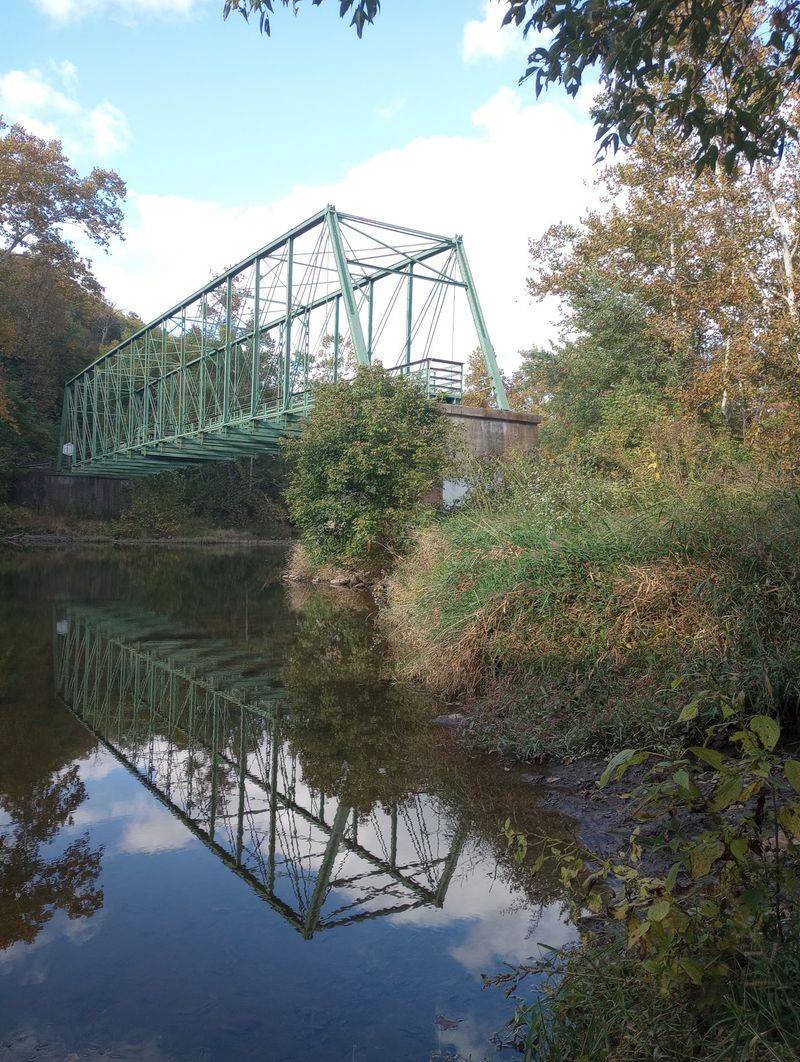
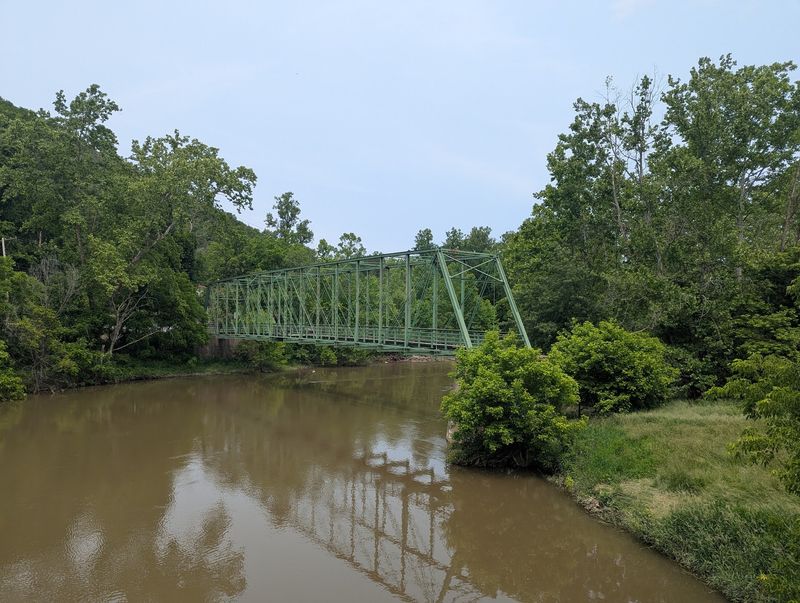
Tucked into the green folds of eastern West Virginia, far from any stoplight, sits a slender metal span that most drivers zip right past. The Capon Lake Historic Whipple Truss Bridge crosses the Cacapon River in the small community of Capon Lake, a short and winding drive from Wardensville.
It is recognized as a historical landmark, and it wears that title without any fuss at all.
Folks of a certain age may remember when old bridges like this one were simply how you got from one side of the water to the other. Nobody thought twice about them back then.
Today, spans of this vintage are rare enough in the state that each survivor feels a little like a family heirloom somebody forgot to put in a museum.
The setting does a lot of the heavy lifting. Wooded hills rise around the river, the water slides by calmly, and the bridge’s crisscrossing frame stands out against all that green like a pencil sketch on a painted canvas.
Whether you are a history buff, a weekend wanderer, or someone who just needs a break from the road, a few unhurried minutes here pay off.
Start here, and the rest of the story unfolds naturally.
From Romney Roots to a Second Life at Capon Lake
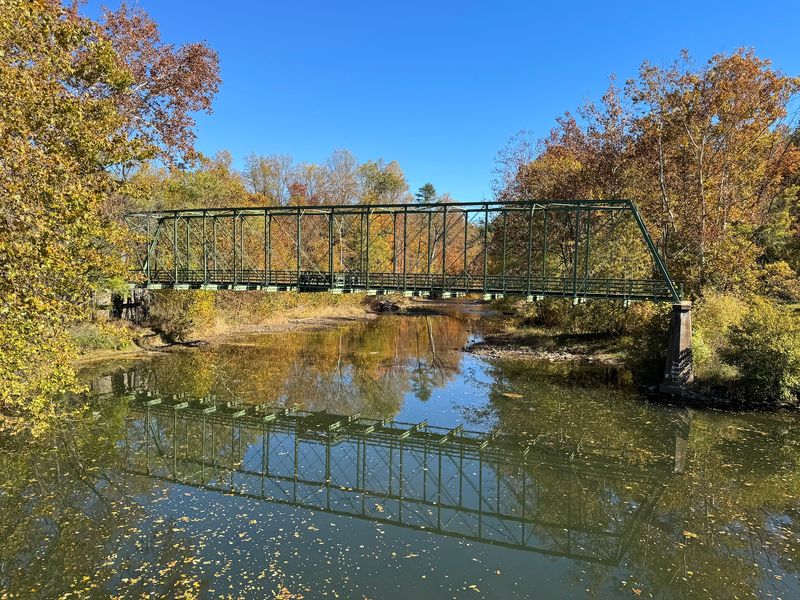
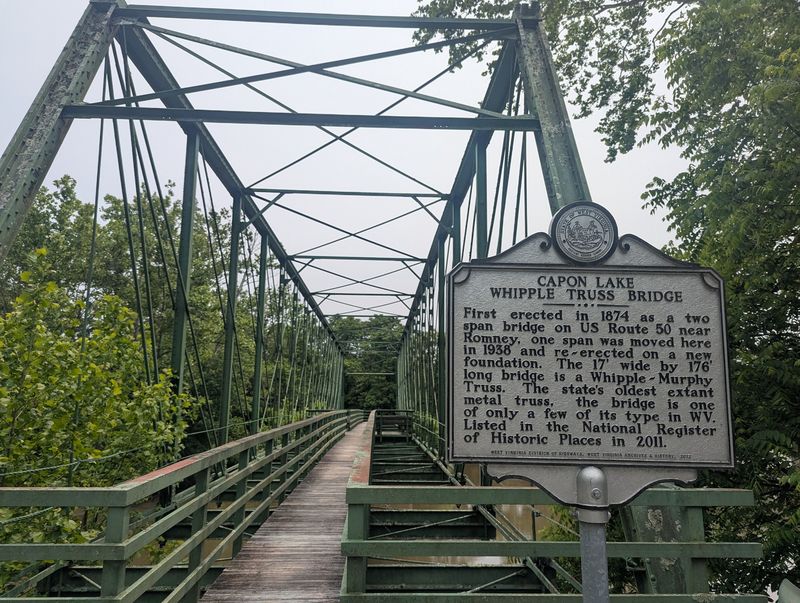
Believe it or not, the bridge you see today did not start its working life here. According to state historical accounts, its metal frame reportedly dates to 1874, when it was built to carry travelers over the South Branch of the Potomac River near Romney.
Back then, it was part of a busy route through Hampshire County.
Times changed, traffic grew, and by the late 1930s a bigger crossing was needed in Romney. Rather than scrap the old truss, crews reportedly took it apart and moved it to Capon Lake, where it served drivers heading toward Capon Springs for decades.
That kind of thrift feels very West Virginia, where a good thing gets a second job instead of a trip to the junk pile.
Eventually a newer bridge took over road duty nearby, and the historic span was preserved for walkers instead of being torn down. It later earned a place on the National Register of Historic Places.
The structure is often described as the oldest surviving Whipple truss bridge in the state and among the oldest metal truss spans still standing anywhere in West Virginia.
Not bad for a bridge that has already moved house once.
Crisscrossed Diagonals and the Genius of Squire Whipple
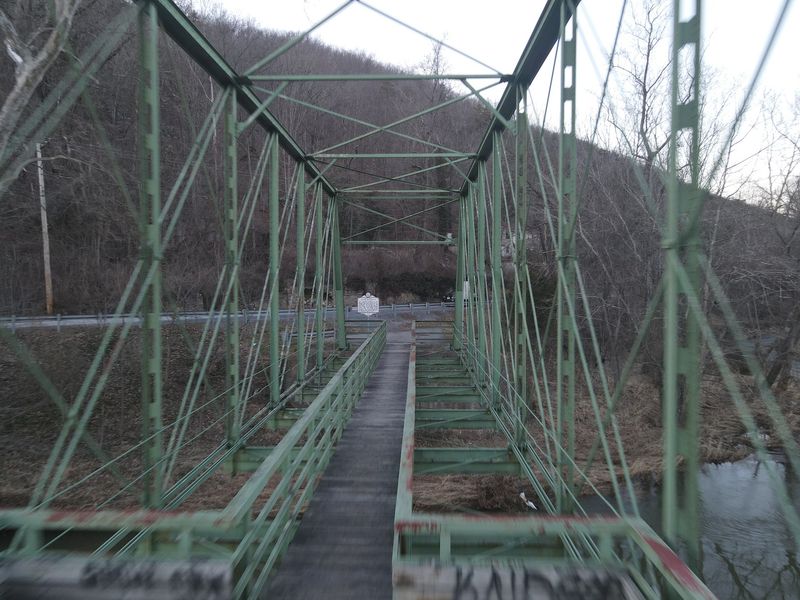
Look closely at the sides of the bridge and you will notice something that sets it apart from plainer spans. The diagonal bars do not simply run from one panel to the next.
They stretch across two panels at a time, overlapping to form a tidy row of X shapes that almost looks woven.
That pattern is the calling card of the Whipple truss, named for Squire Whipple, a 19th-century American engineer often credited as one of the pioneers of scientific iron bridge building. His approach helped builders figure out how weight actually travels through metal, which let them make longer and lighter spans with confidence.
In an era of horse carts and early automobiles, that was cutting-edge stuff.
The frame also dates to a transitional period when American bridge builders were moving from wrought iron toward steel. Visitors frequently remark on how unusual the design looks, and it is easy to see why once you notice the double-crossed web.
Modern highway bridges hide their bones under concrete.
Here, every piece is out in the open, practically inviting you to trace the load with your finger and imagine the hands that fit it all together more than a century ago.
Mystery Timbers Beneath the Waterline
Here is a little secret that only shows itself when the river runs low. Peer over the railing on a dry-spell day and you may spot old wooden timbers resting in the water, some of them arranged with what look like crossmembers.
They are weathered, dark, and half-buried, but they are unmistakably shaped by human hands.
One visitor who noticed them during a stretch of very low water wondered if they might be the remains of an earlier wooden bridge that stood here before the metal one arrived. Nobody we found has confirmed that for certain, so treat it as a friendly riddle rather than settled history.
Still, it is a fun thought, a ghost of an older crossing lying quietly under the newer one.
Kids especially love a mystery like this. Hand them the job of spotting the beams and counting how many they can find, and suddenly a history stop turns into a treasure hunt.
Timing matters, though. When the Cacapon is running higher after rain, the timbers slip out of sight completely.
Late summer and early fall, when water levels often drop, may give you the best chance to catch a glimpse of whatever came before.
Footsteps on a Walkway Built for Strolling
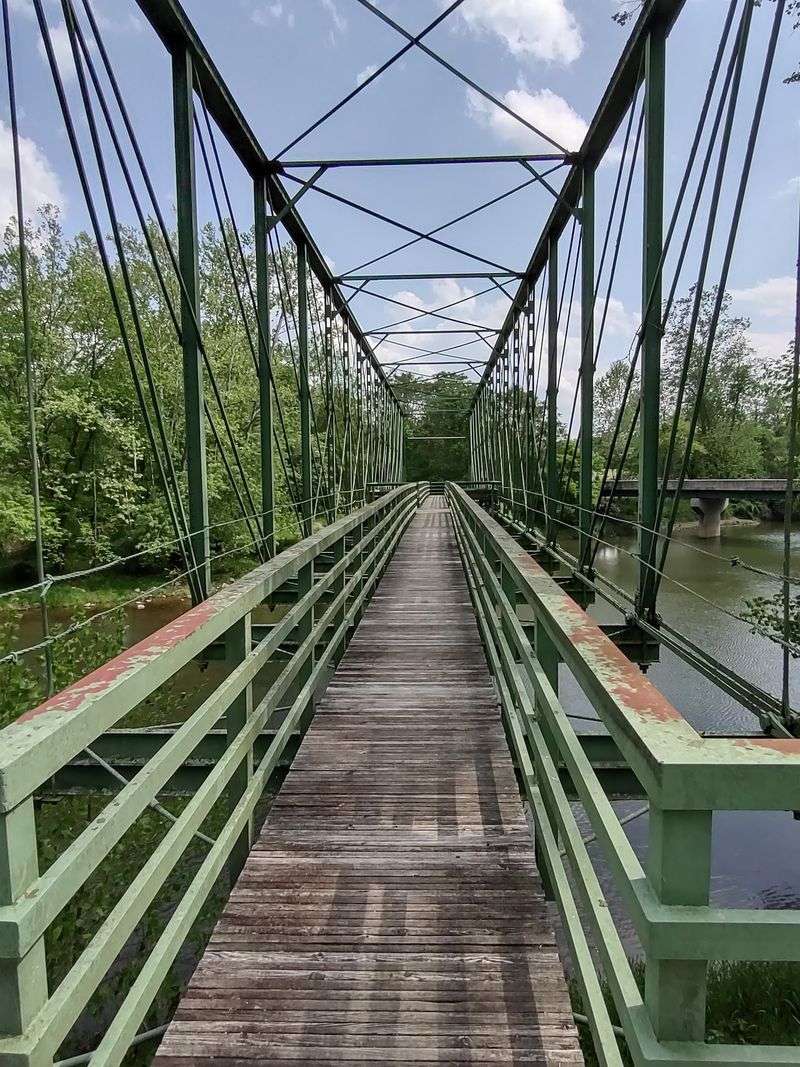
Crossing an old bridge on foot feels completely different from rattling over one in a car. On the Capon Lake span, a safe walkway carries you all the way across the Cacapon River, so you can take your time instead of hustling to beat oncoming traffic.
Visitors consistently mention how easy and comfortable the walk is.
With the road traffic long gone, the pace slows down to whatever speed you like. You can stop mid-stride to admire the ironwork overhead, lean on the rail to watch the current, or simply enjoy the hollow, satisfying sound of your own footsteps.
For folks with grandkids in tow, it is a manageable stretch that will not wear out little legs.
A bit of common sense still goes a long way. Keep young children close to the railings, hold onto small dogs, and wear shoes with decent grip if the deck is damp from morning dew or a passing shower.
Beyond that, the experience is pleasantly simple. There are no turnstiles, no timed entry, and no rush.
It is just you, a century-and-a-half-old frame, and a river that has been flowing past long before anyone thought to span it.
Midway Benches with a Front-Row Seat
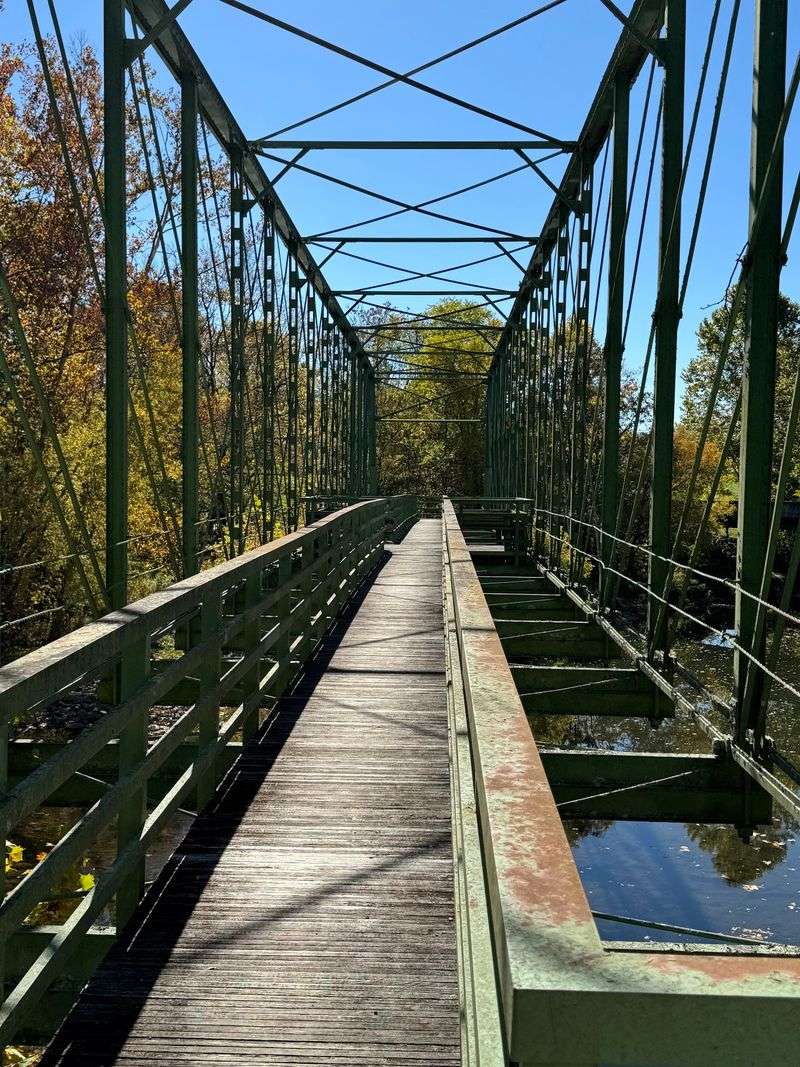
Halfway across, the bridge offers a pleasant surprise. The walkway widens into a roomy spot with benches, practically begging you to sit a spell.
It is the kind of thoughtful touch that turns a quick crossing into a real pause.
Picture it on a cool autumn morning, thermos of coffee in hand, the hills on both sides glowing orange and gold. Or imagine a warm June evening when the light goes soft and the river turns the color of honey.
Either way, the view from those benches is about as good as it gets without climbing a mountain.
Retirees and anyone who appreciates a rest stop will find this detail especially welcome. You do not have to power through the whole crossing at once, and you can split the walk into two easy halves.
It also makes a natural gathering point if you are visiting with family and want everyone in one place for a chat.
Bring a small snack, sit quietly, and let the sounds of moving water and rustling leaves do their thing. Few free seats in West Virginia come with scenery this peaceful, and fewer still sit atop a genuine piece of 19th-century engineering.
Roadside Markers and the Capon Springs Story
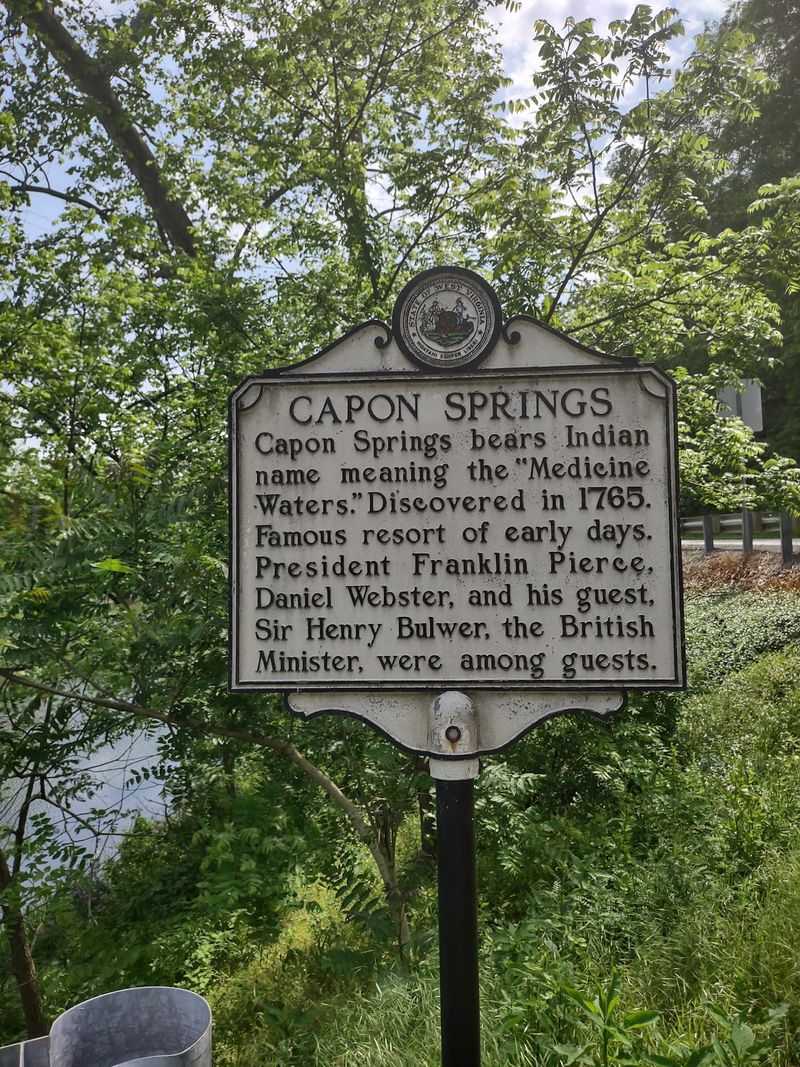
History buffs, keep your eyes peeled for the signs. Near the bridge you will find historical markers, including a second one dedicated to nearby Capon Springs.
Reading them takes only a minute or two, but they add welcome context to everything you are looking at.
Capon Springs has long been associated with its mineral springs, and for generations the area drew visitors hoping for fresh mountain air and a restful escape. Many of the travelers bound for that retreat would have passed right through Capon Lake, possibly rumbling across this very bridge after it arrived in the late 1930s.
Standing there, it is easy to imagine a car packed with vacationers and suitcases heading up the road.
Those small blue-and-gold style markers are a West Virginia tradition in their own right. Plenty of us grew up with parents who would pull over at every single one, much to the backseat’s dismay.
Now, a lot of us have become those parents or grandparents, and honestly, the habit is worth keeping.
Snap a photo of the marker text before you leave. It makes a handy reference later when you are telling friends about the trip or sorting through vacation pictures at the kitchen table.
River Views That Stretch Around the Bend
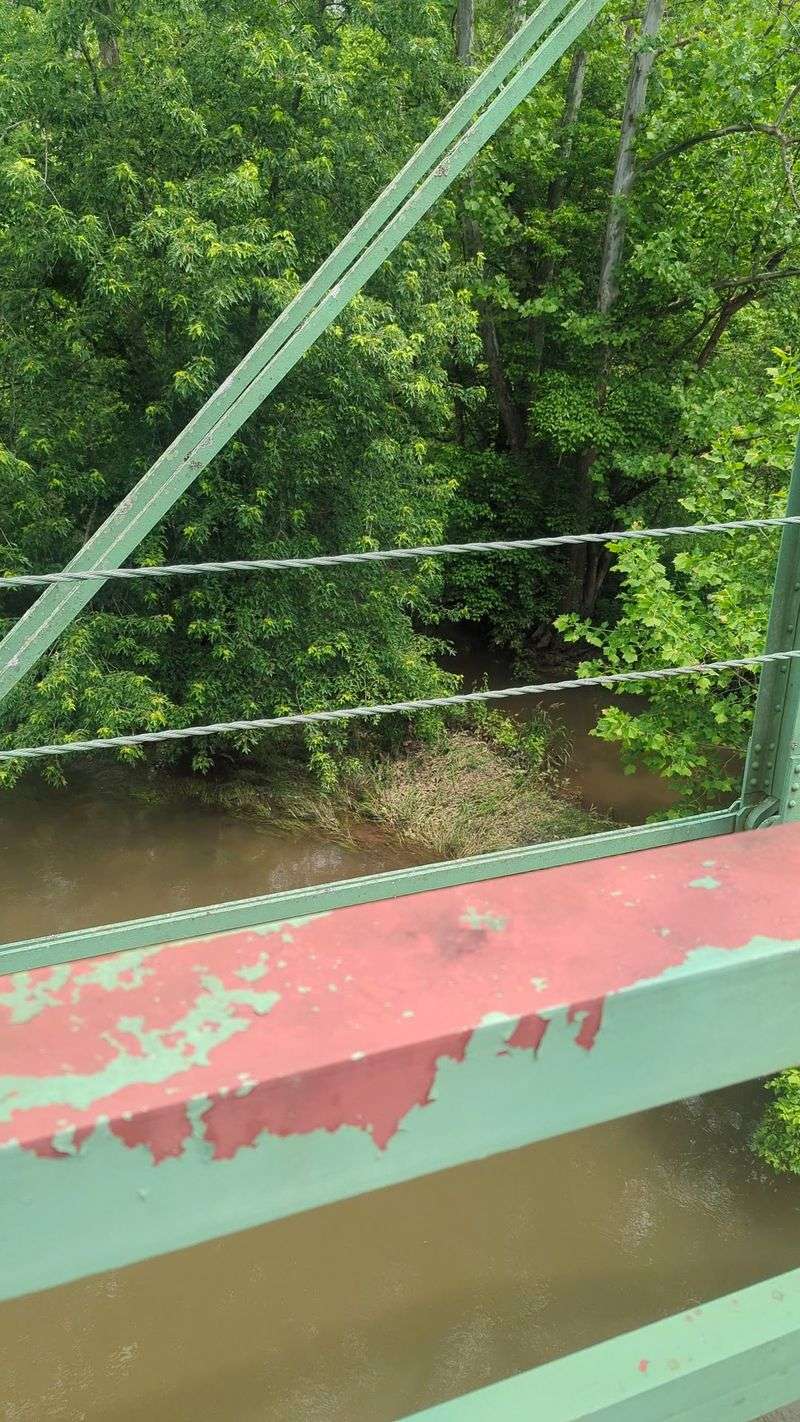
Ask almost anyone who has stopped here what they remember most, and the answer often comes back to the water. The Cacapon River slides beneath the bridge in a wide, easy ribbon, curving out of sight between wooded banks.
River views are among the most frequently praised parts of the visit.
From the middle of the span, you get a vantage point that simply is not possible from the riverbank. Upstream and downstream both open up, and on a still day the hills reflect in the surface like a mirror.
When the breeze picks up, the water ripples and sparkles in a way that is surprisingly calming to watch.
Seasons change the scene dramatically. Spring brings fresh green and fuller currents, summer offers lush leafy walls on both sides, fall paints everything in warm colors, and winter strips the trees bare so the river’s shape really shows.
Many visitors simply call the place beautiful, and it is hard to argue. The best part is that none of it requires a hike, special gear, or a fee.
Walk a few steps, look over the rail, and let the Mountain State show off a little.
Picnic Blankets, Fishing Lines, and Slow Afternoons
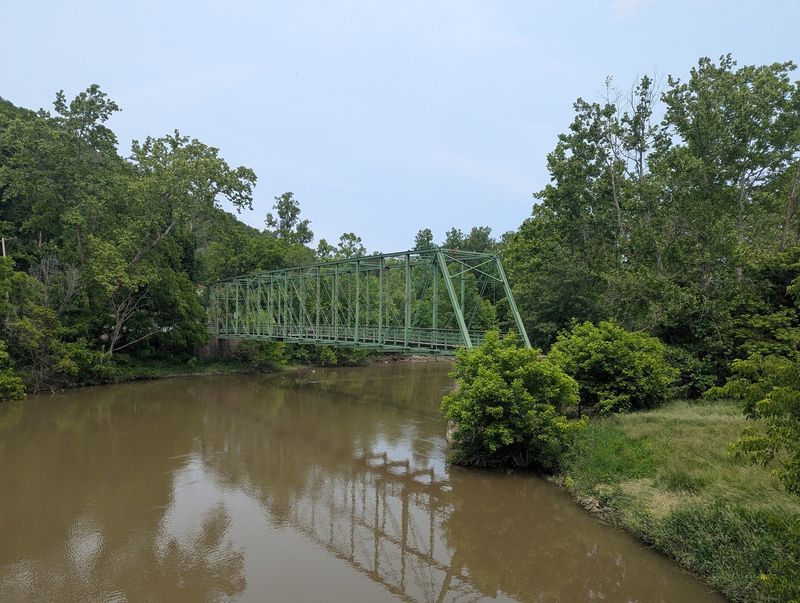
Grandpa always said the best afternoons involve a fishing pole and nowhere to be. Capon Lake seems to agree.
Visitors describe the area as a great spot for river views, picnics, or fishing, which covers just about everything a lazy Saturday needs.
Pack a cooler with sandwiches, a few pepperoni rolls, and some cold lemonade, then find a comfortable place near the water. The sound of the river and the sight of that old iron frame make even a simple lunch feel special.
It is an affordable outing, too, since the scenery comes free of charge.
Anglers will appreciate being right on the Cacapon, a river well loved by locals who enjoy casting a line in quiet water. Be sure to carry a valid West Virginia fishing license and follow current state regulations before you wet a hook.
Rules can change, so checking ahead is always smart.
Remember to leave the spot as clean as you found it. Carry out your trash, stay off private property along the banks, and keep things tidy for the next family who pulls over looking for the same peaceful afternoon you just enjoyed.
Photographers, Families, and Road-Trip Wanderers
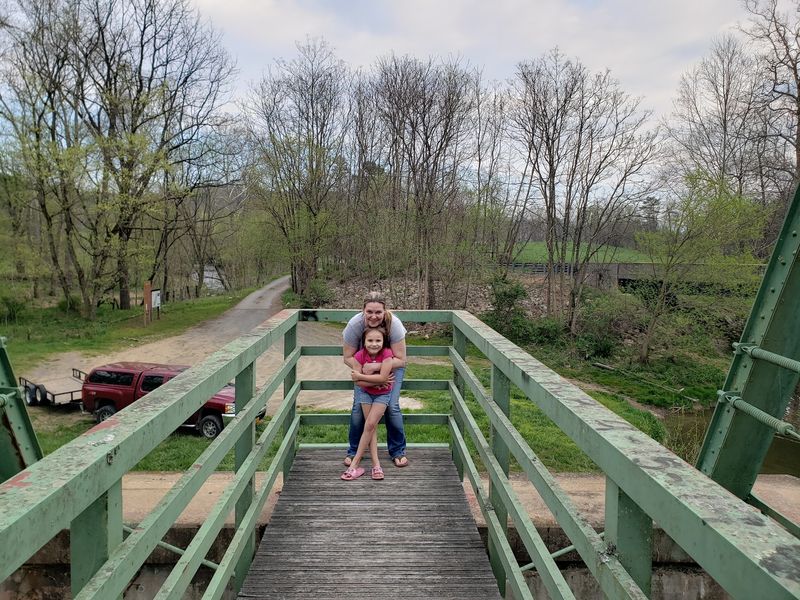
Got a camera itching for something besides selfies? Visitors describe the bridge as an easy, fun place for a photo shoot, and that tracks.
The geometric truss lines, the curving river, and the soft hills create frames that practically compose themselves.
Family photographers love it for casual portraits, and hobbyists enjoy playing with angles through the crisscrossed diagonals. Early morning and late afternoon light tend to flatter the old metal most, bringing out texture and warmth.
Overcast days work well too, giving the scene a moody, timeless look.
Beyond the camera crowd, the stop suits almost everyone. Retirees on a scenic drive can enjoy a relaxed walk with benches along the way.
Families with kids get a short adventure plus a possible hunt for hidden timbers, while road trippers heading through the eastern panhandle find a perfect leg-stretching break.
Plenty of visitors call it a cool little stop, and that modest description fits nicely. Nobody is pretending it is a theme park.
It is a pleasant, low-key corner of West Virginia where history, nature, and a sense of neighborly calm come together, and one past visitor even left a simple reminder to love one another.
Parking, Access, and a Few Practical Pointers
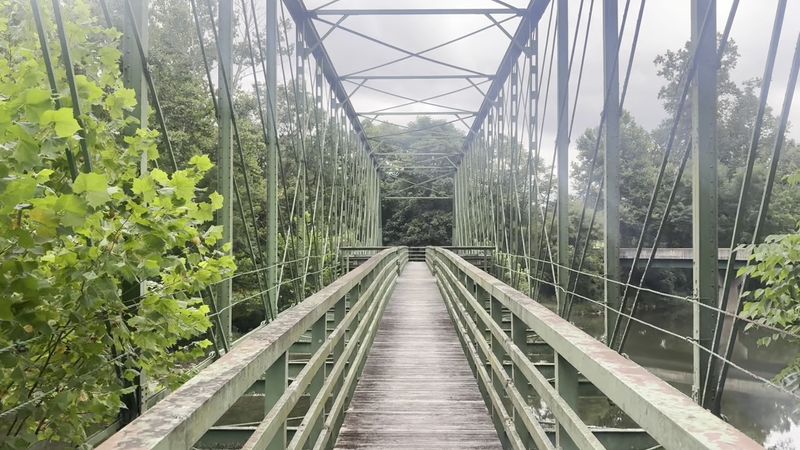
A little planning keeps the visit smooth. The bridge sits near Capon Springs Road in the Capon Lake area, and your GPS will likely route you through Wardensville.
Cell signal in these hills can be spotty, so downloading a map ahead of time is a wise move.
Here is one detail that trips people up. There is no access to the bridge from the boat launch parking area off Capon Springs Road, according to visitors, so do not assume that lot connects to the walkway.
Look for a proper pull-off closer to the bridge itself instead.
Be careful about where you park, too. Road shoulders out here can be soft or edged by ditches, and at least one visitor ended up stuck and waited hours for a tow on a quiet weekend morning.
Stick to firm, level ground and avoid easing too far off the pavement.
No official hours or admission fees appear in the listing information we found, and it functions as an open-air roadside landmark. Daylight visits are the most sensible choice for safety and for enjoying the views.
Bring water, sturdy shoes, and bug spray during warmer months, since services nearby are limited.
Why a Humble Old Bridge Deserves Your Detour
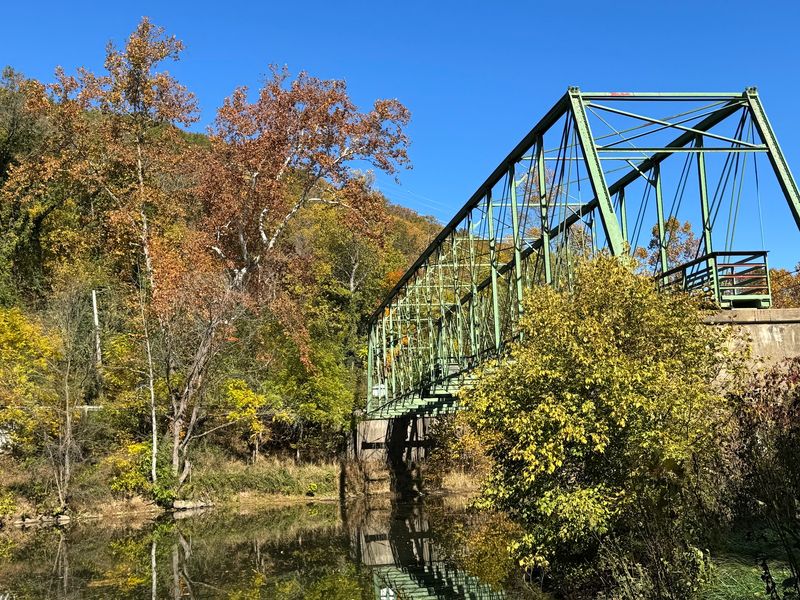
Sometimes the smallest stops leave the biggest impression. The Capon Lake Historic Whipple Truss Bridge will not take up your whole day, but it may linger in your memory long after the drive home.
Few places pack this much quiet history into such a short stroll.
Think about what you are actually standing on. A metal frame reportedly built in 1874, moved from Romney in the late 1930s, carried generations of travelers, and then was saved when it could have easily been scrapped.
That is the West Virginia spirit in a nutshell: practical, proud, and unwilling to let good things go to waste.
Add in the benches, the river views, the historical markers, and those mysterious timbers under the water, and you have a stop worth circling on the map. It costs nothing, suits nearly every age, and offers the kind of calm that is getting harder to find.
So next time you are rolling through the eastern panhandle, pull over and walk across. Point it out to the grandkids, share a memory or two, and snap a picture.
You will find it at Capon Lake Historic Whipple Truss Bridge, Wardensville, WV 26851.
