A century-old mountaintop hotel in Pennsylvania has hosted famous inventors, welcomed generations of travelers, and collected its share of ghost stories. One room is even associated with reports of flickering lights and the sound of children crying.
I find it interesting that a place built in 1907 can feel so connected to both American history and local folklore. Henry Ford, Thomas Edison, and Harvey Firestone once visited, leaving behind stories that remain part of the hotel’s identity.
Inside, historic photographs, antique furnishings, and long hallways preserve the atmosphere of an earlier era. The enormous veranda offers sweeping views of the surrounding mountains, while the hotel’s unusual stories give visitors another reason to look closely.
I like how the building’s history is interesting even without proving anything supernatural. Between its famous former guests, century-old architecture, and tales associated with Room 119, this mountaintop landmark has plenty to talk about.
The Lobby That Doubles as a Photo Album
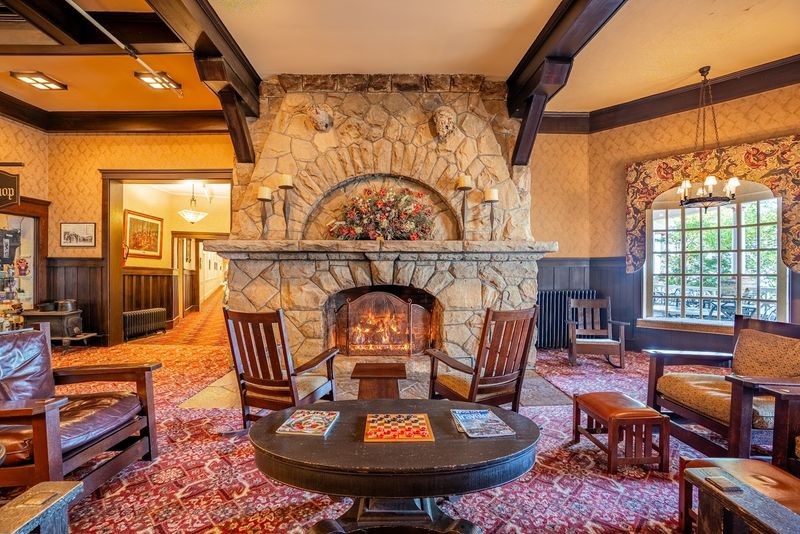
My camera roll from that first hour is almost entirely lobby shots, and half of them accidentally include somebody’s portrait staring back from a frame on the wall. That is the trick of this room.
The walls are packed with old photographs, newspaper clippings, and framed images of the hotel in its earliest days, so a casual snapshot of an armchair often catches three or four faces in the background.
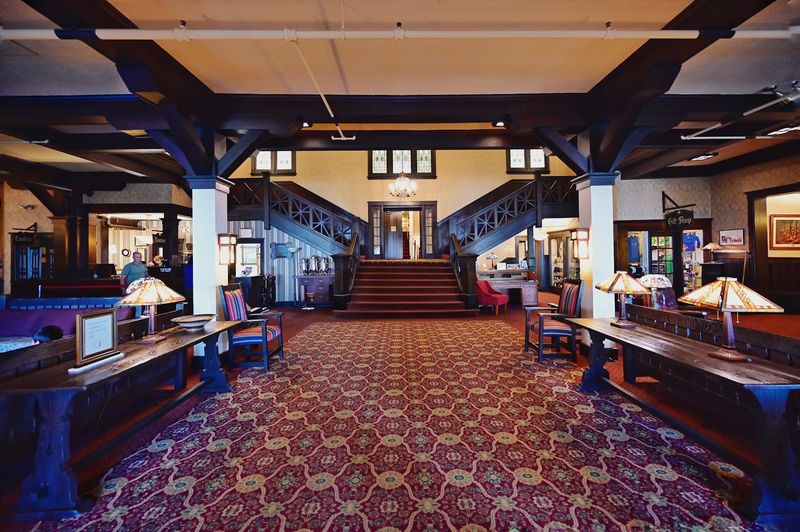
Dark wood covers nearly everything, and the chairs look like they have been holding guests since the Roosevelt era. There is a square grand piano tucked to one side, which I had genuinely never seen before.
Original furniture, an antique dial telephone, and an old cash register sit around like museum pieces nobody bothered to rope off. You can walk right up and study them.
My advice is to slow down here instead of heading straight to your room. Sit by the fireplace for ten minutes and let your eyes adjust to the low light, because that is when the details start showing up.
Then take your photos. Look at them again that night and you will spot the extra faces you missed, people from 1910s group portraits, hotel staff long retired, guests posed on the porch in hats and long coats.
Nothing spooky about it, just layers of history hanging within arm’s reach. Still, it makes for the kind of picture your friends ask questions about.
Hallway Portraits and the Rooms With Plaques on the Doors
Henry Ford slept here. So did Thomas Edison and Harvey Firestone, who traveled together as a group nicknamed the American Science Wizards, and small plaques on certain room doors still mark where they stayed.
I walked those hallways twice just to read them. The corridors are dim and narrow with framed black and white images running the length of the walls, and that dimness is exactly why photos taken here get interesting.
Use your flash and the glass in the frames throws back reflections, sometimes your own outline, sometimes a hallway behind you that looks longer than it really is. Skip the flash and the portraits blur into soft shapes that feel like something out of a different decade.
Guests I read about online often mention the hallway photographs as their favorite part, and I agree completely. Seeing the building in its prime, with automobiles parked along the front and women in white dresses on the veranda, connects you to the place fast.
Worth knowing before you go: there is no elevator. The building dates to 1907 and stairs are the only way up, sometimes several flights depending on your room.
If steps are a problem, request a lobby-level room when you book. I mention it because a friendly heads-up beats a surprise with luggage in hand, and the hallway portraits are just as good on the ground floor.
Sunset on the Grand Porch
Around seven in the evening the porch fills up, and for good reason. The Summit is one of the last remaining grand porch hotels in the country, and the veranda stretches out with white rocking chairs facing a valley that drops away toward Uniontown.
Sunset here turns the whole facade a warm peach color. Everybody points their phones at the sky, but the better shot is turning around and photographing the porch itself.
That is where the faces sneak in. Reflections in the tall windows behind the chairs catch other guests, staff passing through the lobby, and sometimes a distorted version of you that does not quite look like you.
I got one photo of an empty rocking chair with what looked like a figure in the window glass behind it. Turned out to be a woman reading inside, but for about four seconds I was thrilled.
Practical note about the setting: a busy four-lane road runs past the top of the mountain, and trucks work hard on that grade. Expect engine noise mixed with your mountain views.
It did not ruin anything for me, though I would not call the porch silent. Bring a sweater if you visit in spring or fall, since the elevation keeps evenings cool even when the valley below stays warm.
Stay until the town lights flicker on. That is the moment worth waiting for.
Room 119 and the Stories Guests Trade
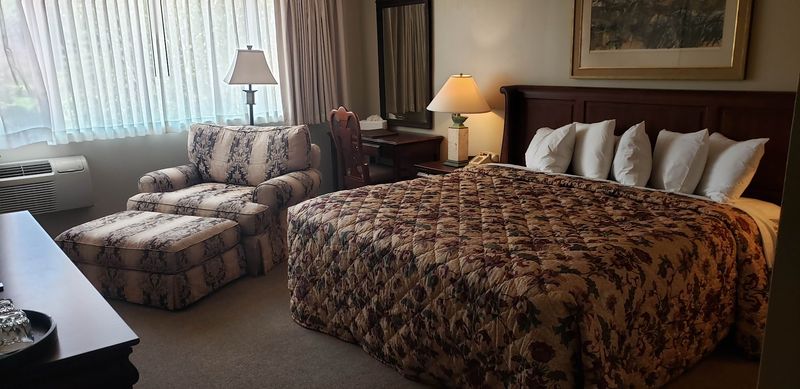
Every old hotel seems to have one room people whisper about, and here it is 119. Accounts passed around over the years mention lights flickering at odd hours and the sound of children crying during the night.
Ghost hunters have actually come out to investigate. According to the hotel’s ownership, they never found anything definitive, which I find refreshingly honest.
The current owner has joked that if any spirits are hanging around, they are probably her parents, and they would be good ghosts. That kind of easy humor tells you a lot about how the place handles its own legend.
What makes photos here feel odd is more practical than supernatural. Original fixtures, uneven lighting, mirrors set in old wooden frames, and thick shadows in the corners all combine to trick a phone camera.
Low light means longer exposures, and longer exposures blur anything that moves. Add a reflective surface and suddenly your bedroom photo has a shape in it you cannot explain.
I stayed in a different room and still caught two shots where my own reflection appeared where I did not expect it. My honest read is that the building’s age does most of the work.
Either way, comparing photos afterward became my favorite evening activity. Ask at the front desk about the hotel’s history and the staff, who genuinely know their stuff, will happily fill in details.
Mae’s Dining Room and the Penny-Covered Counter
A counter made entirely of pennies. That detail stuck with me longer than almost anything else, thousands of coins pressed into a surface until it glows dull copper under the lights.
Photograph it up close and you get an accidental crowd of tiny faces, Lincoln repeated over and over across the whole thing. It is easily the most literal answer to the question of why people keep finding unexpected faces in their pictures here.
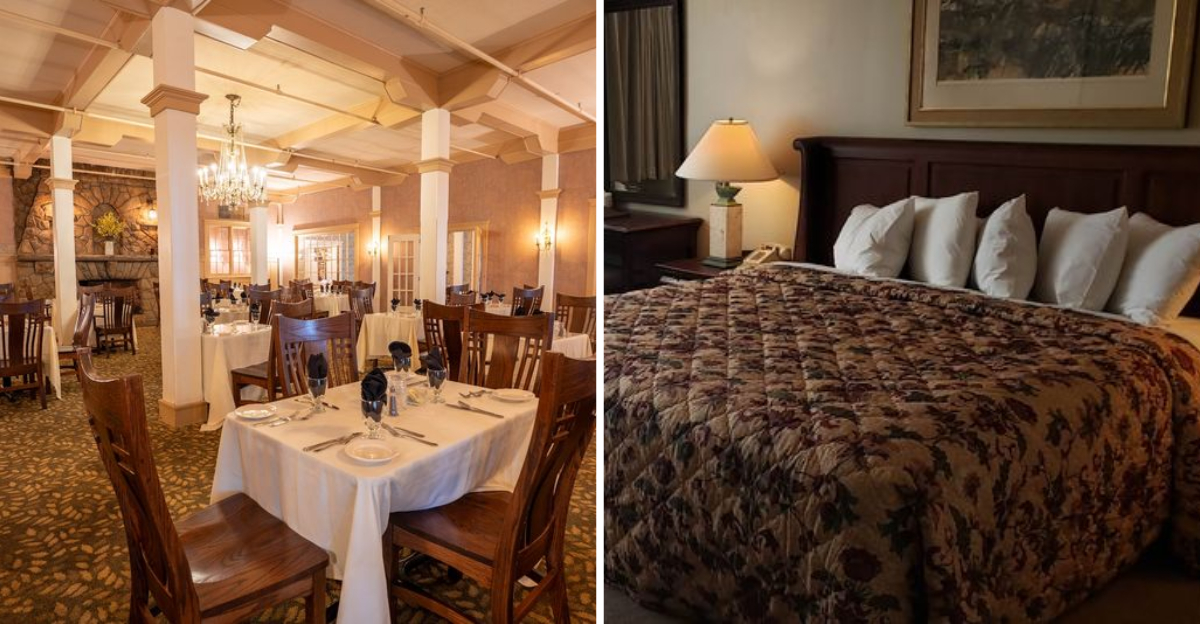
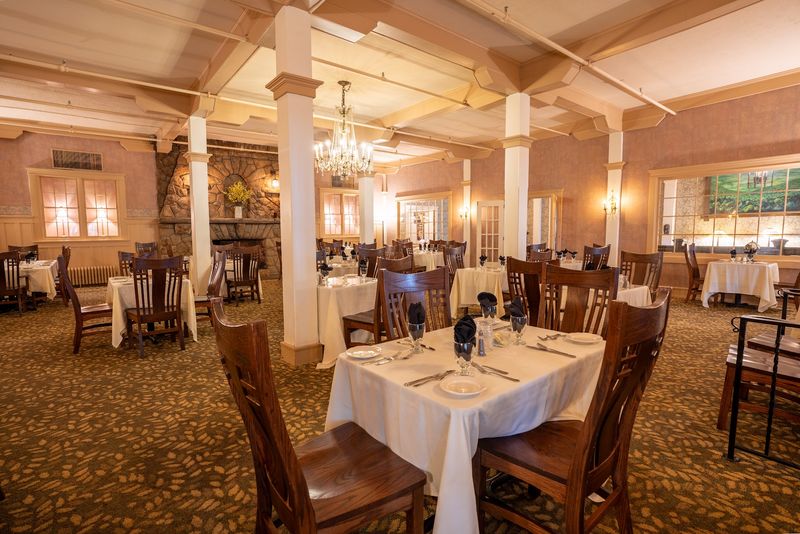
Mae’s Dining Room sits nearby with white tablecloths and a small fireplace, and it handles breakfast, lunch, and dinner during the season. Crab cakes come up constantly in guest conversation, and the coffee earned praise from more than one visitor.
I had breakfast there two mornings and appreciated that it felt like a real dining room rather than a hotel afterthought. Portions were generous and the staff knew the area well enough to suggest what to see next.
Reservations are smart, especially on weekends when the hotel hosts weddings. Events do happen often, and knowing that ahead of time saves you from surprises about timing or pool access.
Ask about the antique cash register and the old dial telephone while you are wandering. Neither is behind glass, and both photograph beautifully.
Small tip from experience: sit near a window if you can, because the light coming in makes even a plain plate of eggs look like a magazine shot.
Grounds, Pools, and the Trail Loop Below
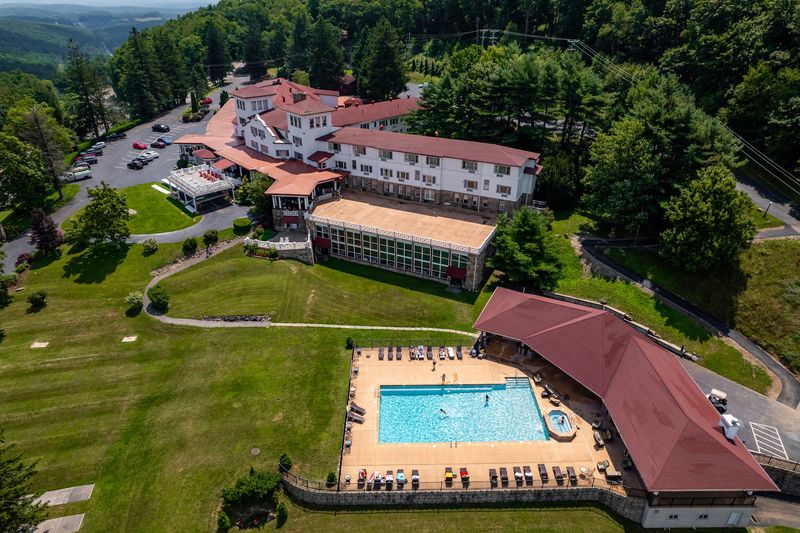
After dinner I found a walking trail that loops around the property, and it turned into the quietest twenty minutes of the trip. The grounds spread out further than the building suggests, with a nine-hole golf course dating back to the early 1920s tucked along the ridge.
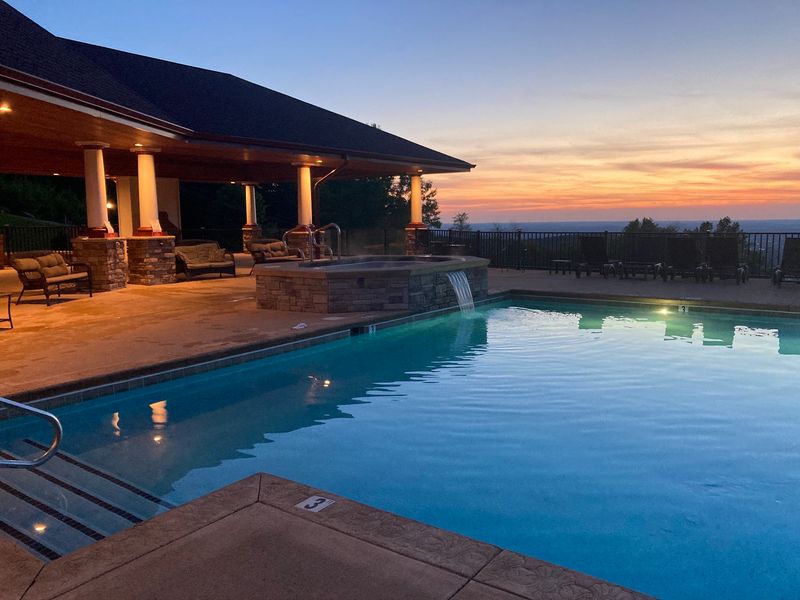
There are two pools, one indoors and one outside, plus an outdoor hot tub with the mountains sitting right there in front of you. Rooms overlooking the pool tend to get the best window views.
Photography down here works differently than inside. Late afternoon light filters through the trees and the white building glows against the green, and if you shoot toward the windows you will catch reflections of guests moving through the halls.
That is where a lot of the mystery photos come from, I suspect. Old glass, low sun, and a hundred windows facing the same direction.
Explore the basement level too. Cozy reading nooks, billiards, and a game room live down there, and they are easy to miss entirely if nobody points them out.
The location works beautifully as a base. Pennsylvania’s Ohiopyle State Park, Frank Lloyd Wright’s Fallingwater, Fort Necessity, and Laurel Caverns all sit within easy driving distance.
The hotel and restaurant close for the 2026 season on October 31 and are scheduled to reopen on April 23, 2027. Reservations for the 2027 season are already available.
Address: 101 Skyline Drive, Farmington, Pennsylvania 15437
