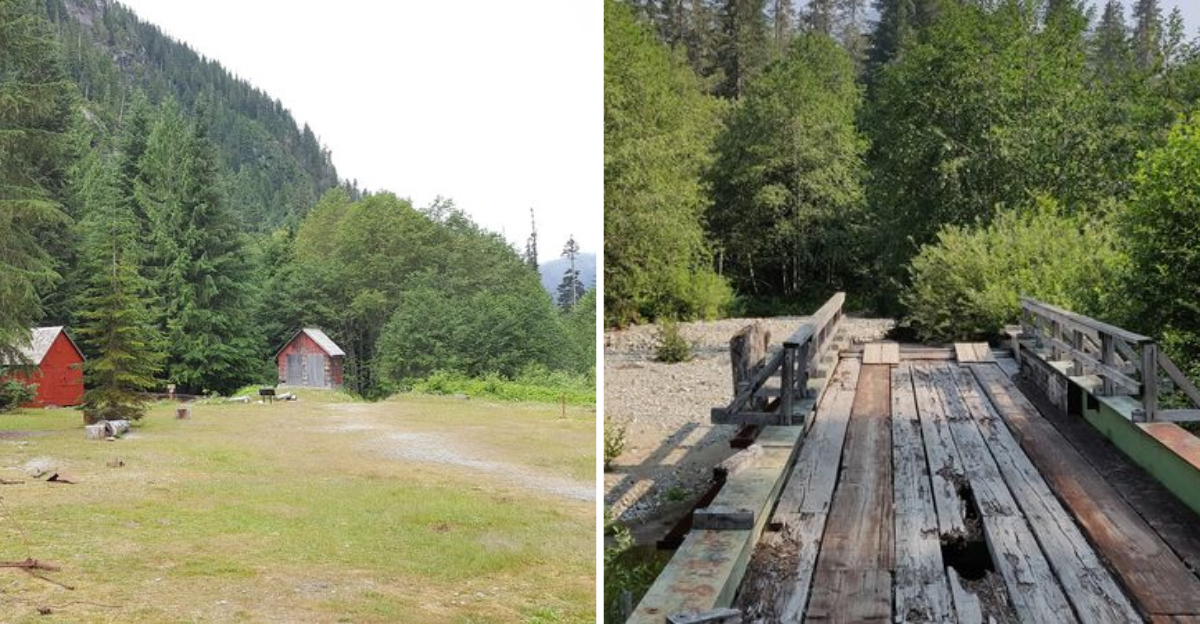
Washington State’s Cascade Mountains contain remnants of former mining settlements now reached only by foot along forested mountain trails. An old route once used by miners and resort visitors has been erased in sections by flooding, leaving behind a path that winds through dense evergreen forest and rising elevation.
Moss-covered trees, rushing water, and quiet wilderness shape the approach, creating a gradual transition from modern trailhead to historic ruins.
Abandoned structures and rusted remnants of the mining era appear slowly through the trees, offering a glimpse into a settlement that once supported a remote mountain community. Washington ghost towns like this reflect how nature gradually reclaims human history while preserving traces of its past.
Getting to Barlow Pass Trailhead: Where the Journey Begins
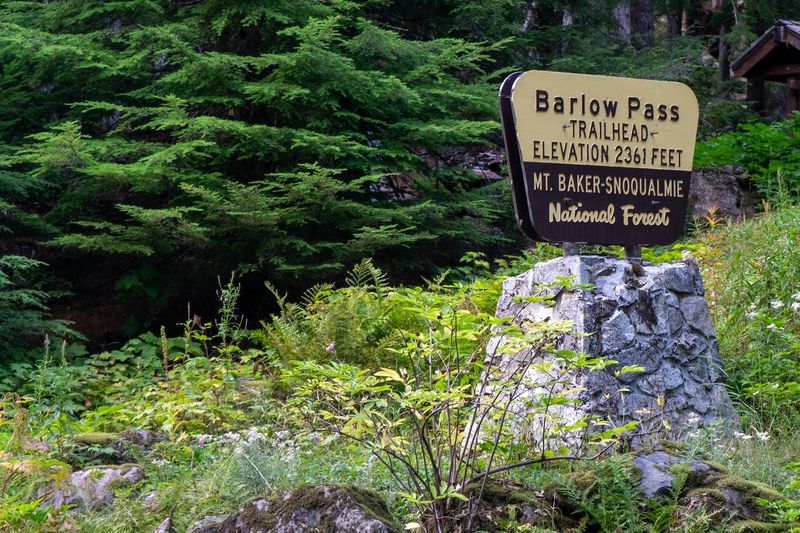
The trailhead itself sets the tone before you even take a single step. Barlow Pass sits along the Mountain Loop Highway near Granite Falls, Washington, and the parking lot often looks fuller than the trail actually feels.
Most vehicles belong to hikers heading to Monte Cristo, yet once you hit the path, the crowd seems to dissolve into the trees almost immediately.
A Northwest Forest Pass is typically required for parking here, so it is worth having that sorted before you arrive. The trailhead has restroom facilities, which hikers consistently appreciate, especially given how long the full round trip can be.
The trail begins on a relatively flat grade, following the old route of the Everett and Monte Cristo Railroad. You can almost imagine the sound of a steam engine chugging through these same woods over a century ago.
The surrounding forest is thick with cedar and fir, and the air carries that cool, damp quality that makes Pacific Northwest hiking feel refreshing even on warmer days. Arriving early on weekends gives you the best shot at a parking spot without stress.
The Trail Itself: Four Miles of Flat, Forest-Wrapped History
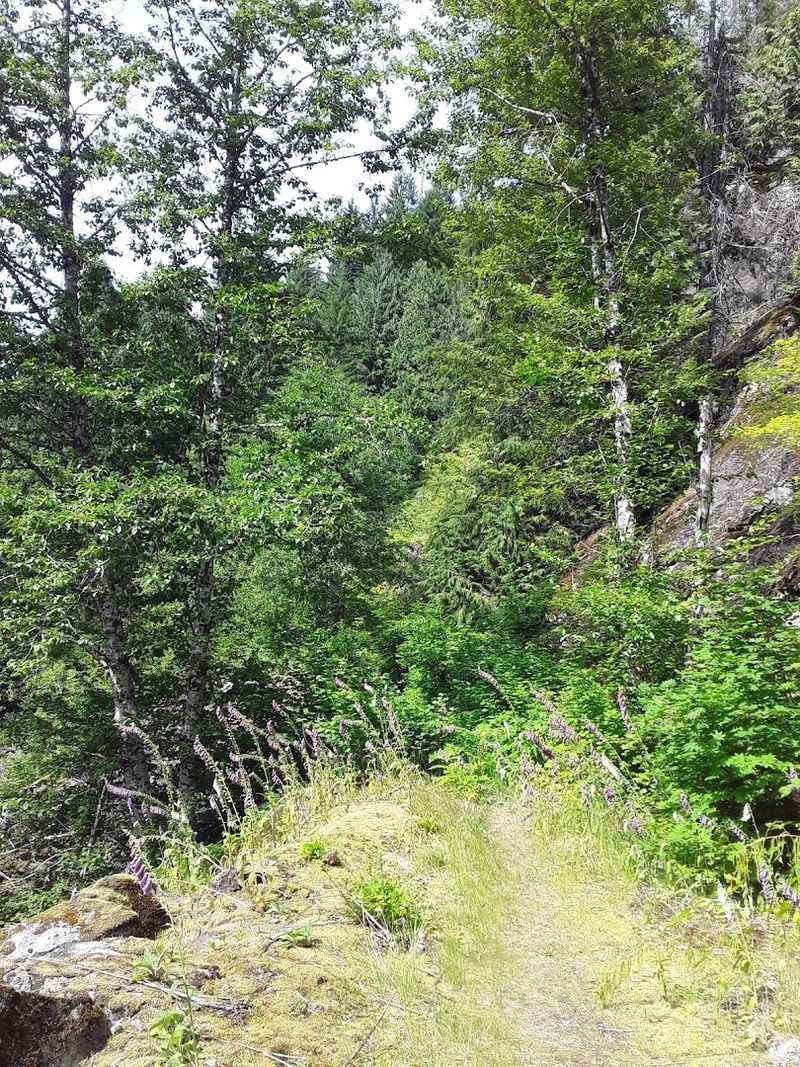
Flat trails sometimes get dismissed as boring, but this one earns its keep through atmosphere alone. The path to Monte Cristo follows the old railroad grade, which means elevation gain is minimal and the terrain stays manageable for most fitness levels.
That said, four miles one way adds up, and the eight-mile round trip is a genuine commitment for a casual afternoon.
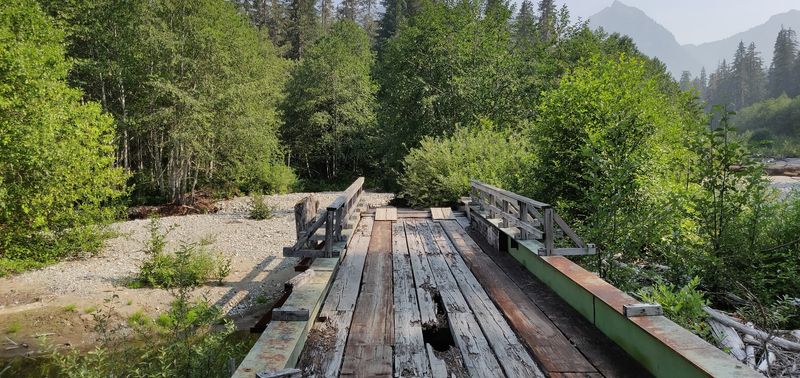
The trail winds through forest that feels genuinely untouched in stretches, broken up occasionally by views of mountain peaks and the South Fork Sauk River running nearby. There is a river crossing along the way where a bridge once stood.
A large fallen log now serves as the crossing point, and navigating it adds a small but memorable moment of adventure to the hike.
Bugs can be present depending on the season, but most hikers report conditions are manageable. The trail is generally well-maintained and easy to follow.
Trekking poles are helpful but not essential. The relatively gentle nature of the route makes it accessible for families and older hikers, though younger kids should be comfortable with longer distances before attempting the full out-and-back journey.
Monte Cristo’s Mining History: Gold, Silver, and Big Dreams
Back in 1889, Monte Cristo was not a quiet forest clearing. It was a booming mining settlement fueled by the discovery of gold and silver in the surrounding peaks of the Cascades.
Investors poured money into the area, and at its peak the town had hotels, a railroad connection, and all the infrastructure of a place people genuinely believed had a future.
The Everett and Monte Cristo Railroad was built specifically to haul ore out of the mountains and bring supplies in. It was an engineering achievement for its time, cutting through difficult terrain to link the remote town to the outside world.
Mining operations ran from roughly 1889 to 1907, when the combination of declining ore quality, repeated flood damage, and economic pressures finally made the operation unsustainable.
What strikes me most about the history is how quickly optimism can collide with reality in a place like this. The mountains gave just enough to draw people in, then made it clear they were never really in charge.
The story of Monte Cristo is less about failure and more about ambition meeting the indifferent force of the natural world, which feels oddly timeless.
The Ghost Town Ruins: What the Forest Left Behind
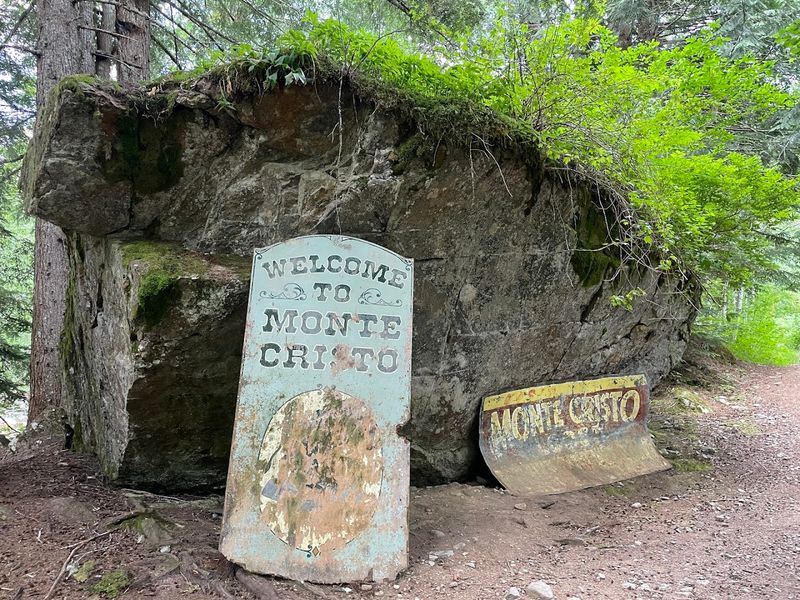
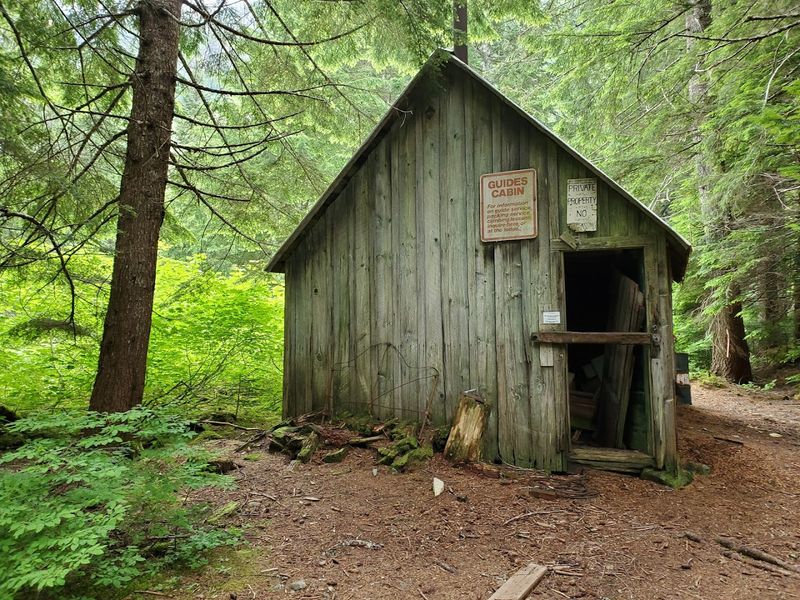
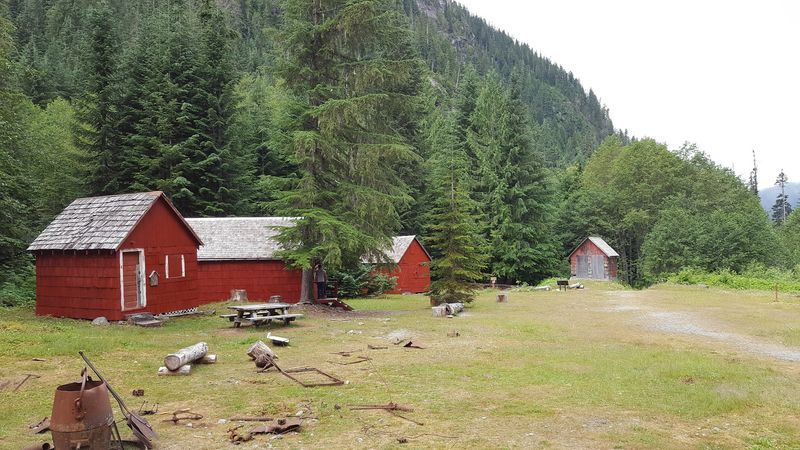
Few original structures from the mining era have survived intact. The forest has done a thorough job of reclaiming the land, and what remains is more atmospheric than architectural.
Rusted machinery, crumbling foundations, and interpretive signs scattered around the site piece together the story of what once stood here.
The Monte Cristo Preservation Association, a non-profit organization, works to maintain the historical site and keep the interpretive signage accurate and informative. Their efforts make a real difference to the visitor experience, turning what could feel like a random clearing into something with genuine educational weight.
Reading the signs while standing among the remains of the town creates a layered kind of understanding that no museum exhibit quite replicates.
There is a particular kind of stillness at Monte Cristo that is hard to describe. The mountains rise steeply on all sides, the river moves nearby, and the ruins sit quietly in between.
It does not feel spooky so much as reflective. You get a strong sense that the land has moved on and the ruins are simply passengers now, slowly being absorbed back into the landscape that originally made them possible.
Wildlife and Scenery Along the Way: The Cascades Show Off
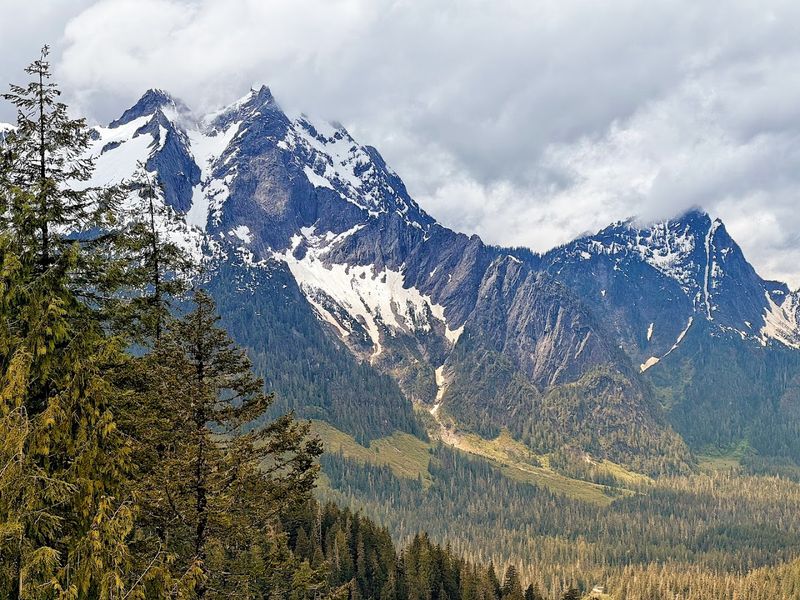
The hike to Monte Cristo is not just about the destination. The trail passes through some genuinely beautiful Cascade scenery, and taking time to notice it makes the miles feel shorter.
The South Fork Sauk River runs alongside portions of the route, its sound a constant companion that adds a rhythmic quality to the walk.
Mountain peaks frame the skyline when the trees open up, and on clear days the views are sharp and dramatic. The area sits within the Mount Baker-Snoqualmie National Forest, which means the surrounding landscape is protected and relatively undisturbed.
Birdlife is active along the trail, and the dense understory of ferns and shrubs gives the forest a layered, lush quality that feels distinctly Pacific Northwest.
I noticed how the light changed as the morning progressed, shifting from cool and grey to something warmer filtering through the canopy. Deer have been spotted in the area, and the general sense of wildlife presence adds a quiet excitement to the walk.
Bringing a pair of binoculars is not essential, but it would not be wasted. The scenery alone justifies the effort even before you reach the ghost town.
Practical Tips for Visiting Monte Cristo Ghost Town
A few practical details can make the difference between a smooth trip and an avoidable headache. Carrying your own water is essential.
The South Fork Sauk River runs through the area, but it is not safe to drink from due to potential heavy metal contamination from the old mining operations. A reliable water filter will not help here, so bring enough from home for the full round trip.
Layering your clothing is smart regardless of the season. The Cascades can shift from sunny to overcast quickly, and temperatures drop noticeably in the shade of the forest.
Sturdy hiking footwear is worth wearing, especially because of the log crossing over the river, which can be slippery when wet.
The trailhead is open 24 hours a day, every day of the week, but most hikers start in the morning to give themselves plenty of daylight for the round trip. Plan for roughly four to five hours total depending on your pace and how long you spend exploring the townsite.
Pack snacks, sunscreen for open sections, and a camera. The parking lot fills up on weekends, so earlier is genuinely better if you want a spot without circling.
Why Monte Cristo Deserves a Spot on Your Washington Hiking List
Not every hike needs a summit or a waterfall to justify the effort. Monte Cristo offers something rarer, which is the feeling of walking into a story that most people have never heard.
The combination of accessible terrain, genuine historical depth, and stunning Cascade scenery makes it a genuinely well-rounded day out.
The fact that the site is only reachable on foot adds to its appeal rather than detracting from it. There are no crowds of day-trippers arriving by car.
The people you meet on the trail have all made the same commitment, and that shared effort creates a quiet camaraderie that feels different from more heavily visited destinations.
The Monte Cristo Preservation Association’s ongoing work means the site continues to be interpreted and maintained thoughtfully, so visitors leave with context rather than just curiosity. Whether you are drawn by the history, the hiking, or simply the idea of a ghost town hidden in the Cascades, this place delivers on all three.
It is the kind of destination that lingers in your memory long after the drive home, the kind of place you find yourself recommending to people before you have even finished telling the story.
Address: Mountain Loop Highway, Granite Falls, WA 98252
