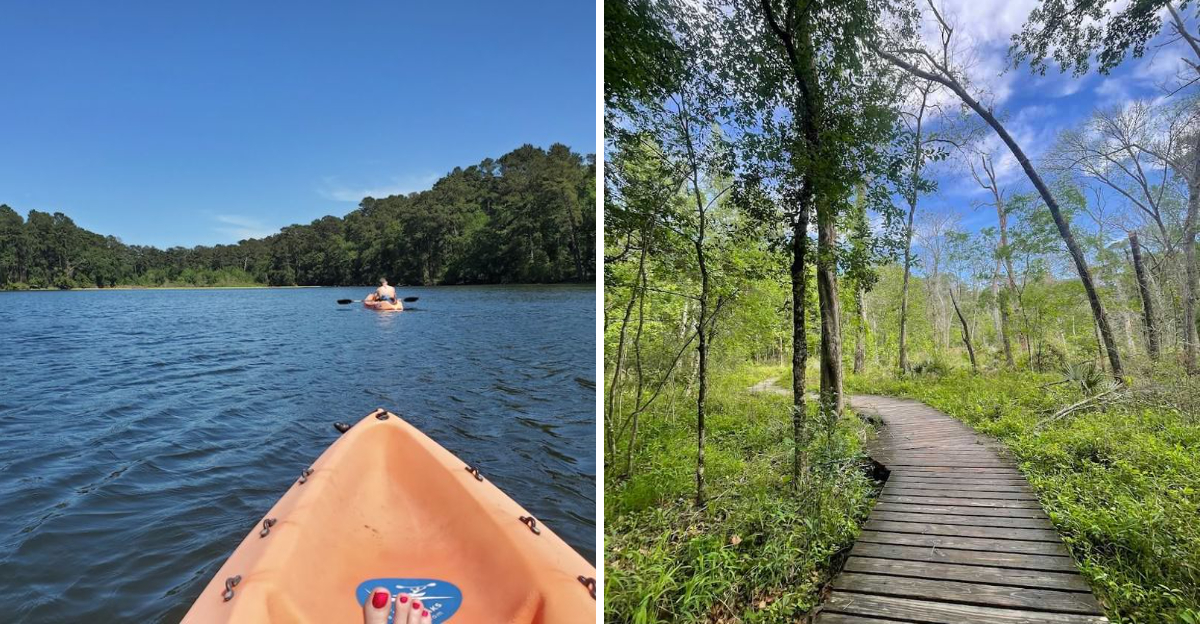
While tourists pack the famous lakes, locals know where to go. This secret Texas lake is the answer.
It is quiet, peaceful, and the water is calm enough for a canoe or a lazy afternoon of fishing. The park is nestled in the woods, giving it a secluded feel that you just do not get at the crowded spots.
You can hike the trails, paddle across the water, or just sit by the shore and let the world slow down. It is not flashy, but that is exactly the point.
It is the kind of place where you can actually enjoy nature without fighting for a patch of grass. The locals have known about it for years.
Now you do too. Go before it gets discovered!
Lake Raven, A 210-Acre Reservoir That Feels Like It Was Made For Peace
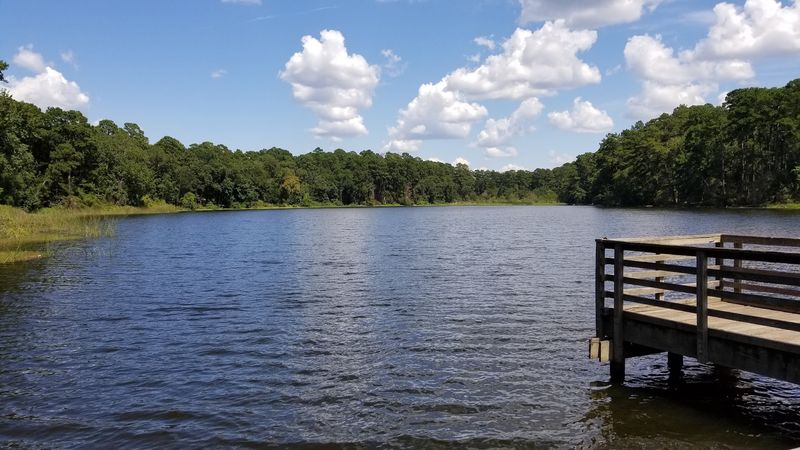
There is something almost disarming about the first time you see Lake Raven up close. The water is genuinely clear, not the murky greenish tone you might expect from a Texas lake in summer.
At just 210 acres, it is not enormous, but it has a way of feeling much bigger once you are out on the water with pines pressing in from every direction.
What makes this reservoir special is its stability. Water levels barely shift more than a foot throughout the entire year, which means the shoreline stays consistent and the ecosystem around it thrives.
Three creeks feed the lake, Prairie Branch, Big Chinquapin Creek, and Little Chinquapin Creek, giving it a steady natural pulse that keeps the water fresh and the habitat healthy.
The lake was originally created by a dam built by the Civilian Conservation Corps in the late 1930s. That dam actually failed in 1940 and was rebuilt in 1956, so the version you see today has been holding steady for decades.
There is something grounding about knowing the history beneath the surface.
Paddling out toward the middle on a quiet weekday morning, with herons lifting off the far bank and the smell of pine in the air, is genuinely one of the better outdoor experiences available within a short drive from a major Texas city. No flashy marina.
No party boats. Just still water, old trees, and a sky that feels wider out here than it has any right to be.
Fishing at Lake Raven, Where Trophy Bass and Quiet Mornings Come Together
Anglers who know about Lake Raven tend to guard that knowledge carefully. The lake has built a reputation for producing trophy largemouth bass, with some fish exceeding 10 pounds, which is not something you hear about every day at a small reservoir inside a state park.
Redear sunfish over 9 inches show up regularly too, alongside crappie, perch, and catfish.
One of the more practical perks here is that no fishing license is required within the state park boundaries. That alone makes it an easy choice for families or casual anglers who want to spend a morning on the water without extra paperwork.
The park provides a boat ramp, fishing piers, and fish cleaning stations, so you have everything you need already on site.
Early mornings are the sweet spot. The lake surface sits glassy and flat before the day warms up, and the fish are active near the shallows.
I have watched people pull in solid bass from the pier before 8 in the morning without a word spoken between them, just the occasional splash and a satisfied nod.
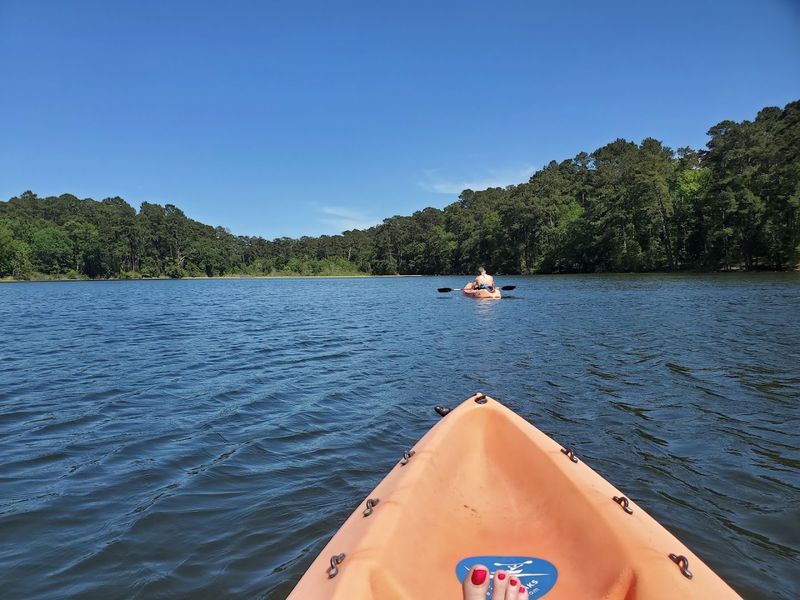
Motorboats are allowed on the lake but must run at idle speed only, which keeps things calm and safe for everyone. Kayak fishing is particularly popular here because you can work the edges quietly without spooking fish.
Bring your own gear or pick up supplies at Gator Junction, the park store near the entrance, and you are set for the whole day.
The Chinquapin Trail, A Six-Mile Loop That Circles the Whole Lake
The Chinquapin Trail is the main event for hikers at Huntsville State Park, and it earns that status.
At roughly 6.8 miles, this loop circles the entire perimeter of Lake Raven, giving you continuous views of the water through the trees while keeping you shaded under yaupon, pine, and hardwood canopy for most of the route.
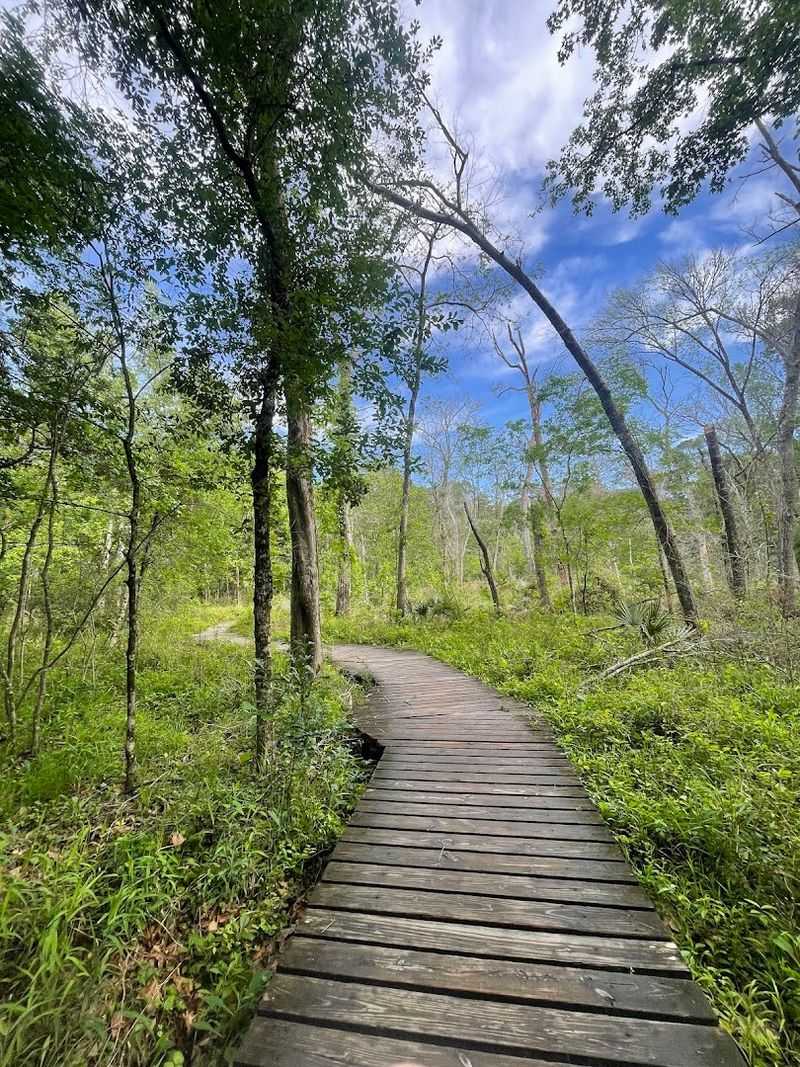
The trail surface changes as you go, hard-packed dirt in some sections, sandy stretches in others, and boardwalks over the marshier low-lying areas near the creek inflows.
Those boardwalk sections are genuinely enjoyable, especially in spring when the water level is higher and you can hear frogs calling from just below your feet.
Part of the trail follows an old service road originally built by the Civilian Conservation Corps in the 1930s, and you can feel that history in the solidness of the path. The CCC also built the dam at the south end of the lake, and the trail leads you right past it.
It is one of those quiet historical moments you do not expect on a nature hike.
Plan for about two to three hours at a comfortable pace. The trail is not technically difficult, but the roots and soft sand sections require attention.
Morning starts are ideal because the forest stays cooler longer and wildlife activity is at its peak. I spotted a pileated woodpecker hammering away at a dead pine about halfway through, and I completely forgot I was tired.
Bring water, wear sturdy shoes, and take your time.
Wildlife at Every Turn, From Alligators to Painted Buntings
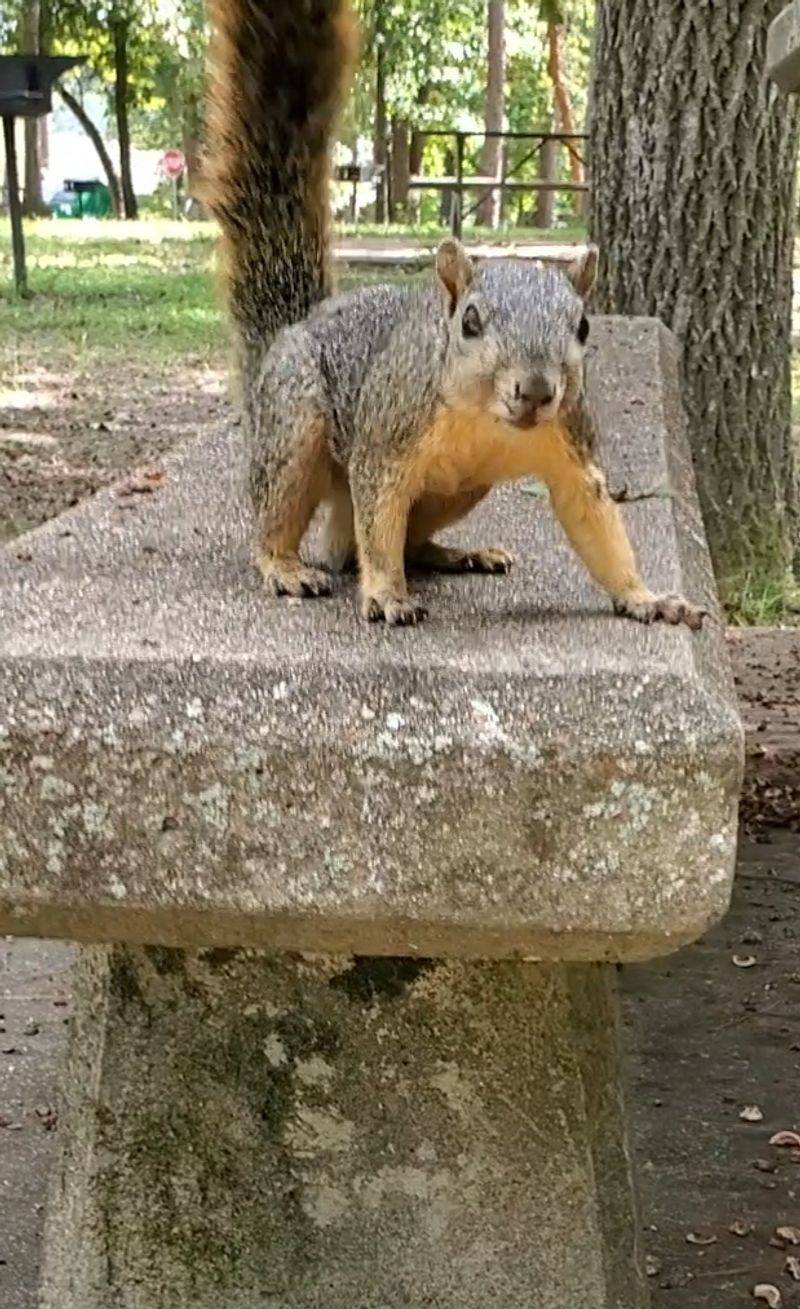
Huntsville State Park takes wildlife seriously, and the animals here seem to know it. White-tailed deer wander through campsites at dusk with a casual confidence that suggests they consider themselves the actual residents.
Armadillos shuffle along the trail edges, raccoons investigate every unsecured cooler, and eastern gray squirrels are basically everywhere at all times.
The bird life is exceptional. Over 200 species have been documented in the park, and the variety is genuinely impressive for a single location.
Painted Buntings show up during migration, which is always a moment worth stopping for. Blue herons and white egrets work the shallows around the lake with a slow, deliberate elegance, and bald eagles have been spotted overhead near the water.
The park has a dedicated bird blind that overlooks an outlet of the lake, and it is one of the better setups I have seen at a Texas state park. You can sit quietly inside and watch kingfishers, herons, and waterfowl without disturbing them at all.
It rewards patience in the best way.
Alligators are also present in Lake Raven, and that is worth knowing before you wade near the shore. The park enforces clear guidelines about not feeding wildlife and keeping food away from the water’s edge.
Alligator sightings near the fishing piers and boat launch are not unusual. They are native to this ecosystem and are not a threat if you give them appropriate space.
Seeing one sunning on a log from a safe distance is honestly a highlight.
Camping Under the Pines, From Full Hook-Ups to Primitive Sites
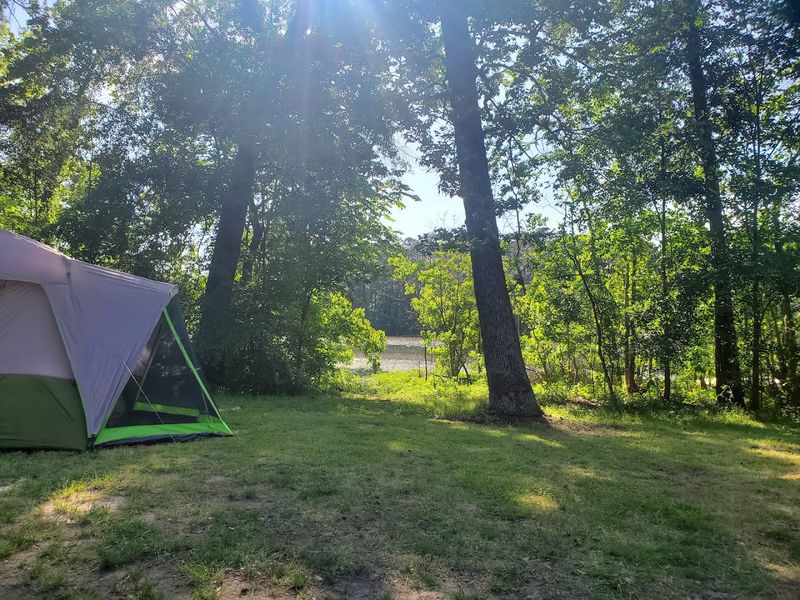
Camping at Huntsville State Park feels different from a lot of Texas campgrounds because the tree cover is so dense. The tall loblolly pines create a canopy that softens the heat and filters the light in a way that makes the whole experience feel more like deep forest camping than typical state park fare.
It is genuinely comfortable, even in warmer months.
The park offers 160 campsites with a range of options to match different preferences. Some sites have water and electricity, others include full hook-ups with sewer access for RVs, and there are primitive options for those who want a simpler experience.
Screened shelters and group pavilions round out the selection, making this a solid choice for everything from solo trips to family reunions.
Raven Hill is the section of the campground that caters well to RV campers, with pull-through sites and the amenities to match. The more primitive sites sit deeper in the woods and feel noticeably quieter, especially on weeknights when the park is less busy.
If you can get one of those spots on a Tuesday or Wednesday, the solitude is remarkable.
Restrooms with showers are available throughout the campground, which is a genuine comfort after a long day on the trail. The sounds at night here are worth mentioning too.
Owls, frogs, and the occasional rustling in the underbrush create a natural soundtrack that no playlist can replicate. I slept better here than I had in weeks, which I was not expecting at all.
Paddling and Swimming, Getting Out Onto the Water at Lake Raven
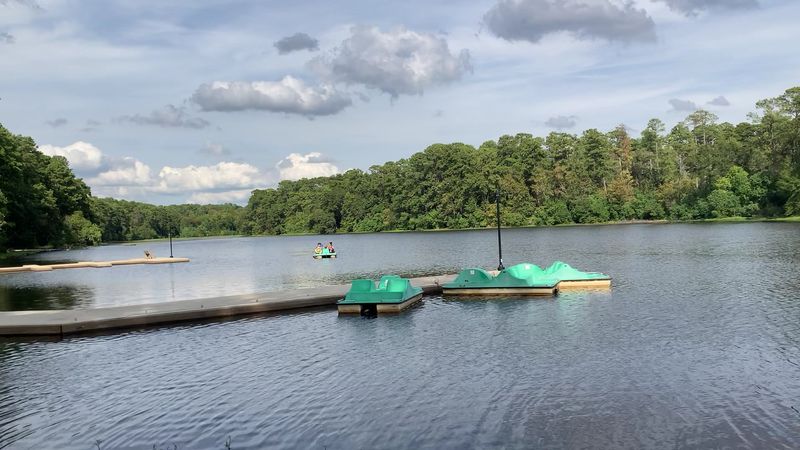
Renting a kayak or canoe near Raven Lodge is one of the easiest decisions you will make at this park. The lake is calm, the water is clear, and the idle-speed-only rule for motorboats means the surface stays smooth enough to paddle without fighting any wake.
Paddle boats are also available if you want something more relaxed and less directionally demanding.
Personal watercraft are permitted if you bring your own, and the boat ramp makes launching straightforward.
The lake is small enough that you can explore most of it in a single outing without exhausting yourself, but interesting enough that you will want to poke into every cove and shaded inlet along the way.
Great blue herons tend to flush dramatically from the reeds as you approach, which never gets old.
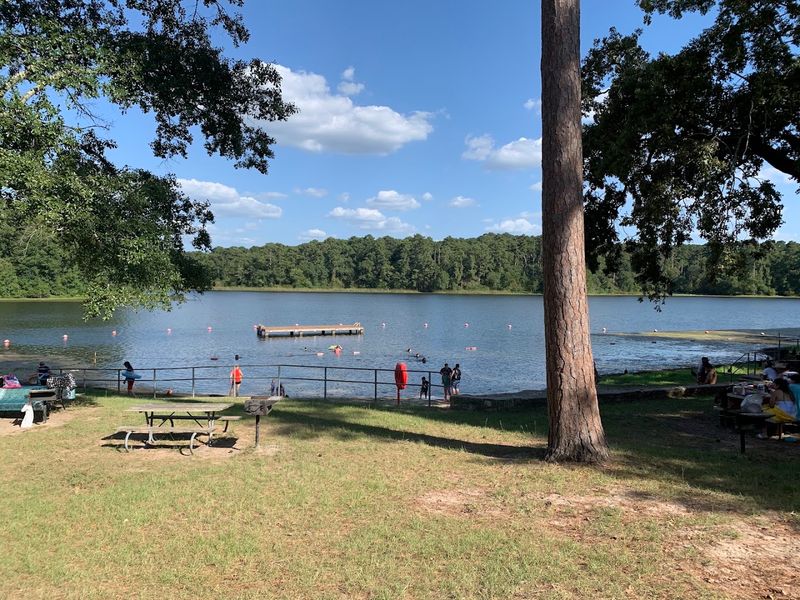
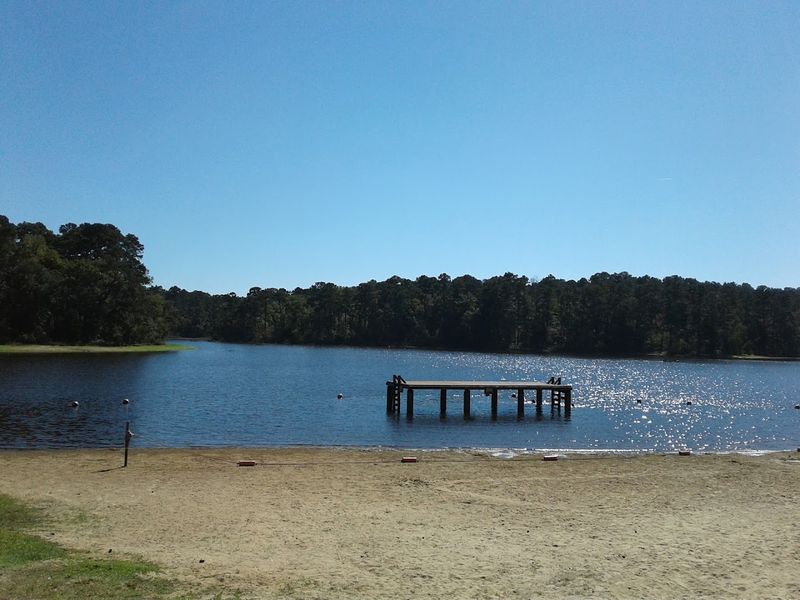
The swimming area is a designated sandy beach section of the lake, typically open from 10 in the morning through early evening. There are no lifeguards on duty, so the expectation is that swimmers look after themselves and their group.
The beach is not enormous, but it is pleasant and well-maintained, and the sandy bottom makes entry easy for kids.
One thing worth knowing is that swimming can be temporarily restricted following alligator sightings near the beach area. The park posts notices when closures are in effect, so check before you plan your afternoon around it.
It is a reasonable precaution and part of what makes this a genuine wild ecosystem rather than a manufactured resort lake. That realness is actually part of the appeal.
The History Woven Into the Park, Civilian Conservation Corps and Sam Houston’s Legacy
Huntsville State Park carries more history than most visitors realize when they first pull in. The Civilian Conservation Corps, a Depression-era federal work program, built much of the park’s infrastructure between 1937 and 1942.
The group recreation hall, the boathouse, the original dam, and the spillway all came from the hands of CCC workers, and the craftsmanship has held up remarkably well for structures pushing 80 or 90 years old.
The Coloneh Trail is named after General Sam Houston’s Cherokee name, which translates loosely to Raven. That is also where the lake gets its name.
Houston lived among the Cherokee for a period of his life and was given that name by the tribe. The park sits in his adopted home territory, and that connection gives the whole place a layer of meaning that goes beyond the natural scenery.
Before European colonization, the area was inhabited by the Bidai people, an indigenous group native to East Texas. Their presence in this region stretches back centuries, and the land carries that long history quietly beneath its pine-covered surface.
The nature center inside the park offers exhibits on local history, animals, and plant life that help put all of this into context.
Ranger programs are available and cover topics ranging from local plants and animals to the history of the CCC’s work in the park. These programs are worth attending if you happen to be there when one is scheduled.
Understanding what went into building this place makes spending time in it feel more meaningful and less like just another outdoor outing.
Practical Tips for Your Visit to Lake Raven at Huntsville State Park
Getting to Huntsville State Park is genuinely easy from Houston, about 65 miles north on Interstate 45. The drive takes roughly an hour depending on traffic, and the shift from urban highway to deep pine forest happens faster than you would expect.
Once you turn onto Park Road 40 West, the trees take over and the city feels very far away.
The park is part of the Texas State Parks system, so you will need a day pass or an annual Texas State Parks Pass to enter. Reservations for campsites are strongly recommended, especially for weekends and holidays.
The park can fill up quickly, particularly in spring and fall when the weather is ideal and the wildflowers and dogwoods are putting on a show.
Gator Junction, the park store near the entrance, sells camping and fishing supplies, groceries, ice cream, cold drinks, and ice. It is a convenient stop for anything you forgot to pack, and the ice cream situation is taken seriously.
Guided horseback trail rides are offered through 2E Stables for those who want to see the park from a different angle entirely.
Insect repellent is non-negotiable, especially during warmer months when mosquitoes are active near the water. Sunscreen matters too, even under the tree cover, because the Texas sun finds its way through eventually.
The park also has geocaching opportunities scattered throughout the trails, which adds a fun layer for families with kids. Come early, stay late, and let the pines do the rest.
Address: 565 Park Road 40 West, Huntsville, TX 77340
