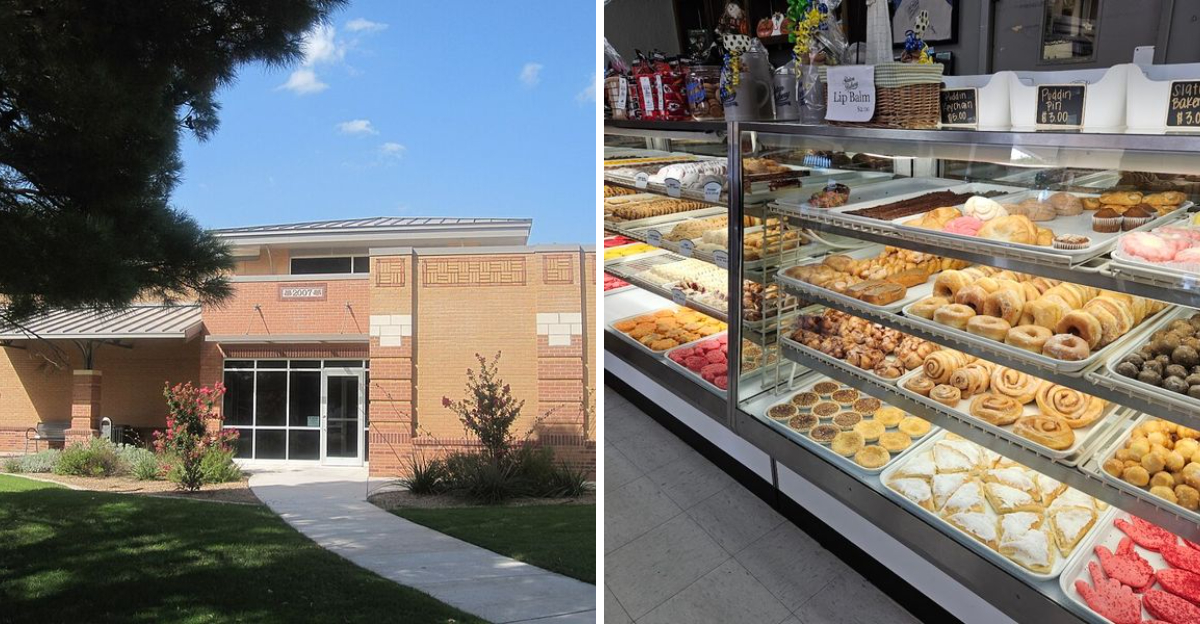
A small town bakery that has become the heart of the community. That is what this Texas town built.
The bakery is not just a place to grab a loaf of bread. It is where neighbors catch up, where visitors are welcomed, and where the smell of fresh pastries draws you in from the street.
The recipes are time-tested, the staff knows the regulars by name, and the pastries are the kind you think about long after you leave. It is the sort of place that gives a town its identity.
People drive from nearby towns just for a taste. And once you have had a bite of what they are baking, you will understand why.
It is proof that sometimes, all it takes to build a community is good bread and a warm oven.
A Town Born From the Railroad
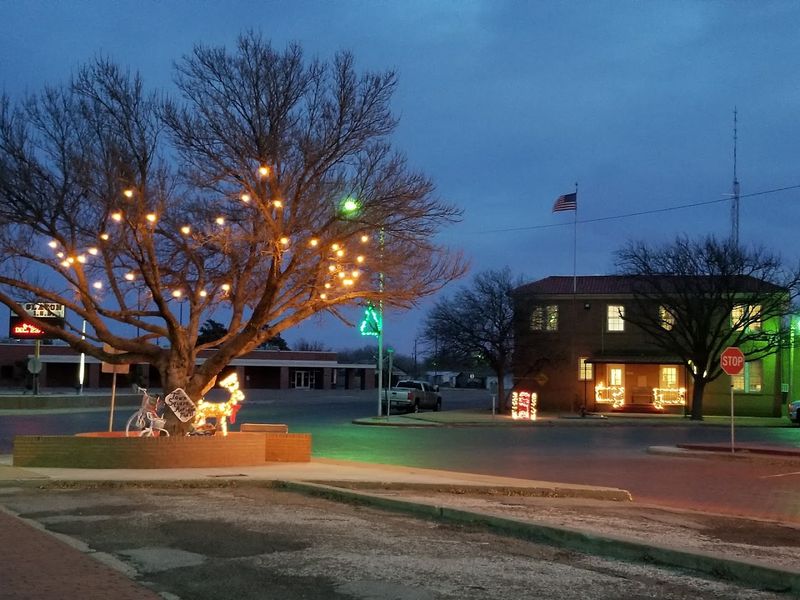
Not every small town can trace its exact birthday, but Slaton can. On June 15, 1911, the Santa Fe Railroad officially established the town as a division point, strategically placed to service trains pushing through northwest Texas.
It was named after O. L.
Slaton, a local rancher and banker who helped make the railroad’s expansion in the area possible.
The town’s layout itself tells a story. Streets were designed in a wagon wheel pattern, radiating outward from the center, a design reminiscent of Washington, D.C.
That kind of intentional planning hints at the ambition the founders had for this place. Slaton was not just a whistle-stop.
It was meant to matter.
And for decades, it absolutely did. Slaton served as the center of the largest division in the entire Santa Fe system, drawing company employees, their families, and the businesses that followed them.
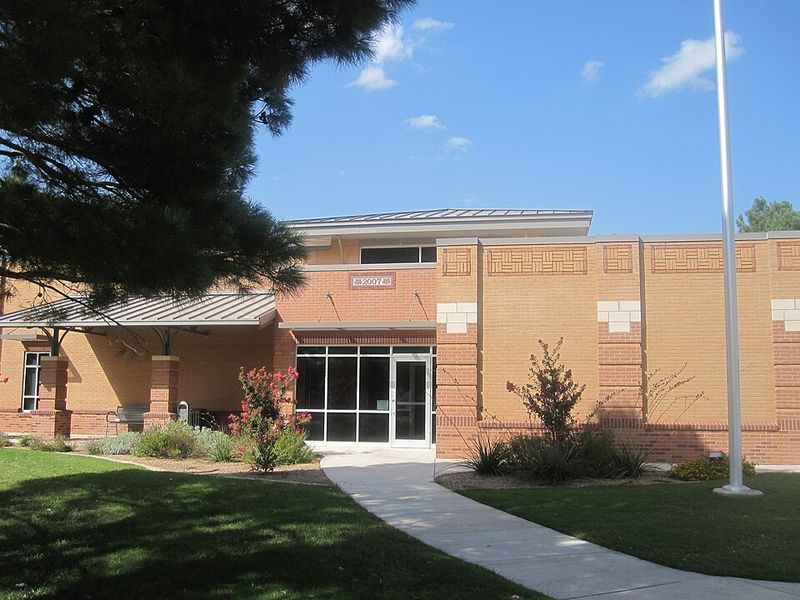
The population swelled, storefronts filled up, and a real community took shape around the tracks. The AT&SF 1809 steam engine, one of the locomotives that once worked these very yards, now rests on display in the Town Square as a permanent tribute to that era.
Santa Fe began pulling back operations in the late 1960s, and the town felt that shift. But Slaton did not disappear.
It adapted, held on, and kept its identity firmly intact, which says everything about the character of the people who chose to stay and build something lasting here.
German Roots Run Deep in Slaton
There is a layer of Slaton’s story that surprises a lot of first-time visitors. This town holds the distinction of being the westernmost German settlement in Texas, and that heritage is not just a footnote in a history book.
It is alive in the community’s traditions, its annual events, and the pride locals carry about where their families came from.
A Catholic priest named Joseph Reisdorff played a pivotal role in shaping the town’s cultural foundation. He actively recruited German Catholic and Lutheran settlers to the area in the early 1900s, building a community with a strong sense of faith, hard work, and togetherness.
Those values became the backbone of Slaton’s identity.
Every October, the town celebrates St. Joseph’s Sausagefest, an event that brings those German roots back to the surface in the most enjoyable way. There is food, community spirit, and a genuine sense of celebration that feels nothing like a staged tourist attraction.
It feels like a family reunion for an entire town. Walking through that event, you get the sense that people here genuinely like each other, which is rarer than it sounds.
The German influence also shows up in the architecture of older homes along West Garza Street, some dating back to 1911. History here is not preserved behind glass.
It is lived in, celebrated, and passed down with real affection from one generation to the next.
The Slaton Bakery, Over a Century of Community
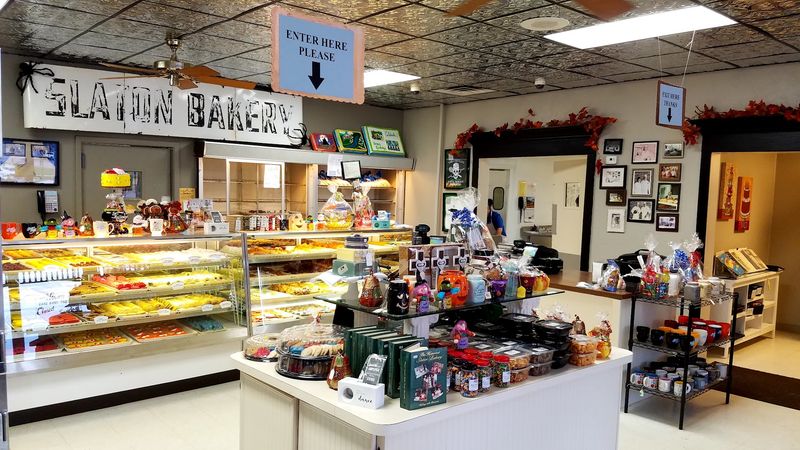
The Slaton Bakery did not start as one single business. It came together in 1923 when two local bakeries, the Blue Ribbon Bakery and City Bakery, merged into one.
That combination created something that would outlast almost everything else in town, becoming a genuine institution that locals and out-of-town visitors now plan their trips around.
The Wilson family took ownership in 1943 when Barney and Ollie Mae Wilson purchased the bakery. Their son Sherrell and his wife Robin eventually took over, and their son Chad represents the third generation actively involved in keeping the place running.
Over 80 years of family ownership is not a small thing. It means the recipes, the values, and the warmth have stayed remarkably consistent across decades.
The bakery received a Texas Historical Commission marker in 2009, recognizing its significance not just as a business but as a cultural landmark. Inside, there is a small museum space with old photographs and vintage kitchen equipment that gives you a real sense of the bakery’s long journey.
The staff treats customers like they are walking into someone’s home rather than a retail counter, and that feeling is not manufactured for show. It is simply how this place has always operated.
Located at 109 S 9th St, right across from City Hall in historic downtown Slaton, the bakery is open Tuesday through Saturday, starting at 6 a.m., which means early risers get first pick of everything fresh out of the oven.
Address: 109 S 9th St, Slaton, TX 79364
Vanilla Wafers That Won a Statewide Competition
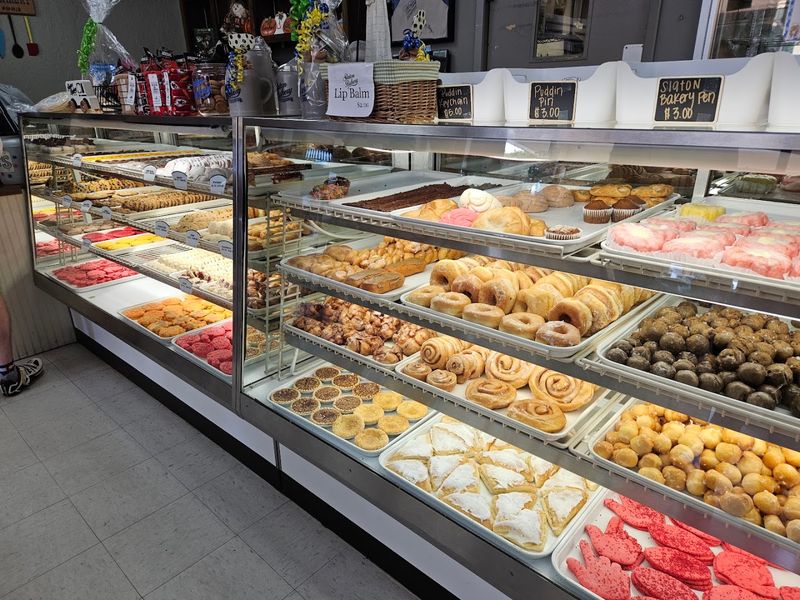
If there is one item that put the Slaton Bakery on the map beyond city limits, it is the vanilla wafer. The recipe has been around nearly as long as the bakery itself, passed down carefully through the Wilson family.
These are not the mass-produced, cardboard-thin wafers you find in a supermarket bag. They are soft, golden, and carry a buttery depth that makes one feel genuinely insufficient.
In 2015, those wafers earned first place in H-E-B’s Quest for Texas Best competition, a statewide program that recognizes exceptional Texas-made food products. That win opened a lot of doors.
Today, Slaton Bakery’s vanilla wafers are distributed to H-E-B, United Supermarkets, and Market Street locations across Texas and New Mexico. The bakery even opened a separate cookie plant across town in 2012 just to keep up with the demand.
That is a remarkable expansion for a small-town operation.
Locals have long used these wafers as the foundation for homemade banana pudding, and the bakery actually hosts an annual Texas Banana Pudding Festival to celebrate exactly that tradition. It is the kind of event that feels both silly and completely wonderful at the same time.
Picking up a bag of vanilla wafers from the bakery feels like bringing home a piece of Slaton itself, something tangible and delicious that tells the story of a community that never stopped believing in doing one thing exceptionally well.
Thumbprint Cookies and Gingerbread Snaps Worth the Drive
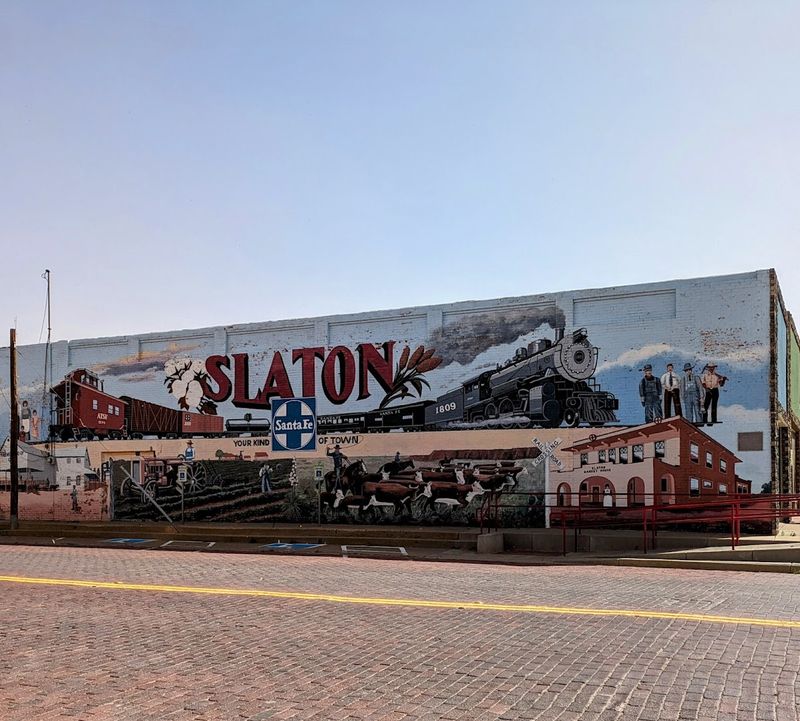
Beyond the famous vanilla wafers, the Slaton Bakery has a couple of other specialties that deserve their own spotlight. The thumbprint cookies are made from a family recipe that dates back to the 1950s, and one bite makes it immediately obvious why nobody has felt the need to update it.
They are rich, tender, and carry that unmistakable quality of something made with genuine care rather than speed.
Then there are the gingerbread snaps. The name might suggest something crispy and sharp, but these are softer than traditional gingersnaps, with a warmth and spice that feels more comforting than bold.
They are popular enough that the bakery distributes them to grocery store chains, meaning you can actually find them on shelves outside of Slaton. That said, eating them fresh at the source is a completely different experience.
What strikes me about these cookies is how unassuming they are. There is no flashy packaging or elaborate presentation.
They sit in simple trays and bags, and they let the flavor do all the talking. That honesty feels very much in line with the town itself.
Slaton does not oversell anything. It just delivers, consistently and without drama.
If you ever find yourself passing through on a Tuesday, Thursday, or Saturday morning, arriving early is a smart move. The freshest batches go quickly, and there is a particular joy in getting something still warm from the oven that no amount of careful planning can fully replicate.
The Texas Air Museum, A Hidden Gem at the Airport

Most people do not expect to find a museum with over 60 vintage aircraft hidden away at a small municipal airport in West Texas.
The Texas Air Museum at Slaton Municipal Airport is exactly that kind of unexpected discovery, the type that makes a road trip feel like a genuine adventure rather than a scheduled obligation.
The collection includes World War II-era aircraft, tanks, military vehicles, and weaponry. For history enthusiasts or anyone with even a passing interest in aviation, the sheer variety of what is on display here is genuinely impressive.
It does not feel like a sterile exhibit. It feels like a working archive of American military history, maintained by people who deeply respect what these machines represent.
Every summer, the museum hosts a biannual air show in June that draws visitors from well outside the region. Watching vintage aircraft take to the sky over the flat South Plains landscape is the kind of experience that stays with you.
There is something about seeing these old machines actually move that no static display can replicate. The sound alone is worth the trip.
Slaton is not a town that shouts about its attractions, which is part of why this museum catches people off guard in the best possible way.
If your only plan was to visit the bakery and head back to Lubbock, adding a stop at the Texas Air Museum is one of those easy decisions that transforms a quick errand into a full and memorable day out.
Address: 12102 FM 400 #34, Slaton, TX 79364
Downtown Slaton, History You Can Actually Touch
Downtown Slaton has the kind of lived-in character that newer developments spend a lot of money trying to fake. The streets here tell real stories.
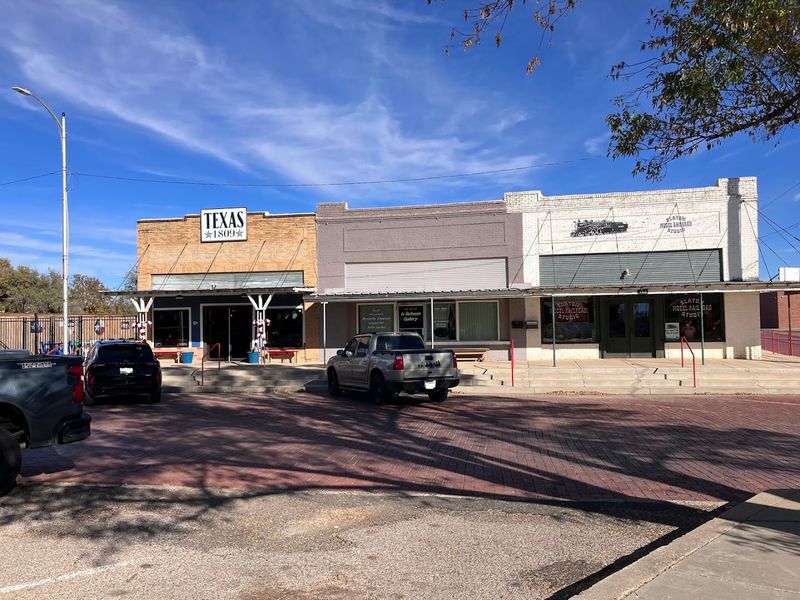
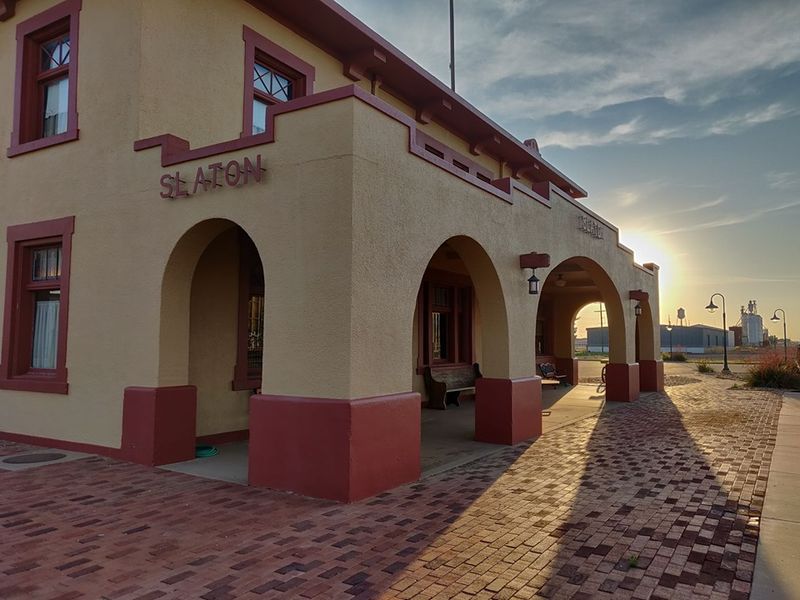
The Slaton Harvey House, a historic railroad restaurant now undergoing restoration, stands as the last remaining structure from the original Santa Fe Slaton Division Point. Preserving it matters because once buildings like that are gone, they are gone for good.
The Slaton Heritage Mural at the corner of 9th and Garza streets is another downtown highlight. It captures the town’s layered identity in a single visual sweep, railroad history, agricultural roots, and community pride all sharing the same wall.
It is the kind of public art that makes you stop mid-stride and actually look. I found myself reading the details longer than I expected to.
The Slaton Museum and an Antique Mall are both located downtown, offering different ways to connect with the town’s past. The antique mall in particular has the kind of unpredictable inventory that rewards patience.
You never quite know what you will find, which is half the fun. West Garza Street is worth a slow walk for its collection of historic homes, some dating back to the town’s founding year of 1911.
These are not museum pieces. People live in them, tend their yards, and go about their days surrounded by architecture that most cities would have long since demolished.
That quiet continuity is one of Slaton’s most underrated qualities.
Why Slaton Stays With You Long After You Leave
There is a particular kind of place that does not need a marketing campaign because the people who find it become its best advertisement. Slaton is firmly in that category.
After a few hours here, something shifts. The pace slows down in a way that feels intentional rather than sleepy, and you start noticing details that a busier place would rush you past.
The July 4th Festival at Slaton Park and the Trunk or Treat Halloween celebration on the Town Square are the kinds of community events that remind you what small-town life is actually built on. Not novelty.
Not spectacle. Just neighbors showing up for each other, year after year, with consistency that no app can replicate.
That rhythm is rare, and it is genuinely worth experiencing firsthand.
The Slaton Model Railroad Studio, with its miniature re-creation of local train tracks and South Plains towns, is a charming final detail that captures something essential about this community. The people here are proud of their history in a way that feels earned rather than performed.
They built something real, kept it running through hard times, and made space for anyone willing to show up and appreciate it. Slaton is not trying to be the next big destination.
It is simply being itself, and for the right kind of traveler, that is more than enough. If a warm bakery, genuine history, and a community that still knows its neighbors sounds like your kind of afternoon, Slaton has been waiting for you all along.
