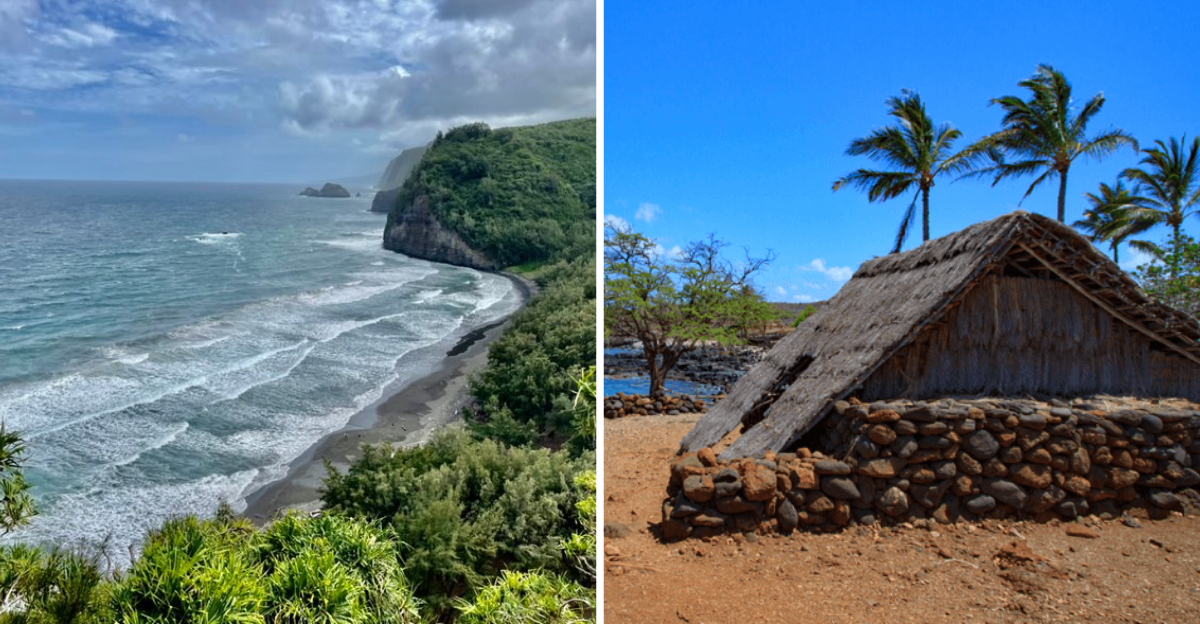
Hawaii has a peninsula that stopped me in my tracks the moment I arrived. The air felt different there, heavier with history, like the land itself was holding onto something ancient and powerful.
Rolling green hills, rugged coastline, and sacred temples scattered across the land all felt connected to one extraordinary story. I came expecting beautiful scenery, and I found it.
But I also found something harder to describe, a kind of quiet reverence that hangs over every valley and stone wall. This is where a king was born, raised, and spiritually rooted before he united the islands under one rule.
The birthplace is marked by a simple platform, and the surrounding area holds multiple temples still considered sacred today. That peninsula is not just a destination; it is a living chapter of Hawaiian history you can actually walk through.
I spent an afternoon walking those hills, the wind carrying the sound of the ocean, and felt like I had stepped into a story still unfolding.
Mo?okini Heiau: Where Spiritual Power Was Born
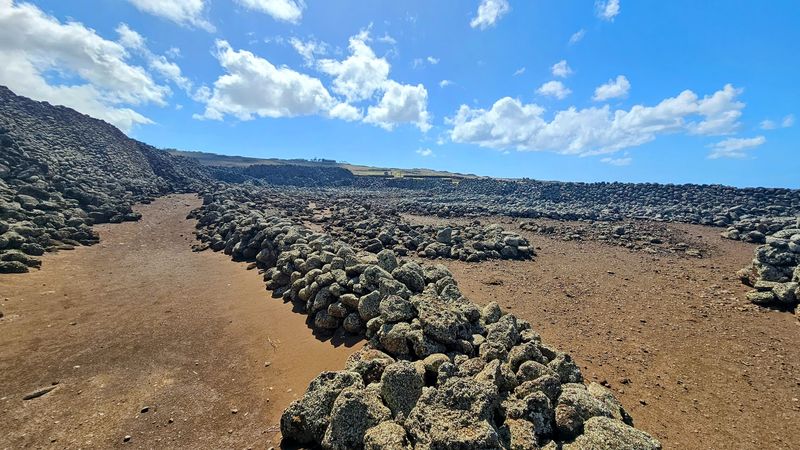
Few places on Earth carry the weight that Mo?okini Heiau does. Perched on the remote, windswept northern tip of the Kohala Peninsula, this massive stone temple is one of the oldest and most sacred sites in all of Hawaii.
Oral histories suggest a temple existed here as far back as 1,500 years ago, which makes standing near its walls feel genuinely humbling.
Dedicated to Ku, the Hawaiian god of war, Mo?okini Heiau served as a center of both spiritual and political power. The walls rise nearly 30 feet high in places, all built without mortar, just enormous lava rocks stacked with remarkable precision.
King Kamehameha I himself conducted ceremonies here, drawing strength from this place before his campaigns to unify the islands.
Getting here is part of the experience. The road leading to the site is rough and unpaved, and a four-wheel-drive vehicle is recommended.
That isolation feels intentional, like the land is filtering out those who are not serious about the journey. Once you arrive, the silence is striking.
This is not a museum. Mo?okini Heiau remains a living spiritual temple, actively cared for and respected by Native Hawaiians today.
Visitors are expected to approach with genuine reverence, not just curiosity. No picking up rocks, no loud conversations, no treating it like a photo backdrop.
The Kamehameha I Birthsite is located just a short walk away, marked by a specific stone. Together, these two sites form a sacred corridor that no history lover should miss.
Pu?ukohol? Heiau: The Temple That Changed Everything
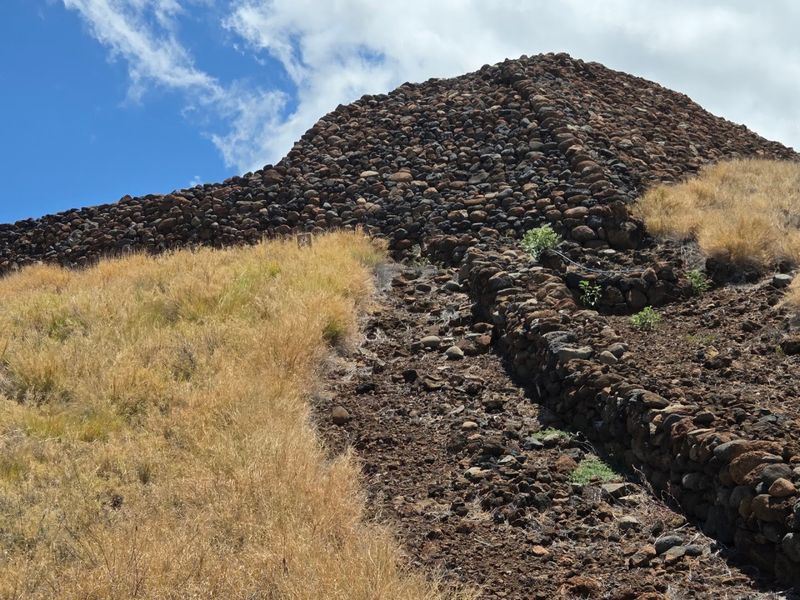
Some buildings change history the moment they are completed. Pu?ukohol? Heiau is exactly that kind of place.
Kamehameha I built this massive temple between 1790 and 1791 after a kahuna, a Hawaiian priest, told him that dedicating it to Kukailimoku, the war god, would give him the power to unite all the Hawaiian Islands. He took that prophecy seriously.
The numbers alone are staggering. The structure measures 224 by 100 feet, with walls standing 16 to 20 feet high.
To build it, lava rocks were reportedly passed hand to hand along a human chain stretching roughly 25 miles from Pololu Valley. That kind of communal effort, organized by one leader with one vision, says a lot about who Kamehameha was.
After its completion, Kamehameha invited his rival Keoua to the dedication ceremony. Keoua was killed there and offered as a sacrifice.
That moment effectively handed Kamehameha control of the Big Island, setting the stage for the full unification of Hawaii by 1810.
The site also includes the ruins of Mailekini Heiau, an older temple that was later converted into a fort. Just offshore, barely visible beneath the water, lies Hale o Kapuni, a submerged heiau dedicated to shark gods.
The whole area feels layered with meaning.
Visiting Pu?ukohol? Heiau National Historic Site gives you a rare chance to stand at the exact place where Hawaiian history pivoted. Address: 62-3601 Kawaihae Rd, Waimea, HI 96743.
The Original King Kamehameha Statue in Kapa?au
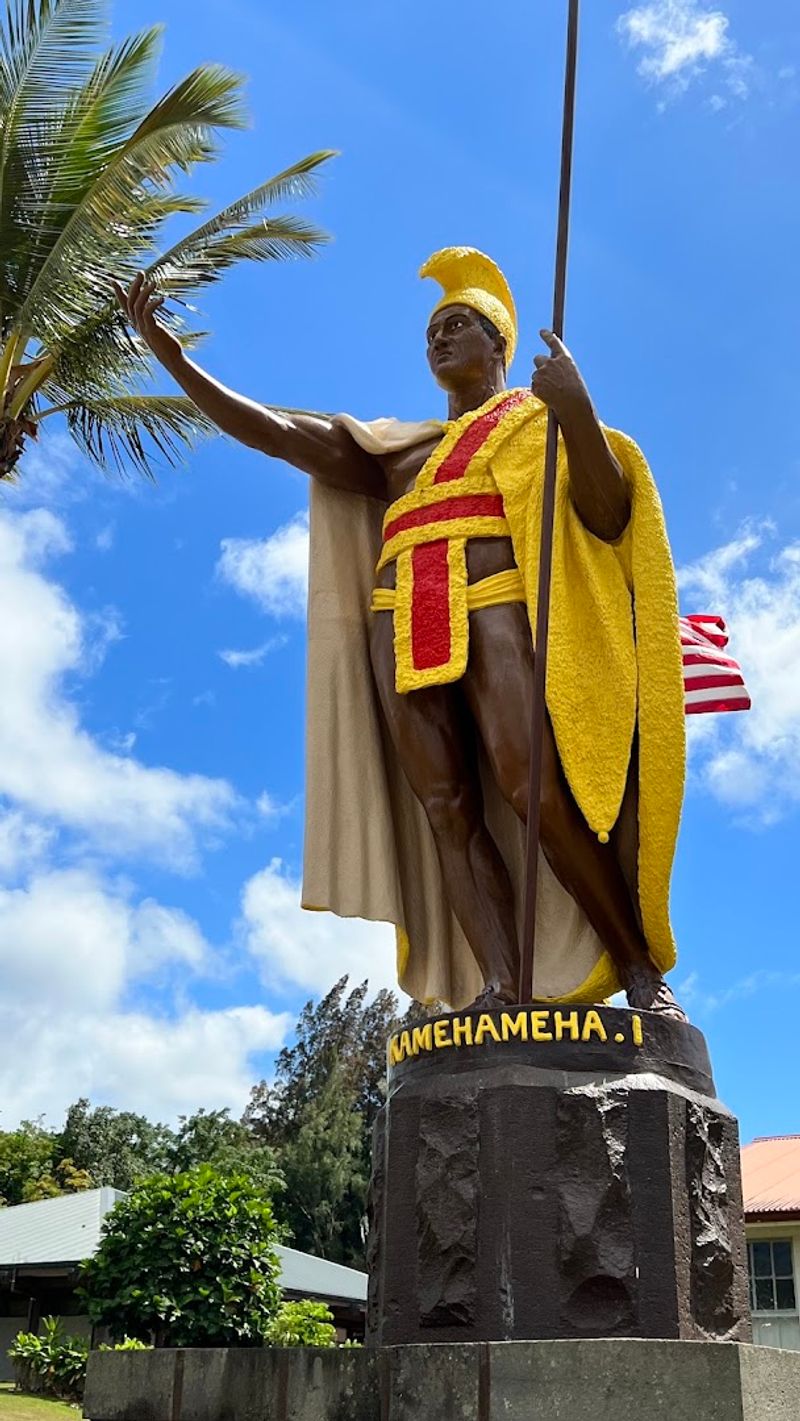
Most people know the famous King Kamehameha statue in Honolulu, the one that gets photographed constantly and draped in leis during celebrations.
What many visitors do not know is that the original statue stands right here in Kapa?au, a small town in North Kohala, just down the road from where the king was actually born.
The story behind this statue is genuinely fascinating. The original was commissioned in the late 1800s and was being shipped from Europe when the vessel carrying it sank near the Falkland Islands.
A replacement was cast and sent to Honolulu, which became the famous one most people recognize. The original was later salvaged and eventually found its way to Kapa?au, where it rightfully belongs.
Every year, the statue is draped in enormous leis during Kamehameha Day celebrations, honoring the king who brought the islands together. The leis can stretch for yards, sometimes covering the statue almost entirely in fragrant flowers.
It is one of the most visually striking cultural ceremonies you can witness in Hawaii.
Kapa?au itself is worth lingering in. The town has a quiet, unhurried energy, with small shops and local eateries tucked along the main street.
It does not feel like a tourist trap at all, which makes it refreshing.
Seeing this statue in its rightful home, surrounded by the landscape that shaped the man it honors, hits differently than seeing a replica in a busy city. This one feels personal and rooted in real ground.
Polol? Valley: Where the King Once Hid as a Child
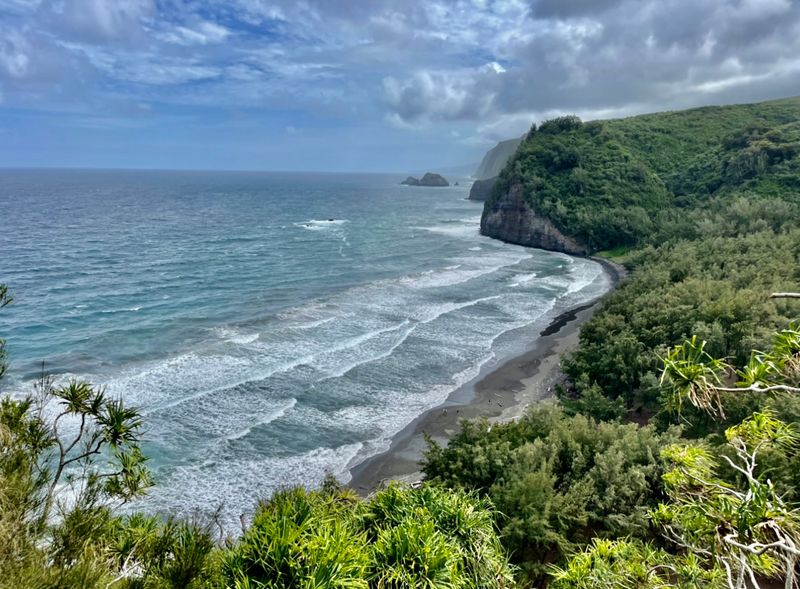
There is a particular kind of drama to the Polol? Valley Lookout that photographs never quite capture. The moment you reach the end of Highway 270 and step up to that viewpoint, the valley opens up below you in a rush of green cliffs, black sand, and crashing surf.
It genuinely takes a second to process.
This valley holds deep cultural significance beyond its beauty. Traditionally, Native Hawaiians farmed kalo, also known as taro, here, supported by fertile soil and a freshwater stream that still runs through the valley floor.
The land fed people for generations, and that relationship between community and place is still felt when you hike down.
According to historical accounts, young Kamehameha I spent time in places like Pololu Valley as a child, hidden away from rival chiefs who saw the infant as a threat. Knowing that adds a quiet layer to the experience as you walk the steep trail from the lookout down to the black sand beach.
You are treading ground that shaped a future king.
The hike down is moderately challenging, with loose footing in places. Sturdy shoes are a practical must, not just a suggestion.
The beach at the bottom is not ideal for swimming due to strong currents, but it is spectacular to stand on.
Coming back up the trail, with the valley spreading out behind you, you get a real sense of why this place meant something. It is not just scenery.
It is sanctuary.
Lapakahi State Historical Park: Life Before the Kings
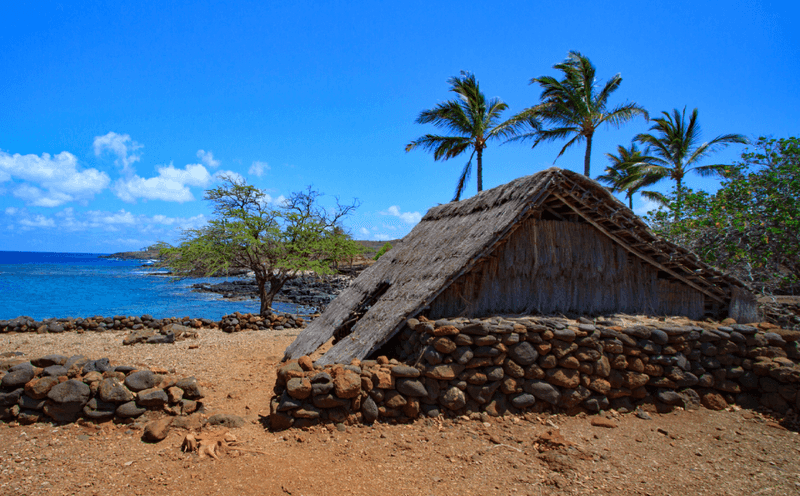
Kohala’s history does not begin and end with Kamehameha. Long before the great king was born, ordinary Hawaiian families built their lives along this coastline, fishing, trading, and raising children in a community that lasted for centuries.
Lapakahi State Historical Park preserves what remains of one of those ancient villages, and it is a genuinely moving place to explore.
The park dates back over 600 years, making it one of the oldest preserved Hawaiian settlement sites accessible to the public. A one-mile loop trail winds through the ruins, passing partially restored structures with interpretive signs that explain what each area was used for.
You get a real sense of daily life here, not the ceremonial or royal version of Hawaiian history, but the lived, practical, human version.
Salt pans carved into the rock, canoe storage areas, and the remains of small dwellings all tell a story of a community deeply connected to the sea. The ocean right beside the trail is incredibly clear, showing off the kind of turquoise that seems almost too vivid to be real.
This park tends to be quieter than the more famous sites on the island, which works in its favor. You can move at your own pace without feeling rushed or crowded.
Early morning visits are especially peaceful, when the light is soft and the coastal breeze is still cool.
Lapakahi is a reminder that Hawaiian culture was rich and complex long before any one ruler rose to prominence.
Address: HI-270, Waimea, HI 96743.
Kohala Mountain Road: The Drive That Rewrites Your Expectations
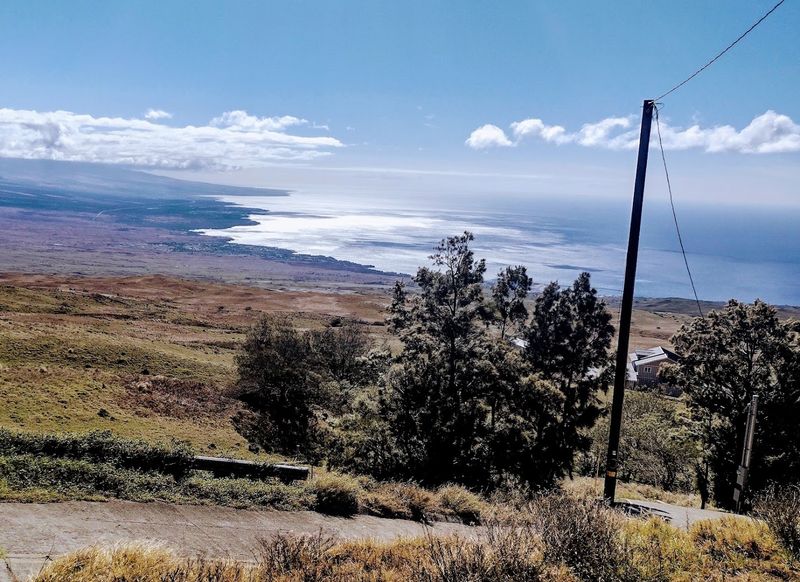
Nobody talks enough about Highway 250. This 20-mile stretch of road connecting Waimea to Hawi might be the most quietly spectacular drive on the entire Big Island, and most visitors completely miss it because they are focused on beaches and lava fields.
That is genuinely their loss.
The Kohala Mountain Road climbs through rolling ranch country that looks nothing like the Hawaii you see on postcards. The landscape shifts from dry coastal scrub into lush, impossibly green pastures dotted with cattle.
On clear days, the views stretch all the way to the ocean, with the dark blue of the Pacific contrasting against the vivid green hills in a way that feels almost surreal.
Some people compare this drive to the countryside of Ireland or Scotland, and once you see it, that comparison makes complete sense. The clouds hang low over the ridgeline, the grass is thick and bright, and the road curves gently through it all without any rush.
I found myself slowing down just to take it in properly.
Pulling over at one of the informal viewpoints along the way is highly recommended. There are spots where you can see both sides of the peninsula at once, which gives you a real appreciation for how dramatic the geography of North Kohala actually is.
This drive also connects you to the broader story of Kohala, because the land you are passing through is the same land that raised and sheltered a future king.
That context makes every green hill feel like it belongs to something larger than just a scenic route.
