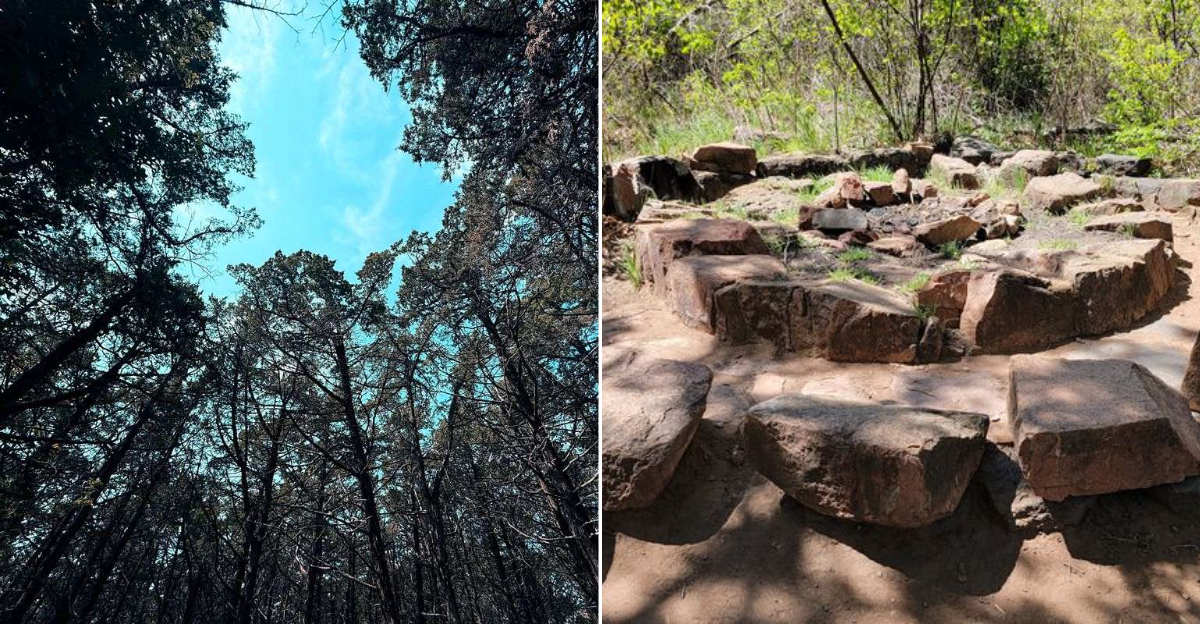
The trees stretch ahead in perfect, unbroken lines, each one exactly six feet from its neighbor in a grid that repeats in every direction.
Over twenty thousand red cedars were planted here as part of a forgotten government experiment from the early twentieth century.
The rows go on without end, and the symmetry feels less like nature and more like a maze designed to unsettle. The quiet is heavy, and the repetition creates a disorienting feeling that sets in quickly.
This is not a forest that grew on its own. It was planted with a purpose, but that purpose has long since faded from memory.
A short trail leads through the planted rows, but the deeper you go, the more the uniform spacing begins to feel wrong. It is a place where history, science, and unease meet in the middle of Oklahoma.
Just Getting There Feels Like Finding A Secret
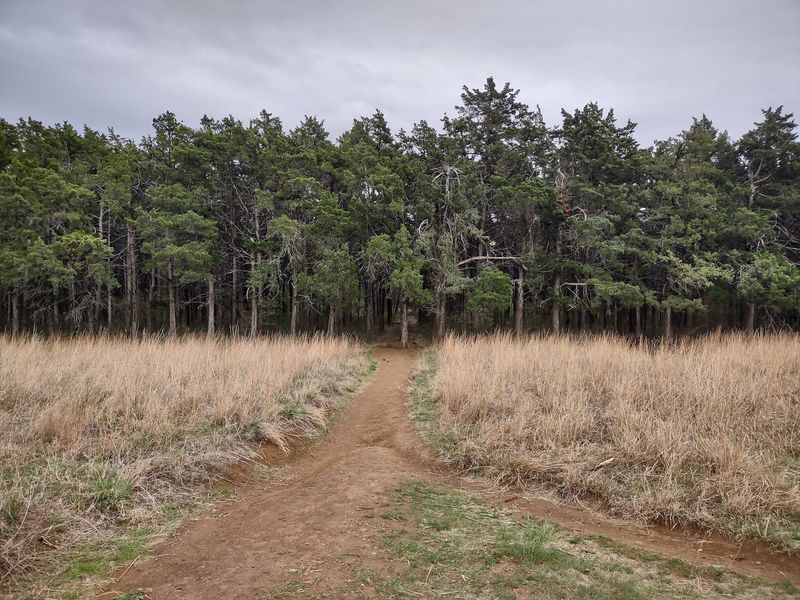
There is no big carved sign or ranger booth waiting to greet you, which honestly makes the whole trip feel like you are in on something most people drive right past. You roll through the wide grassy stretches of southwestern Oklahoma, with granite boulders piled up on the hillsides like someone dumped them there on purpose, and everything looks pleasantly ordinary.
Then this thick, dark rectangle of trees appears out of nowhere, and it does not match a single thing around it. The rest of the landscape is open and scrubby and sun-bleached, so a solid wall of cedar sticks out the way a building would.
Most folks park in a small gravel pull-off along the side of the highway, since there is no formal lot with painted lines or anything like that. Bring a screenshot of your directions, because cell service out in the Wichita Mountains can get flaky and you do not want to be guessing.
Give yourself a little extra driving time too, mostly because the surrounding refuge roads are the kind where you will absolutely want to stop and stare at the scenery. Does that sound like a fair trade for a slightly confusing drive?
The Exact Spot You Need To Punch Into Your Map
Let me save you some circling around, because this is the part where people usually get turned around and end up driving the same stretch three times. You are looking for the Parallel Forest at Meers Road, Lawton, OK 73507, and that is the address to plug in before you leave the house.
Once you are close, keep your eyes open for a small unofficial parking area along the side of Highway 115, since that is how most visitors know they have arrived. There is no gate, no ticket window, and nobody standing there to wave you in.
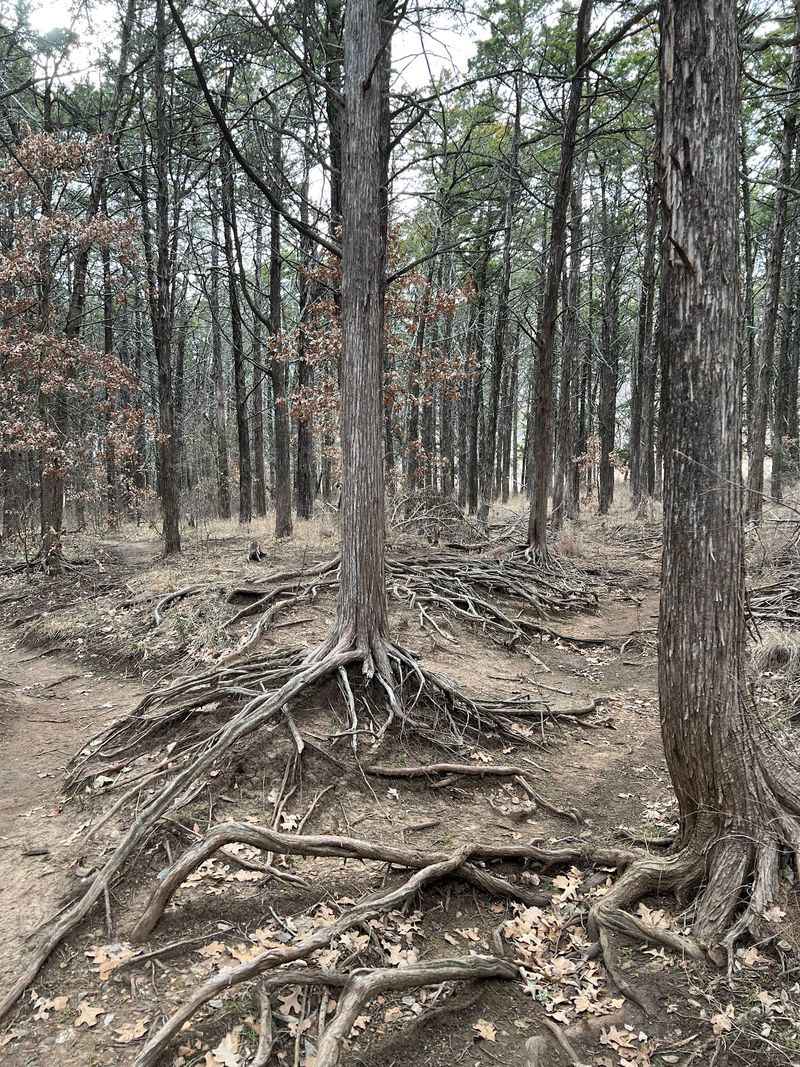
The walk from the pull-off to the tree line is short, so you are not committing to some long trek before the strangeness begins. Wear shoes you do not mind scuffing up, because the ground is uneven and littered with fallen cedar debris in spots.
I would also suggest going with a friend rather than solo, not because it is dangerous, but because half the fun is watching somebody else react when the rows come into view. You will want a witness for that moment, trust me on this one.
A Backstory Weirder Than Any Rumor About It
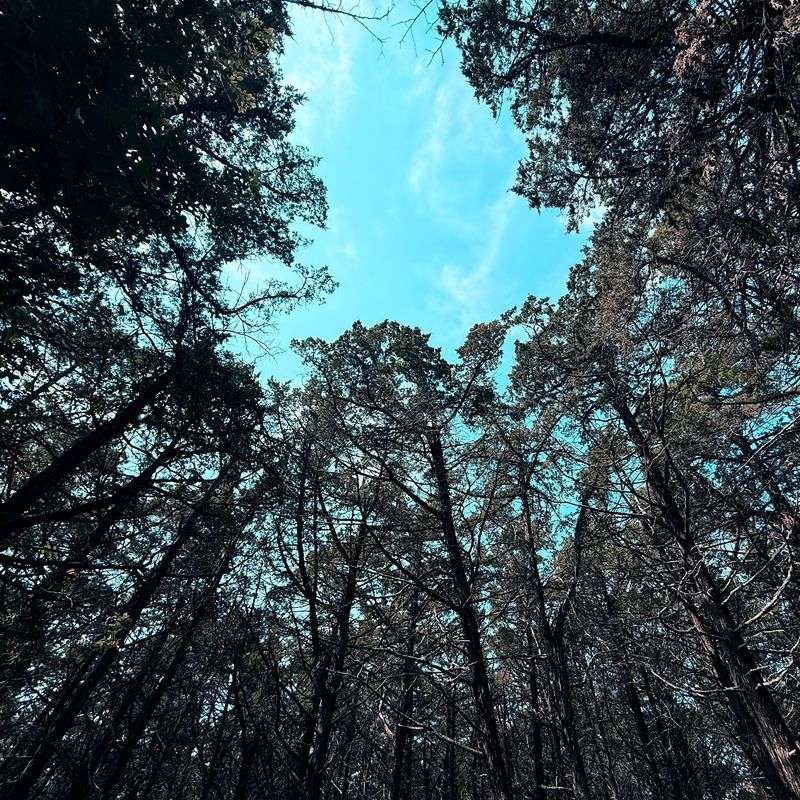
Here is the thing that surprises almost everyone: not one of those trees grew there on its own. The entire forest was planted deliberately by people, in a government project that put thousands of Eastern Red Cedar saplings into the ground in careful lines.
The goal was practical rather than pretty. The plan involved producing usable wood and creating a windbreak during a stretch when the Oklahoma soil badly needed protection from blowing away.
Whether that project succeeded the way anyone hoped is a whole other conversation, but what got left behind is this bizarre living grid that nobody quite planned as a tourist attraction. Nature has been slowly reclaiming the edges ever since, which creates a funny tension between the tidy rows and the messy undergrowth creeping in.
I love that the eeriest place in the region started as a fairly boring agricultural idea. Somebody with a clipboard measured out spacing, crews put seedlings in the dirt, and decades later people drive across the state to feel unsettled by the result.
Knowing the history does not make it less strange when you are standing in there, either. If anything, it makes the whole thing feel stranger.
Why The Name Fits Better Than You Expect
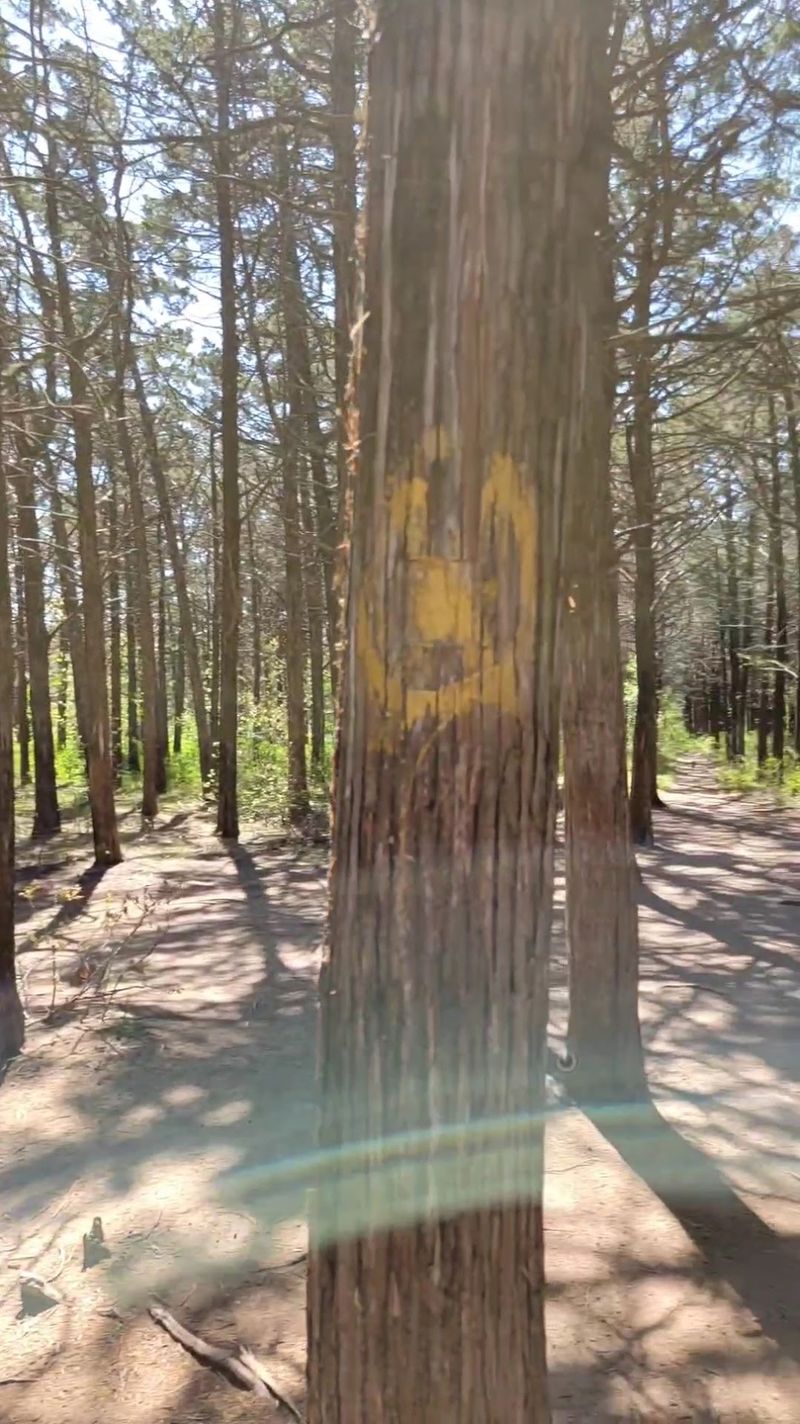
You will get the name the second you step past the first row of trunks, and honestly it is a little startling how fast it clicks. Every tree lines up with the ones beside it, behind it, and diagonally from it, so no matter which way you turn your head, you are looking down a corridor.
The spacing was set at about six feet between trees, which is tight enough that the cedars could not spread outward the way they normally would. Instead they shot straight up, competing for light, and ended up tall, skinny, and weirdly uniform.
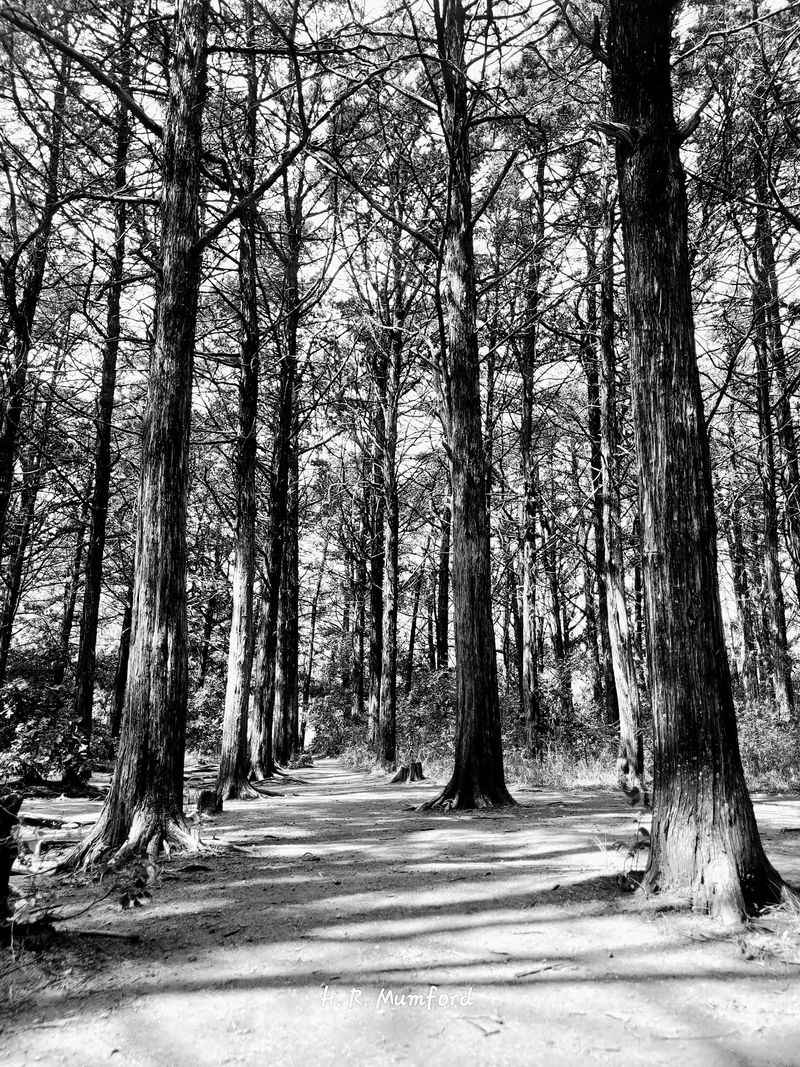
Lower branches died off from the shade, so a lot of the trunks are bare for the first several feet. That gives the whole place an open, hallway-like quality underneath a heavy ceiling of green.
Your eyes keep trying to find a pattern break and never quite do, which is the part that messes with people. Turn ninety degrees and you get the exact same view all over again.
It is a genuinely fascinating example of how planting choices shape the way a tree grows. Kind of makes you look at ordinary forests differently afterward, does it not?
That Hush You Notice Before You Notice Anything Else
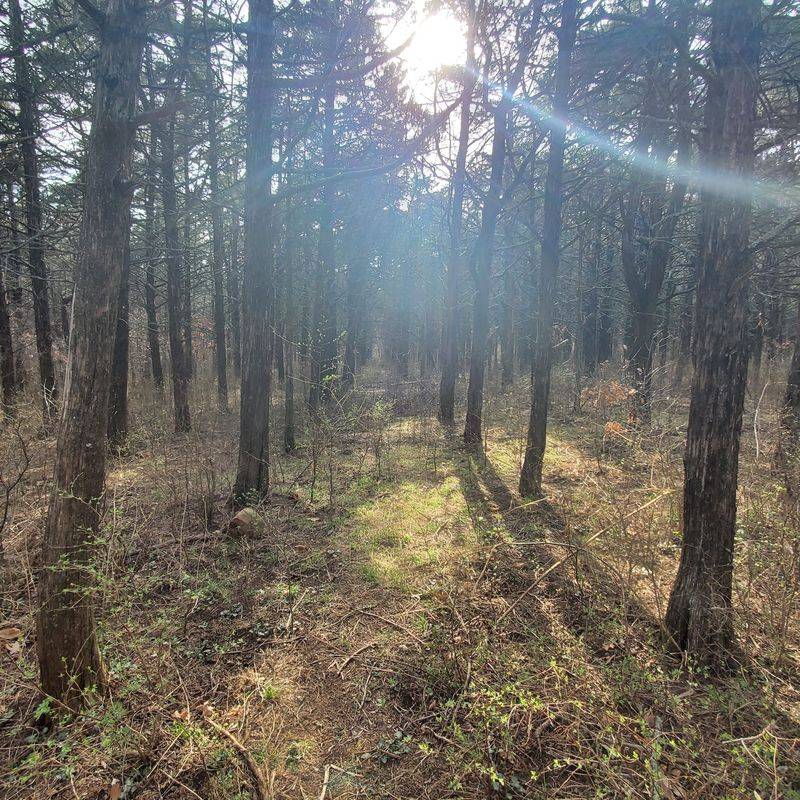
Sound behaves oddly in there, and that is usually the first thing people mention when they come back out. The canopy overhead is thick enough that it swallows a good chunk of daylight, so even at noon the interior sits in a dim greenish half-light.
All that cedar also seems to soak up noise, which means the usual background hum of wind and birds drops down to almost nothing. Your own footsteps on the fallen needles end up being the loudest thing around.
Combine the low light with the unnatural order of the rows and you get a feeling that is hard to name. It is not scary exactly, more like your brain flagging that something here does not match how forests are supposed to work.
Some people find it peaceful and end up wandering for a long while, completely content. Others get about fifty steps in and decide they have experienced enough, which is also a perfectly reasonable response.
If you are bringing kids or anyone jumpy, go during bright midday hours rather than late afternoon. The mood shifts noticeably as the light drops, and there is no reason to rush that part.
Campfire Stories Cling To This Place
A spot this odd was always going to collect stories, and this one has gathered a whole pile of them over the years. People trade tales about ghosts drifting between the trunks, distant drumbeats with no source, rituals held after dark, and floating orbs of light.
None of that is documented in any serious way, and I am not asking you to believe a word of it. Still, the stories are half the reason the place gets talked about across Oklahoma, and hearing them beforehand definitely colors how you experience the walk.
What I find more interesting is why the legends stuck here instead of somewhere else. Human brains are wired to spot patterns, and when a pattern shows up in nature this precisely, we start reaching for explanations that feel bigger than a forestry project.
If you enjoy that kind of atmosphere, read up on the folklore before you go and let it sit in the back of your mind. If you would rather keep things grounded, skip the stories entirely and just enjoy an unusual stand of trees.
Either way, you leave with something to talk about on the drive home.
A Stone Circle Waiting Deeper In The Woods
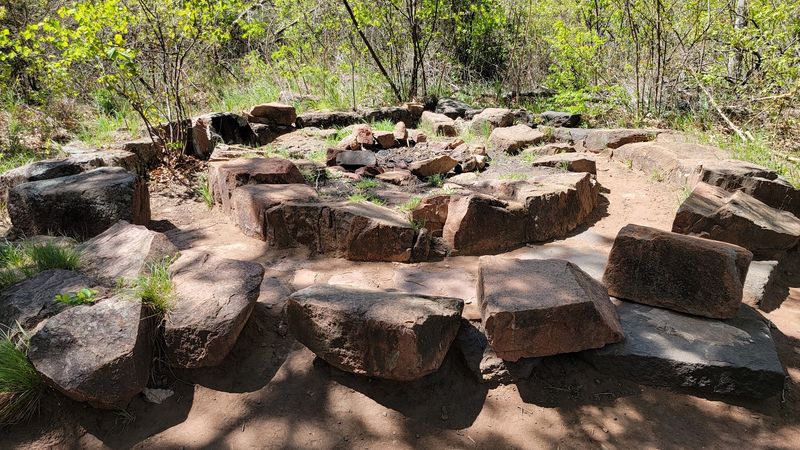
Just when you think the forest has shown you its whole hand, there is another oddity tucked away in the trees. Somewhere deeper in, past the first stretch of rows, sits a circle of stones that has become its own little pilgrimage for curious visitors.
Most people find it by heading left from the main entrance and working their way toward a creek, where the ground opens up a bit. It is not marked and it is not advertised, so finding it takes a little patience and a willingness to poke around.
Nobody has a tidy, confirmed explanation for who arranged it or why, which of course only feeds the legends I mentioned earlier. It could be old, it could be relatively recent, and the mystery is doing a lot of heavy lifting either way.
Please treat it gently if you locate it, meaning look, photograph, and leave the stones exactly where they sit. Places like this survive because visitors keep their hands to themselves.
Download an offline trail map before you wander off the main path, because the identical rows make it genuinely easy to lose your bearings out there.
You Might Share The Area With Longhorns And Elk
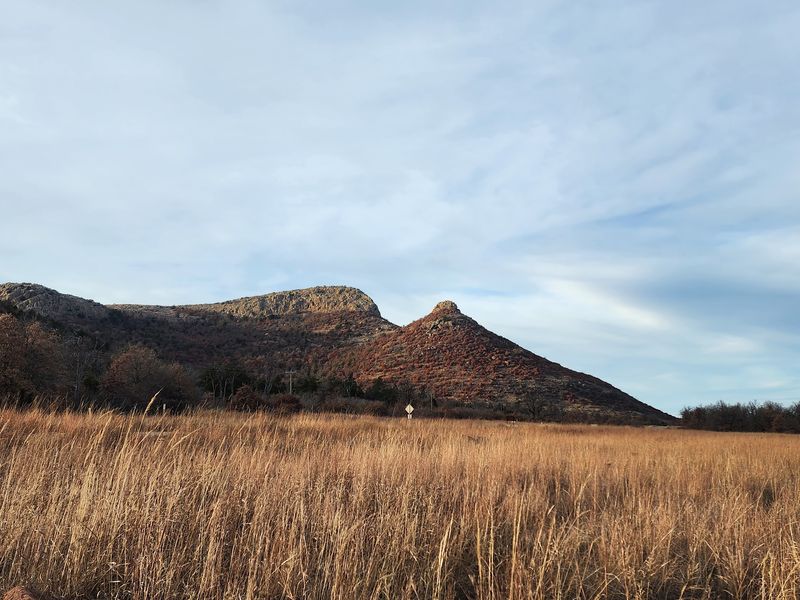
Do not forget where you actually are, because this whole strange forest sits within the Wichita Mountains Wildlife Refuge, and the residents there do not care about your sightseeing plans. Longhorn cattle wander the open areas, deer move through at dawn and dusk, and Rocky Mountain elk turn up often enough that spotting one is a real possibility.
Keep a generous distance from all of them, especially the longhorns, since those animals are big, free-roaming, and completely unbothered by human opinions. Watching from your car or from well down the road is the smart move.
Bring binoculars if you have a pair, because the surrounding grasslands and rocky slopes give you long sightlines that are honestly better for wildlife watching than the forest itself. Inside the rows you mostly see trees, unsurprisingly.
Early morning tends to be the most productive window for animal sightings, plus the light across those granite hills is worth the alarm clock. Late afternoon works nicely too.
The combination of prairie wildlife and an artificial tree grid is such an odd pairing that it makes the trip feel like two separate outings stacked together. That is a pretty good deal for one stop.
Autumn Makes The Whole Thing Look Unreal
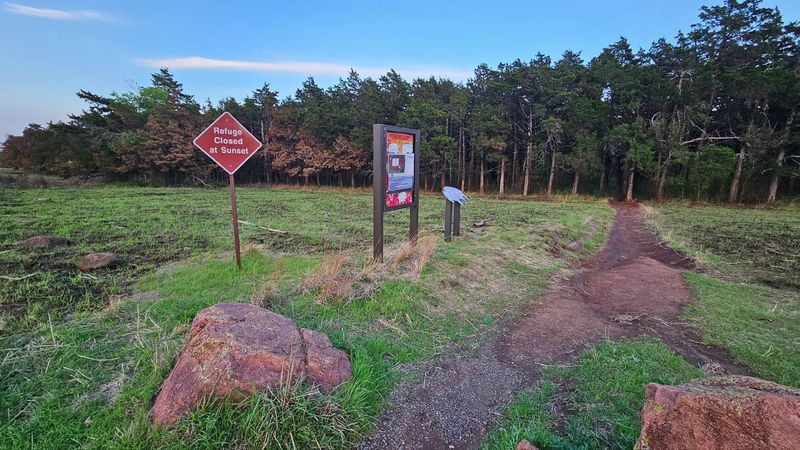
Any season works for this, honestly, but fall is when the contrast really shows off. The cedars stay dark and green year round, so when the surrounding trees and grasses turn gold and rust across the Wichita Mountains, those rigid rows look almost pasted onto the landscape.
Cooler air helps too, since summer out here gets hot enough that a shaded walk stops being charming and starts being sticky. Autumn temperatures make the whole outing far more comfortable.
Photographers should aim for the hours right after sunrise or before sunset, when light slants sideways through the trunks and creates those long striped shadows. Midday inside the forest tends to go flat and murky, so plan accordingly.
Winter has its own appeal if bare, stark scenery is your thing, and spring brings green undergrowth pushing up between the rows. There is really no bad time, just different flavors of strange.
Wrap up the trip with a scenic drive through the rest of the refuge, since Oklahoma does not hand out landscapes like this everywhere. Between the perfect rows and the wild granite hills, you get one of the odder day trips in the state.
